

Matson Bankrolled Dark Money Super PAC, New Filings Show
A loophole in federal campaign spending law left primary voters in the dark about who was bankrolling last-minute advertising in the contest for Hawaiʻi’s 1st Congressional District.
Ever since August, it’s been a mystery: Who was behind the dark money super PAC that was trying to oust U.S. Rep. Ed Case during the Aug. 8 Democratic primary?
Turns out it was a major player in Hawaiʻi’’s shipping industry and a Las Vegas casino conglomerate with deep ties to the islands.
Newly filed reports from the Federal Election Commission show that Matson’s political action committee and Boyd Gaming Corp. donated a combined $100,000 to Future Progress to fund a last minute advertising campaign supporting Hawaiʻi State Sen. Jarrett Keohokalole’s unsuccessful bid to unseat Case. Most of that money — $75,000 — came from Matson’s PAC, which is funded by its employees.
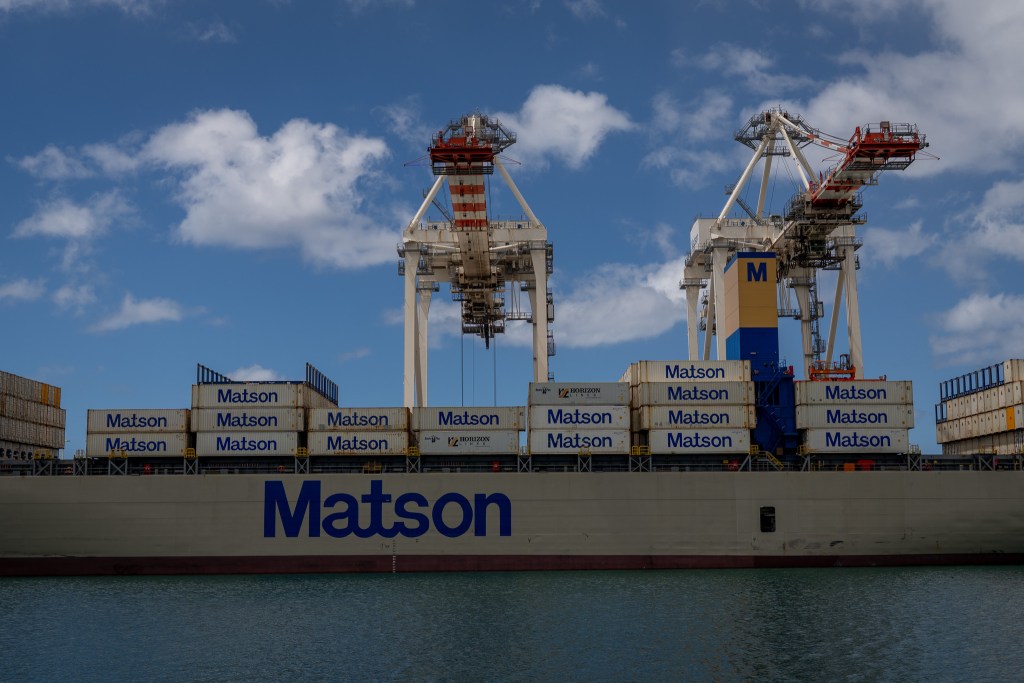
The timing of the ad buy combined with the FEC’s reporting schedule effectively hid the true source of the funds until now, something that campaign finance experts have said has become an increasingly common tactic to obscure who’s bankrolling political operations until after votes have been cast.
Unfortunately for Keohokalole, the amount of money pumped into the PAC didn’t make much of a difference — he lost to Case by 20 percentage points.
It also forced Keohokalole, who had championed legislation seeking to eliminate the influx of corporate money into island politics, to answer uncomfortable questions about the sudden influx of dark money into the race on his behalf and the fact that the super PAC had used one of his campaign consultants to make its ad buys.
That Matson’s PAC helped pay for the pro-Keohokalole ad campaign is not surprising, especially to Case who describes the company as a longtime adversary.
The congressman has been an outspoken critic of the Jones Act, a 100-year-old maritime law that requires goods shipped between U.S. ports to travel on U.S.-flagged, owned and crewed vessels — arguing that it contributes to the high cost of living in the islands and is in need of reform. Matson profits from the law’s protections, which help to ward off competition and allow the company to operate almost as a monopoly in the islands.
“Matson is a very committed opponent and they directly or indirectly bankrolled a huge portion of this campaign against me,” Case said. “It’s consistent with their concerted effort to get me to shut up and do nothing about the Jones Act, which I’m not going to do.”
Following The Money
During the campaign, the Jones Act was one of the clearest distinctions between Case and Keohokalole. Like other members of Hawaiʻi’s all-Democrat delegation, Keohokalole had said he supports the law, repeating the familiar refrain that it’s critical to national security, jobs and maintaining reliable, regular service to the islands.
Keohokalole’s positioning paid off at least in terms of winning donations.
Federal records show Matson’s PAC donated $10,000 to Keohokalole’s campaign. Matson employees gave another $39,000, including top executives, such as CEO Matthew Cox and Senior Vice President Kuʻuhaku Park, who handles government relations for the company. In fact, of the 15 people listed on Matson’s executive management team 13 of them were listed as donors to Keohokalole’s campaign.
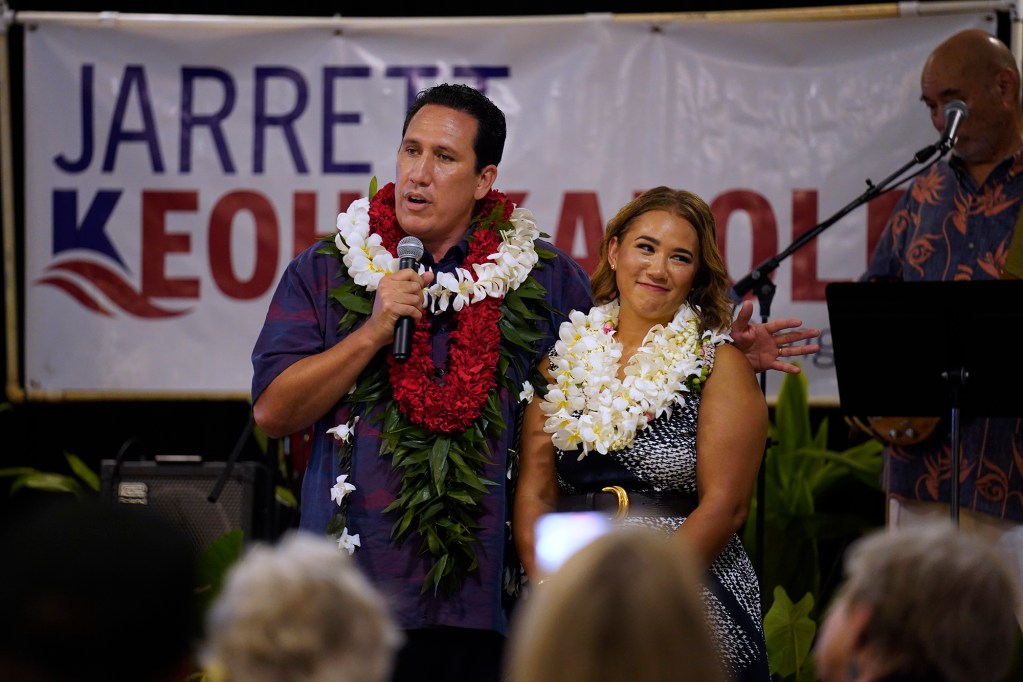
Keohokalole received contributions from others associated with the islands’ maritime industry, including PACs representing the Seafarers Union, Saltchuk Resources and the International Longshore and Warehouse Union.
Boyd Gaming’s $25,000 donation to Future Progress is harder to explain, Case said, because its business “doesn’t enter into my world one way or the other in Washington.”
The company owns more than two dozen gaming properties in 10 states and has strong connections to the islands. Its California Hotel & Casino in Las Vegas is a sanctuary for Hawaiʻi residents visiting the so-called ninth island, and it operates Vacations Hawaiʻi, a travel agency that offers discounted travel packages to get them there.
In addition to funding Future Progress, Boyd Gaming donated $5,000 directly to Keohokalole’s campaign through a separate political action committee.
Case said it’s possible the company wasn’t supporting Keohokalole over his position on federal issues, but rather giving him money because he’s an influential state legislator who has a say over whether gambling will one day be legalized in Hawaiʻi.
Keohokalole, a co-chair of the Native Hawaiian Caucus, had previously introduced legislation along with other lawmakers that would have allowed the Department of Hawaiian Home Lands to build a casino to generate revenue, but the bill never passed.
Boyd Gaming has donated to several state candidates in the current campaign cycle, including Hawaiʻi Gov. Josh Green and his running mate for lieutenant governor, Kauaʻi Mayor Derek Kawakami.
Keohokalole did not agree to speak with Civil Beat for this story, but in a previous interview said that he had no affiliation with the Future Progress super PAC, adding that “anyone spending money to influence this race should disclose their donors, whether they’re supporting me or my opponent.”
Boyd Gaming did not respond to a request for comment.
Matson: ‘This Is Our First Time’
While Case said he didn’t want to relitigate the primary election, he criticized Matson and Future Progress in particular for taking advantage of loopholes in federal campaign finance law that allowed the identity of the super PAC’s funders to be hidden from voters when it mattered most — before they cast their ballots.
He’s since co-sponsored legislation that would require super PACs to disclose their top three donors on ads so that voters know ahead of time who’s paying for the messages that are trying to influence them.
“They did it this way for one obvious reason,” Case said. “They did it this way to conceal who they were because they felt that helping my opponent directly, openly and publicly was going to be a liability to my opponent, and they wanted my opponent to win.”
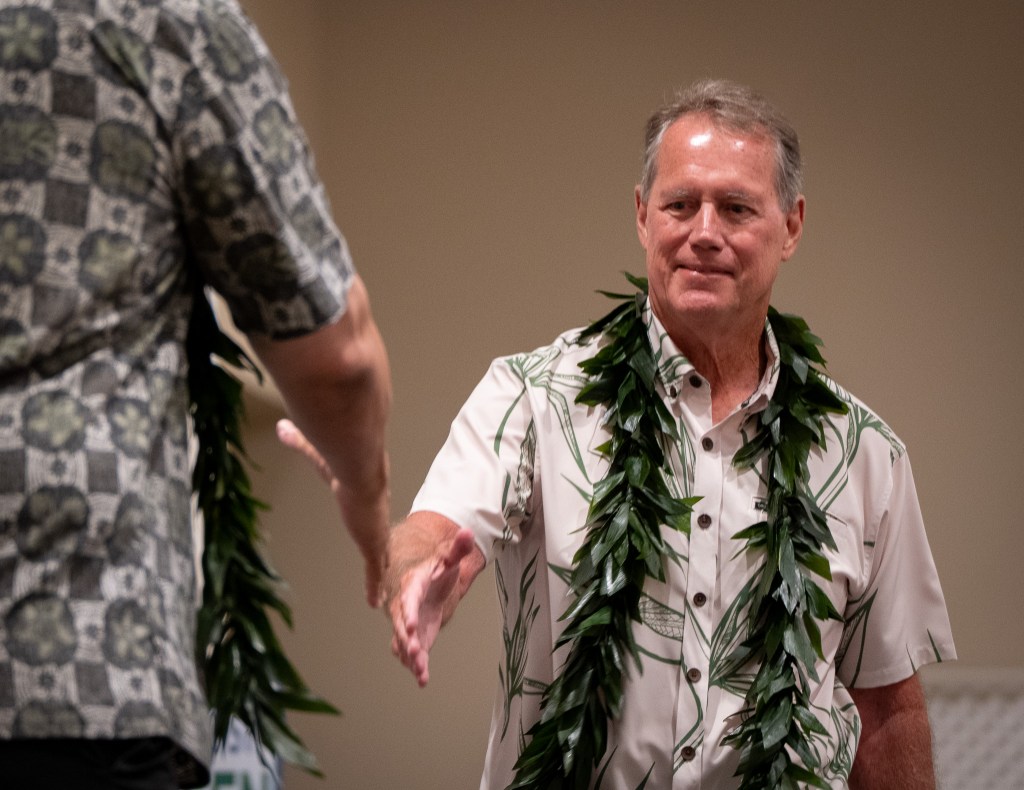
Matson’s Kuʻuhaku Park said that the company and its leaders supported Keohokalole through direct contributions, but said that its donation to Future Progress was separate. The super PAC first approached Matson about donating, he said, and that the stated purpose was to back candidates who aligned with the maritime industry’s interests.
Park said there was no discussion about how the money would be spent, and that Matson did not know the money would be used in the contest between Case and Keohokalole.
“This is our first time we ever contributed something like this,” Park said. “It’s been a learning experience, but we have a long history of supporting candidates who support maritime interests.”
Martin Hamburger, the political consultant who set up Future Progress, said he couldn’t speak to the exact conversations that took place between Matson and his super PAC. He worked directly with Keohokalole’s campaign and an internal firewall within his firm prevented him from participating in those conversations due to federal prohibitions on coordination.
Regardless of how the super PAC’s motivations were couched, he said there wouldn’t be anything wrong with a donor such as Matson telling Future Progress how it wanted its money to be spent. “There’s no problem earmarking it,” he said. “That’s perfectly legit.”
Federal data shows that Matson’s PAC has spent $303,000 so far this election cycle. The largest share of that money — $85,000 or about 28% — went to backing Keohokalole, including through its donation to Future Progress. The PAC also gave another $20,000 to PACs associated with U.S. Sen. Brian Schatz and U.S. Sen. Mazie Hirono even though neither of them are on the ballot this year.
Matson’s PAC donated to several Republican campaigns as well, including those of Alaska Sens. Lisa Murkowski and Dan Sullivan, who’s in a tight race against former U.S. Rep. Mary Peltola that could determine control of the Senate.
It also gave to House Speaker Mike Johnson’s reelection campaign and to the leadership PAC for U.S. Sen. Roger Wicker of Mississippi, an ardent Jones Act defender who has openly questioned the legality of President Donald Trump’s waivers that were meant to reduce fuel costs.
Will Matson work with super PACs in the future? Park said it will depend on the election and the issues at play.

