Neal Milner: No Blue Tsunami In Hawaiʻi. Just Listless Kona Winds
Look to Wisconsin for political change, competition, enthusiasm, optimism and belief in a fresh start.
November 11, 2026 · 6 min read

About the Author

Hawaiʻi was not part of the sweeping Democratic trend in the 2026 midterms. Really, the state bucked the trend.
If, as many have said, the 2026 election nationally was a “tsunami” and a “hundred-year flood,” then by comparison Hawaiʻi’s was a combination of the regularity of mauka showers and the listlessness of summer Kona winds.
While the country voted for change, Hawaiʻi voted for the status quo. While the national trend is about reaffirmation and renewal, Hawaiʻi’s election was about redundancy.
The nation’s 2026 claim-to-fame was Democrats winning in places where they never win.
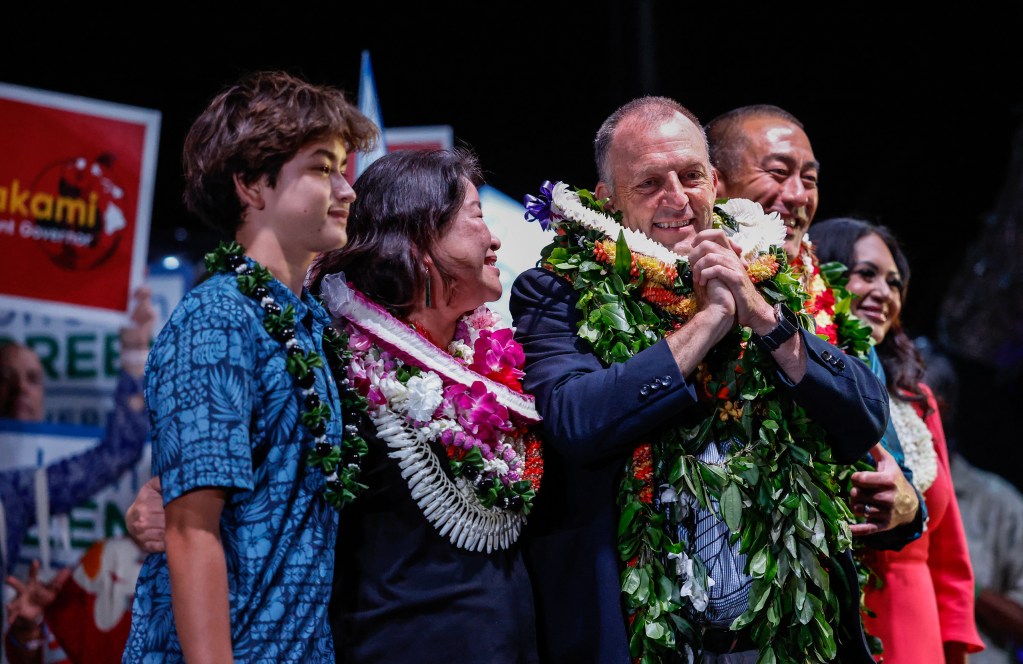
Hawaiʻi’s 2026 claim-to-fame was Josh Green winning the governorship by the biggest margin ever.
While the national midterm turnout went up, Hawai‘i’s went down — close to the bottom nationally.
Democrats pounded Republicans into submission even in places where it hasn’t happened for years or ever. Hawaiʻi’s Democrats didn’t have to pound anyone, anywhere.
It was like Hawaiʻi’s 2026 election took place back when Fred Trump was teaching his son Donald how to scoop up apartment buildings.
To understand just how different Hawaiʻi was, think of the last election not as one but three: the national contests, the contests in states that are regularly competitive such as Wisconsin, and those in Hawaiʻi, where competition really doesn’t exist at all.
The first two are different in some ways but very much alike. Hawaiʻi, however, is in a class by itself.
The elections nationally and in competitive states were about change. “We’re back in power, and change is in the air!” Such enthusiasm, optimism and belief in a fresh start.
Hawaiʻi’s election wasn’t about change. Instead it stolidly, unexcitedly, and predictably strengthened the established patterns of political power. Nothing ventured, nothing lost.
How Midterms Broke Down Competitively
Competitive: Wisconsin
Wisconsin is a political hotbed – Republican and Democratic voters evenly matched, one very conservative U.S. Senator and one very liberal one. Generally the state votes for the Democratic presidential candidate.
Its present Democratic governor, Tony Evers, has been in office for nearly eight years. Before him was Scott Walker, a Republican who was a national hero among conservatives, who also served eight years.
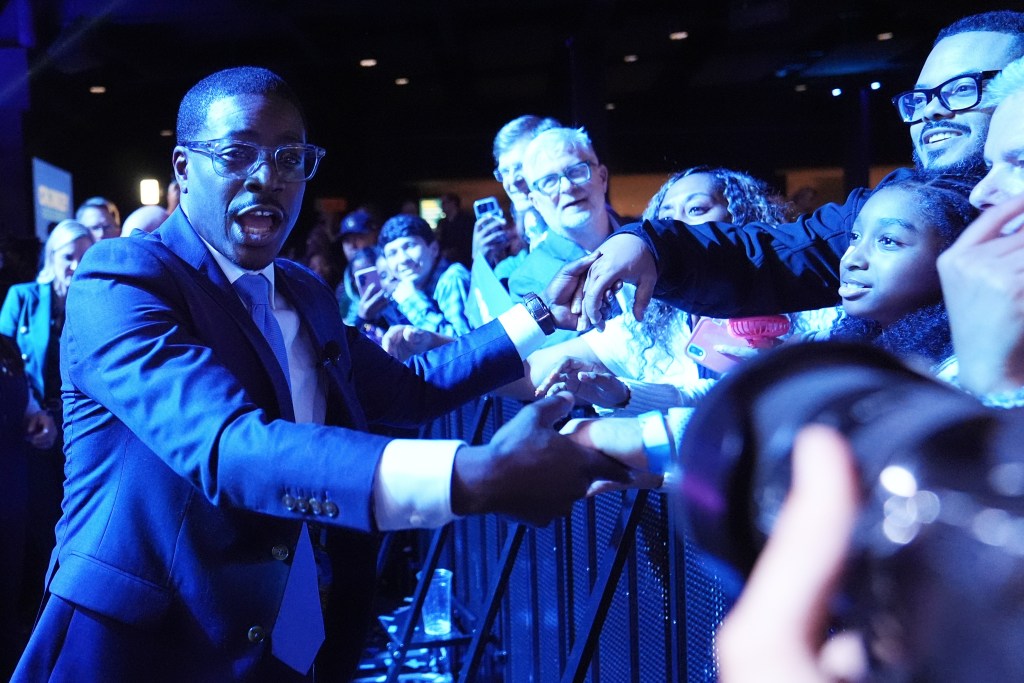
In the recent election, Wisconsin elected its first black governor, David Crowley, currently Milwaukee County Executive.
The voter turnout there is always among the highest in the nation.
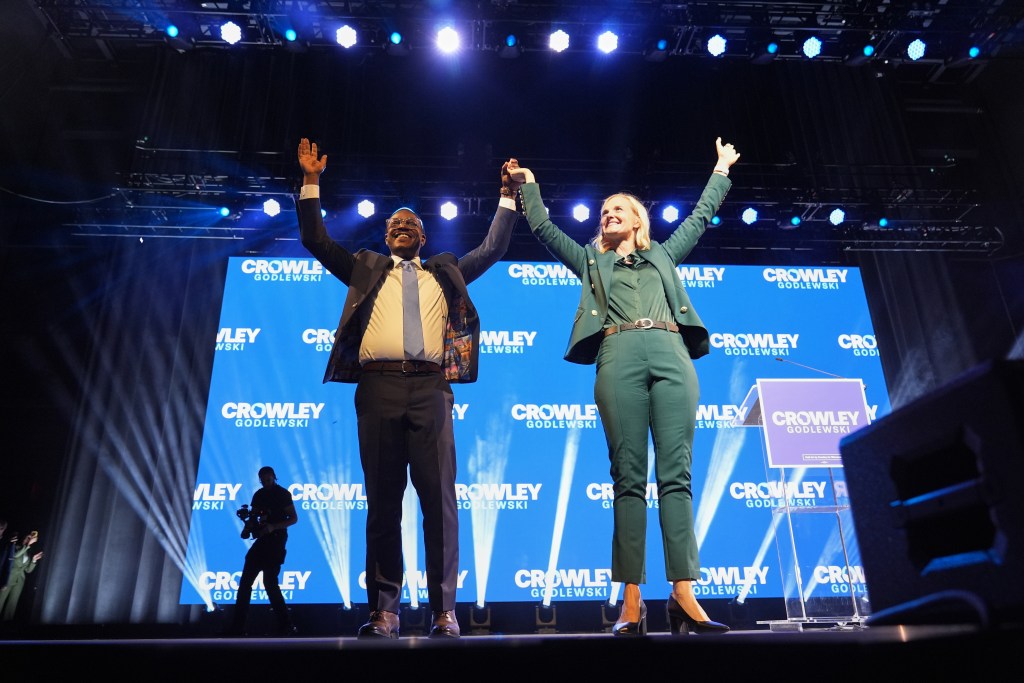
As a result of the 2026 midterms, the governor and both houses of the legislature are Democratic, and Republicans lost Congressional races in places they never lost.
The election broke barriers up and down the ballot.
“We’re going to be ambitious. We’ve been waiting a long time for this moment,” one state Democratic legislative leader said. “We have a lot to do, and we are going to move quickly.”
At the same time, there are still a large number of Republicans in the state Legislature. The electorate is still both evenly divided, very attentive and easy to mobilize.
In competitive places such as Wisconsin, the Democratic wave – as big and historic as it is – will nevertheless be affected by the lingering intense competition. A mandate maybe, but one that will be contested right off the bat.
That also describes the aftermath of the national election.
The National Election — Competitive
The first challenge is among the Democrats themselves.
The new Democratic Congressional majority is made of very different groups with very different ideas: the Democratic Socialists, southern moderates and a number of elected Democrats who are not very well known.
It’s safe to say that affordability is a prime issue among all of them. It’s also safe to say that there is a big difference in what that means.
U.S. Sen. Brian Schatz of Hawaiʻi, who will play a big role in developing the Democratic strategy, is aware of the vulnerability.
“We don’t feel cocky about this,” he said soon after the votes were in.

Ideas showcases stories, opinion and analysis about Hawaiʻi, from the state’s sharpest thinkers, to stretch our collective thinking about a problem or an issue. Email news@civilbeat.org to submit an idea or an essay.
“We don’t feel like this is some permanent realignment of American politics. This was a flat-out rejection of Trump, and now people are going to give our party a chance.”
All of these factional differences — plus the Congressional Republicans’ strategies — will be playing out publicly among voters who, as the elections showed, are paying extra close attention but could fracture as a voting bloc – possibly by the next election in 2028.
Hawaiʻi — Blah
Hawaiʻiʻs election was nothing like the ones in either nationwide or in the competitive states. It has no effective opposition.
Supposedly there are many differences among the Democrats in Hawaiʻi’s Legislature, but they seldom go public. I’m sure if you asked the average Hawaiʻi voter to identify some factions and what they stand for, she or he would have no idea what you are talking about.
Opposition is ineffective if people don’t know it exists. Super-secret squads are what political officials use when they don’t want the public to know what’s going on.
Compared to the national election and Wisconsin, the Hawaiʻi aftermath is as quiet as a mouse and as impenetrable as the state’s Democratic control.
Look, I don’t want my argument to be seen simply as “throw the bums out.” What really interests me is a clash in Hawaiʻi politics that’s been around for years.
People regularly complain about Democratic control – the “machine,” as in insiders, secrecy, power brokers and corruption.
Most of all, they complain about delays, bad management and unbelievable screwups that are stranger than political fiction.
So what? That makes no difference because there are no meaningful political consequences for this awful public administration.
There are no political consequences for the Convention Center debacle, the DOE’s funding mishaps and its school air conditioning disaster – make your own list – because there is no organization or individual, including of course the Republican Party, with clout to make the people in charge pay the consequences.
Passionate complaints disappear into the ether, and the elected officials who should be accountable get re-elected anyway.
Hawaiʻi has a culture of complaint, but it has no culture of reckoning.
Donʻt you sometimes wonder if a different kind of politics – one that’s more public, divisive and vibrant – would result in policies that do a better job of dealing with Hawaiʻi’s affordability issues?
There is so much nostalgia about old Hawaiʻi – Hawaiʻi as a quiet place.
Maybe the only place that is still peaceful and quiet is Hawaiʻi politics.
And that’s a false peace.
 Sign up for our FREE morning newsletter and face each day more informed.
Read this next:
Local reporting when you need it most
Support timely, accurate, independent journalism.
Honolulu Civil Beat is a nonprofit organization, and your donation helps us produce local reporting that serves all of Hawaii.
ContributeAbout the Author