More Money, New Problems? What’s Next For Hawaiʻi In A Blue Congress
Sen. Brian Schatz is likely to take the No. 2 spot in the Senate as Democrats pick up seats. Is trouble with the Trump administration on the horizon?
For the last two years, Hawaiʻi and its congressional delegation have been playing defense against President Donald Trump and a Republican-controlled Congress. The administration and its allies have attacked Native Hawaiian rights, various DEI programs, science and health grants to the University of Hawaiʻi and earmarks that might help Hawaiʻi shore up its cultural institutions, such as ʻIolani Palace.
That all changed Tuesday night, as Democrats surged back into power in a rebuke of Trump and the GOP, retaking both the House and Senate by significant margins. While there will be checks on what the Hawaiʻi delegation can accomplish, it will gain clout in numerous ways.
Hawaiʻi voters once again elected Democrats to Congress, and now they’ll be watching to see whether the blue wave will make a difference in addressing some of their top priorities, such as the state’s high cost of living, limited housing supply and ambitious goals to address climate change.
With their new power, the congressional delegation can bring home more appropriations and earmarks. Sen. Brian Schatz is poised to become Senate majority whip, the second most powerful player in that chamber. And, instead of working to ward off threats to Hawaiʻi, lawmakers can play offense, even though Democrats are already engaged in a fierce debate about how aggressive they should be.
Here’s what it means for Hawaiʻi – in four key areas.
More Power, More Money
Historically, Hawaiʻi’s congressional delegation has placed a premium on bringing home the bacon. That’s why U.S. Sen. Dan Inouye — often dubbed the King of Pork — was able to amass such power and influence.
With Democrats firmly in control of Congress come 2027, Hawaiʻi’s representatives will have even more say over how federal dollars are spent. Schatz and U.S. Rep. Ed Case both sit on their chambers’ respective appropriations committees and will be moving up the ranks. The all-Democratic delegation will also be primed to pump more money into the islands through earmarks which tend to favor the party in power in terms of size and magnitude.
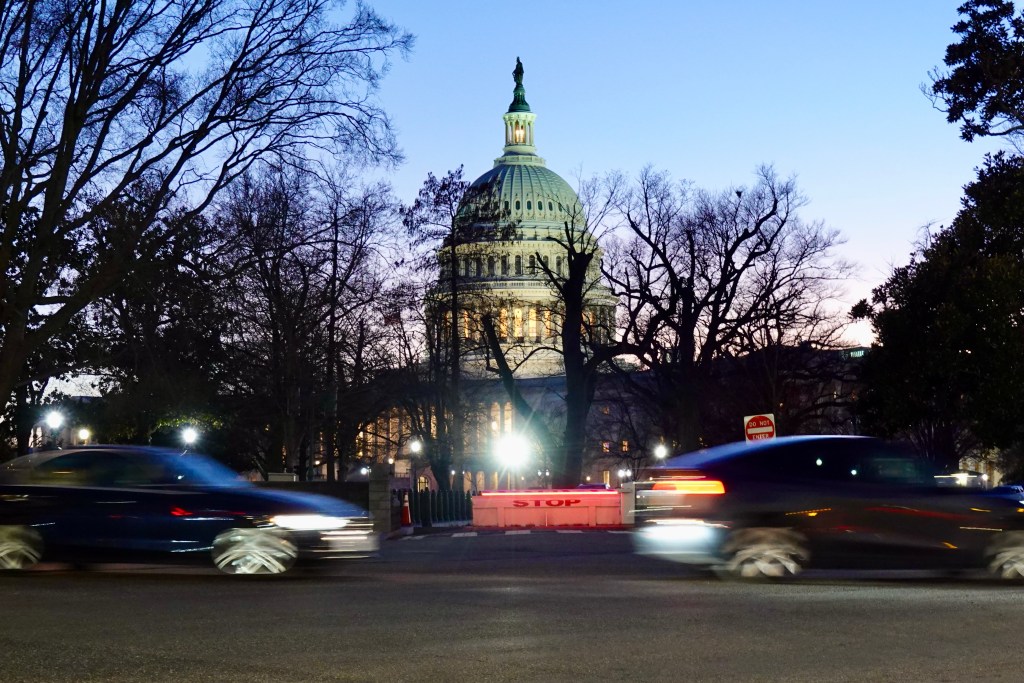
Already, Case has said he’s looking forward to securing funding for one of Hawaiʻi’s crown jewels, ʻIolani Palace, which has not been eligible for federal earmarks with Republicans at the helm.
Like voters everywhere, those in Hawaiʻi went to the polls with deep anxieties about life under Trump – from concerns about affordability and the cost of living to worries about self-dealing and corruption in government to the threat of immigration raids.
Prices aren’t just going to drop just because Democrats are back in control of Congress, said Carl Bonham, economics professor and executive director of the University of Hawaiʻi Economic Research Organization. Lawmakers still need to figure out a way to end the war in Iran and get rid of Trump’s tariffs before anyone in the islands can start to realize any relief in their pocketbooks.
“It’s not a silver bullet,” Bonham said. “You voted out the culprits, but the new people in power can’t just go in and change things.”
Many Democrats want to use their new majorities in Congress to launch oversight investigations of Trump’s actions, including accusations of self-dealing.
While oversight is important, U.S. Rep. Jill Tokuda said Democrats need to move with urgency to address Americans’ economic woes. Among the first moves, she said, should be to suspend the federal gas tax even if that means moving a discharge petition before Democrats officially retake the majority in January.
“It’s time for us to get shit done,” Tokuda said. “Don’t wait another day. The next day may not be better than the today that we have.”
Who Does No. 2 Work For?
The new majority bodes well for Schatz, who’s currently in line to become the majority whip, which would make him the second highest-ranking Democrat in the Senate behind Chuck Schumer. (That of course presumes Schumer holds on as majority leader.)
Hawaiʻi’s senior senator watched the results roll in from his home in Washington, D.C., and pretty quickly realized that voters are looking to Democrats to ease some of the pain they’ve been feeling whether at the gas pump or after losing their healthcare — or seeing its costs skyrocket.
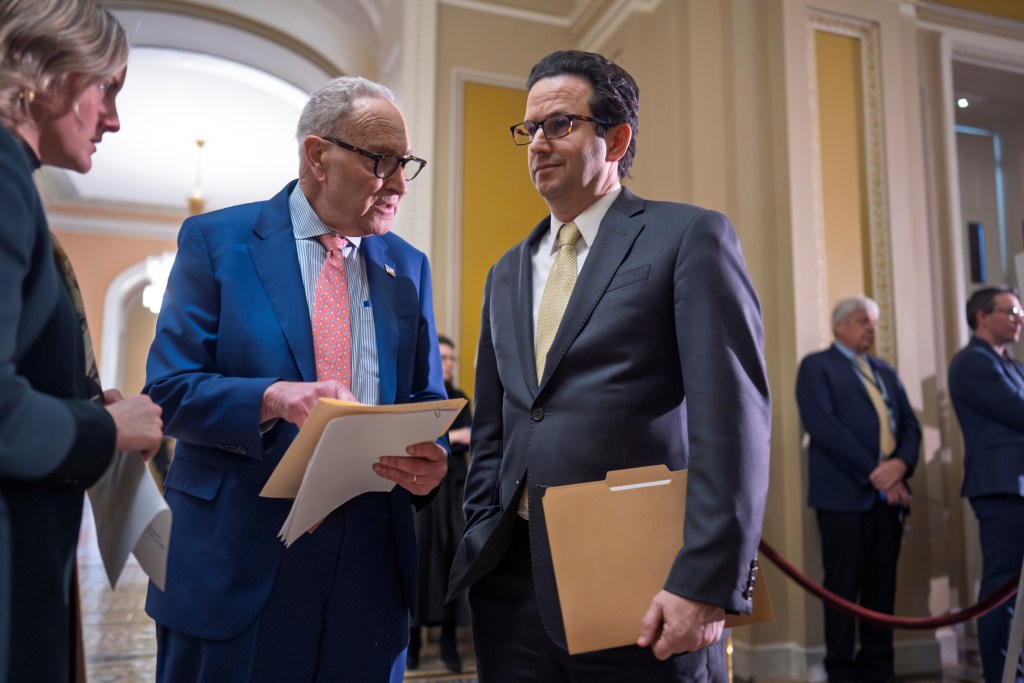
He said the party’s top priorities should be ending the conflict in Iran and restoring Republican cuts to food stamps and Medicaid. Democrats will have to balance that policy work, he said, with the need for accountability and oversight of the administration.
“We don’t feel cocky about this,” Schatz said. “We don’t feel like this is some permanent realignment of American politics. This was a flat-out rejection of Trump, and now people are going to give our party a chance.”
“Democrats should be happy, should be proud, should be thankful,” he added. ”But we should also be humble about what this means. It’s not that people love us. It’s that people have decisively decided to give us a chance on the national scene, and now it is our job to be worthy of that trust.”
Schatz described his bid for majority whip as a continuation of his work building relationships in Washington so that he can better represent the islands. At just 54, he has a long career ahead of him assuming he continues to win reelection in a state where so far he has drawn little competition and courted almost no controversy. One day he could find himself first in line to replace Schumer, especially if Schatz sticks to his pledge not to run for president.
“I try to make sure that I understand politics as building alliances that help Hawaiʻi,” Schatz said. “So obviously if I’m in the room where decisions are being made a little more frequently that benefits Hawaiʻi and that’s the way I try to think about it.”
Dealing With Trump’s Executive Power
Case warned it would be a mistake to assume that just because Democrats have regained some power it will mean the “sky is rosy again.”
A Democratic majority might make his work easier in terms of earmarking funds for Hawaiʻi, he said, but it doesn’t erase the Trump administration’s policies or immediately reverse Republican cuts to federal food assistance programs and healthcare.
Democrats are already preparing a robust oversight agenda that will include scrutiny of Trump’s tariffs and his family’s financial dealings, which have resulted in billions of dollars in additional income for the president since returning to office. Case said that means residents should be prepared for a contentious two years.

“It’s going to be very ugly, very angry, very divided, which it already is,” Case said. “But since Democrats will have the bully pulpit, they will be amplifying that voice a lot more.”
But Democrats will be limited in what they can do.
A lot of the chaos caused during Trump’s second term was the result of executive action rather than something Congress did, whether it was unleashing ICE agents into communities or targeting university grants, so much of what comes next, Bonham said, will depend on whether Democrats can use what leverage they have over the purse strings to get Republicans on their side and negotiate with the president.
One thing is for sure – the delegation won’t have to spend as much political capital when it comes to protecting places such as the East-West Center or “dancing around DEI.” While the Trump administration can continue to target programs that promote diversity, equity and inclusion, Case said it will be a harder sell to a Democratic majority.
Regardless, Trump will remain an obstacle as will the Senate’s filibuster rules, which still require a 60-vote majority to move major legislation.
Trump has already said he’s open to working with Democrats, but whether he follows through is another matter. The president is unpredictable, said Colin Moore, a political scientist at the University of Hawaiʻi. While he might be constrained, he may not be undeterred.
“The president still has awesome powers and can move very quickly,” Moore said. “Congress, in many cases, can only react.”
Making Progress On A Cleaner Planet
Local environmentalists will be watching closely to see whether Tuesday’s blue wave might also jolt Hawaiʻi’s fight against climate change after two years of assault on those efforts.
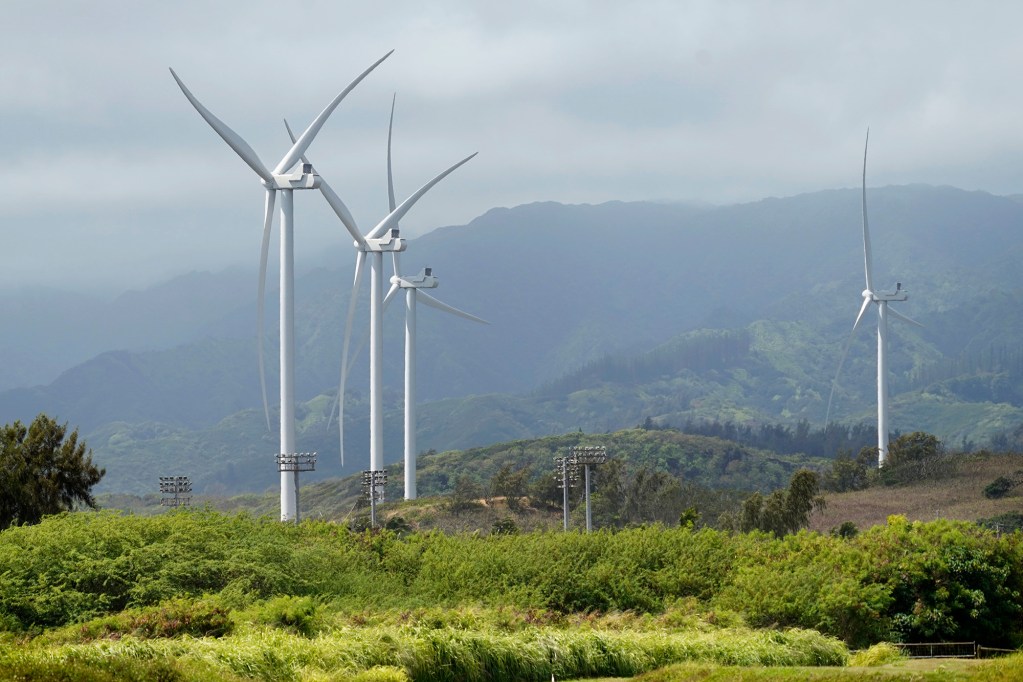
The island state’s ambitious goals to fully ditch oil, gas and other fossil fuels — replacing them with local sources of renewable clean energy by 2045 — are in alignment with a mandate on Democrats to bring down costs, they say, particularly in the form of cheaper utility bills.
But Trump has used much of his second White House term to stymie that clean energy transition in Hawaiʻi and other states. The so-called “Big Beautiful Bill” he signed into law in 2025 phases out key federal tax credits that have helped erect both utility-scale and home rooftop solar systems across the country.
Attorneys with the environmental legal advocacy nonprofit EarthJustice hope the incoming Democratic-controlled Congress will swiftly pass legislation to restore the tax credits – and dare Trump to veto it as energy costs linked to oil and gas continue to climb.
“If we can get back on script focusing on clean energy, led by now the federal government and Congress, where that leadership totally evaporated in the first two years of the Trump administration that would be a huge swing back,” Honolulu-based Earthjustice attorney Isaac Moriwake said. “That would be felt all the way down to Hawaii as well.
In Hawaiʻi, the state under Gov. Josh Green created a task force last year to make sure the dozen or so utility projects already in the pipeline stayed on schedule and got the tax credits needed to finance them before they expired. Still, Moriwake said, others that had been planned were cancelled after the tax credit was killed.
“If we can get back on script focusing on clean energy… that would be a huge swing back.”
Isaac Moriwake, a Honolulu-based attorney for Earthjustice
Further, many of the federal dollars used for climate research in the islands have dried up under Trump’s second term, forcing researchers at the University of Hawaiʻi and other institutions to seek alternative grants and funding to keep their research afloat. Some of the funding lost under Trump 2.0 helped maintain the islands’ specialized network of weather monitoring stations, bolstering local climate resiliency.
It remains to be seen whether the Hawaiʻi delegation’s new clout in Congress will restore those dollars.