The Sunshine Blog: How Low Can We Go?
Short takes, outtakes, our takes and other stuff you should know about public information, government accountability and ethical leadership in Hawai‘i.
November 8, 2026 · 9 min read

About the Author

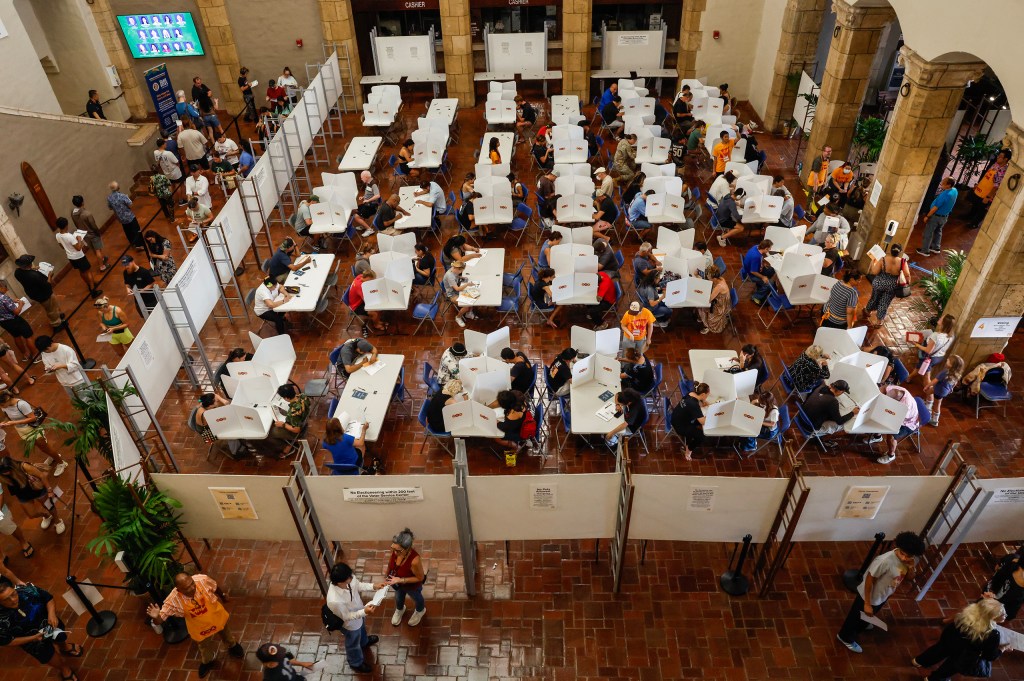
Numbers game: There may be a few voters out there still trying to cure their signatures with state and county officials, but this year’s general election results are pretty much official and the news is not good when it comes to participation.
Voter turnout statewide in Tuesday’s general election was at its lowest point since 1959, with a total turnout of 45.8%. Vote by mail accounted for 43.8% and only 2.1% of voters cast their ballots in person on Election Day.
On the one hand, The Blog was happy that the lack of voters allowed the polls to close at a reasonable time and elections officials to announce results relatively early. We had plenty of cold pizza left over for staff to scarf down the next day.
Still, only 391,251 voters (out of 853,399 registered statewide) participated in this year’s election, which saw most incumbent legislators and council members returned to office. The final total may change slightly after the official certification of results.

The curing deadline to correct any signatures on ballot envelopes is Tuesday at 4:30 p.m., while the deadline to file any election objections is 4:30 p.m. Nov. 23.
Despite the low turnout, truth be told, we’re not that far behind the nation as a whole, according to an analysis by the Washington Post. The paper touts this year’s 49% national turnout as “historic” and the second highest in more than a century, just behind the 2018 midterms.
Yet Hawaiʻi does continue to be at the bottom, something we’ve scratched our collective heads about for years.
Here’s a breakdown of turnout in the past 20 years as well as historical trends back to statehood in 1959:
Help wanted, sports fans: The Honolulu Police Department is launching a new push to attract recruits to hundreds of officer vacancies that have proven hard to fill over the past few years.
Now, armed with some interesting demographic data, the department is trying a new approach. Deputy Chief Parker Bodie tells The Blog that a couple years ago police officials studied Honolulu recruits who were having good success as sworn police officers. One thing in common was they generally had been athletes in high school or college.
The new campaign targets athletes through a series of TV spots that should begin airing later this month on Hawaii News Now’s broadcasts of University of Hawaiʻi sports events. The campaign, called “Accept the Challenge,” has already debuted with a digital banner while fully produced commercials are being finalized.
The 30-second commercials — 100 of them a month for the next year — are scheduled to air during any UH games being broadcast during Mountain West conference games. That includes football, basketball and other sports as well as some lifestyle programs, he says.
HPD is hoping to attract local candidates for sure, but is also targeting some mainland markets with the commercials including New Mexico, Texas, the San Francisco Bay Area (coincidentally new Chief David Lazar’s recent stomping grounds?), Reno and, of course, the Ninth Island, Las Vegas.
The cost: $150,000.
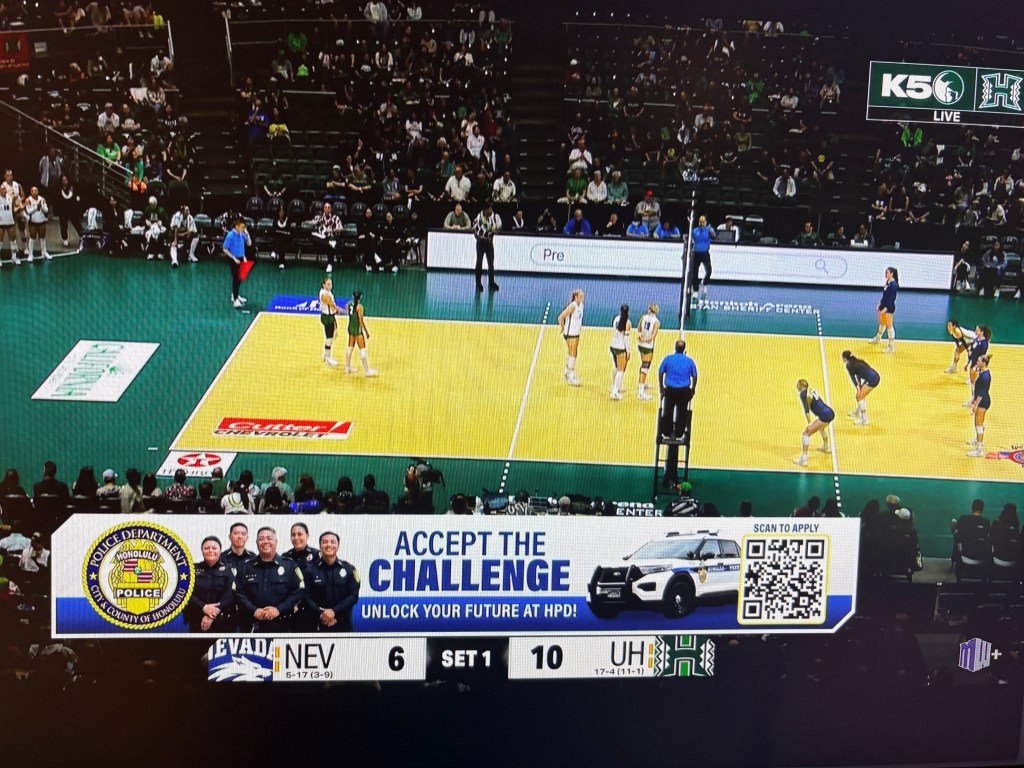
Bodie says the department still has at least 250 to 300 officer positions to fill. The official vacancy rate is about 450 but he says that doesn’t account for officers who are already in training, most of whom he is confident will make it onto the force as rookies in the not too distant future.
He noted that HPD started its biggest academy in several years in July with 66 officers and brought in another 62 at the end of last month. That class, scheduled to graduate in May, includes 16 women, a record number. Since taking over the department, Lazar joined the nationwide 30×30 Pledge, an initiative focused on increasing the ranks of female officers.
HPD also announced last week that is again in the market for a communications director. No official word on what happened to Claudette Springer, who was hired with much fanfare in July 2025 as Mayor Rick Blagiardi and his comms people made a valiant push to beef up HPD’s longstanding woeful (as in basically non-existent) public and media relations efforts. With help from the mayor’s crew, HPD brought on half a dozen new public information officers who have definitely increased the flow of information coming out of the department. (The Blog thinks it must be working because we haven’t heard a peep about lack of scanners from the news media in more than a year.)
Maybe there’s a former UH volleyball star out there as their future spokesperson.
Money trackers: One of the big takeaways from this year’s election season is the millions of dollars that rolled through candidates, campaigns and super PACs as they fought to win voter support. In recent years, Hawaiʻi has made that flow of campaign cash pretty easy to follow with a data tracking system that has evolved and improved. Now we can scrape the data off the state site with the click of a mouse, download it into our own laptops and sort it every which way.
But there was a time — 1994 to be exact — when all campaign reports were paper and had to be hand-carried to the Hawaiʻi Campaign Spending Commission offices and dropped off before the deadline.
In 1996, a private company began providing electronic filing services for some races — governor, lieutenant governor and mayor. In 1997, council races were added to the privately produced electronic system. State IT officials finally took over the database in 2007. Senate and House candidates were the last to go in (are we surprised?) in 2008.
Ah, for the good old days. Reporters used to have to stake out the state office and wait for the filings to be dropped off. Often candidates themselves did the dropping and some politicking at the same time. The press was eager for the numbers, usually scrambling on tight deadlines to get late-afternoon filings and interviews before the nightly newscast or print deadline.
“The media would all be in my office waiting for the reports to come in,” longtime former campaign spending official Tony Boldomero told The Blog, waxing nostalgic. “They’d walk in the door and boom — there was Daryl Huff, there was Keoki Kerr.” (Two of Hawaiʻi’s most well-known political reporters, for those who don’t recognize the names.)
In 2012, a local computer whiz, Jared Kuroiwa, famously built the first searchable database at home on his own time and opened it up to the public. Until then you needed to review dozens if not hundreds of individual filings to find out, say, who a candidate’s biggest donors had been over the last few elections or other trends. Kuroiwa’s small effort was a huge help for those who knew about it.
But it wasn’t until 2013 that the state came up with its own searchable system (something that had long been the norm in other states) with data going back to 2006. That made it somewhat easier for the public — and the press — to check up on who was giving and who was getting when it came to the river of cash that has always been the backbone of politics.
Since then, records retention rules have kicked in and data is only kept in the publicly accessible database for 10 years — right now that’s back to 2015. Prior years’ reports are still … somewhere. But annoyingly harder to access.
Lost in the records retention shuffle are some of the most consequential elections, including the 2012 race for Honolulu mayor that saw a huge influx in outside money tied to the Pacific Resource Partnership flood into the race.
Now the Campaign Spending Commission is about to launch a new system that appears to make it even easier for candidates to file reports, the commission to track them and the public to review the information.
The commission got a detailed look at the system at its meeting last month from MapLight, a national technology company and specialist in lobbying and campaign reporting that’s developing the system.
The project is on track to go live early next year and will be in use for the 2028 election cycle, according to commission staff.
For candidates and PACs, the system has been streamlined for filing and even includes automatic reminders about upcoming deadlines. CSC staff will also have a much easier time tracking contributions and expenditures and enforcing violations. The public will have advanced search options to drill down even deeper while following the money.
The Blog is eagerly awaiting its launch, since the 2028 election season is already heating up. But really the big question should be: With a new and improved and seemingly easy filing and tracking system, isn’t it time to require more frequent reports as well?
Currently, campaigns file reports roughly every six months until it gets closer to the primary and the general. Even then, the public’s ability to see who is supporting or opposing candidates or ballot measures lags well behind when the donations or key expenditures are made. And with mail-in voting many ballots are already marked and returned by the time the details become public.
With the new system, are regular monthly reports throughout the entire election cycle too much to ask? Here’s hoping that’s something the commission pitches to the Legislature.
 Sign up for our FREE morning newsletter and face each day more informed.

Local reporting when you need it most
Support timely, accurate, independent journalism.
Honolulu Civil Beat is a nonprofit organization, and your donation helps us produce local reporting that serves all of Hawaii.
ContributeAbout the Author