

Todd Simmons: Making Sense Of Senselessness In Orlando
Having grown up near Orlando and worked for the city’s LGBT newspaper, this writer struggles to understand Sunday’s heartless attack.
Sipping my first cup of coffee in the dark and checking my phone early Sunday — 5 a.m., I’m an early riser — I was surprised to see a long list of Orlando friends chillingly marked “safe” in a Facebook Safety Check. My heart sank as I saw the words “shooting” and “terrorist” and realized something horrible must be unfolding in my home state.
My fingers couldn’t move quickly enough to get to the shocking news that, 48 hours later, we now know too well: A terrorist shooter; 49 murdered and 53 injured at the LGBT nightclub Pulse in Orlando; the worst mass shooting in U.S. history.
As a former editor of Watermark, Orlando’s LGBT newspaper, I know a lot of people in the area. It took a few feverish hours of phone calls, texts, e-mails and Facebook posts to confirm the safety of my friends, including that of my cousin: He and his partner live just three blocks from Pulse. They were up most of Saturday night and Sunday morning, the skies above their home thick with emergency response helicopters and the cries of ambulance and squad-car sirens.
Thankfully, they hadn’t been in the club and were OK — rattled, but OK. But as of midday Sunday, they were still trying to get in touch with a couple of friends who hadn’t been heard from.

As I watched and read coverage throughout the day, I wondered, time and again: How could this happen in a small Orlando gay club? Why would an armed anti-gay zealot with a history of violence drive two hours from his Port St. Lucie home to murder people he didn’t know? And what does all of this mean for LGBT people and those who love them?
The Enemy Isn’t Religion, It’s Homophobia
I was born in a small rural town a short drive from Orlando. The area, then, was more scrub palms and orange trees than tourist destination. The first theme park hadn’t even been built. Years later, as a college student at the University of Florida, taking my first, tentative steps out of the closet, I loved making the occasional trip to Orlando — by then, a big city with a diverse community of gay hotspots, nightclubs and neighborhoods.
And years after that, I was there for the early incarnations of Gay Days, the mammoth annual celebration for LGBT folk at area theme parks and nightspots.
Gay Days, in fact, happened the week prior to Omar Mateen’s rampage. If there’s one thing to be thankful for in this hellish attack, it’s that it didn’t take place the previous weekend, when Pulse was one of eight local LGBT clubs being promoted to the 150,000 Gay Days attendees from across the country and around the world.
If there’s one thing to be thankful for in this hellish attack, it’s that it didn’t take place the previous weekend, when Pulse was one of eight local LGBT clubs being promoted to the 150,000 Gay Days attendees from across the country and around the world.
And yet, it did happen. A radicalized bigot who swore allegiance to Islamic State group leaders prior to the attack, the U.S.-born Mateen reportedly was incensed at seeing two men kissing in public recently in Miami. Mateen, who had been questioned multiple times by FBI agents over possible connections to terrorists and terror groups, and who previously had been placed on the agency’s watch list, may have first scouted Disney World as a possible target before settling on Pulse.
One of the dead was Kimberly Morris, 37, who had moved to Orlando from Hawaii only two months ago to care for relatives. She was already a much-loved bouncer at Pulse, and friends here remember her fondly.
Authorities both here and abroad now say they’re most worried about copycat incidents. Police in Los Angeles arrested a heavily armed man in Santa Monica on Sunday who also had chemicals used to make explosives; he said he was in town for the Los Angeles Pride event. The man — who was on probation in his home state of Indiana, which he was forbidden from leaving — didn’t say he planned to do harm at the event; but his arrest and the Pulse shootings show just how vulnerable the LGBT community is to violence and “lone wolf” attacks.
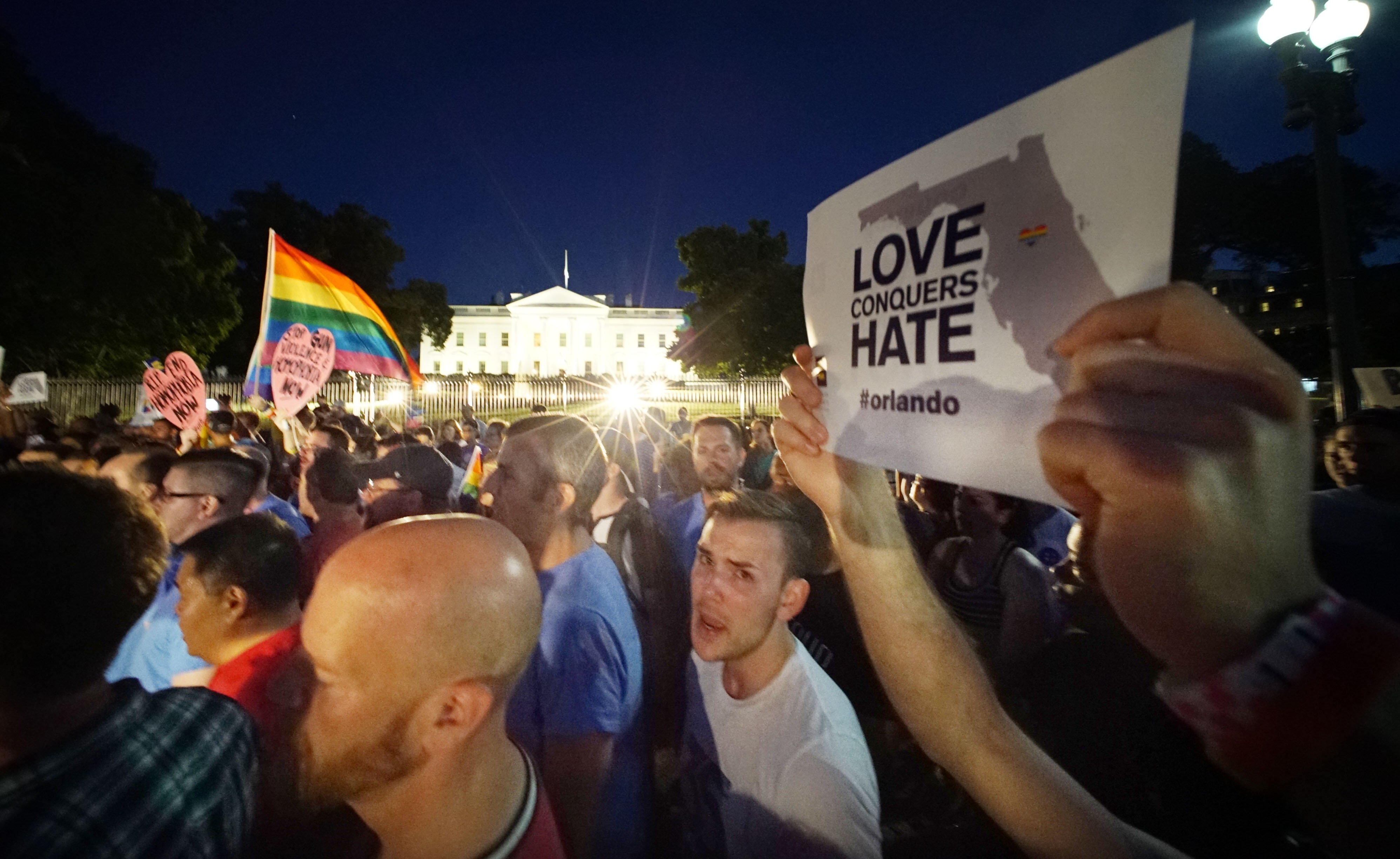
Such vulnerability is even more pronounced because of Congress’ continuing resistance to legislation to make it illegal for suspected terrorists on the FBI watch list and individuals on the Federal Transportation Administration’s no-fly list to purchase handguns. Despite Mateen previously having been on the watch list for nearly a year, he had no trouble buying his semi-automatic weapon, getting a concealed weapons permit from Florida authorities or being certified as a security officer.
Many are rushing to use Mateen’s actions to condemn Muslims and Islam. It’s easy to see their point. Some Islamic countries officially punish homosexuality with the death penalty; the internet is awash with gruesome videos of Middle Eastern gay men being stoned to death and plunging to their deaths after being thrown off tall buildings. And Islam’s most sacred text, the Quran, condemns homosexuality in multiple passages, many argue.
But fundamentalist Protestants and Catholics in this country often similarly condemn homosexuality, and interpret the Bible as justification for doing so. Nearly 20 years ago, terrorist Eric Robert Rudolph, a Christian Identity adherent, bombed a gay nightclub in Atlanta as part of his religion-inspired fight against the “homosexual agenda.” The bombing — one of four Rudolph committed, including one at Atlanta’s Olympic Park — injured five.
The enemy in these actions and others is not religion or people of faith. It is homophobia. It is those who use religion to justify violence and hatred and to pit neighbor against neighbor. And in the case of the United States, it is a government and gun lobby that will not allow to pass even the most common-sense measures to keep guns out of the hands of dangerous people.
We Will Make Good Come From This
Florida has evolved for the better since I last lived there 13 years ago. A state that steadfastly refused to pass basic anti-discrimination protections for gays, lesbians and transgender people, and that until just a few years ago outlawed gays or lesbians serving as adoptive parents, opened its collective heart for the victims of the Pulse attacks, decrying violence and discrimination against LGBT people.
Led by my good friend, Executive Director Nadine Smith, the civil rights and social justice organization Equality Florida raised $2.6 million from nearly 60,000 donors by Monday afternoon in relief funds. All proceeds from the group’s GoFundMe page will go to directly to victims and surviving families.
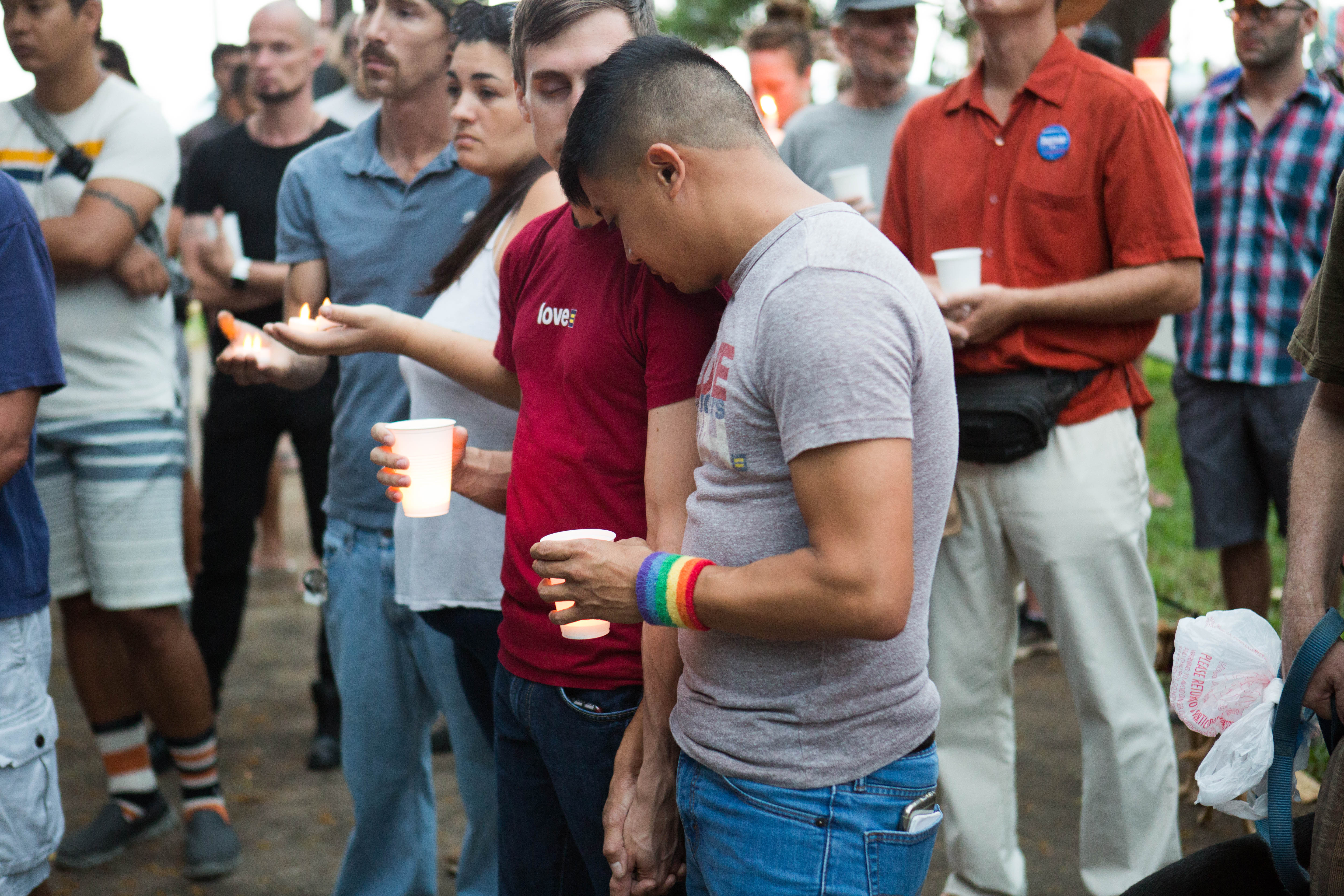
Equality Florida held a vigil Monday evening at Orlando’s Phillips Performing Arts Center that drew thousands of mourners. Smith delivered emotionally charged remarks, citing calls that have poured in from around the country expressing love and solidarity.
In the end, it is efforts like these, to build community and embrace our humanity, that will be our salvation — not building big border walls, excluding others from entering our country or arming ourselves to the teeth.
And not avoiding places that have traditionally been ports of refuge, particularly for the LGBT community. In times good and bad, the venerable gay bar has always been a place where we could go to relax and enjoy fellowship with others who personally understand the challenges of being gay in a country that has yet to make gays, lesbians, bisexuals and trans people first-class citizens.
That idea must not perish over fears of other radicalized killers taking aim at our friends, our freedom and our selves.
In speaking at Monday night’s rally, Smith said she’s been asked repeatedly whether any good can come from this. She had a ready answer.
“Nothing good at all will come from this. We will make good come from this,” she said. “It doesn’t happen on its own.”

