Reader Rep: Dig For The Best Sources To Do Better Journalism
Turning to a small cast of experts as commentators may be easier for reporters, but easier isn’t better.
The first rule for a journalist in identifying a source is to spell the person’s name correctly.
The second rule can be more complicated. It requires identifying that person’s expertise and giving him or her a short title, as a way to provide context and explain why audience members should care what that person has to say about the subject.
Reader James H. Wright noticed a variety of morphing titles and wide claims of expertise for recurring spokespeople in our community. One such authority figure is Colin Moore, an associate professor in the University of Hawaii’s Department of Political Science. Moore has become a go-to source for local media on all sorts of political issues, even though the scope of his scholarly expertise has some bounds.
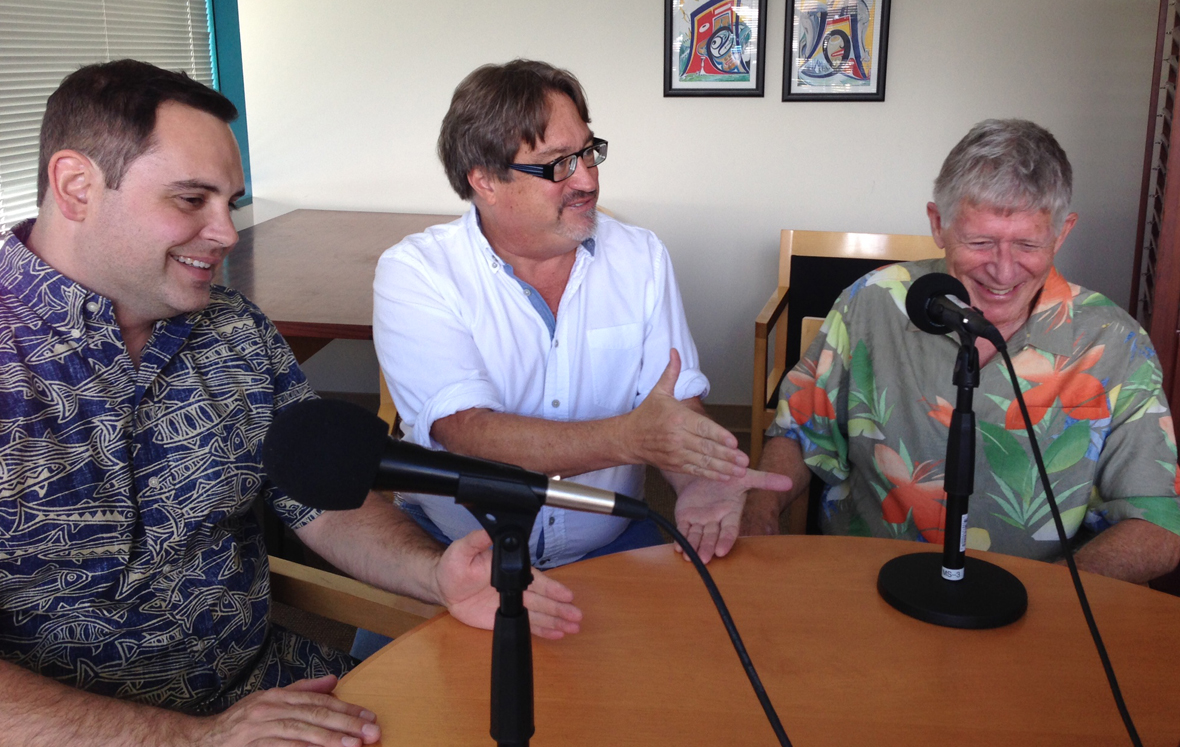
Smart people like Moore can talk about a lot of subjects and raise interesting points about almost anything. Other people, though, might have better expertise on specific topics but don’t get the opportunity to speak. That’s primarily because it’s easier for a journalist to call Moore again, and quickly have him respond to a prompt, than to seek out and develop a new source.
This lack of diversity in sourcing may be easier for journalists but weakens overall public discourse, because fewer voices get heard.
In most cases, the better the quality of the source, the better the quality of the information. And that, ultimately, makes for better journalism. Moore might be brilliant on some topics, such as the focus of his upcoming book on “American Imperialism and the State, 1893-1921.” He also probably knows more about local politics than most people, just because he’s interested in it and follows it.
But he also might know less than others about, say, the history of political response to homelessness in Hawaii or some other specific strands of inquiry.
Media organizations would serve us better by actively seeking out new and specialized voices and more clearly identifying the specific scope of a source’s knowledge on a particular topic. Moore, for example, might know a lot, but he can’t possibly know everything. The way to fuzz this up, when reporters apply him to any random political question, is to explain his punditry as the voice of a “University of Hawaii political science professor,” as has been done in Civil Beat, or “Director of the University of Hawaii’s Public Policy Center,” which is the way the Honolulu Star-Advertiser has described him.
Sloppy Labels Can Mislead
Sometimes, as Civil Beat columnist Ian Lind recently reported, those identified as “professors” might not even be the most reliable of sources. Media organizations (such as Hawaii News Now) sloppily gloss over wide variations between good and bad professors with the use of broad labels.
When you gain awareness about this labeling practice, the quality of those labels gains immense importance. Many times, with this label literacy, sources will appear under-labeled (or mislabeled) and stretched outside of their comfort zones for the sake of media expedience. On this topic, two other regular University of Hawaii sources come to mind: Kenneth Lawson and Aaron Hunger.
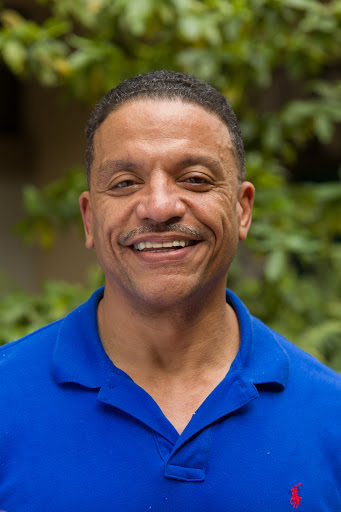
Lawson has a fascinating backstory of how he rose to prominence as a lawyer in Ohio, then lost his wealth and law license because of drug-related crimes, then salvaged his life in Hawaii, through service to the William S. Richardson School of Law, an up-and-down-and-up-again story that he acknowledges in his bio on the school’s web site.
Despite his personal redemption, his disbarment means he cannot practice law here. He does have his juris doctorate degree, though, making him eligible to teach. Students seem to enjoy his classes, so much that they voted for him to be their commencement speaker in 2014. He is knowledgeable about criminal law practices. He also is comfortable in front of a news camera.
Yet his official title at University of Hawaii is “faculty specialist,” meaning he is not considered a “professor.” And (as would be true of any lawyer) his expertise in law, which has many diverse and complicated strains, is limited. His expertise, like that of Moore, or any other person, is limited in the sense that he can speak authoritatively about some subjects but only generally about other subjects.
Easy Sound Bites
Local television stations, such as Hawaii News Now and KHON, often disregard these kinds of nuances for the sake of easy sound bites on all sorts of topics, applying Lawson to a wide range of stories, from a murder case to a lawsuit against the Ethics Commission, and labeling him as a “professor,” which implies a certain rank at the university as well as extensive research and scholarship responsibilities not implicit in other types of rankings and job responsibilities.
Lawson said that he explicitly describes himself as a faculty specialist (or as a member of the faculty) to media members, but local television reporters, in particular, label him in other ways. This mislabeling reached the point where a viewer complaint was registered with the law school’s dean, Aviam Soifer, who then began sending out clarification emails to media sources about using faculty members’ labels correctly.
Lawson said, “No matter how many times I tell them, I can’t control how they quote me, or who they say I am.”
Soifer, for example, sent one of those emails to Mark Platte, Hawaii News Now’s news director, in March, but HNN still used the “professor” label for Lawson on its most recent story that included his comments.
Probably even more confusing for HNN audiences has been the morphing labeling of UH Manoa doctoral student Aaron Hunger, who is writing a dissertation about the Hawaii criminal justice system for the Department of Political Science. In his student role, Hunger began lobbying local government agencies about transportation and accessibility issues, but his research on criminal justice caught the attention of local media, including HNN.
While some media sources, such as Civil Beat, properly labeled Hunger as a student, HNN tapped him 15 times during the past two years to talk about crime-related issues and described his expertise in various ways, including as a “criminal justice instructor at UH Manoa.” However, UH Manoa doesn’t have a criminal justice program or offer criminal justice classes.
Those with master’s degrees, including graduate students, can teach university classes, and they often do. Hunger has taught political science classes at UH Manoa and a couple of courses at UH’s West Oahu campus that, he said, include criminal justice content (but are listed as interdisciplinary courses mixing public administration, business and philosophy).
He also makes ends meet by teaching criminal justice classes at a small non-traditional school (Remington College). Like Moore and Lawson, he is comfortable in front of a camera and good at creating sound bites about a wide range of topics.
But he is not a “law enforcement instructor,” “a University of Hawaii criminology instructor” or a lawyer. (In an “EXCLUSIVE” story, Lynn Kawano of HNN, asked him in February about the strengths of the prosecutor’s case against a Honolulu police sergeant suspected of driving drunk and given a “courtesy” ride home by police. He determined it was “very weak.”)
“I’m always crossing my fingers about how they will make me look on TV. I feel a little helpless when they put the stuff out there.” — Aaron Hunger, doctoral student, UH Manoa
Hunger seems to be an earnest and engaged citizen, trying to make Honolulu a better place. He also appears to have been cast in the part of the “convenient foil” for any story about the local police department.
In one case, for example, HNN reporter Kawano brought Hunger her story notes and asked him to respond to its allegations, with only those notes as his guide, as a way to heighten the emotions of her broadcast piece, through such soundbites as: “What’s laid on the table against the chief is huge.” Hunger, also called a “criminology expert” in the story, commented as well on jurisdiction issues and potential conflicts of interests.
Hunger said every time he’s interviewed by HNN and other media sources, he tells them his credentials, including that he is an instructor (not a “professor”) and doctoral student researcher. He said he made a business card that lists those two credentials, plus his affiliation with political science and his secondary interest, women’s studies. The other side of the card notes that he is an instructor in the department of criminal justice at Remington.
When he watches his clips on television news, though, he acknowledges being amazed at the various ways he is described.
“I think, ‘Wow! I have all of these great titles,’” he said. “Once we (sources) give them the information, we have very little power over the editorial things they do with it. I’m always crossing my fingers about how they will make me look on TV. I feel a little helpless when they put the stuff out there. … Each of (the reporters) put a different label on me and nobody seems to be watching that.”