Rail to Ala Moana: It’s Possible And Too Valuable To Pass Up
Stopping the rail route at Middle Street doesn’t make sense, the writer argues. Better to look at different funding options and build the full route.
Should Honolulu build a $7 billion dollar rail system that stops at Middle Street, has perhaps half the ridership originally planned for and is a drain to operate?
Lost riders include those from Leeward or Central Oahu who could get to downtown, Chinatown,or Ala Moana quicker by car or by bus rather than rail and then another bus at Middle Street. Airport tourists would hesitate to ride the rail to Middle Street, but might if it went to Ala Moana. Lost would be thousands of tourists and townies at Ala Moana who could travel west, visiting great gathering places along newly created rail stops.
A rail system to Ala Moana benefits all of Oahu and is part of a formal comprehensive planning process. The General and Community Plans for Oahu were developed over many years with extensive island-wide input. Of the eight community plans, only Ewa and Honolulu are designated as “development plans” with the goal to direct population growth there. The six remaining plans, covering the rest of Oahu, are “sustainable community plans” with the goal to sustain the existing character of the area.
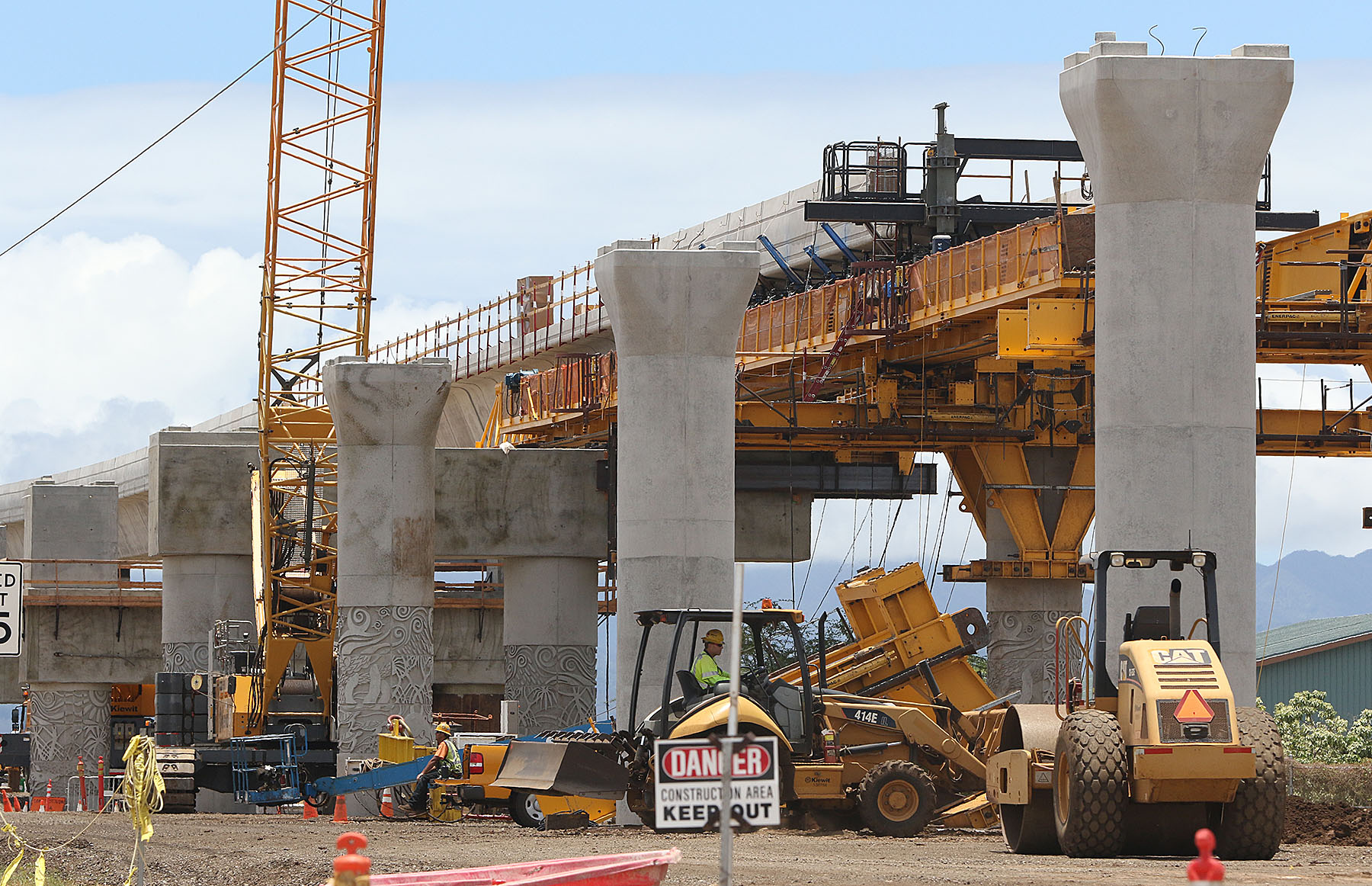
In this overall plan, everyone benefits. The special qualities of sensitive and cultural communities are maintained while areas designated for growth are connected. For example, in the Ewa Development Plan, the number of homes in the Ewa area are targeted to grow from 20,000 in 2000 to 56,000 in 2035, with much of the expansion along rail stops.
Communities realizing the great opportunity with a rail stop are creating vision plans that incorporate rail components to increase visitors, revitalize business, beautify the area and make great gathering places. Other U.S. cities have used these strategies to increase revenue and add jobs.
Transit Oriented Development is the new buzz word, with active planning by Oahu communities. In the TOD for Chinatown, rail and street improvements for Kekaulike Street feed into the nearby mall, and there are new transit and pedestrian areas, beautified streets and heritage and cultural walks. The Nuuanu Stream corridor is revitalized, and more business and community events are held. Similar TOD planning is occurring at other rail stops.
Imagine more tourists feeding in from Ala Moana or elsewhere, as great gathering places are created in Chinatown, Kakaako or Waipahu.
Three Funding Options
With the benefits of rail to Ala Moana identified, it is important to know there are funding sources. Here are three options that can work in combination. More options and combinations are possible.
First, with a viable plan for a fully functioning rail system as proposed (i.e., full ridership), additional federal funds are more likely and should be sought.
Second, the excise tax can be extended, while the burden is reduced. Residents are accustomed to the .5 percent charge, but with increased business revenues in the state, extending the excise to .4 percent for another few years and then .3 percent after that may suffice. The excise tax on Oahu is a good revenue source because tourists share the costs. Thus a stop at Ala Moana is appropriate because there will be increased visitor use.
Imagine more tourists feeding in from Ala Moana or elsewhere, as great gathering places are created in Chinatown, Kakaako or Waipahu.
It should be noted that according to recent news reporters, there have been five consecutive record-setting years of visitor arrivals. Visitor arrivals rose 4.2 percent and spending, 4.3 percent, for June 2016 as compared to June 2015.
Finally, consider an Optional, Overlay, Improvement and Transit Oriented Zone centered around each stop. In such a zone, the landowner/developer has the option for increased density. In return, a 2 to 3 percent tax is levied on initial sales and future resales of property they build. The exact percentages can be adjusted.
This creates a huge, continuous revenue stream that can pay, subsidize or plan for rail (construction, extensions, operations and debt), nearby related affordable housing, compatible infrastructure, more business and livable spaces, community grants for implementation and tax administration. This revenue source is advantageous because it is related to construction costs, and thus provides the rail system some inflation protection.
Furthermore, long after rail is paid for, sales of property within the zone continue to generate revenue to support needed TOD improvements and rail operations. While this zone does have a new tax, it is one the landowner/developer wants and chooses because of density incentives. Those who don’t want the tax do not have to pay it, but they will not get increased density if they rebuild.
Rail to Ala Moana is financially possible and can connect locals, tourists, leeward residents and townies in an invigorating master plan. The social, cultural, economic and transportation benefits are too valuable to pass up, especially with funding options that can lower the burden for all.
 GET IN-DEPTH
REPORTING ON HAWAII’S BIGGEST ISSUES
GET IN-DEPTH
REPORTING ON HAWAII’S BIGGEST ISSUES
Community Voices aims to encourage broad discussion on many topics of community interest. It’s kind of a cross between Letters to the Editor and op-eds. This is your space to talk about important issues or interesting people who are making a difference in our world. Column lengths should be no more than 800 words and we need a current photo of the author and a bio. We welcome video commentary and other multimedia formats. Send to news@civilbeat.org. The opinions and information expressed in Community Voices are solely those of the authors and not Civil Beat.