Trump’s Finger On The Button? No Thanks
The propensity of Republican presidents to wage war combined with the unpredictable and inexperienced Trump could add up to disaster.
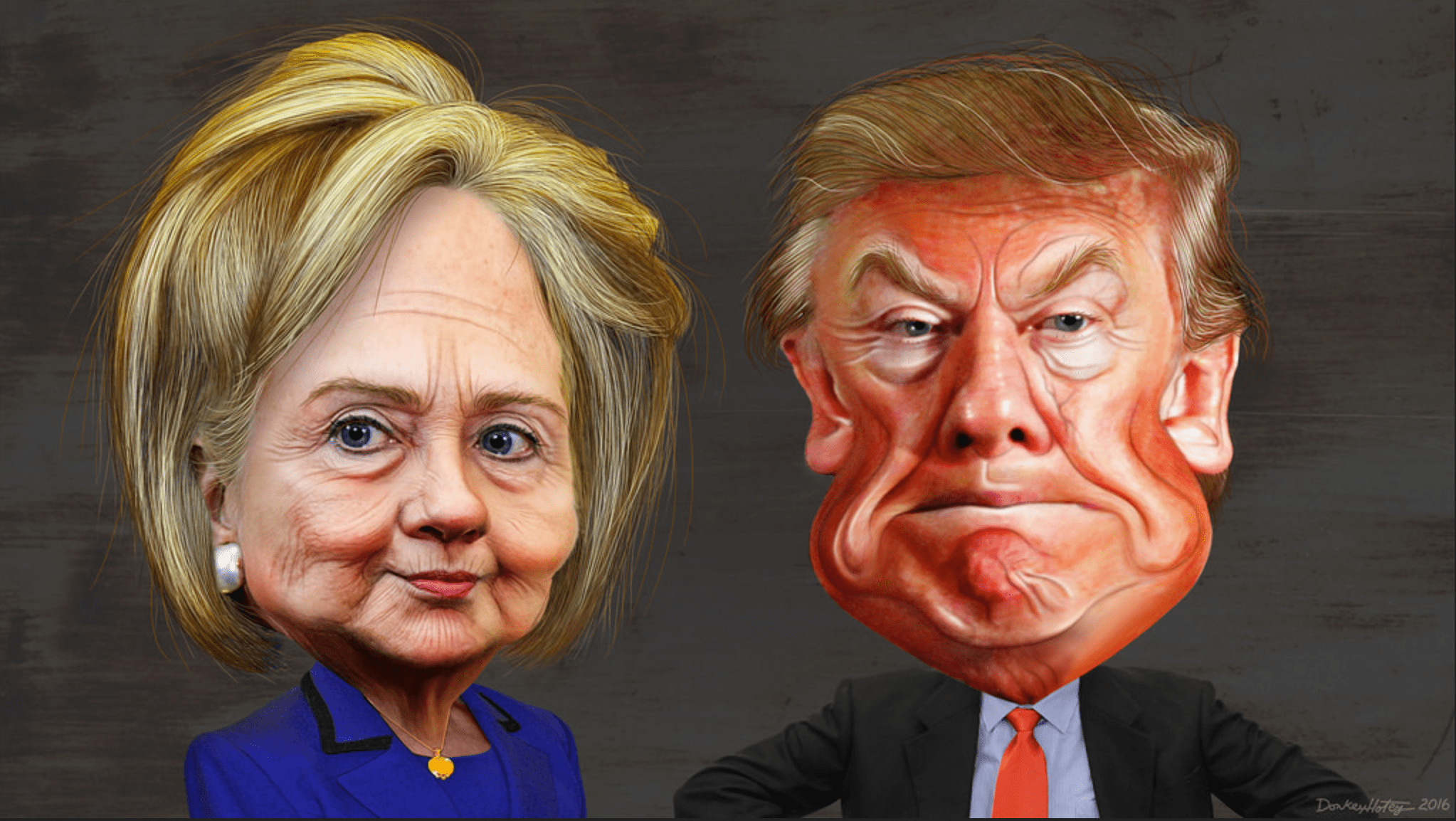
It’s déjà vu all over again. We’re hearing more and more from anti-establishment types that Hilary Clinton and Donald Trump are Tweedle Dee and Tweedle Dum, that it doesn’t make a real difference to the United States or the world which candidate wins in November. We’ve been here, before and this idea is very, very wrong.
We heard similar arguments back in 2000 when Ralph Nader ran as the Green Party candidate for president. I voted for Nader in 2000 because I agreed with (and still do now) the key planks of the Green Party platform.
But we know now that Nader was one reason — though certainly not the only one — that George Bush won the presidency, based on a very close outcome in Florida that ultimately required the Supreme Court to step in and stop the re-count.
In a 5-4 conservative majority decision, the court took action on what was a fundamentally political question. And they gave the presidency to a man who is widely considered now to have been one of our worst presidents of all time.
This isn’t a partisan conclusion: the survey linked to above included 238 presidential scholars. George W. Bush’s presidency included monumental mistakes and tragedies, including primarily the Iraq War that began in 2003 and led to the deaths of over 1 million Iraqis, and is still reverberating today with entities like ISIS arising directly from that war, as well as from previous U.S. foreign policy decisions in Pakistan and elsewhere in the 1980s and 90s.
President Obama has unfortunately reignited the Iraq war after bringing it to a close in 2011. In 2014, he began sending troops and air forces back into Iraq in an effort to stop ISIS from taking over the whole country. This is so far a very limited re-engagement when compared to the all-out invasion that Bush ordered in 2003: Only a few thousand ground troops are engaged in Iraq and Syria so far, compared to over 160,000 at the height of the war.
The 2003 Iraq War is the most egregious example of U.S. foreign policy mistakes in the last couple of generations — this generation’s Vietnam. The Vietnam War led to the deaths of 58,000 American soldiers and, depending on how you count, about 3 million Vietnamese. It was a clear defeat for the United States. The general consensus today is that that war was unnecessary, a war of choice that led not only to loss of stature on the world stage but also to massive death, suffering and destruction.
The history of U.S. wars over the last century, however, shows fairly clearly that the Republican Party can rightly claim the mantle of being the war party. It has almost always been the more belligerent of the two major parties.
Since our next president is going to be either Donald Trump or Hilary Clinton, this is not just an academic debate. Literally millions of lives may hang in the balance because Republicans are historically more likely to start wars than Democrats.
It’s not a matter of Tweedle Dee and Tweedle Dum in this election. There are real differences.
Wars, Regime Change: A Brief History
Stephen Kinzer’s books “Overthrow” and “Brothers” provide a great overview of U.S. unilateral wars and regime change operations from 1893 onward.
That year marked the first U.S. regime change operation, in Hawaii, in which a small group of American Hawaiians overthrew Queen Liliuokalani with the backing of the U.S. Marines but without the knowledge or consent of President Grover Cleveland. Cleveland actually worked to reverse the coup but wasn’t able to do so.
When President William McKinley succeeded him in 1897, McKinley pushed successfully for annexation of Hawaii. In 1898, Hawaii officially became part of the United States via passage of a congressional resolution that many still hotly contest today.
This was the first in a long line of U.S. regime change operations and unilateral wars, but there is an obvious pattern in looking at the 14 regime change operations that Kinzer focuses on in “Overthrow” — all but one were conducted by Republican presidents or, in the case of Hawaii, without any presidential involvement (at least until after the fact).
The major exception to this rule is the early engagement in Vietnam and later regime change operation, supported by Democrat John F. Kennedy, which led to President Ngo Dinh Diem’s death at the hand of his CIA-backed captors. All-out war ensued, waged by Kennedy’s successors Lyndon Johnson (Democrat) and Richard Nixon (Republican).
Here is a quick history of the major U.S. unilateral wars and regime change operations since 1893:
- 1893: White Hawaiians of American descent, with the help of the U.S. marines but without official U.S. support until after the fact, overthrew the Hawaiian monarchy. Democrat Cleveland made failed efforts to reverse the coup. Republican McKinley annexed Hawaii in 1898.
- 1898: Cuba, the Philippines and Puerto Rico are seized from Spanish control by Republican McKinley after the Spanish-American War.
- 1912: Under Republican Taft, the United States invaded Nicaragua and occupied the country until 1925.
-
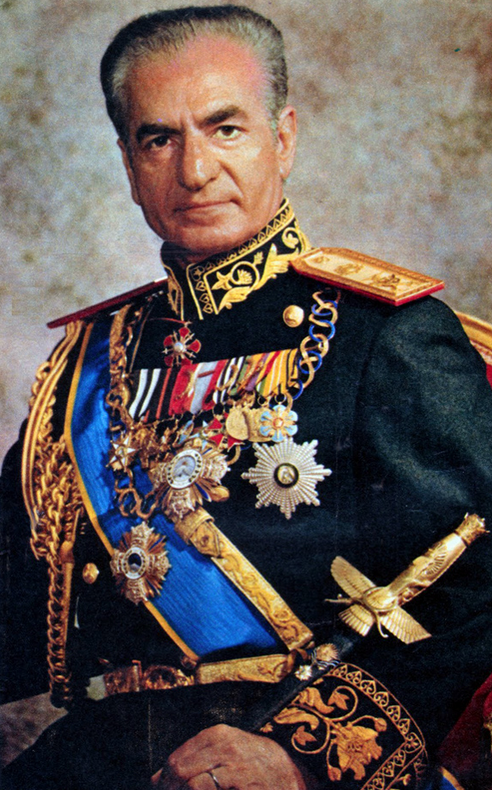
Shah Mohammad Reza Pahlavi of Iran Wikimedia Commons 1953: Under Republican Eisenhower, the United States and British agents planned and supported a coup in Iran that overthrew democratically-elected Mohammad Mossadegh and brought Shah Mohammad Reza Pahlavi to power for 26 years until the revolution that brought hard-line Islamists to power. This was the first action where the new CIA was actively involved, under the direction of John Foster Dulles. It began a decade of active U.S. regime change operations around the world, ostensibly in the name of fighting communism.
- 1954: Under Eisenhower (again), the United States invaded Guatemala, removed the government from power and installed the first in a line of U.S.-backed dictators.
- 1963: Kennedy initiated armed intervention in Vietnam in 1961 and this escalated over the next two years (about 16,000 U.S. troops were on the ground by the time that Kennedy was assassinated in Nov. 1963). In 1963, Kennedy supported a coup against Diem, and Diem is assassinated, despite Kennedy’s statements opposing an assassination. The war is continued and expanded under Johnson and Nixon.
- 1973: Nixon supported a coup against Salvador Allende, a democratically elected leader, in Chile, resulting in his death and the coming to power of right-wing dictator Augusto Pinochet, who ruled Chile with an iron fist for 17 years. The CIA actively supported Pinochet after he came to power.
- 1976: Republican President Gerald Ford backed a right-wing coup in Argentina, which led to major purges, disappearances, torture, executions and suppression of leftists and perceived enemies of the state, in what is known now in Argentina as the Dirty Wars. New information is only now coming to light showing the U.S. role in this horrific history.
- 1984: Republican Ronald Reagan invaded and toppled the Grenada government.
- 1989: Republican George H.W. Bush invaded Panama, toppling the government of dictator Manuel Noriega.
- 2001: U.S. forces under Republican George W. Bush invaded Afghanistan and toppled the Taliban, leading to the longest (still-running) U.S. war in history.
- 2003: Bush invaded Iraq and killed dictator Saddam Hussein, leading to the deaths of over 1 million Iraqis. The country is still reeling from the repercussions of this invasion, and conflict is ongoing on many fronts.
- 2011: Under Democrat Barrack Obama, but led by British and French forces under a United Nations mandate to protect Libyan civilians, the United States invaded Libya by air and, going far beyond the authority of the U.N.’s mandate, toppled the Moammar Gaddafi regime. In chaos, this country is now considered a major recruiting ground for the Islamic State.
This, of course, is a very brief list of U.S. military engagement around the world. The full list of historical U.S. troop deployments in other countries numbers in the hundreds.
Trump: Likely More Militaristic
We can’t know, of course, how Clinton or Trump will act on foreign policy because we can’t know the future. The best we can do is to make educated speculations. Even the candidates don’t know because no one can know what events will unfold in the world. Foreign policy is sometimes more a matter of reacting to world events rather than making them happen.
Given this history and the composition and unfortunate longevity of the military-industrial complex in American policy making, it seems clear that Trump would be the more militaristic president rather than Clinton. More war-like tendencies are built into the Republican Party’s foreign policy establishment and voter base than is the case with the Democratic Party.
This conclusion is certainly complicated by the fact that Clinton has a rather hawkish record on foreign policy, as well as by the fairly aggressive foreign policy record under Obama, with which she is strongly associated, since she was secretary of state for the first four years of Obama’s presidency. My biggest fear is that she will conduct an even more aggressive foreign policy than Obama has thus far, particularly with the international drone program that is already actively assassinating suspected enemies in a number of countries around the world, contrary to international law.
When it comes to who would be the more responsible leader on foreign policy, it is an easy choice: Even with Clinton’s aggressive foreign policy record, we have to choose her.
Clinton looks to Gen. Jack Keane as her key military advisor. She was described in a recent endorsement by ex-CIA chief Michael Morell in The New York Times as being strongly for military action in Libya and Syria. I think military “solutions” in these countries are the opposite of what is needed; we’ve seen time and time again that military solutions don’t work in the Middle East. All we’re doing with massive military action is further inflaming our enemies and support for our enemies, while also causing ongoing bloodshed and misery for poor populations targeted with our bombs and other weapons of war.
However, when it comes to foreign policy, Trump is simply unpredictable, reactionary and vindictive in the extreme, and his foreign policy statements reflect a muddled confusion of tweets and generally off the cuff statements that show a very poor grasp of world events.
He was for the Iraq war before he was against it. He was for leaving Iraq in 2011 before he was against it. He was for using nukes on our enemies before he was against it. And he was adamant that Obama and Clinton were the “founders” of ISIS before he walked back those crazy statements by claiming that he was engaging in good old sarcasm.
Given the man’s emotional immaturity, his mean-spiritedness, his lack of any history of public service or compassion for anything or anyone beyond his own career and ego, it would be a massive mistake to give him the ultimate power available in our world today.
When it comes to who would be the more responsible leader on foreign policy, it is an easy choice: Even with Clinton’s aggressive foreign policy record, we have to choose her. It is highly unfortunate that in a world where an ostensibly dovish Democratic president is leaving office with four active wars under way (Iraq, Syria, Afghanistan and Libya, with strong support for the Saudi war in Yemen), two of which he began, that voters who prefer non-military solutions must choose his Democratic successor, who will likely be even more aggressive than him, simply because the alternative is likely to be so much worse.
A potential silver lining of this sorry state of affairs is that the Republican Party may be forced to undergo a serious re-think of its core foreign policy values, including the far-too-frequent willingness to intervene in very serious and damaging ways in other countries.
 GET IN-DEPTH
REPORTING ON HAWAII’S BIGGEST ISSUES
GET IN-DEPTH
REPORTING ON HAWAII’S BIGGEST ISSUES
Community Voices aims to encourage broad discussion on many topics of community interest. It’s kind of a cross between Letters to the Editor and op-eds. This is your space to talk about important issues or interesting people who are making a difference in our world. Column lengths should be no more than 800 words and we need a current photo of the author and a bio. We welcome video commentary and other multimedia formats. Send to news@civilbeat.org. The opinions and information expressed in Community Voices are solely those of the authors and not Civil Beat.