Big Role For The New East-West Center President: Enticing Obama
An alumnus with more than 40 years of experience in Asia will be the center’s next president. Can he make room for Obama?
It happened relatively quietly. It was announced on a Friday and followed quickly by two hurricanes, news that President Obama would be visiting and the start of the International Union for Conservation of Nature’s massive conference in Honolulu.
While the announcement of Richard R. Vuylsteke as the new president of the East-West Center wasn’t as dramatic as those stories, it is nevertheless just as significant of an opportunity to have impact and bring change to Oahu. Not via big-storm mayhem or creation of a big marine sanctuary but by focusing international attention on an organization dedicated to promoting “better relations and understanding among the people and nations of the United States, Asia and the Pacific.”
That’s a big mission for any organization. But in the context of the continued strategic pivot of U.S. interests away from the Middle East and toward Asia, it’s enormous, with significant potential for a center with nearly six decades of experience in this arena and tens of thousands of influential U.S., Asia and Pacific Island alumni.

Vuylsteke is one of those alumni, and he is well connected throughout the Asia-Pacific region, with a career spanning 43 years. A graduate of the University of Hawaii Manoa with a Ph.D. in Asian and Western social and political philosophy, he has served as president of the American Chamber of Commerce in Hong Kong since 2008.
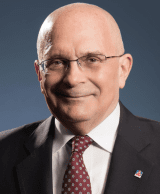
He’s served in other business and academic capacities, too, including president of the American Chamber of Commerce in Taipei, editor-in-chief of the Taiwan Review and area studies coordinator of the State Department’s Foreign Service Institute in Taipei. He is a former Fulbright scholar at the University of Rajasthan in India as well.
However, Vuylsteke’s experience in a much smaller geographic area, Washington, D.C., will be equally critical to his and the center’s success. While it will be incumbent on Vuylsteke to begin relationship building inside-the-Beltway, that need represents an opportunity to develop the EWC board to include more influential members who can help him and the center become better known to members of Congress, State Department officials and others.
Board members may also help Vuylsteke with another opportunity that Washington insiders say is real: that Obama would work with the center in a limited capacity after his presidency concludes.
When Obama traveled to Honolulu last week to make remarks about his expansion of the Papahanaumokuakea National Marine Monument, he skipped the Hawaii Convention Center, where the IUCN was about to take place, and instead spoke at the East-West Center.

As he said during those remarks, his parents met only a mile or so from the center and he grew up and attended high school about a mile or so away as well. He and his family regularly spend the winter holidays on Oahu, and his sister, Maya Soetoro-Ng lives here. Honolulu is not only his birthplace but in many ways, his home.
While the president hasn’t said yet what he’ll be doing once he leaves office, the Obamas have committed to living in Washington at least long enough for their youngest daughter, Sasha, now 15, to complete high school. During that time, he is expected to help develop the Obama Presidential Center in Chicago and undoubtedly to add to the three best-selling books he’s already published.
But many say the East-West Center could provide the right environment for opportunities to push the Asia Pivot, which a sprawling analysis published Tuesday in influential Foreign Policy magazine called his “unfinished legacy,” citing major lingering issues in North Korea, the South China sea and, of course, with the embattled Trans-Pacific Partnership trade deal.
“As much as the administration would like to take a victory lap in Asia, the legacy of the pivot is only partially complete,” wrote Victor Cha, a former member of George W. Bush’s National Security Council as director for Asian affairs. “And it is on the China account where there remains much work.”
If Vuylsteke and his board of governors were able to create an opportunity for Obama to continue to be influential in that work, that might represent the most meaningful development at the East-West Center since its creation in 1960. It would certainly improve the center’s standing with the State Department and significantly raise its domestic and international prominence.
Those are all issues that must be prominent for Vuylsteke as Obama winds down his presidency and as Vuylsteke prepares to take the helm of the center in early 2017, replacing Charles E. Morrison, whose retirement was announced last year.
After several years of struggling to find its footing following the death of EWC champion Sen. Daniel Inouye, the center has the chance now to develop a bigger, more influential profile under its new leader. We congratulate Vuylsteke on being chosen for that role and wish him the best of success, here in Honolulu, in Washington, D.C., and throughout the Asia-Pacific region.