IUCN: ‘If They Can Do It Why Can’t I?’
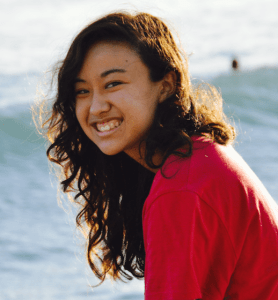
A shy young woman of color emerges from the recent World Conservation Congress a different person than when it began.
As a young woman in high school, it can be easy to feel excluded from a movement that seems to be led and dominated by men. Prior to attending the International Union for Conservation of Nature World Conservation Congress, I had questioned my ability to be a part of the environmental movement based on the belief that women played a minor role in this issue.
But after attending the WCC and listening to the “Empowering the Next Generation” session, I had a change of heart.
Interacting with women of all ages and races certainly empowered me, and listening to their discussions about conservation efforts showed me that if they can do, why can’t I?

John Jarvis, director of the National Park Service, talked about working with everyone in the world to make a difference, “especially women and people of color.” I am both. That’s the importance of the WCC, to me, and I learned a lot from listening to a variety of women presenters.
Hindou Oumarou Ibrahim of the the Association for Indigenous Women and the Peoples of Chad talked about how she and others overcame the barriers they faced because of their gender. Her story can inspire my generation to challenge the misogyny that is still present in the world today and know that these things are just obstacles that can be defeated.
“Now, the chiefs come to me for help,” Ibrahim said with a smile, which resulted in heavy cheers from the crowd.
Then there was Alison Sudol, an actress, songwriter and Goodwill Ambassador for the IUCN. She talked about how she is actually shy, and having to speak in front of people is her “worst nightmare.” But she realized she has a prominent voice and that she wanted to use it to help spread the conservation message.
“I had overcome my apathy, this feeling of ‘I don’t matter, I’m small, I can’t make a difference.’ I had to find concrete solutions to these problems,” shared Sudol.
As a shy girl, I was relieved to hear this. Here was someone speaking in front of a crowd of people, telling us how she felt nervous, but she was able to overcome her fears. That was inspiring; maybe I could do it too.
The WCC allowed people of all ages, female or male, shy or outspoken, to find inspiration and strength to do what they think is impossible.
“Maybe I’ll speak about the WCC on the news,” turned into “I spoke about the WCC on the news today,” all thanks to the women I had the honor of meeting at the event. Speaking in public, let alone on live TV, wasn’t something I was planning on doing until I heard Sudol’s message of overcoming and making a difference.
The WCC allowed people of all ages, female or male, shy or outspoken, to find inspiration and strength to do what they think is impossible. I left feeling proud to be a young woman of color knowing that there were others like me making an impact and saving the world.
Moving forward, my role in the conservation movement is to inform my generation and make sure this discussion about preservation continues. Going to the WCC isn’t enough. I need to spread the ideas that were being taught.
My photography teacher had the idea, which we are developing, to create a global community art project where students will take pictures of themselves at their favorite places – from one of Hawaii’s pristine beaches to a lush hike in the mountains – write about why it is their favorite and what they plan to do to help preserve it. We plan on sharing these photos through social media and throughout our school to raise awareness about the importance of conservation.
Through this project, we hope to encourage the students at Kalani High School and around the world to keep the environment and conservation efforts top of mind. The planet is at a crossroads, and it’s time that my generation took a stand to reverse the damage caused by those that came before us so that our children and grandchildren will be able to experience what too many have taken for granted.
 GET IN-DEPTH
REPORTING ON HAWAII’S BIGGEST ISSUES
GET IN-DEPTH
REPORTING ON HAWAII’S BIGGEST ISSUES
Community Voices aims to encourage broad discussion on many topics of community interest. It’s kind of a cross between Letters to the Editor and op-eds. This is your space to talk about important issues or interesting people who are making a difference in our world. Column lengths should be no more than 800 words and we need a current photo of the author and a bio. We welcome video commentary and other multimedia formats. Send to news@civilbeat.org. The opinions and information expressed in Community Voices are solely those of the authors and not Civil Beat.