

Neal Milner: Let’s Stop Worrying About Hawaii’s Low Voter Turnout
The fundamental problem is that the theory of raising voter turnout is wishful thinking and contrary to what we know about the realities of voting and elections.
Voter turnout is overrated.
Voting and elections have far less to do with a healthy democracy than those who complain about Hawaii’s low voter turnout think.
Looks like I won’t be getting many Fourth of July speech invitations any time soon.
Let me defend my heresy, which in fact is not heretical at all if we consider how people behave instead of how we want them to behave.
But speaking of heresy, it is the turnout advocates who worship a false idol, which professors Christopher H. Achen and Larry M. Bartels called “folk theory of democracy” in their book “Democracy for Realists.”
It’s the view of democracy you learned in civic class and absorbed the same way you learn to accept other powerful cultural myths. Powerful but wrong.
The very attentive, politically aware citizen is the foundation of this folk theory. Elections are citizen mandates that hold leaders accountable. There is a clear link between what these highly informed citizens want and the policies that result.
That’s the ideal that people who worry about the state’s low turnout have in mind. The fundamental problem is that the theory is wishful thinking and contrary to what we know about the realities of voting and elections.
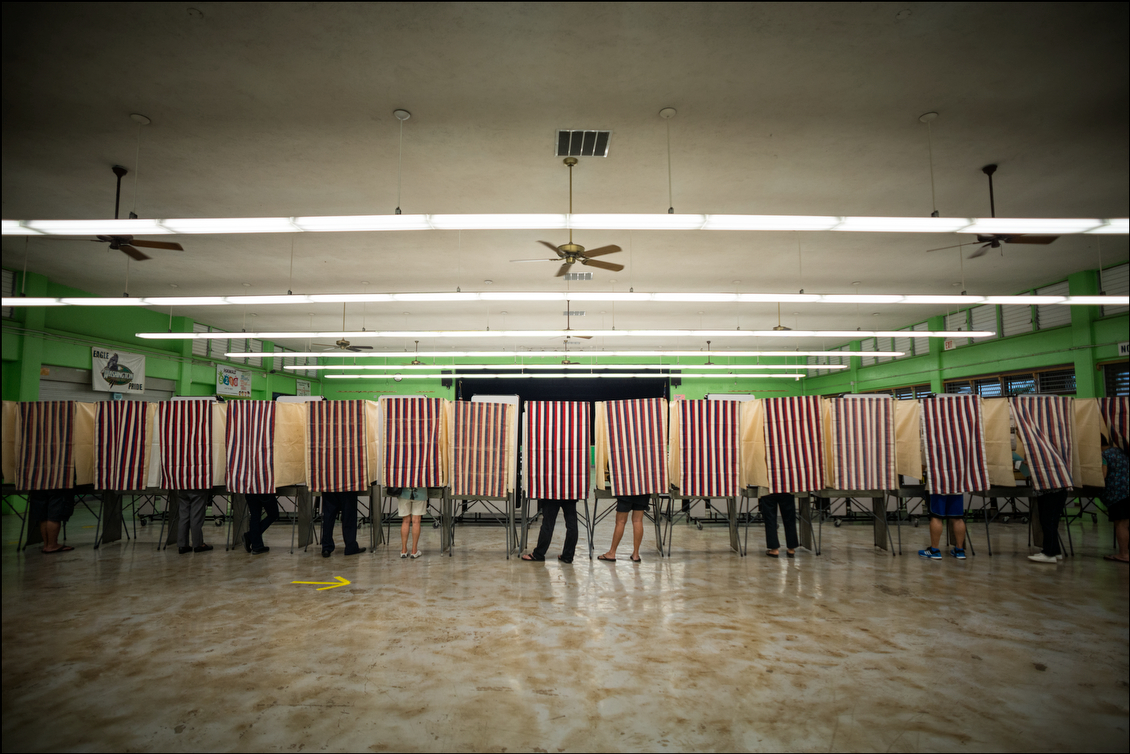
Voters do not behave this way and elections are far from mandates.
Achen and Bartels contrasted this hypothetical, information-seeking, folk-theory person to what the typical voter is really like — in their terms, the “busy voter.”
She is busy doing the things people need to do to live their everyday lives. Learning about political issues is maybe a part, typically a small part, of the busy voter’s life. She does not carefully study the positions of the candidates, which in fact can be hard for discern.
As a result, the busy voter votes on the basis of social cues and old loyalties that make the search for political information far less complicated or time consuming.
That’s typical, basic and, most significantly, essentially unchangeable.
Now think of the busy non-voter, particularly one in Hawaii. A non-voter has all of these same forces competing with the need to pay attention to politics, probably more.
Additionally, for a busy person in Hawaii, the choice not to vote, well, it makes a lot of sense. Most races at all levels are noncompetitive. The presidency is often decided before Hawaii’s polls close. Why bother going to the polls? What’s the big deal using your time doing other things on Election Day?
You can’t argue with this view of Hawaii’s elections. So, given this miasma of blah, why should the busy Hawaii non-voter vote?
Because … because …
It is shameful not to? That seems to be the implicit, default argument of the turnout advocates. And if you have a negative view of non-voting because it threatens democracy, it is easy to disdain those who don’t vote.
In turnout advocates’ eyes, the non-voter is bereft, uninformed. She is simply not doing her job as a citizen, not pulling her weight, sloughing off.
That’s schoolmarmish, patronizing and offensive. It is what happens when turnout advocates use the unrealistic folk theory of democracy as a moral standard. Sounds a little like old time religion. You can’t get them to abide by your moral standards so you outcast them.
The ultimate derision is “no vote, no can grumble,” as if voting is the required hall pass you need before you can participate in civic life: “You got a complaint about an unsafe intersection for your kids? Sorry, no can do. You missed the August primary.”
But wait a second. The non-voter is typical. She is the majority of us, not some anomaly, not the town drunk.
So here is the nub of the turnout advocates’ problem. Their arguments that are based on the folk theory are not credible, so it is not clear what makes it shameful not to vote.
This indicates that reformers spend too much time beating the low-turnout dead horse. Time to move on. We should lighten up on the non-voters and look around.
It’s really odd how much time people spend worrying about turnout when there are so many other serious threats to democracy.
Make your own list of what worries you most about today’s politics. My guess is that low voter turnout does not come close to the top of your charts.
It’s self-deception to think that the vote is the golden key to resolving these other issues.
(Oh and by the way, to those advocating measures to increase turnout: How hard would you advocate for a higher voter turnout if the result would bring in many more voters for the candidate you oppose like, to pull a name out of thin air, Donald Trump for instance?)
We need to build a democracy that is based on the way people actually behave, rather than based on behavior that is unattainable.
Unresponsive government is a problem and citizen involvement is a key weapon in changing this. But we can’t live under the illusion that moving turnout from a 34 percent to 38 percent, or for that matter 50 percent, is so crucial for achieving this.
As well meaning as turnout advocacy is, it is at best unrealistic and at worst a diversion from this far more important mission.

