

Neal Milner: Honolulu — Beauty And The Beastly Noise
With the proper perspective, it’s possible to tolerate, even enjoy, the city’s mix of urban grit and spectacular scenery.
How does a city like Honolulu balance its natural beauty with the tumult of urban life? How do we best live with this unsettling but inherent mixture of beauty and the beast?
Laws are one way, but regulation only scratches the surface. People here have to reorient themselves toward what living in a noisy city means.
For advice about how to do that, we’ll turn to a music composer who is a renowned sound expert and a Honolulu poet with a recently published collection of poems.
First let’s bring on the funk, bring on the noise.
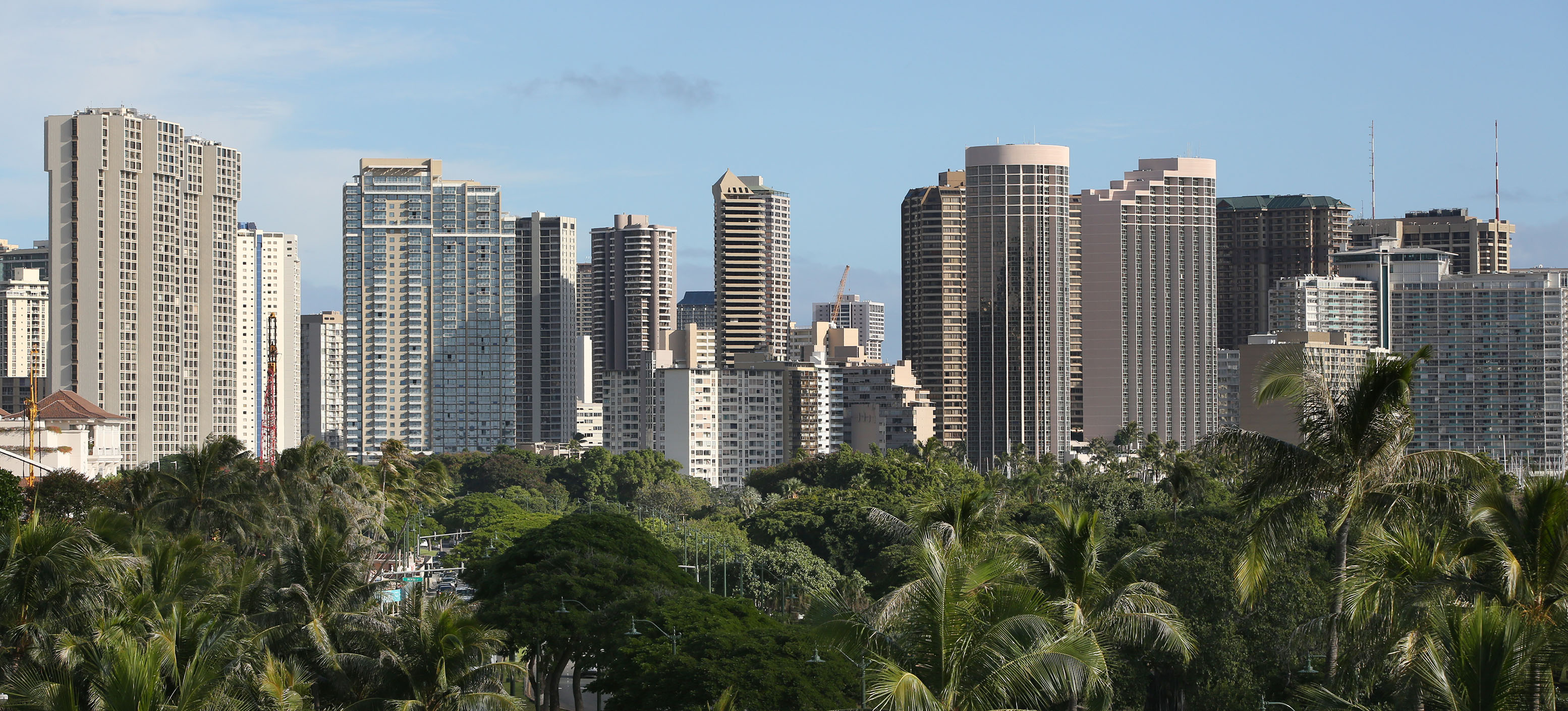
In urban Honolulu noise is as much a part of a Hawaiian sense of place as mynah birds, rainbows and the winds blowing off the Koolaus.
People here live with a cacophony that intrudes everywhere. It’s more than simply loudness. Urban life also brings about newer and more complex mixtures of sounds.
Honolulu’s soundscape is really no different from Seattle’s, Chicago’s, Pittsburgh’s.
Congestion, traffic noise, zero lot lines (houses that go right up to the edge of busy streets), walk-up apartments with lanais close enough to touch H-1 — these all contribute to this constant din.
Yet we like to think of Honolulu as a city with natural beauty. In fact, in this city there really is very little separation between the natural world and the gritty, noisy place we have created for ourselves.
A Temporary Reconfiguration
In Honolulu it’s impossible to separate beauty from noise.
And that includes potentially idyllic places like Foster Garden, the botanical garden sitting on a small rise on Vineyard Boulevard just above downtown.
That garden is an extraordinarily beautiful place with an unmatched collection of trees and plants. It is a jewel, but not an oasis. Instead it is a microcosm of the blended, noisy way we live in urban Honolulu, a mixture of noise, grit and beauty.
City life intrudes everywhere in Foster Garden. It is impossible to look up above the tree line without seeing downtown high-rises looming nearby, the funky, marginal buildings off School Street, or the small homeless encampment along Nuuanu Stream.
And the noise! The mauka side of the garden, where many of the most spectacular trees are found, abuts what is possibly the busiest stretch of H-1.
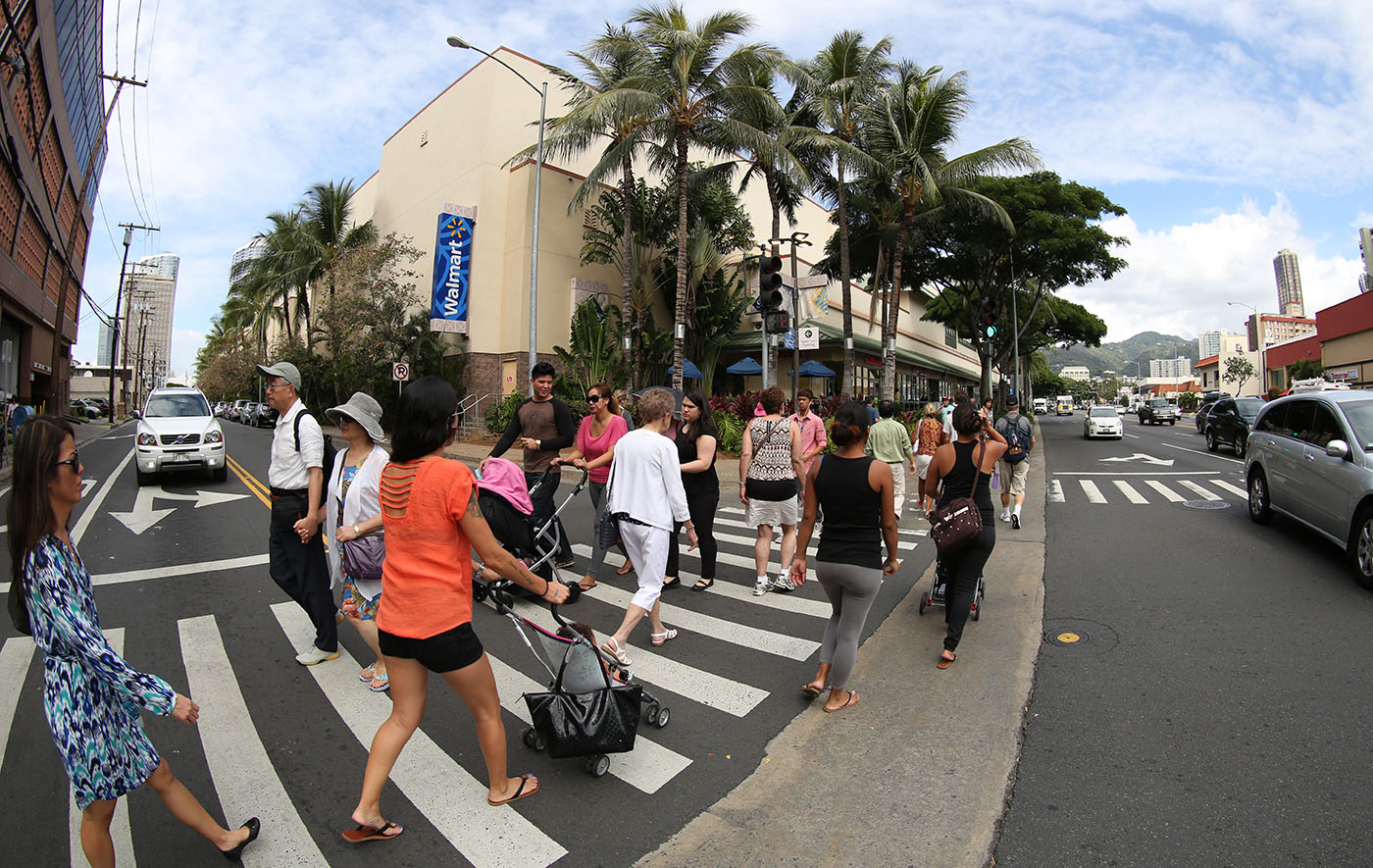
That makes for a kind of roaring white noise that encompasses the entire place. Queens Hospital is close by, so ambulance sirens often rise above this noise.
Spending time in that garden is not an escape from our hectic lives. It is a temporary reconfiguration.
Ke Kula ‘o Samuel M. Kamakau, a Hawaiian language immersion school, also has this juxtaposition of grit and beauty.
The school sits near the base of a small Kaneohe valley. Like Foster Garden, it is a lovely setting that offers hints of old Hawaii.
Keep your eyes level, and you see this loveliness. But lift them up, and you see H-3 with its immense support pillars.
Thriving Amid The Mix
Some of the best advice on how to deal with this mix comes from a music composer and a local poet.
Murray Schaefer (“The Tuning of the World”), a composer and one of the pioneers of acoustic ecology, developed listening exercises like “soundwalking” that make it possible to separate enriching from depressing sounds. Sound walks train the ear to be sensitive to all the sounds around us so that we can be more self-conscious in our listening.
The Honolulu poet Christy Passion offers another way that focuses less on the ear and more on the imagination (“Still Out of Place“). In her poem, “If I were an Optimist,” Passion talks about two ways to think about a garden.
You can stress a garden’s romantic, pristine, “natural” side: “the buzz of bees overhead in the flowering avocado tree, the creep of pumpkin leaves along the wooden box.”
Or you can think about that garden another way, what Passion describes as a “squint at the obtuse,” looking beyond this natural beauty and instead appreciating the more ordinary, simple-minded, even messy parts of the garden: the unswept leaves, the cracks in the sidewalk, the “ordinary dove.”
This focus on the ordinary is “reeling in quiet revelation, ” a way to appreciate the ups and downs of everyday life:
“All of it is proof/that the untended finds its way without us —/they bloom and fall and move in miracles/while we give our hearts away.”
With that quiet revelation the garden becomes a less sheltered but grittier, real place.
In fact there is something fascinating, even attractive, about the immersion school’s mix of flowers and freeway. At first that vision turned me off, but once I got over my purity impulse, I found the juxtaposition fascinating.
All in all, for students of Hawaiian language and culture, the mixture is a powerful reminder that cultural renaissance does not happen in a vacuum.
The same was true for me with Foster Garden. At first I found the noise distracting and disconcerting.
But after sitting on a shady bench near the orchid collection, I found myself reoriented and thinking about the garden and the city in a different way, more like the squinter in Christy Passions’ poem and more in a way that shows how natural beauty and urban life go hand in hand whether we like it or not.

