

Services For The Needy Generate Hope, Complaints In Chinatown
Can the area pull off the balancing act of helping the homeless while still allowing businesses to thrive?
On a sun-drenched afternoon in Honolulu’s Chinatown, Wai Ching sits in the doorway of his empty char siu restaurant reading a Cantonese-language newspaper. A man named Happy Iakio approaches him to ask for a cigarette.
“Every day ask,” Ching says of Iakio’s routine. “Every time, eat free, smoke free.”
Iakio is one of about 200 people who line up around the corner from Ching’s Char Siu House, along Pauahi Street three times every weekday for free meals from River of Life Mission, a nonprofit that serves about 15,000 meals monthly.
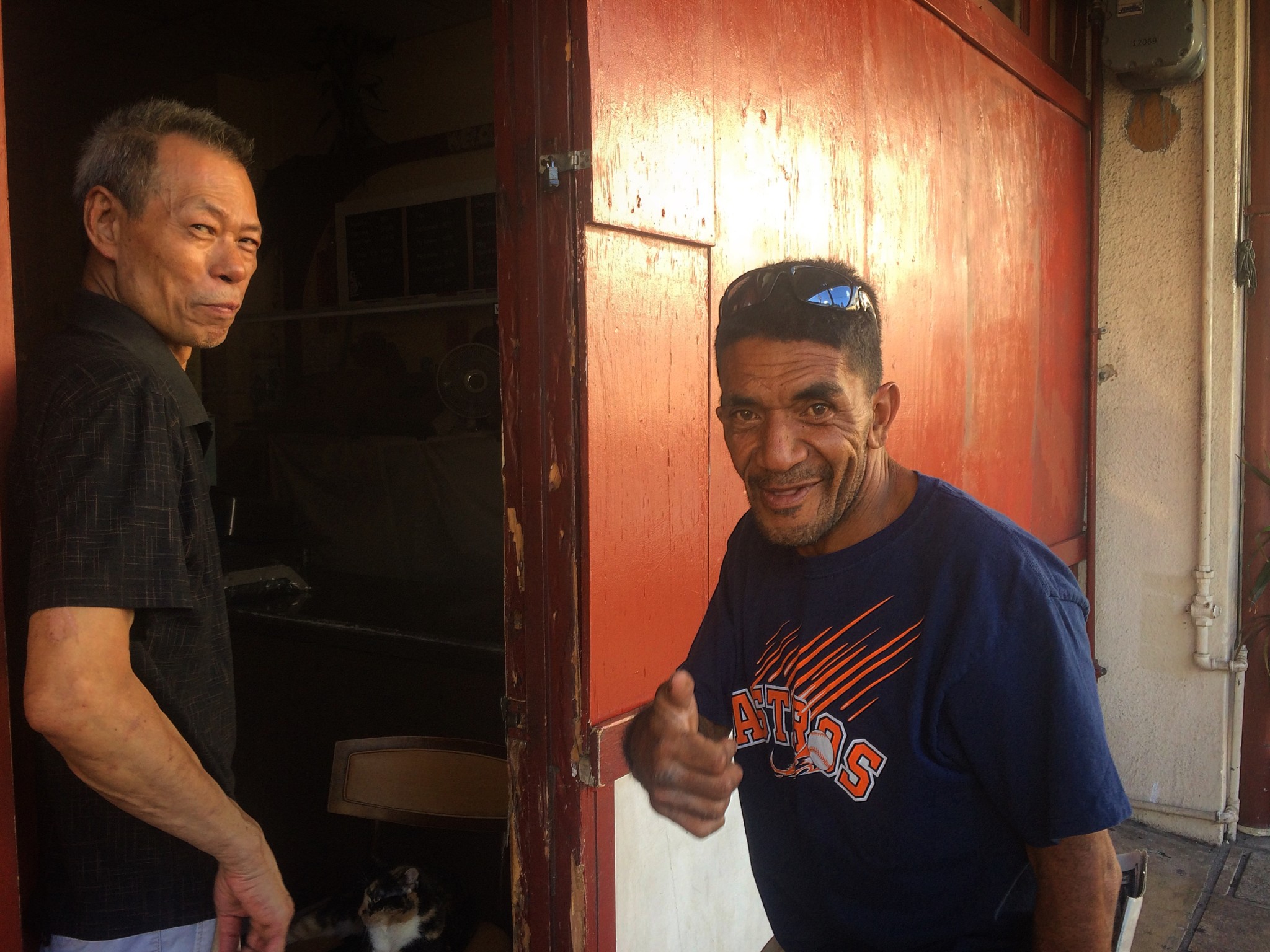
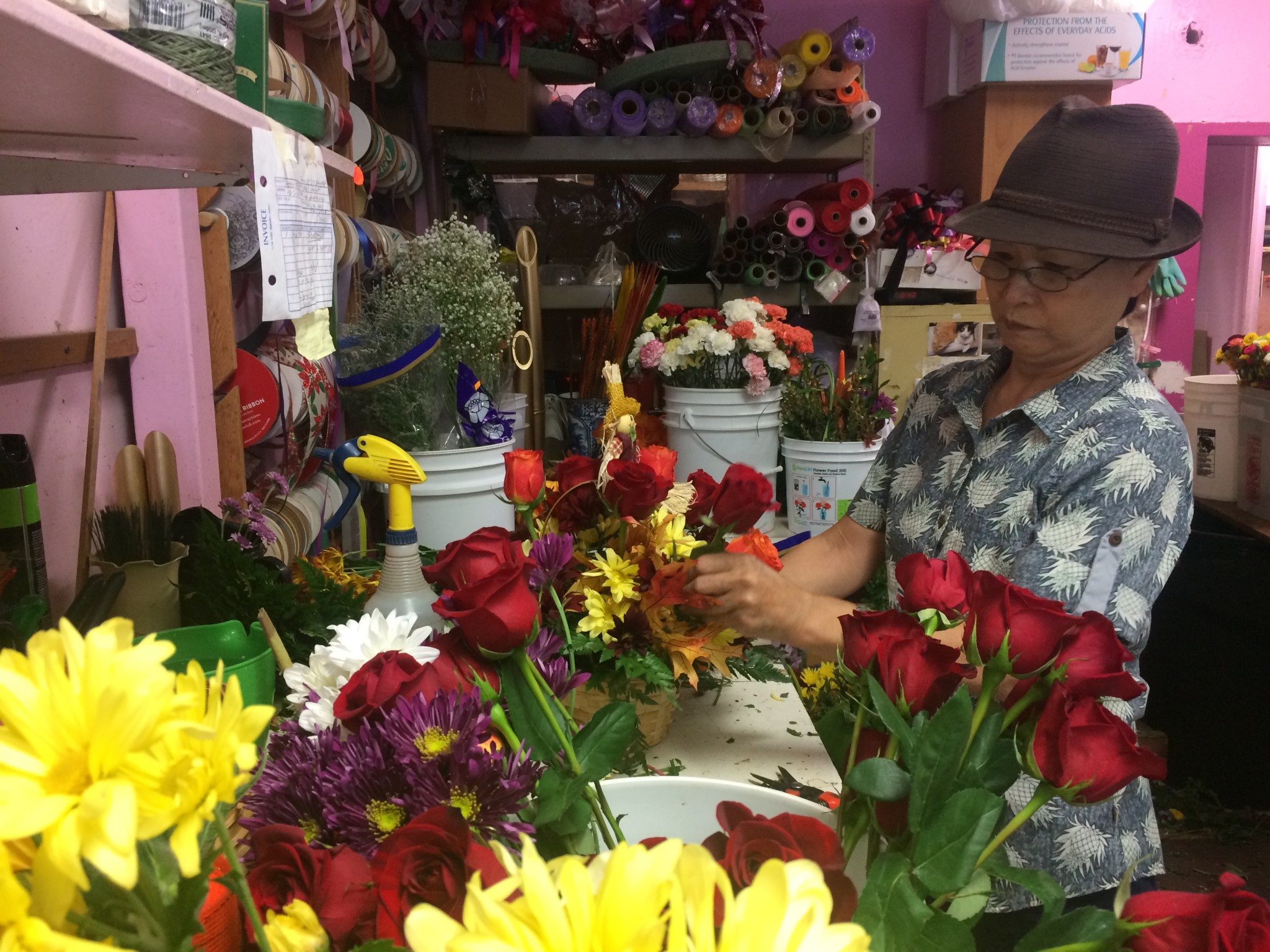
The interactions between Ching and Iakio are lighthearted. But small business owners like Ching and Kay Kadooka, who owns a nearby flower shop, are fed up.
They say the large number of people who loiter near their businesses, waiting for meals from River of Life, deters potential customers.
“It affects the business climate in Chinatown,” said Stanford Yuen, a member of the Downtown-Chinatown Neighborhood Board. Yuen and other board members would like River of Life to move its meal operation out of Chinatown.
They say they want to strike a balance by assisting the needy without attracting more of them to Chinatown’s narrow sidewalks.
Kadooka says relocating River of Life would help her struggling florist shop “tremendously.”
While River of Life itself maintains a clean and presentable building façade and interior, a nearby line of people waiting for meals creates an “unpleasant” atmosphere outside of her store Flower Field, Kakooka said. She figures her store loses three hours of business every day as a result.
Bob Merchant, River of Life’s executive director, is open to the idea of relocating the meal services, but even with the help of the city and state, he hasn’t found another location.
Over a year ago, Merchant met with a representative from Honolulu Mayor Kirk Caldwell’s office to discuss finding an alternate location. In 2008, Merchant talked with then-state Rep. Karl Rhoads, who said he later sought a location from the state Department of Land and Natural Resources.
Nothing came of the meetings.
“It’s been an issue forever,” said Rhoads, who suggested more enforcement of both the city’s sit-lie ban on public sidewalks and House Bill 1660, passed in 2014, requiring that a 36-inch corridor be left clear on sidewalks for pedestrians.
Even if River of Life moved its meal services, homeless people might still loiter in front of Chinatown storefronts.
“This isn’t ‘Field of dreams,’” Merchant said of the notion that River of Life attracts homeless people. “We didn’t build it and they came. They were here already.”
New Addition Welcomed By Some
Nearby, a four-story city-owned building is on its way to becoming the new home of some mentally ill people who were once homeless.
It was announced about two years ago that Safe Haven, a 25-bed homeless shelter currently operated by Mental Health Kokua at the north end of Fort Street Mall downtown, would move to Pauahi Hale, a 77-unit low-income building that currently serves people earning less than 50 percent of the area median income.
Current tenants will not be displaced, and the building is undergoing renovations, including installation of a new roof, to prepare it for its new residents. Bill Hanrahan, Safe Haven project director and Pauahi Hale property manager, said he hopes updates to the building will be complete in May or June next year.
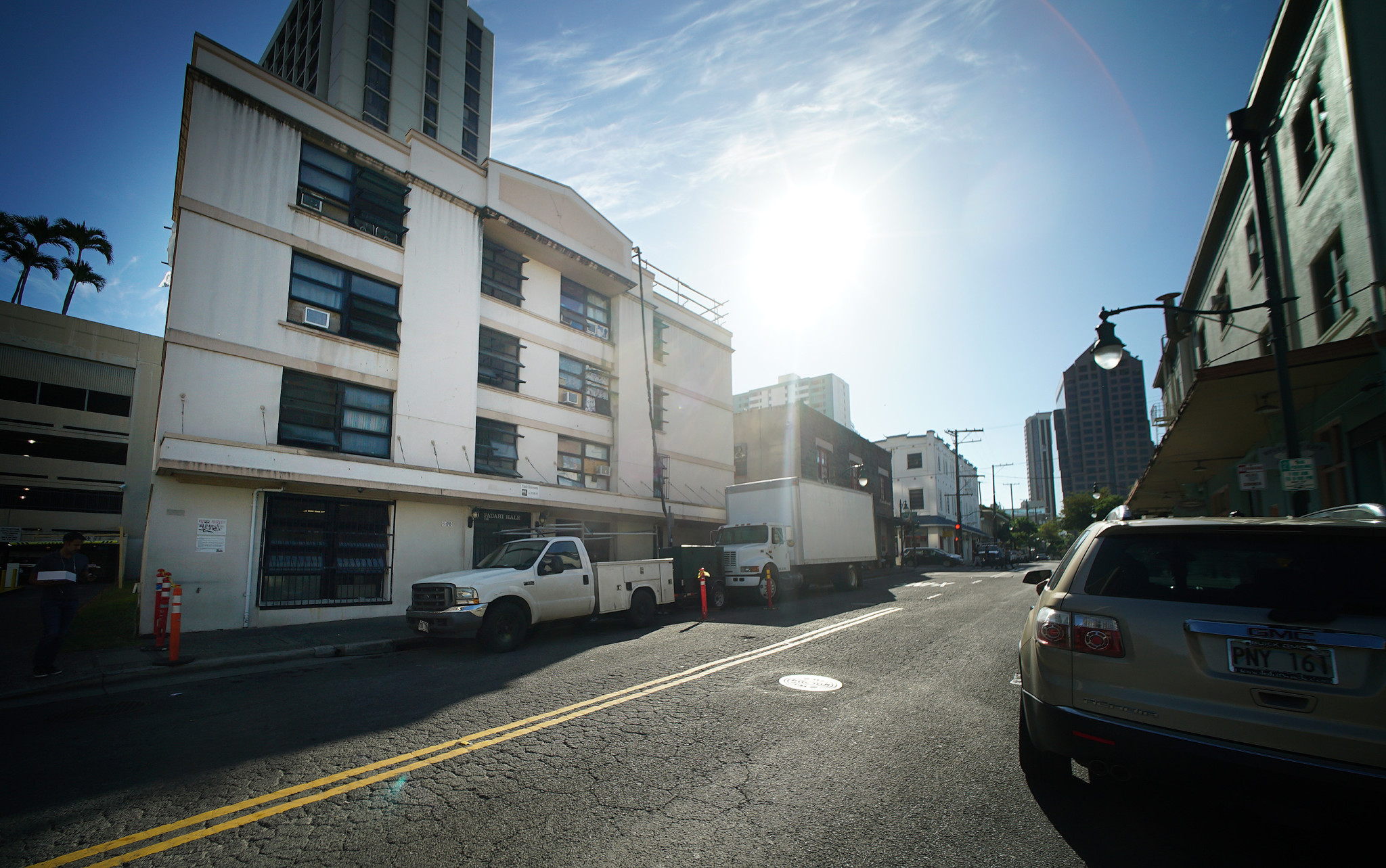
Renovations only began within the last few weeks, according to Greg Payton, executive director/CEO of Mental Health Kokua. Before that, the nonprofit worked on securing the money to renovate the building and putting together a contract with the city, which owns Pauahi Hale, to agree on renovations, how much they would cost and the transition of building management to Mental Health Kokua.
Payton said Safe Haven has sought a location in Chinatown since the mid-1990s because that’s where many homeless people congregate.
“There’s enough business out there already right now. We don’t have to worry about attracting anybody, that’s for sure,” he said.

Safe Haven’s current downtown location has had a population of homeless people who are medically frail and use drugs, Hanrahan said. However, he doesn’t think there will be a hole in services when the relocation occurs – Safe Haven will continue to have a presence and do outreach at the mall.
Lynne Matusow, a former member of the Downtown-Chinatown Neighborhood Board, and Victor Lim, chairman of the Fort Street Mall Business Improvement District Association, support Safe Haven’s move, saying the shelter will provide much-needed services.
Kenny Chow, owner of MAI, a shop that sells smoothies and bubble drinks near the corner of Maunakea and Pauahi streets, does not.
Chow said his shop has had issues with homeless people stealing, throwing food and littering outside. With Safe Haven moving in, he said the situation “is going to be very worse.”
Public Benefit, Private Nuisance
Chu Lan Shubert-Kwock, president of the Chinatown Business and Community Association and another neighborhood board member, said business operators have had issues with homelessness for years. She said they were unhappy with the image of homeless people lying around before the sit-lie ban was passed in 2014.
Nevertheless, the association supports Safe Haven’s move to Pauahi Hale because it’s convenient for the nonprofit, which will be able to operate its multiple services — the shelter and its public restrooms — all from one location.
Board member Yuen agrees. However, he has repeatedly said Chinatown is used as a dumping ground for the homeless and there needs to be a plan to discourage even more social welfare agencies from coming to Chinatown.
The latest point-in-time count indicated that as of January 2016, 4,940 people without homes live on Oahu. According to a 2014 census estimate, 21 percent of people in Chinatown live below the poverty level.
“The answer to the lines of people in the street is to find housing for them,” says Bill Hummel, social worker and director of Lighthouse Outreach Center, a homeless shelter in Waipahu. “The solution to the problem transcends their ability as a community.”
Down the street at River of Life Mission, Happy Iakio gets more than free meals. He’s spent over 10 years on the streets, struggling with alcoholism.
One recent day he was attending a Bible class — he attributes his sobriety to the support he’s found at the organization.
“If it wasn’t for them, I think I would be in jail,” Iakio said. “If they ever move, it’s going to be hard on these people.”
River of Life started with one man serving free meals out of his truck in 1986.
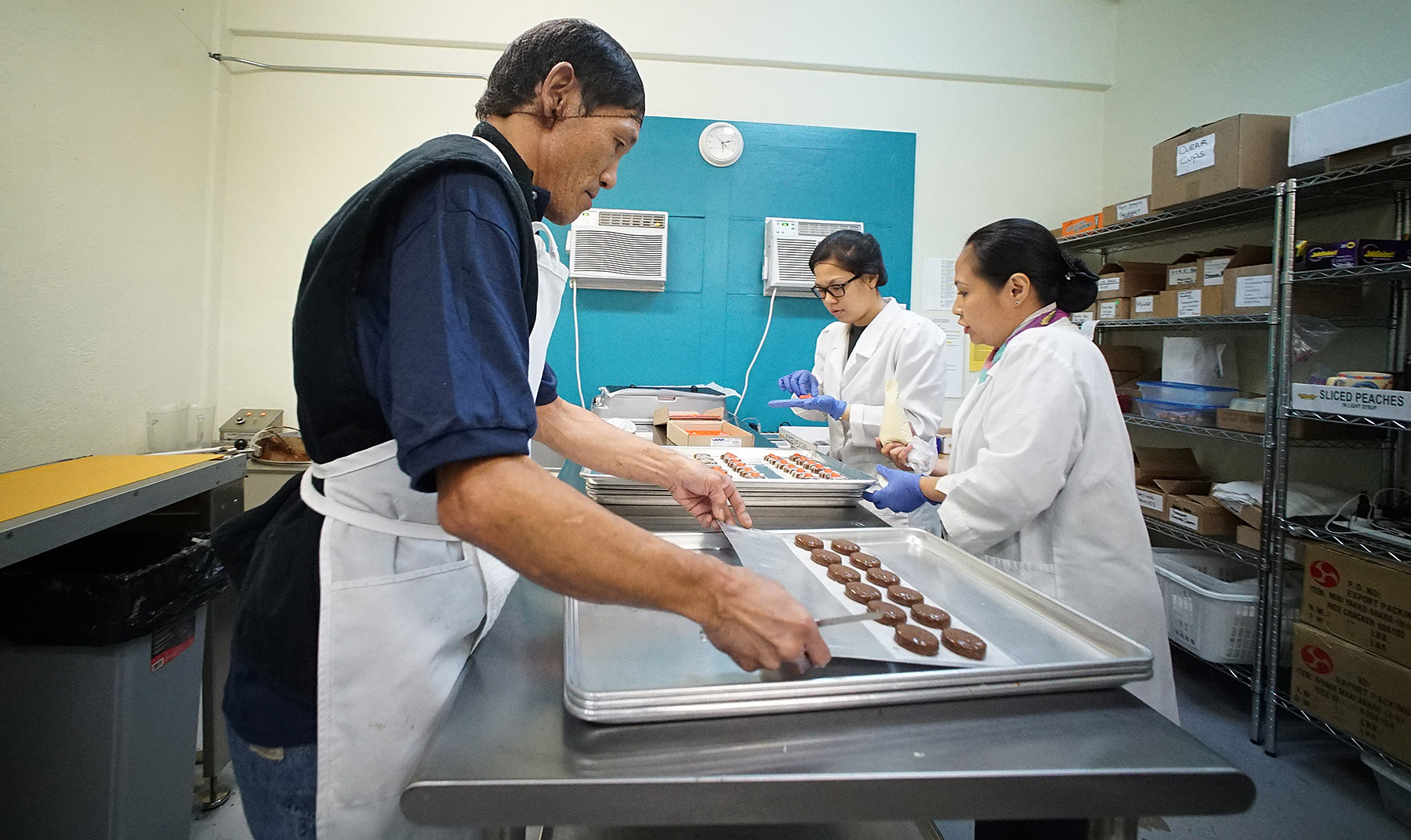
Today, the organization owns the building on the corner of Pauahi and Maunakea streets. From its Pauahi Street building, the organization offers a free clothing store, showers, toilets and a chocolate factory that offers job training to people recovering from drug and alcohol addiction.
To regulate the crowds at meal times, River of Life only allows people to line up along the Pauahi Street sidewalk, which has no storefronts, rather than Maunakea Street, where Kadooka’s florist storefront is. An employee monitors the line during meal times.
Still, Merchant remains open to serving those meals elsewhere.
“I keep saying, find me a place that’ll work, that’s a win-win situation and we’ll consider it,” Merchant said. “But nobody has come up with anything specific.”


