Navy Should Think Twice Before Dropping Bombs On Pagan
As it looks to expand in the Marianas, the U.S. military owes the affected residents a full and accurate assessment of the possible impacts.
The presence of the U.S. can be both a blessing and a curse. Hosting military bases and training grounds often means economic and developmental advantages, but there are undeniable costs as well — especially when it comes to the environment and ensuring residents’ concerns are heard.
This is a problem Hawaii understands all too well, which is why we empathize with the plight of our Pacific neighbors in the Northern Mariana Islands who are currently facing the possibility of the U.S. Navy turning part of one of their most pristine islands into a bombing range.
If the Navy gets its way, the northern part of Pagan island would turn into a playground for war games, complete with live-fire target practice on its forests and amphibious landing exercises on its beaches.
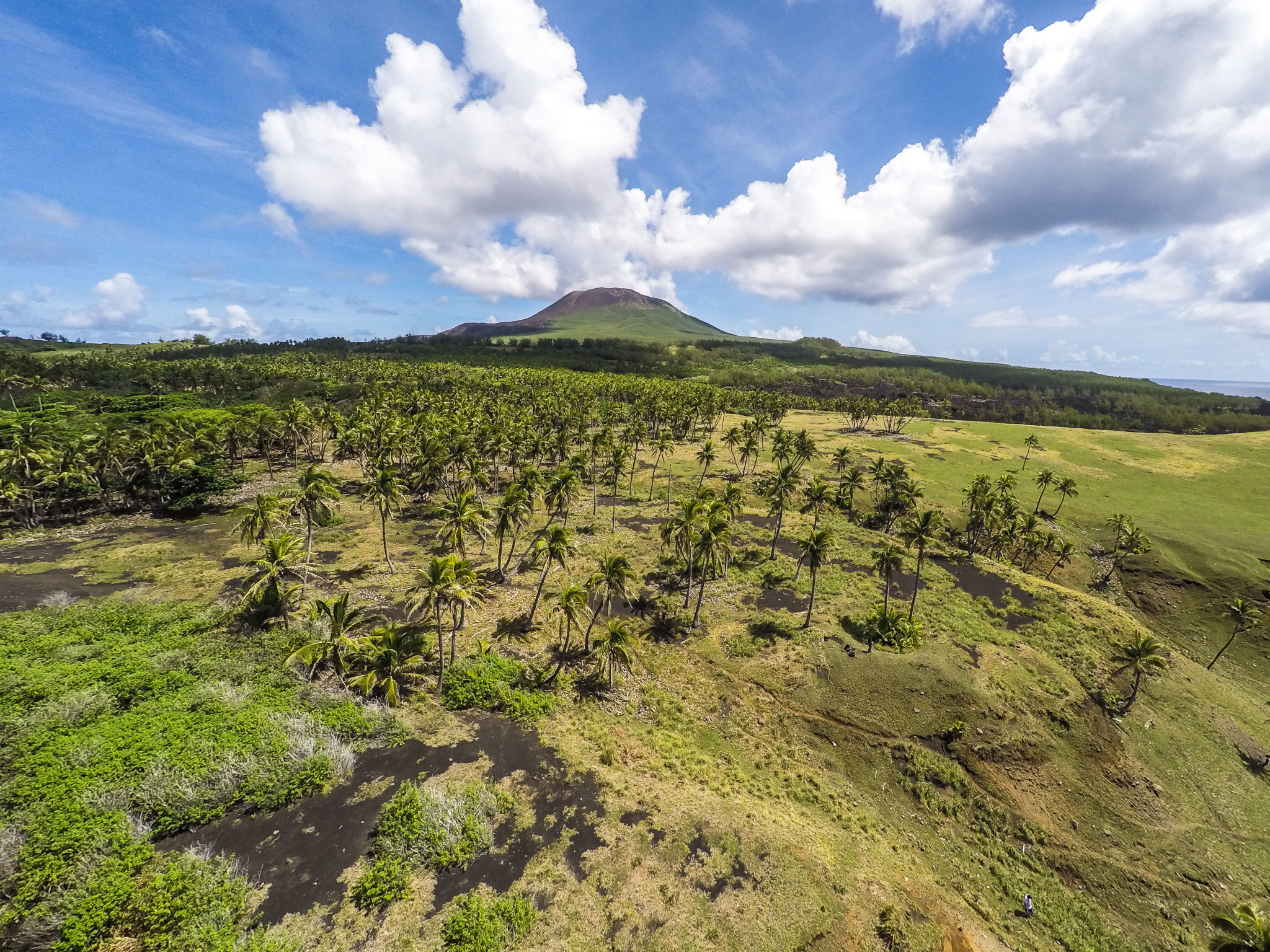
As Civil Beat’s Anita Hofschneider reported last week in her five-part series, “Pacific Outpost,” the Navy has its reasons for wanting to use Pagan island. The Department of Defense, after all, is trying to “rebalance” to the Pacific, and a large influx of additional Marines stationed in nearby Guam means they need training grounds close by.
The overall military buildup in the region is understandable, but the Navy has been derelict thus far in its responsibilities to fully consider and publicly report the repercussions of its presence on Pagan. The Navy’s 1,388-page draft environmental impact statement has been widely criticized for overlooking critical information, as well as failing to even consider alternate sites.
To add insult to injury, the Navy’s proposed plans, according to one expert Hofschneider talked to, are vastly inferior compared with Navy plans for sites with higher visibility, such as Puget Sound in Washington state.
“I think they were thinking that they have a lower threshold to meet out there than in a state with the … resources to bring to the table,” Jim Keany, director of biological resources at the Environmental Science Associates, a national environmental consulting firm, said of the Navy.
That also applies to Tinian, a nearby island where residents thought military expansion would bring a base but instead may now get live-fire ranges that could destroy the island’s environment and devastate its tourism economy.
It is easy to understand how all this happened. The Mariana Islands are impoverished with little to no political capital. Whoever’s job it was to draw up the draft environmental impact statement for the Navy probably never felt that the stakes were particularly high. But that kind of laziness and corner cutting has real repercussions — ones that the Navy needs to answer for.
According to the EPA, for example, the proposed training on Pagan would destroy 121 acres of marine habitat across six beaches, including 10,600 colonies of threatened coral. The federal agency has criticized the Navy’s initial plans for not providing enough information on potential impacts or offering adequate proposals to mitigate the harm.
The Navy’s plans also make no reference to developing the island for habitation — an insensitive oversight considering some still consider the island home and wish to return there.
The island is mostly uninhabited because a 1981 volcanic eruption chased away residents and destroyed infrastructure. But today, a handful of people (mostly former residents and their children) still live on the island sporadically. Many others are holding out hope to someday return to the island full time.
Military training could significantly change that — an outcome that the Navy has failed to address or proactively offer solutions for. Even though the proposed bombing range and training areas are limited to the northern, volcanic part of the island, they still overlap with parts of the island used for fishing and farming.
According to Craig Whelden, executive director of U.S. Marine Corps Forces Pacific, the Navy is “very open to trying to find solutions which can achieve homesteading opportunities for people who want to live in Pagan.” While that cooperative sentiment is welcome, the onus is on the Navy to offer solutions, not just be open to them.
To its credit, the Navy seems to have learned from its initial mistake. A new environmental analysis is set to be published this spring, and Whelden says it will address the myriad concerns that have been raised. A final decision is expected in the summer of 2018.
But by then, the damage may already be done. The military frequently insists that it is a trusted and capable steward of the environment, as well as a good neighbor to its hosts. The Navy’s sloppy plans for Pagan, however, have corroded trust, and many, as Hofschneider’s series showed, are already skeptical.
If the Navy truly wants to be considered a steward of the environment and a considerate neighbor, it would be wise to get cracking on that list of alternate sites for training.