

Inside Agriculture: The Rising Importance of NGOs
With the current state of government, NGOs help to keep research that benefits the public alive.
While this is bad news for agriculture, the sun still rises over public research on Oahu’s fields.
Morning stars fade into dawn as a handful of field workers trickle in to Hawaii Agriculture Research Center. A dog wags its tail as it waits for the farm manager to follow her charges in for the morning meeting. The scene is like many farms on Oahu, although the work here is unique.
With locations in both central and east Oahu, HARC is a hub for local agriculture in Hawaii. Founded in 1895 as the Hawaii Sugar Planter’s Association, a research think tank for Hawaii’s dominant sugar industry, this center has its roots in sugar but has since taken on a mission that encompasses a much broader range of research in support of Hawaii’s diversifying agricultural community.
It is one of a number of non-governmental organizations, or NGOs, that serve the community without the same policy and funding limitations imposed on government organizations. It is funded by a combination of grants, contracts and community donations.
“I think we are still waiting to see what this administration does and how it will impact agriculture. No doubt the events of the last few days have our ears perked,” says HARC farm manager Jayme Barton.
With the current state of government, NGOs like HARC are more important than ever in the effort to keep research that benefits the public alive.

So, what is this important research?
A look around this hundred-acre farm will give clues. Workers begin their day in a huddle to brainstorm ways to combat the coffee berry borer, which has been plaguing the islands’ internationally renowned coffee crops.
An organic vegetable and kalo garden, a permaculture patch and a native plant rain garden serve as learning tools for the biennial Seeds4Tomorrow high school camp. When entering a prickly pineapple plot, one may be pleased to learn that researchers here seek to research genetics and pave the way for new smooth-leaved varieties suitable for production. A grove of papayas stand in an effort to breed a ringspot resistant papaya without the use of genetic engineering.
The research here benefits not only the farmers and consumers, but the environment as well.
To summarize their current collection in Maunawili, HARC Forester Nicholas Dudley says, “Archived at Maunawili are economically important collections of plants which include sugarcane, coffee, cacao, and Acacia koa. Koa is noteworthy as it has been selected for disease resistance from the local Oahu eco-region.”
Dudley works to combat the devastating koa wilt disease that affects native forests. His station also experiments with the sustainable practice of agroforestry, using tree crops such as cacao (chocolate) in combination with Acacia koa, a native hardwood that fixes atmospheric nitrogen.
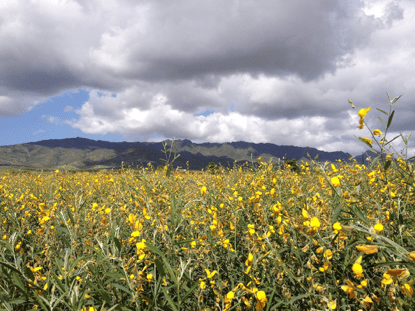
In Kunia, Jayme Barton researches the use of “cover crops” to prevent erosion and sequester carbon dioxide that can restore soil carbon in fallow periods. This project is supported by the USDA Natural Resource Conservation Service. Other research projects are supported by grants from the state government, contracts and donations from the community.
Other non-governmental organizations help, too.
“We frequently partner with other NGOs like Oahu Resource Conservation and Development Council on projects relating to soil health and watershed management and other conservation based projects and outreach,” says Barton.
“We also work with Pacific Gateway Foundation in various ways to help support their goals of transitioning immigrants, refugees and socially disadvantaged farmers into affordable housing at Kunia Village,” she says. “These farmers now work, live and play in the Kunia village community and run a farmers market where they sell the produce they grow only miles away.”
There are many challenges to Hawaii’s agricultural community, now and in the future. With rising uncertainty of the extent of federal research, NGOs play an important role in supporting agriculture.
For anyone who is concerned with these issues and would like to help out or learn more about agriculture, there are plenty of ways to get involved.
Barton says, “the first step to really understanding agriculture in Hawaii is getting out and volunteering on a farm or with a nonprofit. There is something you learn when getting your hands dirty that you just can’t pick up from a documentary film, or the internet. If you’re someone who does this already, try a farm in a different moku, talk to someone you don’t know who farms in a way you’ve never experienced.”
 GET IN-DEPTH
REPORTING ON HAWAII’S BIGGEST ISSUES
GET IN-DEPTH
REPORTING ON HAWAII’S BIGGEST ISSUES
Community Voices aims to encourage broad discussion on many topics of community interest. It’s kind of a cross between Letters to the Editor and op-eds. This is your space to talk about important issues or interesting people who are making a difference in our world. Column lengths should be no more than 800 words and we need a current photo of the author and a bio. We welcome video commentary and other multimedia formats. Send to news@civilbeat.org. The opinions and information expressed in Community Voices are solely those of the authors and not Civil Beat.
