Reader Rep: Reporters Are Ignoring Trouble At The Honolulu Zoo
Taxpayers are shoveling more money in, but directors keep leaving. Why isn’t anyone covering it?
The Honolulu Zoo has another new director (its sixth in eight years) and millions of new dollars devoted to it.
That combination — taxpayers being on the hook for more of the bills, under unstable leadership — should be prompting a revival in investigative journalism about the zoo, in order to bring to light systemic issues related to leadership, animal care, facilities maintenance, patronage and resource management.
Instead, recent coverage mostly has combined copy-and-paste stories (another new director, with local ties, is here!) with high-level overviews (we’ve had so much turnover; isn’t this terrible!), with a peppering of cute clickbait of baby animals.

City administrators can’t seem to get this important job done, ill-informing the public about what’s really happening behind the scenes at one of its major investments. Honolulu Councilman Ernie Martin even has suggested the community might need to bring in a special investigator with subpoena powers, a la the Robert Mueller investigation.
I’m hoping local journalists, in turn, can sense significant fertile ground here and come back to this story with some enthusiasm, rising to the challenges of it.
The Honolulu Zoo is one of my favorite places on Oahu. The 42-acre grounds are spacious and gorgeous, with new flowers regularly in bloom year-round. The animals are majestic, with some of my favorites including the Siamang gibbons, giraffes, the cheetah, the Sumatran tiger, and Galapagos tortoises, plus the dozens of colorful tropical birds, including birds-of-paradise.
As much as I enjoy smile-inducing photos of a new baby sloth, I see the shabbiness at this zoo, too, and the long-closed reptile and hippo exhibits. I also have to wonder what world we have brought this beautiful little sloth into, along with the others subjugated to a seemingly chaotic manmade and human-mismanaged environment.
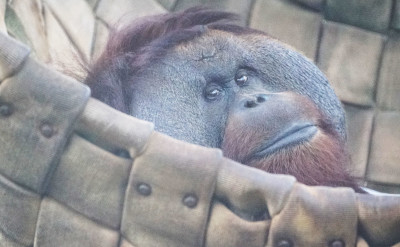
Before commenters veer off into philosophical arguments about zoos, in general, I want to acknowledge and sympathize with those concerns, including my personal misgivings about celebrating animals being kept in cages for our enjoyment. I perceive the orangutans at this zoo, for example, to be chronically sad and deserving of something better.
But my intent here is not to prompt a broader zoo discussion; I want to expand upon a Honolulu Zoo discussion, within a journalistic context, about how this institution’s being managed and maintained and covered by local journalists.
In other words, from reading and viewing the journalism about this place, I really don’t think I have a sense of what’s going on there, and maybe you have some of the same questions I do.
This zoo has a long and fascinating history, with King David Kalakaua, monarch of Hawaii, donating these royal lands in part to show off his exotic bird collection.
Paul Breese was the first official zoo director, starting in 1947, followed over the decades by Jack Throp, Jerome Marr, Don Davis and Ken Redman, who held the top post from 1993 to 2008. During those 60-plus years, the zoo had five directors.
The Revolving Door
In the eight years since, cycling through names not even acknowledged on the zoo website, it has had six directors (not counting interims):
- He “stood out in the areas of knowledge, experience and most of all, the ability to manage.” That’s what journalists swallowed and regurgitated about Stephen Walker, previously the director of the Tulsa Zoo in Oklahoma. He started in 2009 and resigned soon after for “personal reasons.”
- “We are so fortunate in getting this guy.” That’s what journalists swallowed and regurgitated about Manuel Mollinedo, who previously had allowed a tiger to escape under his watch in San Francisco. He started in 2011 and left soon after for “personal reasons.”
- Even though he had no zoo experience, his “background in developing world-class exhibits and creating new programs that will reach out to a wider audience of residents, students and visitors is very exciting for the future of the zoo.” That’s what journalists swallowed and regurgitated about Jeffrey Mahon. He started in 2013 and soon after resigned for “personal reasons.”
- Even though he also had no zoo experience, he “has strong management, marketing, and operations experience, and we are happy to bring him home to Oahu.” That’s what journalists swallowed and regurgitated about Jeffrey Wilkinson. He started in 2014 and resigned soon after for “personal reasons.”
- “We need a zoo director who is committed in the long run.” That’s what journalists swallowed and regurgitated about Baird Fleming, who started in 2015; he resigned soon after but not before voters approved a charter amendment to provide consistent property tax revenues to the zoo, which will equate to roughly $6 million a year. As Civil Beat columnist Denby Fawcett chronicled, citizens didn’t learn of his resignation (maybe by design) until after the vote. When she talked to him, Fleming inexplicably didn’t think his impending departure was worthy of mention.
Therefore, you might be prudent to reserve some of your optimism for the newest director, Linda Santos — despite a letter of endorsement from the zoo’s first director, Breese — until she has proven herself. Remember, included in her more than 30 years of service to the Honolulu Zoo, she was part of the team that lost its accreditation. Her initial goals include getting the zoo reaccredited and bringing in more visitors; no surprises there.
Santos said she doesn’t want to reopen an exhibit, like the enclosures for the hippos or the reptiles, and then have problems that require closure again. But that happened recently with the runaway chimps, when they were brought back into their exhibit a couple of weeks ago and then taken back out again, a park staff member told me. They might be on display again this week.
Twilight Tour Is No Bargain
Santos said she wants to do more guest experiences, like the Twilight Tours, to bring in more visitors and increase zoo patronage. But I tried the Twilight Tour a few weeks ago, and it was an overpriced and underwhelming program, poorly organized to boot.
I showed up at the front gate with my family and some friends to take the tour, about 15 minutes before it was to begin, and found everything there locked and no signs about what was happening. We walked all around the outside premises, until we finally found a side gate, where tour takers were being admitted.
Zoo staff there only were taking cash, at a kamaaina rate of $15 per person, $10 for kids, but the bank machines at the park weren’t working for some reason that day, so I had to borrow $60 cash from a friend to get inside.
As much as I enjoy smile-inducing photos of a new baby sloth, I see the shabbiness at this zoo, too.
The tour itself was short, two hours minus the significant front-end time wasted on the delayed entry, and everyone had to stay together in a big blob of people. The tour guides were informative and accessible, but no more so than any other hands-on zoo program I have attended. While I was on the tour, we didn’t get to see any special areas. We did get a few bland cookies and a cup of juice at the end of the tour.
Ordinarily, for a full day at the zoo, the kamaaina rate is $8 for adults, $4 for children, so when I compare this Twilight program to the typical zoo experience, I would say it’s double the price, for a fraction of the fun, cash only, with dusk as the primary benefit. That doesn’t seem to me to be an exemplar, to be held up as a model to lead the Honolulu Zoo to prosperity.
Some local journalists have been digging into this zoo topic, to reach down into the details plaguing this beloved institution, such as Civil Beat’s Fawcett and Hawaii Business Magazine’s Tiffany Hill.
Pulitzer Prize-winner Tom French has shown how such in-depth coverage of a zoo can be done. Hawaii journalists just need to move past the daily stories of the new directors coming and going and instead uncover what’s really happening behind those zoo gates.