

Alan McNarie: This Nuke Plan Would Have Turned Hawaii Upside Down
During the Cold War, attack preparations were proposed that called for interisland evacuations and commandeering of property.
HILO, Hawaii — A mass evacuation of thousands of people from Oahu to the Big Island. Hundreds of civilian buildings seized for conversion to fallout shelters and refugee housing. An instant bureaucracy with dictatorial emergency powers.
Welcome to Nuclear Holocaust Hawaii, Cold War-style.
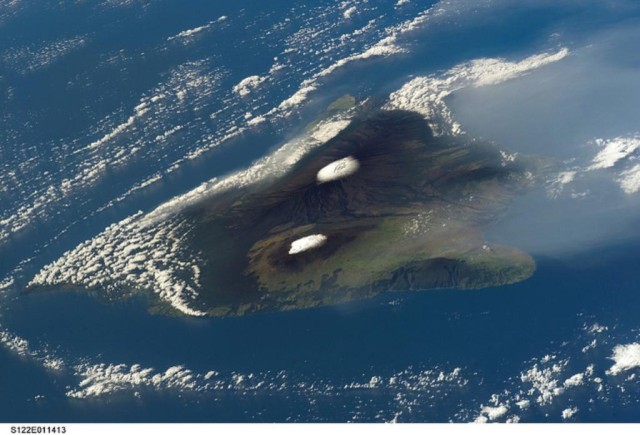
In 1980, the Hawaii County of Hawaii Planning Department issued a draft document, “Plan for Emergency Preparedness, Volume V: Nuclear Civil Protection Crisis Evacuation Plan.” It laid out a detailed blueprint for moving 177,361 Oahu residents from “high risk zones” to Hawaii island and housing them and locals in a network of appropriated structures including churches, schools, hotels and public buildings.
The plan was breathtaking in its scope and detail, but was ultimately shelved as unworkable.
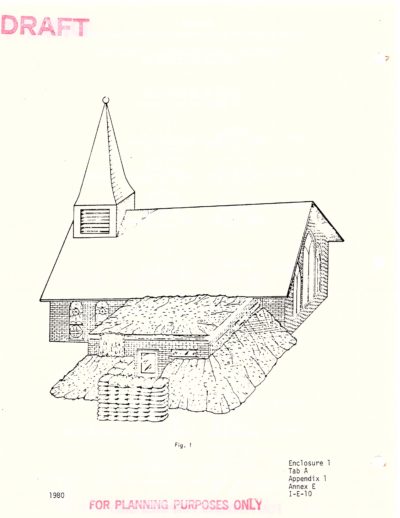
In addition to the converted refugee housing, it called for the government to commandeer and modify hundreds of structures, from post offices to a “memorial park,” as fallout shelters.
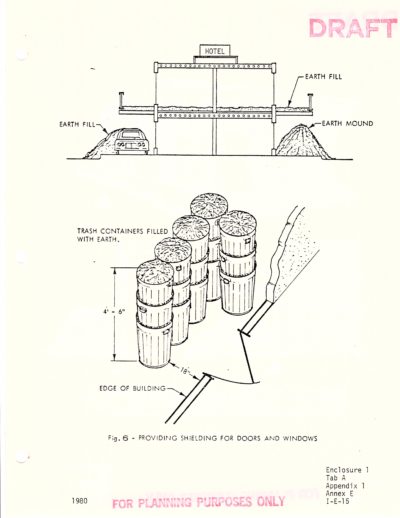
It included sample diagrams for rapidly “improving” the resistance of those buildings to radioactive fallout by bulldozing earthen berms against their walls or stacking sandbags or earth-filled trash cans alongside them. One plan for a hotel, for instance, included piling a layer of earth on the second floor to insulate the first, and pushing earthen berms against a row of cars parked under the awning at the lobby entrance, sacrificing the cars to keep the building’s window glass intact.
About 500 buildings were designated for such upgrades, with estimates of how much soil fill would be required for each — all told, 219,000 cubic yards of dirt. A three-page list gave the names, addresses and phone numbers for public agencies, lumberyards, private contractors and plantations that would be called on to supply the needed building materials, equipment and personnel.
The document also listed scores of restaurants to be commandeered to feed the people housed in buildings that didn’t have built-in commercial kitchens. How the food would be safely transported to the people or the people to the food across a possibly radioactive landscape was not explained. But there were sections devoted to procuring food and fuel supplies.
Oddly enough, only a single paragraph was devoted to water, on an island where much of the population relies on catchment systems that could be rendered useless by fallout.
A large section was devoted to setting up the bureaucracy to administer all this; it diagrammed a chain of command and listed individual jobs and job descriptions.
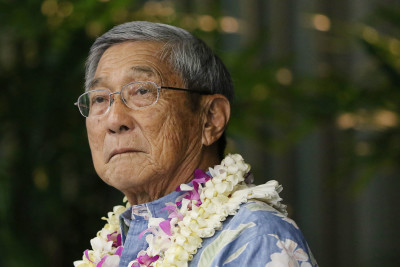
But all that planning didn’t impress one key player: Harry Kim, now Hawaii island’s mayor and then its civil defense director. Despite the plan’s wealth of local detail, Kim said the document originated on Oahu, and that he had opposed its adoption.
“All you have to do when you read something like this, if you’re someone in charge, is think, “How am I going to do this?’” he said nearly four decades later. “There were no resources being sent to help you do it.”
Kim also saw the plan as unworkable on a human level.
“I don’t want to be the people responsible at the port (of Honolulu) for saying who goes and who does not go. I certainly don’t want to be responsible for receiving,” he said.
If the plan was unworkable then, it’s almost totally irrelevant today, according to Hawaii County Civil Defense planning expert Barry Periatt. To start with, he said, there would simply be no time for moving people from another island prior to an attack, even if the move could be organized.
During the Cold War, Periatt said, “governments talked to each other” and the two superpowers had excellent intelligence on each other. The 1962 Cuban Missile Crisis, for instance, played out over 14 days of simultaneous escalation and negotiation, before the Soviet Union agreed to withdraw nuclear missiles and bombers from Cuba and the U.S. pulled ICBMs out of Turkey.
The U.S. had first discovered those missiles in Cuba with U-2 spy planes, and could monitor their removal the same way. In a similar crisis, the Hawaii planners must have assumed, there would be time to prepare while the superpowers attempted to negotiate their way back from the brink. Meanwhile, both sides would be monitoring each other with aerial and ground intelligence.
Today there is no hot line between Washington and Pyongyang, and Korea’s missiles are relatively small and mobile, harder to track on the ground.
Thirty-eight years after the plan to improvise hundreds of fallout shelters was found unworkable, Perriatt said Hawaii lacked a single blast shelter or fallout shelter.
The state is formulating its new plan in three stages. Testing the first stage, the warning system, led to the false alarm of Jan. 13. Stage 2 will cover the first 72 hours after attack, during which, Periatt said, the state can expect no help from the federal government. After that, planners will move on to Stage 3, the long-term job of coping and recovery.
With such a short warning, the new plan has to emphasize sheltering in place. But Kim noted that any new plan must consider human emotions. Calling for kids to stay in their schools and parents at home after an attack, for instance, probably won’t work.
“The planning was, ‘Don’t go to the school,’” Kim said. “If it was my child, I’d be on my way.”

