Danny De Gracia: How The Legislature Kills Bills In Silence Without Even A Vote
Committee chairs have wide latitude in scheduling draft legislation, which can advance or abort the public’s ability to have a say on important matters.
February 7, 2022 · 6 min read

About the Author

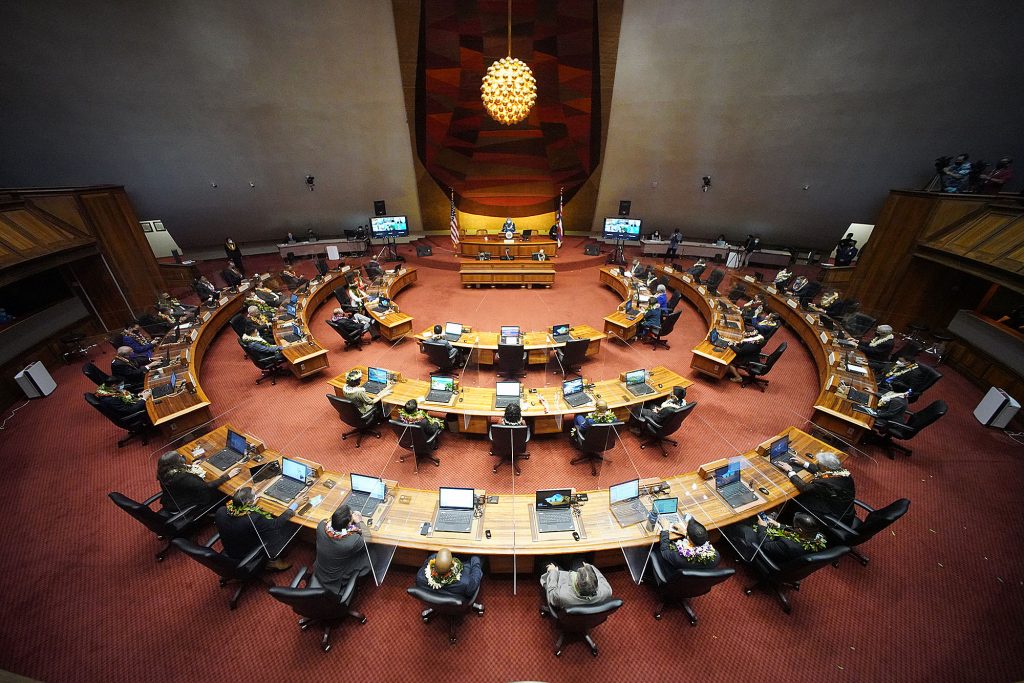
 As our Legislature continues to meet without the in-person participation of the public, some long-running Capitol traditions are adding to the frustration of a democracy in lockdown.
Among them is the wide latitude committee chairs are given in scheduling bills, which can advance or abort the public’s ability to have a say on important matters.
Being a former committee clerk to two standing committees, I know from experience that the chair’s ability to be a kind of “god” over the subject matter assignment is an important part of the majority’s agenda-setting process and legislative control.
The Legislature can’t hear every bill because there just isn’t enough time, and some bills are not meant to be heard because they are introduced as a political statement rather than an actual intent to pass a law.
That said, it’s one thing to not have a bill heard and to just try again the next year when all is well and you can visit the Legislature in person and talk with your representative any time you please. It’s another matter entirely when there are existential threats and 2022 is the last session before an election and a bill that needs to be discussed is ghosted.
As much as was practical, during my own time at the Capitol, my chairs directed me to schedule nearly every bill and resolution assigned to our committee for a hearing. This often resulted in blowback from the public over why we heard “bad bills,” but the explanation we offered was that we only heard the bills to advance the discussion and to give members of the public an opportunity to have a say, which they vociferously did.
On one occasion, I scheduled a hearing for a resolution that wanted Hawaii to adopt the United Nations Convention on the Rights of the Child. In short order, local conservatives who noticed the hearing agenda took to talk radio and denounced it. So overwhelming was the rancor over this seemingly innocuous resolution that my chair ordered me to delete it from the agenda by filing an amended agenda, a tactic that effectively “pigeonholes” or kills the measure without it ever being heard or voted on.
“We can’t delete the reso from the agenda,” I countered. “To delete it now would tell everyone we’re spineless, and not only that, it’s just a reso, it has no force of law. Besides, I’m a social conservative, and I have no problem with this thing!” After much coaxing, I persuaded the chair to keep it on the agenda, and not only did it clear our committee, but the Legislature eventually adopted it. (You’re welcome.)

In today’s Legislature, deleting measures from a prior agenda is a fairly common practice. The problem is, people can get very enthusiastic about submitting testimony for a measure the minute they see the hearing notice, only to have their hopes dashed hours later.
Vice Speaker John Mizuno explained to me by phone that what he calls “the strikethrough” – an amended hearing agenda that notes a measure has been deleted – may seem expedient at first, but can have long-term repercussions that chairs can regret.
Recalling an instance in which, as the former Human Services chair, he once scheduled a hearing for a homelessness bill, but then deleted it from the agenda after receiving calls from various stakeholders and even the governor’s policy staff, Mizuno explains that in hindsight he wished he hadn’t done that because it denied the community an opportunity to discuss the matter.
“Moving forward, it’s better to do your homework first and before putting a bill on an agenda, think about it, because it’s better to just not hear a bill than to delete it after scheduling it,” Mizuno said. He added the caveat that he still respects the right of chairs to schedule or not schedule a bill, but that they should always use that power with care.
The other way that a bill can be ghosted is during committee decision-making, when a bill has been heard but no vote is taken because it is deferred indefinitely without a future date to take action on it, leaving it in a kind of legislative limbo.
It’s common practice for bills to be deferred indefinitely under the chair’s discretion, but it’s important to note that if a committee finds a bill distasteful or unreasonable, they could just vote to “hold” the measure, because at least that’s on the record. Deferring a bill without a vote or future reconvene is a soft-kill that leaves people on the hook, preventing the closure of a vote.
“There are several reasons why I did this as a chair,” Mizuno cautions. “The first was to protect my members, because they might get heat for having to vote up or down on a controversial bill. The second was sometimes you need extra time to study it, and see if you need to revise it. But, if you’re going to defer a bill indefinitely, you should at least make it productive by explaining the reason and offering another way to proceed so the public isn’t left in the dark or without a voice.”
Should legislators pass every bill? Of course not. But because the public is locked out of the Capitol, lawmakers should go easy on ghosting measures this session. If a bill is bad or controversial, just hear it and vote on it. If a measure fails to pass, that in itself is an important part of the process because it shows us where we need to change.
So, please ease up on the ghosting, legislators. Protect democracy and give as many bills as possible a chance to be discussed and voted on.
 Sign up for our FREE morning newsletter and face each day more informed.
Read this next:

Local reporting when you need it most
Support timely, accurate, independent journalism.
Honolulu Civil Beat is a nonprofit organization, and your donation helps us produce local reporting that serves all of Hawaii.
ContributeAbout the Author