Less than 3 days left in our summer campaign to raise $125,000 by September 4. Support Civil Beat today!
We Should Insist On Full-Time Work From Legislators For Full-Time Pay
If lawmakers allow the big pay raises proposed by the Salary Commission to take effect, it can’t be business as usual at the Capitol.
March 23, 2025 · 7 min read


About the Authors


Leaders of the Hawaiʻi Legislature are suddenly staring at one and probably two fateful forks in the road, courtesy of the state Salary Commission.
First fork: They can either allow big pay raises to take effect for top-level officials in all three branches of state government — or they can reject them all.
Second fork: Assuming they take the money, lawmakers can either acknowledge the reality that they are full-time state employees who should work year-round — or they can cling to the fantasy that they are still citizen-legislators who convene for short sessions once a year before resuming their real lives.
Even now, 46 of 76 legislators report no income from jobs besides their gigs as senators and representatives, a Civil Beat analysis of financial disclosure records shows.
They are due to receive 32% raises on July 1, 2027, then additional raises over the following three years. Legislators who earn $74,160 now would make $114,348 as of July 1, 2030.
Get Serious About A Full-Time Legislature
So what could we expect from a Legislature that would be inarguably full-time? A lot more than we’re getting right now.
For starters, more committee hearings spread out over the year instead of just three and a half frenzied months. We don’t necessarily need to increase the 60 floor sessions, but they too should be spread out rather than jammed into the current window of mid-January to early May.

This session House Speaker Nadine Nakamura quickly abandoned her bill that called for creation of a task force to analyze the logistics of a year-round Legislature. Lawmakers are holding off until they receive what likely will be a much less ambitious report on the subject from the Legislative Reference Bureau, which was given no deadline for producing it.
They have to get more serious than that if they are going to accept serious money.
We get it, many legislators have gotten comfortable with the status quo. That’s why they’ve shot down most of the serious reforms that have been proposed in the last three sessions.
But to say thanks for the raise now it’s back to business as usual risks a doom cycle in which a public that is already apathetic and cynical about Hawaiʻi politics could completely lose confidence in their state government.
They’ve Already Got The Time
Our analysis of the 2025 financial disclosure reports of all 76 lawmakers shows the transition to a year-round Legislature really shouldn’t be hard for most of them. The reports cover calendar year 2024.
Thirty-four legislators — 22 in the House and 12 in the Senate — reported no income other than legislative pay. A dozen others reported also receiving social security or state retirement payments, income from rental properties and family trusts.
Another 12 lawmakers reported minimal income, less than $25,000 per year, from what appeared to be contract work or some type of part-time employment.
Just 18 legislators appeared to have substantial income related to work beyond their legislative jobs.

For instance, Rep. Della Au Belatti reported $100,000 to $150,000 from her job as a lawyer with the Eric Seitz law firm. Sen. Henry Aquino reported $50,000 to $100,000 from a position as executive director of the Waipahu Community Association.
A few legislators who said they had no income beyond their legislative jobs also reported business ownership or interest but reported no income from those companies.
A number of others appear to have spouses or civil partners who make good money at their jobs. But numerous lawmakers apparently failed to list spousal income as required by law, a situation that prompted the Hawaiʻi State Ethics Commission to send letters to legislative leaders a few weeks ago warning them that the filings needed to be corrected.
Still, the majority of Hawaiʻi lawmakers don’t appear to have any other work besides the Legislature.

More Sunshine In The Forecast
Conversion to a year-round schedule takes away the most convenient excuse — “we just don’t have time” — for not approving many desperately needed reforms at the Legislature.
Most importantly, it should be the ticket to ending the Legislature’s status as a secret society exempt from the Sunshine Law that requires county councils and other boards and commissions to conduct the public’s business out in the open. Perhaps that exemption could remain for large-scale party caucuses, but smaller group meetings need to happen in public.
Would this result in less arm-twisting and political favor-trading? Bank on it.
A more relaxed schedule should also mean curtailment of the draconian power of committee chairs who singlehandedly decide which bills should be heard, how they should be amended and when they should be deferred.
This can be accomplished through simple rule changes.
Fiscal notes should be added to all expenditure bills so that legislators — and everyone else — can see the price tags up front. The Legislature approved an office to do fiscal analysis of bills way back in 1990, but since it was never funded it was never actually created.
A bill is still alive this session that could finally help address that, although, go figure, it doesn’t mention the money that would be needed to finally get the office up and running.
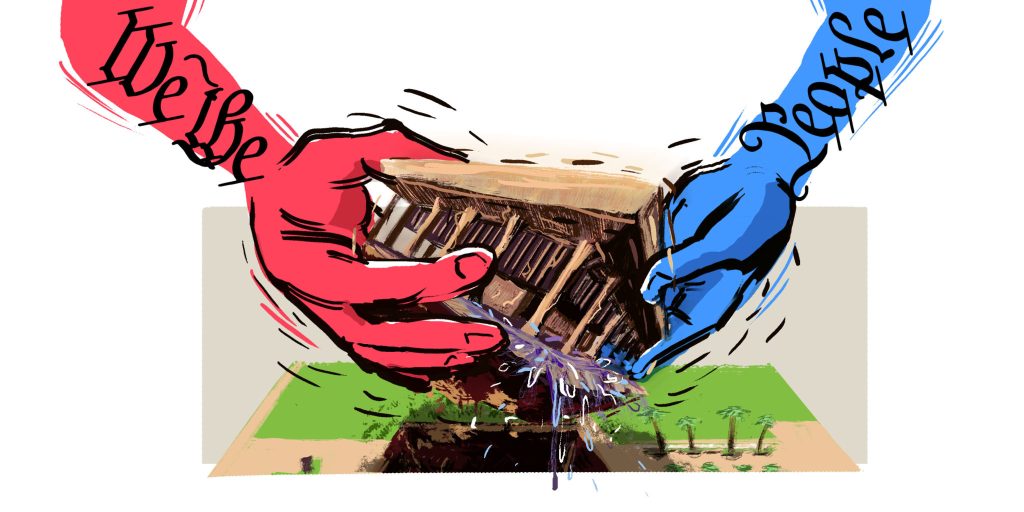
On The Job When Needed
Beyond spurring long-overdue adoption of specific reforms, a 12-month Legislature is simply a better model for effective leadership.
The Legislature has sole authority over funding, taxation and policy decisions that are managed by multiple levels of local government in most states. Legislators need to be around all year to oversee the bureaucracy.
They’d also be in a better position to respond to emergencies. When much of Lahaina burned in August 2023, we were more than five months away from the next legislative session. While the House organized special working groups to address the disaster, the Senate did not. And when the 2024 session finally did roll around, the clock ran out on a lot of fire-related legislation that deserved more attention.
The constitution spells out when each session begins — the third Wednesday in January — but not when it ends.
The bill-writing process in general would be less rushed, theoretically giving legislators time to actually craft policies that address specific challenges rather than applying off-the-shelf policies from national lobbying organizations or other states.
A constitutional amendment would be the best way to convert to a 12-month Legislature. It could be accompanied by another prohibiting lawmakers from holding other jobs.
Voters might be open to the package deal: making legislators work more for those raises they would have already received, and eliminating the potential conflicts of interest that moonlighting presents.
In the meantime, the constitution spells out when each session begins — the third Wednesday in January — but not when it ends. Those 60 days of floor sessions could already be spread out over a lot more of the calendar, and committee hearings could continue in the intervals.
If lawmakers accept the raises, they should embrace the full-time nature of their jobs.
Hopefully their leaders would recognize this as a pivot point for change at the Capitol. If they don’t, they’ll need some persuading by reform-minded legislators and frustrated voters who are willing to elect more of them.
Clarification: Rep. Tina Grandinetti reported income of $50,000 to $100,000 for work with PolicyLink, a national public policy advocacy organization. That ended in December but was required to be included in the recent filing.
 Sign up for our FREE morning newsletter and face each day more informed.
Read this next:

Local reporting when you need it most
Support timely, accurate, independent journalism.
Honolulu Civil Beat is a nonprofit organization, and your donation helps us produce local reporting that serves all of Hawaii.
ContributeAbout the Authors