Lahaina Fire Stole Their Dream Home. Plans To Rebuild Reveal Deep Divides
The Deals are the first oceanfront property owners on Front Street to try rebuilding in an area that scientists say is at risk due to sea level rise. Neighbors see it as a test case.
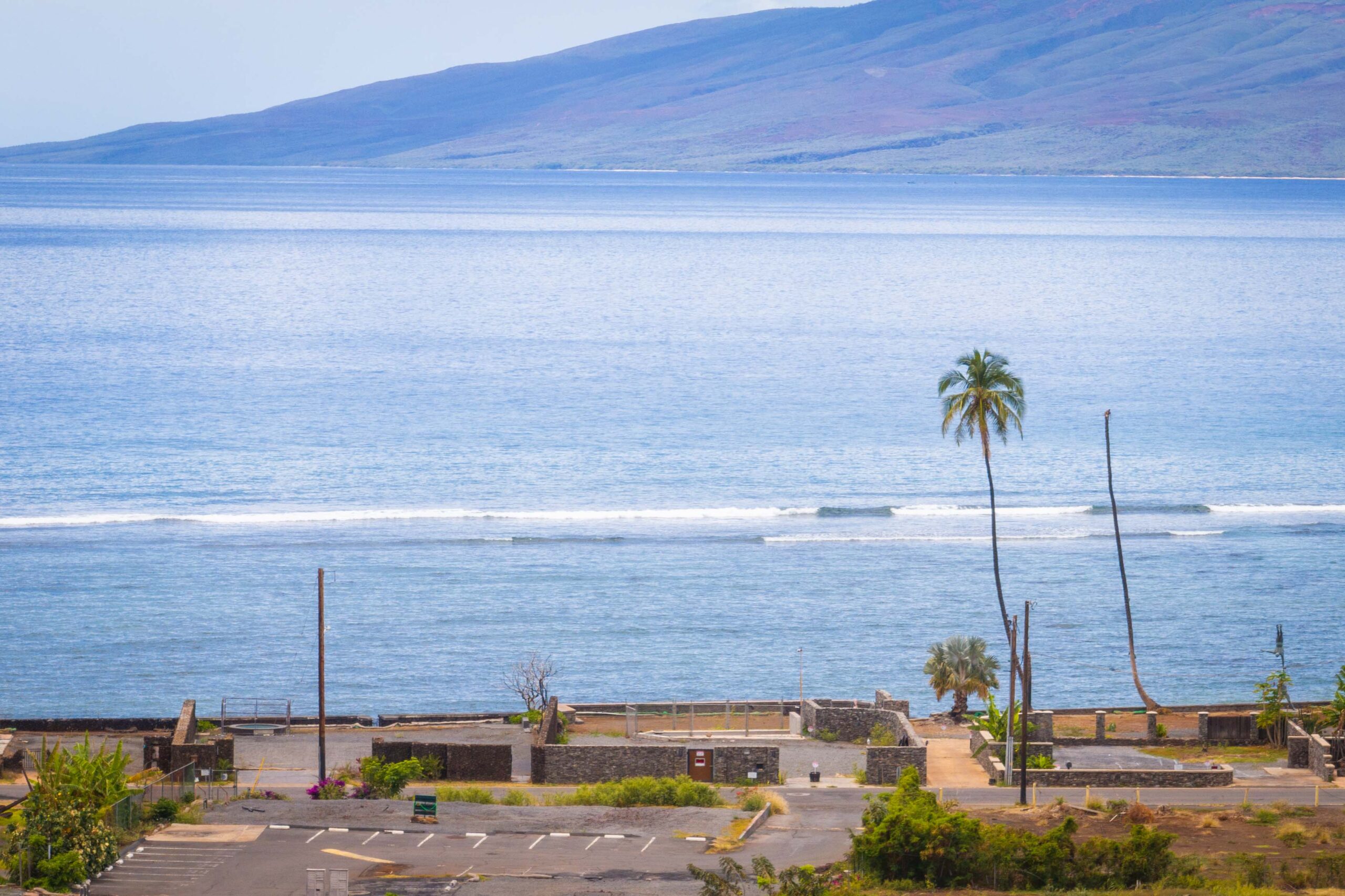
Graded gravel lots line the shore along Lahaina’s historic Front Street more than 20 months after wildfires razed most of the town and killed 102 people.
The mesmerizing blue of the ocean, lapping against seawalls, contrasts with the blackened tree stumps, relentless weeds and scorched foundations of houses in this wealthy subdivision in West Maui.
The stone steps that worshippers climbed for more than 100 years are all that remains of the Lahaina United Methodist Church. Wood beams prop up the walls of the historic U.S. Seamen’s Hospital a block away.
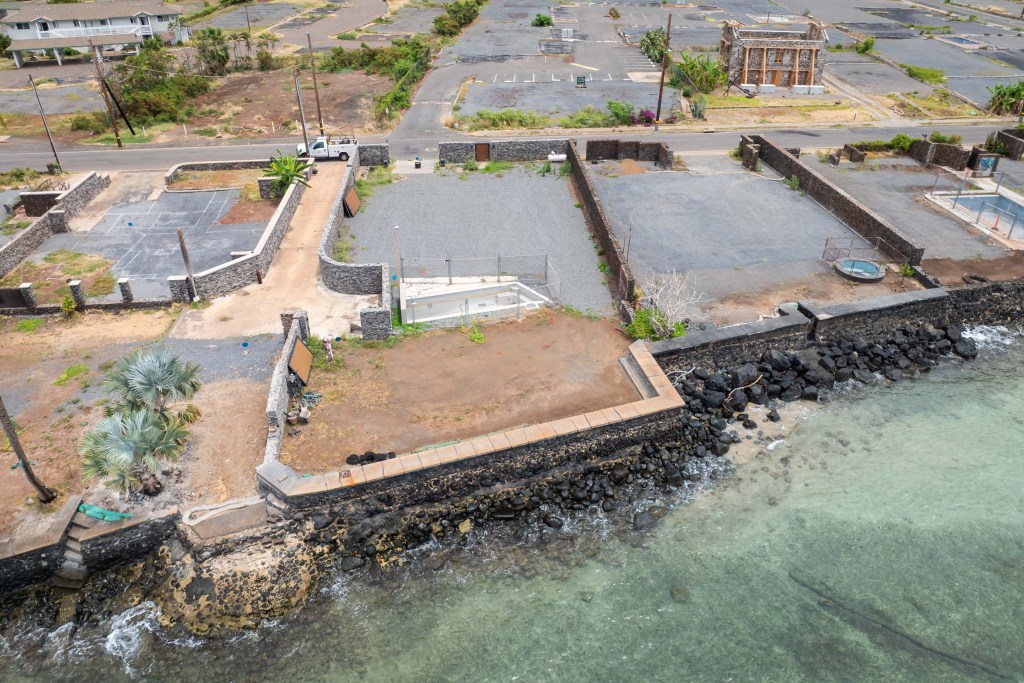
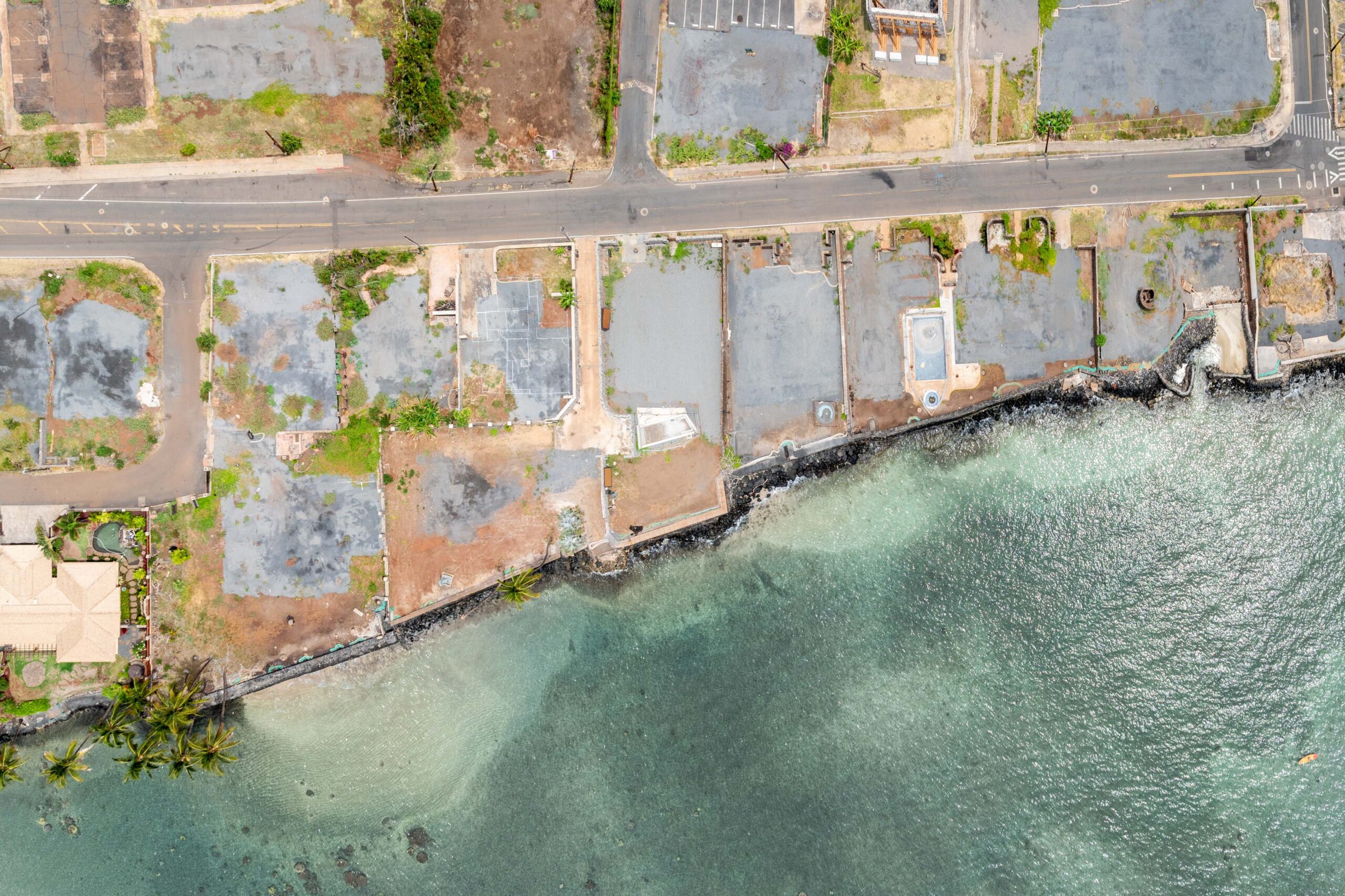
Just down the road at 1045 Front St., a rock wall with an electronic keypad and no-trespassing signs encircles a vacant lot. Before the fire, the wall rimmed the modern multimillion-dollar home of former Boeing executive Stanley Deal and his wife, Dilara.
The couple bought their slice of paradise — where they could sit by their pool and watch whales and boats make their way across the channel between Maui and Lānaʻi — for just over $2 million in 2016. Now, the Deals are the community’s first oceanfront property owners in Lahaina seeking approval to begin reconstruction of their home, one that Zillow estimates once was worth nearly $9 million, in an environmentally sensitive area with special protections from the state and county.

Wildfires, hurricanes, floods and other disasters fueled by climate change have forced communities around the world to grapple with how — or whether — to rebuild. But the fire that tore out the heart of downtown Lahaina on Aug. 8, 2023, has exposed long-simmering tensions that reflect a wide range of visions not just for the future of Lahaina, but for Maui and the rest of Hawaiʻi, where working-class locals often resent wealthy transplants who only live part of each year on the island.
Those tensions have pitted the rights of individual property owners against the values of those who see the fire’s devastation as an opportunity to move Lahaina back from the shoreline, restore public access to the waterfront, safeguard precious natural resources and preserve what’s left of the town’s historic character.
While more than 300 property owners have been issued permits allowing them to rebuild their houses on the mauka side of Front Street farther from the ocean, not a single permit has been granted so far to someone who lost a coastal home in the fire.

More stringent restrictions on shoreline development instituted to address future risks posed by climate change have complicated the permitting process for coastal properties and prompted some landowners to question whether they will be able to rebuild at all.
The Deals are an exception because they applied for a special management area permit, generally required by the state and administered by the counties for all construction near the shoreline, just three days before more stringent coastal zone management rules went into effect on Aug. 25, 2024. As of April 11, seven other property owners had also filed applications — only one of them before the rule change. The Deals are the first to make it to the Maui Planning Commission.
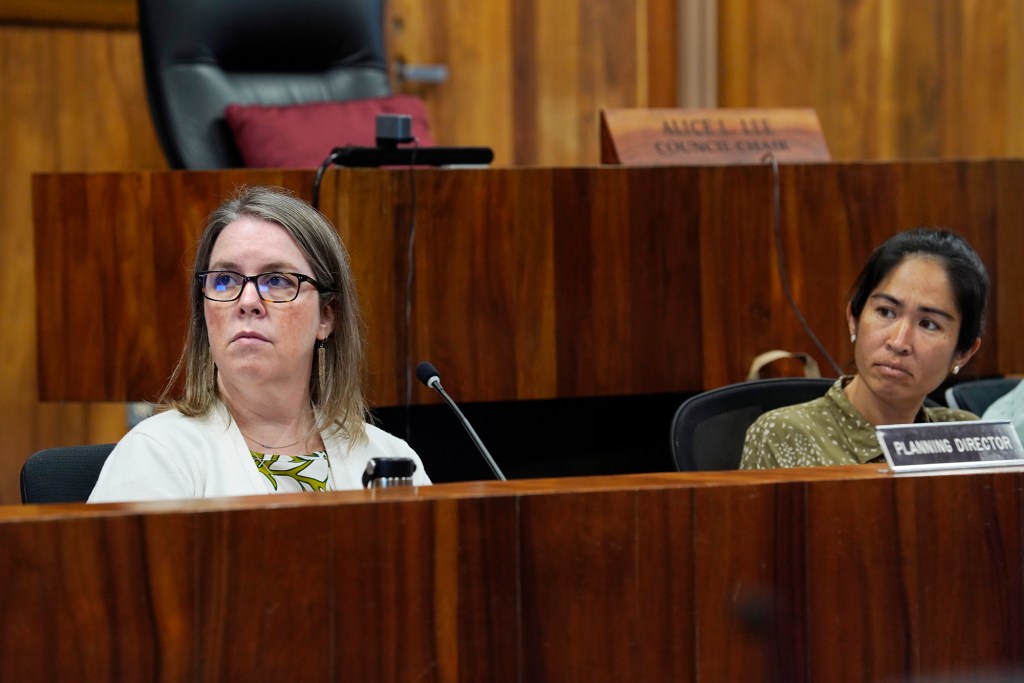
That process got underway earlier this month with two hours of emotional debate that often dwarfed the specifics of the Deals’ own permit application.
Those pushing for approval, mostly neighbors who also hope to rebuild, pointed to the benefits of restoring the homes they once loved. Opponents argued that now is the moment to address historical injustices and ensure Lahaina’s longterm sustainability.
The Maui planning director anticipates that 167 of these special management area permit requests will be emerging in the coming months and years, according to a letter between the county and state health officials. Many of those oceanfront properties’ owners are likely monitoring the Deals’ permit process closely for a sign: An approval would renew their faith that their beloved neighborhood may not be forever lost.
“It would mean somebody got through the process and is rebuilding, and that’s hope,” said Lynn Barr, a health care entrepreneur and public health advocate from Washington who purchased a home neighboring the Deals’ in 2022. “I just wish it would set a precedent we could follow going forward.”
‘It’s For Lahaina’s Rebirth’
The Deals lived in their home roughly four months a year before the fires and plan to live there on a more permanent basis now that they are retired, according to the Maui Planning Department’s staff report on the permit.
Aside from additional safeguards to protect against rising seas and future fires, the 3,617-square-foot, two-story home with a pool and attached garage would look and feel just about the same as the home that was destroyed. The estimated cost of rebuilding: $1.85 million, which is about how much it cost to build it the first time around.
At the first public hearing on their permit application, Stanley Deal told the planning commission that he and his wife are “deeply committed” to the community and their plans are consistent with the county’s vision for a “stronger, more resilient Lahaina, with respect to its history, embracing sustainability and support of the local economy.”
“This home is not just for us, it’s for Lahaina’s rebirth, and I’m dedicated to ensuring its reconstruction benefits not only my family, but the community,” he said. “Lahaina’s recovery will take time. Each approved project is a step toward healing.”
The Deals declined requests for an interview.

Tiare Lawrence, a Native Hawaiian community activist who told the commission that her family had been pushed out of Lahaina while more people moved in from the mainland, said it was against the community’s best interest to rebuild such homes.
“Let’s be honest: These beachfront homes haven’t benefited our local families,” she said. “They’ve been bought up, flipped and swallowed by out-of-state investors. The couple requesting this permit doesn’t even live on Maui. They don’t fish these waters. They don’t surf these waves. They don’t walk this shoreline. And they definitely won’t be the ones dealing with the flooding, the erosion, and the loss of access once this home is built in a sea level rise zone.”
The planning commission deferred its decision on the Deals’ permit request for two weeks to hear further testimony. The hearing is scheduled to resume Tuesday.
‘Never Waste A Good Disaster’
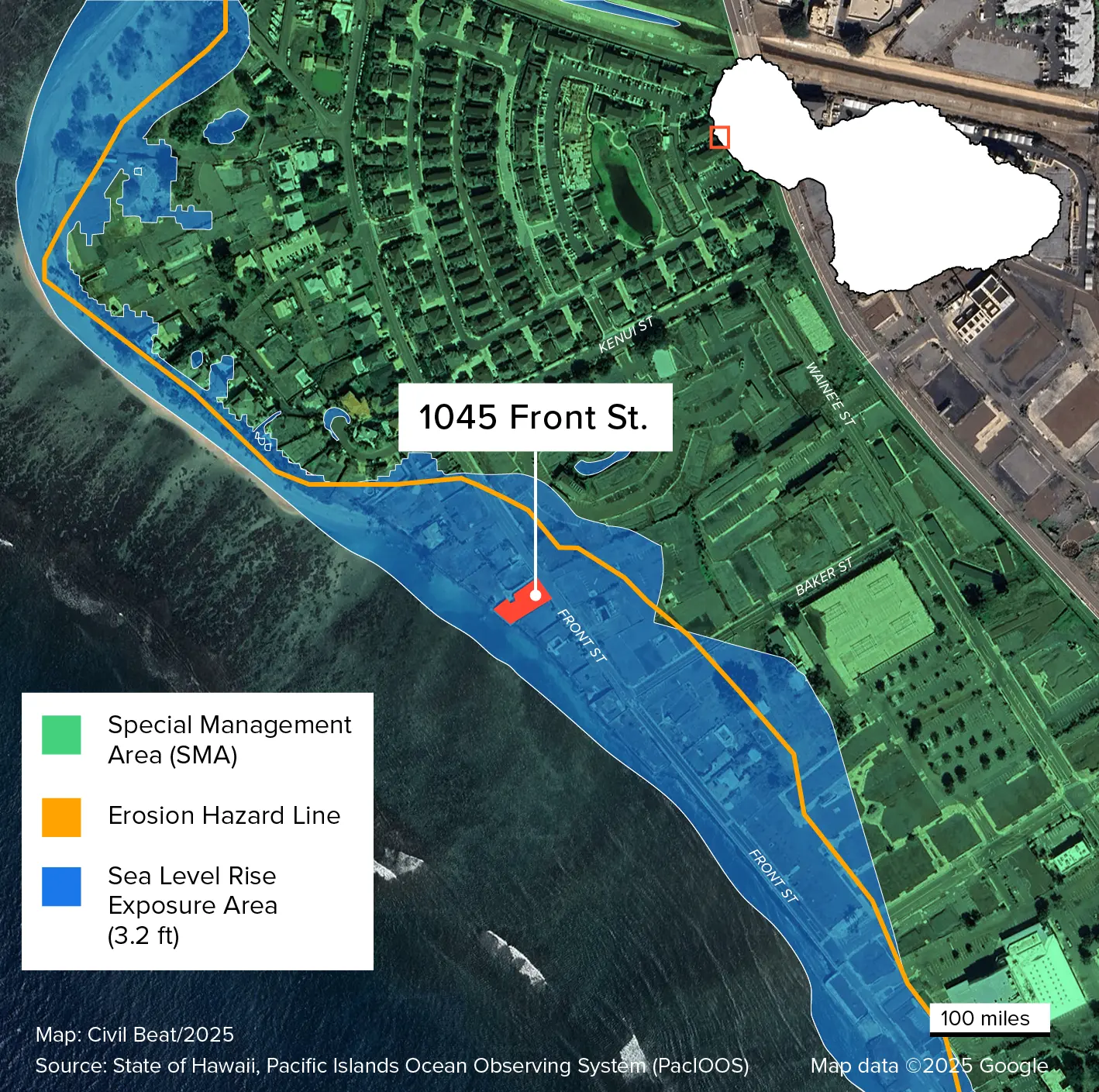
Much of the debate over rebuilding 1045 Front St. is centered on research from the University of Hawaiʻi Mānoa, which relies on science from the Intergovernmental Panel on Climate Change. It shows this property and others along the coast would be vulnerable to damage if sea level rises by 3.2 feet by 2100 as expected.
But some of the oceanfront property owners reject the modeling behind that science, saying it doesn’t account for the protections against erosion and waves provided by their existing seawalls. They say they have never seen any changes to their properties, and they are unwilling to accept it as a reason to abandon their dreams of rebuilding.
Bern Burkhalter, a retired carpenter and electrician, said his parents owned an oceanfront house on Front Street for about 30 years before it was destroyed in the fire. He and his wife lived across the street.
While he believes that climate change and erosion threaten other communities, he questions research suggesting that his parents’ property — which for decades sat behind a seawall — had experienced or would continue to be at risk because of erosion and sea level rise that “hasn’t been noticeable.” A small beach on the other side of the seawall had been sandy at times and rocky at others.
“It’s always been cyclic,” he said.
“This is our home. The lifestyle and history that were encompassed in that place are irreplaceable,” Burkhalter said. “We loved that community. It’s a very special place, and we would be willing to take some risks to have that special place.”
Sea levels around Maui are estimated to rise between 4 and 6 feet by the end of the century, and coastal properties like the Deals’ are increasingly likely to be threatened by erosion and flooding, according to research by Chip Fletcher, interim dean of the School of Ocean and Earth Science and Technology at the University of Hawaiʻi Mānoa.
While many homeowners are deeply attached to their oceanfront properties, Fletcher said, there is an opportunity to build a more resilient Lahaina.
“Never waste a good disaster,” he said. “I know that’s harsh, but it’s actually sort of a rule of thumb.”
Barr, who also owned a house near the Deals before the wildfire, has publicly disputed Fletcher’s research. She acknowledges that climate change is dangerous, but she thinks that the seawall along Front Street is capable of protecting the majority of oceanfront properties. She said a company called K2N Crest inspected the seawall bordering her property and determined it to be in good condition.
The Climate Resilience Collaborative at UH submitted testimony to the planning commission that directly challenged several of Barr’s statements and said sinkholes were likely to occur inland of seawalls, even if erosion was not visibly evident on the shoreline.
“Sinkhole-related structure damage is already occurring in several areas of West Maui, and is expected to worsen as sea level continues to rise,” according to the group’s testimony.
The county has also determined that some of the seawall along other parts of Front Street needs to be repaired and extended to protect from erosion, a project expected to cost over $10 million.
‘We Miss It So Much’
Property owners’ efforts to rebuild their oceanfront homes will be a major test for how the county balances its new rules and a desire to plan for the predicted effects of climate change with growing pressure to more quickly rebuild Lahaina.
Lahaina — once the capital of the Kingdom of Hawai’i, a major hub for Pacific whaling and home to many of the island’s sugar plantation workers — was a bustling, largely immigrant town in 1929 when a humble plantation home was built on the property that is now considered 1045 Front St.
The Deals demolished that home in 2018, two years after they bought the property, and built in its place a contemporary house reminiscent of the boxy architecture popular in California.
Front Street and much of Lahaina’s Historic District lie within the special management area where most properties are required to have special permits that require developers to follow rules intended to protect the fragile coastal environment and preserve public access to the waterfront.
To expedite the rebuilding of Lahaina, Maui Mayor Richard Bissen announced in February that 636 destroyed structures, mostly residential properties, would be exempt from much of the process of acquiring those permits. But the exemption did not extend to shoreline properties like the Deals’.
The county also recently adopted stricter shoreline setback rules for new coastal construction. Those rules cite research related to projected sea level rise and the effects of erosion on Maui, according to Maui Planning Director Kate Blystone.
“You want your regulations to evolve as you learn new things,” Blystone said. “And that’s what we did.”
However, the proposed construction at 1045 Front St., which will adhere to the previous 40-foot setback requirement, isn’t bound by the more prescriptive rules because the Deals submitted their permit applications just days before the new rules went into effect.
While the Deals managed to narrowly circumvent the new regulations, their neighbors will have to specify plans to address any parts of their properties that could be impacted by sea level rise, floods, erosion and tsunamis. The planning director then must consider the anticipated sea level rise and likelihood the properties will suffer damage from floods or erosion when determining whether to issue a permit.
Oceanfront property owners said they worry they also will have to follow new rules prohibiting construction inside the “erosion hazard line,” where most of their homes previously stood.
“We all would want to get home as quickly as possible,” Blystone said. “But there’s this tension.”
The planning department has a responsibility to protect health, safety and general welfare, she said.
“That is what our rules do. That’s what our community plans do,” she said.
The Deals’ proposal outlined several features in the rebuild to mitigate the effects of coastal hazards, including extending the home’s concrete footing 3.5 feet underground and encasing the water, gas and electrical lines in concrete to protect against erosion.
Still, comments at the public hearing and the ongoing buzz make it clear that no amount of mitigation measures will end the ongoing community uncertainty and frustration stirred up by this first project.
Barr said she had fulfilled a “lifelong dream” when she purchased her home on Lahaina’s coast in 2022, and she was traumatized when her property was destroyed in such a violent and unexpected manner.
“We miss it so much, and the only way we get it back is to build it,” she said.
While she was sympathetic to the frustrations of Native Hawaiians and others who feel like they have been pushed out of Lahaina, she said she also really wants to return to the life she lost when her house burned down.
“I don’t think people understand how painful it is to have lost everything and not to be able to move forward, to not have a path, and to have all these people hating you,” she said.
At the hearing, Lahaina resident Jackie Keefe said she was frustrated by property owners like the Deals expressing a love for the community they call home a few months each year while simultaneously requesting to rebuild their oceanfront properties.
“It infuriates me when I hear folks asking for Lahaina back the same way,” she said. “That just shows me a different level of entitlement … This is our one chance, our one opportunity for restoration.”
Civil Beat’s coverage of Maui County is supported in part by a grant from the Nuestro Futuro Foundation and its coverage of environmental issues on Maui is supported by grants from the Center for Disaster Philanthropy and the Hawai‘i Wildfires Recovery Fund, the Knight Foundation and the Doris Duke Foundation.