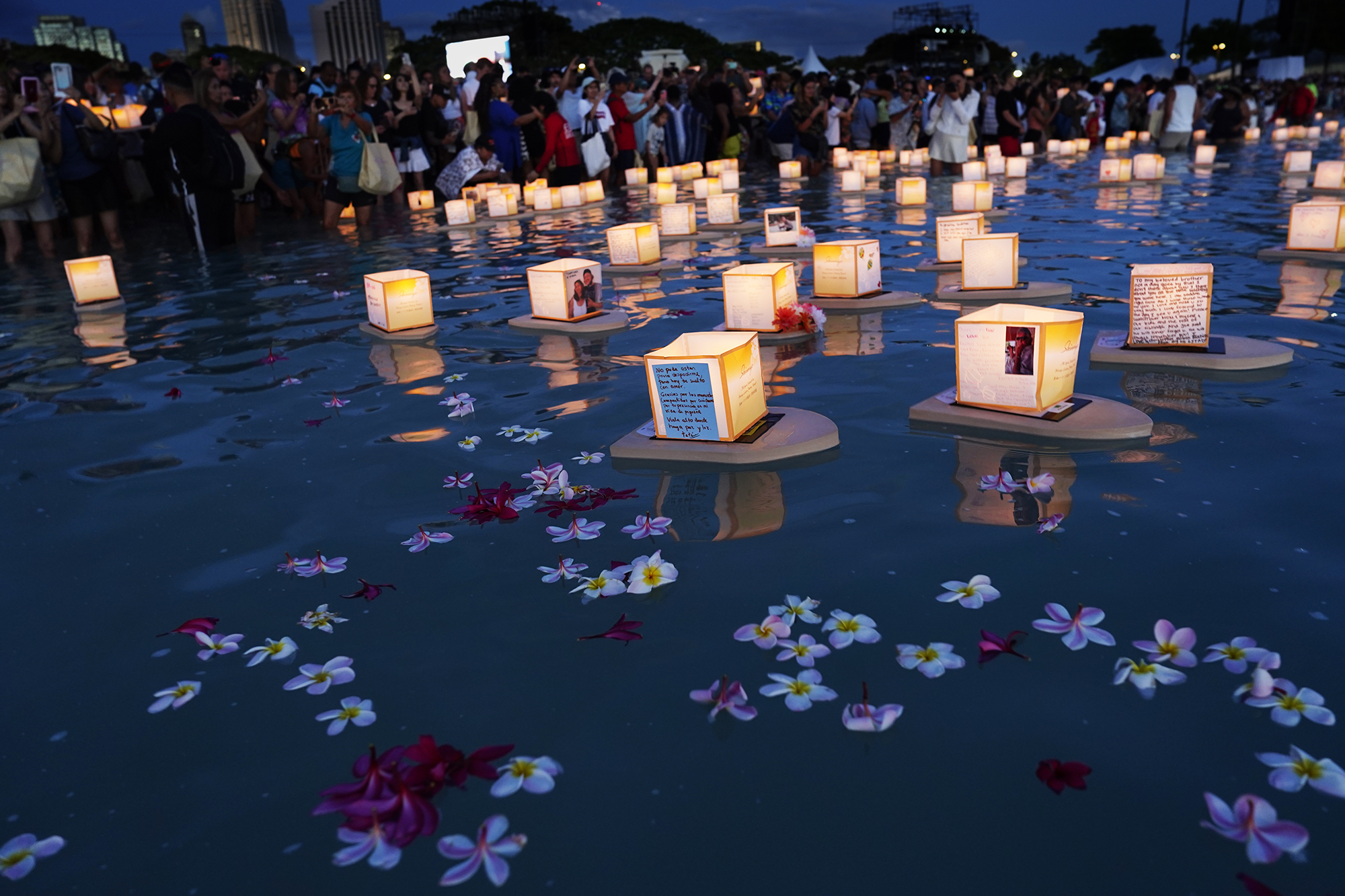
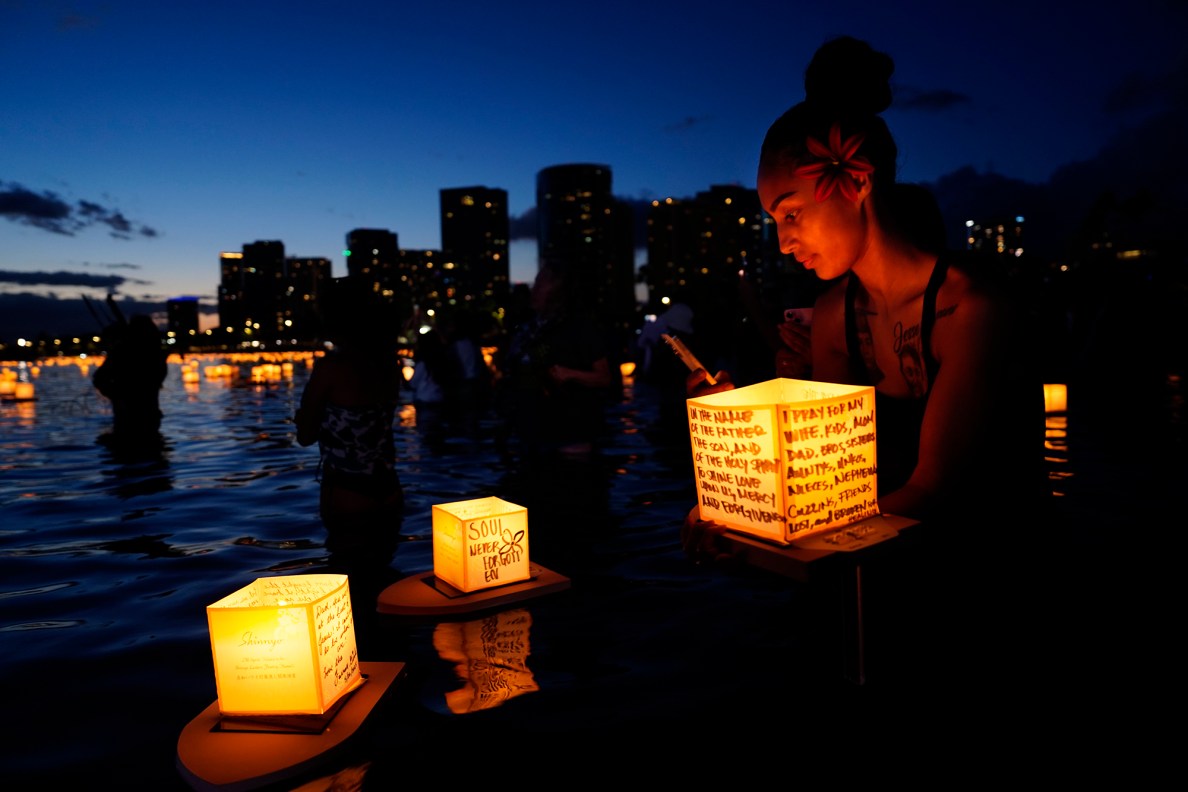
The 27th Annual Shinnyo Lantern Floating Hawaiʻi brought an estimated 50,000 people together Monday to remember their loved ones with a Memorial Day ceremony.
Photo Essay: Raising Spirits On Earth Up To The Heavens
The 27th Annual Shinnyo Lantern Floating Hawaiʻi brought an estimated 50,000 people together Monday to remember their loved ones with a Memorial Day ceremony.
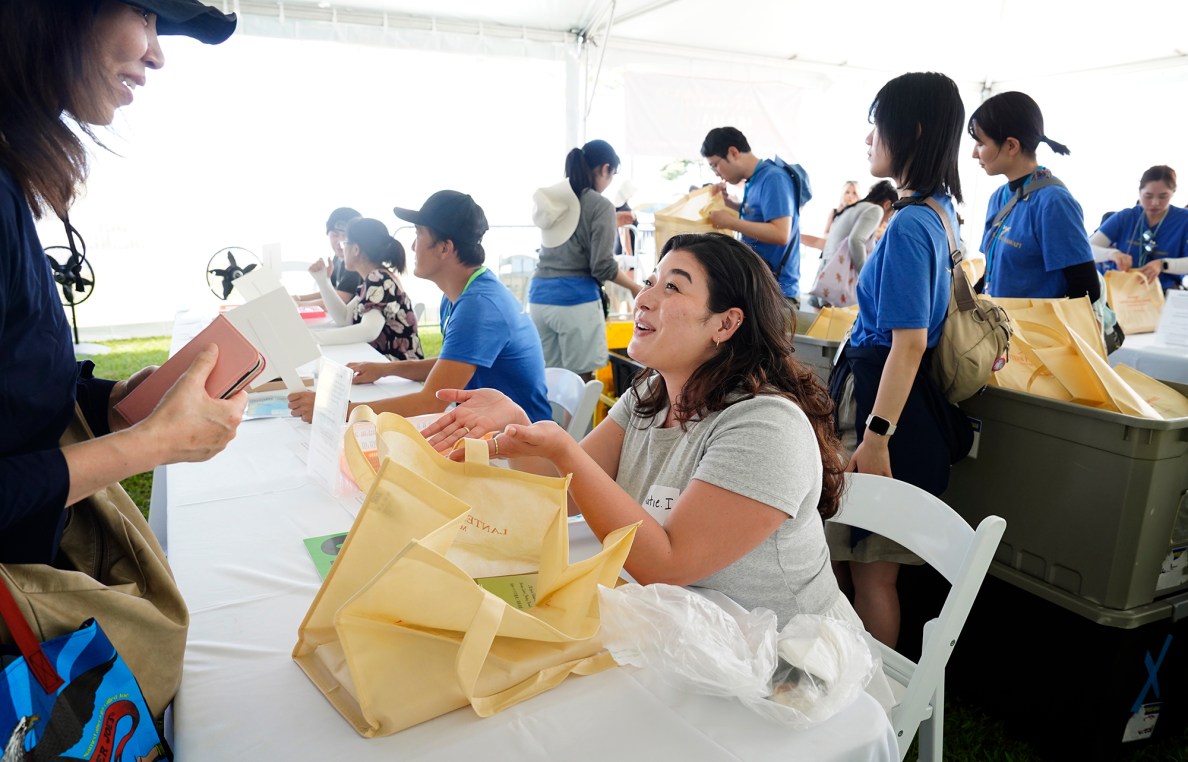
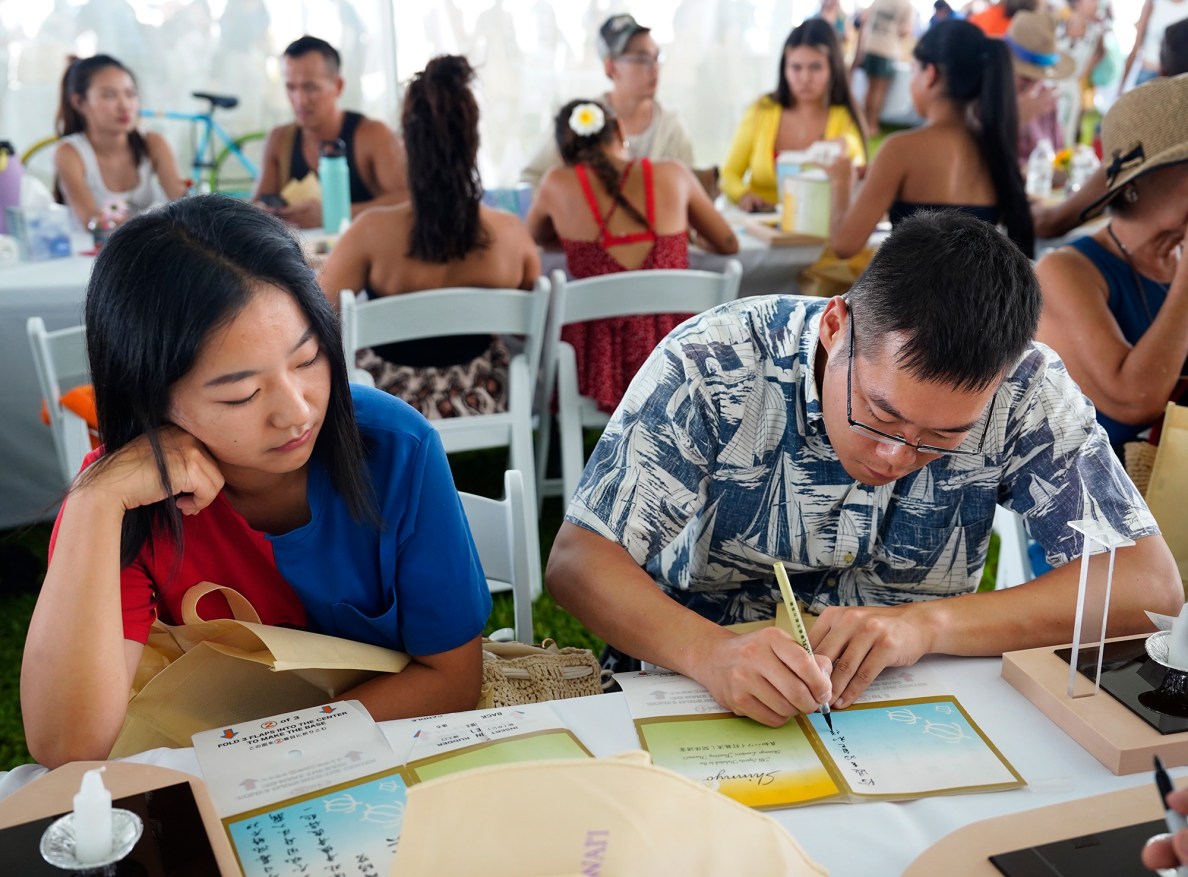
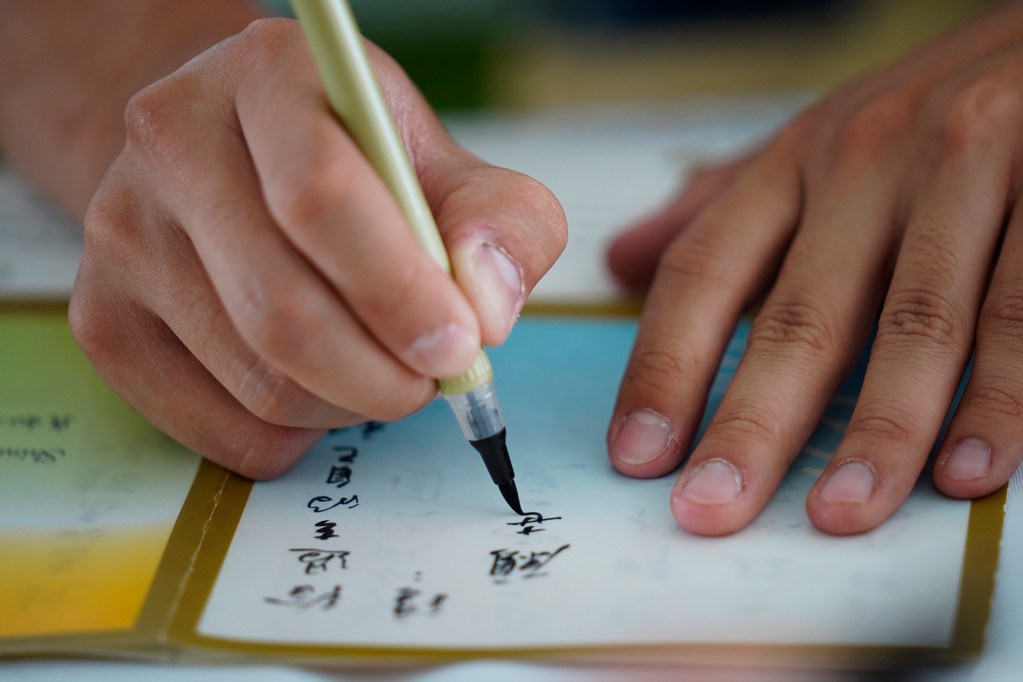
Shinnyo-en USA practitioner Katie Ishizaka, of Chicago, goes over instructions with Yamazaki Hiroko, of Tokyo, as she picks up her floating lantern for the 27th Annual Shinnyo Lantern Floating Hawaiʻi Monday in Honolulu. Ishizaka has volunteered at the annual event for three years. (Kevin Fujii/Civil Beat/2025)Volunteers hand out floating-lantern kits. More than 5,600 individual lanterns were distributed. Some were still available when the distribution tent closed at 4 p.m. Monday. (Kevin Fujii/Civil Beat/2025)Honolulu resident Qiyu Yin, left, watches Shintzu Jen write to loved ones for the lantern he will send afloat. (Kevin Fujii/Civil Beat/2025)Shintzu Jen, of Honolulu, remembers friends and family on his lantern. He describes his writing as traditional Chinese. (Kevin Fujii/Civil Beat/2025)
The Memorial Day event honors and remembers people from diverse backgrounds. Multiple languages were heard as participants wrote notes to their long-lost loved ones in the pick-up tent. Members of the military received priority with a reserved line to receive their floating lantern kits.
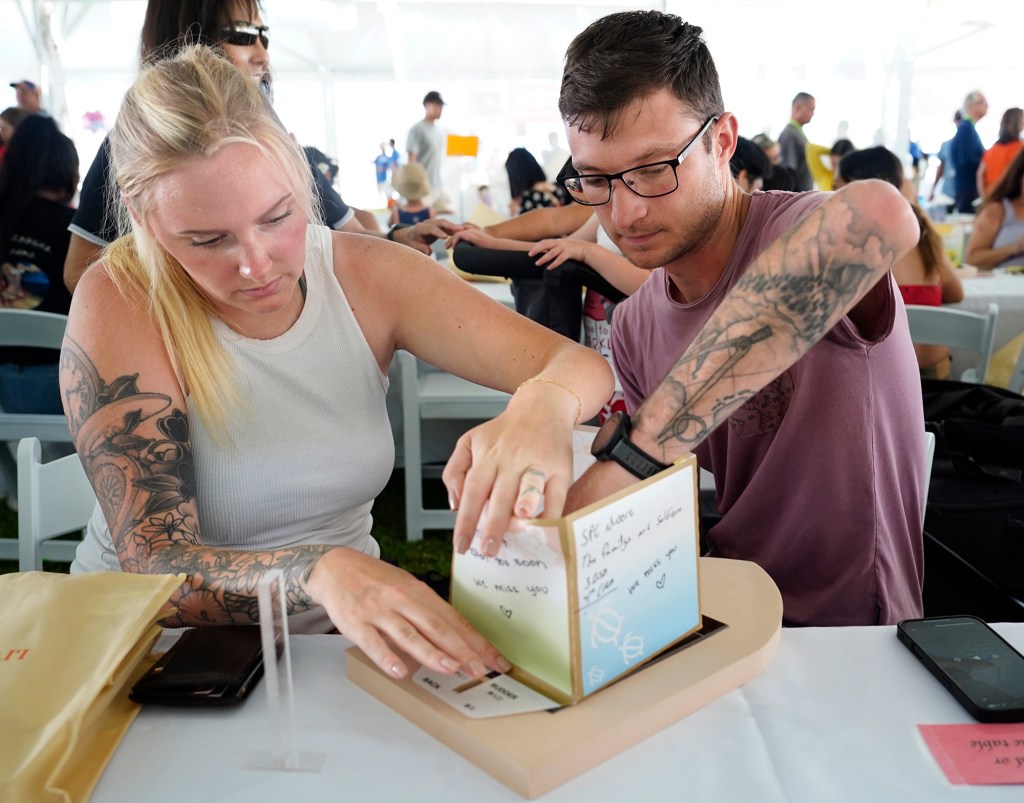
Kalyn and Cameron Green assemble their lantern with messages to family and military friends. The couple met in the Army. (Kevin Fujii/Civil Beat/2025)
In 1971, the last Monday of May officially became a federal holiday to honor and mourn those who were killed during military service.
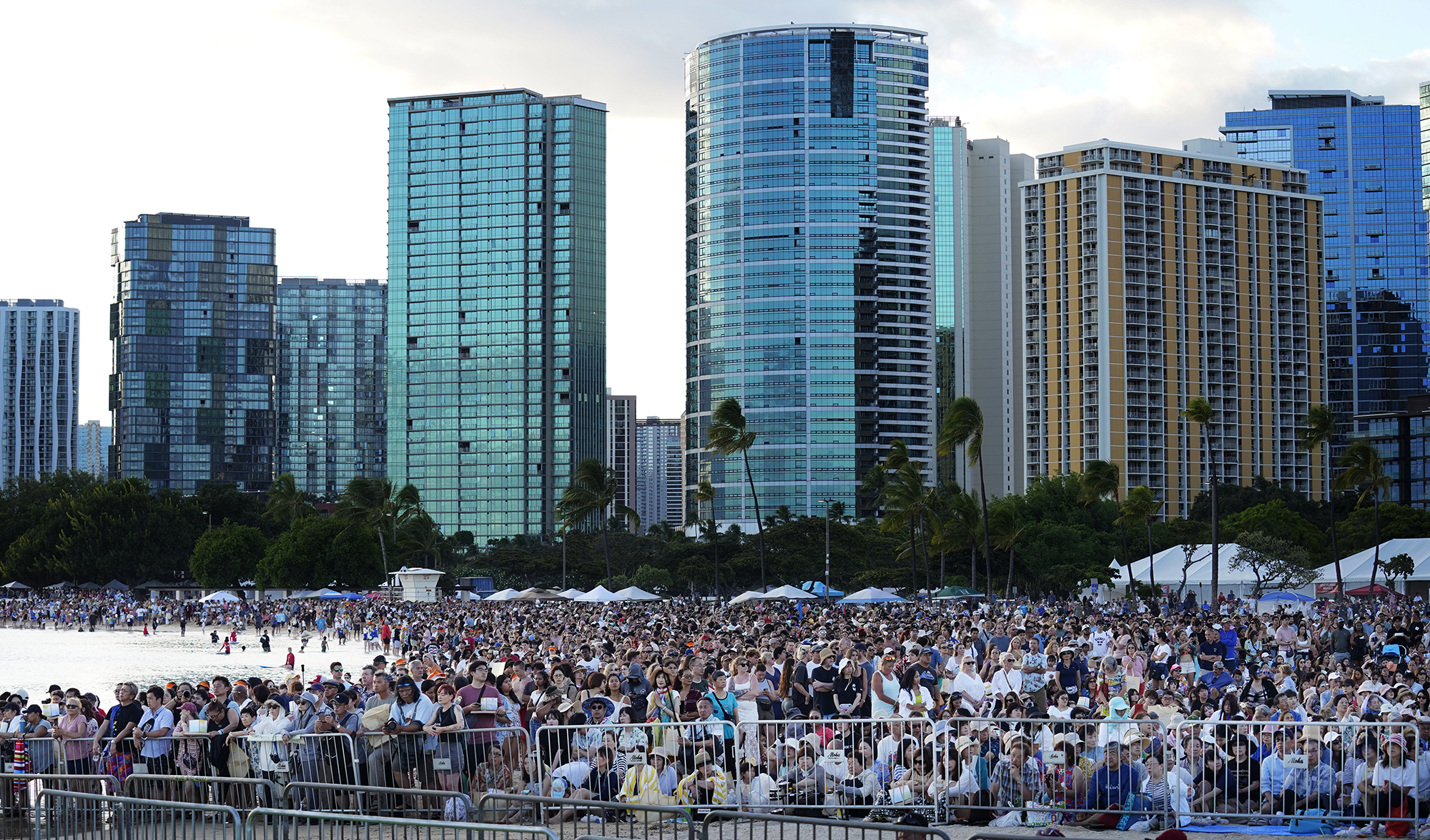
An estimated 50,000 people watch the 27th Annual Shinnyo Lantern Floating Hawaiʻi ceremony on multiple large-video displays in Ala Moana Regional Park. (Kevin Fujii/Civil Beat/2025)Emilia Perry, second left standing, prepares to place a lei on the Hawaiʻi guiding lantern Monday. Perry is the widow of professional surfer, Honolulu Ocean Safety Department lifeguard and actor Tamayo Perry who died in a June 23, 2024, shark attack while surfing. (Kevin Fujii/Civil Beat/2025)
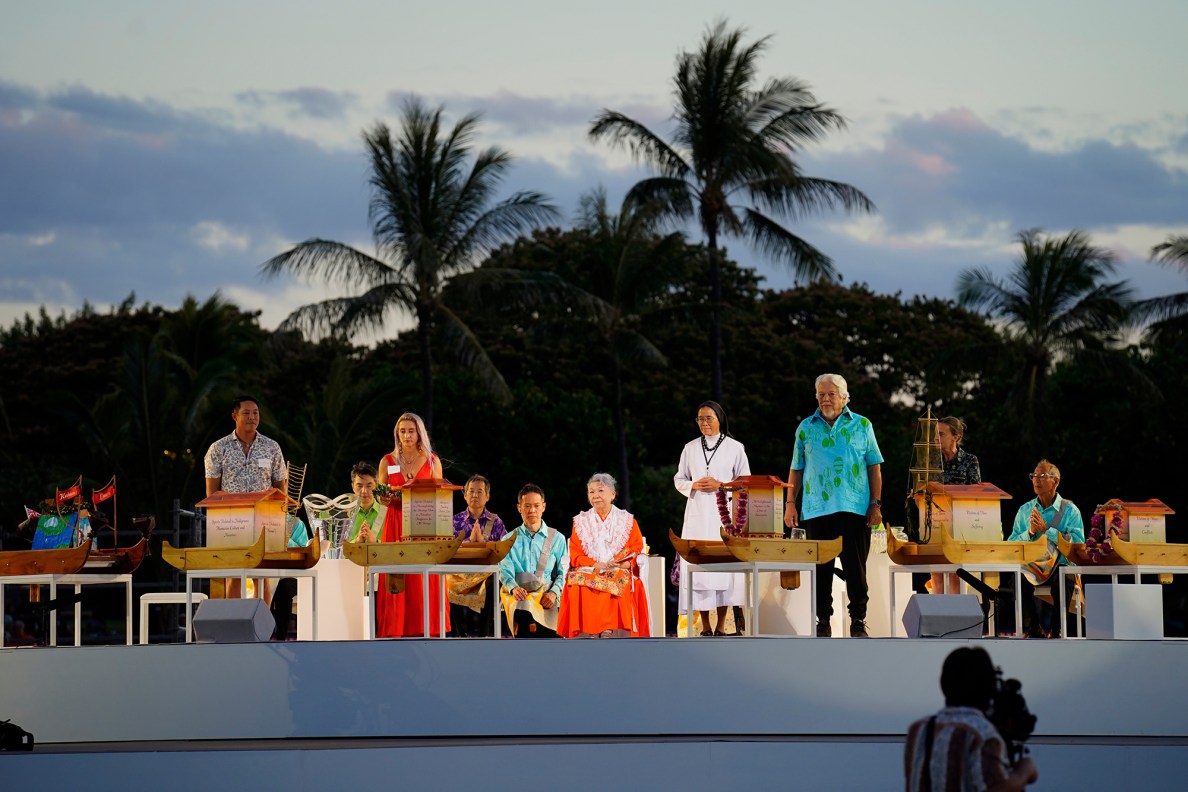
Emilia Perry, who was married to lifeguard Tamayo Perry, who died in a shark attack while surfing last year, placed a lei on the Hawaiʻi Lantern, which offers multiple prayers for: spirits related to Hawaiʻi, spirits related to Indigenous Hawaiian culture and ancestors, spirits of Hawaiʻi’s land, water, flora and fauna and the spirits of victims of accidents on land and water.
Others on the ceremonial stage are Hawaiʻi Coral Restoration Nursery aquaculture biologist Anthony Mau, from left standing, Perry, the head of Shinnyo-en Her Holiness Shinso Ito, sitting, Chaminade University assistant professor of religious studies Sister Malia Dominica Wong, legendary Hawaiian musician Keola Beamer and U.S. Army Garrison Hawaiʻi commander Col. Rachel Sullivan.
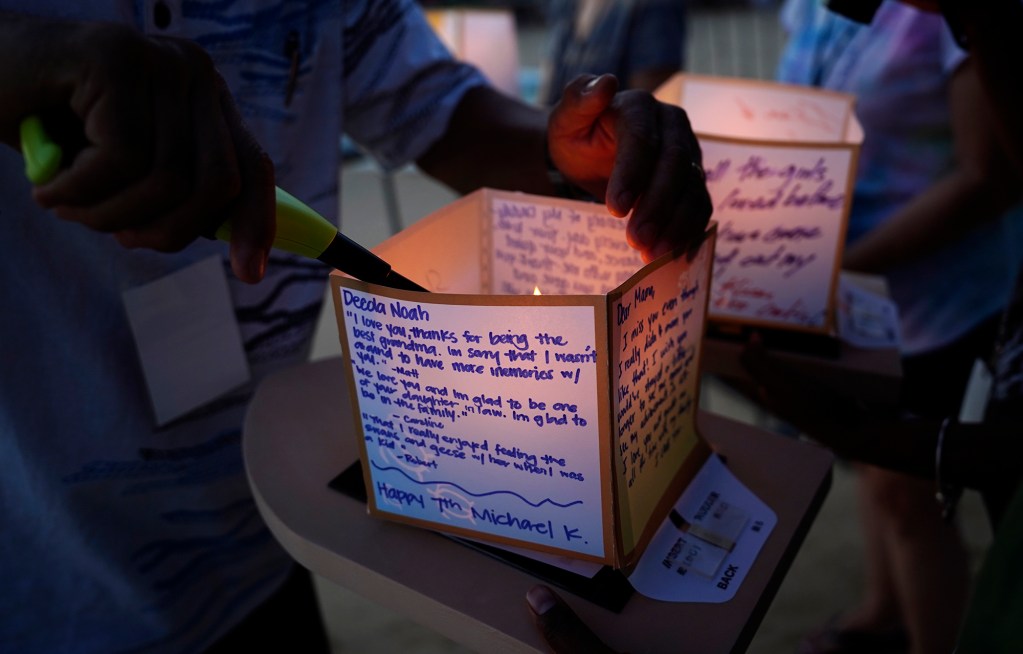
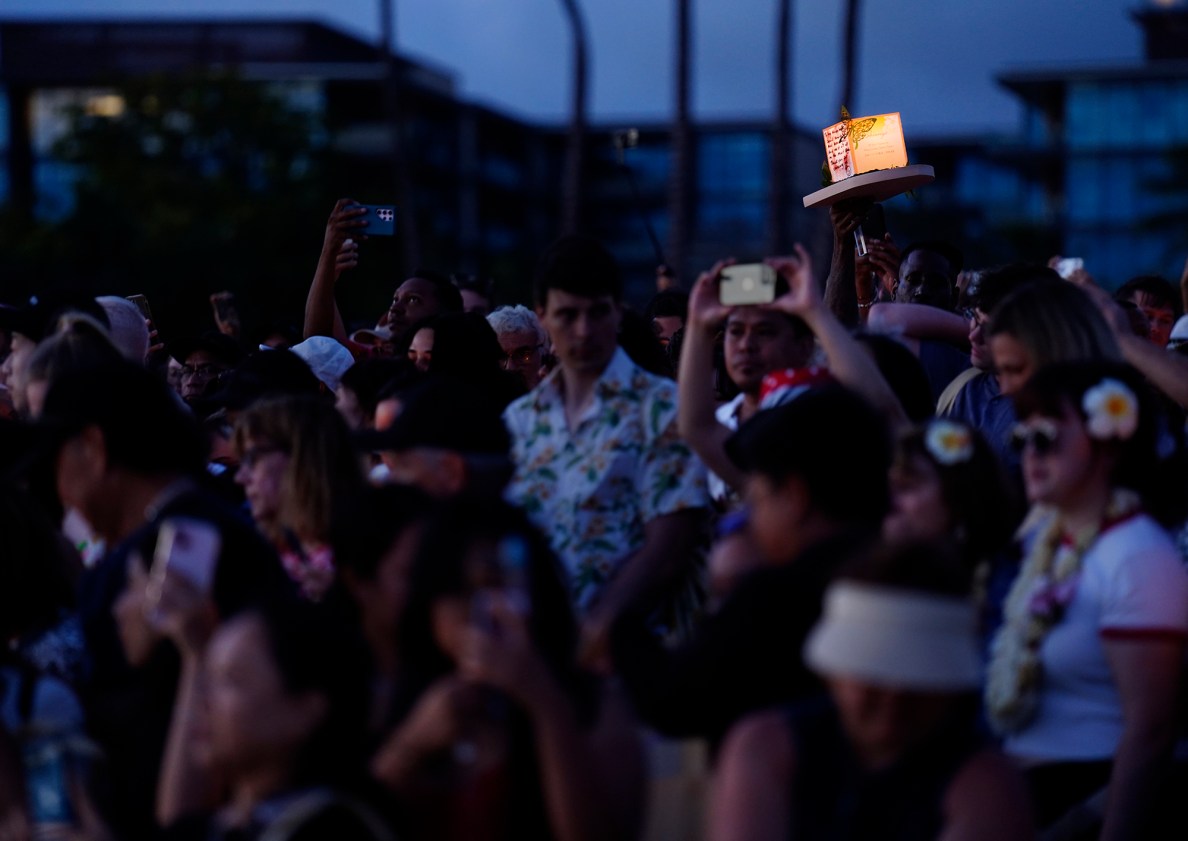
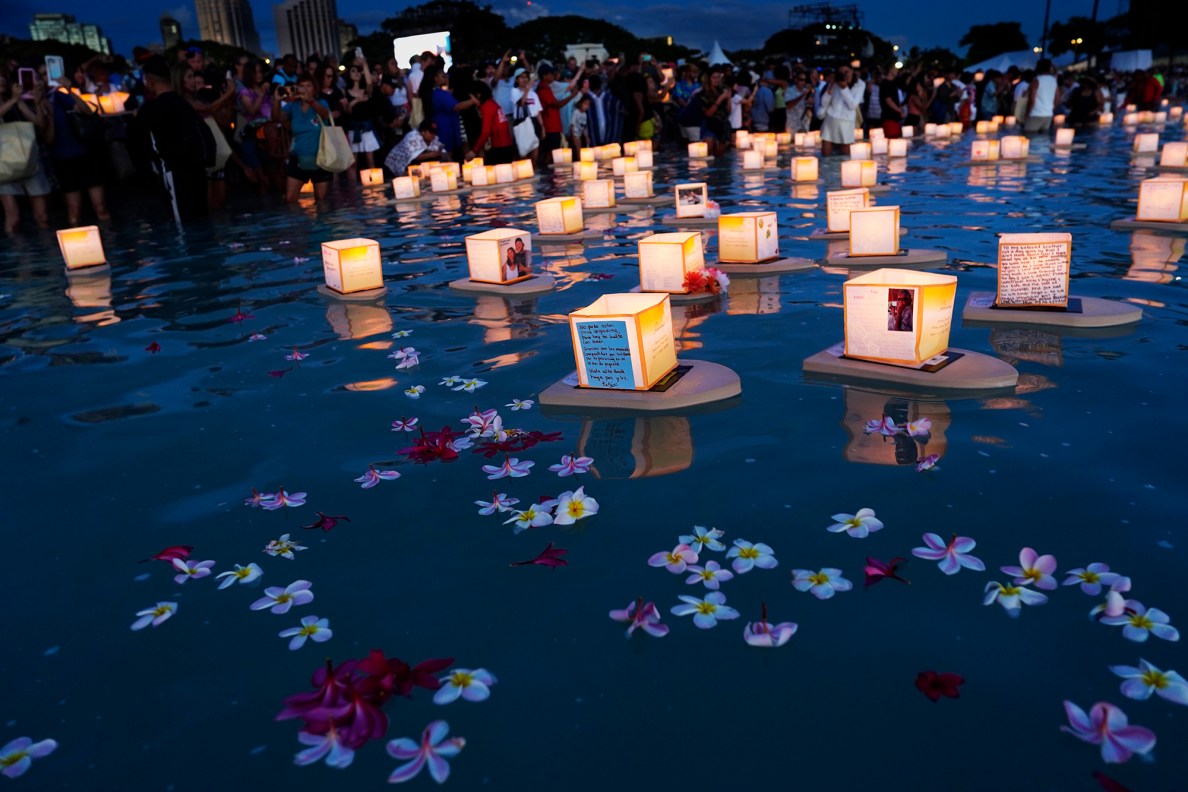
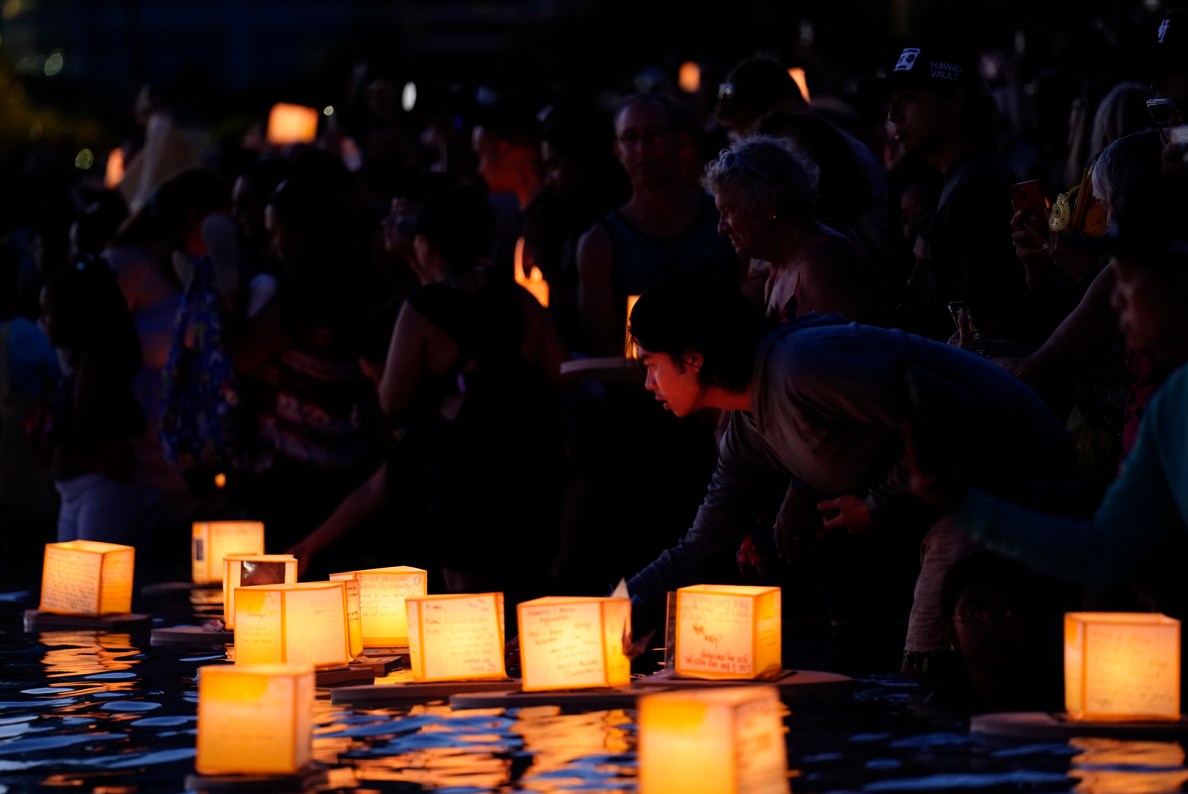
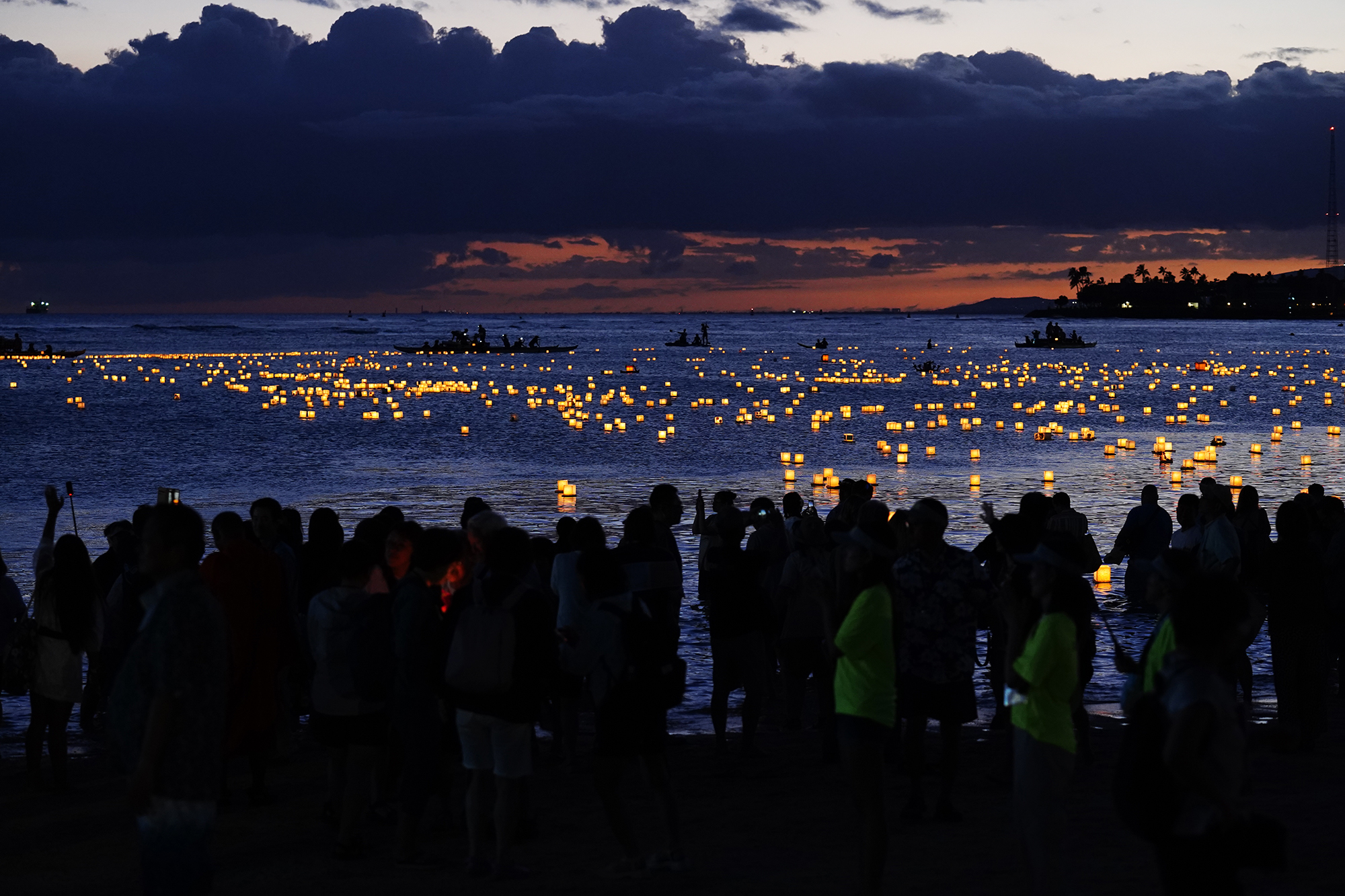
A volunteer lights an individual memorial lantern before sending it afloat. (Kevin Fujii/Civil Beat/2025)A lantern is carried above the crowd to get to the water. (Kevin Fujii/Civil Beat/2025)Plumeria flowers float with individual memorial lanterns. (Kevin Fujii/Civil Beat/2025)Robin Cartago, of Honolulu, sends off his lantern remembering friends and family. (Kevin Fujii/Civil Beat/2025)The sun sets as a portion of the estimated 50,000 people attending the 27th Annual Shinnyo Lantern Floating Hawaiʻi watch their memorials float away from shore. (Kevin Fujii/Civil Beat/2025)Jessika Solomon, of Kalihi, videos the lantern for her father, whom she lost to cancer. Her husband’s daughter Kamilla Solomon stands behind her after handing her a lantern remembering her husband’s family. (Kevin Fujii/Civil Beat/2025)
The photos look quiet because they are. It’s stunning to be in a crowd of approximately 50,000 people and be able to hear your own slippers slapping your heels as you walk away from the beach. The silence is reverent.
As a local newsroom, Civil Beat has a unique public service role in times of need. Your support ensures that we can pivot when emergencies arise and get vital information out to everyone, from all communities.
Support timely and accurate breaking news stories as well as impactful coverage across the state. Donate today.