The 32nd Annual World Fireknife Championships took place during the We Are Samoa Festival at the Polynesian Cultural Center. The event captures the beauty and danger of the Samoan ritual. It also creates a fun challenge to photograph.
Photo Essay: Trial By Fire
The 32nd Annual World Fireknife Championships took place during the We Are Samoa Festival at the Polynesian Cultural Center. The event captures the beauty and danger of the Samoan ritual. It also creates a fun challenge to photograph.
Fire knife competitors came from Australia, Cook Islands, Hawai‘i and other states, Japan, New Zealand, the Philippines, Samoa and Tahiti. The four categories of competition included Junior, ages 6-11, Intermediate, ages 12-17, Senior Female and Senior Male, 18 and older.
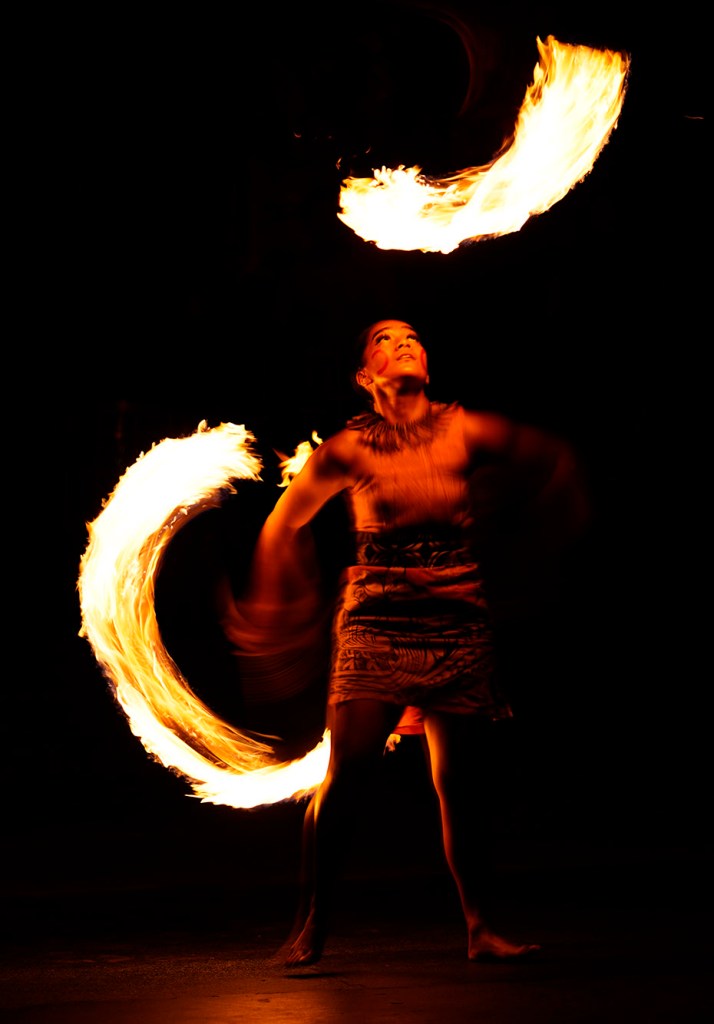
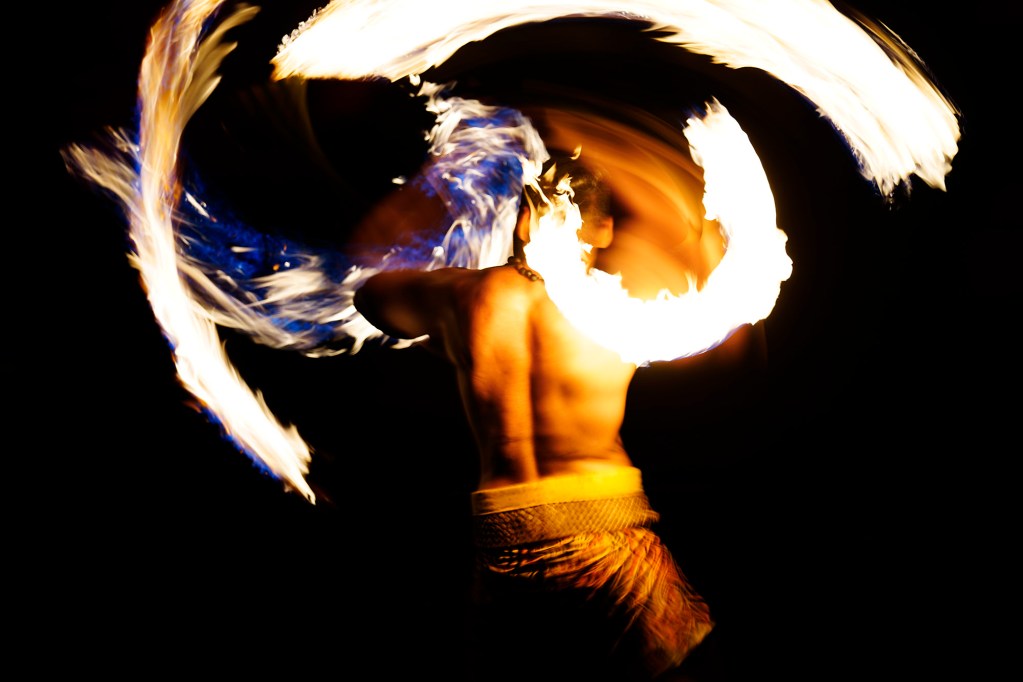
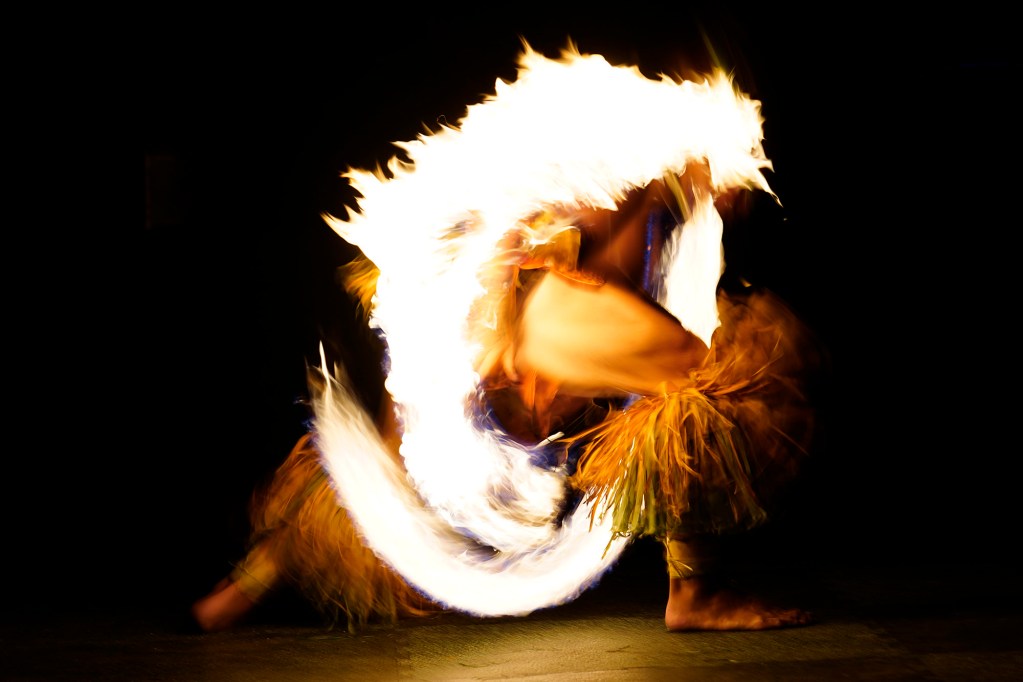
Streaks of fire frame Moeatalagi Schwenke of Sydney as she spins her single knife. Schwenke won first place. Exposure settings: ISO 50, 1/4 shutter speed at f5. (Kevin Fujii/Civil Beat/2025)
Photographing the fire knife competition requires understanding exposure, timing and a lot of luck. First, the setting is dark. Comprehending the complexities of exposure and white balance makes these images dynamic. Slow shutter speeds capture the blur of the flames. This can make the competitors appear blurry too. But when faces and bodies are still during the 1/4 of a second exposure, they can remain sharp enough to identify. To capture the accurate color of fire, white balance is set for daylight.
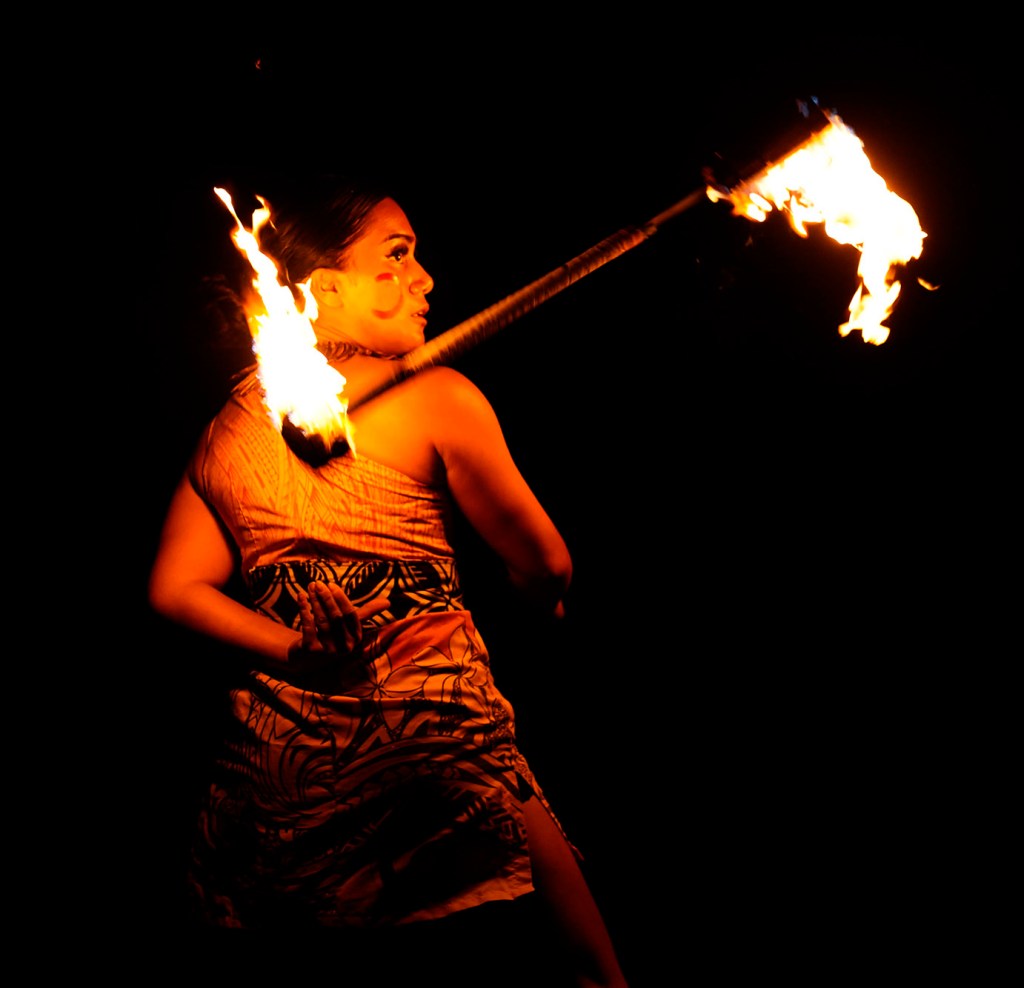
Aaliyah Ava of Lā’ie throws one of her double knives into the air while spinning the other behind her back. Ava finished second. ISO 100, 1/6 shutter speed at f2.8. (Kevin Fujii/Civil Beat/2025)
Pornsawan Angelo of San Diego nears the end of her double-knife routine Wednesday. The faster shutter speed captures some of the flame’s movement. But the focus is on Angelo’s face with a shallow depth-of-field of focus slightly blurring the fire and her double knives. ISO 640, 1/125 at f2.8. (Kevin Fujii/Civil Beat/2025)
Novice photographers are taught to keep the source of light behind them to illuminate their subject. Light coming from the side or behind the subject challenges exposing the image correctly according to a camera’s light meter. Manual exposure takes precedence.
Smoke and sand rise because of the fast action and intense movements at the 2025 World Fireknife Championships at the Polynesian Cultural Center Wednesday in Lā’ie. ISO 800, 1/15 at f2.8. (Kevin Fujii/Civil Beat/2025)
Aaliyah Ava of Lā’ie throws her single knife behind her back. Ava finished second. With a shutter speed of 1/250th of a second, most action freezes, which is important here to capture Ava’s face and the move she’s making. ISO is higher to accommodate the faster shutter speed, set at ISO 2500. 1/250th, aperture f2.8. (Kevin Fujii/Civil Beat/2025)
Mālia Giffin of Whangaparāoa, Aotearoa, the Māori name for New Zealand, puts out her double fire knives. All senior competitors extinguished their double knives with sand. The intention in this photograph is to show how Giffin and other competitors put out their double knives to conclude their performance. While images before this had larger flames, this shot of Giffin’s hand piling sand on her knives and the last flicker of flames rising visually describes the intention. House lights come up and a spotlight shines on Giffin here to help out. ISO 1600, shutter speed 1/125th of a second at f2.8. (Kevin Fujii/Civil Beat/2025)
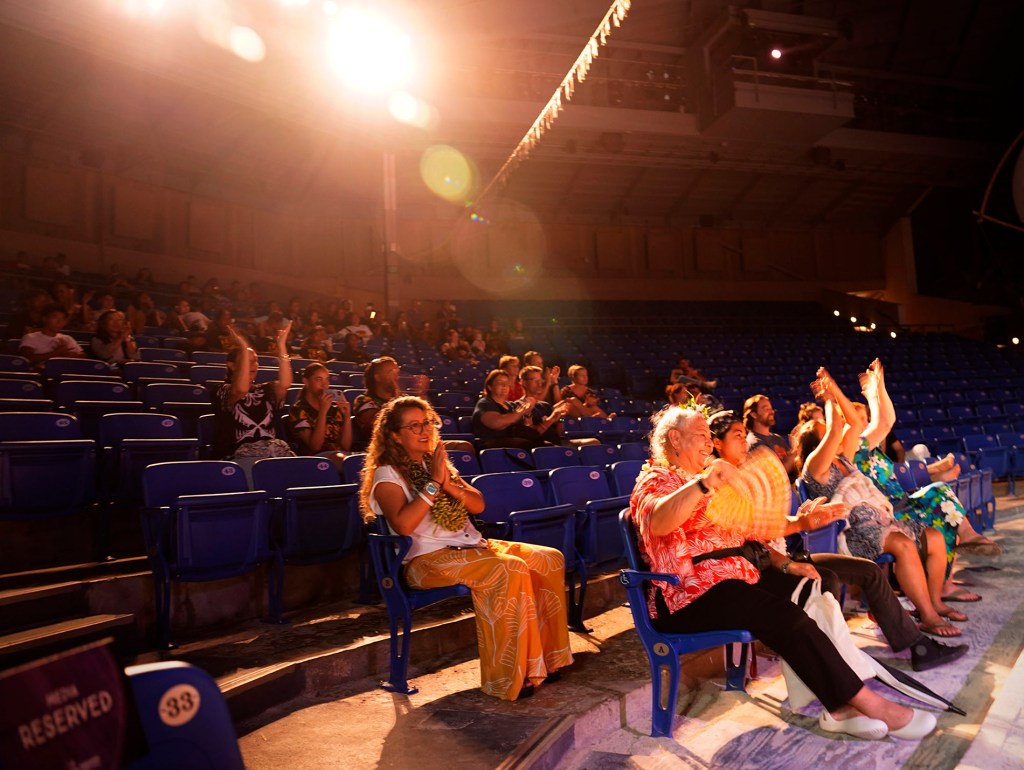
The World Fireknife Championships crowd applauds and cheers on the competitors. The evening crowned Moeatalagi Schwenke of Sydney as the 2025 senior women’s champion. Senior men finalists were later selected. ISO 1600, 1/10th of a second shutter speed at f2.8. (Kevin Fujii/Civil Beat/2025)
The audience of the 32nd Annual World Fireknife Championship contained many family and friends. They are as much a part of the competition as the competitors themselves. Another backlit situation proves challenging to properly expose the blurring of hands clapping especially while changing the scene from the brightly lit stage to the darker spectator seating area.
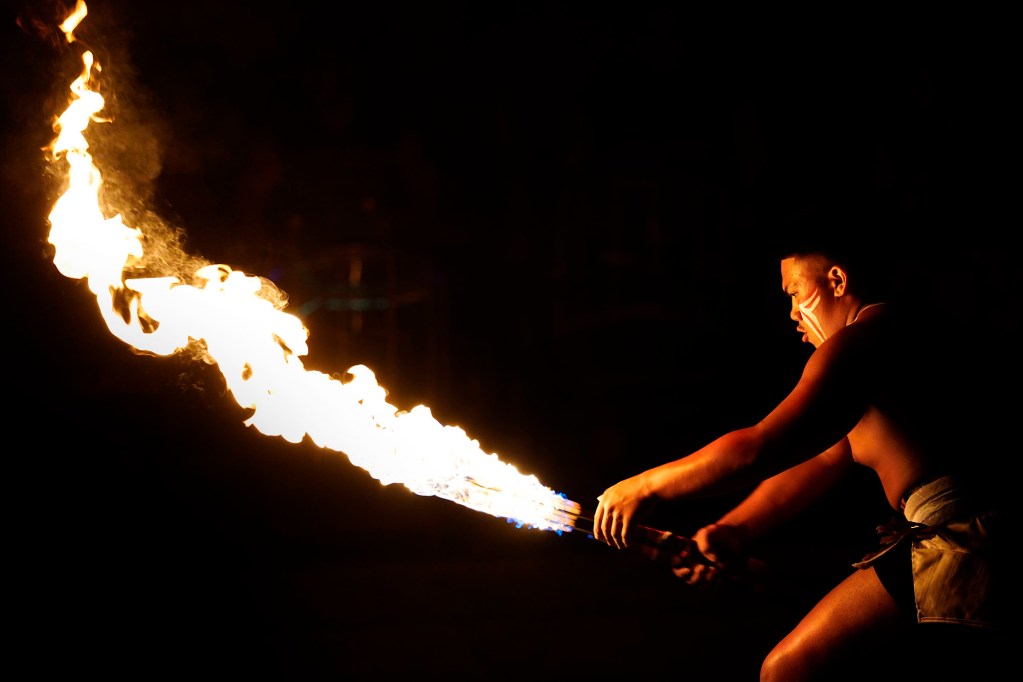
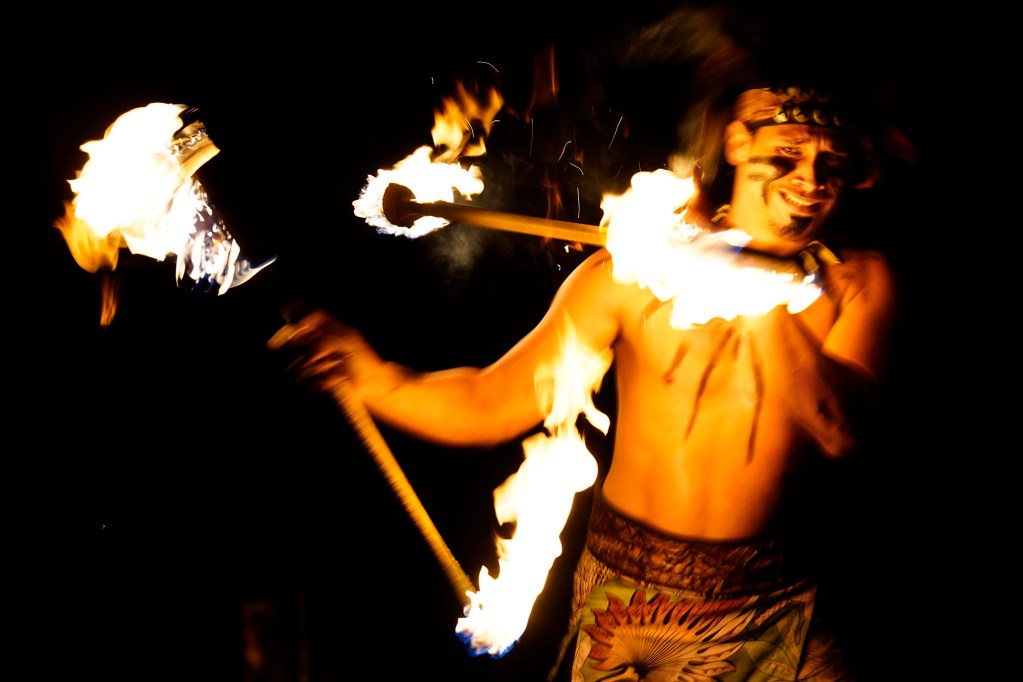
Each competitor started with one end of their single or double fire knives lit. Dancers employed numerous ways to light the smaller end. Matagi Lilo of ʻEwa Beach draws out his flame before thrusting his hand and double knives through the fire to light the smaller ends during the senior men’s preliminary round Wednesday night. To show this action, a higher ISO and shutter speed were required. ISO 3200, 1/250th of a second at f2.8. (Kevin Fujii/Civil Beat/2025)
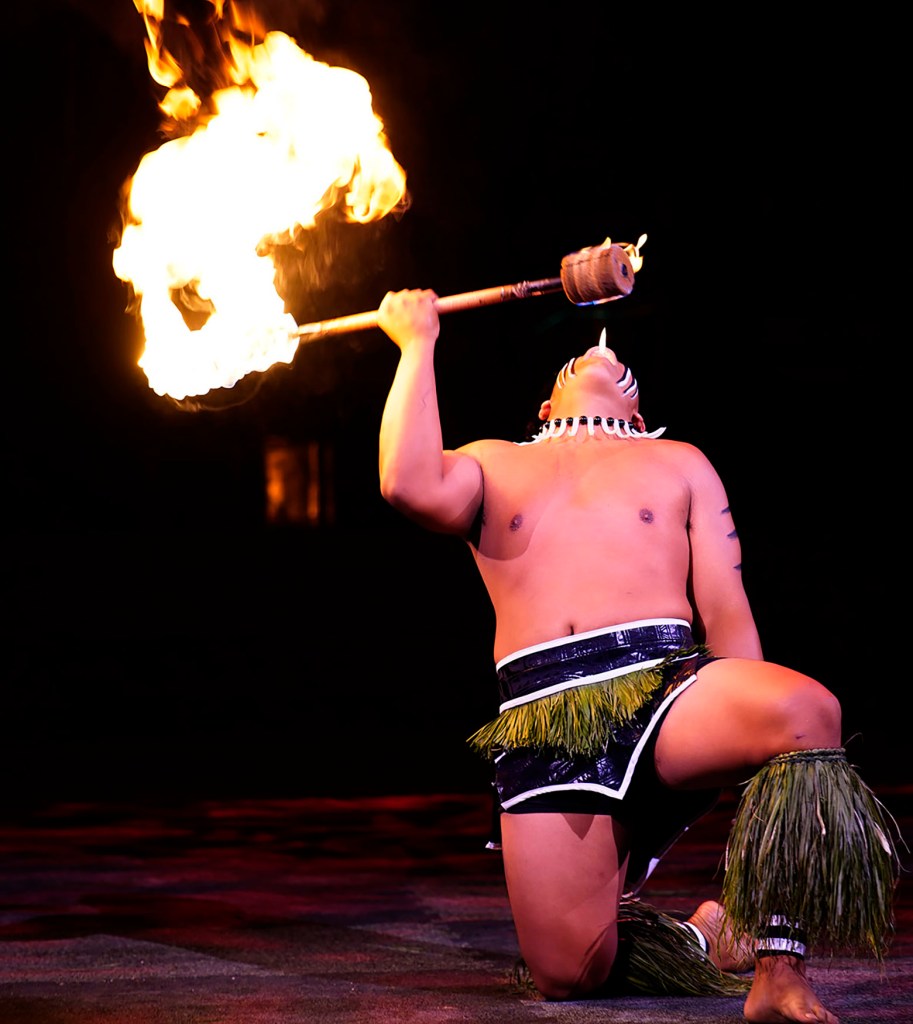
Mose Lilo of ʻEwa Beach uses his mouth to ignite the other end of his single knife. Lilo gets some of the flammable liquid in his mouth and lights it with the flaming end to move the fire. He and Matagi are brothers. To capture this action but show the movement of flames, a medium shutter speed of 1/60 of a second was used. Other exposure elements: ISO 800, f2.8. (Kevin Fujii/Civil Beat/2025)
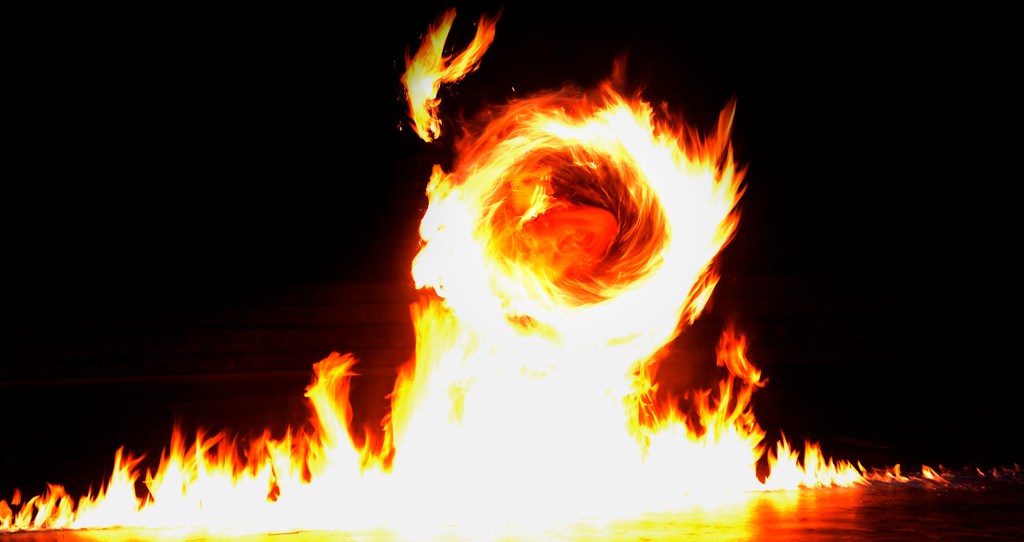
Achiles Tafiti of Lā’ie creates a line of fire during a spin of his single knife. This move created the most fire by touching the floor with flammable liquid from their knife to ignite it, then spinning the fire knife at a high rate of revolutions to throw more liquid. ISO 50, 1/4 time value at f2.8. (Kevin Fujii/Civil Beat/2025)
Each competitor followed an almost similar pattern of moves. A handful made this dynamic line of fire early in their single-knife portion. There was more flammable liquid on their knife at this time. This exposure was hard. More fire means more light. It’s much brighter. The quarter-second shutter speed and low ISO work well. But the amount of light allowed to pass through the lens’ aperture could have been less to capture more details of the flame; a photographer might suggest, “two stops down” moving the aperture from f2.8 to f5.6.
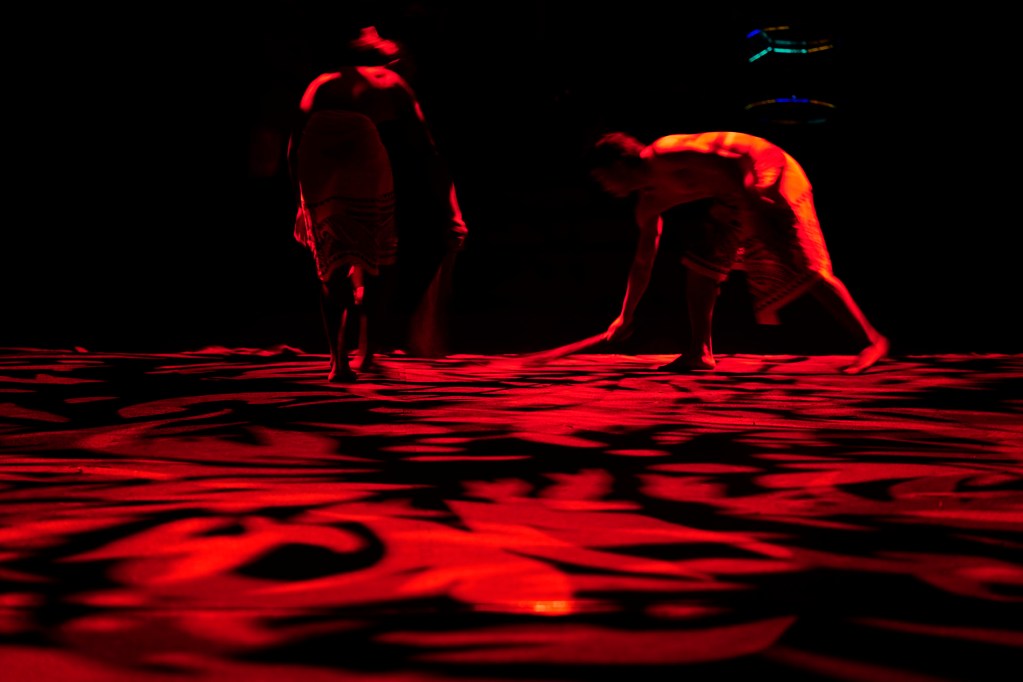
Polynesian Cultural Center stagehands swept sand off the 2025 World Fireknife Championships stage after every competitor. They also extinguished each competitors’ single fire knife before transition to the double-knife portion. A slow shutter speed captures a little bit of blurring for the sweeping motion. ISO 1250, 1/20th of a second at f2.8. (Kevin Fujii/Civil Beat/2025)
Joseph Cadousteau of Papeete, Tahiti, performs his double-knife routine during the senior men’s preliminary round Wednesday. He made it to the finals and finished in second place. ISO 200, 1/5th at f2.8. (Kevin Fujii/Civil Beat/2025)
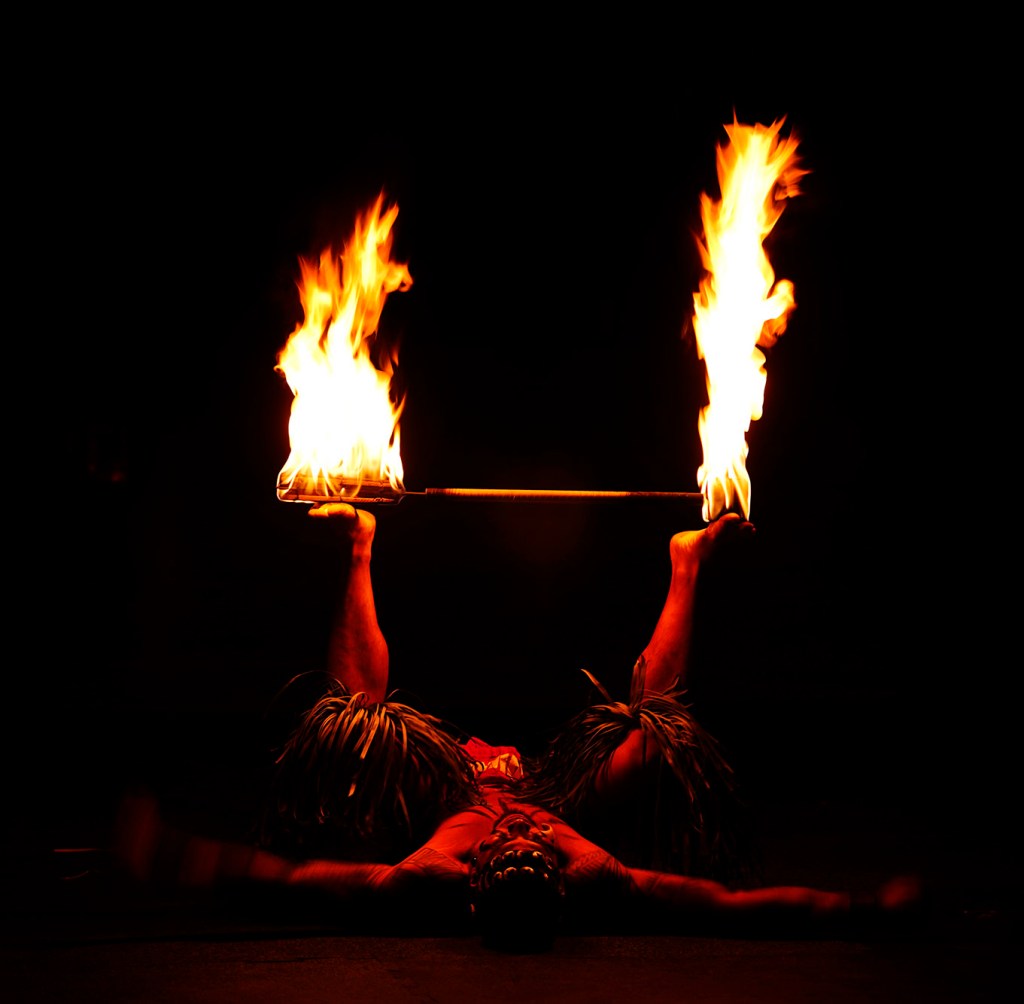
Achiles Tafiti of Lā’ie places his single knife on the soles of his feet for a test of how long he could endure the heat. ISO 50, 1/15 at f2.8. (Kevin Fujii/Civil Beat/2025)
The idea with flames on feet was to show the fire’s action. The awesome thing was the competitor lay completely still while his soles held the fire aloft.
Hale Motu’apuaka of Wahiawā passes his single knife between his legs during the 2025 World Fireknife Championships senior men’s preliminary round. The Central Oʻahu competitor won his fourth World Fireknife Championships Thursday. The slow shutter speed makes it appear as though Motu’apuaka is stepping through a ring of fire. ISO 200, 1/5 at f4.5. (Kevin Fujii/Civil Beat/2025)
The tricky part of showing the eventual senior men’s champion to appear as if he’s stepping through a ring of fire is balancing the highlights of the flame and the darker exposure for his body. The flames are overexposed here with very little detail except the path of movement. But the exposure is set for Motu’apuaka’s body.
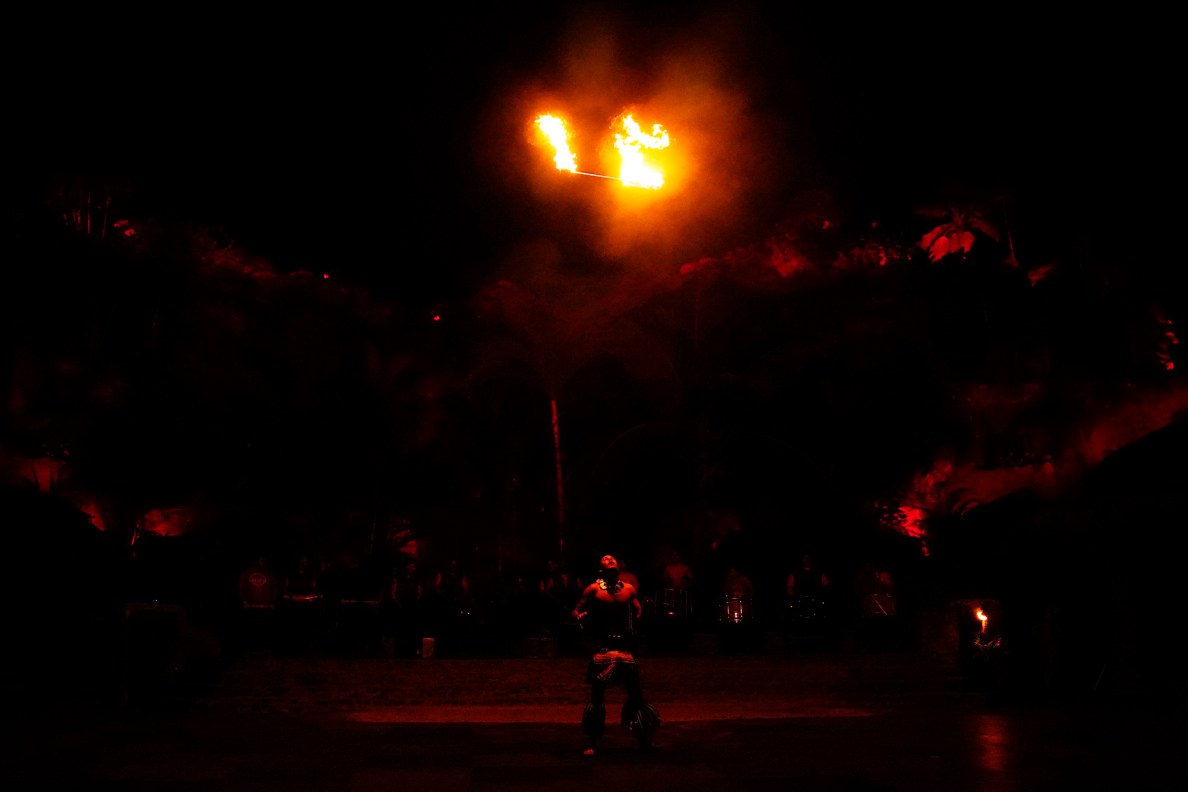
Heimana Ondicolberry of Papeete, Tahiti, throws his single knife high in the air. Part of the fire knife competitor’s score is based on the height of the throw. ISO 8000, 1/320 at f2.8. (Kevin Fujii/Civil Beat/2025)
Showing the height that some of these competitors reached with their knives is more of a composition challenge: There’s a lot of dead space. For exposure, this could have been captured with a slow shutter speed. When the fire knife reaches its peak, it freezes momentarily. But a faster ISO and shutter speed were used.
Brandonlee Lavatai of Pago Pago, America Samoa, winces during his performance. Spectators in front-row seats were able to feel the heat when competitors performed near the front of the stage. ISO 800, 1/30 shutter speed at f5. (Kevin Fujii/Civil Beat/2025)
A delicate balance of capturing motion and facial expression required a 1/30th of a second shutter speed. Other frames before and after this image showed too much blur or flame blurring Brandonlee Lavatai’s face. Luck and timing work for this image to capture his reaction to fire dancing around his face.
Hale Motu’apuaka of Wahiawā concludes his senior men’s preliminary routine Wednesday. He went on to win his fourth World Fireknife Championships title Thursday night. ISO 3200, 1/30th at f2.8. (Kevin Fujii/Civil Beat/2025)
Trying to capture a scene-setting image with low light required the faster or higher ISO. Also known as ASA, it’s an international standard for the sensor’s sensitivity to light. The higher the ISO, the more sensitive the sensor is to light which allows the shutter speed to reach 1/30th of a second.
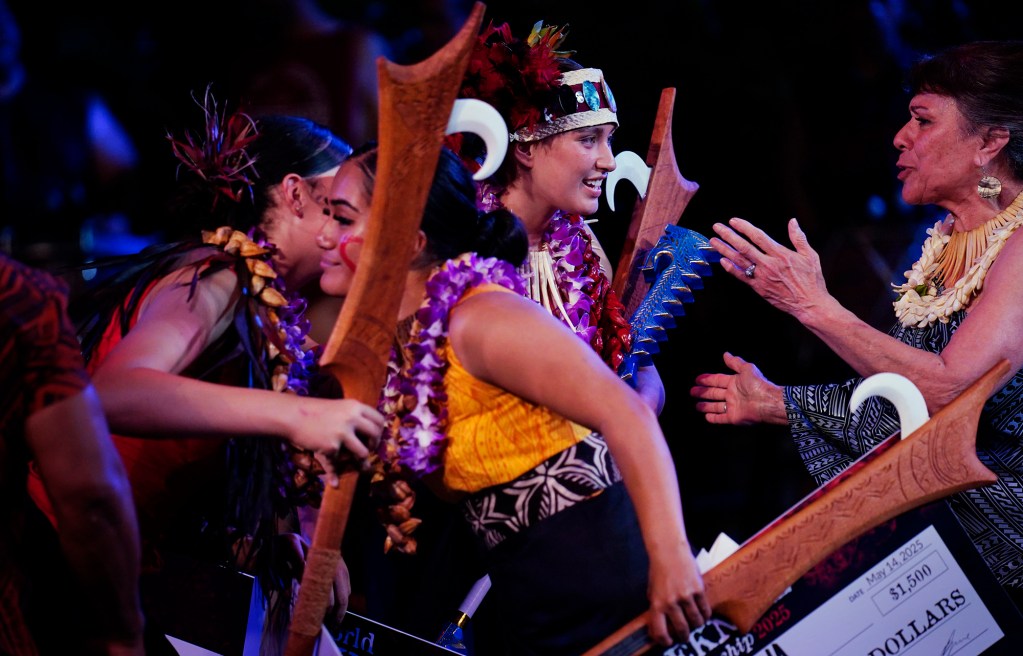
The championship competition for the senior women took place Wednesday night. Judge Tanimalie Letuli, right, congratulates the 2025 World Fireknife Championships senior women’s winner Moeatalagi Schwenke of Sydney as second-place Aaliya Ava of Lā’ie hugs third-place Emillie Lovett, of Aukland, New Zealand. ISO 2000, 1/1600th at f2.8. (Kevin Fujii/Civil Beat/2025)
With house lights on, it’s still a bit dark on the stage. A higher ISO and shutter speed were needed to capture the moment. The wide-open aperture of f2.8 keeps the depth-of-field of focus a bit shallow on the winner and slightly blurs second and third place.
The World Fireknife Championships senior men take a selfie after their preliminary round. Six competitors qualified for next year’s championship. Three advance to Thursday night’s finals. ISO 2000, 1/500th at f2.8. (Kevin Fujii/Civil Beat/2025)
These 20 photographs are a small portion of the 6,333 downloaded. 519 were deleted because they were unusable: either nothing but darkness or too blurry. Both cameras were handheld. A tripod would have helped, but it would have limited following the fast action. Photographs were lightly edited with Adobe Photoshop to lighten faces and crop the dimensions.
The trial to make photographs of this competition is self-indulgent. Every exposure is set for what and how the photographer sees the situation and wants to relay the same message to you, the viewers.
As a local newsroom, Civil Beat has a unique public service role in times of need. Your support ensures that we can pivot when emergencies arise and get vital information out to everyone, from all communities.
Support timely and accurate breaking news stories as well as impactful coverage across the state. Donate today.