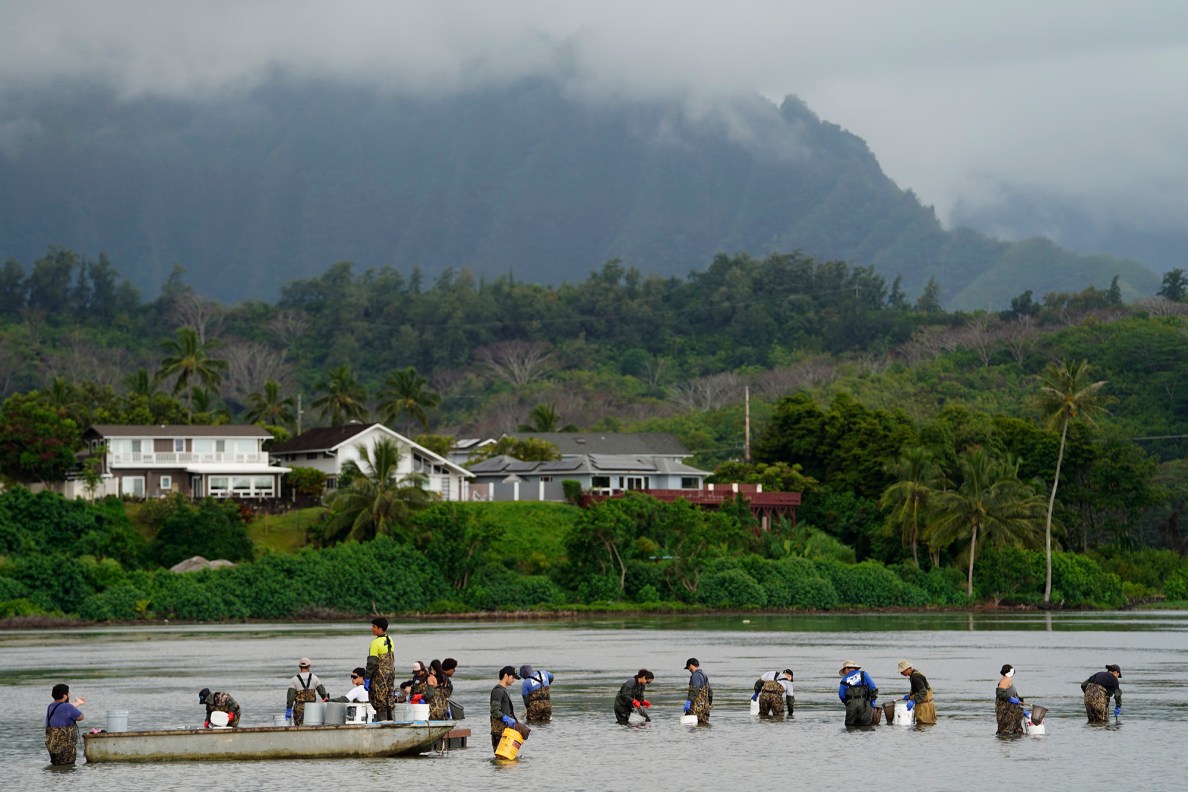
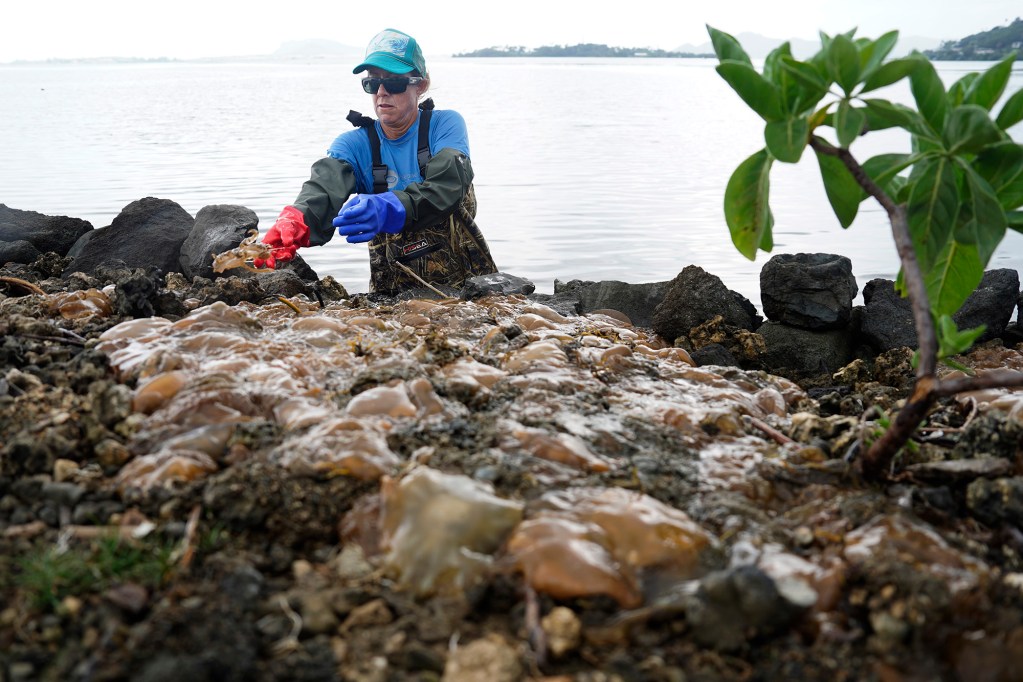
Volunteers and Paepae o He‘eia staff removed the invasive Cassiopea andromeda from the 800-year old Heʻeia Fishpond on Tuesday in Kāneʻohe. The invasive jellyfish prevent young fish from thriving. (Kevin Fujii/Civil Beat/2025)
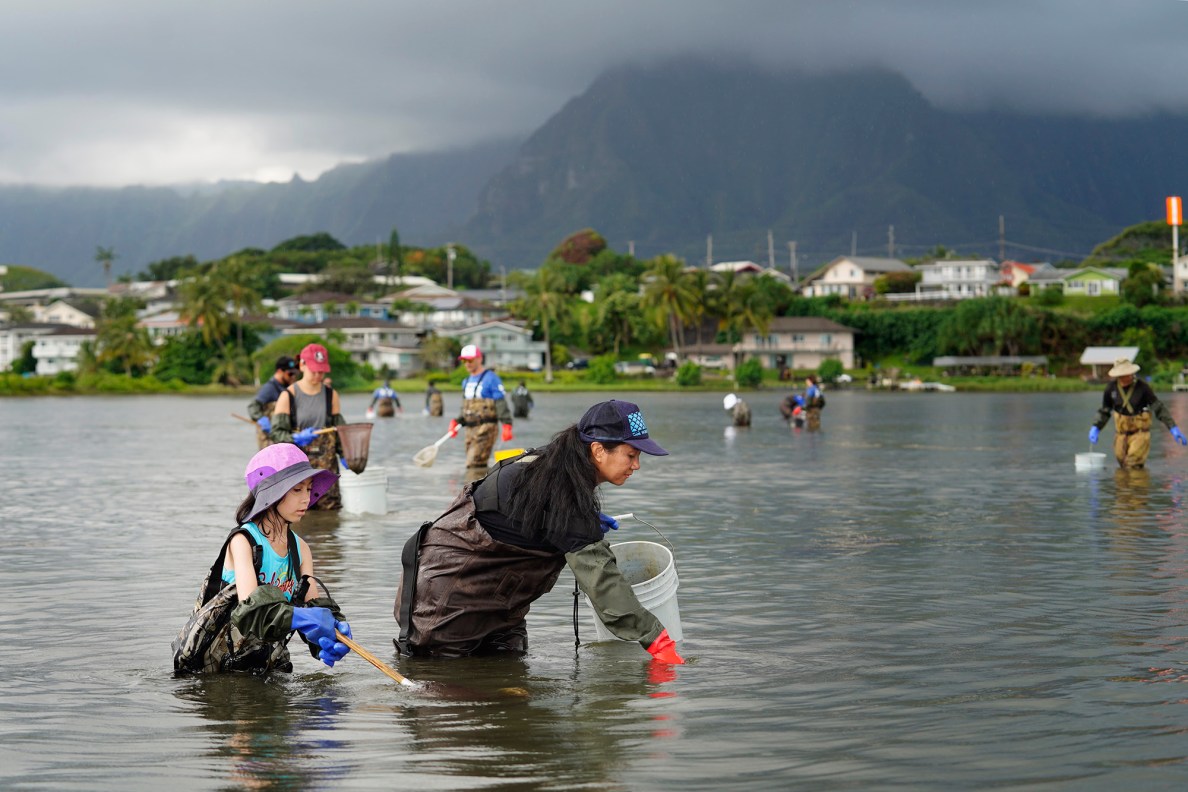
Sixty volunteers and staff waded thigh-deep into the historic He’eia Fishpond with nets and five-gallon buckets this week. Their job? Remove as many invasive jellyfish as possible.
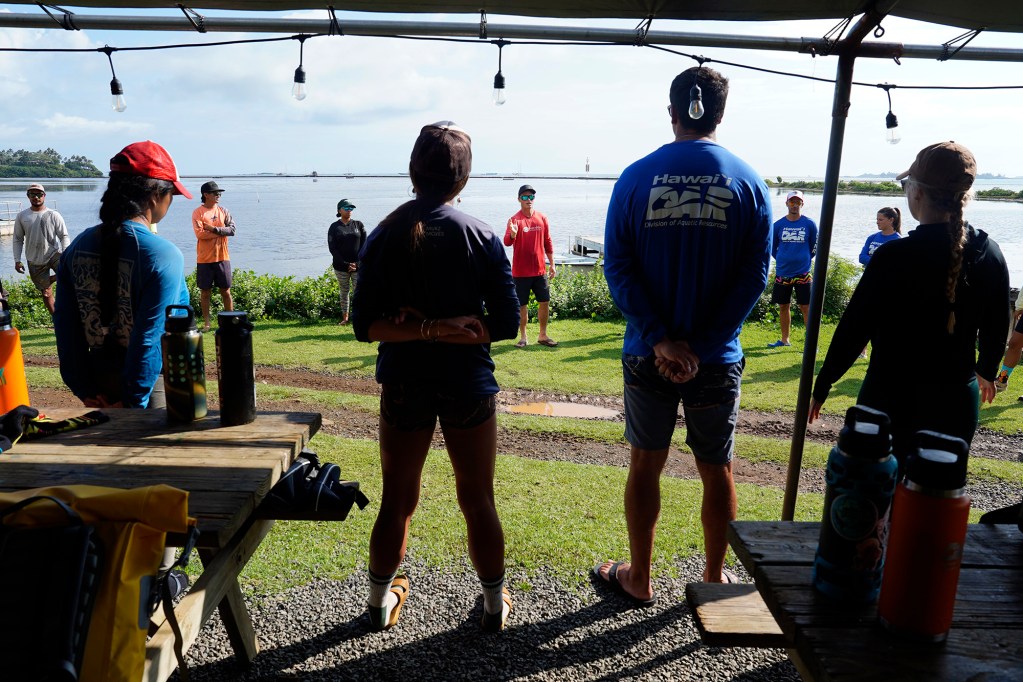
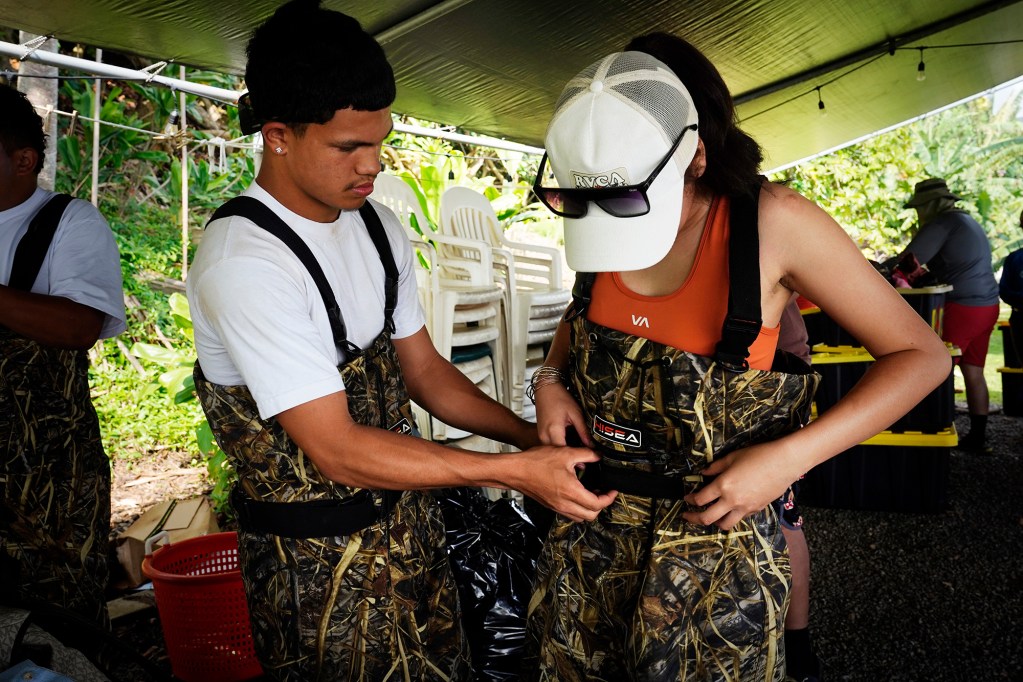
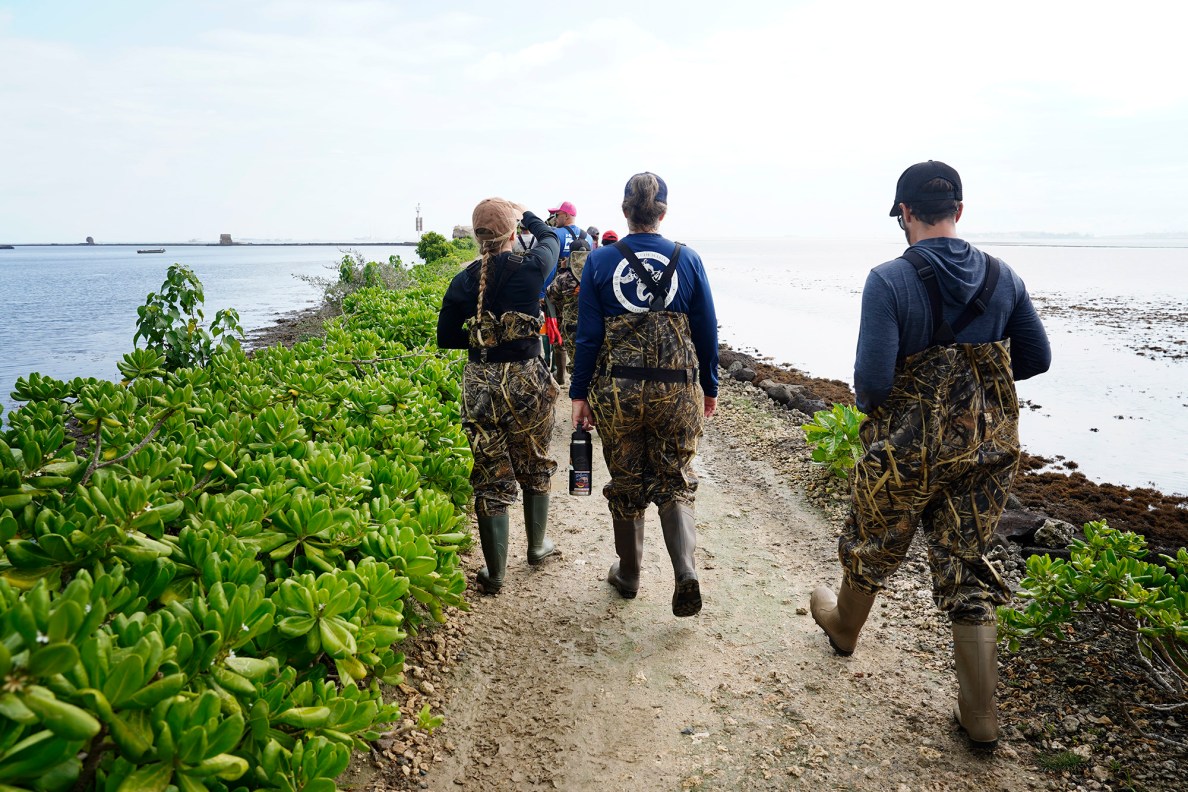
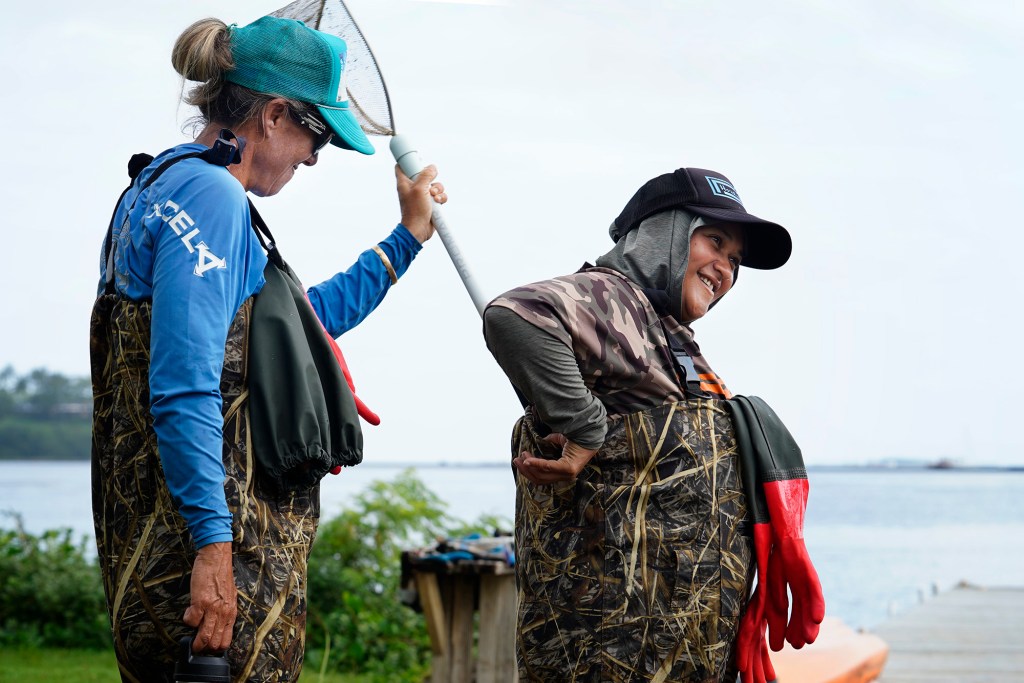
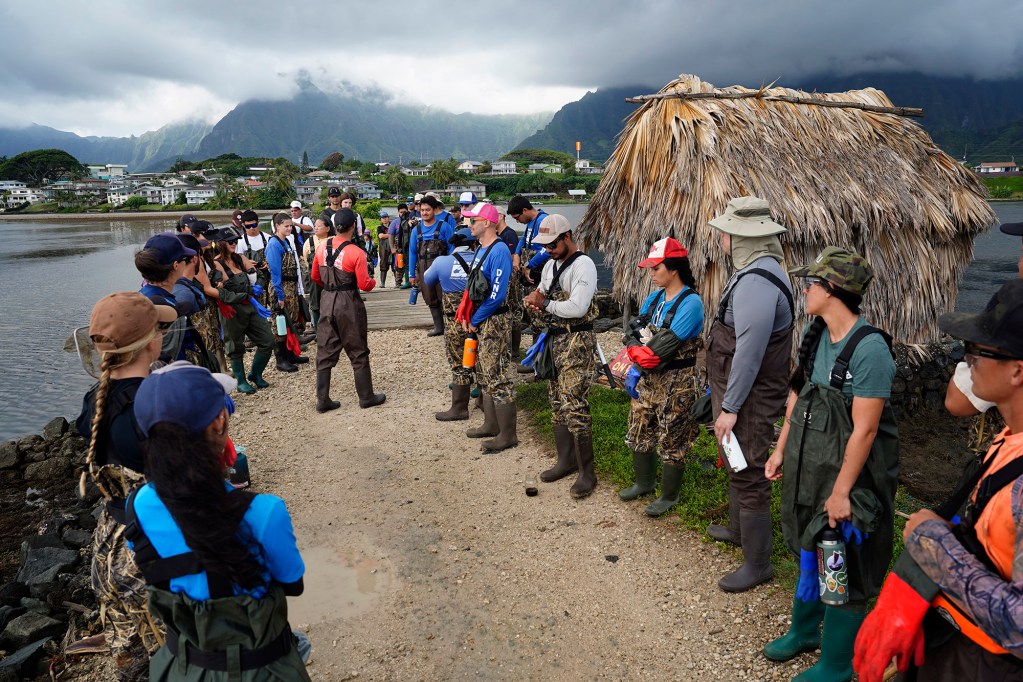
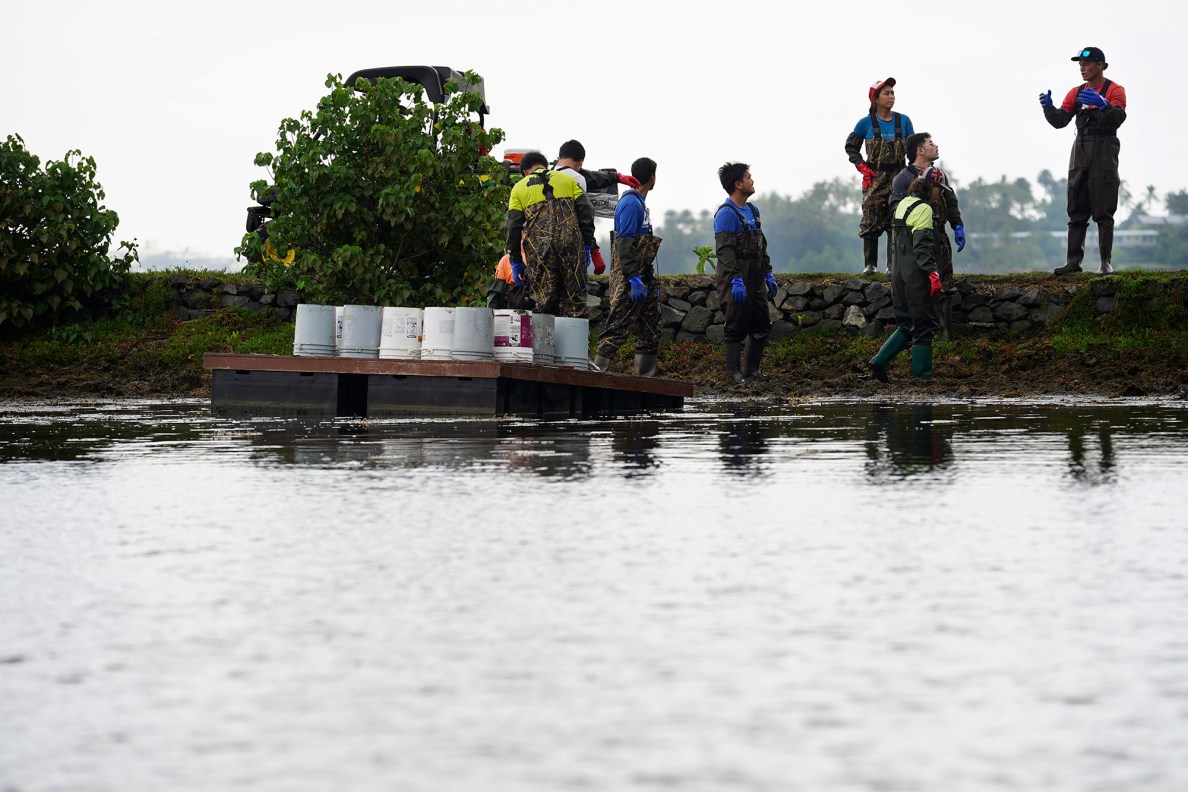
Paepae o He‘eia Kū Hou Kuapā manager Keahi Piʻiohiʻa, center in red, briefed volunteers and Paepae o He‘eia staff about removing the invasive upside-down jellyfish, also known as mangrove jellyfish, from the pond. (Kevin Fujii/Civil Beat/2025)Volunteers from Papahana ‘o Kaiona school, Jason Miller, left, helped D’zyre Williams with her waders before stepping into the fishpond. The waders protected volunteers and staff from the cold water and potential stings from the invasive jellyfish. (Kevin Fujii/Civil Beat/2025)Paepae o He‘eia volunteers walked down the wall separating the 800-year old He‘eia Fishpond, left, from Kāneʻohe Bay. Department of Land and Natural Resources employees, Papahana ‘o Kaiona students and community members who saw the group’s Instagram post calling for volunteers arrived in force. (Kevin Fujii/Civil Beat/2025)
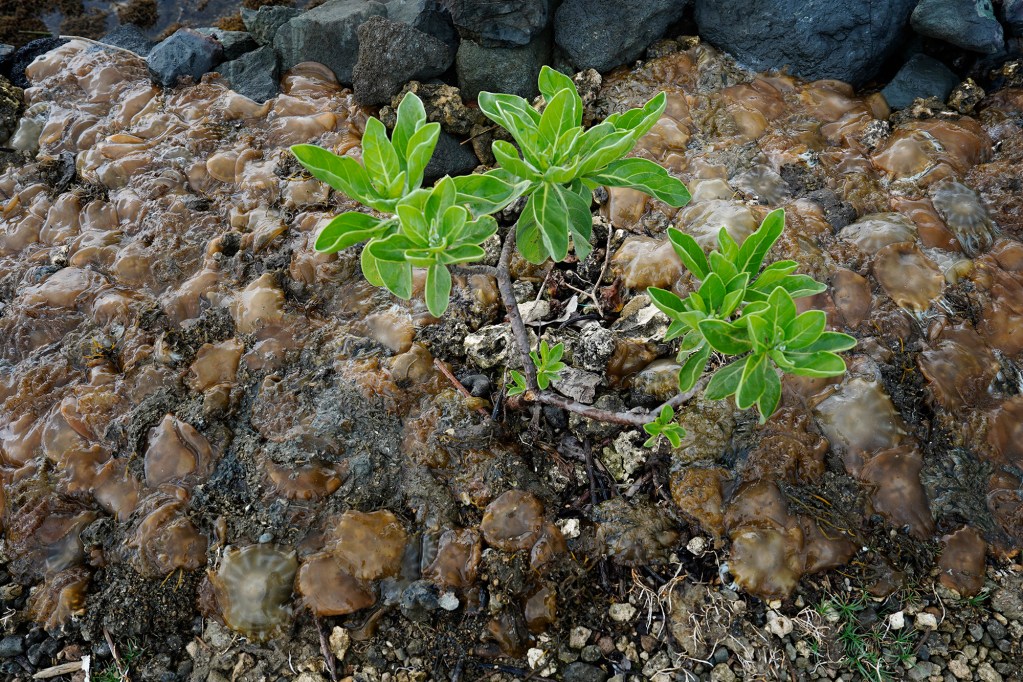
The task looked impossible as the group walked along the wall which separates the fishpond from Kāneʻohe Bay. The jellyfish have spread across the fishpond floor like sea anemones.
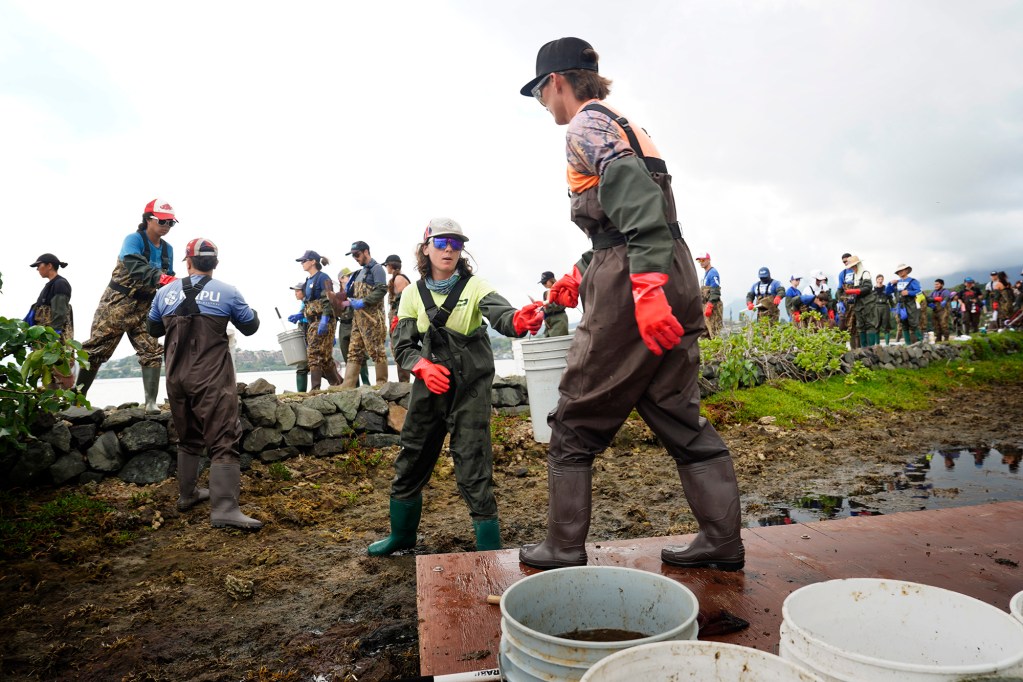
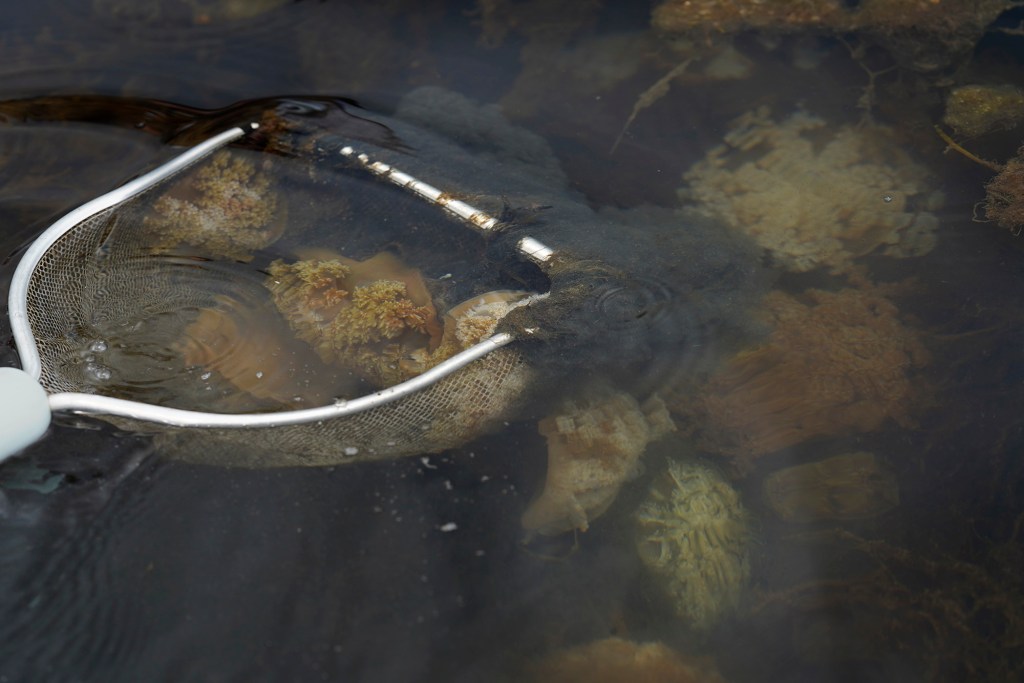
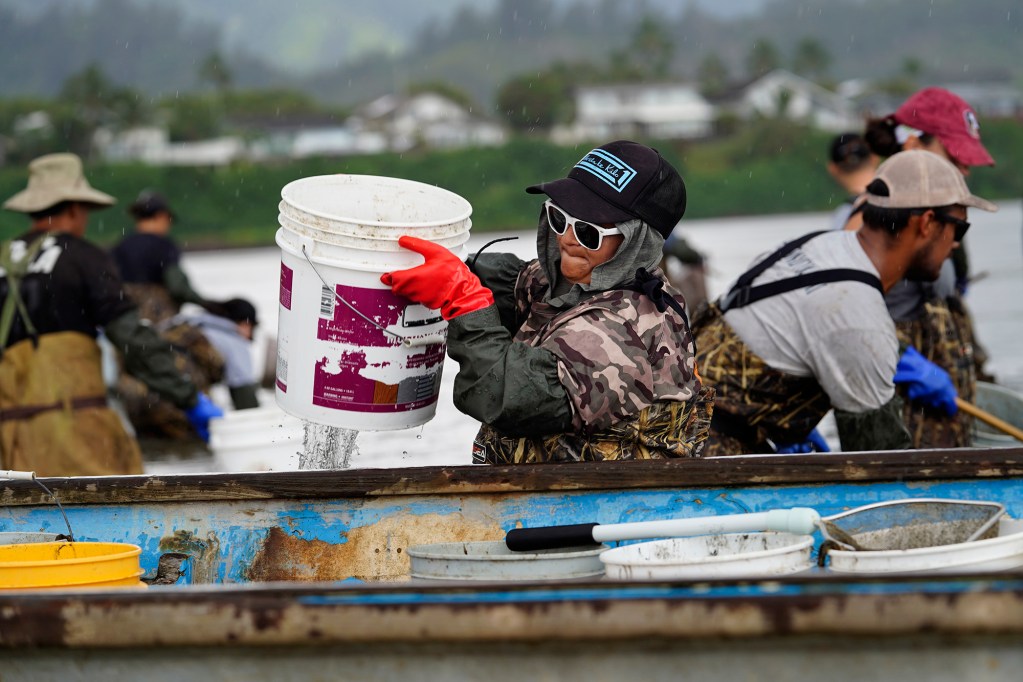
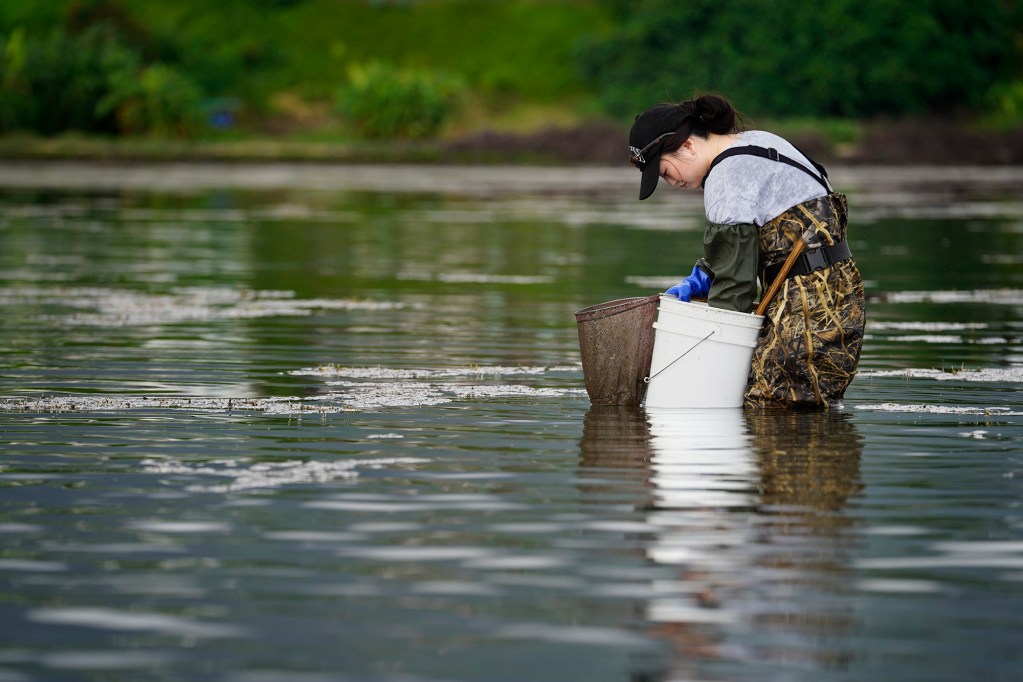
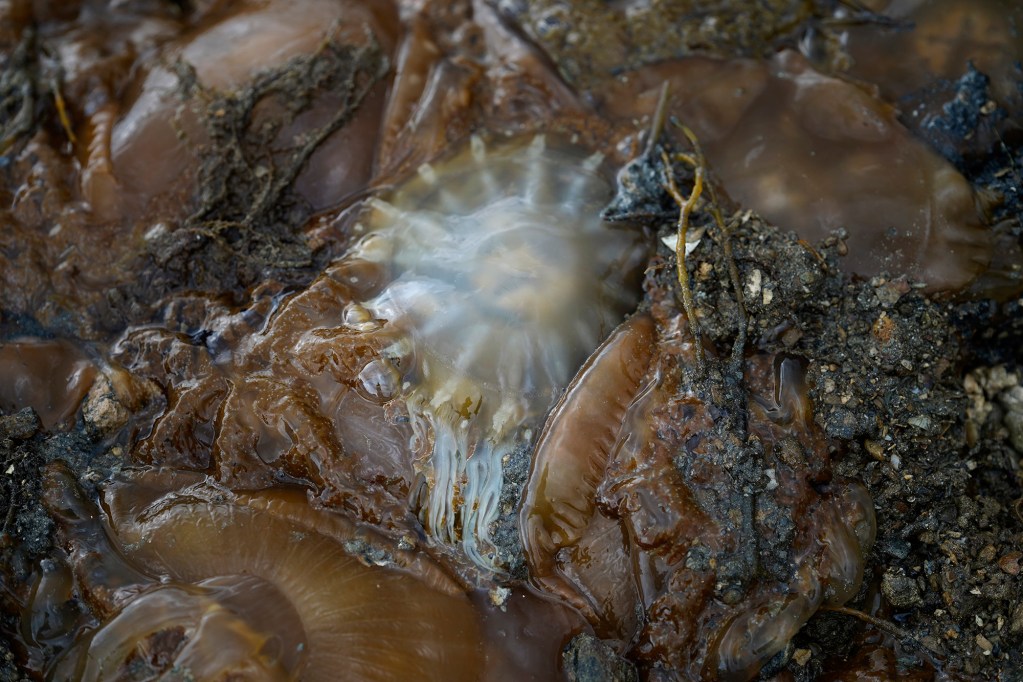
Paepae o He‘eia Executive Director Hi’ilei Kawelo, from left, stuck a net down Paepae Pōhaku program manager Mamo Leota’s waders before walking down the wall to the begin their work. (Kevin Fujii/Civil Beat/2025)Paepae o He‘eia Kū Hou Kuapā manager Keahi Piʻiohiʻa briefed volunteers and staff about their approach to remove the invasive jellyfish. Piʻiohiʻa warned volunteers that the fishpond floor nearest the wall is soft and could pose a tripping hazard. (Kevin Fujii/Civil Beat/2025)Paepae o He‘eia staff and volunteers created a line to move the buckets full of the invasive Cassiopea andromeda from the ancient fishpond. (Kevin Fujii/Civil Beat/2025)Paepae o He‘eia volunteers Estella Kahaulelio, 6, and Leadan Yee scooped up the invasive upside-down jellyfish. (Kevin Fujii/Civil Beat/2025)Cassiopea andromeda — also known as upside-down jellyfish or mangrove jellyfish — was netted for removal from the 800-year-old He‘eia Fishpond by Paepae o He’eia staff and volunteers on Tuesday. The prolific jellyfish can reproduce asexually or sexually which has caused its population to explode since 2017 when they were first sighted in the fishpond. (Kevin Fujii/Civil Beat/2025)Paepae o He‘eia staff member Mamo Leota hoisted a bucket full of the invasive jellyfish. She set the bucket carefully in the boat to prevent it from splashing back on her face. (Kevin Fujii/Civil Beat/2025)Paepae o He‘eia Kū Hou Kuapā manager Keahi Piʻiohiʻa, right, talks with staff members and interns before returning the barge with empty five-gallon buckets to the volunteers. (Kevin Fujii/Civil Beat/2025)Paepae o He‘eia volunteer Hanna Bae of Covington, Wash., removed invasive jellyfish from the fishpond. Bae was visiting her brother who’s finishing up his studies at the University of Hawaiʻi Mānoa. One of his professors offered extra credit for volunteering. (Kevin Fujii/Civil Beat/2025)The invasive mangrove or upside-down jellyfish was scooped out of He‘eia Fishpond this week. The jellyfish lie upside-down on the shallow fishpond floor and release mucus with stinging cells called cassiosomes when disturbed. These paralyze small fish which fall into their mouths facing the surface of the water. The sting is painful for humans. (Kevin Fujii/Civil Beat/2025)The larger, older jellyfish are yellow-brown from their symbiotic relationship with algae. (Kevin Fujii/Civil Beat/2025)Paepae o He‘eia Executive Director Hi’ilei Kawelo made sure the jellyfish removed from the He‘eia Fishpond wouldn’t slide into Kāneʻohe Bay. (Kevin Fujii/Civil Beat/2025)The jellyfish were unceremoniously dumped on the wall to perish. Approximately 15,000 jellyfish were removed Tuesday. Paepae o He‘eia plans to have more invasive species removal events in the future. (Kevin Fujii/Civil Beat/2025)
As a local newsroom, Civil Beat has a unique public service role in times of need. Your support ensures that we can pivot when emergencies arise and get vital information out to everyone, from all communities.
Support timely and accurate breaking news stories as well as impactful coverage across the state. Donate today.