

It’s Not Just Tourists: Hawaiʻi Residents Drown At Alarming Rates
The number of residents who die each year is surprising, even to lifeguards. And the danger is not limited to inexperienced swimmers or surfers chasing Hawaiʻi’s notorious big waves.

Editor’s note: Civil Beat published this story in 2025. We’re highlighting it this holiday weekend, amid a spike in near-drownings among children on Oʻahu.
Noʻeau Lima slipped into his father’s bedroom early in the morning, waking his father to follow a long-established family ritual of alerting an adult before heading out spearfishing.
The 15-year-old had been freediving off the shoreline on Oʻahu’s Westside since he was 7. By his teens, he was diving 100 feet down without a scuba tank, holding his breath and scouring crevices for fish to snag with his speargun. His catch was on the dinner table a couple nights a week.
“Don’t worry, Dad,” Michael Lima recalls his son saying before heading out with a family member to Yokohama Bay. “Today’s the day a giant’s going to fall.”
When No‘eau got to the secluded stretch of beach near Ka‘ena Point at the very tip of Oʻahu, the teen pulled on his camouflage wetsuit, tightened his weight belt and grabbed a speargun before pushing his yellow kayak into the water. Then at around 9 a.m. on May 12, 2020, he dipped beneath the waves.
There was no lifeguard on duty to notice that he never resurfaced.

In recent years, state and county officials have ramped up efforts to educate visitors about the dangers of the state’s dynamic waves. Ads at airport baggage claims and richly produced videos on Hawaiian Airlines and in Waikīkī hotel rooms warn tourists not to go to unguarded beaches and never turn their back on the sea.
But nearly half of the 800 people who drowned in the ocean in Hawaiʻi over the last decade — and more than half of people on Oʻahu and the Big Island — were not inexperienced out-of-towners, but people who call the islands home.
Hawaiʻi has the second-highest per-capita rate of resident drownings in the country, with the lives of 187 residents lost in the ocean between 2020 and 2024 alone. Drowning is the leading cause of death for children under 15 in the state and Hawaiʻi residents of all ages are more likely to drown than to die in a car crash.
As a parent, Lima said, he promised to keep his son safe. “And I couldn’t,” he said. “I couldn’t save him.”

When presented with the data, the sheer number of residents who drown is shocking even to the lifeguards and the heads of emergency management departments.
“It is surprising because when you think about drownings, you think it’s a tourist that’s not familiar with the water or not familiar with snorkeling or the waves,” said Gerald Kosaki, who previously oversaw ocean safety at the Hawaiʻi County Fire Department and co-chaired the Drowning and Aquatic Injury Prevention Committee at the state Department of Health for several years from its inception in 2015. “Because you’re a resident doesn’t mean that you’re immune to drowning.”
187 residents drowned in the ocean statewide between 2020 and 2024
If the number of residents who die each year is surprising, so too are the ways in which they die. The danger is not limited to inexperienced children or surfers chasing Hawaiʻi’s notorious big waves.
In the last decade, 58 have died free diving. Another 59 residents have died after being swept to sea while fishing from the shore, picking coveted snails called ‘opihi or simply standing too close to waves that can get dangerously high in the time it takes to look up from a tide pool.
There was the fisherman who fell off the sharp black lava rock on a remote stretch of coastline on the Big Island – and the man who died trying to save him. The off-duty firefighter who founded a water rescue company, only to die himself while maintaining underwater fish cages. And the two friends in their early 20s who were swept out to sea by a rogue wave at Oʻahu’s Moi Hole, just months before Noʻeau Lima’s death along the same stretch of coastline.
In a speech before the Hawaiʻi Water Safety Coalition in May, Gov. Josh Green said the goal is “zero preventable drownings.” The state has never met that goal, and far from it.
An Ambitious Goal
Two decades ago, health officials set out to get the annual number of resident drownings down to just 0.9 per 100,000 people to align with national targets. To get there, the state would have to cut the rate by two-thirds.
That didn’t happen. Ocean safety leaders and drowning prevention experts say that the state did not back up that goal with the resources needed to achieve it. Efforts like expanding access to swimming lessons and ocean safety awareness campaigns targeting locals fell by the wayside.
Instead, the per-capita rate of residents drowning in Hawaiʻi has actually gone up. At its peak in 2022, the number of people who died was four times the state’s 2005 target and three times the national average. Sixty residents died in Hawaiʻi that year.
“That was aspirational to begin with at the time, but it is kind of sobering to see how far off we are from that goal,” said Daniel Galanis, an epidemiologist with the injury prevention branch of the Department of Health who has been studying drowning trends for about 20 years.
For every person who dies, at least two more are treated by EMS, taken to the emergency room or are hospitalized, often in critical condition. More than 520 people suffered health complications as a result of a near-fatal drowning between 2013 and 2017, the most recent years for which data is available. Nonfatal drownings – and the resulting lack of oxygen from a serious submersion – can cause irreversible brain damage, respiratory failure or cardiac problems.
Native Hawaiians have disproportionately high rates of drowning, according to research John Kaleimakali’i Thorton Clark conducted while he was a graduate student at the University of Hawaiʻi Mānoa. Clark, who now works for the Department of Health, found that drowning fatalities are 1.5 times higher for Native Hawaiians and Pacific Islanders than for all other ethnicities.
The disparities were even worse among Native Hawaiian children, who are three times more likely to drown than their peers. Childhood drownings are driven, in part, by a lack of access to swimming lessons and publicly accessible pools, particularly among low-income families. Only about eight Hawaiʻi schools have pools on campus, and there no public pools on Oʻahu’s Westside.
On Oʻahu, 57% of the ocean drownings between 2015 and 2024 were residents
“It begs the question as to what was being done to implement prevention initiatives,” said Jessamy Hornor, who became the drowning coordinator at the injury prevention branch at the Department of Health last October. Her 6-year-old daughter and husband drowned in 2016 when they were swept out by a rogue wave at the Makapuʻu tide pools on Oʻahu.
“I think the operating assumption has been that this is just how it is,” she said. “I hope we can reframe to say many drownings could be prevented through various layers of outreach and education.”
Recent investments in Honolulu show that the problem is not intractable. The number of resident drownings in the county has dropped significantly over the last two years — a decrease that coincides with officials extending the hours that lifeguards staff beach towers, and increasing the number of ocean safety mobile response units by 50%.
The recent decrease on Oʻahu, is an indicator to Kurt Lager, the interim director of the Honolulu Ocean Safety Department, that things are moving in the right direction, though there’s still work to be done.
“I don’t think it’s a number that you can ever get to zero. That’s like saying there won’t be any traffic accidents on this island at any time,” he said. “But it’s a goal. It’s a goal that you can never stop pursuing.”
A False Sense Of Security
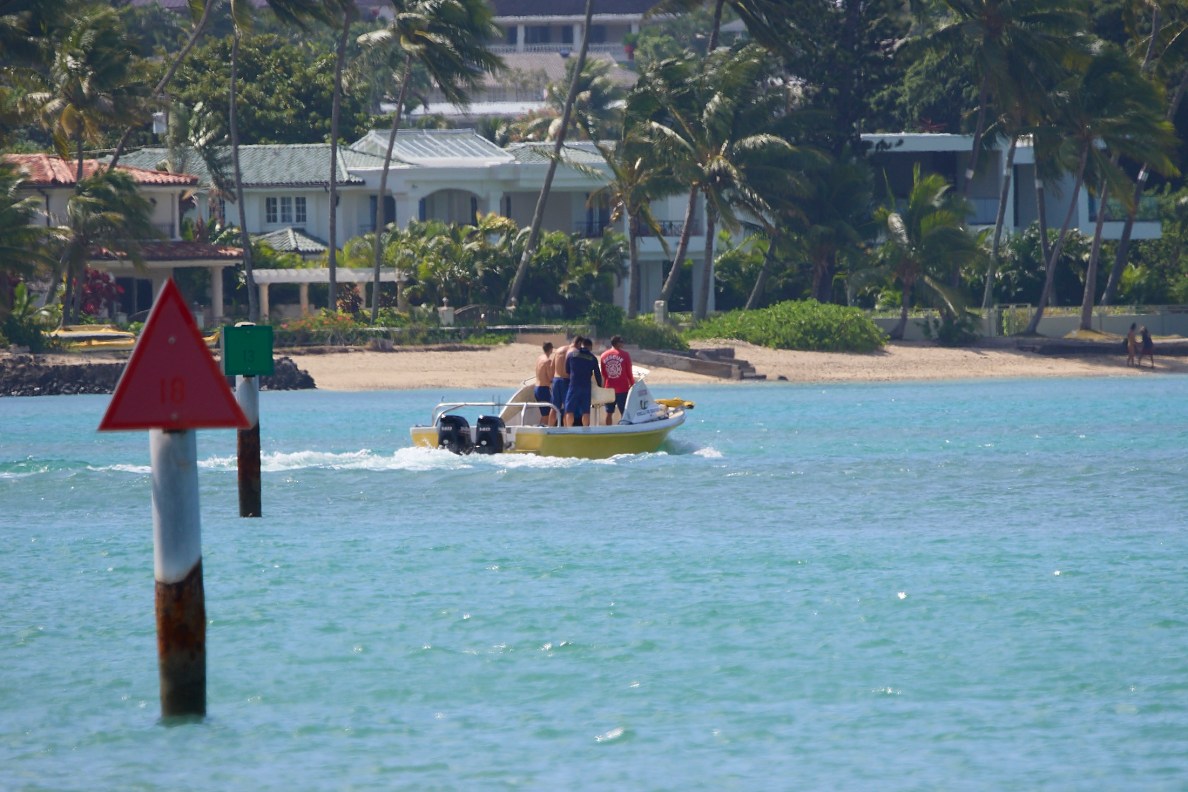
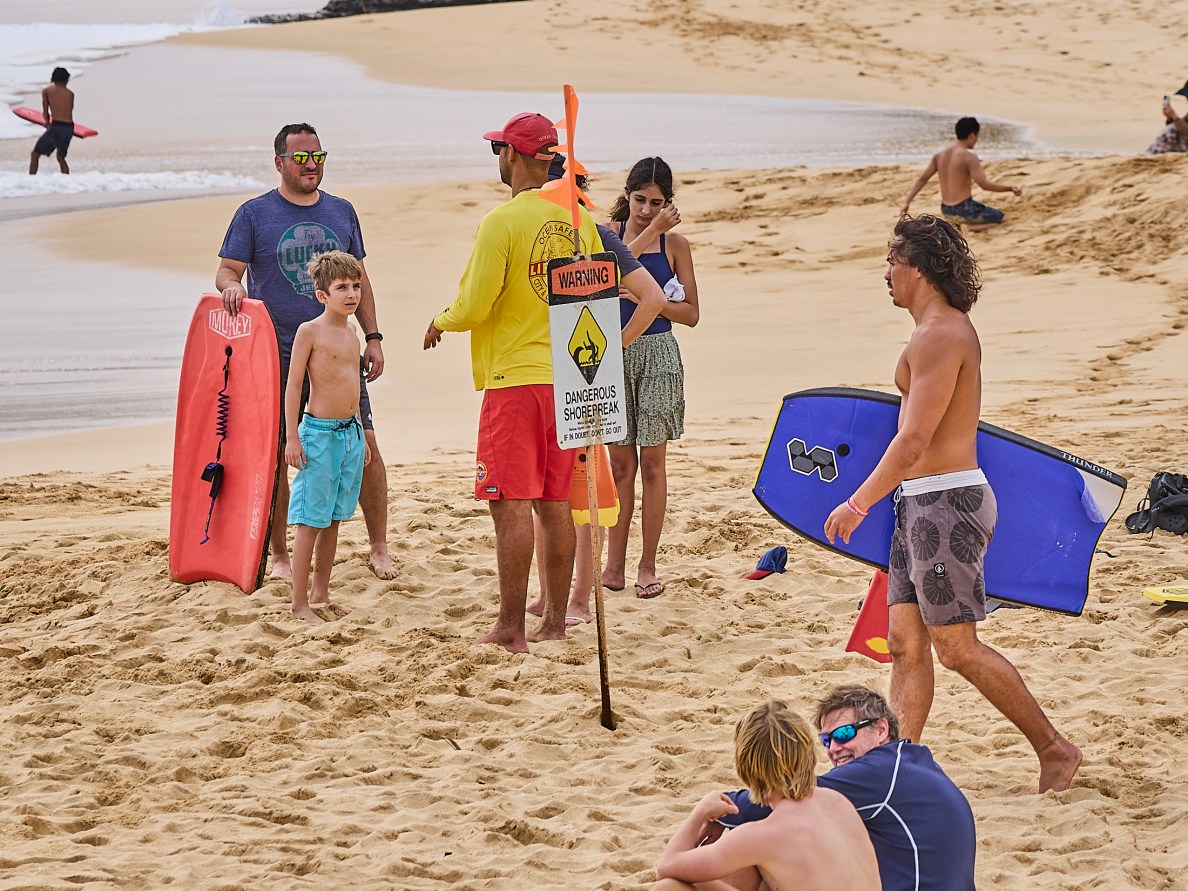
It’s impossible for lifeguards to have eyes on every wave along Hawaiʻi’s 1,052 miles of coastline. On the state’s most populated island, a third of beach parks have a lifeguard tower. And in a state where the ocean plays such a significant role in residents’ culture and livelihood, people are more exposed to its unpredictable force.
“Sounds silly to say, but the more you’re in the water, the higher your risk of drowning,” Galanis said.
But that doesn’t stop locals from getting overconfident in familiar surroundings, going out on slippery rocks in the intertidal, riding a big wave or staying down a little longer to spear another fish.
“It’s because they take the chances,” said Rick Fram, loading his surfboard into a friend’s pickup truck at Laniākea Beach.
“I’ve almost drowned twice on the North Shore,” his friend, John Heraux, chimed in, looking out at the waves on an early Friday morning in May where the two of them had been out for an early surf before work.
The risk doesn’t deter them from surfing the North Shore like they’ve done for decades. As locals, they said, sometimes it feels like the worst can’t possibly happen.
“Any body of water at any given time or any beach is dangerous. It’s inherently dangerous, even if there’s no waves,” Lager said. “I do think every drowning is preventable, but human nature, people are going to go beyond their limits and past their ability, skills, and they end up getting in trouble.”

One particularly risky activity is free diving, which involves a diver holding their breath for minutes at a time to go deep below the surface, often armed with a speargun for catching fish or octopus.
Free diving has claimed the lives of more Hawaiʻi locals in the ocean than almost anything else, surpassed only by swimming and people who fall or are swept into the ocean by accident, also known as unintended immersions. Fifty-eight people died while free diving between 2015 and 2024, according to health department data, although last year’s data is provisional. Often, the cause is shallow water blackout, a condition in which people don’t have enough CO2 in their blood to signal to the brain that they need oxygen, leading them stay down too long and pass out as they rise to the surface.
It’s the more seasoned divers who are at higher risk of shallow water blackout, said Kosaki, who oversaw ocean safety in Hawaiʻi County for nine years.
“They know how to go down and hold their breath longer and stay down longer without having to feel their urge to breathe again,” Kosaki said. “When we find these guys, they’re at the bottom of the ocean because their lungs are full with water.”
That’s what happened to Noʻeau Lima.
Even for a teenager, Noʻeau was a savvy diver, adept at navigating strong currents. From a young age, his father taught him to prioritize safety, study the conditions of the waves before he went out and always carry a dive floater.

But that day, Noʻeau got separated from his uncle during the hunt. There was no lifeguard in the tower on Yokohama Beach due to pandemic restrictions, and when Noʻeau was nowhere to be found, his uncle searched for a while on his own, expecting to see the teen’s sunbleached brown hair pop up from the water. Several hours later, there was still no trace of Noʻeau, except for his kayak bobbing along on the waves.
“What we understood is that when my son went into the ocean at 9 o’clock in the morning, as soon as he took his first dive, he never came up,” Lima said. “When they found him, he was still in the shooting position.”
This is the second story in an ongoing series about Hawaiʻi’s struggle to reduce the number of residents who drown in the state each year. Up next: Why Oʻahu’s North Shore isn’t just dangerous for surfers — and why the popular stretch of beaches is so hard to protect.
Emergency management officials have grappled with how to prevent these deaths, which often occur in more remote areas away from lifeguards and with no sign of distress from the surface. The conventional wisdom is to stay close to a buddy, watch each other and don’t get distracted by the hunt, said Tristan Laboy, a 22-year-old Marine who grew up spearfishing on Oʻahu.
Once, when Laboy was a teenager, he blacked out underwater while free diving with a friend on the North Shore. He’d caught a couple of fish in a cavern when he saw a big menpachi that he was determined to snare. Pushing himself to stay down longer and catch more fish, Laboy started running out of air. When he tried to come up, his gear got stuck in a crevice.
“I was moving and moving, but I wasn’t going anywhere,” he said. “Of course, like, worst place you can be free diving and you’re running out of oxygen is probably a crevice or you can’t see the surface. So I’m like, oh shucks, am I going to die in here?”
He cut himself free from his gear, ditched his weight belt and tried to float up, but he passed out before he broke the surface. When he woke up, his friend had pulled him to the surface and onto the buoy that Laboy always takes with him.
Since then, he always goes out with a friend who he’s confident is a strong swimmer and will have his back.
58 people died while free diving between 2015 and 2024
Short of that, preventing freediving deaths is a sticky challenge, said Jim Howe, a longtime lifeguard on Oʻahu and the former director of the Honolulu Emergency Services Department, which, for more than two decades, included the ocean safety division. Some solutions just aren’t practical. A tag line, for example, could be used to pull someone up, but it could also get caught around coral.
“The advice that we came up with professionally was if you are the fellow up at the top, you should have a spear,” Howe said. “If you see your partner sinking and you cannot grab them or get to them, go ahead and spear them, and especially spear them in the rear end, if you can, so you can haul them back up.”
The Ocean Will ‘Catch You Off Guard’

The risky activities aren’t just beneath the waves. Accidentally ending up in the ocean — either by falling or getting pulled in by a wave — was the second highest cause of resident drownings between 2015 and 2024. Some got into trouble on a kayak. Others fell or were swept out by a rogue wave while fishing from shore or picking ‘opihi. Just this March, a Hilo man was with his family at Mermaid Pond on the Big Island when he was swept off the rocks by a wave, his loved ones watching helplessly.
“It just tells me that people maybe aren’t fully thinking about what they’re getting themselves into before they visit a beach,” Lager on Oʻahu said. “The ocean will seem extremely calm. So people will walk out either on a shoreline, rocky or sandy, and then out of nowhere a large swell … And it will catch you off guard if you’re not paying attention, or if they turn their back to the water.”
The first body Kauaʻi Ocean Safety Bureau Chief Kalani Vierra pulled from the water was a 40-year-old ‘opihi picker at Queen’s Bath, a large tidepool where rogue waves have claimed numerous lives.
‘Opihi are sometimes referred to as the “fish of death” because of the dangers associated with collecting the prized limpets from rocks in the surf zone. This ‘opihi picker had been knocked off the rocks by a wave. But he couldn’t swim, and neither could his friends. By the time Vierra got there, it was too late. Vierra strapped the man’s lifeless body to the back of his jet ski and held him close while navigating the choppy waves to get back to land.
“Didn’t get his face out of my head for a week,” he said.
The memory of failed rescues haunts first responders. But most oceangoers have no idea that the beach where they are fishing or swimming has been a site of death. Some beaches lack even basic warning signs indicating the risk of strong currents or big swells. Where they do exist, many are illegible under stickers slapped on by careless beachgoers.
A rare exception is Hālona Blowhole on Oʻahu’s southern edge, where a white wooden stake rises from a rock in the surf zone.
The stake was erected in the 1930s by Japanese fishermen to honor those who were swept off the slippery rocks to their deaths — and to warn others that waves could reach that far up the steep cliff. Nearby, a yellow rescue tube hangs on a metal pole, a modern-day reminder of the unforgiving nature of the rough southern swells.
The warning hasn’t stopped fishermen from continuing to plant their fishing poles in the rocks just down the coast. One rainy sunset earlier this month, three fishermen clambered up the rugged cliff, carrying white plastic buckets, tackle boxes and long fishing poles, passing a stone shrine meant to protect and honor fishermen on their way to the road.
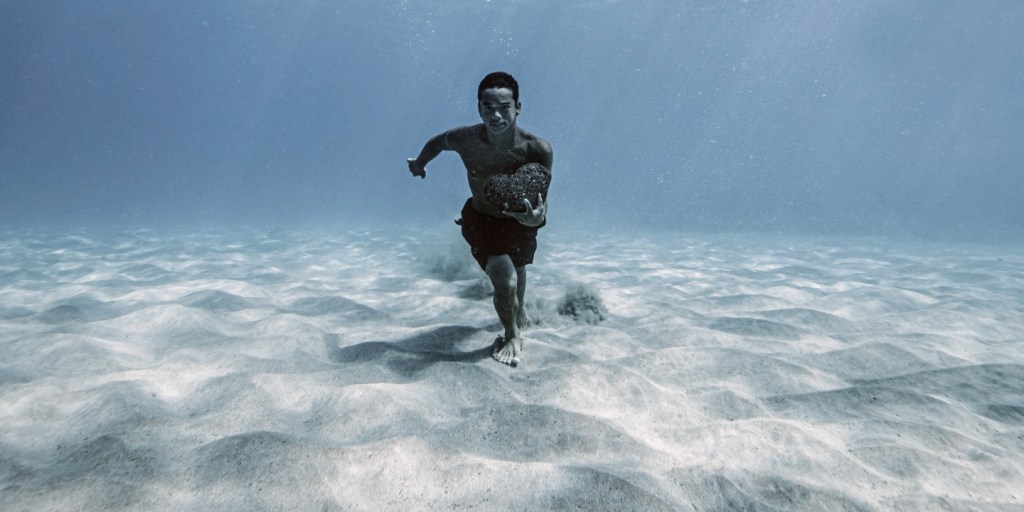
There’s no memorial at the spot where Noʻeau Lima died. His father doesn’t need a manmade reminder. Every time he goes to the ocean, he can feel his son’s presence and the pain of missing him hits his heart.
“I daydream about seeing my son in the ocean, bobbing his head up, waving his arms out, telling me ‘I’m sitting right here, dad.’ And then I kind of don’t feel like being there after that,” he said.
Noʻeau was in the water every day, surfing, paddling or diving. After his death, his father found an entry in his son’s journal calling the ocean his home.
“We live by the ocean,” Lima said. “We die by the ocean.”
Civil Beat’s community health coverage is supported in part by the Atherton Family Foundation.
About the Author
Help power essential news and information