Waiʻanae High School’s Marine Science Learning Center aims to connect students with their heritage and sense of place — and also address the region’s food insecurity, which is among the worst on Oʻahu.
Photo Essay: Westside Students Learn Life And Cultural Lessons Through Aquaculture
Waiʻanae High School’s Marine Science Learning Center aims to connect students with their heritage and sense of place — and also address the region’s food insecurity, which is among the worst on Oʻahu.
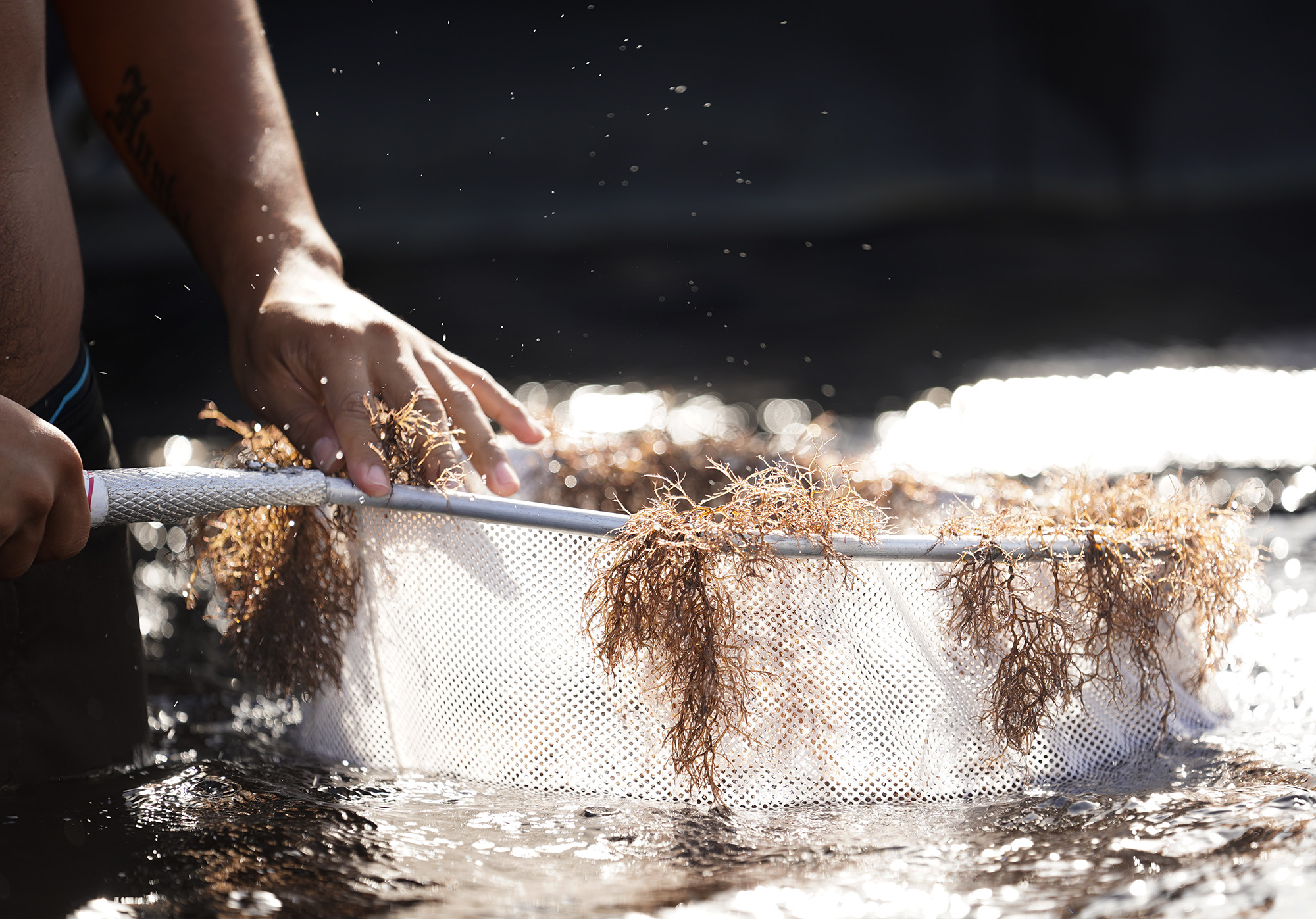
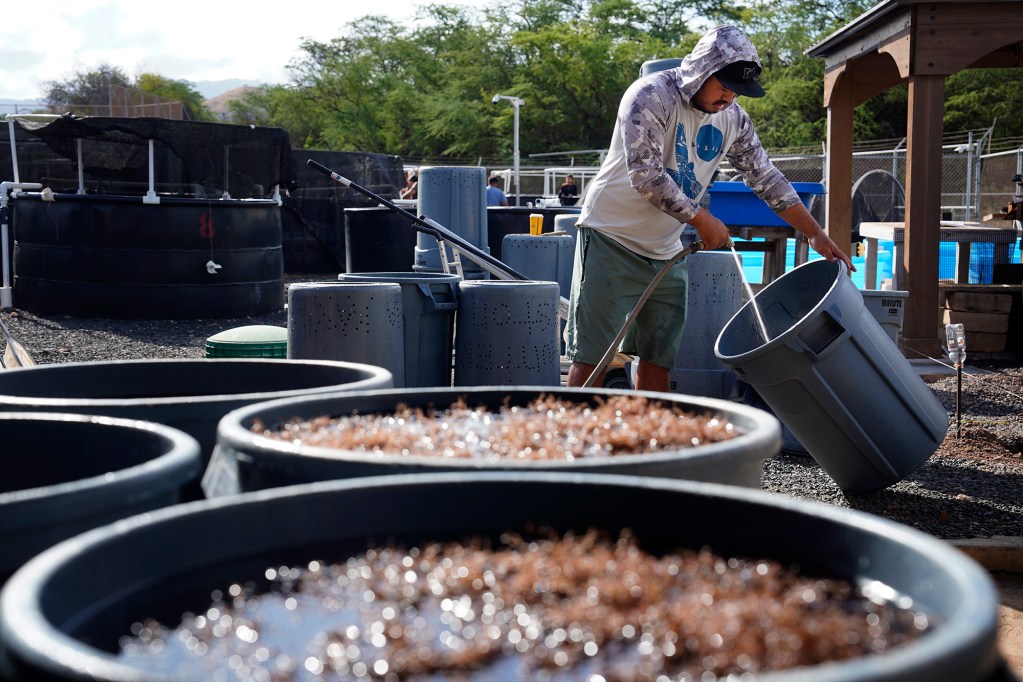
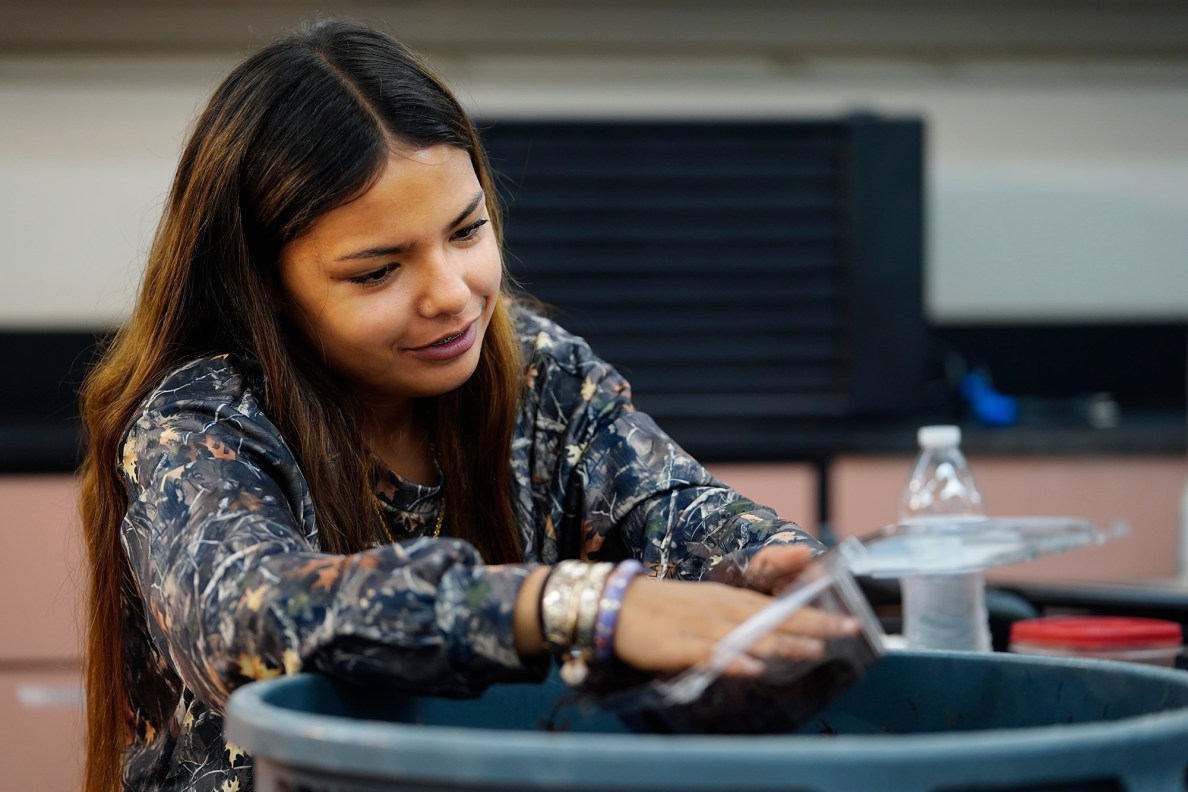
Netted limu is gathered so Waiʻanae High School Marine Science Learning Center students can clean out a tank during class in April. The tanks are cleaned weekly. (Kevin Fujii/Civil Beat/2025)
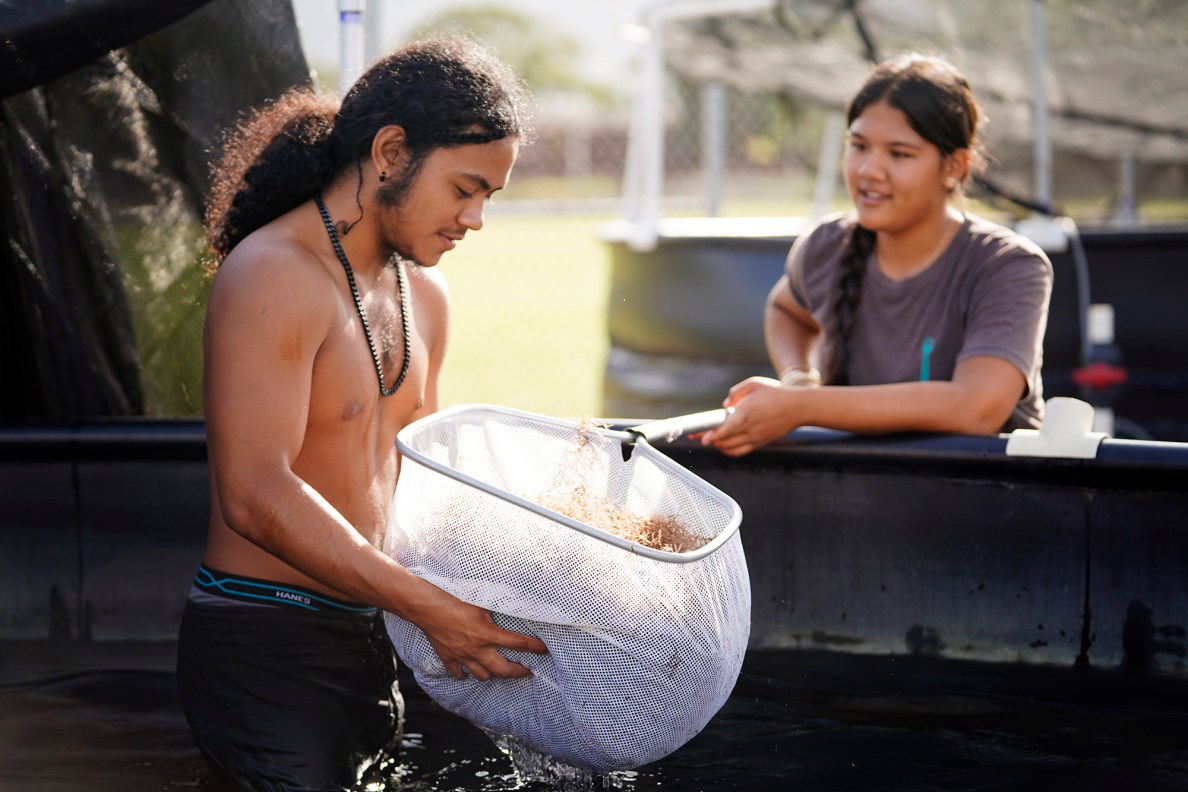
Chaysten Basso Popa squeezes water out of a net full of limu for Serenity Hema to empty a tank for cleaning. Popa and Hema were seniors in the program when this photograph was taken. The Department of Labor pays Hema to work for the program when pau with classes. (Kevin Fujii/Civil Beat/2025)
Waiʻanae High School’s Marine Science Learning Center is the only Hawaiʻi public school with a dedicated aquaculture facility. The program gives students hands-on learning experiences farming fish and limu (seaweed).
The school is expanding its tanks and research space, as part of an ongoing effort to boost Leeward Oʻahu’s food security and establish a hatchery for native fish to reestablish throughout the state.
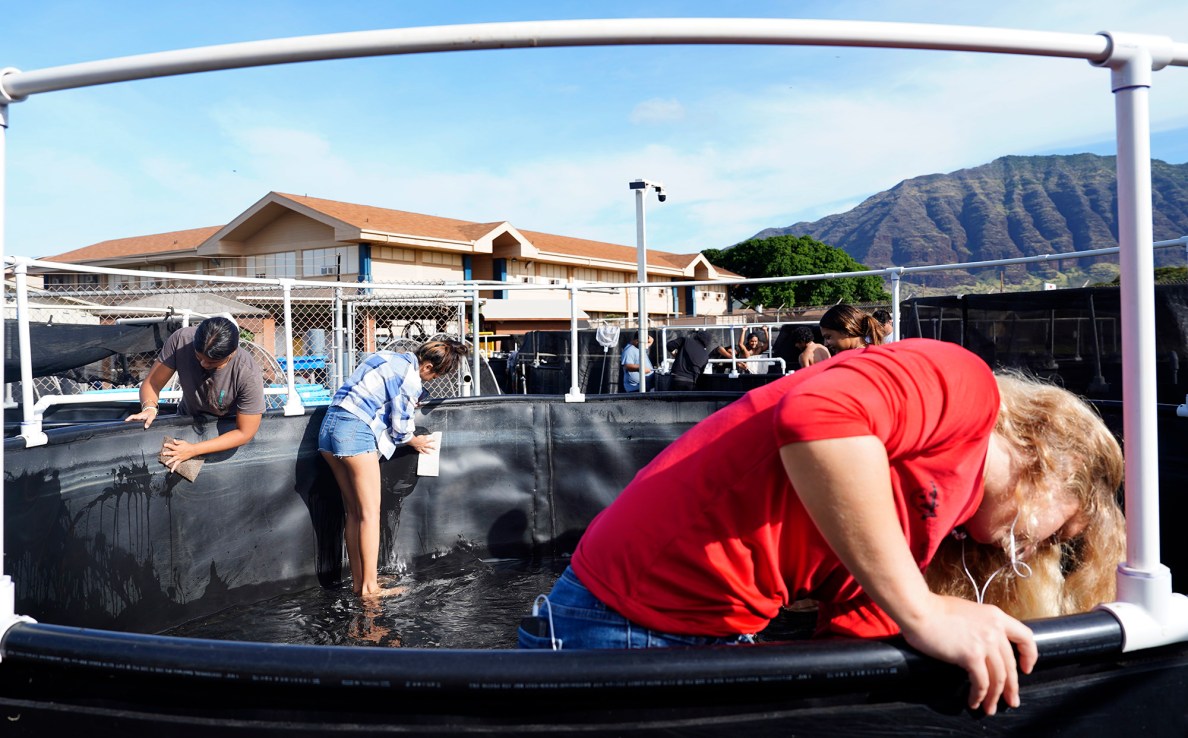
Waiʻanae High School students scrub the sides of a limu tank at the Marine Science Learning Center. (Kevin Fujii/Civil Beat/2025)
Alex Totman-Rodrigues is one of a handful of former Waiʻanae High School students now working for the Marine Science Learning Center.
Totman-Rodrigues’ aim — like center coordinator Dana Hoppe — is to see the once prevalent, native mullet, known as ʻanae, back to its namesake town: Waiʻanae.
The 26-year-old spent three years working at the Oceanic Institute before returning to his old school, as part of a five-year internship with the Kupu ʻĀina Corps, a workforce development initiative developed by the state. He sees his work with the school as a service to future generations, who he hopes will continue to build on the knowledge developed by previous classes of students at Waiʻanae High.
Restoring mullet’s place on the Westside is intended to help students connect with their heritage and sense of place, but also to boost food self-sufficiency in the area.
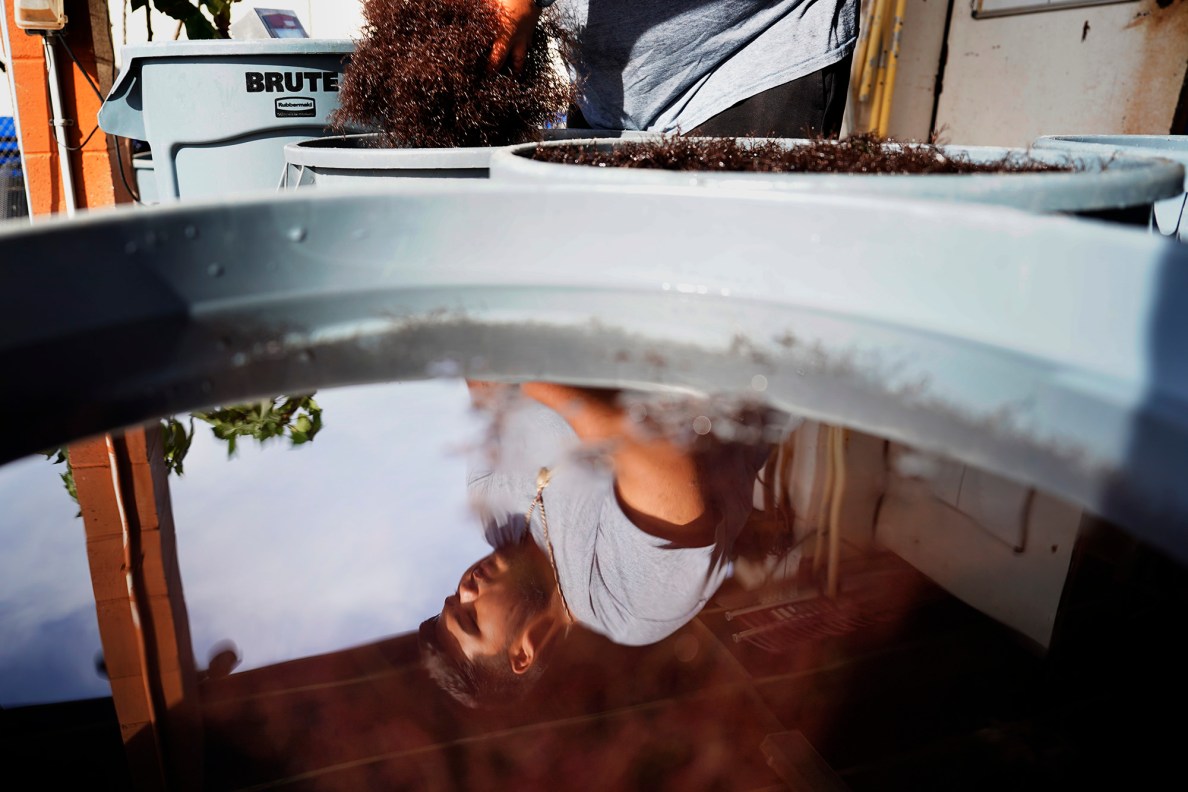
Waiʻanae High School Marine Science Learning Center’s Hyrum Tom weighs limu while its tanks are cleaned. (Kevin Fujii/Civil Beat/2025)
Totman-Rodrigues and his colleagues are already teaching the next generation, as are Waiʻanae High School students, who are often tasked with teaching primary school kids visiting on field trips. They come from all over the islands, Hoppe said, including some from out-of-state schools.
“We teach our kids how to be docents. Our juniors and seniors — they take a leadership role,” Hoppe said.
Teacher Tyson Arasato rinses a bin to hold limu while its tank is cleaned. Arasato, a 2007 graduate of the program, is currently a teacher of the four levels of Career Technical Education (CTE) courses that make up the marine science sequence. (Kevin Fujii/Civil Beat/2025)
Jazra Oliveria Nunes, left, and Mayjean Wakinekona-Kahunanui — both seniors at the time this photo was taken — transfer limu from a temporary holding bin with water to a bin to drain out water. The limu is transferred in the bin with holes before and after its tank is cleaned for the weight to be lightened. (Kevin Fujii/Civil Beat/2025)
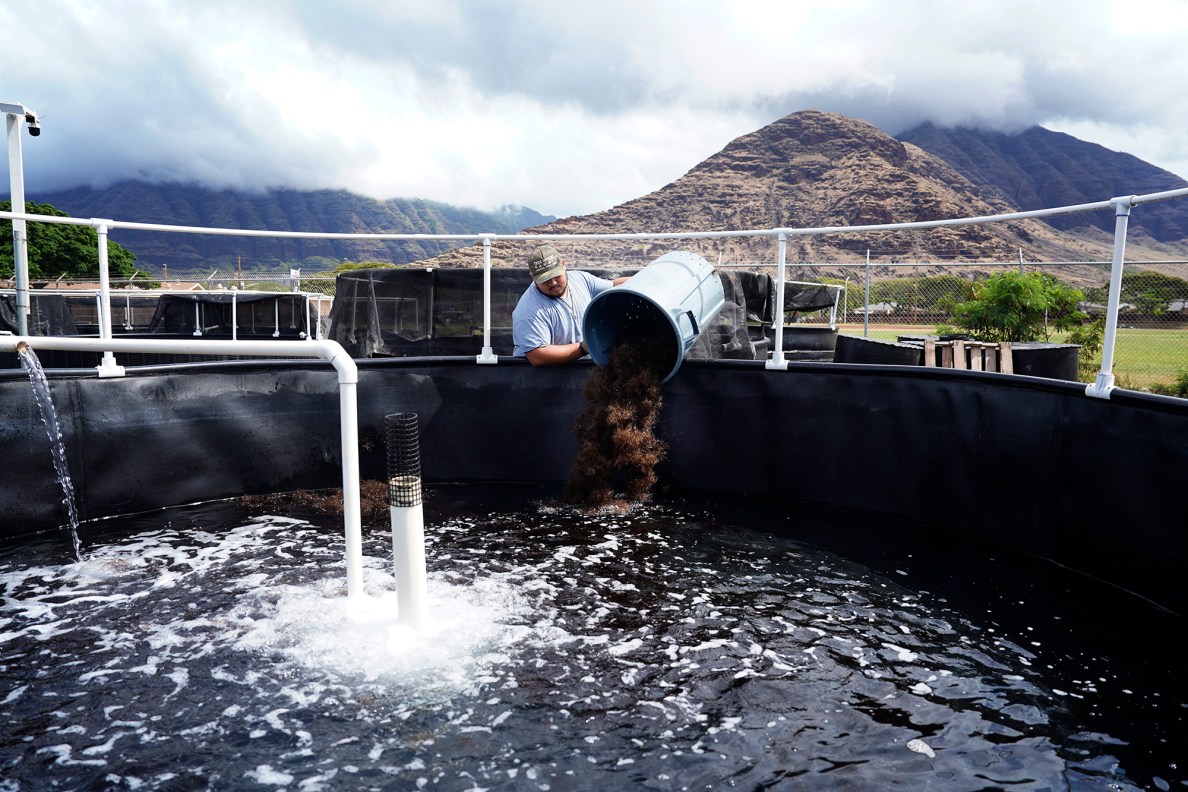
Hyrum Tom returns the algae back to its freshly cleaned tank. (Kevin Fujii/Civil Beat/2025)
While students at Waiʻanae may not all end up with careers in the aquaculture industry, their education is not wasted, Hoppe said, nor does their final career destination matter that much.
“It’s trying to teach them how to think critically, trying to teach them how to be responsible, trying to teach them values that a lot of times they don’t get at home,” Hoppe said. “How do you treat other people? How do you resolve conflict in a positive way instead of a negative way? Those are all important skills.”
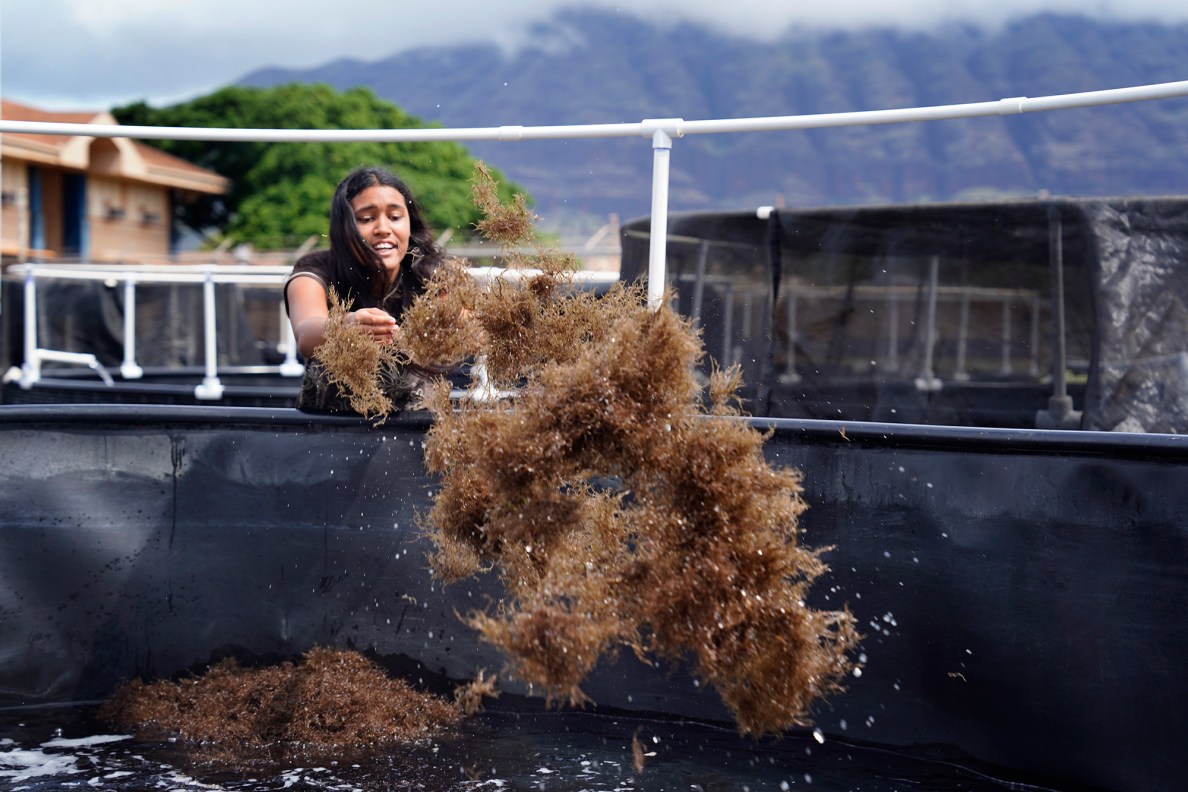
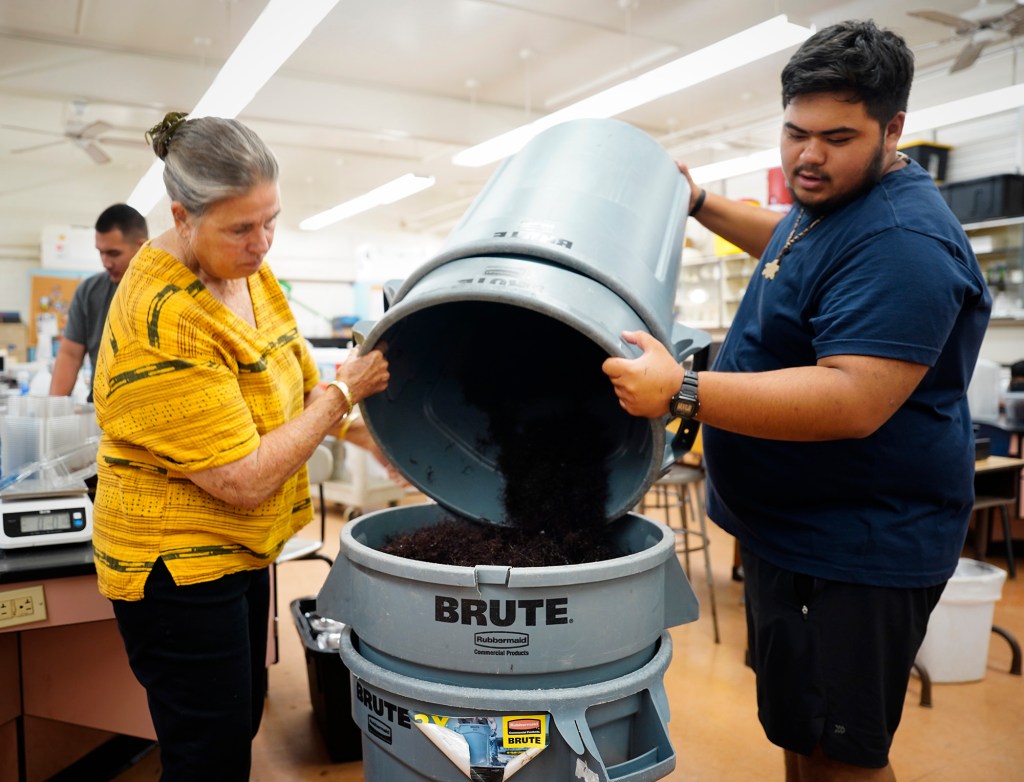
“Fly! Be free!” says Diamond Holbron Kealoha as she spreads out limu in its freshly cleaned tank. (Kevin Fujii/Civil Beat/2025)Waiʻanae High School Marine Science Learning Center’s Dana Hoppe and Hyrum Tom work in the Waiʻanae classroom. (Kevin Fujii/Civil Beat/2025)
The students get hands-on experience at the school but often visit other aquaculture facilities to see what the industry has to offer, visiting the Big Island’s Hawaiʻi Ocean Science and Technology Park and the Pacific Aquaculture & Coastal Resources Center at the University of Hawaiʻi Hilo.
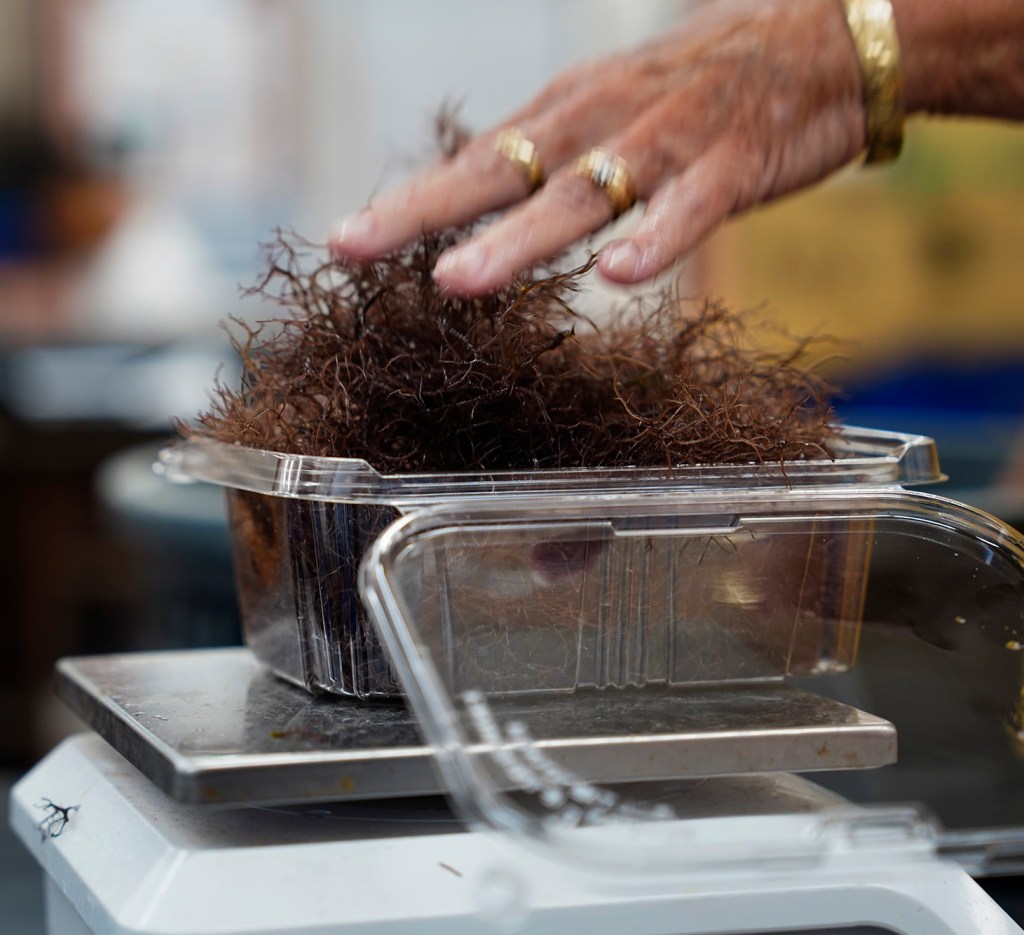
Mayjean Wakinekona-Kahunanui packages limu, which will go to the Waiʻanae Coast Comprehensive Health Center’s ‘Elepaio Social Services. (Kevin Fujii/Civil Beat/2025)Coordinator Dana Hoppe weighs a package of ogo — seaweed. (Kevin Fujii/Civil Beat/2025)Hyrum Tom places boxed ogo — seaweed popular in poke — into a bin for transport. Approximately 250 pounds of limu is boxed and delivered to Waiʻanae Coast Comprehensive Health Center’s ʻElepaio Social Services monthly. (Kevin Fujii/Civil Beat/2025)
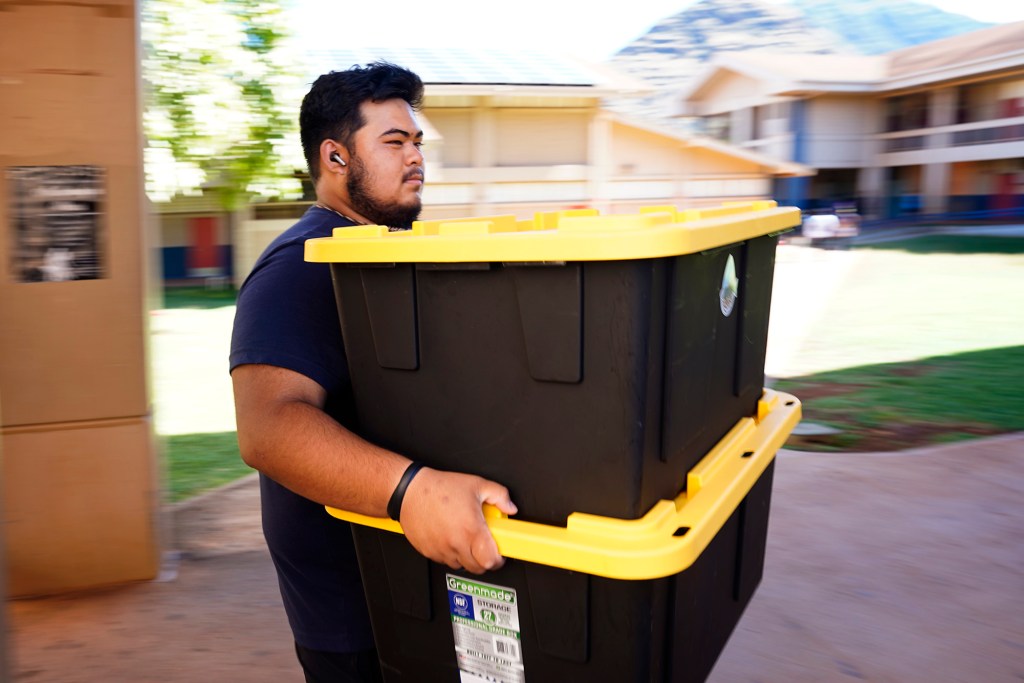
Hyrum Tom moves containers filled with boxed limu at Waiʻanae High School. ‘Elepaio Social Services buys the boxed ogo and distributes to the community’s kūpuna free of charge. (Kevin Fujii/Civil Beat/2025)
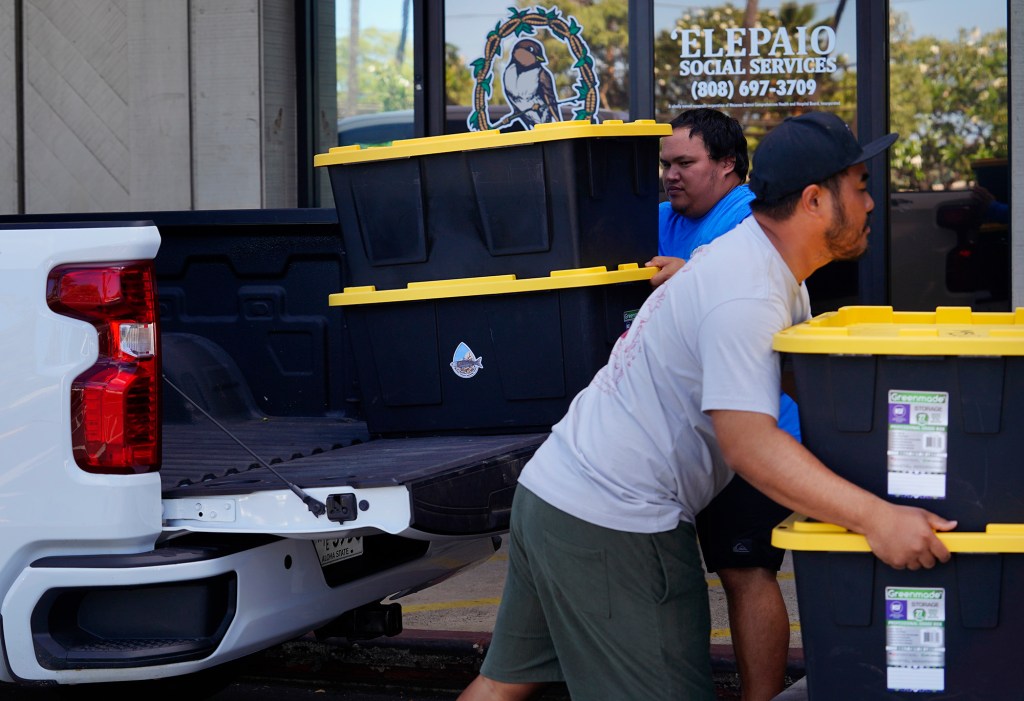
Graduates of the Marine Science Learning Center program Alex Totmon Rodriguez, left, and Tyson Arasato, deliver limu to ‘Elepaio Social Services. Arasato, a 2007 graduate, is now a Waiʻanae High School teacher. Rodriguez, a 2018 graduate, is currently an intern with the program. (Kevin Fujii/Civil Beat/2025)
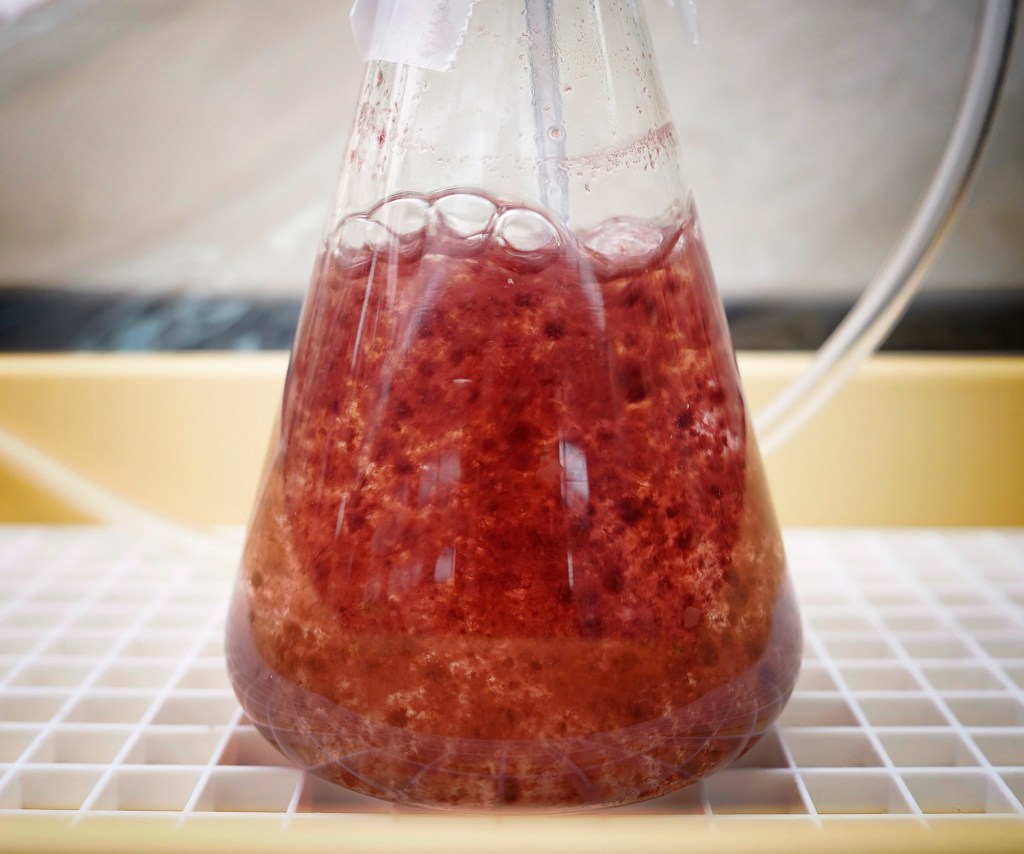
The cyclical process begins anew as teacher Tyson Arasato adds an aeration tube to a beaker of young limu. (Kevin Fujii/Civil Beat/2025)Limu Kohu begins to grow in the Waiʻanae High School Marine Science Learning Center. Even during the months when most students are on summer break, the Marine Science Learning Center remains open year-round for the cycle to continue without interruption. (Kevin Fujii/Civil Beat/2025)
Hoppe told Civil Beat in the June story that students learn to monitor water quality, salinity and a long list of complex tasks as part of their work.
”We make sure that the curriculum is rigorous science,” Hoppe said. “But the skills are universal: Trying to teach them how to think critically, trying to teach them how to be responsible, trying to teach them values.”
The practical experience, Hoppe said, helps show students their own potential.
“Hawai‘i Grown” is funded in part by grants from the Stupski Foundation, Ulupono Fund at the Hawai‘i Community Foundation and the Frost Family Foundation.
Civil Beat’s education reporting is supported by a grant from Chamberlin Family Philanthropy.
As a local newsroom, Civil Beat has a unique public service role in times of need. Your support ensures that we can pivot when emergencies arise and get vital information out to everyone, from all communities.
Support timely and accurate breaking news stories as well as impactful coverage across the state. Donate today.