

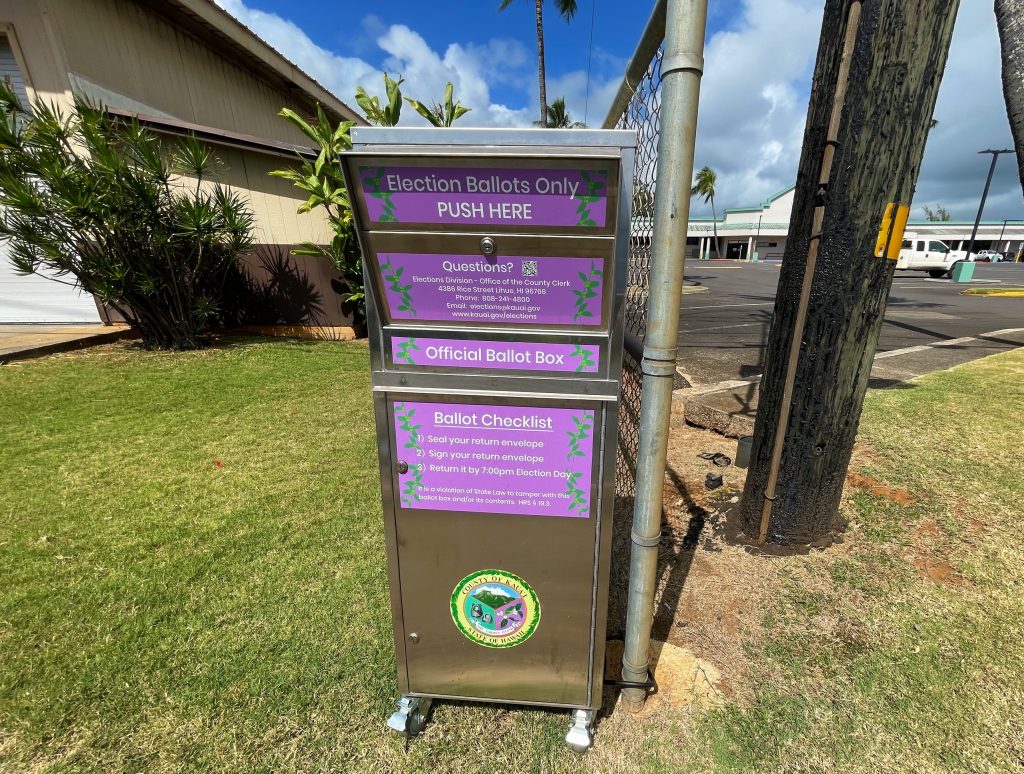
The next meeting of the Hawaiʻi Elections Commission on Wednesday is expected to be dominated by recent findings of discrepancies in the number of drop box and mail-in ballots cast on Kauaʻi during the 2024 general election.
That the state’s official count of those ballots exceeded the number that the county said it collected and submitted is not in dispute.
But accounts of just how great that discrepancy was vary — a lot.
The numbers range from 25 according to the state’s chief elections officer to 39 according to the Hawaiʻi Supreme Court to 661 according to an Elections Commission permitted interaction group and up to 3,772 based on the initial Kauaʻi County ballot envelope count.
Civil Beat has reviewed the tranche of public records, correspondence and court submissions and confirmed there were inconsistencies that raise questions about the management of mail-in ballots in Hawaiʻi.
However, gaps in the chain of custody records during the county’s ballot collection all the way through the state’s counting make it impossible to say with certainty who’s right about how big the difference really was.
Any major discrepancy would be especially significant in the seven-member Kauaʻi County Council race, where seventh-place candidate Fern Holland beat eighth-place Ross Kagawa by only 108 votes countywide.
Considerable energy, including a Supreme Court case brought by Elections Commission member Ralph Cushnie and more than 30 other voters, has already been spent addressing the fact the state counted more ballots than the county said it delivered.
The county’s record of the ballot envelopes collected on Kauaʻi from drop boxes and delivered by the U.S. Postal Service has been a particular focus. Those daily logs are a manual count of ballot envelopes designed to track election progress, and are not a tally of certified votes, the county has repeatedly said.
That disclaimer was sufficient explanation for any differences between the county records and the official state count, the Supreme Court ruled in December when it dismissed the election challenge nearly a month after the results had been certified.
But a permitted interaction group, commonly called a PIG, of the state Elections Commission said last month that additions to the county spreadsheets during the proceedings raise more questions about the reliability of the record. And the group says the county’s record-keeping isn’t compliant with state law.
An official audit by the state Elections Commission of the ballot envelopes collected by the county and the paper ballots in the state’s possession is now needed, along with testimony from election officials, the interaction group said.

Meanwhile, a second PIG is looking at possible discrepancies in Hawaiʻi County’s ballot count, another issue that may be discussed at Wednesday’s commission meeting.
While the Kauaʻi concerns have been percolating since last year’s general election, controversy began at Elections Commission meetings almost immediately after the introduction of all-mail voting by the state in 2020. Signals from the Trump administration last week that it intends to lead an effort to eliminate mail-in voting will ensure ongoing scrutiny.
And the discussion around the Kauaʻi count replicates growing national recognition of the importance of ballot management during elections, said Jennifer Morrell, CEO of The Elections Group, a nonprofit that advises on improving election integrity.
Here’s a closer look at the Kauaʻi controversy in Q&A form:
Where Do The Numbers Come From?
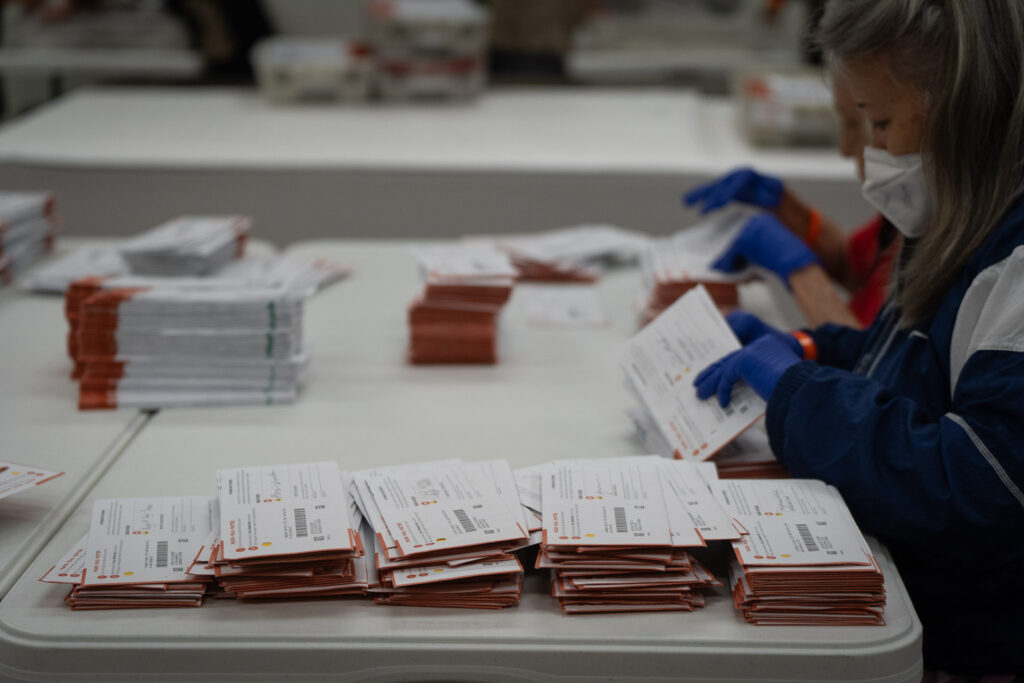
There is a mismatch between the number of ballot envelopes recorded by Kauaʻi County and the final count by the state Office of Elections.
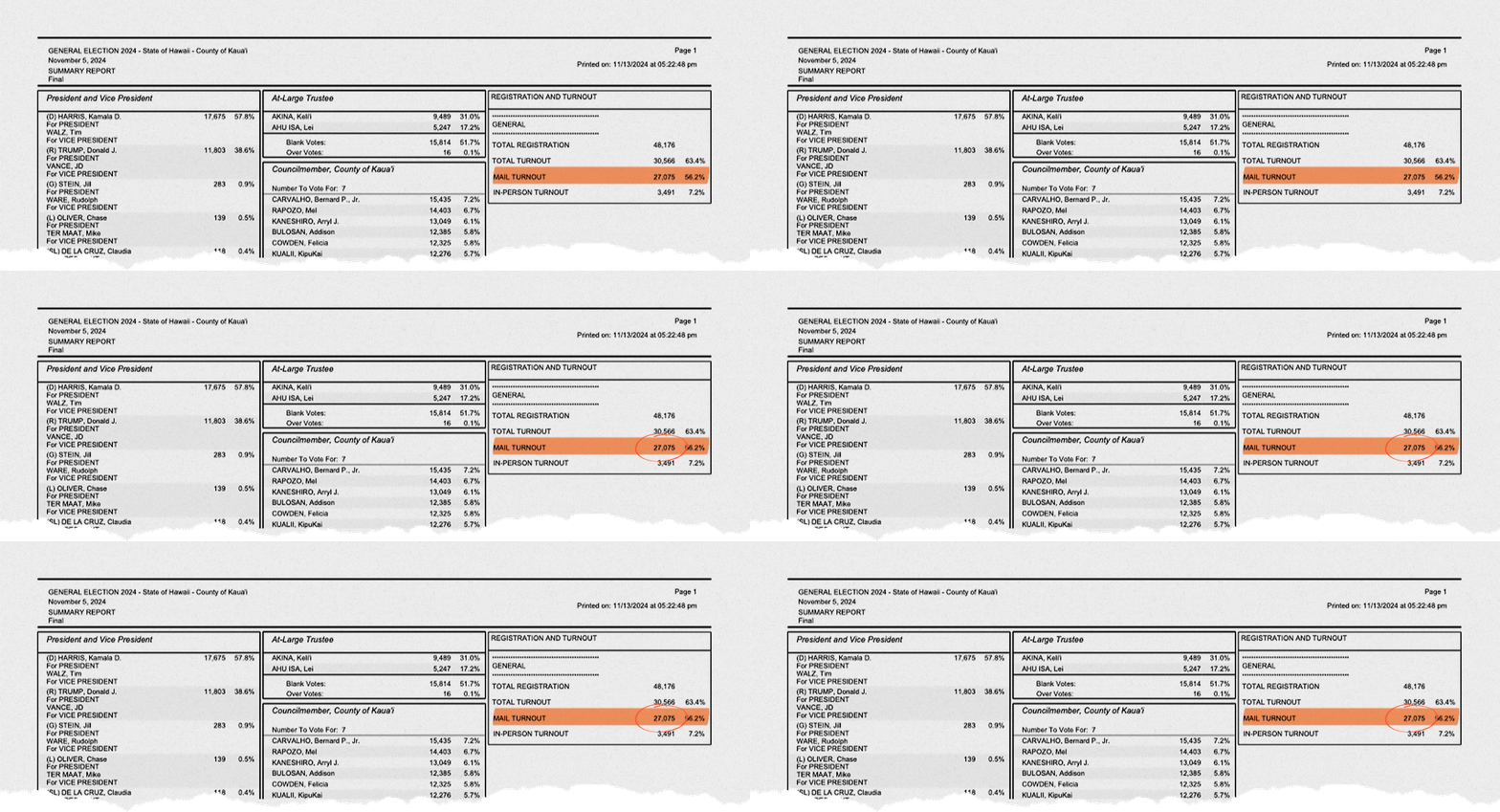
The total general election mail turnout was 27,075 ballots, according to the official final summary (an additional 3,491 ballots were cast at the county’s voter service center in Līhuʻe — no envelopes needed). The county ultimately reported it collected 26,633 ballot envelopes. After 219 were eliminated through signature verification, it was left with 26,414.
But envelope transfer forms show that 27,036 were transferred to the state counting center – 622 more than the county reported collecting, but still 39 less than the state said it counted.
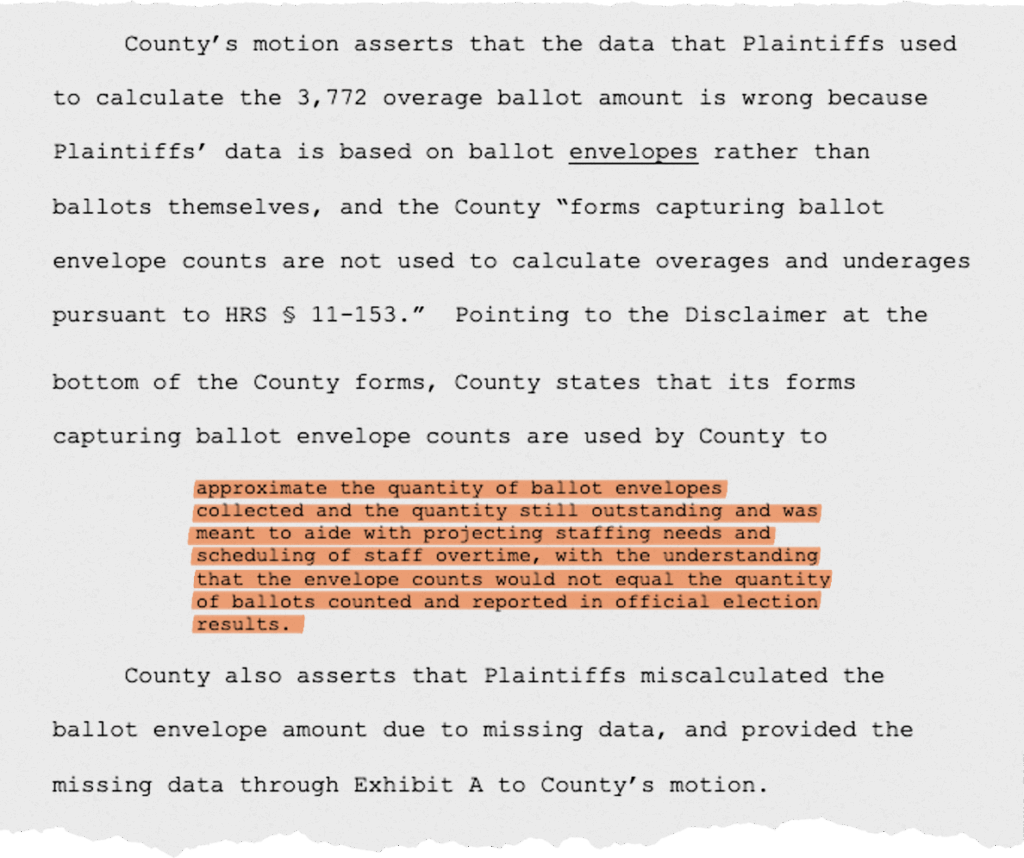
The county’s primary explanation for the difference between the mail ballots it received and the mail ballots counted by the state is that its tallies are only unofficial counts used to track election progress and staffing needs.
That raises concerns about the accuracy of the chain-of-custody records for ballot collection the county is required to maintain. Hawaiʻi statute describes that as “a complete and current count of all … ballots issued, spoiled and received in their county.”
The audit recommended by the PIG would require both the county and the state to produce the paper trail that underpins the results in the Statewide Voter Registration System (SVRS).
Why Did Kauaʻi Numbers Change?
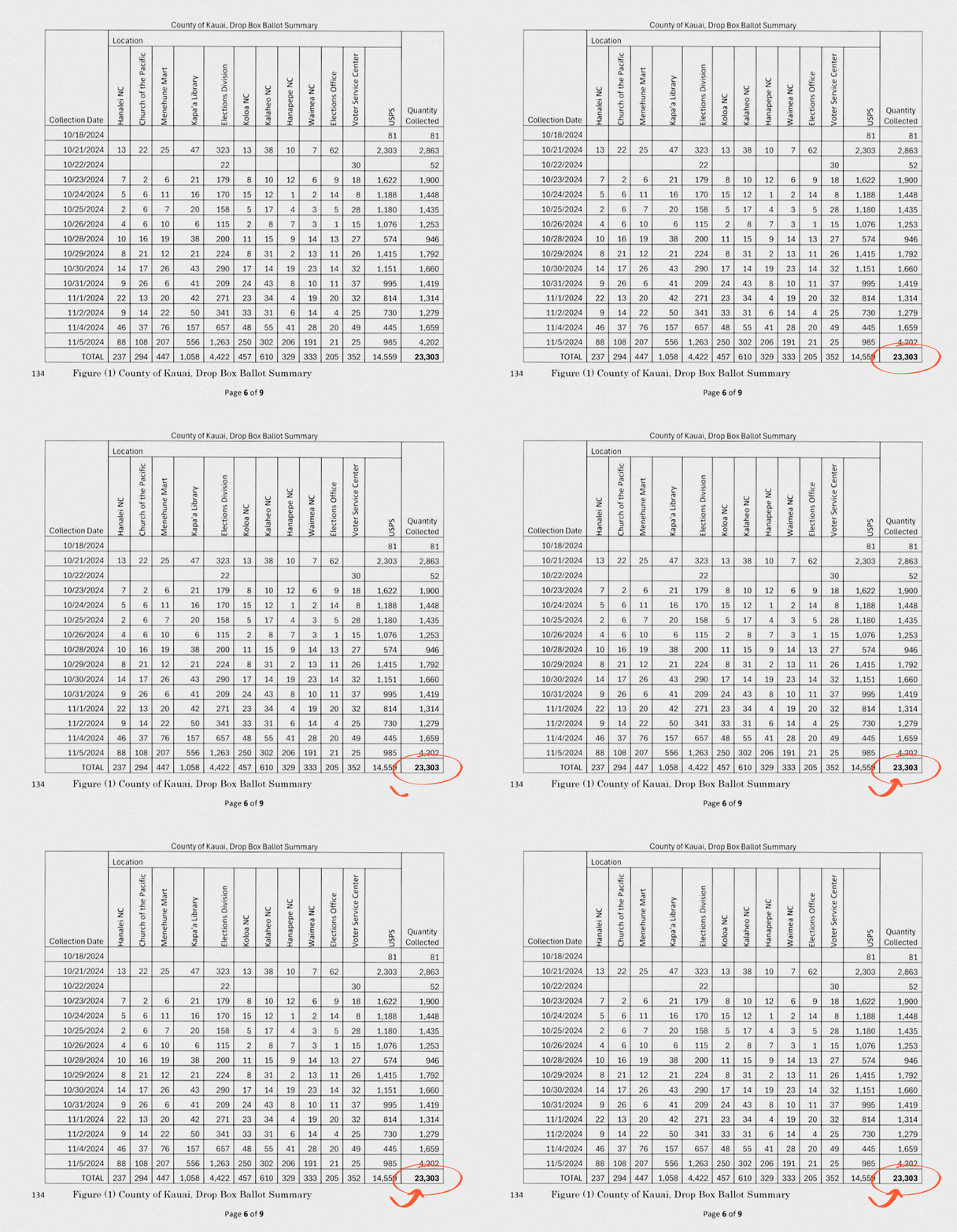
The county initially reported collecting 23,303 ballot envelopes – a total based on the daily count carried out by county election workers and recorded in log sheets showing envelopes collected from drop boxes and delivered daily by the U.S. Postal Service.
Those forms may be altered when the envelopes are recounted at the county elections office. The logs note the alterations and the entries are co-signed by election workers, documents show.
But the county’s total was dramatically revised during the legal challenge to the election results filed by Kauaʻi-based Elections Commission member Ralph Cushnie and other plaintiffs.
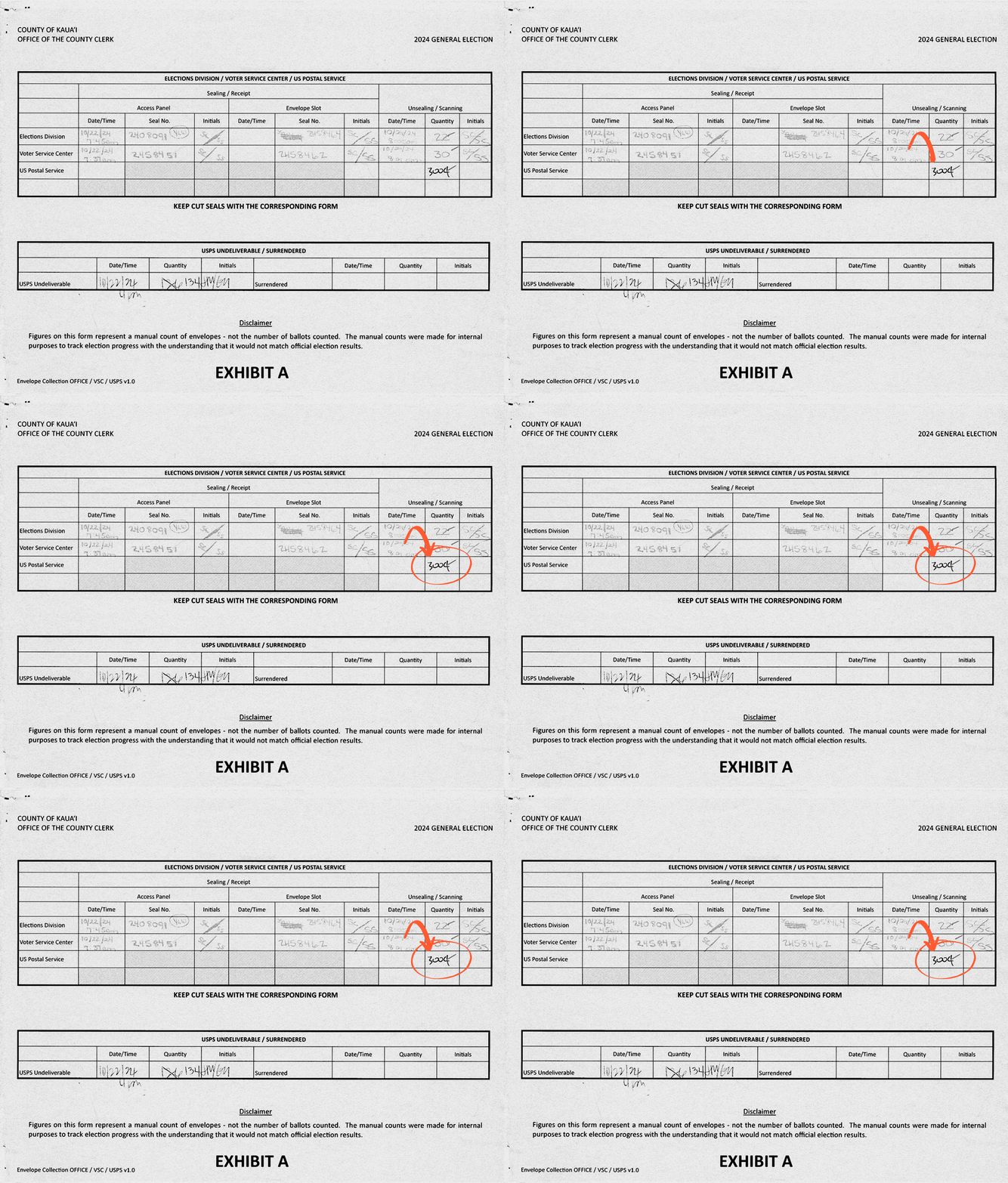
In a Dec. 4 declaration to the Supreme Court – nine days after the election results were certified by the state – Deputy County Clerk Lyndon Yoshioka said that one batch of 3,004 ballot envelopes had been omitted from the daily logs for Oct. 22 due to human error. Two other daily entries were also adjusted.
The correct total, she said, was 26,633.
The documentation the county resubmitted shows the additional postal ballots added for Oct. 22, but the entry is not signed or co-signed – a detail that was disconcerting to the commission’s permitted interaction group and inconsistent with the other pages reviewed by Civil Beat.
Why Different Totals For Envelopes And Ballots?
It is normal to see a difference between the ballot envelope count and the final count, after the ballot envelopes are opened and the vote is verified and scanned, said Morrell, a former elections official.
Typically this is because a ballot failed signature verification. 219 Kauaʻi ballots were rejected for this reason by county officials.
Envelopes can also be collected that have no ballot inside, more than one ballot, or the wrong ballot. Votes are added back to the final count if voters “cure” or resolve issues with their signature within five business days of the election.
The number of votes added in this way tends to be a low percentage of the final count, Morrell said.
The use of machines to count ballot envelopes (rather than the current manual procedure) could improve the accuracy of running totals right up until the ballots are scanned at the counting center, she said.
What Did The Supreme Court Consider?
The Supreme Court only considered the effect of the 39-vote difference between the votes Kauaʻi ultimately said it transferred to the counting center (27,036) and the final state count (27,075).
That was “clearly less than the 108 vote difference” between the seventh- and eighth-placed County Council candidates, the court said in its dismissal of the case Dec. 20.
What Are Election Officials Saying?
Nago wrote in an April 25 letter to the interaction group that “natural checks and balances” are created by the separation of responsibilities between the county and the state.
But on July 29 he acknowledged the state counted what he calculated as 25 more votes — not 39 — than the county delivered, saying “the differences may be attributed to human errors in the hand count and hand-written records.”
County Clerk Jade Fountain-Tanigawa said in a motion to dismiss the election challenge that the data used in the complaint were wrong because some counts of envelopes had been omitted from records it provided under the Uniform Information Practices Act, and the counts only “approximate the quantity of ballot envelopes.”
But both the commission’s interaction group and the Supreme Court pointed out that Hawaiʻi law considers every record created by precinct officials “prima facie evidence of the facts therein set forth, and shall be received as such in any court.” Still, the court did not consider other inconsistencies in the county’s records, citing the county disclaimer.
What Other Issues Does The Kauaʻi Case Raise?
The role of official observers.
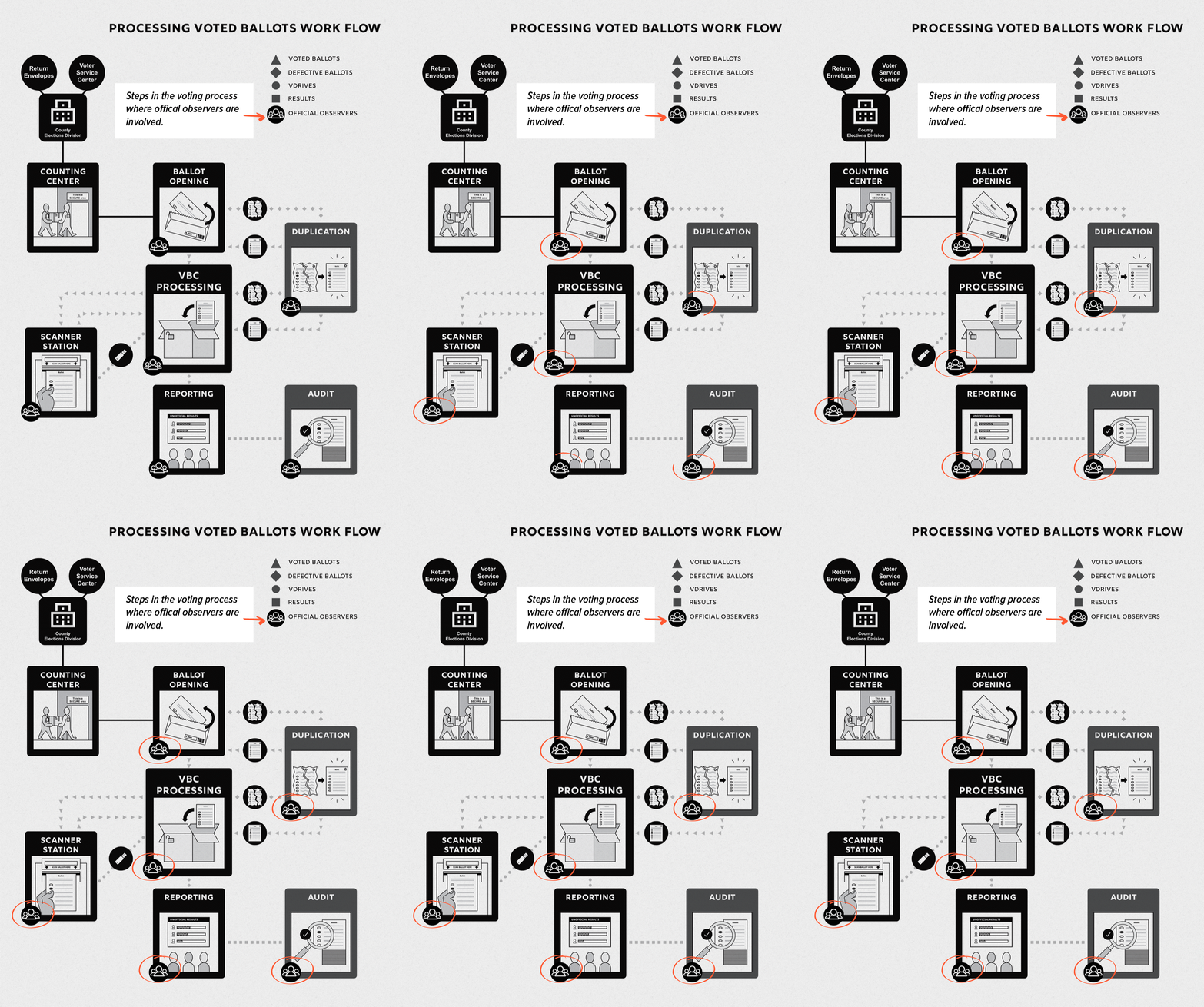
The official state election workflow from the 2024 Counting Manual shows that the role of election observers begins once the ballot envelopes have arrived at the state counting center, but the official elections website says “Ballots are always transported and processed in the presence of Official Observers.”
Nago’s April 25 letter is more qualified, saying that the role of observers “applies specifically to the handling of voted ballots as they are opened and processed at the counting center,” but can overlap with “a handoff at the county clerk’s office to a team of election officials and official observers who take custody of the items.”
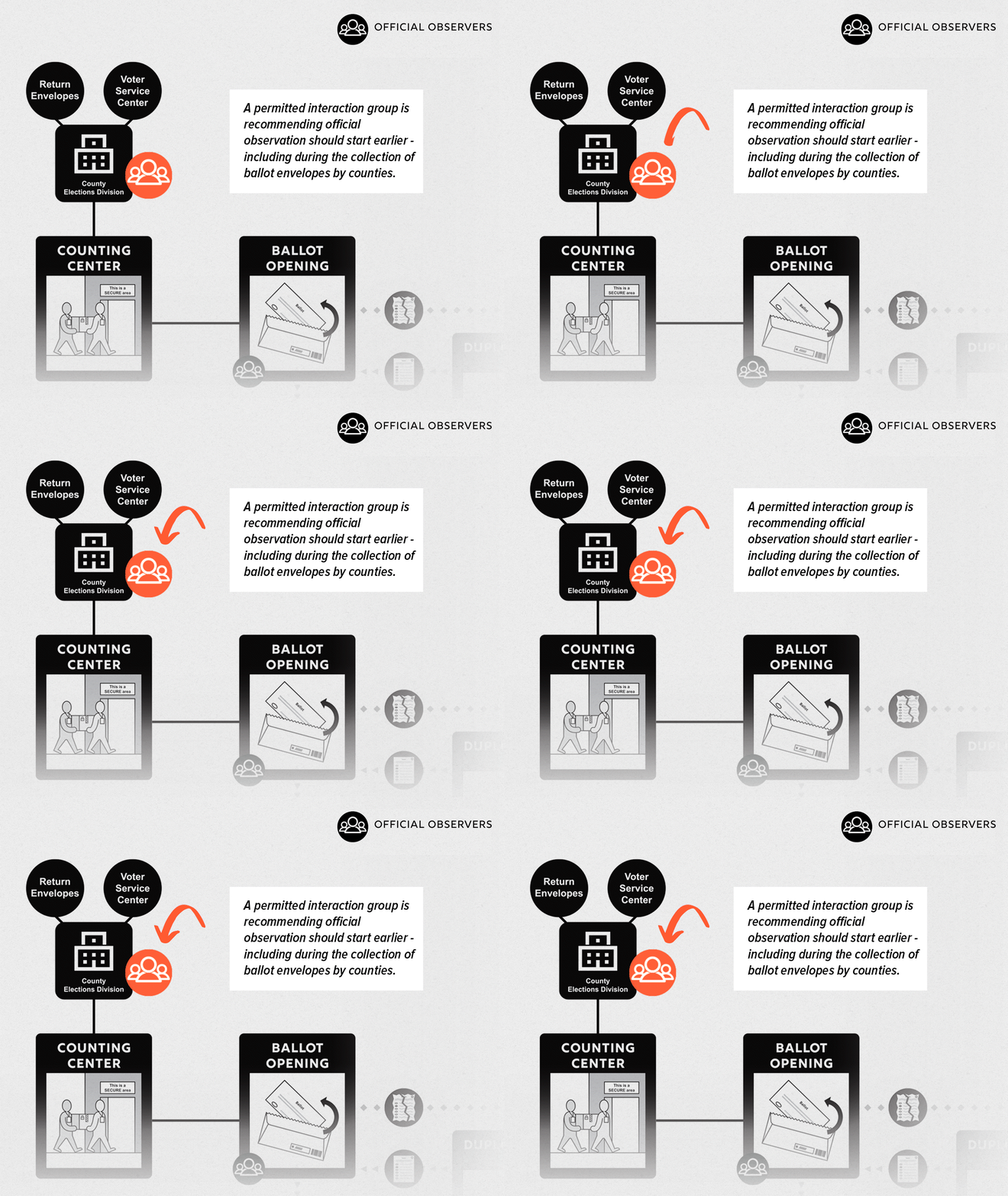
In its July 13 report, the interaction group suggested rule changes to expand the role of observers to include the collection of ballot envelopes, the sign-off on counts and signature verification at the county level.
What Can Early Post-Election Audits Show?
Hawai’i is among the states that has a procedure for post-election audits — but those are limited to a sample of not less than 10% of the votes from a district or precinct selected at random and conducted after the election and before certification.
That’s known as a tabulation audit, Morrell said, designed to ensure that the voting system correctly interpreted and tallied each ballot.
“But none of that tells us if more ballots were scanned than voters who got credit for voting, or if a batch of ballots was accidentally scanned twice, or if a batch of ballots got scanned and there was a jam and somebody deleted the batch, but forgot to rescan it.”
“So the ballot management framework, the ballot accounting and reconciliation and chain of custody are really critical and should be part of the post-election audit,” Morrell said.
About the Author
Matthew Leonard is a senior reporter for Civil Beat, focusing on data journalism. He has worked in media and cultural organizations in both hemispheres since 1988. Follow him on Twitter at @mleonardmedia or email mleonard@civilbeat.org.
16 years ago, Civil Beat did not exist.