Electric hydrofoils flying above our waters are becoming more common. Many pioneers of the sport in Hawaiʻi started out surfing human-powered hydrofoils at regular surf breaks.
Photo Essay: Adventurers Get A Charge Out Of Electric Hydrofoils
Electric hydrofoils flying above our waters are becoming more common. Many pioneers of the sport in Hawaiʻi started out surfing human-powered hydrofoils at regular surf breaks.
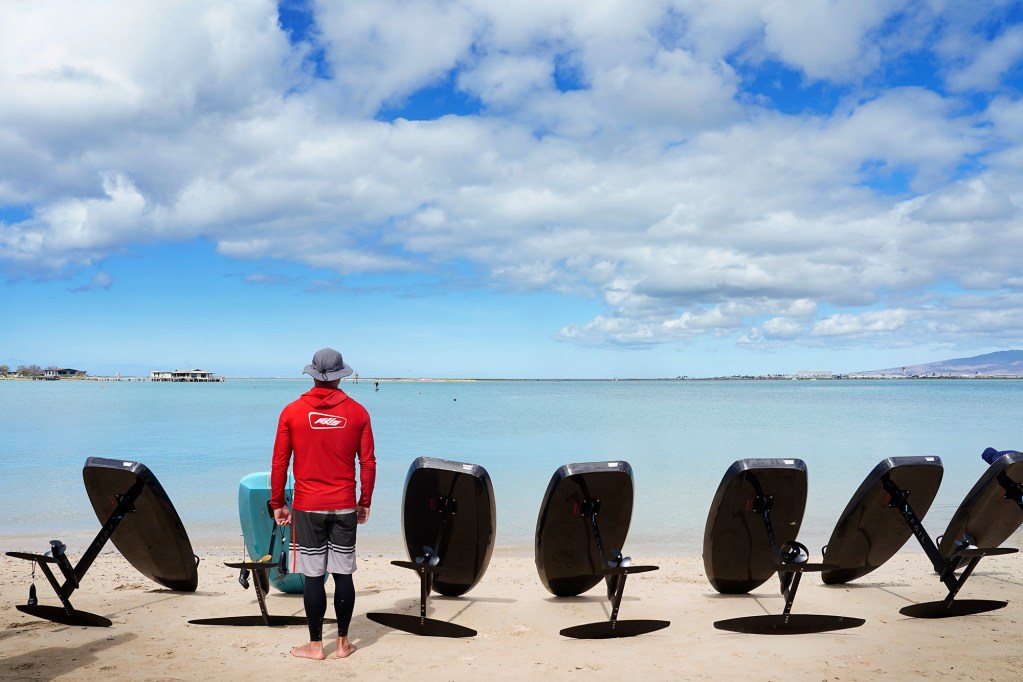
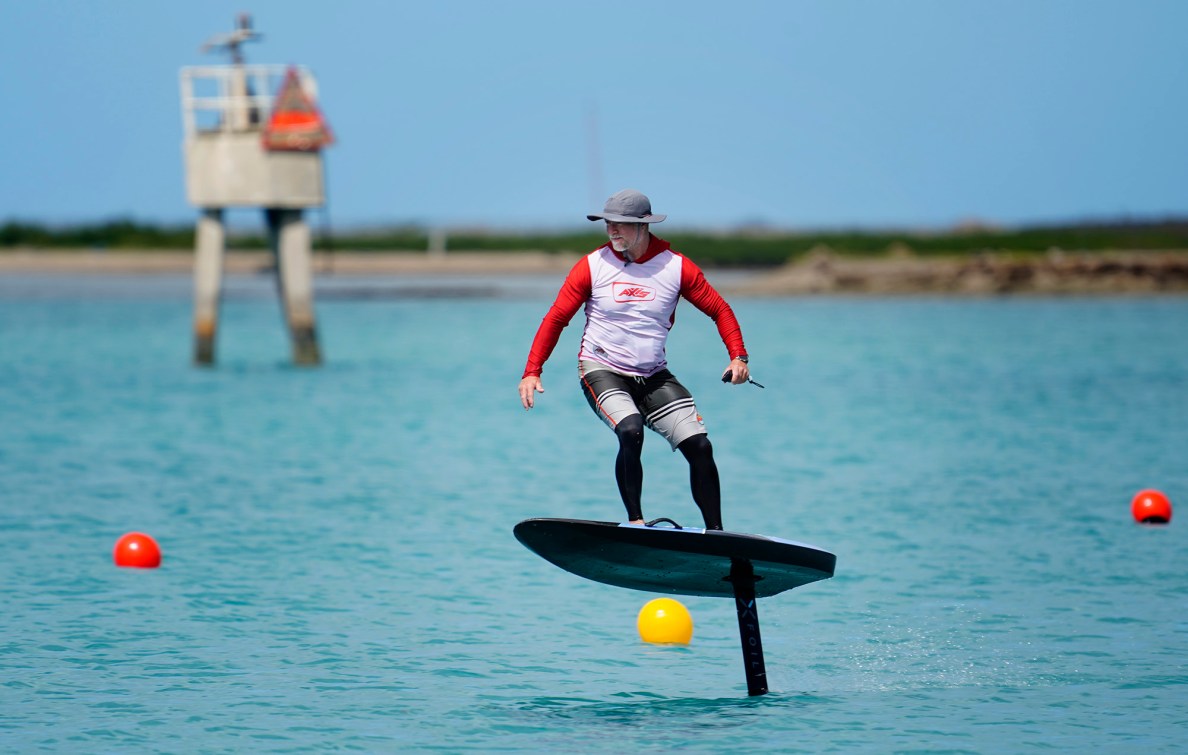
Paul McDonnell stands among multiple electric hydrofoils before his heat in the inaugural Hawaii Efoil Extravaganza 2025 closed-circuit track race Saturday at Ke‘ehi Lagoon in Honolulu. Billed as the first of its kind event in Hawaiʻi, the day consisted of trying out e-foils and racing for prizes. (Kevin Fujii/Civil Beat/2025)
As their home breaks attracted hordes of surfers, electric hydrofoil riders sought the rolling waves on the outside and sometimes flying wind-generated waves in another discipline called “downwinding” to avoid the crowds.
“Five years ago, hardly anyone in Hawaii had seen an e-foil. Now we’re racing them,” said XFoil founder Paul Lowchareonkul of Kailua.
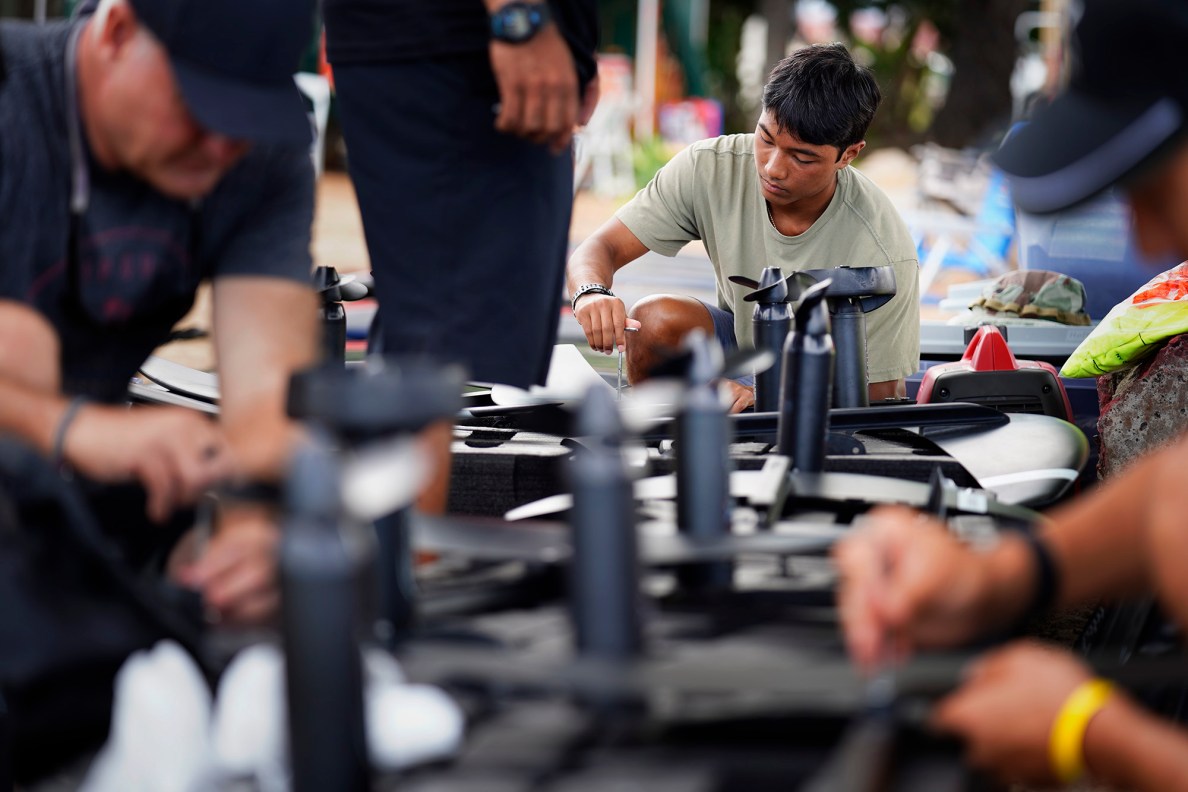
Kama Koa puts together an electric hydrofoil before the Hawaii Efoil Extravaganza 2025 Saturday at Ke‘ehi Lagoon. The average age for an e-foiler is 45 since the equipment is on the pricier side. (Kevin Fujii/Civil Beat/2025)
Also known as e-foiling, the battery-powered hydrofoils helped make it easier to get to the waves. Another type of e-foiling called foil-assist (assisted hydrofoiling) is lower powered. Like pedal-assist bicycles, it has enough juice to help the foiler catch up to a wave’s speed then fly it on nature’s power alone.
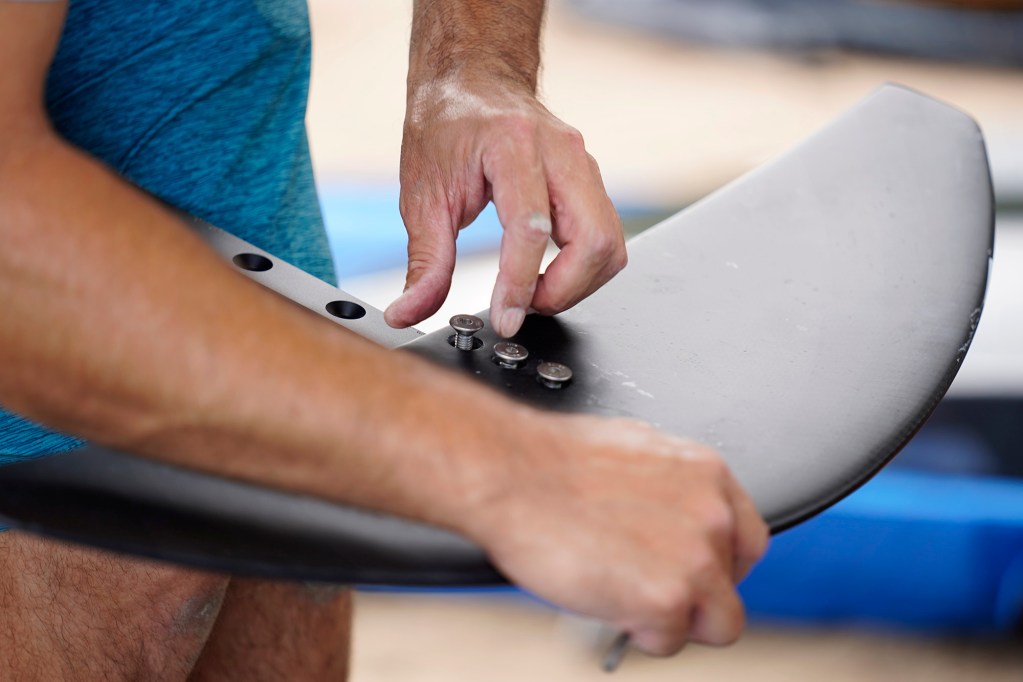
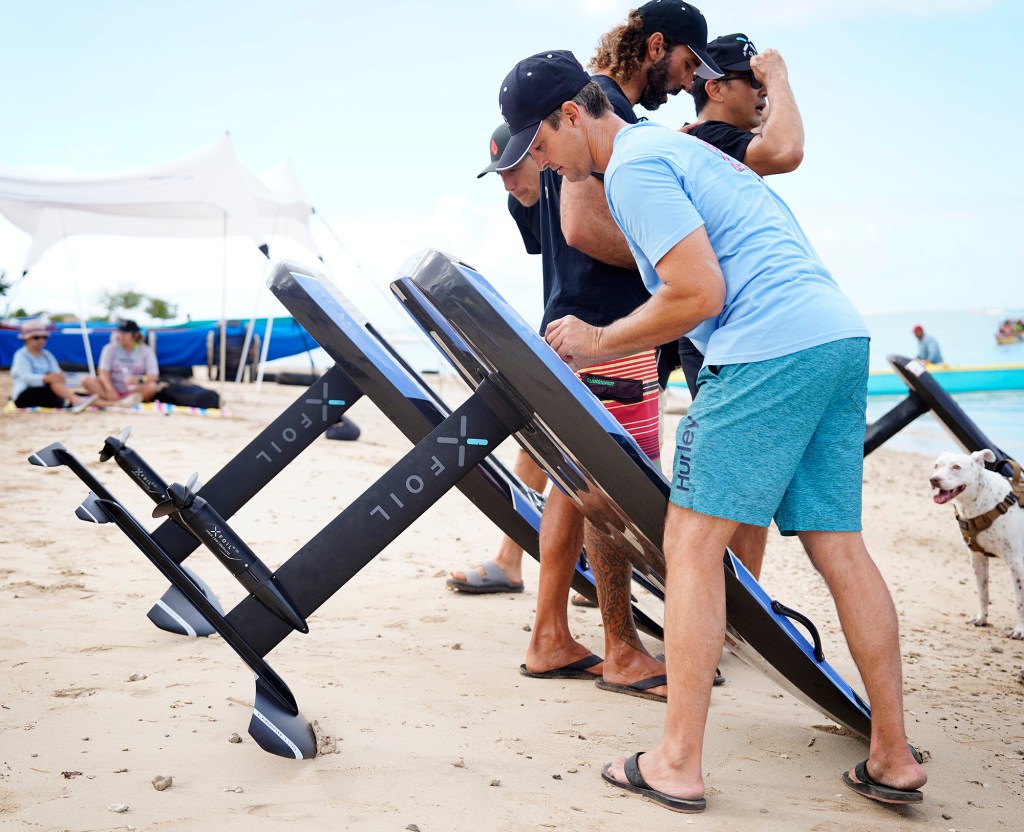
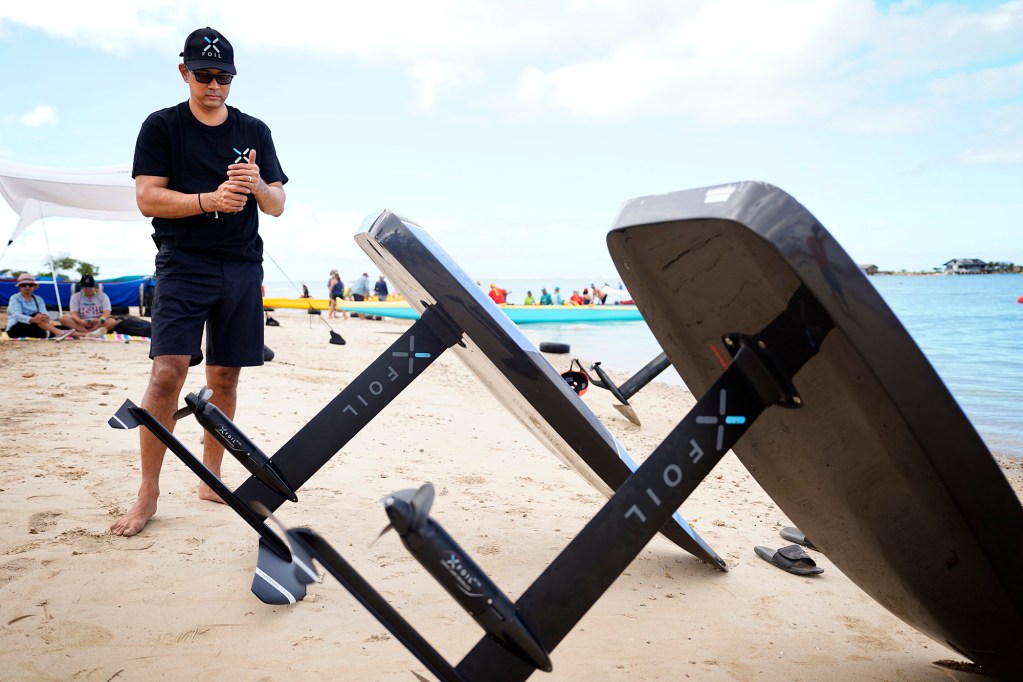
Reggie Clark attaches a front wing to a fuselage for an electric hydrofoil before the day’s events begin. Forward motion of the front wing creates lift like an airplane wing. This allows the foiler to fly above the water and not be affected by choppy waves. (Kevin Fujii/Civil Beat/2025)
“Efoiling is like flying over water,” said Lowchareonkul. “It’s silent, smooth and pure freedom.”
“It’s a sport that combines surfing’s soul with cutting-edge technology.”
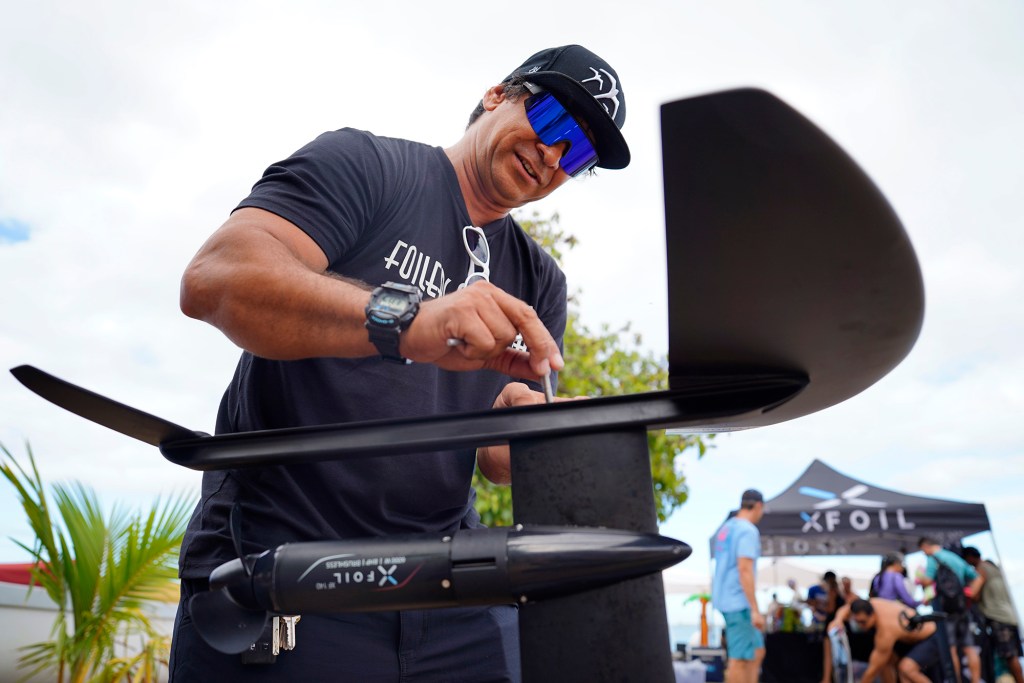
Fuzzy Jardine attaches the fuselage to the mast of an electric hydrofoil. The motor is built into the mast to generate speed for the front wing to generate lift. The rear wing is called a stabilizer. (Kevin Fujii/Civil Beat/2025)Reggie Clark secures the hatch for an XFoil battery during the e-foil event. The rechargeable lithium-ion battery is removable. With so many sensitive electronics inside the board, a water-tight seal is paramount. (Kevin Fujii/Civil Beat/2025)
“The gear has come a long way,” Lowchareonkul said. “It’s lighter, faster, and easier to ride than ever before.”
Paul McDonnell turns for the finish line during his heat in the inaugural e-foil race. The first of its kind in Hawaiʻi, the day consisted of trying out e-foils and racing on a closed-circuit track for prizes. (Kevin Fujii/Civil Beat/2025)
“We wanted to create something that brings people together on the water, no matter their skill level,” Lowchareonkul said.
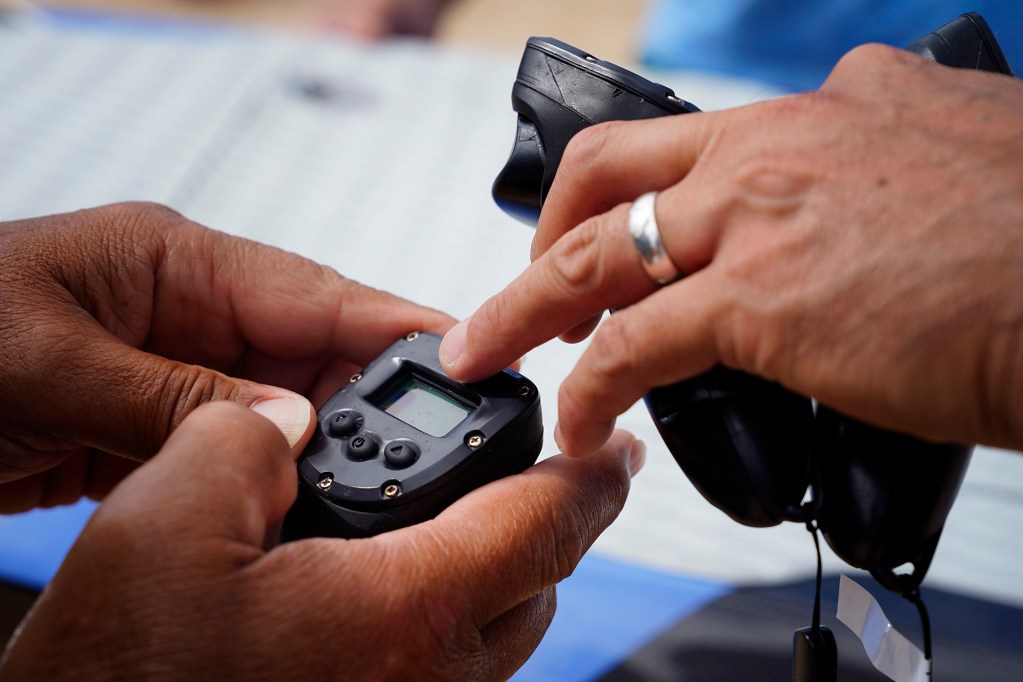
Paul Lowchareonkul pairs an electric hydrofoil to its remote control during the Sand Island event. Lowechareonkul, of Kailua, gives high-performance e-foils a launching point on the Windward Coast. (Kevin Fujii/Civil Beat/2025)XFoil electric hydrofoil remote controls are paired to their boards before a rider takes one out for a demo. Speed and safety measures are controlled and built into the remote control. (Kevin Fujii/Civil Beat/2025)
“Efoiling is more than a sport,” Lowchareonkul said. “The community is a growing ʻohana on the water.”
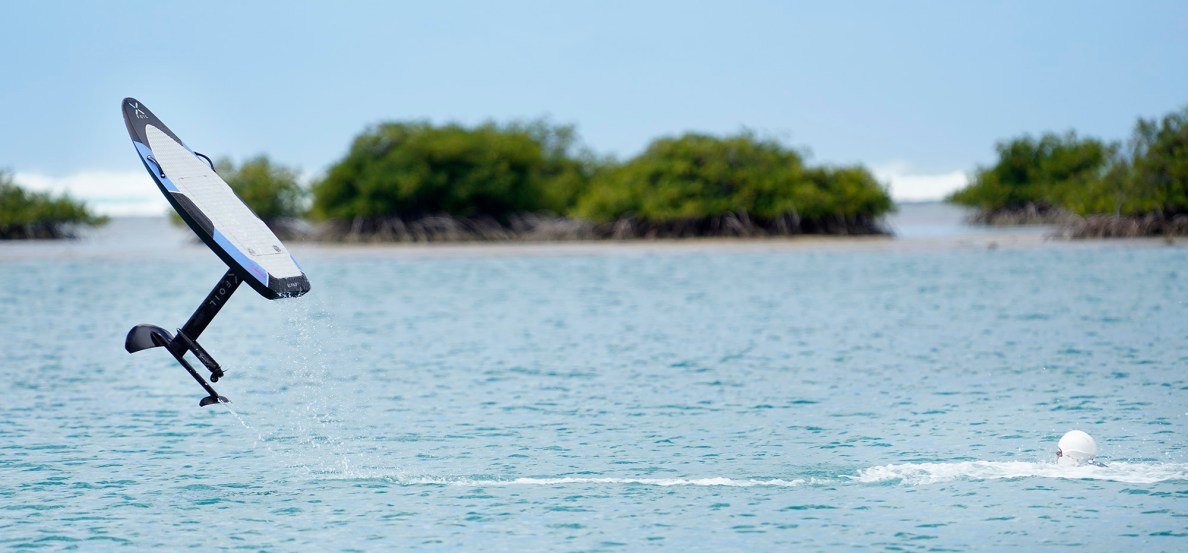
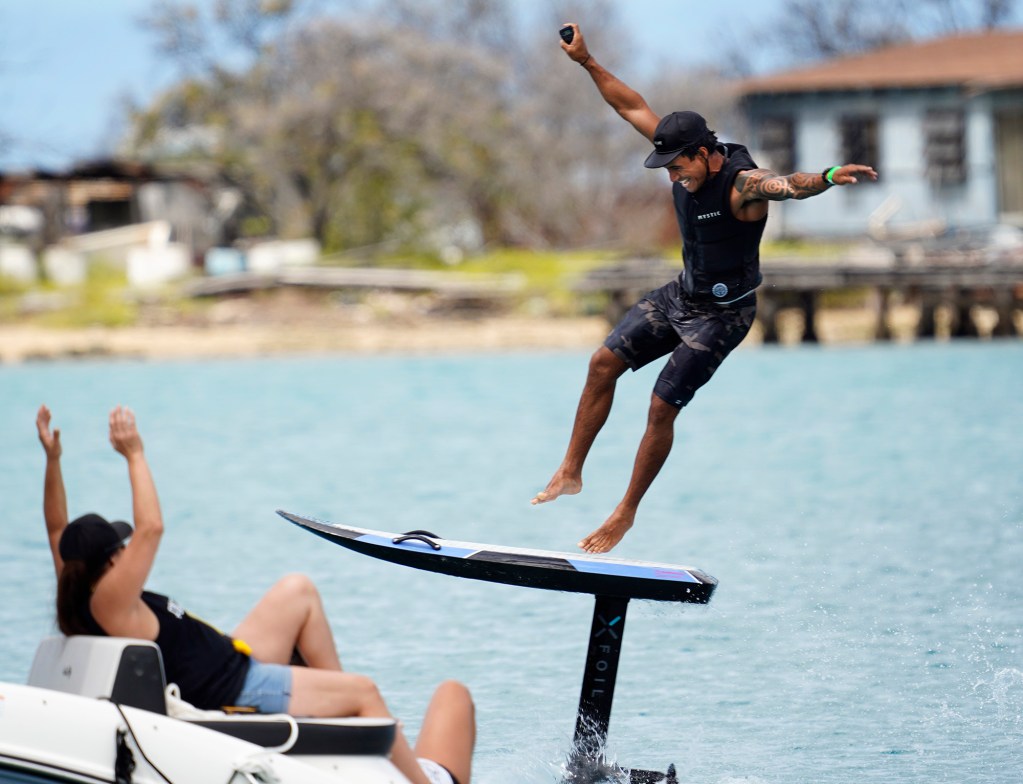
Participants get a briefing on how to fly an XFoil at Ke‘ehi Lagoon. Many were trying an e-foil for the first time. (Kevin Fujii/Civil Beat/2025)An e-foil breaches the water after bucking Spencer Pae, right, during his heat in the inaugural Hawaii Efoil Extravaganza 2025 race. Pae is an experienced waterman and uses a much larger, custom-made e-foil than the one shown here. (Kevin Fujii/Civil Beat/2025)Tama Tepa of ʻAiea jumps off an e-foil at the finish line. Tepa is an experienced prone foiler. He received a lot of praise from the announcer doing the race standing. But Tepa’s smile was evident during his entire race. (Kevin Fujii/Civil Beat/2025)
“We’re just scratching the surface,” Lowchareonkul said. “Foiling will only get faster, greener and more fun from here.”
As a local newsroom, Civil Beat has a unique public service role in times of need. Your support ensures that we can pivot when emergencies arise and get vital information out to everyone, from all communities.
Support timely and accurate breaking news stories as well as impactful coverage across the state. Donate today.