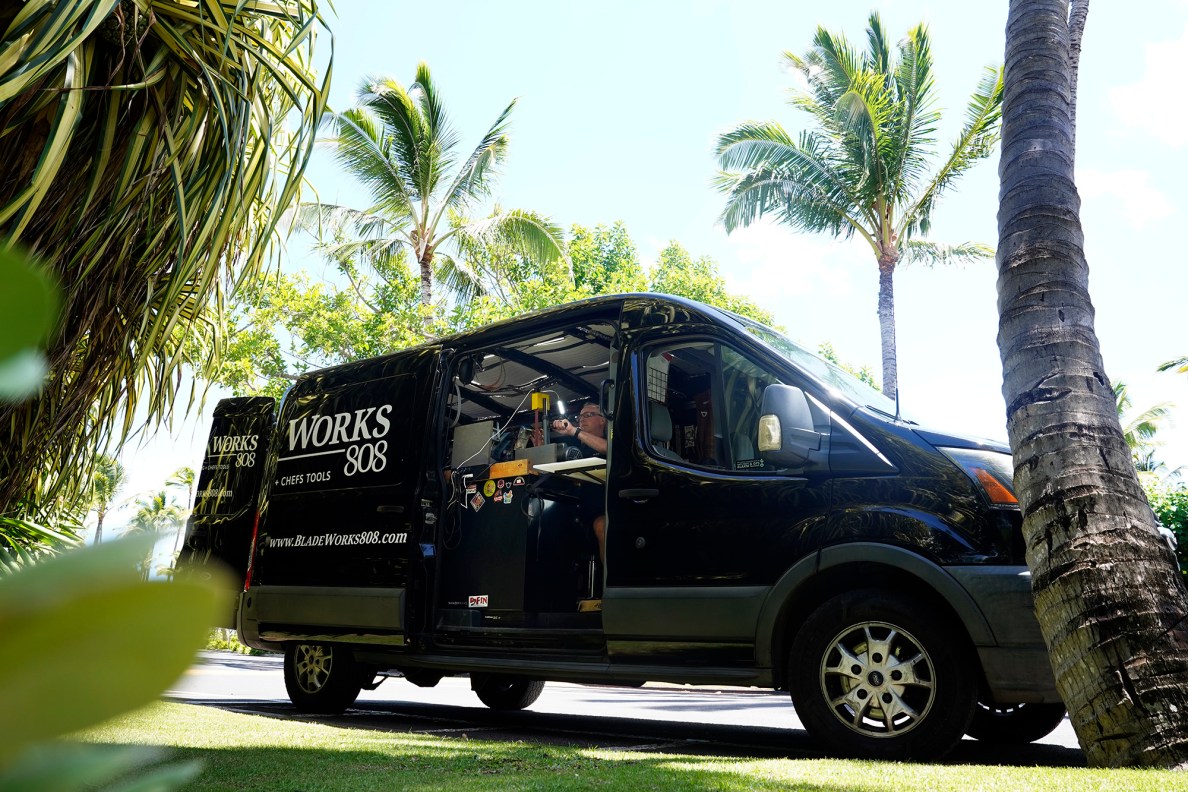
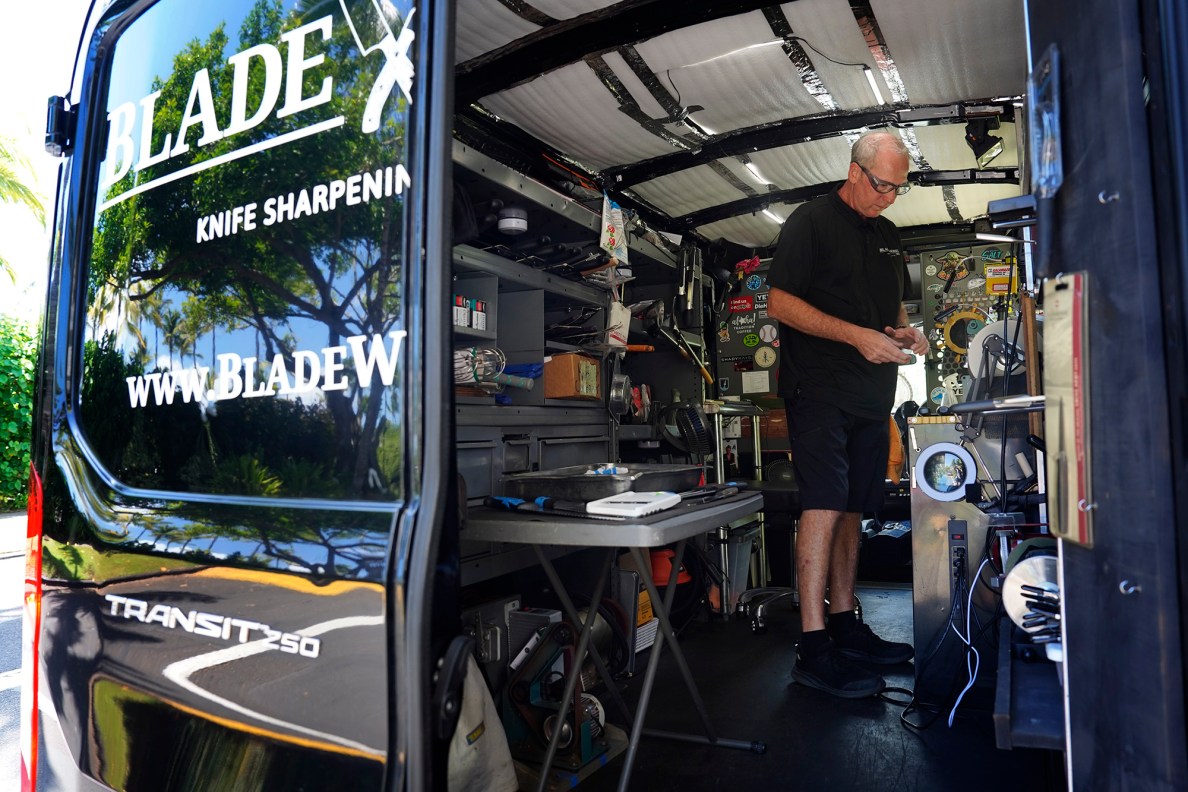
Blade Works 808’s Jeff Bonisa can be found at farmers markets, restaurants and residences that request his speciality service. “I’m probably the only person not scared when someone comes at me with a knife,” said the only mobile knife sharpener on Oʻahu.
Sharp knives are safe. Dull knives are dangerous, believes Bonisa who spent 35 years working as a professional in multiple kitchens. His website lists numerous reasons why knives should be sharpened professionally.
He lives by the long-held belief that sharper knives are safer for chefs and kitchen staff because they require less pressure on the knife to cut. That, in turn, protects the food preparer from maladies such as carpal tunnel syndrome and the danger of applying too much pressure that might cause the hand or food to slip and cut the bearer.
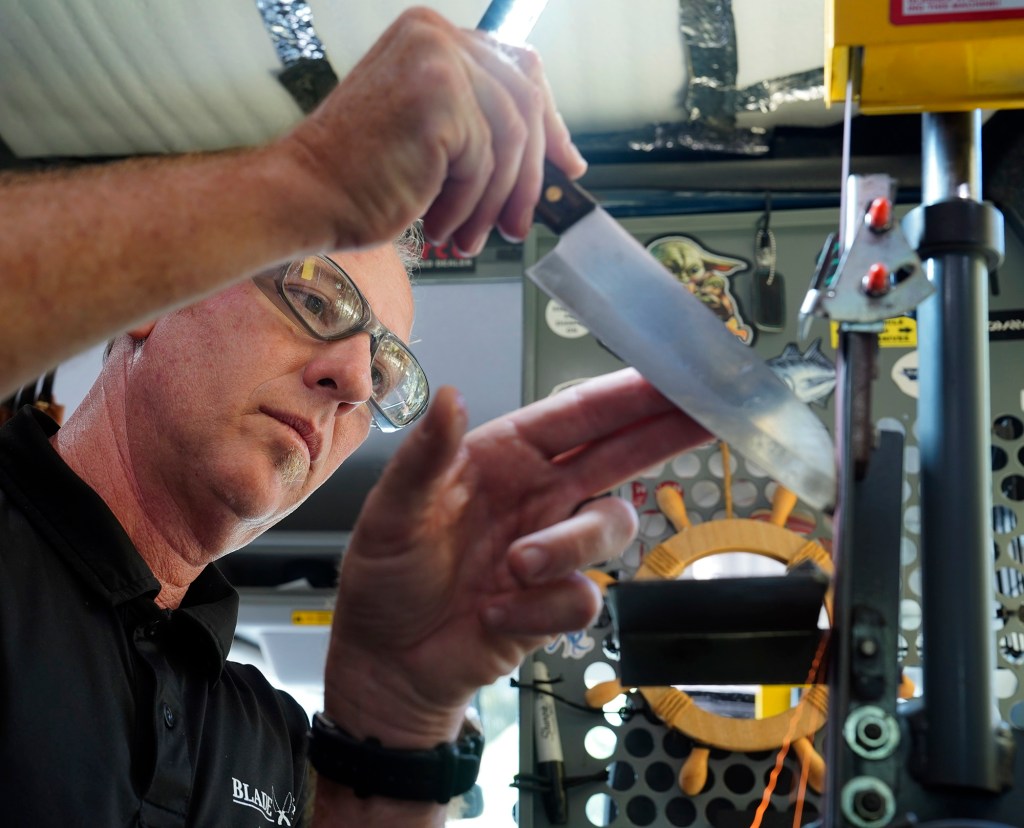
Bonisa starts sharpening a knife with a course grit to remove nicks and return the apex to the blade. Guides align the blade against the belt for the perfect sharpening angle that offers a razor-sharp edge while allowing it to keep its edge and strength. (Kevin Fujii/Civil Beat/2025)
Bonisa goes through at least three processes to sharpen a knife. The first does the hard work with a course-grit sanding belt to remove nicks and re-apex the edge. The next machine he built himself to fine tune, polish and remove burrs. Lastly, knives are finished with a leather or felt wheel with diamond paste. A rechargeable battery powers the machines in his van.
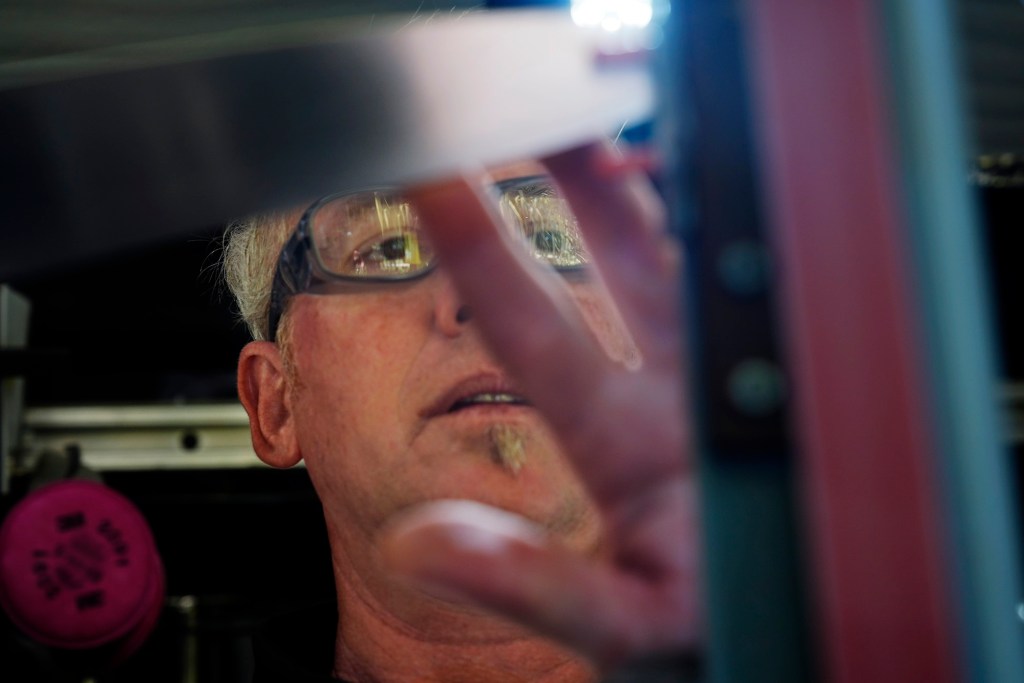
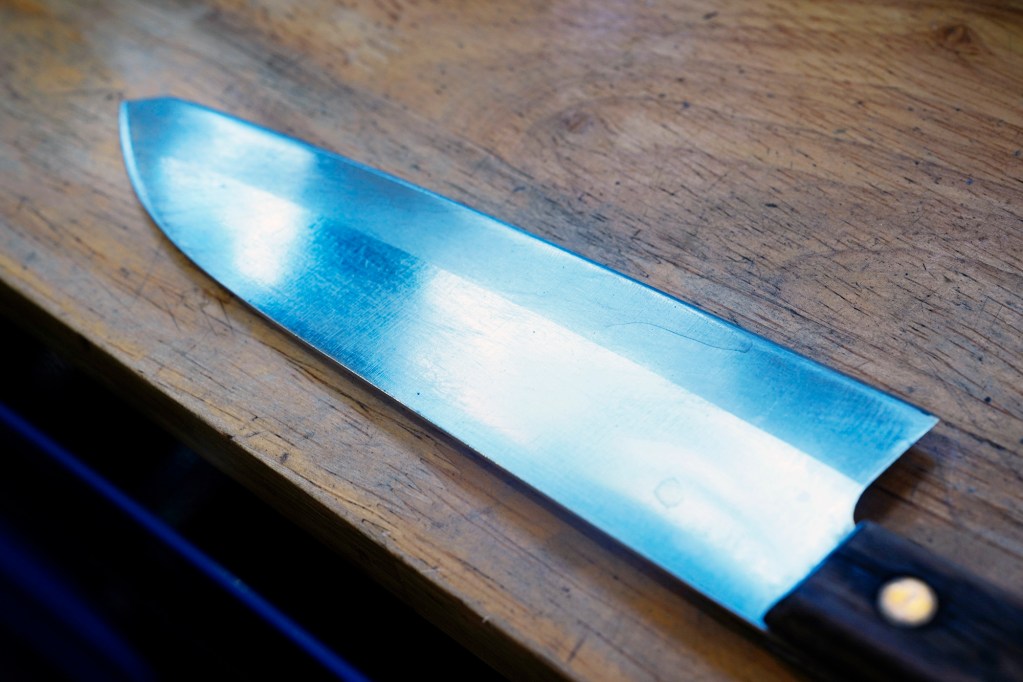
Blade Works 808 goes where customers are or can be found at farmers markets. (Kevin Fujii/Civil Beat/2025)Bonisa focuses on sharpening a knife at every step along the way. (Kevin Fujii/Civil Beat/2025)A family favorite knife lands on Bonisa’s mobile workbench for repair and sharpening Wednesday in Kahuku. This knife is approximately 60 years old with a broken tip. (Kevin Fujii/Civil Beat/2025)Bonisa reshapes a knife with a broken-off tip. With more than normal material being removed, sparks fly. (Kevin Fujii/Civil Beat/2025)Bonisa resurrects an approximately 60-year-old knife by recreating the tip and bringing back its original apex along the cutting edge. (Kevin Fujii/Civil Beat/2025)
Bonisa also takes on lengthy restoration projects. He flips through photos on his smartphone showing a dull blade and more photos with the wooden handle removed and the metal hilt covered with rust. Bonisa says he’ll do this in his workshop because he needs the space and ventilation for all the material and oxidized metal removal. He sanded and stained the wood, replaced the rivets and brought it back to like-new condition.
Bonisa works out of his utility van to sharpen multiple knives for a Kahuku restaurant Wednesday. (Kevin Fujii/Civil Beat/2025)
“As a chef I was always fueled by being creative and loved how everyday was different especially in the private club world,” Bonisa said. “I was never one that could handle monotony and being a sharpener is much the same. I never know what I may get in a day, what problem or fix I may have to solve or what may come across my table.”
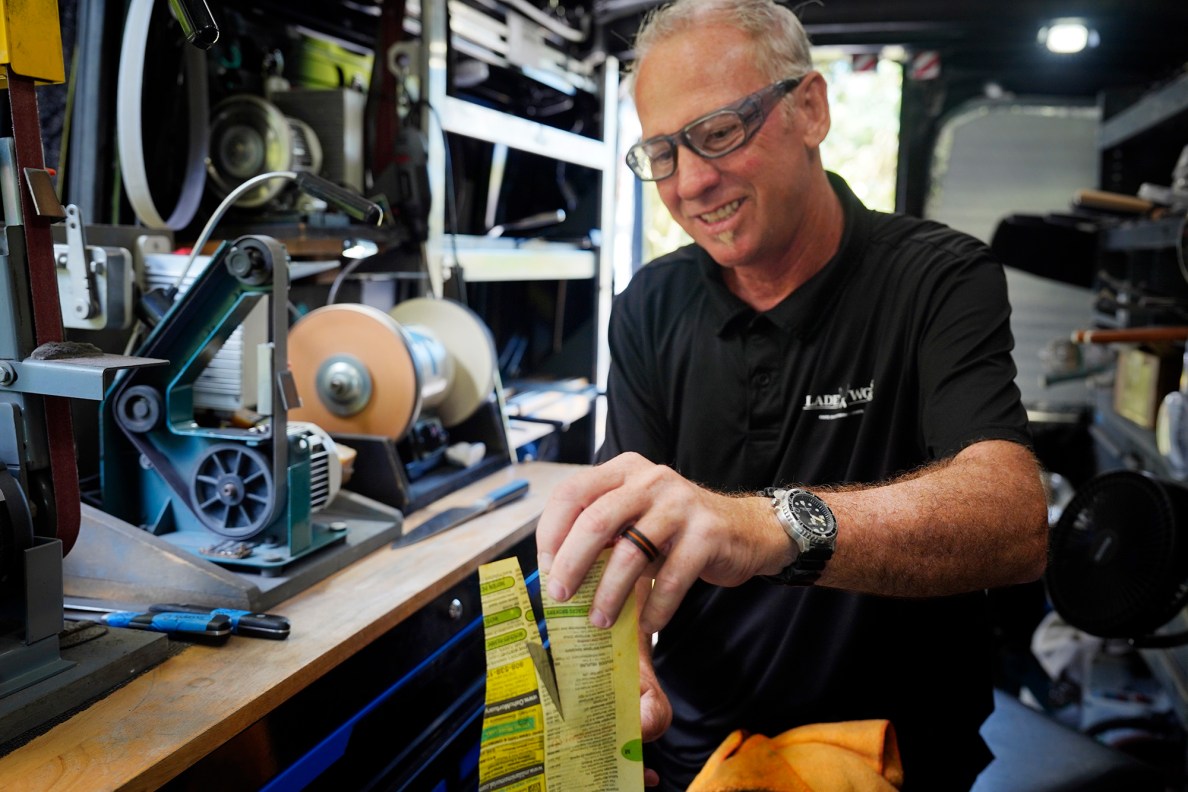
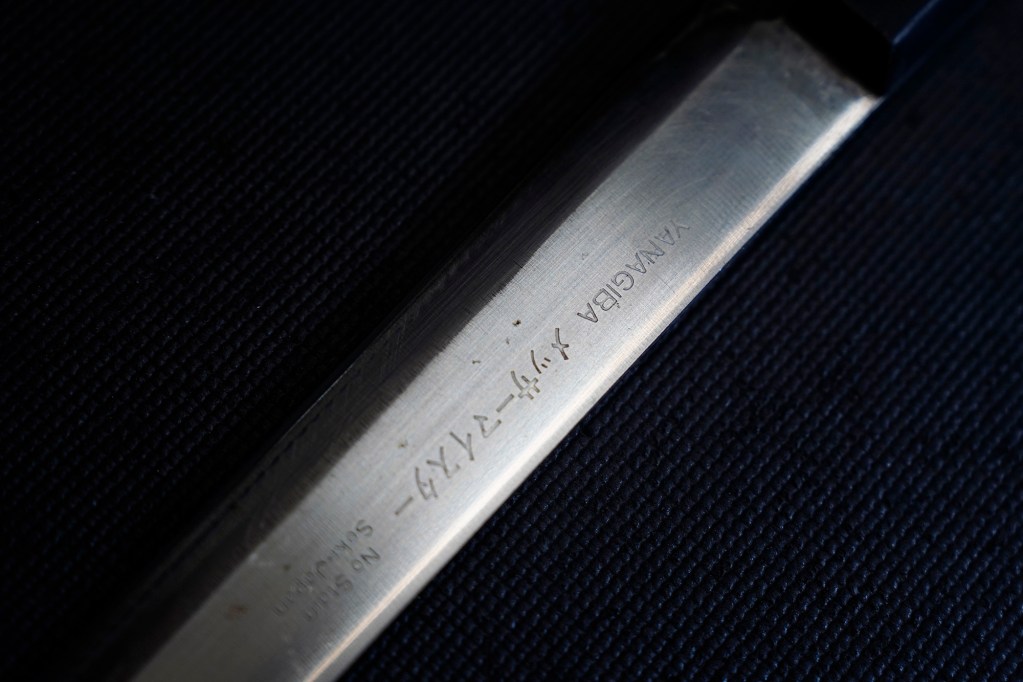
Bonisa sharpens a pair of scissors Wednesday in Kahuku. He works on a multitude of sharp objects like knives, hair-cutting shears, serrated blades, machetes, veterinarian surgical tools, swords, lawn-mower blades, industrial slicers even down to personal pocket knives. (Kevin Fujii/Civil Beat/2025)Bonisa tests every knife he sharpens with pages from old telephone books. (Kevin Fujii/Civil Beat/2025)A Japanese Yanagiba knife is ready for its chef to slice sashimi after Bonisa sharpened it. (Kevin Fujii/Civil Beat/2025)Bonisa tests the sharpness of a Japanese Yanagiba knife. Scoring sharper than some new knives, this single-bevel Yanagiba is ready for its chef to slice sashimi to perfection. (Kevin Fujii/Civil Beat/2025)
During his time as an executive chef on the mainland, Bonisa hired a knife sharpener to work on his team’s knives multiple times a year. “It freed up my staff to continue prepping food instead of having one person sharpen knives all day,” he said. “And sharp knives made cutting faster and easier to get more work done.”
Knives from a Kahuku restaurant’s kitchen are ready for pick up. (Kevin Fujii/Civil Beat/2025)A 6-inch boning knife easily cuts through a lamb neck from the Big Island’s Kahua Ranch after Bonisa sharpened all of Farm Link Hawaiʻi’s knives Thursday in Honolulu. (Kevin Fujii/Civil Beat/2025)Bonisa returns sharpened knives to Farm Link Hawaiʻi culinary manager Chuck Wakeman Thursday. Bonisa worked on the knives in the store’s Honolulu parking lot. (Kevin Fujii/Civil Beat/2025)
“Much like cooking, I love making customers happy and seeing their faces when something is either brought back to life, just sharp, or refurbished,” Bonisa said. “I have been so stoked on all of the different aspects I have created for my business and love all of the different things I do on a daily basis.”
“It’s taken time!” Bonisa said about his mobile-knife sharpening business. “But it continues to grow!”
Supporting Civil Beat means you’re investing in a newsroom that can devote months to investigate corruption. It means we can cover vulnerable, overlooked communities because those stories matter. And, it means we serve you. And only you.
Donate today and help sustain the kind of journalism Hawaiʻi cannot afford to lose.