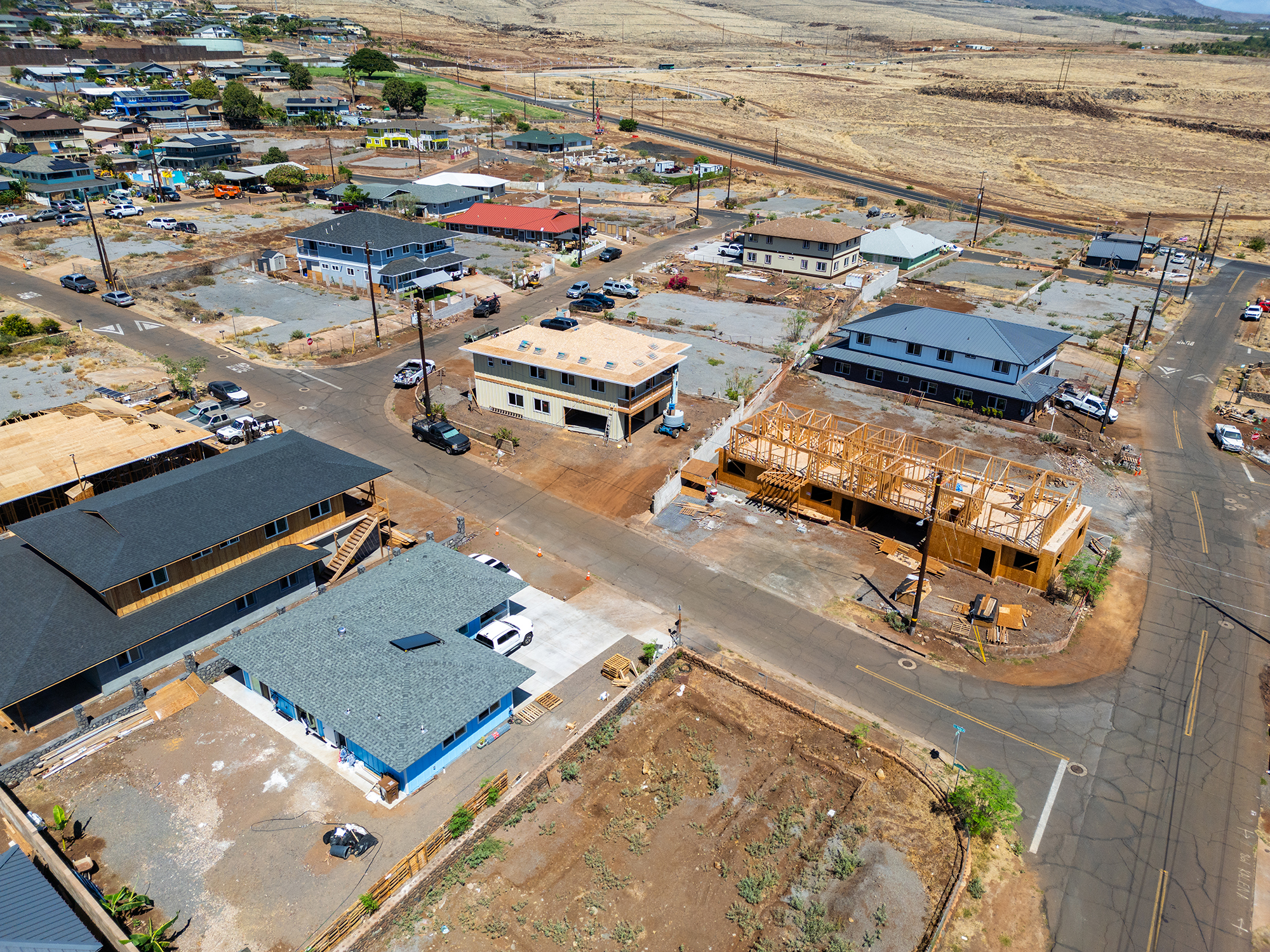
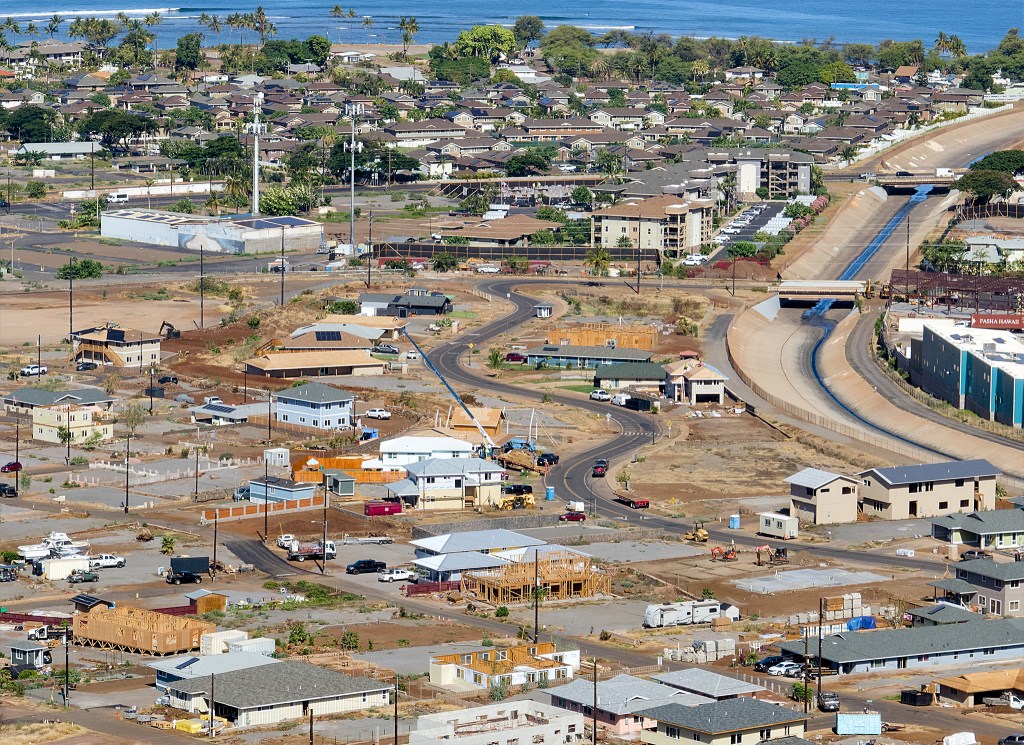
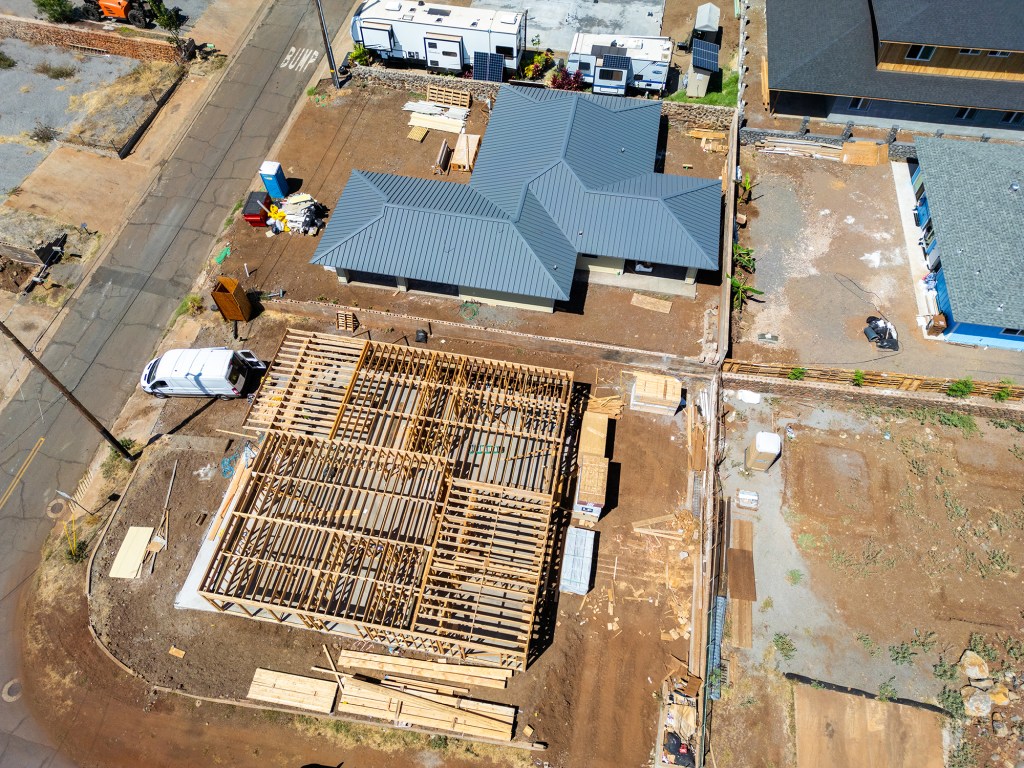
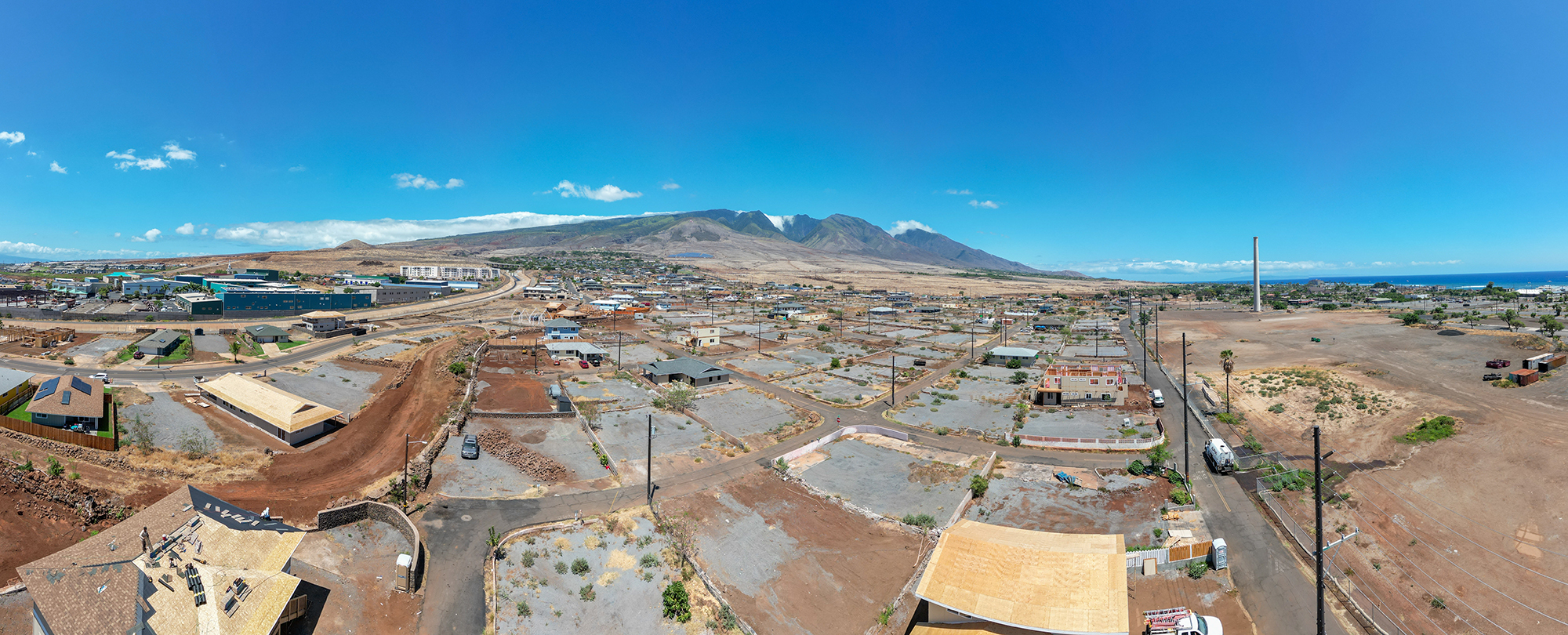
Homes in various stages of construction rise in Kelawea, a neighborhood sandwiched between Lahaina Bypass Road and Kuhua Camp — a densely populated community where a third of fire victims died. (Sean Hower/Civil Beat/2025)
As the second anniversary of the 2023 Maui fires approaches, only a few dozen homes in Lahaina have been rebuilt. But construction is now underway on nearly 300 destroyed homes and businesses, and the buzz and clang of heavy machinery is becoming a far more common sound.
In Upcountry Maui, where more than two dozen homes were destroyed on the same day as the Lahaina fire, subtle changes to the topography show how residents have been working to prevent future disasters.
Here’s a bird’s-eye view of what fire recovery looks like on Maui today.
Lahaina
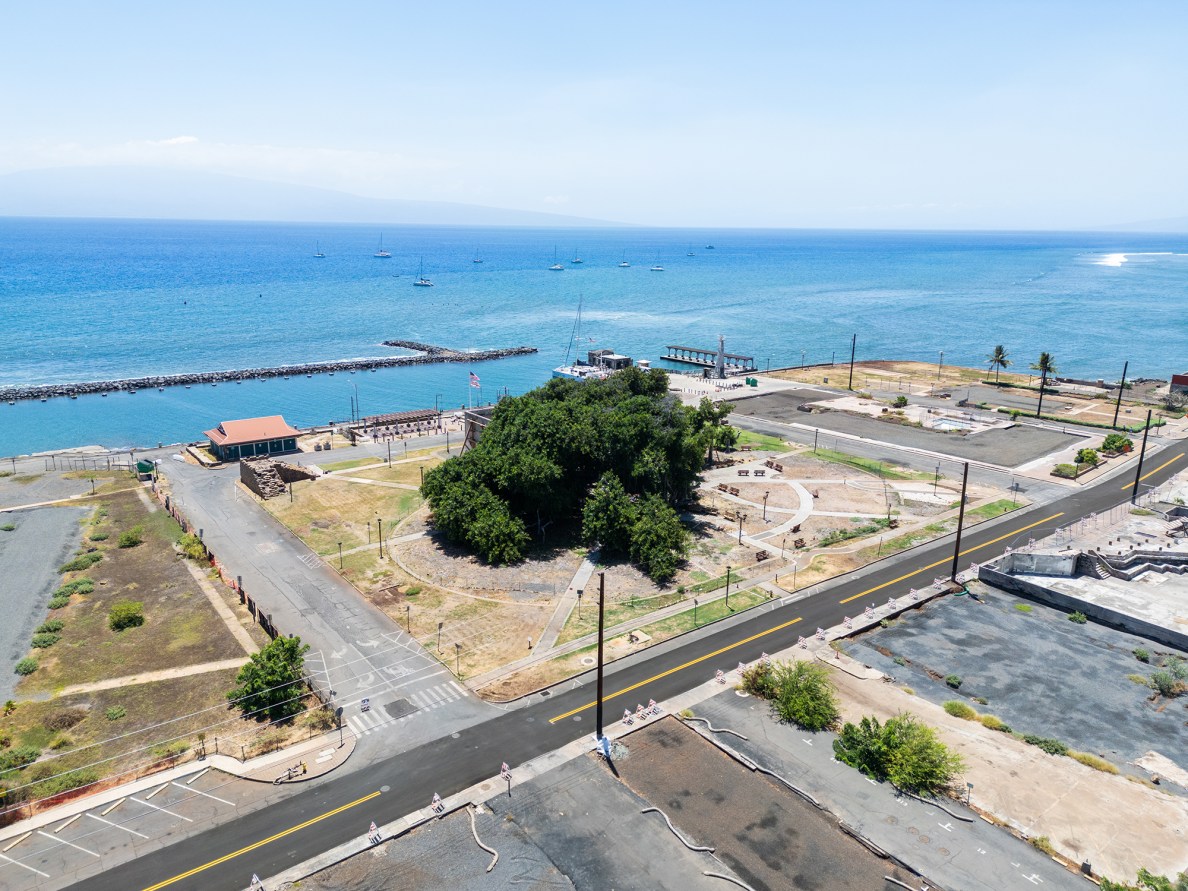
Lahaina’s famed banyan tree — for some a powerful symbol of the town’s resilience and for others a painful reminder of the area’s complicated colonial legacy — continues to recover from the fires. (Sean Hower/Civil Beat/2025)
Front Street, badly damaged in the August 2023 fires, is the primary corridor of county sewer, water and gas mains and electrical lines. (Nathan Eagle/Civil Beat/2024)Issues around historic preservation and sea level rise have complicated rebuilding efforts along Front Street. (Sean Hower/Civil Beat/2025)
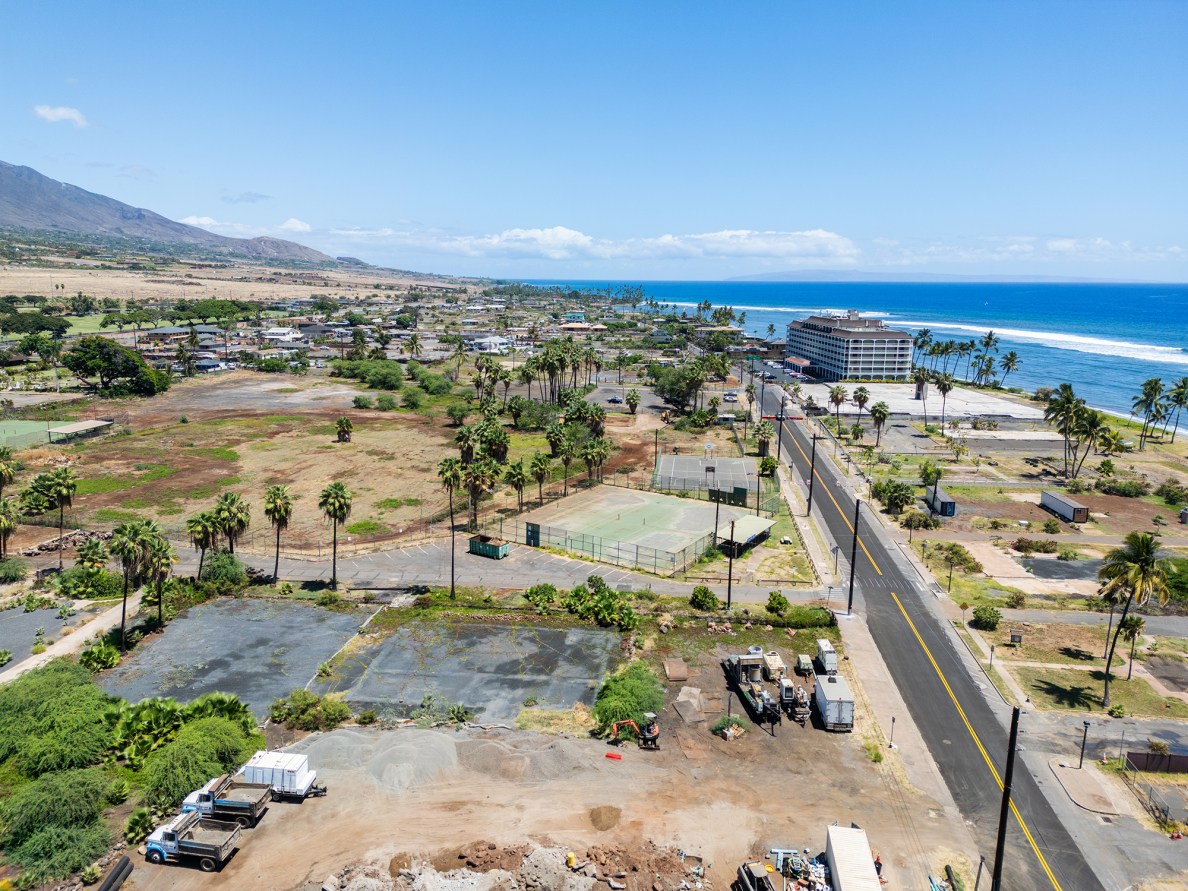
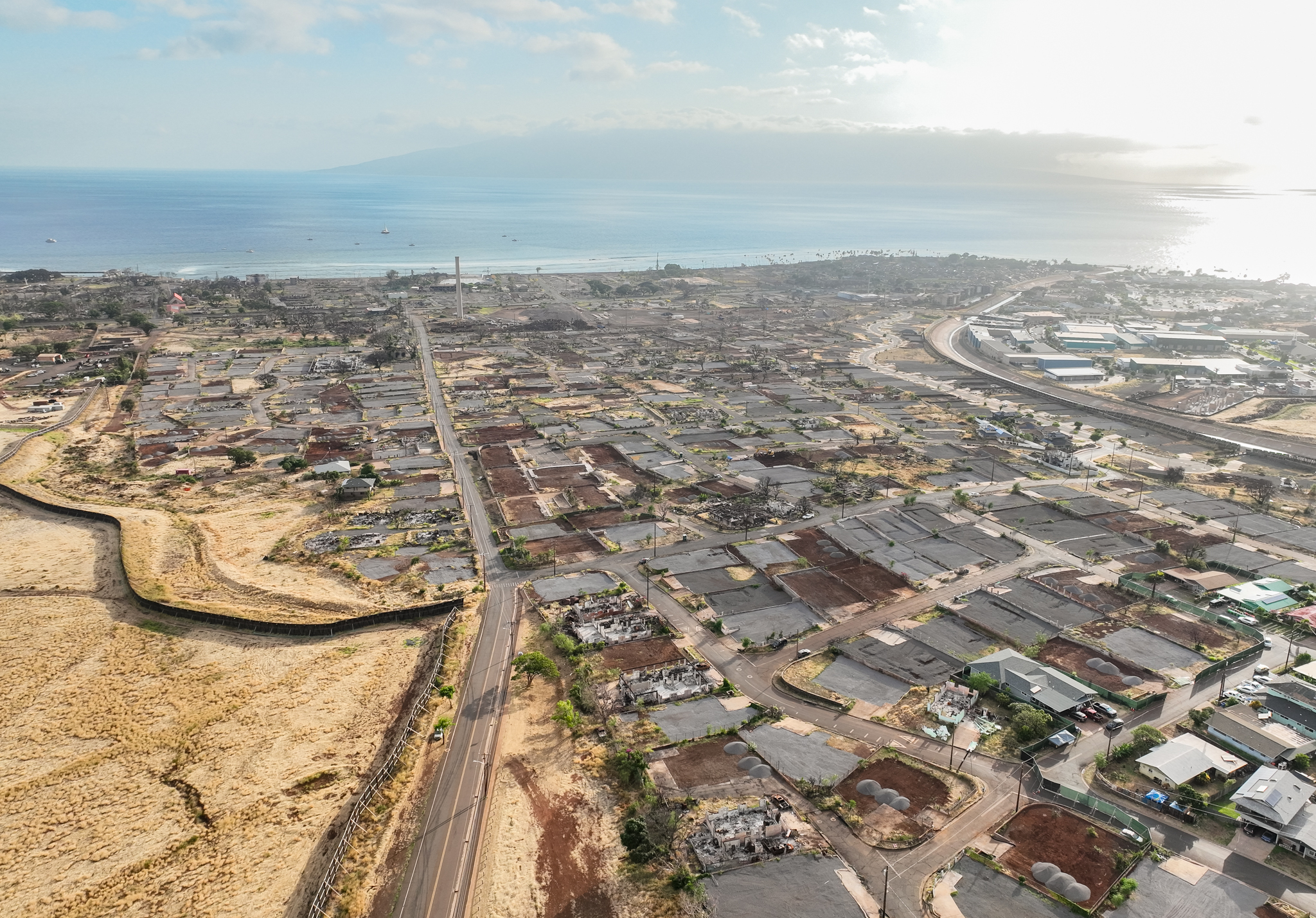
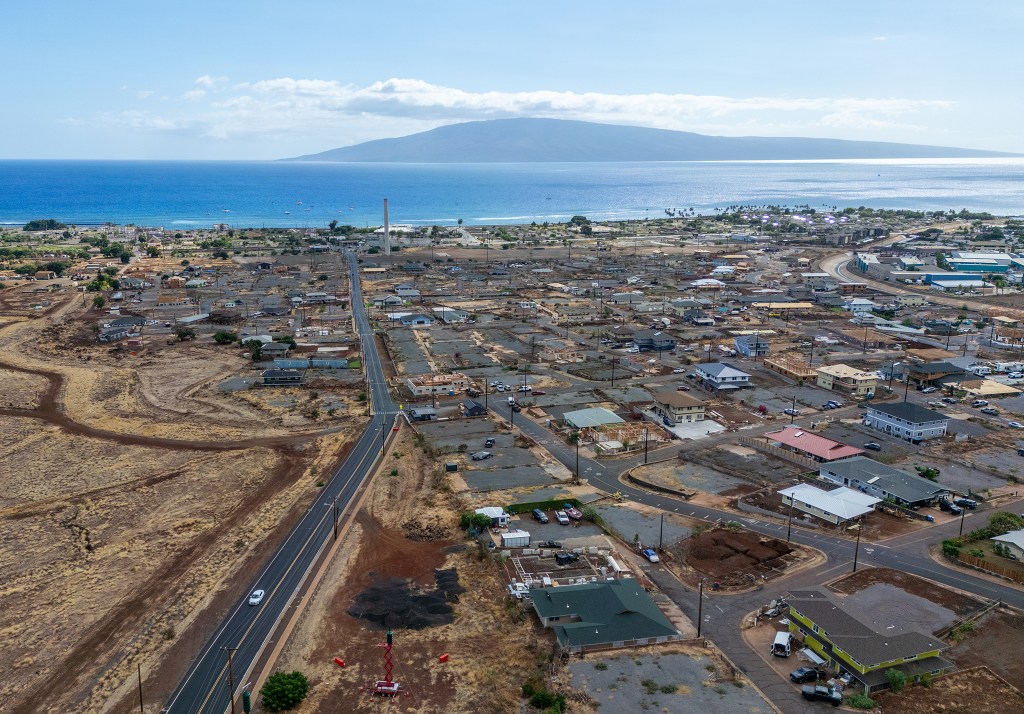
Lots near the Lahaina Shore Beach Resort sit empty, cleared of fire debris. No commercial buildings destroyed in the fire have been rebuilt. (Sean Hower/Civil Beat/2025)
(Nathan Eagle/Civil Beat/2023, Sean Hower/Civil Beat/2025)
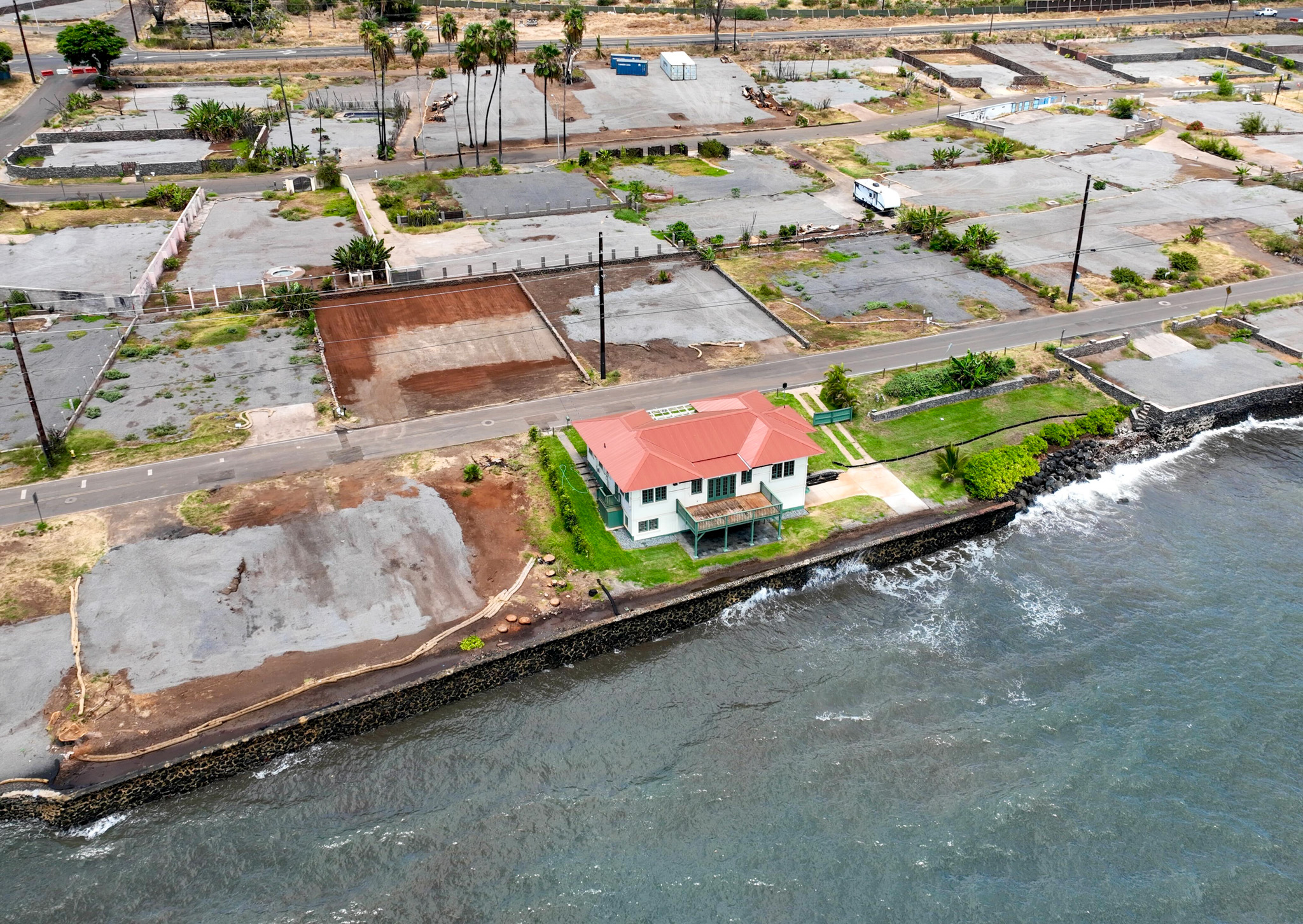
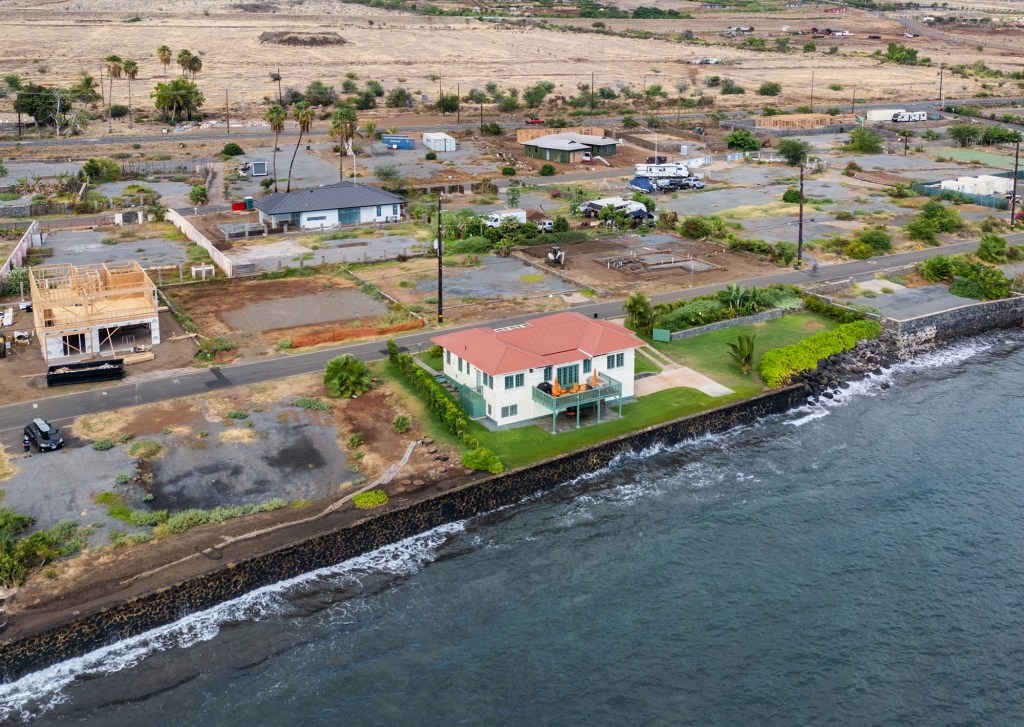
The lots surrounding the so-called “miracle house” on Front Street in Lahaina had been cleared of fire debris and were vacant in July 2024. (Nathan Eagle/Civil Beat/2024)Two years after the fire, the red-roofed historic home is no longer solely surrounded by vacant lots. (Sean Hower/Civil Beat/2025)
As of Aug. 6, 280 homes were under construction in Lahaina. (Sean Hower/Civil Beat/2025)
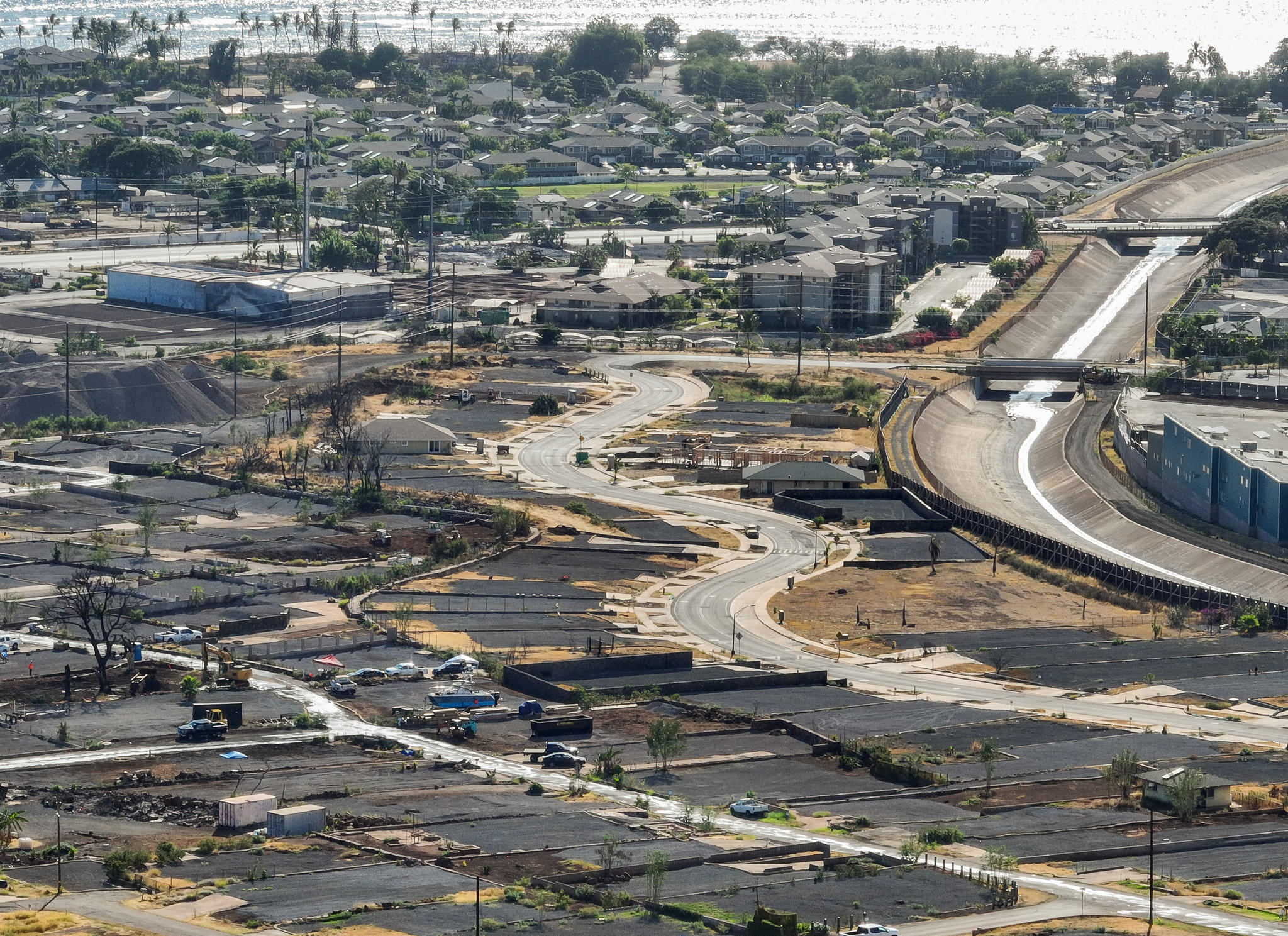
Komo Mai Street winds through Lahaina near the Kahoma Stream channel, where hundreds of residential properties were destroyed. The properties were cleared of debris in July 2024. (Nathan Eagle/Civil Beat/2024)On Aug. 6, 2025, the area was bustling with construction crews. (Sean Hower/Civil Beat/2025)
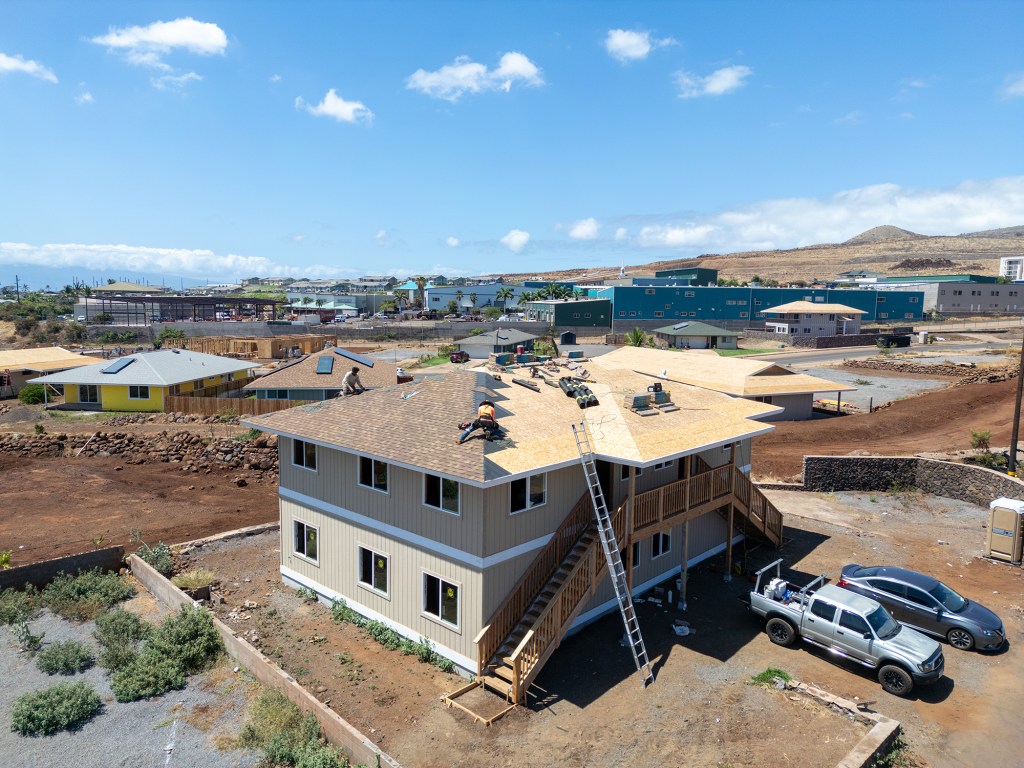
Builders work on the roof of a two-story home in the central Lahaina neighborhood of Kelawea, makai of Lahaina Bypass Road. (Sean Hower/Civil Beat/2025)Contractors hired by Maui County had approved 465 building permits by the second anniversary of the fires and were processing another 339 applications. (Sean Hower/Civil Beat/2025)Though hundreds of homes are under construction and hundreds more are in the permitting process, only 50 homes had been rebuilt as of this month. (Sean Hower/Civil Beat/2025)
Lahainaluna Road, a primary artery into Lahaina, was still blocked off 10 months after the Aug. 8 fires. (Nathan Eagle/Civil Beat/2024)Two years after the fire, the area along Lahainaluna Road is sprinkled with construction sites. (Sean Hower/Civil Beat/2025)
(Nathan Eagle/Civil Beat/2023 and Sean Hower/Civil Beat/2025)
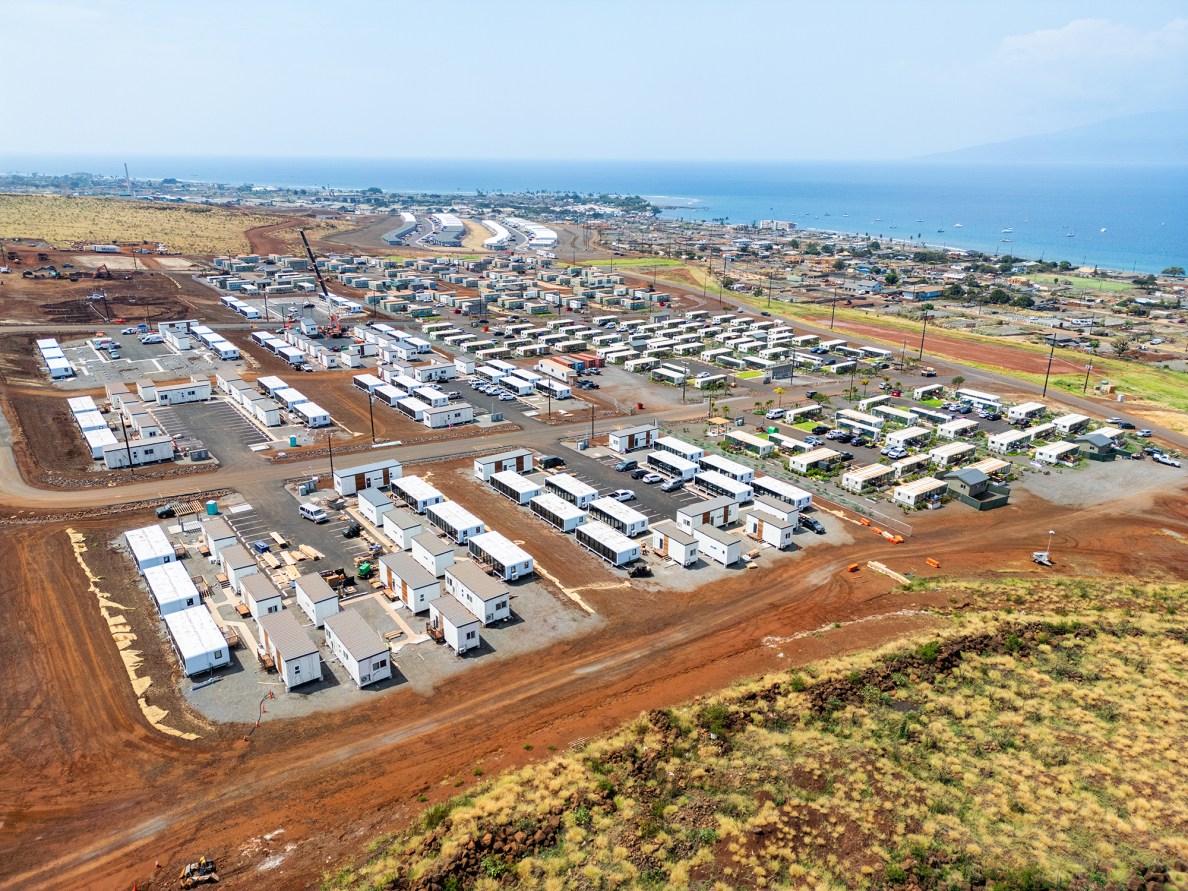
A bird’s-eye view of temporary housing for fire survivors. (Courtesy Sean Hower/2025)
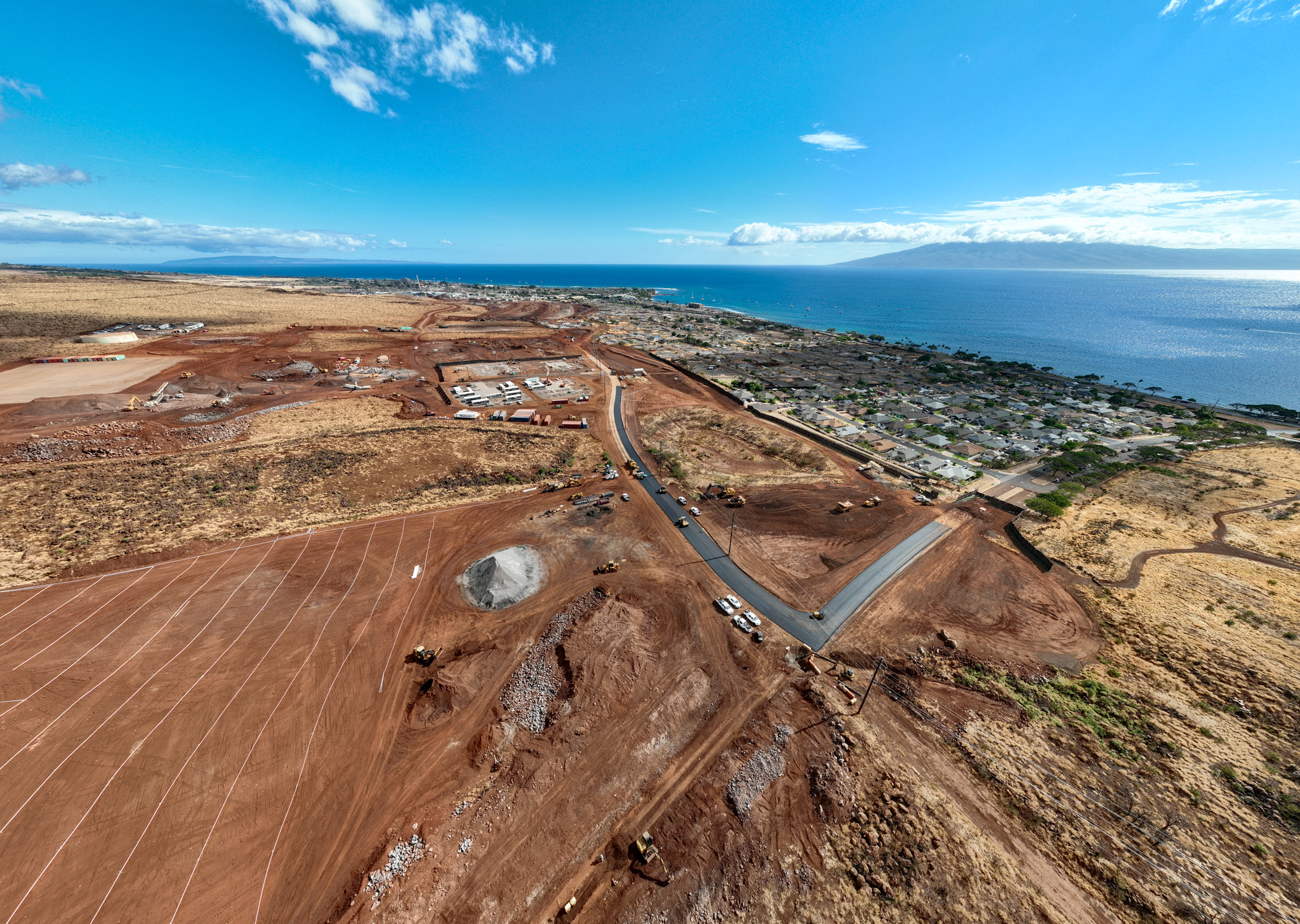
In 2024, the temporary housing projects, located above the Wahikuli neighborhood in Lahaina, were still taking shape. (Nathan Eagle/Civil Beat/2024)The state moved quickly to erect homes at Ka La’i Ola for fire survivors, though it’s uncertain how long the temporary structures will last. (Sean Hower/Civil Beat/2025)
In mid-June, the county reached a new milestone in the island’s fire recovery when it began transferring 400,000 tons of ash and debris to the new permanent wildfire landfill in Central Maui. (Kawika Lopez/Civil Beat/2025)
Upcountry
Two years after the Maui fires, Pōhakuokalā Gulch in Maui has been cleared of debris and potential fuel for future fires. (Sean Hower/Civil Beat/2025) In November 2024, remnants of the 2023 fire in Pōhakuokalā Gulch were still visible. (Kevin Fujii/Civil Beat/2024)An aerial view of the gulch two years after the fire. (Sean Hower/Civil Beat/2025)
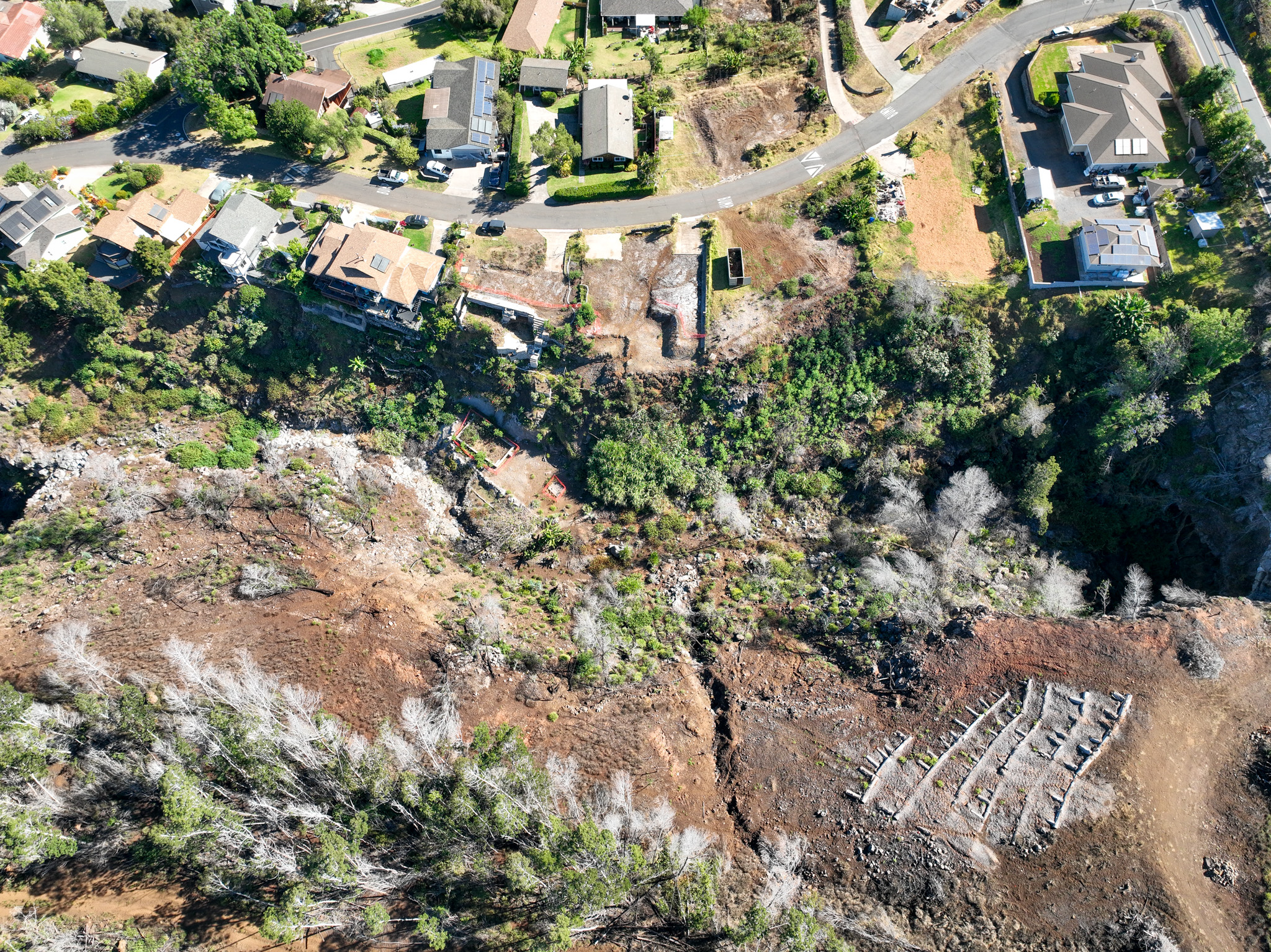
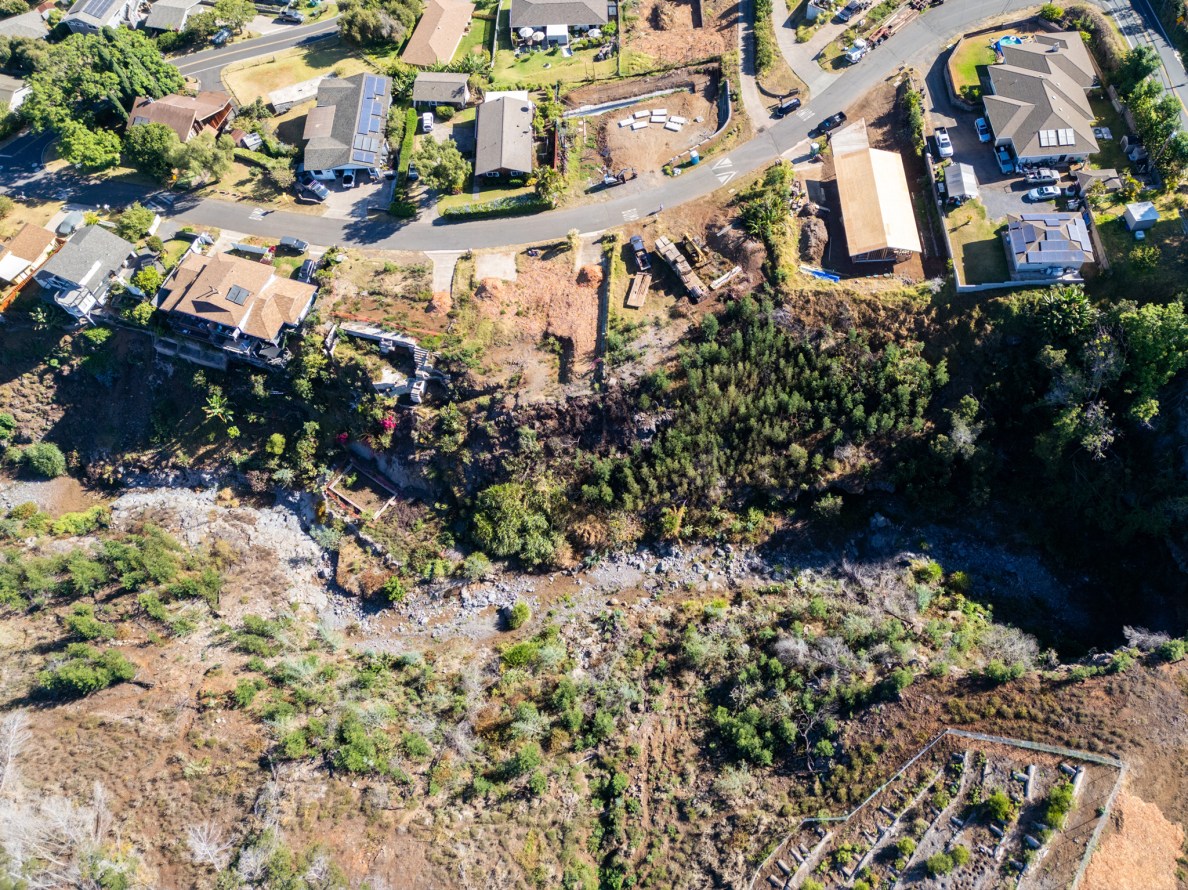
Here’s what Kulalani Drive in Upper Kula, where multiple homes were destroyed in 2023, looked like in 2024. (Nathan Eagle/Civil Beat/2024)The same view a year later shows less vegetation, but multiple empty lots remain. (Sean Hower/Civil Beat/2025)
This article was funded in part by the Maui Strong Fund of the Hawai’i Community Foundation.
Civil Beat’s coverage of Maui County is supported in part by a grant from the Nuestro Futuro Foundation.
As a local newsroom, Civil Beat has a unique public service role in times of need. Your support ensures that we can pivot when emergencies arise and get vital information out to everyone, from all communities.
Support timely and accurate breaking news stories as well as impactful coverage across the state. Donate today.