Kirstin Downey: Proposed Charter Change Might Bring More Swimming Lessons
The idea is to allow Oʻahu to solicit private donations to broaden access to free instruction.
November 24, 2025 · 5 min read

About the Author

Living on an island in the middle of the ocean, there is one thing we all should know: how to swim.
This should be a no-brainer. Free swimming lessons should be universally available and easily accessible — a state priority.
But the sorry truth is that roughly half the kids in the state don’t know how to swim, and consequently, drowning is the leading cause of death for children ages 1-15.
Drowning, in fact, is a huge risk for everyone.
Sarah Fairchild, executive director of the Outrigger Duke Kahanamoku Foundation, a nonprofit that promotes the legacy of Hawaii’s legendary waterman and Olympian, Duke Kahanamoku, has an idea about how we can start to fix the problem.

Ideas showcases stories, opinion and analysis about Hawaiʻi, from the state’s sharpest thinkers, to stretch our collective thinking about a problem or an issue. Email news@civilbeat.org to submit an idea or an essay.
Slip-streaming on the once-in-a decade opportunity to make substantive government changes on Oʻahu, Fairchild has proposed that the city ask voters next year to amend its charter to allow the Department of Parks and Recreation to solicit private donations that could permit paid swimming coaches to broaden public access to free water safety instruction and to extend pool hours to serve more adults as well.
Fairchild believes that philanthropic donors might be willing to help out with funding and that private for-profit swim schools could be convinced to donate free lessons at the city’s public pools. She thinks that the city could do more to solve the problem if the parks department had more funding.
Longer Operating Hours Needed
This isn’t a new problem: Civil Beat has written in-depth stories on the issue over the years. Former Civil Beat reporter Suevon Lee highlighted it in 2019, in March of this year, Megan Tagami wrote an in-depth report, and Caitlyn Thompson raised an alarm about the overall drowning crisis in June. I wrote about it too, back in 2023, in a story that looked at Kahuku and the wealth gap that means rich kids are taught to swim while poor kids often aren’t.
Fairchild’s proposal comes amid a two-year process that permits citizens to propose changes to the city charter, Honolulu’s foundational governing document.
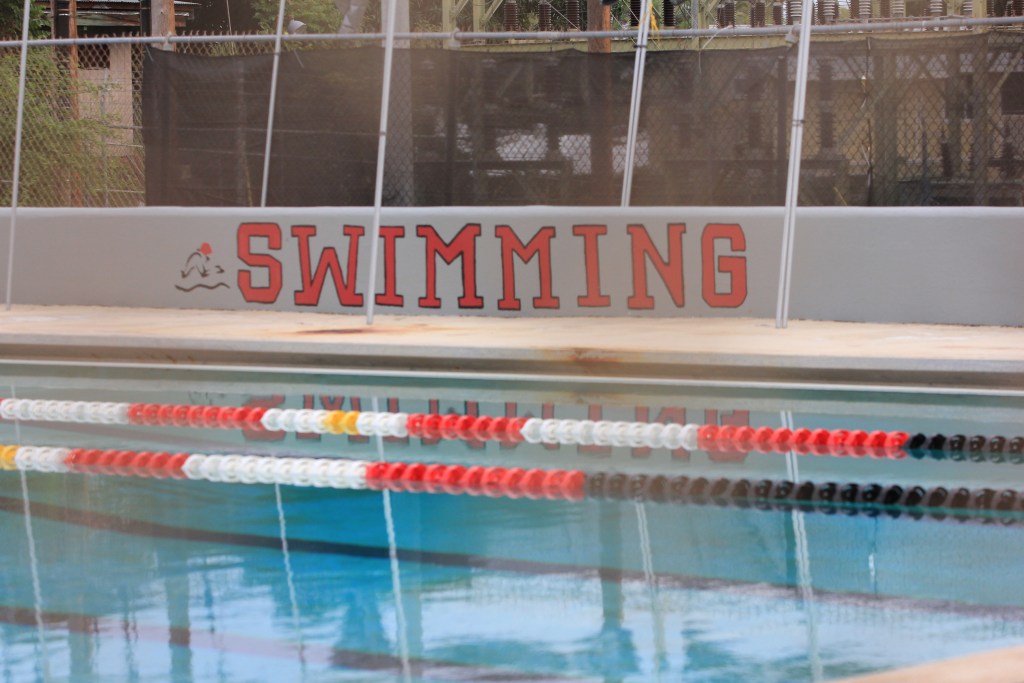
The solicitation of private funding could greatly expand swimming instruction in the cityʻs 31 public pools, spread over 21 sites, many of which have sadly truncated hours of operation. City officials have blamed the short pool hours on funding problems and difficulties hiring qualified lifeguards and pool managers.

The city sponsors dozens of learn-to-swim classes every year but the problem is that they are so popular, they quickly fill up. The demand for classes simply overwhelms the supply.
Nathan Serota, a spokesman for the parks and recreation department, said he believed the city would welcome assistance from public donations.
“When it comes to public donors wanting to help out, we’re all for it because educating kids to be safer and more adept and comfortable with the water is absolutely something we strive for both in our pools and in the ocean,” he said.
The big problem, he said, is that the city has had a hard time recruiting enough lifeguards.
Critics, however, have said the city’s hiring process is too slow and cumbersome and that trained swimming instructors willing to teach at the public schools for free have been turned away by overly cautious bureaucrats.
Some people would no doubt be worried that permitting private funding would lead to commercialization of the pools.
On the other hand, the lack of lifeguards is hurting everyone.
Locked Out In The Heat
I experienced a lockout myself Aug. 15, a boiling hot day when I thought I’d drive over to take a dip at Kailua District Park, arriving to find the doors barred. It was a holiday, Admission Day, but I was also startled to see how short the operating hours at the pool are on a regular basis.
I wasn’t the only one looking longingly at the cool blue water that day. Dozens of sweaty schoolchildren were practicing sports on the fields outside Kailua Intermediate School, and it would have been really nice if they could have had a chance to take a plunge as well.
Wouldn’t it be good if the pools were open for kids to cool off when they are out of school as well? And into the evening in the summer?
Our teens should all be able to work as lifeguards, if they want to and have an aptitude for it.
Some city employees might even like to make overtime pay to tend the pool on holidays like that if there were more of them to share the workload.
Expanding swimming instruction would also increase the pool of people qualified to teach swim lessons.
Our teens should all be able to work as lifeguards, if they want to and have an aptitude for it. Basic swimming instruction in youth sets them up to save lives. This would be a good way to earn money while going to school. Some may find they love it enough for it to become a career track.
These are real jobs. The city is currently recruiting for pool managers who oversee lifeguards, offering starting pay of $55,080 a year. Ocean lifeguarding is another way to go.
Lifeguard instruction is available through the Red Cross for a fee, but it would be good if this was also free.
Serota mused that a benevolent philanthropist could make a big difference in Hawaiʻi by covering the costs of lifeguard certification. He thought city officials would be open to discussing that possibility, too.
Frankly, this all makes so much sense that it really shouldn’t require a charter change to accomplish. But credit Fairchild’s proposal for shining a light on the issue.
 Sign up for our FREE morning newsletter and face each day more informed.

Local reporting when you need it most
Support timely, accurate, independent journalism.
Honolulu Civil Beat is a nonprofit organization, and your donation helps us produce local reporting that serves all of Hawaii.
ContributeAbout the Author