

Shortage Of Swim Lessons Leaves Honolulu Parents Scrambling
Nonprofits are expanding efforts to reach more low-income kids, but a shortage of funding and pool space means not enough swim classes to meet the demand — even for families with money and time to spare.
Honolulu mom Myriam Saboui is an expert at navigating the high-stakes registration process for the city’s free swimming lessons. Minutes before enrollment opens, she loads the registration website on both her phone and laptop and pre-selects the class she wants for her 7-year-old daughter.
But even with Saboui’s diligent preparation, she hasn’t always been able to enroll her daughter in lessons at their local public pool. Classes often fill up in minutes, and the city’s waitlist has grown to more than 870 spots — even though fall enrollment only opened last week.
“My hands are shaking,” said Saboui, who was recently able to find a spot at Pālolo Valley District Park Pool. “It’s really nerve-wracking.”
Classes targeted at beginner swimmers ages 5 to 12 are some of the quickest to fill up, especially when they’re offered on the weekends. Lessons for teens and more advanced swimmers have more availability, but kids can’t take these lessons if they aren’t able to learn the basic skills first, Saboui said.

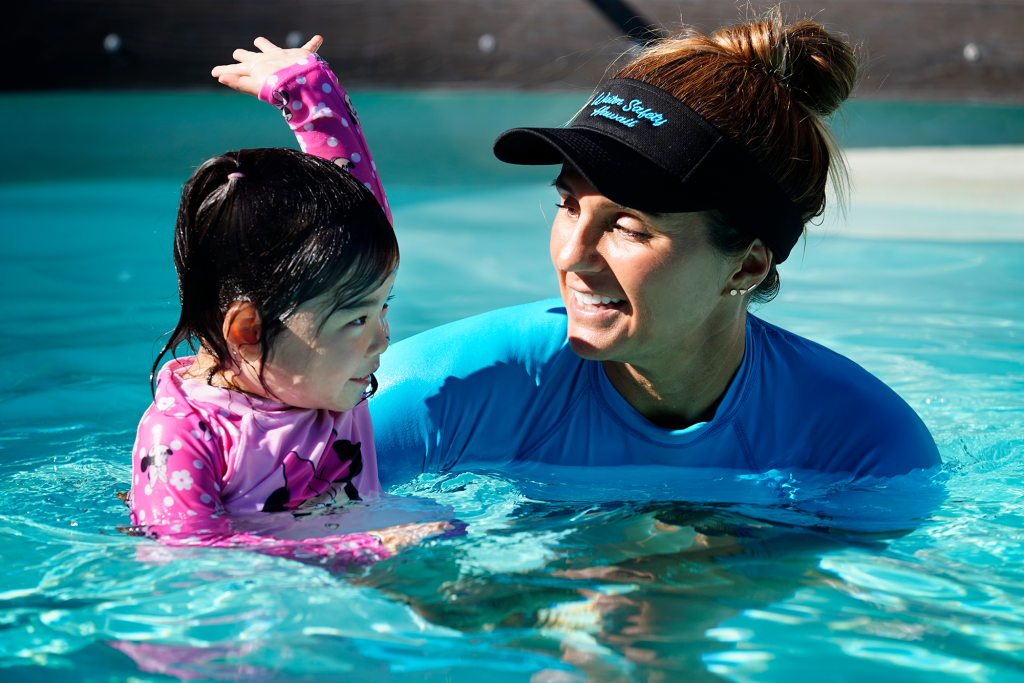
Across the island, swimming instructors say demand for lessons is far greater than what they can accommodate, even when families have the time and money to enroll their kids in private classes. Local organizations like Lēʻahi Swim School offer lessons for a cost, but limited pool space, instructors and funding keep these programs from expanding their reach.
The city offers 140 swimming classes for kids, with roughly 850 children currently enrolled in 1,022 open spots. Nearly all the openings were for more advanced and specialized classes.
Swimming isn’t a skill most kids learn in school, even though drownings are the leading cause of death for Hawaiʻi children ages 1 to 15. Roughly half of children in the state don’t know how to swim, and Hawaiʻi has the second-highest rate of resident drownings in the nation.
Even when families can teach their children themselves, researchers say kids still need lessons to strengthen their water safety knowledge and develop important skills such as identifying rip currents at the beach.
It’s harder for some kids to access swim lessons than others, said Sarah Fairchild, executive director of the Outrigger Duke Kahanamoku Foundation. A 2019 study found that students in low-income schools had fewer water safety skills than their peers at other schools. Oʻahu’s Westside also has no public pools, and a shortage of lifeguards makes it hard for pools to offer more swimming lessons, Fairchild said.

Some nonprofits and community organizations are aiming to change this. Starting this year, the nonprofit Nā Kama Kai and the YMCA of Honolulu are working with low-income and West Oʻahu schools to provide swimming instruction and water safety lessons at nearby beaches or pools. The YMCA was able to expand its outreach in schools after a donor covered the costs of additional lessons for 44 students after reading Civil Beat’s coverage of drownings in Hawaiʻi.
But funding remains a challenge for scaling up initiatives and reaching more kids, especially when demand from families is so high, said Leigh Ann Landreth, YMCA of Honolulu’s vice president of membership and healthy lifestyles. The YMCA plans on offering swimming lessons to five public schools this spring but only has the funding to serve between 44 and 88 kids from each campus, she said.
“Principals are so excited,” Landreth said. “The only thing that we’re hearing is, ‘I wish we had more. I wish we could do more.’”
Limited Spots And Space
At Lēʻahi Swim School, a for-profit organization that offers swimming lessons in Honolulu and Pearl City, waitlists can run from 200 to 700 kids depending on the time of year, president Ben Komer said. He tries to increase the number of available slots by running lessons all day on the weekends and adding extra classes in the summer, but spots fill up quickly.
“Because they’re not teaching this in the public schools, they need to learn somewhere,” Komer said.
This fall, a seven-lesson session at Lēʻahi Swim School cost around $230.
Limited pool space makes it difficult for instructors to expand their reach and provide more lessons, Komer said. The lease is running out for one of the pools the swim school rents in Honolulu and he’s been looking for an alternative location for years. He hasn’t found any options so far, and it could cost a million dollars to build a pool of his own.
Wiki Wiki Swim School, which also offers private swimming lessons to children, has faced similar challenges with space. Founder Amber Smith said it would be too expensive to construct a pool at her own home for lessons, so she’s only able to work with families who have a pool at their house or apartment.
To snag one of the coveted free parks department classes, Saboui said she chooses lessons on weekday afternoons that tend to have more availability even though she needs to leave work to take her daughter to class.
“Unfortunately, the hours aren’t very compatible with working parents,” she said.
Department of Parks and Recreation spokesperson Nate Serota said in an emailed statement that the city’s shortage of lifeguards limits the availability of pools and lessons. The city is offering discounted certification courses to recruit more prospective lifeguards and has a starting hourly pay of $18.58.
Booth Pool in Pauoa, which offers swimming lessons four days a week, has the city’s largest waitlist of roughly 300 kids trying to enroll in classes. Of the 15 Honolulu parks offering free lessons, only Wahiawā public pool has more open spots than waitlisted ones.
It’s a challenging cycle to break, Komer said. Most pools need more lifeguards and instructors, he said, but it’s difficult to recruit workers if they don’t have the opportunity to take swimming lessons in the first place.
“It’s like this catch-22,” Komer said. “Until we get more pools to train more people how to swim, then the next generation will grow up with parents that know how to (swim), and then it’ll get better.”
Starting Up Again
While elementary schools are required to provide basic classroom lessons on water safety, the education department hasn’t offered statewide swimming lessons to students since the 1980s, citing the costs and logistical challenges of transporting kids to local pools.
Only 2% of students received a satisfactory rating on the three skills of floating, swimming and treading water in a 2019 assessment of 560 second graders on Oʻahu, Kauaʻi and Maui.
Some local organizations have made recent progress in reaching more kids through school. One water safety program that started at Pālama Settlement last spring has continued this fall, serving roughly 400 students who attend elementary schools within walking distance of the settlement’s pool.
This summer, the YMCA of Honolulu offered a free water safety course to a record 250 kids, teaching children basic drowning prevention skills such as how to float in the pool and perform CPR. Lessons filled up two hours after enrollment opened, and Landreth said the YMCA closed the waitlist in the third hour once it grew to more than 100 kids.
In a recent report to the state health department, the YMCA said that following the summer classes 42% of parents said their child could appropriately respond to a water emergency, compared to just 6% before the program. It estimated that more than half of the students participating were low-income
For the first time in years, the YMCA is continuing the program during the academic year after receiving grant funding and a private donation to work with five low-income schools.
Landreth said she’s still finalizing which schools will participate in lessons at their local YMCA pool starting in the spring, with the YMCA covering the costs of transportation. Since space in the classes is limited, some principals are facing the hard decision of determining which students can participate.
As is the case with the city parks, there are no YMCA branches with pools on Oʻahu’s Westside. The closest YMCA branch pool is in Waipahu, which can be a 30-minute drive from Waiʻanae. If more funding were available, Landreth said, the YMCA could expand access by providing Westside students with swimming lessons at Camp Erdman, located near Mokulēʻia Beach, or transporting them to the Leeward branch.

“As soon as we have funding to be able to expand, we definitely will,” Landreth said.
Water safety nonprofit Nā Kama Kai is starting a pilot program this fall to provide swimming and water safety classes to fourth graders at six schools in the Waiʻanae-Nānākuli complex.
Unlike other initiatives teaching kids at local pools, the pilot brings kids to Pōkaʻī Bay, only a few miles from some of the participating elementary schools. Since the classes take place at the beach, instructors can also hold ocean safety lessons, teaching kids how to recognize environmental hazards and communicate with lifeguards, Nā Kama Kai founder Duane DeSoto said.
The pilot, which receives funding from the state education department and works in partnership with Lēʻahi Swim School, will run through the fall, although DeSoto hopes to continue collaborations with local schools in the future. Providing water safety lessons through schools is a guaranteed way to reach more kids, he said.
“If we can bring safe swimming practices and ocean safety practices through the DOE,” he said, “then we are reaching the majority of kids in the state.”
Correction: A previous version of this story incorrectly identified the closest YMCA pool to Waiʻanae.
Civil Beat’s education reporting is supported by a grant from Chamberlin Family Philanthropy.

