

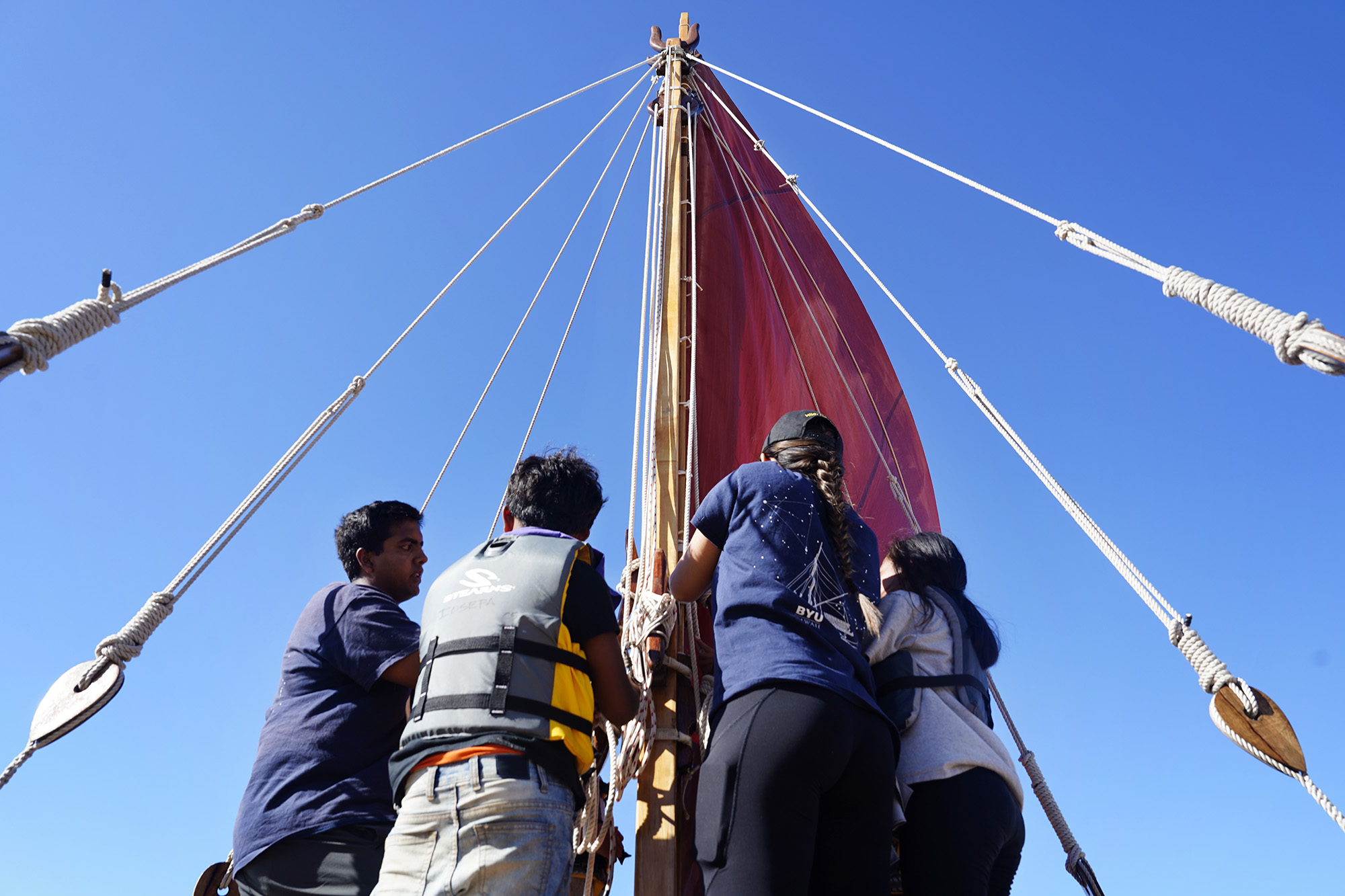
Teaching students Hawaiian voyaging traditions brings cultural practices and place-based learning to the forefront of their educational journey. It also helps those students develop a “navigator’s mindset,” which can boost their confidence and leadership skills, plus emphasize being stewards of the ocean, land and those around them.
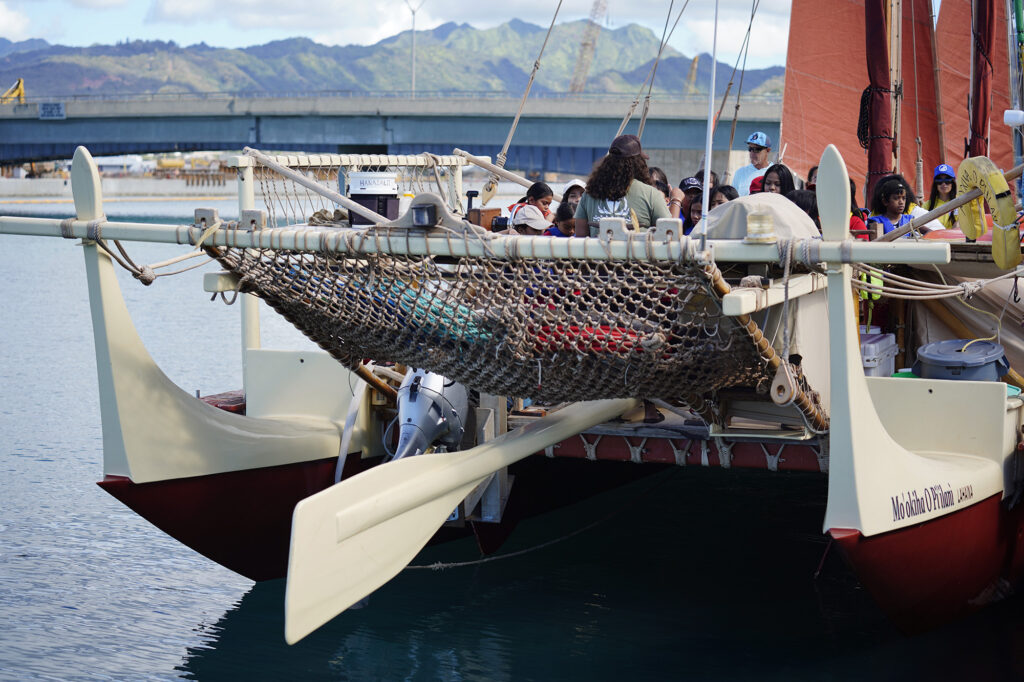
That’s the impetus behind the state Department of Education’s burgeoning Hoʻākea initiative, which is already bringing hundreds of local students aboard the decks of double-hulled voyaging canoes lashed and fashioned in the ways of Hawaiʻi’s kūpuna, or ancestors.
“We are witnessing something extraordinary in Hawaiʻi: the power of community, teachers and students coming together through the groundbreaking Hoʻākea programs,” Polynesian Voyaging Society CEO Nainoa Thompson said in a statement ahead of the latest such event held last week on Mauliola Ke‘ehi, or Sand Island. “What’s happening here is transforming education in ways that are profound and deeply positive.”
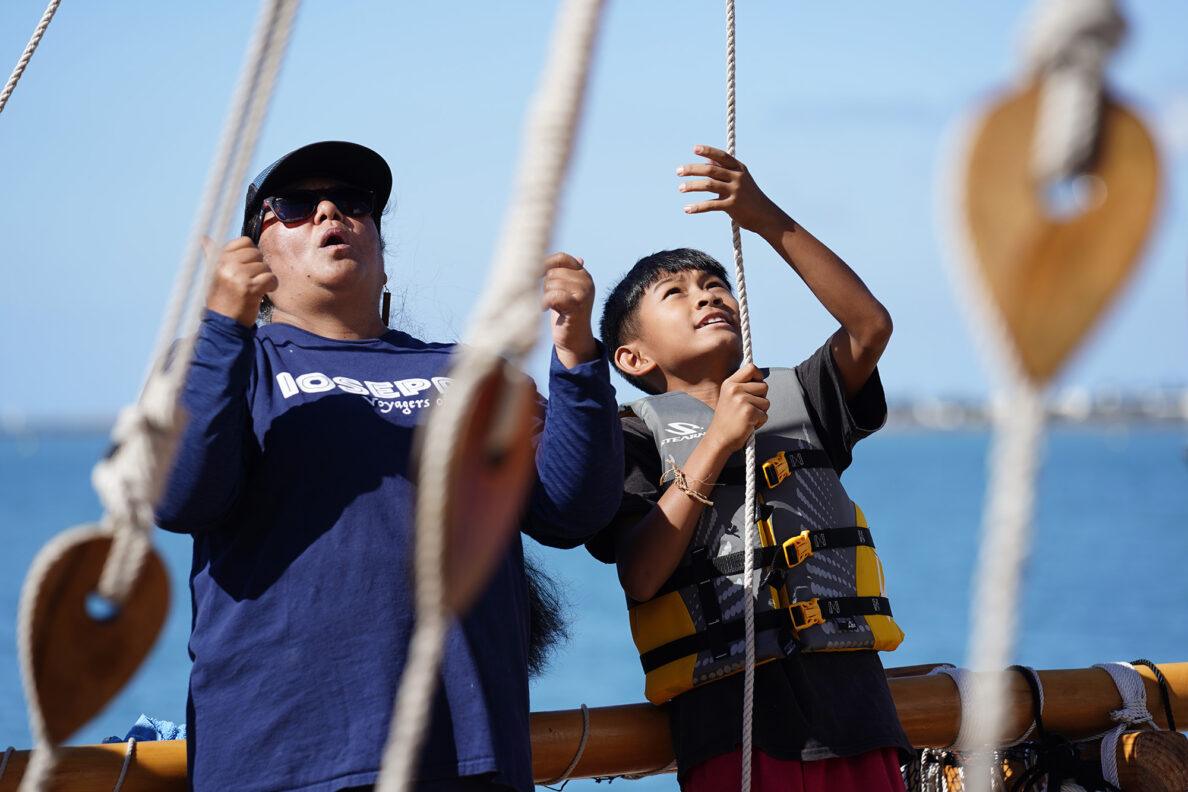
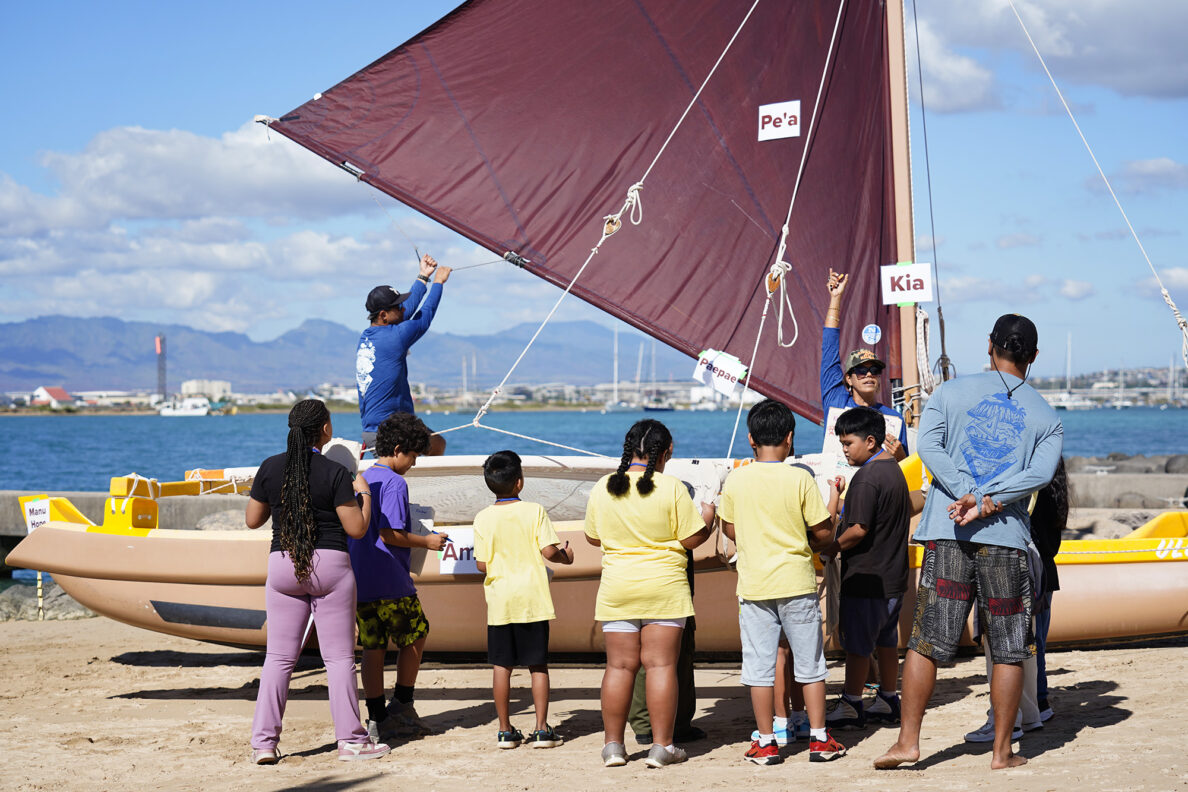
“Hoʻākea has galvanized our teachers and communities around the importance of ʻāina-based and waʻa-based learning and the impact has been remarkable,” Thompson added. “It’s inspiring to see students being introduced to a way of learning that integrates science, culture, tradition and place. These lessons are strengthening our communities and, most importantly, empowering our children with the knowledge and courage to make choices that will care for Hawaiʻi and the world.”
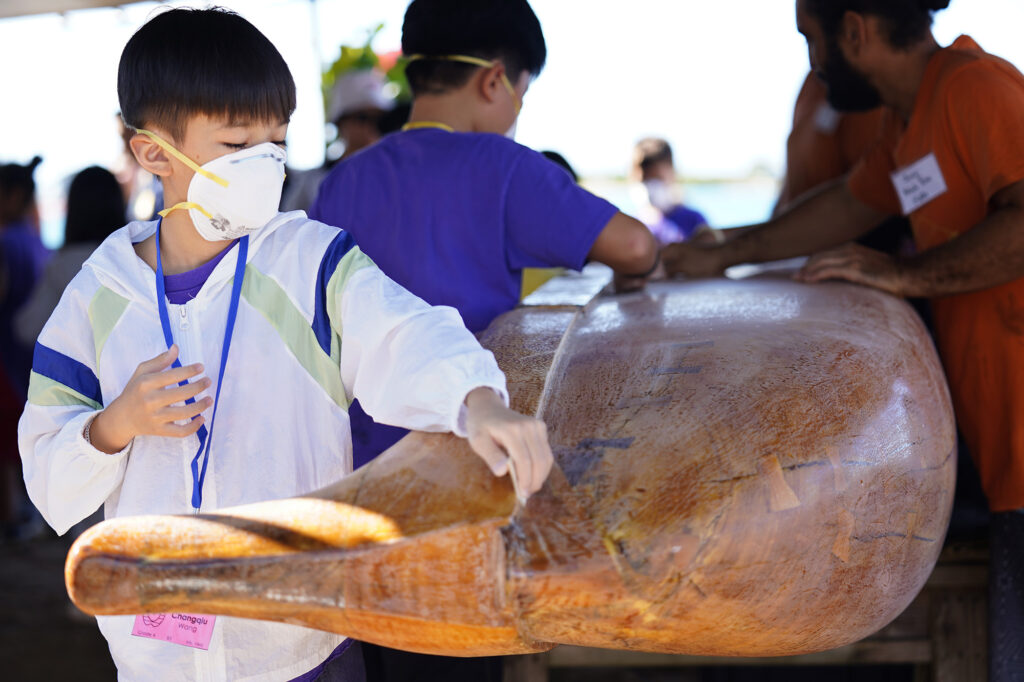
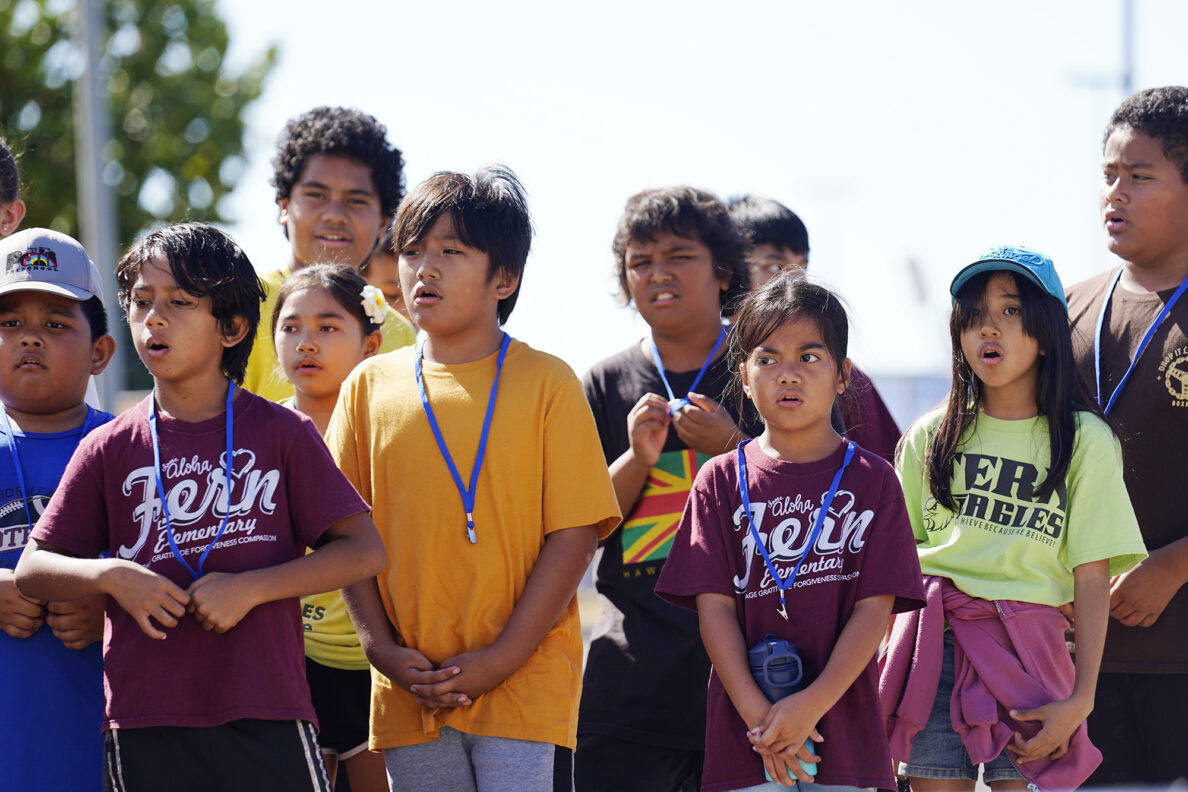
“What’s happening (with Hoʻākea) is proof of what we can accomplish when we move forward as one — creating learning experiences that ground our students in culture and identity, yet prepare them to navigate and thrive anywhere in the world,” Hawaiʻi Department of Education Superintendent Keith Hayashi said.
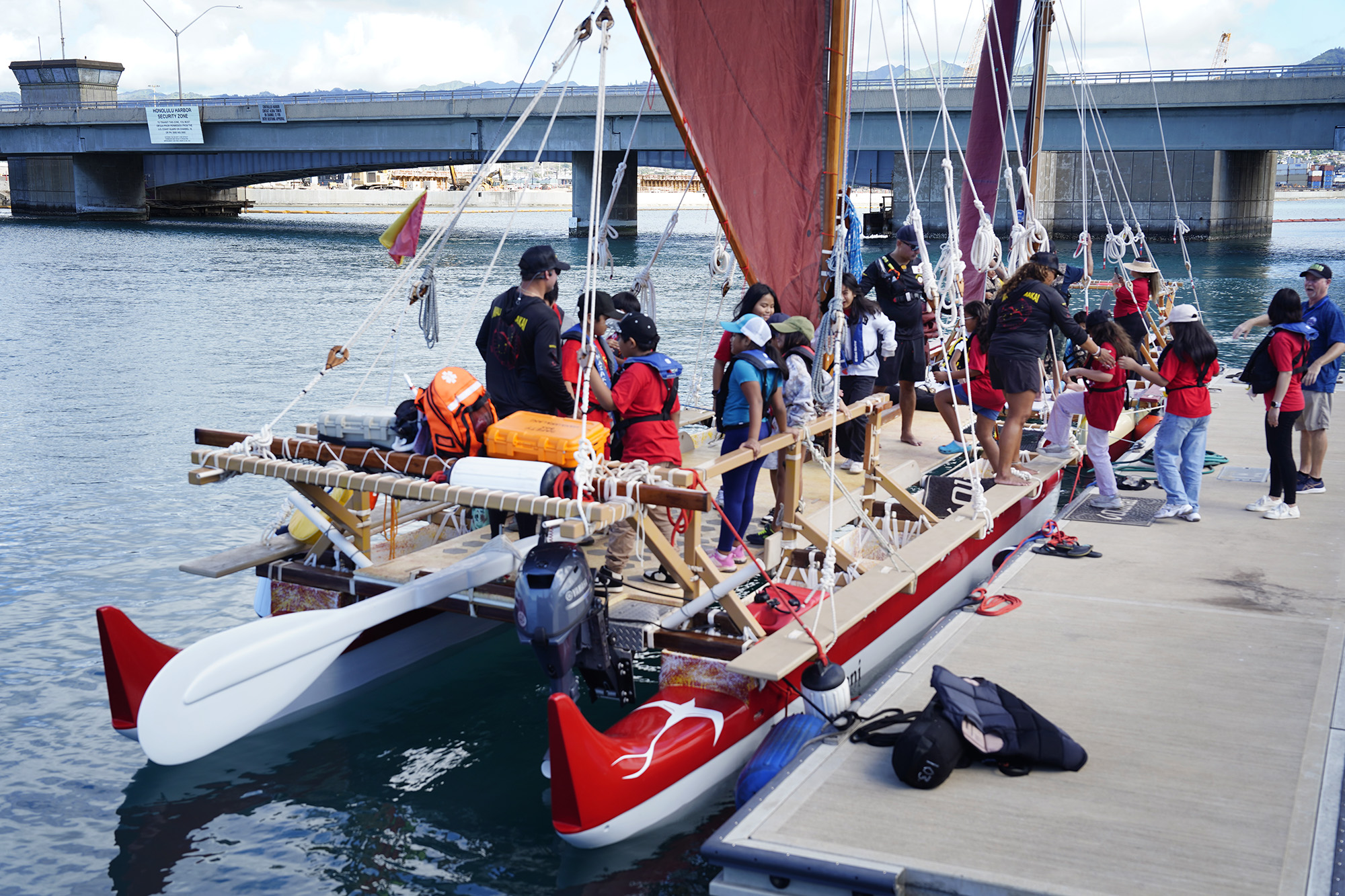
“Classroom work is important for the children,” legendary waterman and Lele Aloha CEO Archie Kalepa said. “But by including the kids and letting them play with, and on, the canoe, they learn much faster and retain that knowledge.”
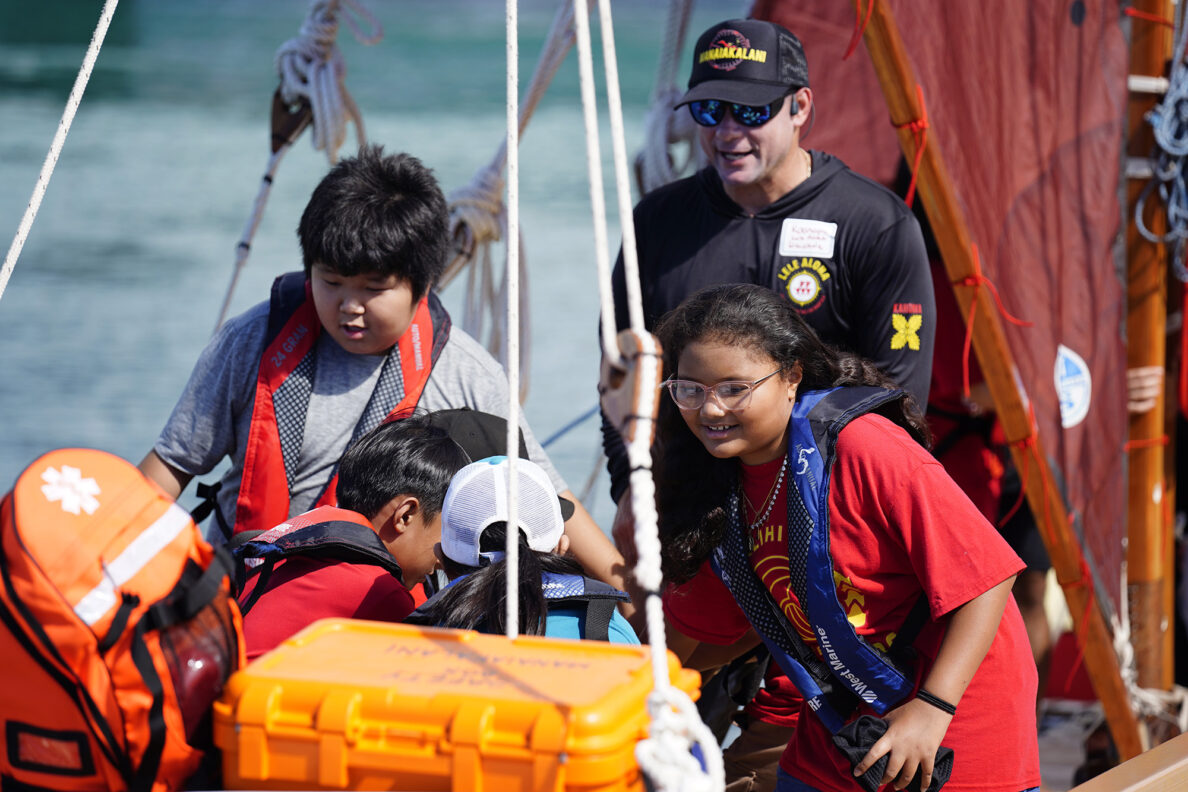
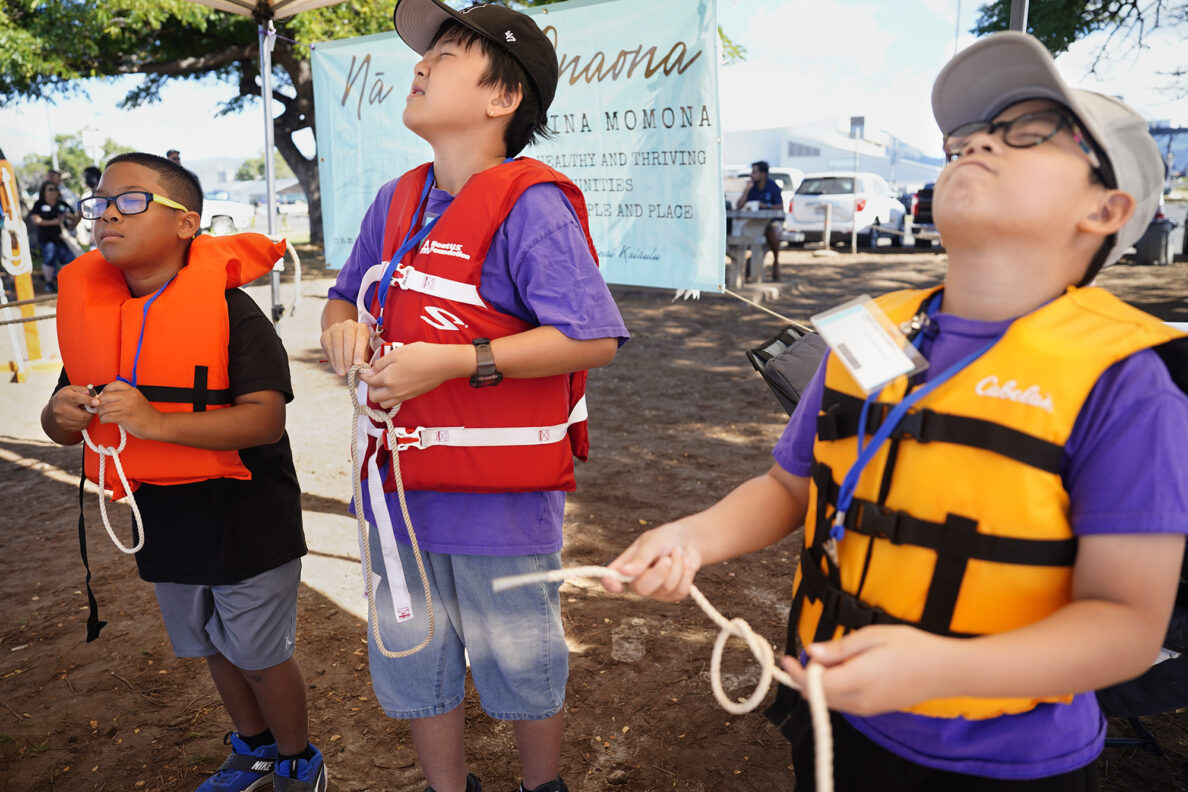
Ho‘ākea began four years ago with 600 students with one event on Windward Oʻahu. More than 1,000 fourth-graders and their teachers were expected to learn at this Ho‘ākea Honolulu event, which ended with an open house Saturday morning for students, and their parents who missed it during the week. Hands-on teaching includes more than 10 sailing wa‘a, numerous paddling wa‘a and includes interactive ʻāina-based stations like knot-tying and navigation.
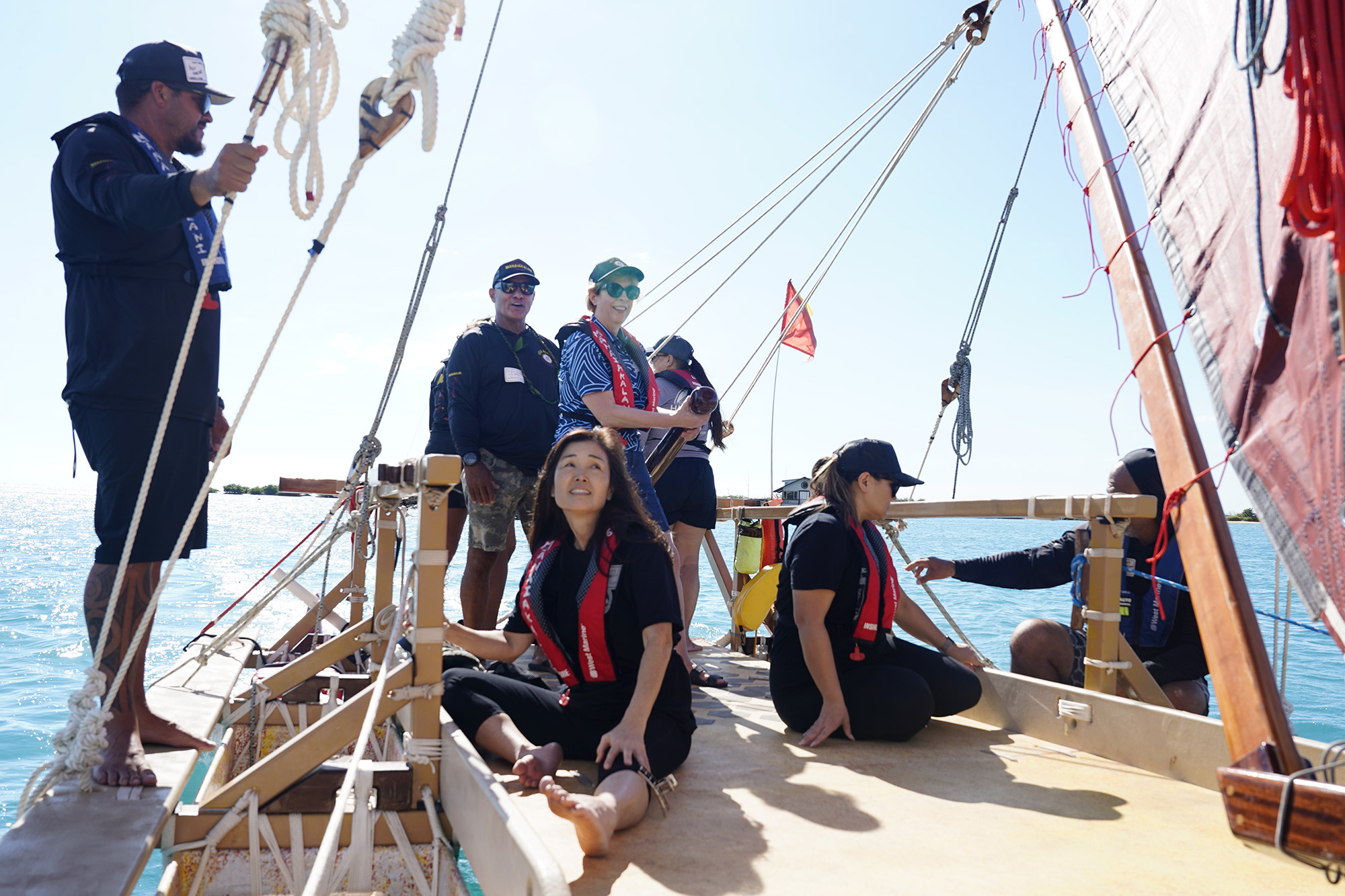
After the students returned to their schools, a handful of sailing wa‘a took educators on a hands-on cruise. Lele Aloha’s Archie Kalepa, left in back row, teaches how to steer efficiently to one of Maui’s two Complex Area superintendents, Rebecca Winkie on the Mānaiakalani voyaging canoe’s hoe uli (steering paddle or rudder). Lele Aloha’s Hugo Sanchez, front left, and Christian Hett, front right, help DOE’s Terry Oshiro, second from left, and Nanea Ching, second from right, with the pe‘a ihu (front sail or foresail) while Lele Aloha’s Brittany Kamai, behind Kalepa, works with DOE’s Tanya Flores on the pe‘a (main sail). (Kevin Fujii/Civil Beat/2025)
According to the DOE, Ho‘ākea’s has five core pillars: 1. Cultivate a navigator mindset. 2. Strengthen cultural identity and connection to the ʻāina. 3. Apply knowledge in real-world, interdisciplinary contexts. 4. Practice stewardship and leadership. 5. Engage in reflective learning and meaningful contribution.
With this framework, educators enrich core schoolwork with hands-on experiences on land and at sea. Kalepa brought up the mathematical formula to estimate distance based on observed wind speed, the length of canoe and time while the Mānaiakalani sailing wa‘a motored upwind. Once that “Yamaha wind” was cut, the sailing lesson began with geography and historical wind direction. “If we’re out of school for Christmas and we’re going in this direction, we want to keep the Mānaiakalani constellation on our port side,” Kalepa said, referencing Māui’s (fish) hook, Mānaiakalani, as easy trade winds from the east- northeast blew a steady 4 knots.
DOE’s Terry Oshiro asked Kalepa how he could tell the wind speed and upcoming gusts.
“I can tell the wind is at 4 knots by the texture on the water and 46 years of being on the water,” Kalepa said. “This has been, and still is, my classroom where I learn, teach and expand my mind and knowledge. I always learn something new on the water.”
Hayashi believes that Hoʻākea will prepare students to lead Hawaiʻi into the future by cultivating its rich voyaging history.
