Photo Essay: Learning How To Survive A Rip Current In Hawaiʻi
This lifeguard helped launch an ocean safety campaign in Australia. Can his tips for escaping deadly rip currents save lives here?

Don’t fight the rip current. Float.
It doesn’t sound intuitive, but ocean safety experts say that trying to swim against the pull of the water is actually the wrong move.
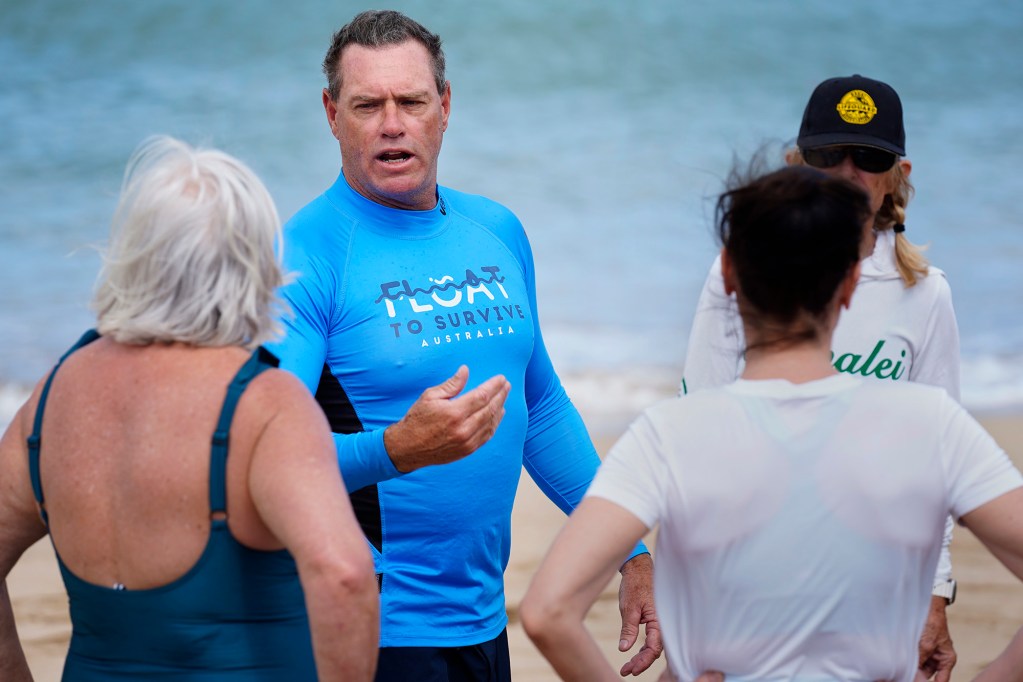
“You need two things to survive a rip,” Bruce “Hoppo” Hopkins said at Hawaiʻi’s first-ever rip current clinic held earlier this month. “Keep your mouth and head above water so you can breathe. And minimize using energy so you can relax. Catch your breath and relax.”
About 70 people gathered at Wai‘oli Beach Park on Kauaʻi on Feb. 18 to hear from Hopkins, a global authority on ocean safety and a proponent of the “Float to Survive” strategy for surviving a rip. The clinic was organized by the Kauaʻi Ocean Safety Bureau, Kauaʻi Lifeguard Association and Hawaiian Lifeguard Association. Hopkins hails from Australia, where he spent more than 30 years as a lifeguard on Bondi Beach.
The “Float to Survive” strategy focuses on staying calm.
“If you can talk in a rip current,” Hopkins said, “you’re doing it right.”


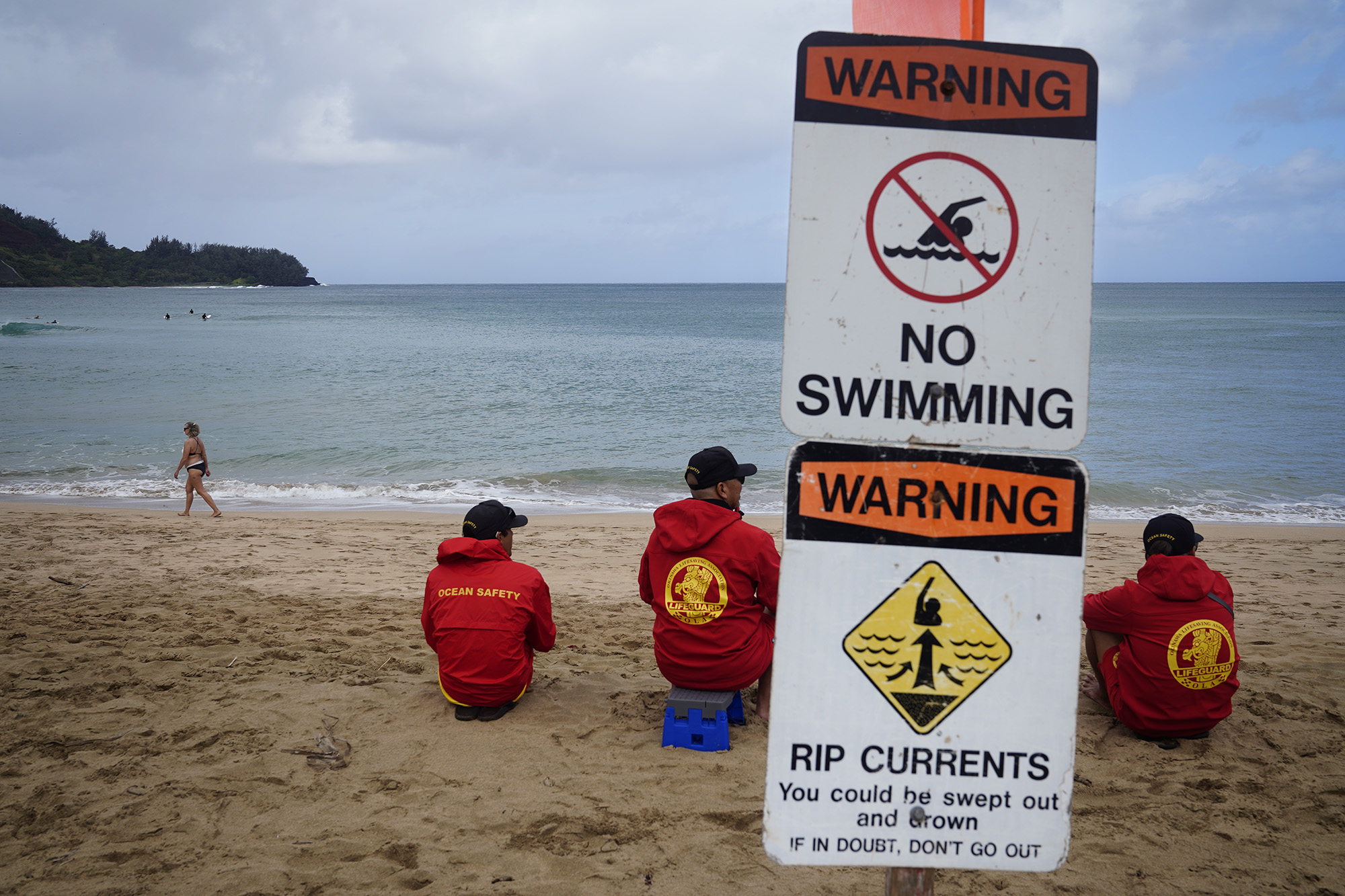
Rip currents are powerful channels that pull water — and anyone swept up in it — away from shore. Learning how to spot and survive one can be life-saving. Hawaiʻi has the second-highest resident drowning rate in the country, and drowning is the leading cause of death for visitors.
Nearly 800 people drowned in the state between 2015 and 2024, according to data from the state Department of Health. About a quarter of the people were swimming. Another 225 people were snorkeling. At least 45 slipped beneath the surface after accidentally falling in the water or getting swept from shore by a rogue wave.
Earlier this month, Honolulu lifeguards rescued two surfers who were caught in a rip current off Mokulēʻia on Oʻahu’s North Shore. One of the surfers had been separated from their surfboard as the current pulled them about 250 yards offshore. Worldwide, rip currents are estimated to be responsible for over 80% of lifeguards’ near-shore ocean rescues, according to the National Oceanic and Atmospheric Administration.

While a rip current drags swimmers away from shore, it doesn’t pull them under the surface. Instead of trying to swim against the water, Hopkins said to ride it to a spot where the pull isn’t as strong.
“Make your default to float if you find yourself in a rip current,” he said. “By floating, you’ll find yourself more relaxed, calm and able to breathe.”
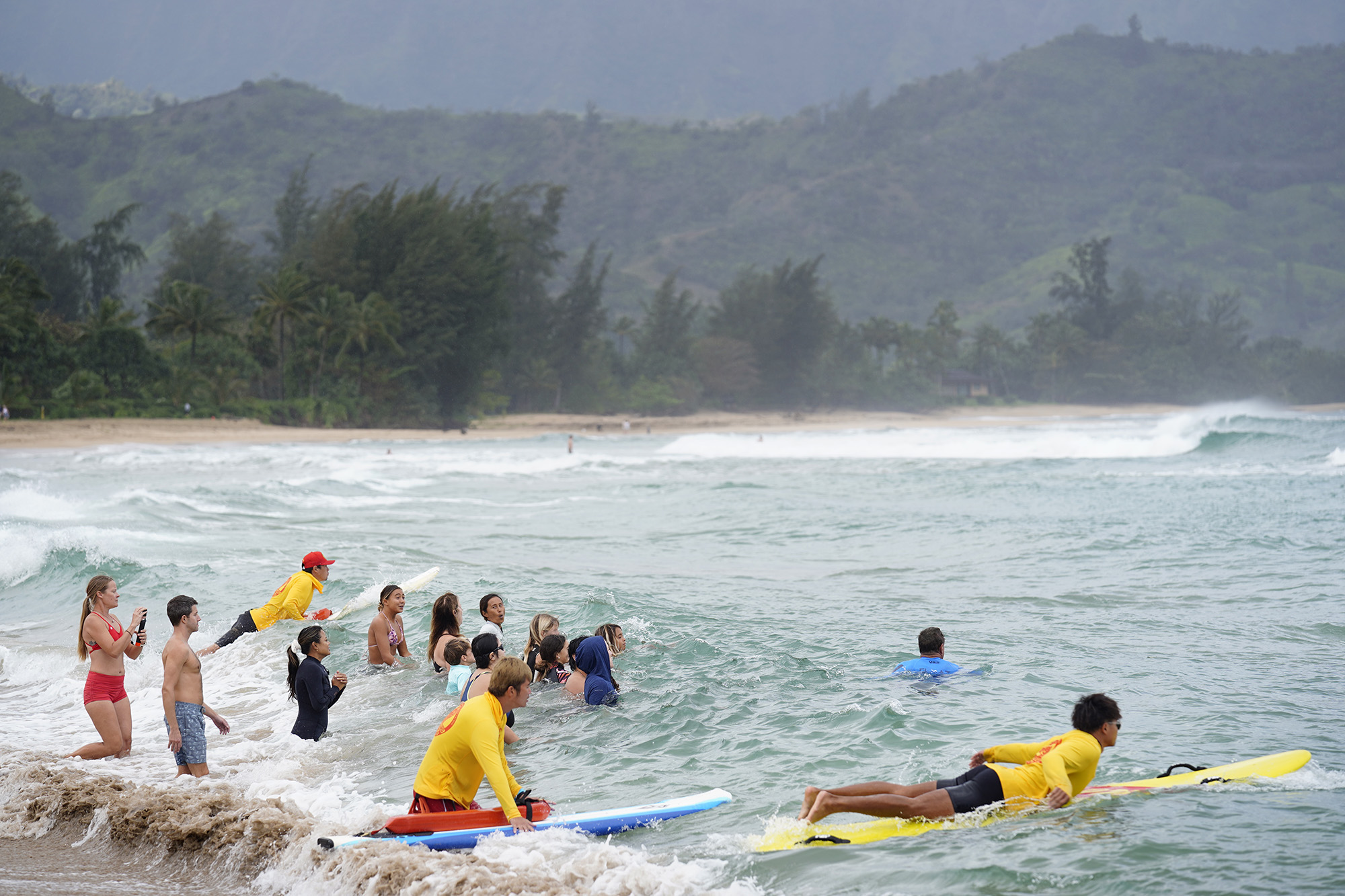
Floating saves the swimmer valuable energy and allows the current to move them to a calmer area. Once out of the channel of the rip current, a lifeguard can more safely get to the person, or they can even get to shore themselves with the help of breaking waves. It’s safer for everyone involved.
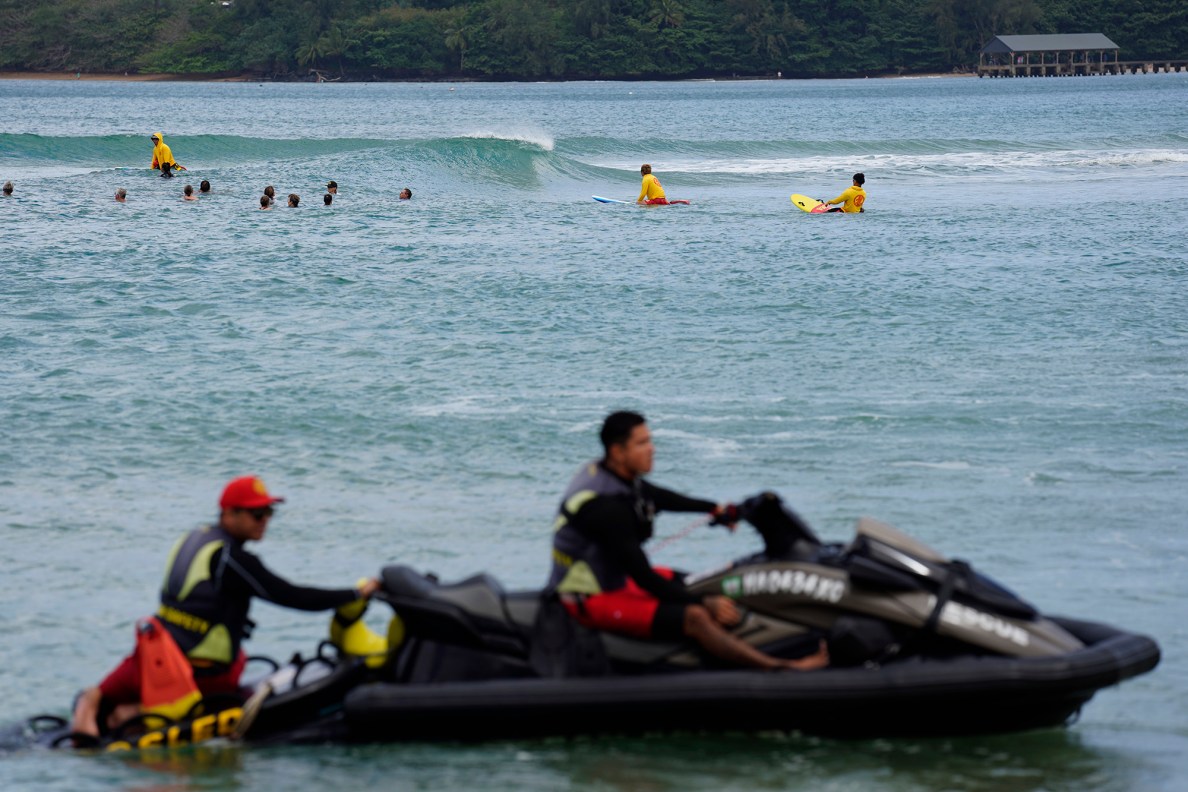
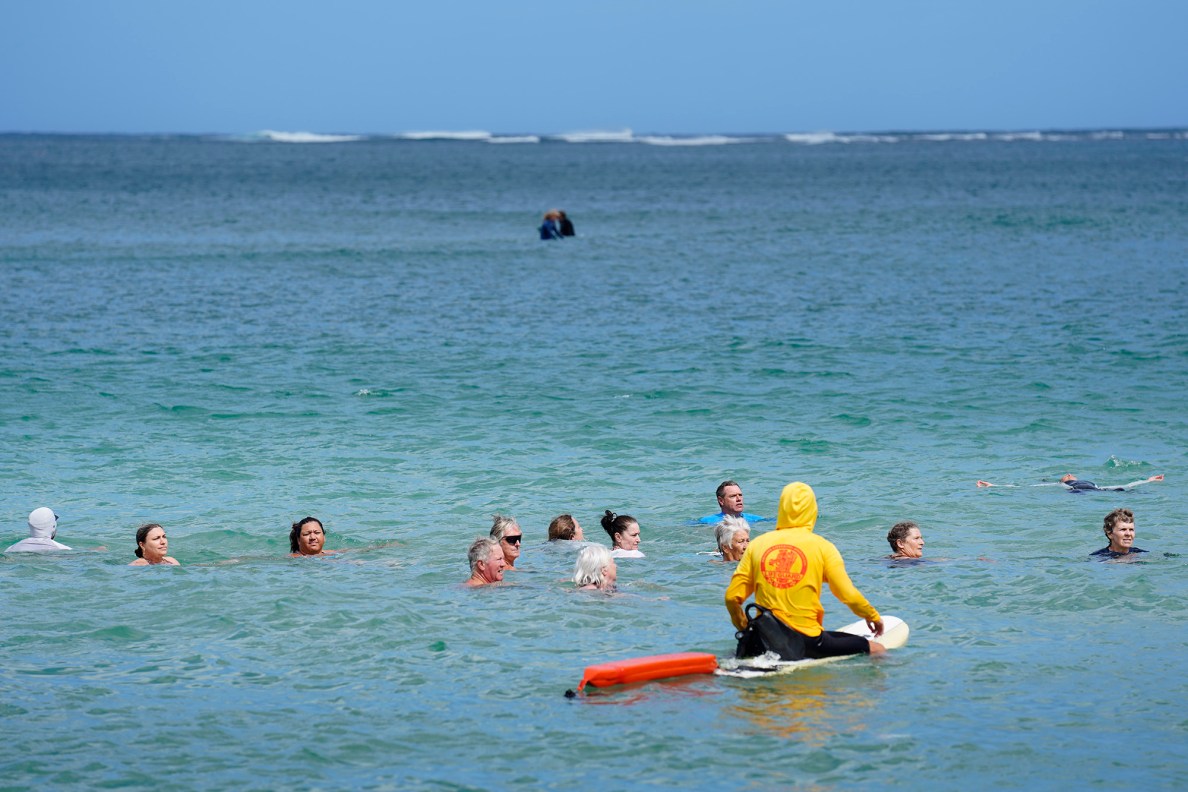
Instead of immediately swimming parallel to the shore, where they could have been going against the current — exhausting themselves while going nowhere fast — swimmers put the floating method to the test.
“Honestly, it felt like a lazy river ride,” Kyla Yoder of Kapaʻa said. “By floating and relaxing, I couldn’t tell we were moving with a rip current until he (Hopkins) told us to turn around and look at the beach.”
“It’s actually kind of relaxing,” she added. “If you can relax.”

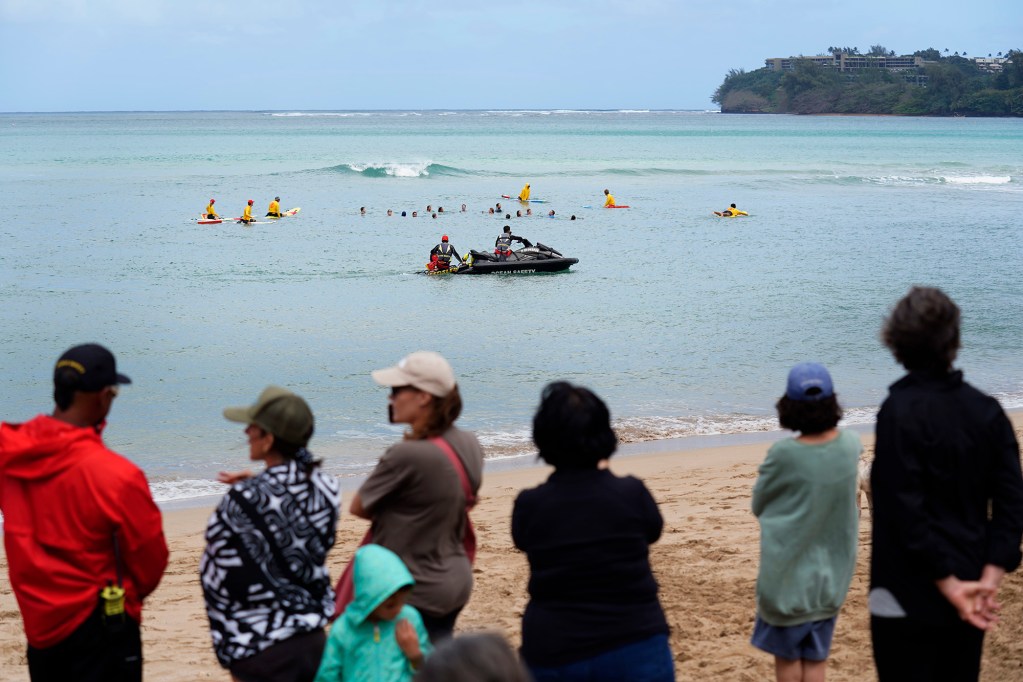
But knowing what to do once in a rip current should be just one line of defense. Kalani Vierra, chief of the Kauaʻi Ocean Safety Bureau, encouraged people to talk to a lifeguard and to assess the conditions by watching the water and waves for at least 20 minutes before jumping in.
CORRECTION: A previous version of this story included an incorrect reference to Bruce “Hoppo” Hopkins’ current position.
Civil Beat’s reporting on Kauaʻi is supported in part by a grant from the G. N. Wilcox Trust.