


Just eight weeks after giving birth to her daughter, Jessica McDonald returned to work.
The mother of three had already used up all of her sick and vacation days, and she couldn’t afford to take unpaid time off. It was excruciating to drop off her infant daughter, Quinn, at day care, but she felt she didn’t have a choice.
“It was a necessity,” she said. “For most of us living here, once you’re out of paid leave, you have to go back to work.”
On her second day back in the office — June 20, 2017 — she got a terrifying call from her daughter’s day care center. The tiny baby was coughing up something that looked like blood, they told her.
McDonald’s husband, who worked closer to the day care center, rushed to pick up Quinn. McDonald asked her boss for permission to leave early and hurried to meet her husband at their apartment in Kāneʻohe.
“I immediately saw her and knew it,” McDonald told Civil Beat last week. “She was dying.”
Quinn had suffered an idiopathic pulmonary hemorrhage, an extremely rare condition in which blood seeps into the lungs, causing respiratory failure in otherwise healthy babies. She died later that day at Kapiʻolani Medical Center.

“It’s very surreal looking back on that day,” McDonald said. “In every way it was a normal day, but it’s actually the worst day of your life — you just don’t know it yet.”
Nine years later, she still feels guilt and anger about not being home with Quinn that day. If she had been there, maybe she would have known something was wrong faster and gotten her baby help much sooner.
“But even if it hadn’t changed the outcome,” she said, “I would have spent her last day with her, instead of at work.”
McDonald is one of thousands of Hawaiʻi parents who has had to cut short time with a newborn baby to go back to work because of the state’s lack of paid family leave. Federal law guarantees most employees up to 12 weeks of unpaid leave to care for a newborn or sick loved one, but going that long without a paycheck isn’t an option for many families.
For McDonald, taking unpaid leave would have meant her family couldn’t cover rent and basic expenses. McDonald did not want to name her employer because she still works there.
“We were essentially making good money but still living paycheck to paycheck,” she said, “so there was no way we could’ve gone without my income.”
Despite decades of advocacy and research and support from the state’s current and previous governor, Hawaiʻi lawmakers have failed to pass a paid family leave policy.
This year a paid family and medical leave bill, House Bill 2360, which earlier this month crossed over to the Senate from the House, is the furthest such a bill has advanced in eight years. But state Rep. Jackson Sayama, who introduced the bill, said it likely won’t pass this year because the Department of Labor and Industrial Relations, which would be responsible for implementing the policy, wants to first complete a study.
Last year, lawmakers appropriated $750,000 to the department to do an actuarial study and legal analysis of the proposed policy. The department is still working to complete requests for proposals for vendors to do the studies.
U.S. Rep. Jill Tokuda, who helped push forward a family leave bill in 2018 while she was a state senator, said the issue has been studied enough. That year, she introduced Senate Bill 2990, which was originally intended to create an implementation plan for a paid leave policy within two years. It was gutted at the last minute. The bill passed, but it only included language to appropriate $350,000 for a Legislative Reference Bureau study on the issue, not an implementation plan.
Since then, the number of other states with paid family leave laws on the books has more than doubled from six to 13, Tokuda said.
“It’s a missed opportunity,” she said. “In fact, that doesn’t even seem harsh enough. Hawaiʻi’s working families, our parents, children caring for aging parents, they’ve been left to struggle while we’ve failed to establish some kind of system.”
‘Closer Than Ever’
Sayama’s bill would give employees up to 12 weeks of paid leave for life events, including the birth of a child or an adoption or foster placement, as well to care for a sick family member. It also includes leave for victims of domestic violence. It would provide up to 26 weeks for a personal injury or illness.
The program, which would operate in tandem with the state’s private Temporary Disability Insurance system, would be funded by shared payroll contributions from employers and employees. Employers could only deduct up to one-half of the premium from employee wages and could choose to pay a larger portion or the entire portion.
A 2024 study estimated premiums would be about 0.7% of payroll. A person earning minimum wage would pay just over $2 a week into the system, assuming they split the premium with their employer, and receive $576 per week on leave.

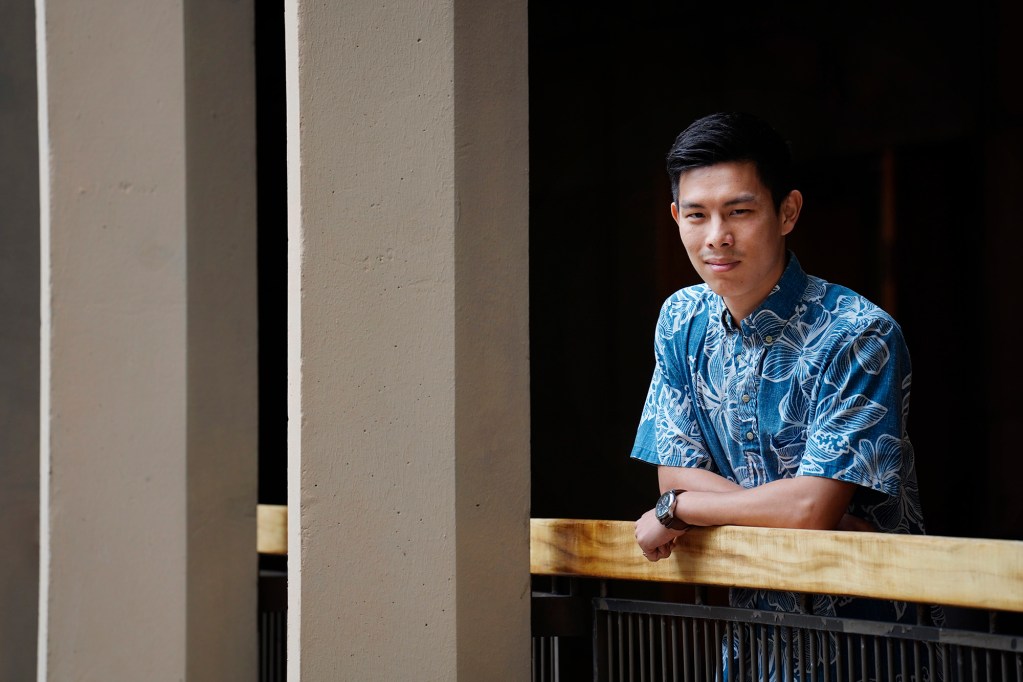
State Rep. Jackson Sayama introduced a family leave bill this year that has advanced further than any other bill in eight years, but he thinks it will be at least another year before it can pass. (Kevin Fujii/Civil Beat/2026)
Similar bills in past years have faced resistance from stakeholders, including some unions, business interests and the Department of Labor and Industrial Relations. In testimony, DLIR has expressed concerns about the cost of the program, how much staff it would take to run it and the potential for a policy to interfere with the state’s exemption to the federal Employee Retirement Income Security Act, which sets national rules for employee benefits and prevents states from creating competing rules.
Hawaiʻi is the only state exempt from the federal law because of its 1974 Prepaid Healthcare Act, which has stricter rules requiring employers to provide health insurance. A paid family leave policy could jeopardize the exemption if it alters the Prepaid Healthcare Act.
One key difference in this year’s bill compared to previous iterations is that it would not require public employees to participate in the program but rather would allow them to opt in if they chose. It’s a change some unions, like Hawaii Government Employees Association, the state’s largest public sector union, supported.
“I think we are closer than ever to an actual bill that we can really pass forward and really help the people of Hawaiʻi,” Sayama said, “but we can’t do that without first examining the fundamental issues of a paid family leave policy in Hawaiʻi.”
More Studies?
Some of the lawmakers who have been fighting for paid family leave for years say they don’t see a need for more studies.
A major study on paid family leave came out in 2017. Conducted by the Hawaiʻi State Commission on the Status of Women with a grant from the U.S. Department of Labor, it analyzed family leave programs in other states, laid out various models Hawaiʻi could use and created a proposed staffing plan for DLIR.
The study drummed up support and enthusiasm among advocates and parents for Tokuda’s 2018 bill, said Nicole Woo, director of research and economic policy for Hawaiʻi Children’s Action Network.
“There were lots of moms with babies in the hearing room kind of overflowing into the hallway,” she said. “There was a lot of energy.”
Tokuda said rigorous debate unfolded throughout the session as testifiers disagreed about details of what a paid family leave program should look like, including the number of weeks provided, how the program should be administered and whether there should be an implementation board.
By the time the bill reached Conference Committee, Tokuda said she felt a funded study was the only thing that could pass.
It was a positive step, she said, but, “not the ambitious goal we started off with.”
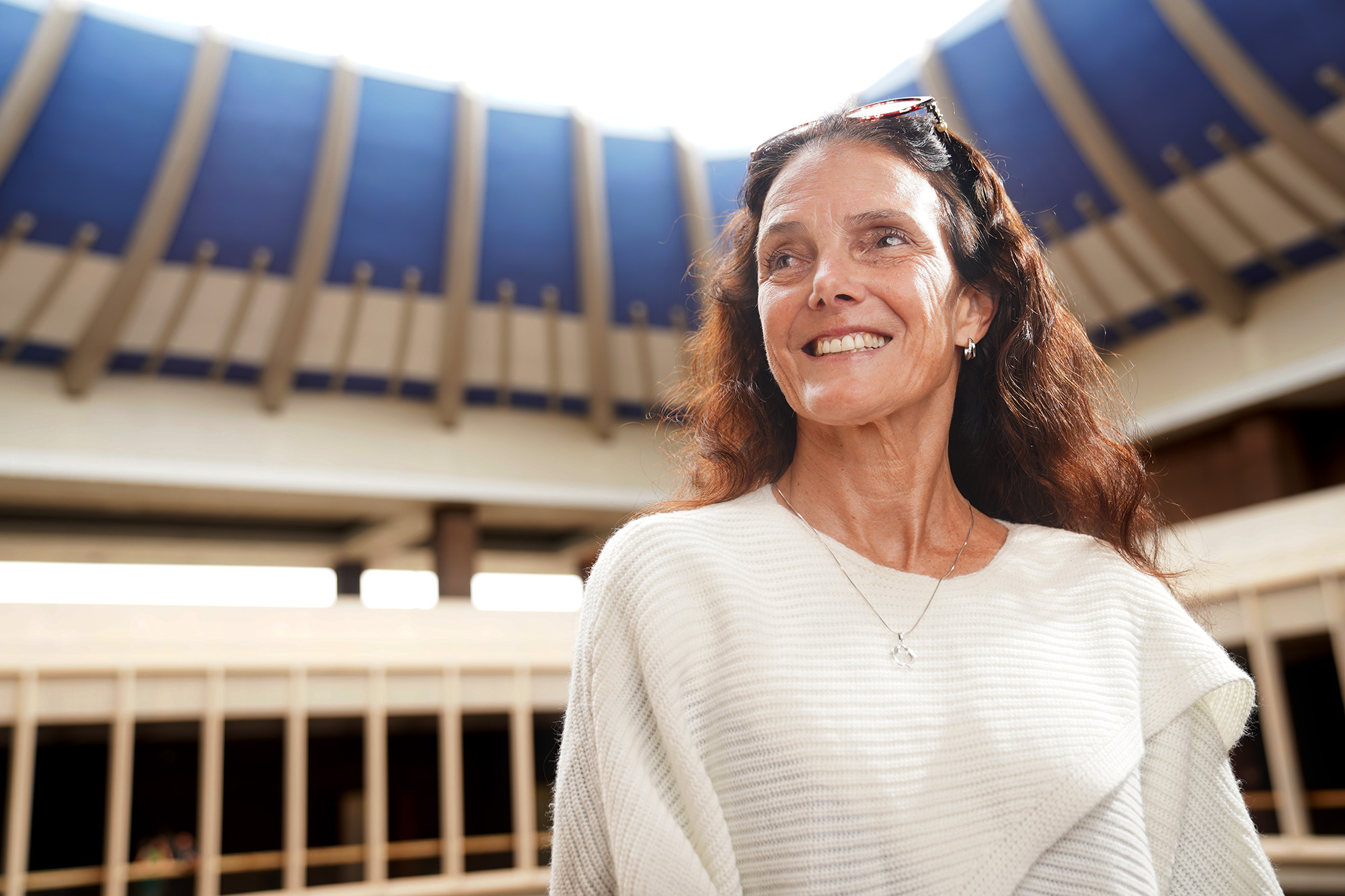
For state Rep. Amy Perruso, a former teacher elected to the house in 2018, keeping the fight alive was personal.
“It’s actually one of the reasons I ran for office,” she said.
In 2005, she had a difficult pregnancy and passed out twice while teaching at Mililani High School. She didn’t want to take time off, even when she felt sick, because she wanted to save her sick leave for after the baby came.
When her daughter was born, she had saved up enough days to spend a month and a half with her before she had to return to the classroom.
“I still wasn’t physically ready, and my child wasn’t ready,” she said. “And I wasn’t really as mentally present as I would otherwise have been. I really think that it was too soon.”
Perruso and others worked on multiple bills regarding sick leave and paid family leave between 2019 and 2024, but no bills actually creating infrastructure for a program advanced. Momentum started to grow, though, as more women were elected to the House and Senate. When Josh Green announced his candidacy for governor in 2022, he pledged to sign a paid family leave bill into law.
In 2025, legislators adopted a resolution calling on DLIR to convene a working group on implementing paid family leave and appropriated $750,000 for the department to conduct an actuarial study and legal analysis of the program. A report on the studies is due by the start of next session.
While she understands the department’s desire to conduct a study, especially given the fact that it’s understaffed and under-resourced, Perruso said she didn’t feel it was absolutely necessary, and advocates are getting tired of so many studies.
“We have had a bill at almost every session that I’ve been in office that has been changed into a study,” she said. “It’s been really frustrating.”
But DLIR director Jade Butay said he doesn’t think the previous studies have been good enough. They either did not use Hawaiʻi-specific data, relied too heavily on projections and models or lacked consultation with DLIR altogether.
He said he doesn’t want Hawaiʻi to repeat what Washington state has gone through.
That state’s paid family leave program, which started paying out benefits in 2020, is now facing a potential $350 million deficit. In 2023, the Washington Legislature had to infuse the program with $200 million because more people tapped into the benefits than the state had money to pay.
“At the end of the day, we’re ultimately responsible for the success of the program,” Butay said, “so we want to be candid about the good, the bad and the ugly.”
Impossible Decisions

Parents are frustrated by Hawaiʻi’s lack of progress.
Six weeks before she was due to give birth, doctors told Big Island resident Leilani Kaliawa she needed to temporarily relocate to Oʻahu so she could be monitored at Kapiʻolani Medical Center for Women and Children. Her fetus was growing too slowly and blood flow to her placenta was weak.
Kaliawa, who had been working part time at Taco Bell, flew to Honolulu in mid-January 2016, leaving her husband and two sons behind.
She lived at Ronald McDonald House, a charity that lodges families with sick children, and went to weekly checkups at Kapiʻolani Medical Center. Her son, Jeremiah, was born March 7, weighing just 2 pounds 8 ounces.
Doctors told her he needed to stay in the neonatal intensive care unit for monitoring. Ten days later, a nurse noticed his stomach was distended, and he needed emergency surgery. Kaliawa realized it was going to be a long hospital stay.
Jeremiah had a condition called volvulus, meaning his intestines were twisted and had formed a potentially fatal blockage.
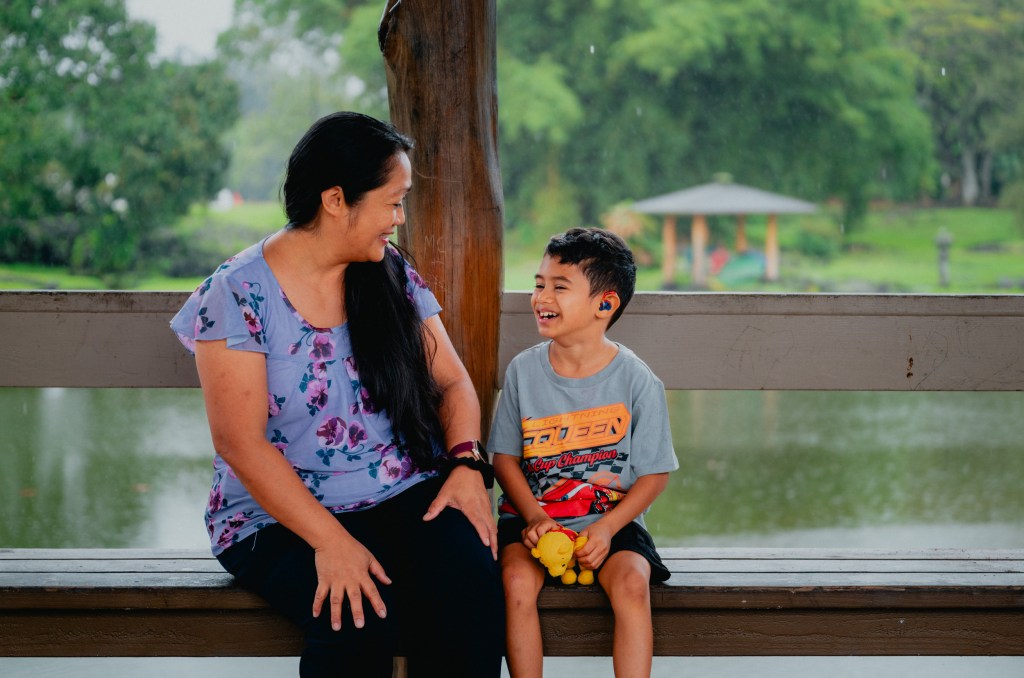
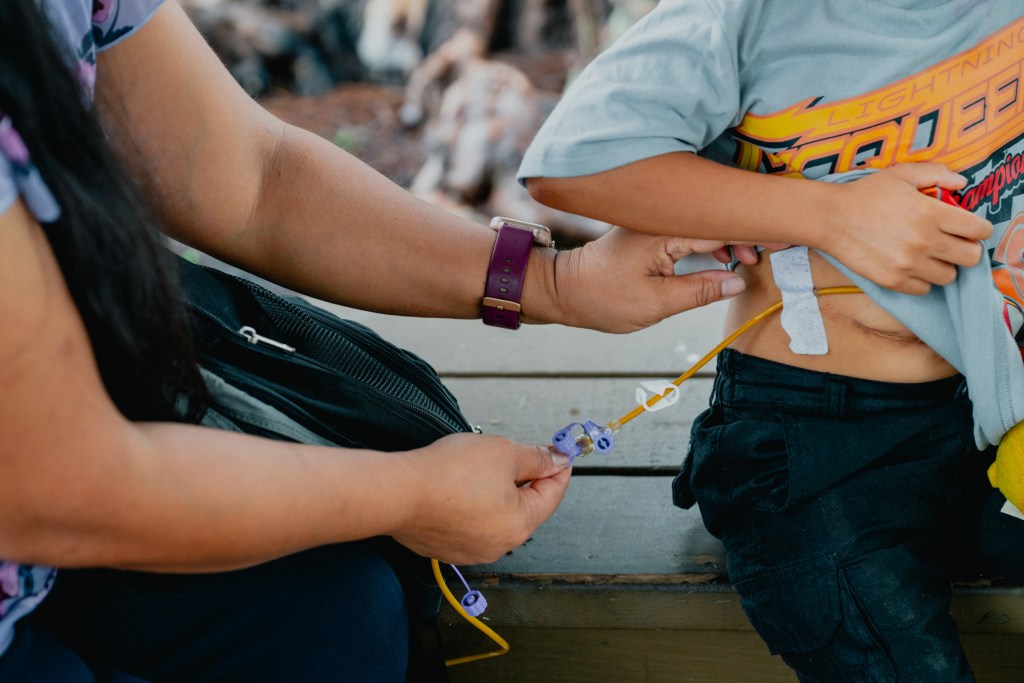
Leilani Kaliawa’s son, Jeremiah, was born weighing just two pounds eight ounces. Kaliawa, who had to quit her job to spend seven months with him in the NICU, testified in support of Sayama’s bill. (Andrew Hara/Civil Beat/2026)
Kaliawa had been receiving some money through the state’s Temporary Disability Insurance program, but by April she had exhausted her benefits. Even though it would put immense financial strain on her family, she knew she couldn’t go back to work.
“He needed extra attention,” she said of her son, “and for me to leave him with someone else, I cannot imagine, because they wouldn’t know how to take care of him.”
She quit her job, and her family started receiving SNAP benefits to help pay for food. They went into credit card debt buying plane tickets for her husband to visit her and Jeremiah at the hospital every other weekend.
In August, surgeons performed another procedure to reconnect parts of Jeremiah’s intestines that had been cut during the emergency surgery months prior. Mom and baby stayed another two months in the NICU before he was discharged, and they returned to Hawaiʻi island on Oct. 10, 2016.
If paid family leave had been available, not only would her family have been able to receive more income, she said, but her husband also could have taken time off to be with them on Oʻahu.
“It would have helped us in not worrying too much about the bills,” she said. “I think we would have been able to give my son still in the hospital more care.”

Keʻōpū Reelitz also struggled with impossible decisions when her six-month old son got sick in 2019.
Reelitz, who worked for the Department of Human Services, used her accrued sick and vacation time to spend about 12 weeks intermittently with him postpartum. But in April that year, he contracted a virus that sent him to the pediatric intensive care unit.
At a point during his hospital stay, she had to leave his bedside to report to the office. She couldn’t stop worrying something might happen to him while she was away.
She got permission from her boss to do remote work from the hospital. She remembers putting her laptop on a hospital tray table and fielding calls from her work cellphone.
“You get through it and deal with the emotional fallout when it’s over,” she said. “I remember telling myself, ‘Just get through this. Put food on the table.’”
Reelitz, who now has three children and works as a policy director for a Native Hawaiian nonprofit, said she has always supported paid family leave, but her experience with her son in the hospital forever changed her.
“Do I pick between being able to pay rent and put food on my family’s table or do I stay at my child’s hospital crib?” she said. “Do we really want to be a community where we are OK with people having to make those decisions?”
Civil Beat’s reporting on women’s and girls’ issues is funded in part by the Frost Family Foundation and its reporting on economic inequality is supported by the Hawaiʻi Community Foundation as part of its work to build equity for all through the CHANGE Framework; and by the Cooke Foundation.
About the Author
Madeleine Valera is a reporter for Civil Beat. You can reach her at mvalera@civilbeat.org or 808-978-7369.
What it means to support Civil Beat.