In the wake of last week’s flood, student doctors from the John A. Burns School of Medicine are treating ailments ranging from digestive issues to joint pain.

UH Popup Clinic On North Shore Offers Help To Flood Victims

In the wake of last week’s flood, student doctors from the John A. Burns School of Medicine are treating ailments ranging from digestive issues to joint pain.

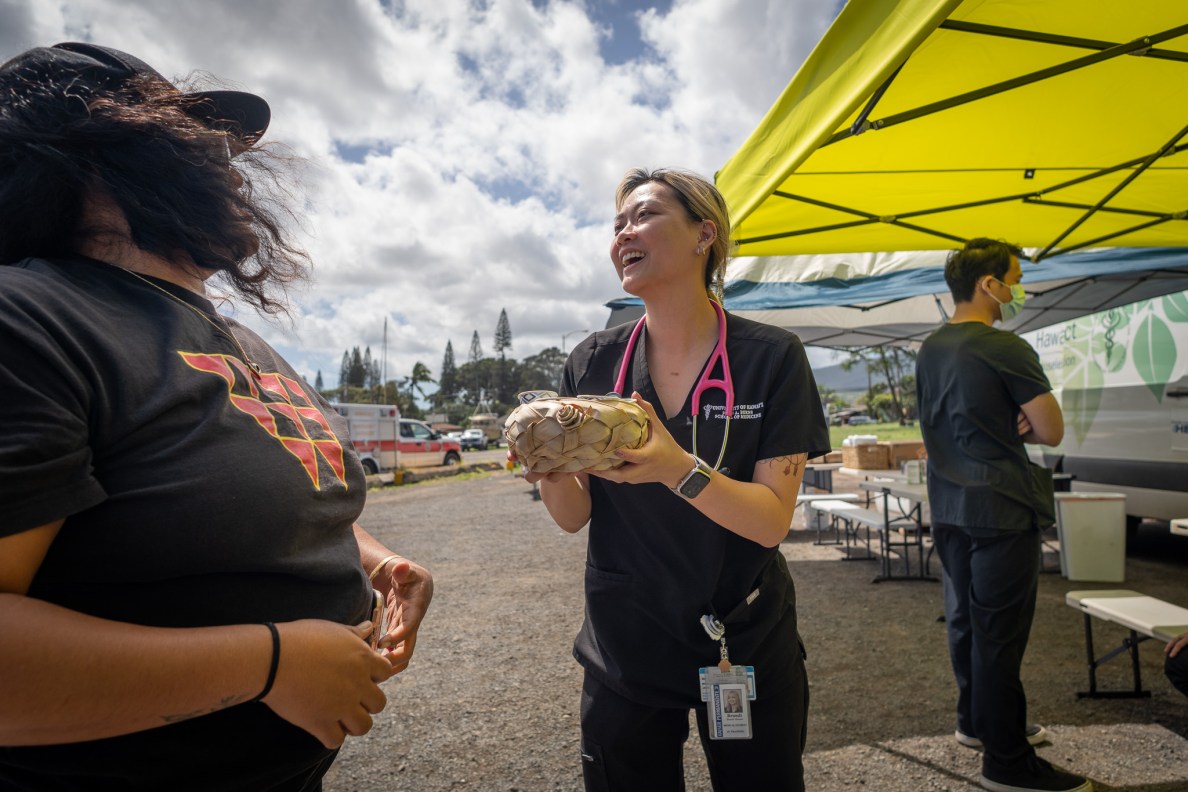
Haleiwa resident Sylvia Paulsen, 85, jokes with student doctor Kira Morikawa at a mobile clinic at Ali'i Beach Park March 26, 2026. Students from John A. Burns School of Medicine (JABSOM) staffed a clinic for area residents affected by flooding in Haleiwa and Waialua. (Craig Fujii/Civil Beat/2026)
Haleʻiwa resident Sylvia Paulsen, 85, jokes with student doctor Kira Morikawa at the mobile clinic set up at Ali’i Beach Park by the John A. Burns School of Medicine at the University of Hawaiʻi. (Craig Fujii/Civil Beat/2026)

Sylvia Paulsen stopped by a pop-up clinic set up on the grounds of Ali’i Beach Park in Haleʻiwa on Thursday, thinking the visit would be a quick in and out. Just a couple of inhalers to help with asthma made worse by the humidity that accompanied the Kona low storm.

It turns out that it wasn’t as easy and fast for the 85-year-old as a visit to Matsumoto’s Shave Ice nearby, even though parking was plentiful and there was no waiting thanks to a full staff of student doctors from the John A. Burns School of Medicine.

Student doctors and attending physicians, right, prepare for their clinic at Ali'i Beach Park in Haleiwa March 26, 2026. The students provided care to local residents affected by recent flooding. (Craig Fujii/Civil Beat/2026)
Student doctors and attending physicians prepare for their clinic at Ali’i Beach Park in Haleʻiwa where they provided care to local residents affected by recent flooding. (Craig Fujii/Civil Beat/2026)
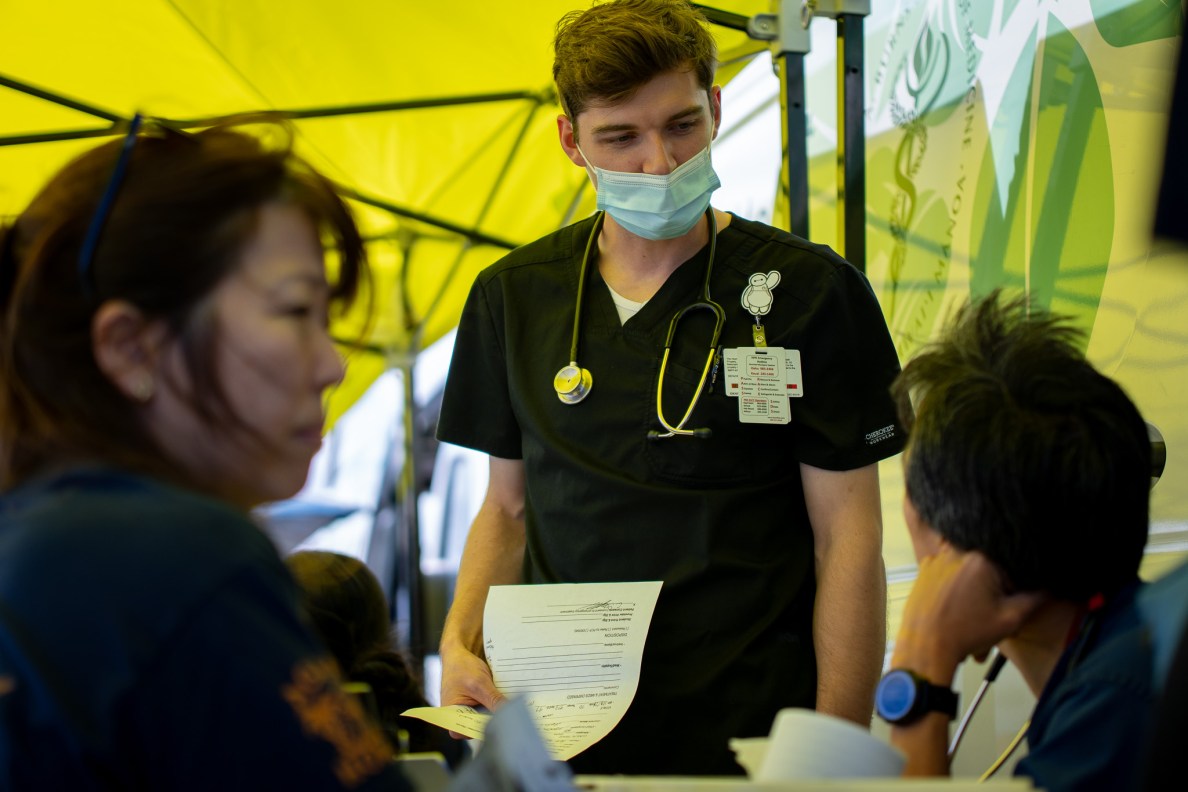
Student doctor Lincoln Hunt, center, presents his case to attending physician Yusuke Kobayashi, right, at a mobile clinic at Ali'i Beach Park in Haleiwa March 26, 2026. Physician Tracie Hata is at left. Students at John A. Burns School of Medicine (JABSOM) staffed the clinics to aid local residents affected by flooding in Haleiwa and Waialua. (Craig Fujii/Civil Beat/2026)
Student doctor Lincoln Hunt presents his case to attending physician Yusuke Kobayashi at the mobile clinic. (Craig Fujii/Civil Beat/2026)

Two mobile clinic vans filled with supplies for wound care and a limited supply of medications parked next to several tables set up under yellow tents. Visits there were structured much like a visit to a doctor’s office, too, minus any available on-site lab work or other diagnostic tests.

But since the student doctors did not have a patient’s electronic health history available, they had to ask questions — a lot of them.

For Paulsen, it ranged from chronic conditions to current medications, from allergies to surgeries.

Other patients came for mild respiratory issues like Paulsen’s, but also muscle and joint pain, skin injuries, and stomach issues with nausea, vomiting and diarrhea. Some felt certain they had been exposed to noxious material and wanted to get checked out.
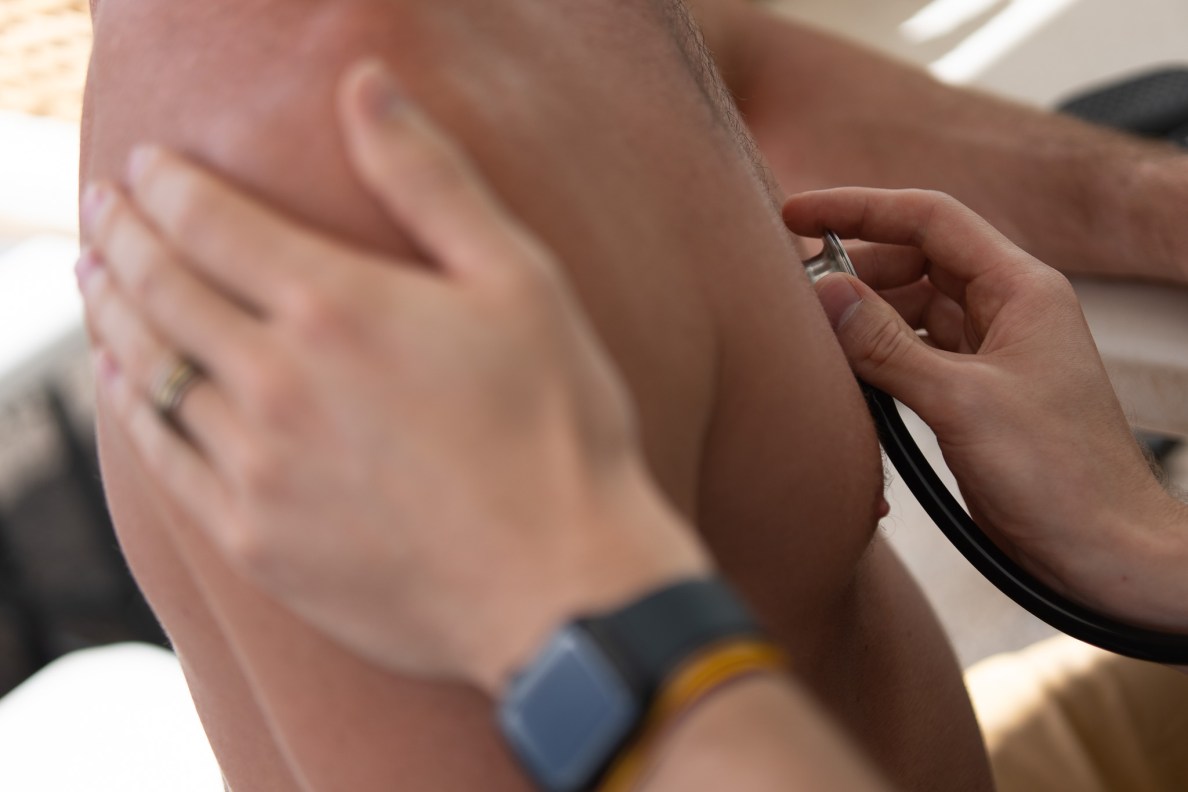
The hands of student doctor Lincoln Hunt listens to the heart of Craig Gasque (cq) during a mobile clinic visit at Ali'i Beach Park in Haleiwa March 26, 2026. Students at John A. Burns School of Medicine (JABSOM) staffed the clinics to aid local residents affected by flooding in Haleiwa and Waialua. (Craig Fujii/Civil Beat/2026)
Student doctor Lincoln Hunt listens to the heart of Craig Gasque during a mobile clinic visit at Ali’i Beach Park. (Craig Fujii/Civil Beat/2026)

Beyond their flood-related ailments, the only reminders that the area was ravaged by torrential rainfall were large potholes filled with water.

The mobile clinic is usually used in conjunction with a homeless outreach program founded in 2005 by Dr. Jill Omori, the medical school’s education director. By mid-week several dozen patients had been seen.

The Queen’s Medical Center provided another tent for psychological and social services concerns.
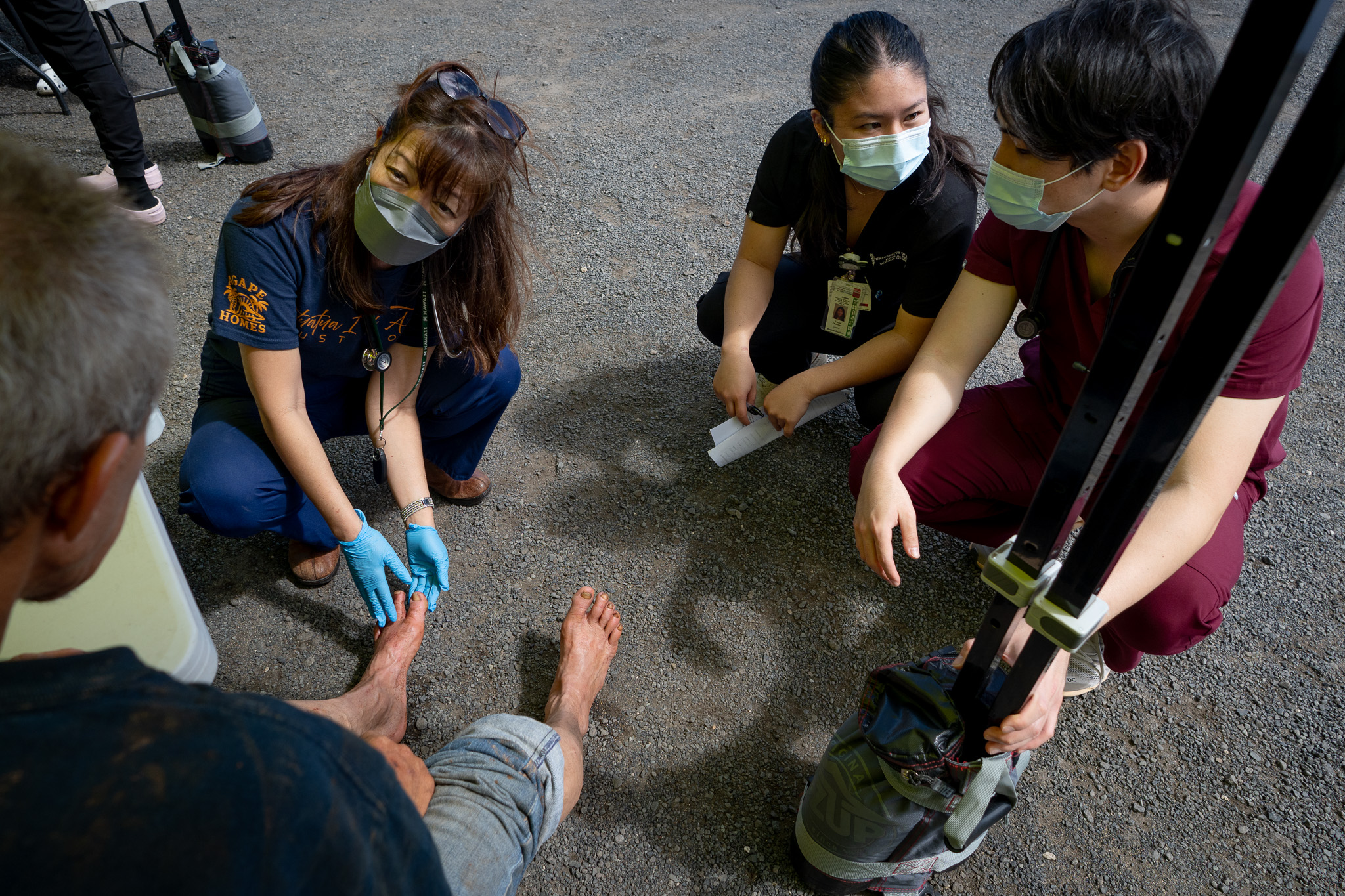
Physician Tracie Hata, left, examines a man's feet, injured by persistent wetness during recent floods, with student doctors Tracie Okumura and Sean Choi at Ali'i Beach Park in Haleiwa March 26, 2026. Students at John A. Burns School of Medicine (JABSOM) staffed the clinics to aid local residents affected by flooding in Haleiwa and Waialua. (Craig Fujii/Civil Beat/2026)
Physician Tracie Hata, left, examines a man’s feet, injured by persistent wetness during the recent floods, with student doctors Tracie Okumura and Sean Choi. (Craig Fujii/Civil Beat/2026)
Student doctor Tracie Okumura, receives a woven bowl of coffee cups from Andreanna Kaluhiokalani, left, as she and other students from John A. Burns School of Medicine provided on-site care to local residents at Ali'i Beach Park in flood-ravaged Haleiwa March 26, 2026. Kaluhiokalani's family owns the coffee shop, Love Like Buttons. (Craig Fujii/Civil Beat/2026)
Student doctor Brandi Mikami receives a woven bowl of coffee cups from Andreanna Kaluhiokalani, whose family owns the coffee shop, Love Like Buttons. (Craig Fujii/Civil Beat/2026)

The student doctors are planning to work in a variety of specialties, from general surgery to obstetrics and gynecology. Several have their eye on internal medicine, and at least one is planning on entering the emerging field of medical pediatrics, which is more common on the East Coast.

Student doctor Michelle Kimura plans to be a general surgeon. She grew up on Oʻahu and also considered law school as a Villanova undergraduate. Either profession was “finding a way to be of service to my community,” she said.

The pop-up clinic started Monday and plans to stay open for Haleʻiwa and Waialua residents through Saturday, from 9 a.m. to 3 p.m. each day.

Civil Beat’s community health coverage is supported in part by the Atherton Family Foundation.

About the Author

What it means to support Civil Beat.

Supporting Civil Beat means you’re investing in a newsroom that can devote months to investigate corruption. It means we can cover vulnerable, overlooked communities because those stories matter. And, it means serve you. And only you.

Donate today and help sustain the kind of journalism Hawaiʻi cannot afford to lose.