

Behind The Scenes: This Puppet Show Took Years To Pull Together
Production on “Panji and the Lost Princess” — a large-scale Balinese shadow puppet and dance show at the University of Hawaiʻi — began more than two years ago. The show will run for only six performances.

The wide-ranging archipelago that makes up modern Indonesia was the birthplace of shadow puppetry, called wayang, an art form that scholars say dates back more than 1,000 years.
This ancient form of entertainment has been meshed with Balinese-style dance in a modern reimagining of a classic Southeast Asian folk tale by the University of Hawai’i Mānoa’s Department of Theatre & Dance and the John F. Kennedy Theatre.
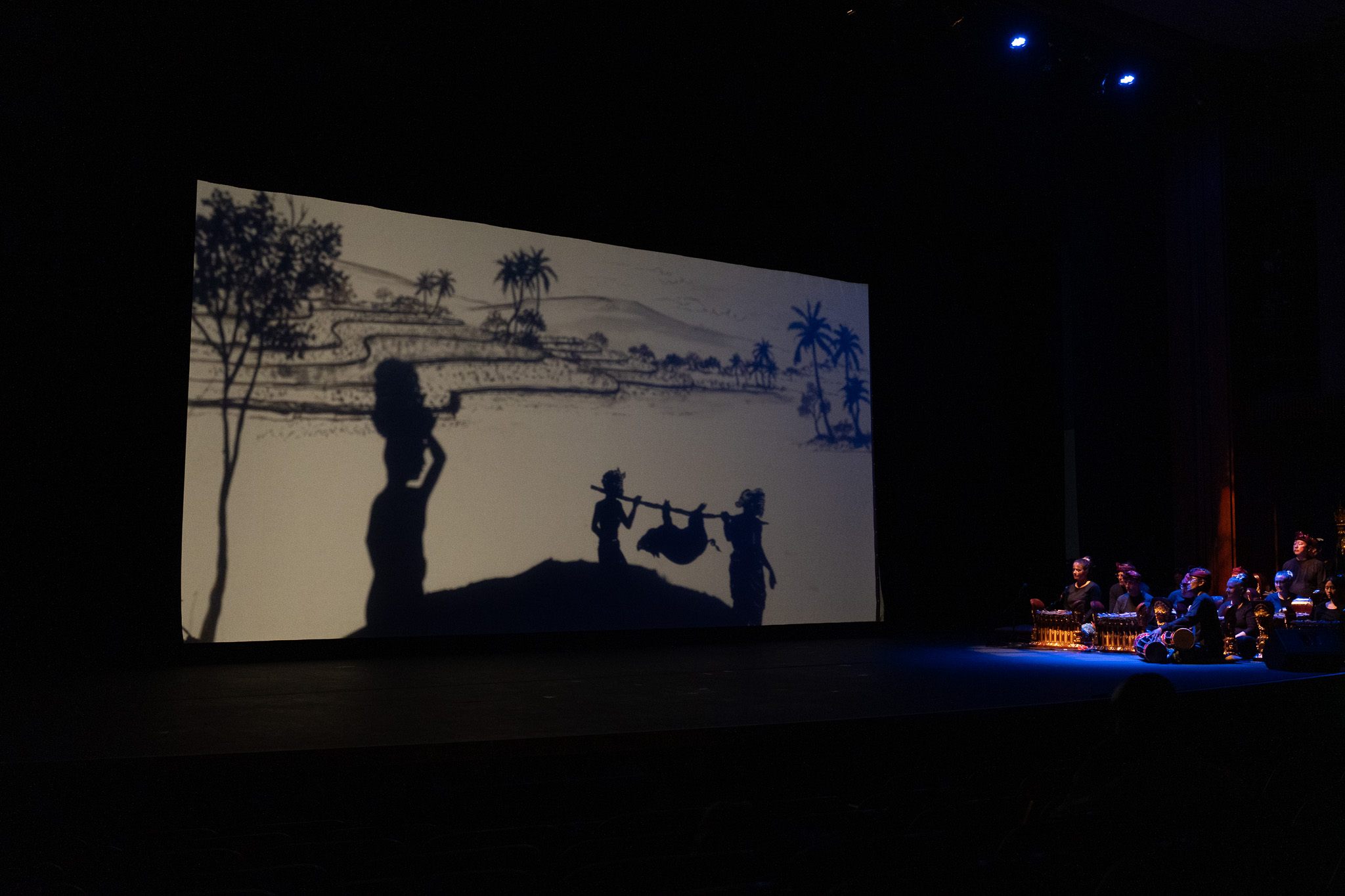
Traditional shadow puppetry is performed on a small four-by-seven-foot screen, wherein a single puppeteer can manipulate several flattened puppets in front of a single light source that projects the figures onto the screen.
The university production exchanges this for a big screen, live cast members and several rear-projecting lights, said I Madé Moja, Balinese master artist and co-director of the production. The flattened puppets are also used.

This mix of modern techniques is becoming more popular in Bali. It was pioneered in the West in the 1980s by Larry Reed, a scholar and master of shadow puppetry, with whom I Madé Moja worked. Reed founded ShadowLight Productions in San Francisco in 1972. He passed away in January at age 81.
This production of “Panji and the Lost Princess” features fantastically costumed cast members, handmade design, and music performed by a gamelan, an Indonesian-type ensemble known for its rich, layered and rhythmic sound, led by I Madé Widana. Cast includes UH Mānoa theatre and dance students, local artists and keiki.
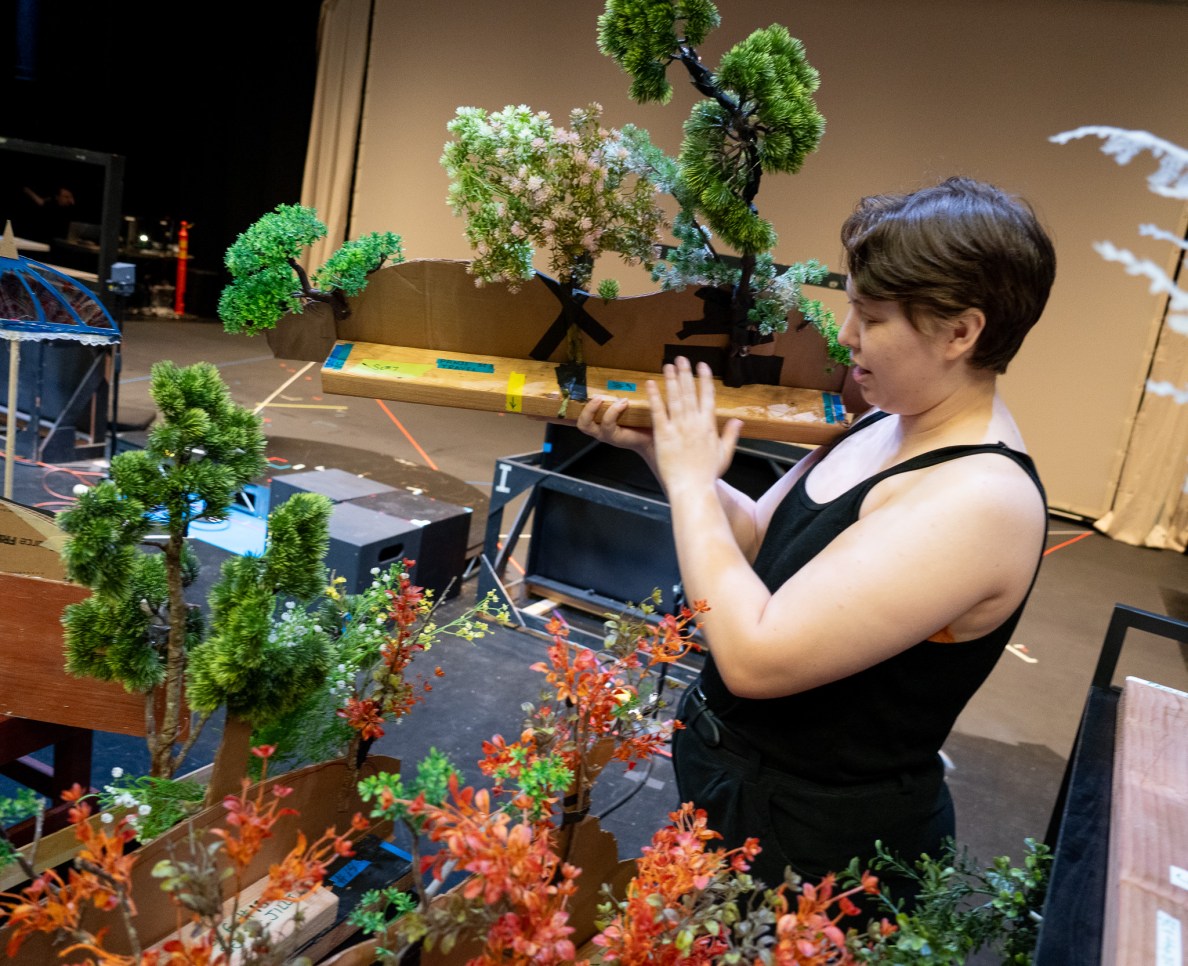


“It’s a modern, innovative way to integrate traditional shadow puppetry with dance and live gamelan music,” said UH theatre and dance professor Kirstin Pauka. “It’s kind of a cinematic version.”
Using a large screen, intricate split-second set changes, lighting and timing create a movie-like feel that is as big a part of the production as the music of the gamelan ensemble and the cast.
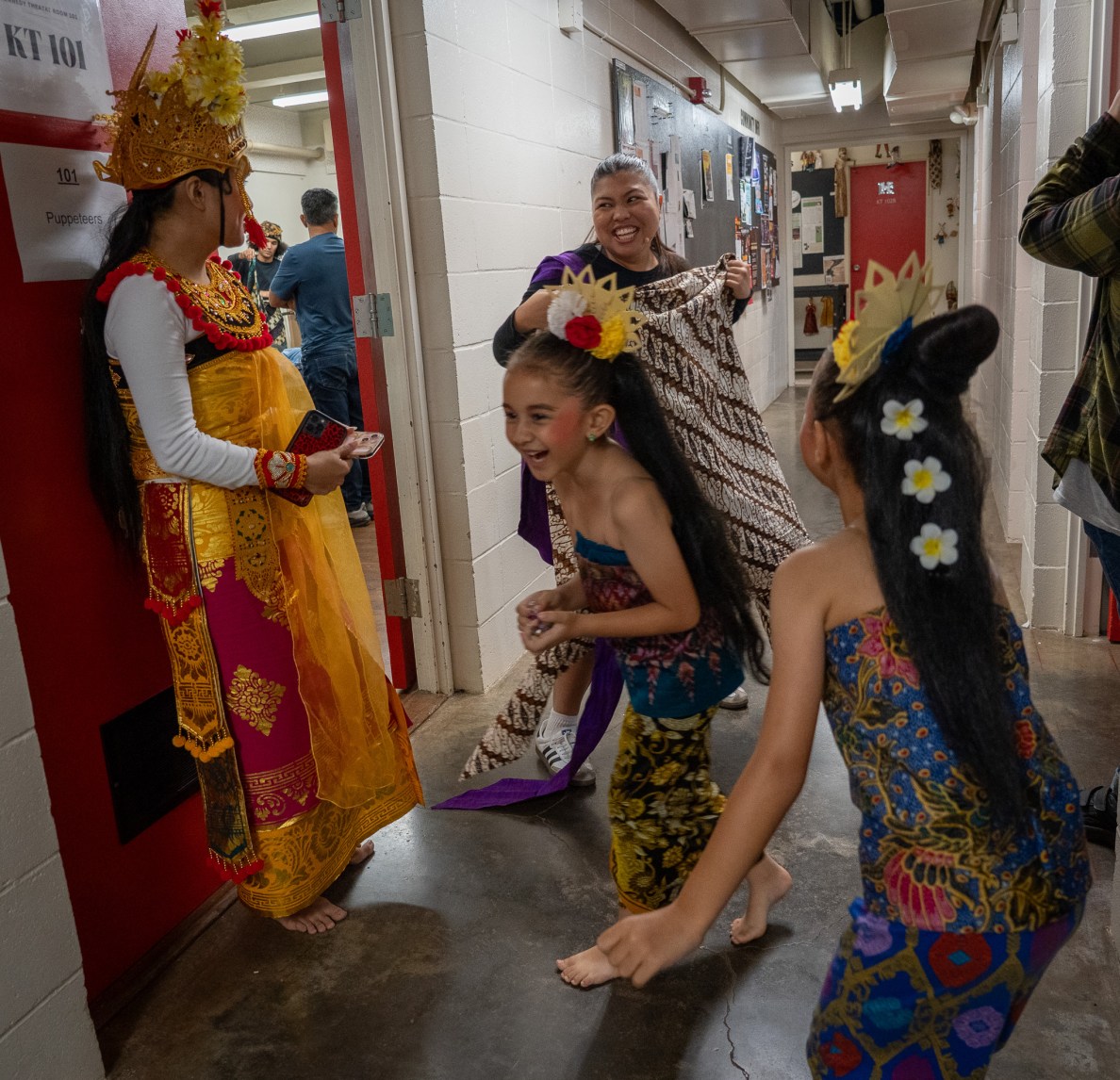
The timeless story of Prince Panji and Princess Langke Sari is about two lovers who are separated by time, circumstance and great disguises, until they finally recognize one another and — wait for it — live happily ever after.
The production began two and a half years ago, with musicians preparing for the last year and a half. Cast members have been at work since October.
All this, for six performances.
“The end product is not the main thing,” Pauka said. “The educational process for the students — that’s the main thing.”


The show opened on April 17 and will have its final performance on April 26.
