

Baby Monk Seal Is Oʻahu’s Newest Celebrity
Kaimana Beach has become a favored birthing place for monk seal mom Kaiwi.
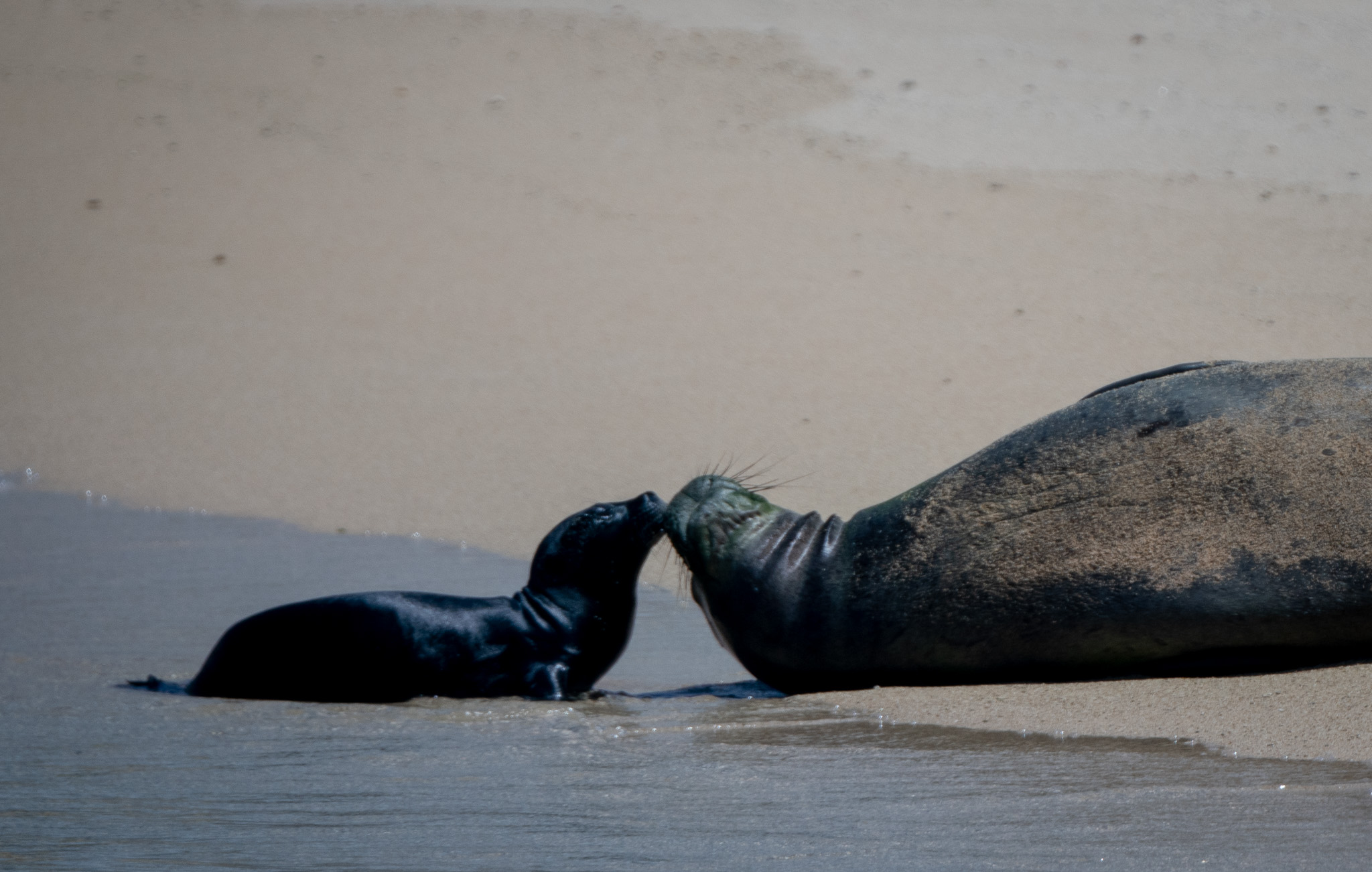
Since giving birth to her seventh pup on May 3, monk seal Kaiwi has spent much of her time resting alongside her newborn at Kaimana Beach. Even in such quiet moments, crowds have remained glued to the pair’s smallest movements.
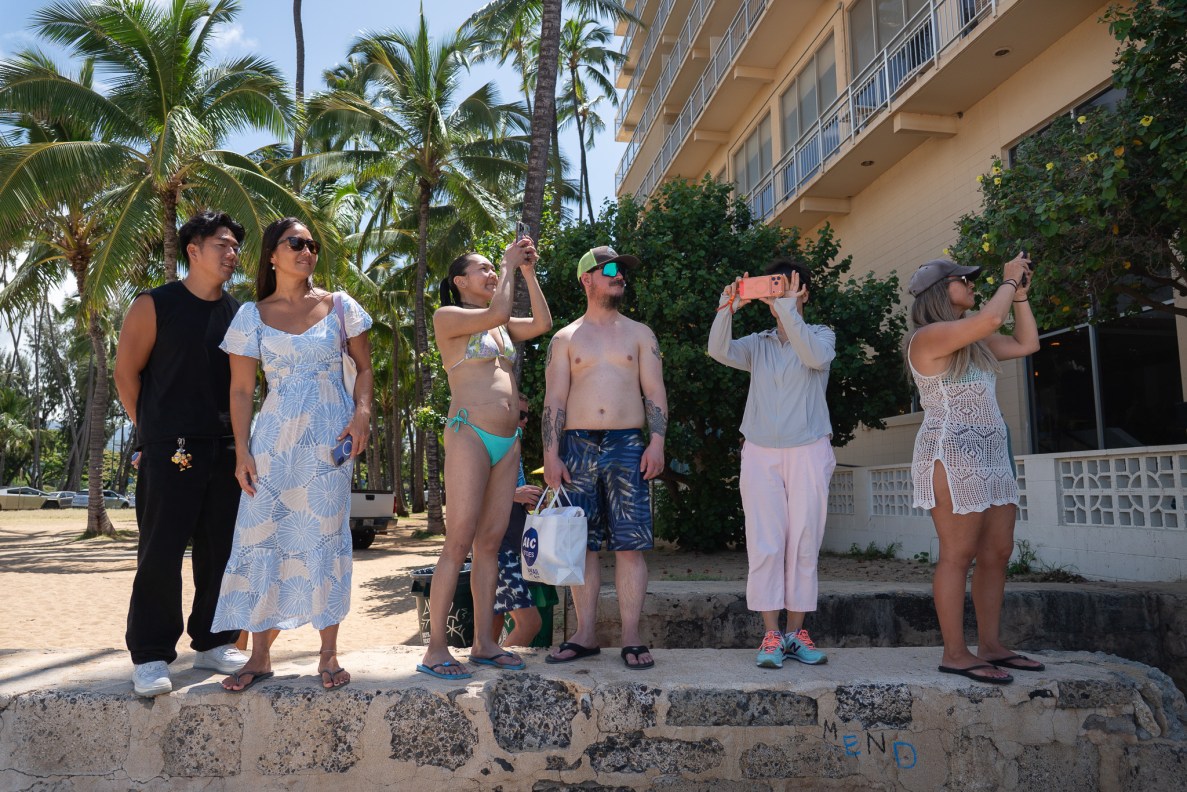

This is not the first time Kaimana Beach has become a nursery for monk seal ʻohana. In 2017, a monk seal named Rocky gave birth at the crowded beach, becoming the first recorded monk seal birth there since the species was listed as endangered in 1976. Kaiwi — also known as RK96 — has continued that legacy, returning four times to give birth at Kaimana.
Hawaiʻi Marine Animal Response staff and volunteers quickly placed fencing and warning signs along the entire beach, leaving a small designated access point for swimming. When swimmers got too close to the pair, staff reminded them to keep a safe distance and stay within the designated area.
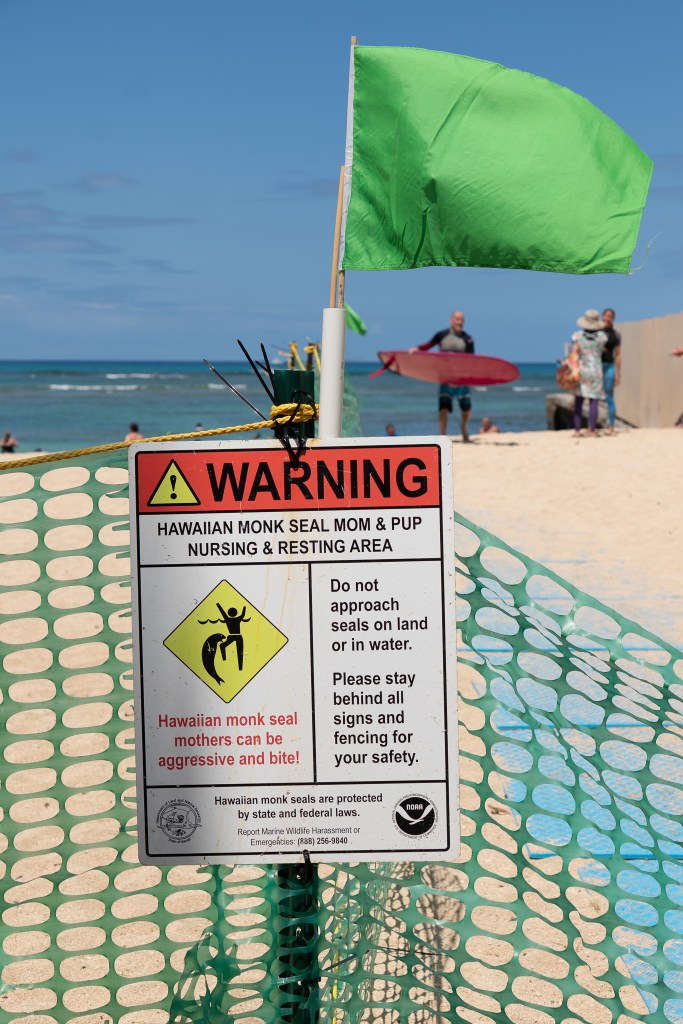
Clara Orr, field operations supervisor at the marine animal nonprofit, said the next several weeks are especially important for the mother and pup, and that when the public respects barriers and follows instructions from officials, it makes it easier for the pair to nurse and bond without unnecessary disturbances.

On Thursday afternoon, four days after the pup was born, a crowd of visitors watched quietly from behind the barrier, observing one of Hawaiʻi’s rarest marine mammals start a new life along the busy coast of Waikīkī.
People who stood shoulder to shoulder waiting for any slight movement of Kaiwi and her newborn resting on the sand of a busy beach said the moment felt like a unique reminder of Hawaiʻi’s connection to its native wildlife.
Amber Herrera, a University of Hawaiʻi Mānoa college student from California, said seeing the monk seal and her pup up close was something she could not pass up before heading home for summer break.
“I was beyond excited,” Herrera said. “What a rare sight to see, but also to be this close, even from a distance, to look at them is so special.”
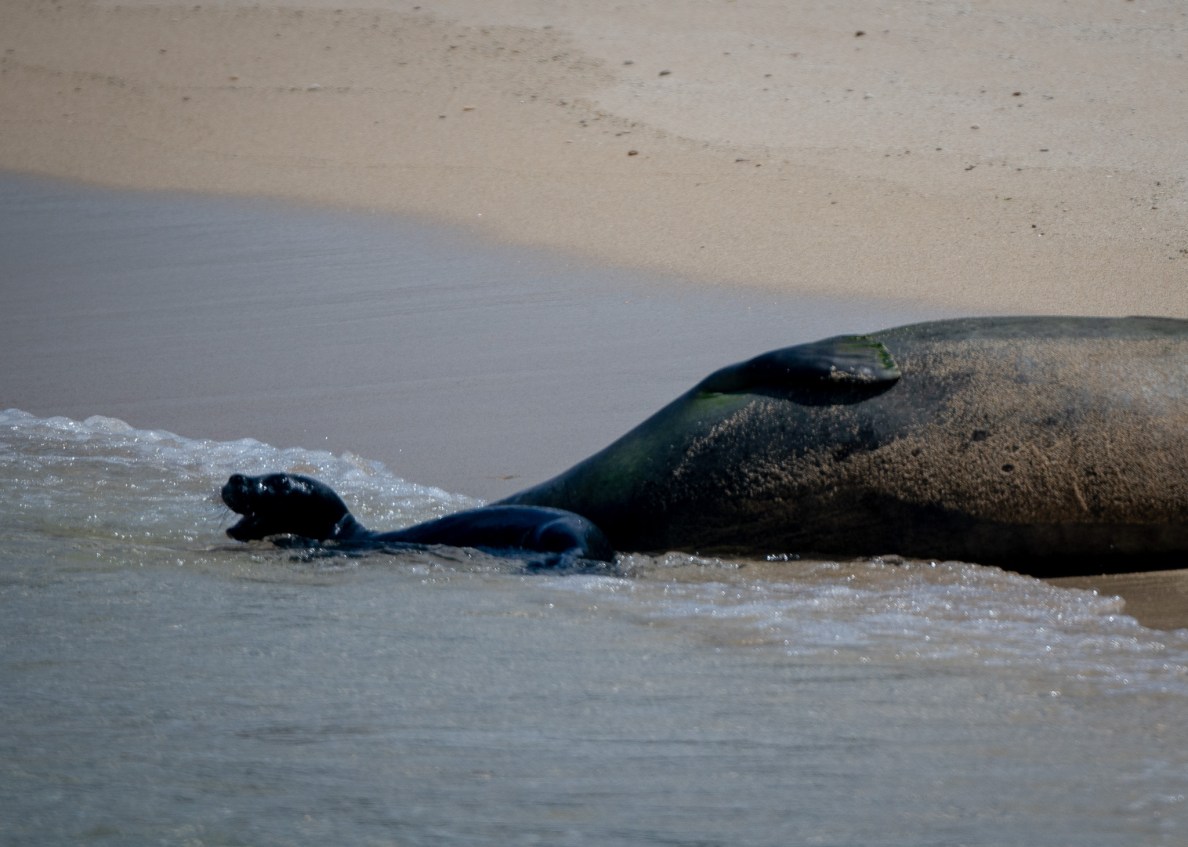
Others had been closely following Kaiwi’s movements long before the pup arrived.
Pamella Mathis, a photographer, had been tracking the seal since March after seeing her swim along Waikīkī’s coastline and noticing her girth.
After finally spotting Kaiwi with her pup, Mathis spent nearly half an hour photographing them from a distance. She described the experience as unforgettable.
“It was amazing. It really was amazing,” she said. “Being here on an island and experiencing the wildlife like this, it’s just amazing, really.”
Sam Berinobis, another monk seal admirer, saw the birth as a hopeful sign for the endangered species.
“To see her reproducing, bringing more seals around and stuff like that,” he said, “it’s great for the island and for their species.”
Civil Beat’s coverage of climate change and the environment is supported by The Healy Foundation, the Marisla Fund of the Hawai‘i Community Foundation and the Frost Family Foundation.

