


It was 1993, and Victoria Snyder wanted a baby.
The Hawaiʻi resident went to William McKenzie — a popular and renowned gynecologist on Oʻahu’s North Shore — and requested to be inseminated with sperm from an anonymous Filipino donor. The following year, she gave birth to twin boys.
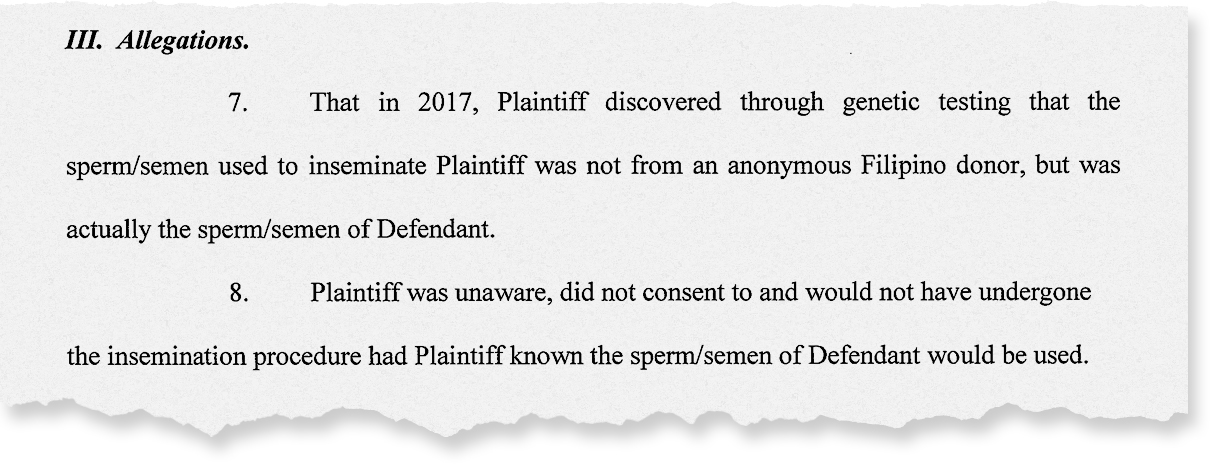
Decades later, when her sons were 23, they made a shocking discovery: Genetic testing showed their father was not an anonymous donor Snyder selected. It was the doctor, according to a civil lawsuit Snyder filed in 2019 seeking damages.
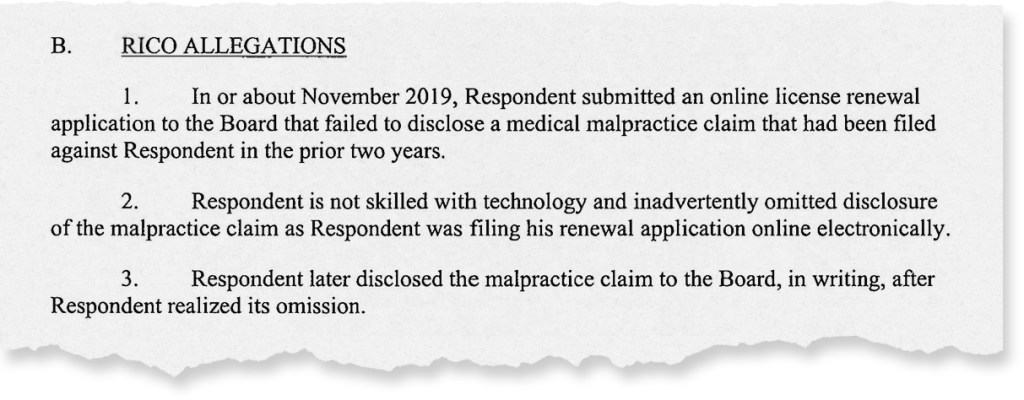
McKenzie denied using his own sperm in the insemination procedure without her consent, according to the court documents, and the case was quietly resolved the following year.
The claims about McKenzie’s fertility practices only surfaced publicly last month after an Instagram user, who said she was a former patient of McKenzie’s, accused him of “artificially inseminating dozens of women with his semen” — a tally Civil Beat was unable to verify. Hundreds of commenters responded, some in horror, others in disbelief. Some identified themselves as his offspring.
When Civil Beat contacted the person who posted the video, she declined to provide additional information to support her claims or explain why she was talking about the matter now, then hid the video from the reporter.
Even with much unknown, the allegations have exposed a startling fact: victims of this kind of deceitful insemination have little recourse in Hawaiʻi.
The state has no specific law prohibiting it, and existing laws against sexual assault and fraud would be difficult, if not impossible, to apply to these circumstances, according to legal experts.
Across the country, doctors accused of inseminating their patients with their own sperm — without the patients’ consent — rarely face legal consequences. While at least 50 such cases have become public in the United States, few perpetrators have faced criminal charges. Few were forced to stop practicing.
Attorneys based locally and on the mainland tended to say the crime that would most closely fit the allegations would be deceptive business practices — a misdemeanor, which Jody Madeira, a fertility fraud expert and law professor at Indiana University Bloomington, said feels like a low-level charge for an act with such devastating and wide-ranging consequences.
Fertility fraud affects not only the mother but also the children, who are often the ones who make the shocking discovery as adults. It can have serious medical implications because those offspring don’t know their own medical histories.
“How do you tell your mom that, effectively, she was sexually violated by this doctor decades ago?” Madeira said. “There are no cultural scripts for that.”
‘Did Not Consent’
Known cases of doctors illicitly inseminating patients with their own sperm date back to the 1940s, Madeira said, but cases started to proliferate with the advent of home genetic testing websites, like 23andMe and ancestry.com. With them, came widespread publicity.
The 2022 Netflix documentary “Our Father” told the story of Donald Cline, a fertility doctor in Indiana who is believed to have fathered at least 50 children. And the 2020 documentary “Baby God,” on HBO, focused on Quincy Fortier, a Nevada doctor who was once that state’s physician of the year before it was revealed he had fathered dozens of children through fraudulent insemination.
Fertility fraud affects not only the mother but also the children, who are often the ones who make the shocking discovery as adults.
Awareness also led to high-profile litigation. Doctors in other states who have garnered international attention for doing the same thing and faced cases have resulted in judgments and settlements worth millions of dollars.
None of that touched Hawaiʻi in any significant way until Victoria Snyder’s lawsuit, which represents the first known accusation against a Hawaiʻi doctor.
Court records show lawyers interviewed Snyder and her children under oath before the parties mutually agreed to end the suit in 2020. Terms of that agreement, including whether money exchanged hands, are not public. Everyone involved, including McKenzie and attorneys on both sides, has either declined to comment or not responded to Civil Beat’s interview requests.
But Snyder was not the only former patient with children fathered by McKenzie, according to members of two families who spoke to Civil Beat on the condition of anonymity, fearing public attention could harm their families. That means the twins have multiple half-siblings.
Civil Beat generally uses on-the-record sources. However, we occasionally use unnamed sources when a source is sharing important information we wouldn’t have otherwise been able to obtain and when they could face negative consequences for speaking publicly. The reporter and at least one editor must know the identity of the source and the use of anonymity must be approved by a senior editor. You can read more about our anonymous sources policy here.
When Civil Beat visited McKenzie’s Waialua home, the doctor’s wife said to “go through legal” and asked the reporter to leave the property.
Thomas Cook, the attorney who represented McKenzie in the Snyder lawsuit, declined to comment for this story.
McKenzie, who worked largely as a private practice OB-GYN in Wahiawā and Mililani for more than 50 years, remains a local legend.
Over his decades of practicing medicine, he delivered more than 9,000 babies, according to MidWeek. He appears to have been both popular and beloved by many of his patients. His offices, now closed, still boast dozens of glowing online reviews.
In 2019, a local resident posted in a Facebook group called “You know you’re from Wahiawā if…” by saying “you, your children or BOTH were delivered by the one and only” Dr. McKenzie – whom the poster called the GOAT, greatest of all time.
Tina Sterling, who started seeing McKenzie at his Wahiawā practice in 1982 when she was pregnant with her daughter, said he was the best doctor she ever had. Sterling, who currently lives in Texas but lived in Sunset Beach at the time, said almost all of the women on the North Shore had McKenzie as their doctor and everyone loved him.
“He just took the time to talk to you about things, like anything you were going through,” she said. “He was a friend and a doctor.”
After delivering more than 9,000 babies over a 54-year career of practicing medicine, longtime #Wahiawa physician Dr. William McKenzie retired from private practice Sept. 1. Dr. Alan Kojima took over the obstetrician-gynecologist practice. #midweekhawaii #hawaii #centralvoice pic.twitter.com/Dl9zAXYwFb
— MidWeek (@MidWeekHawaii) September 27, 2021
Snyder’s lawsuit offers a different view of the doctor. Learning decades later that McKenzie had used his own sperm to inseminate her caused “severe emotional, psychological and physical damages,” the 2019 complaint says. It accuses him of medical negligence, breach of contract and fraud.
She never would have undergone the insemination procedure had she known McKenzie’s sperm would be used, the complaint says. She was unaware and “did not consent.”
On April 30, 2020, the parties submitted a stipulation for dismissal with prejudice, meaning the claim can never be refiled. In civil cases, stipulations for dismissal are usually filed after a settlement. William Sink, who represented Snyder and her children, said he could not discuss the case except to say that it had been resolved.
McKenzie continued to practice until he retired in 2021.
Few Options For Accountability
Colorado had no law to cover fertility fraud when someone came into attorney Patrick Fitz-Gerald’s office about seven years ago with what felt like a crime. Genetic testing was becoming the stuff of Mother’s Day and Christmas gifts. Through 23&Me, the person had learned they had siblings and suspected their mother’s doctor, Paul Jones, was their father.
As a former prosecutor now working in private practice, the case piqued Fitz-Gerald’s interest. He grabbed the three-ring binder of criminal statutes from his shelf and started leafing through, starting with sexual assault. That requires nonconsensual touching, and the patient had consented to the doctor doing the procedure. Because she agreed to use any anonymous donor’s sperm, fraud statutes didn’t apply either. Fitz-Gerald was stuck.
“I kept thinking and trying to bang my head against the wall. And unfortunately, I came back to this person and said, ‘I don’t think what he did is against the law. I don’t think it’s a crime,’” he said. “And obviously they were aghast at that.”
Fitz-Gerald did file suit on behalf of nine families connected to the doctor in question. Some settled and received compensation. Others went to trial where juries found the doctor liable of multiple charges including civil battery, fraud, intentional injury and outrageous conduct.
Despite the juries’ findings, some of the doctor’s medical malpractice insurance companies wouldn’t pay out because the conduct had been intentional rather than negligent or accidental. The victims who went to trial didn’t get paid the full $8 million a jury determined they were owed.
The doctor didn’t face any criminal charges.
Current and former prosecutors disagree whether sexual assault statues apply here.
“We just flat out did not have a statute that directly covered the conduct that the doctor did,” Dan Rubinstein, a district attorney in Grand Junction, Colorado, said.
Mothers in Hawaiʻi who are inseminated with their doctor’s sperm would face similar challenges. While some fraud statutes might be relevant, current and former prosecutors disagree whether sexual assault statues apply here.
Attorneys said it would likely come down to several factors such as whether the patient had requested a particular donor and whether sperm alone actually counts as sexual contact or penetration.
Loretta Sheehan thinks the answer is yes. Putting anything into someone’s body is sexual penetration, according to the former prosecutor at both the federal level and in Honolulu, who now represents plaintiffs in medical malpractice claims in Hawaiʻi.
“They did not consent to have him put his sperm… into their bodies,” Sheehan said. “I think that it’s very clear: I don’t want your sperm. I don’t want you.”
But other current and former prosecutors weren’t as optimistic that a sexual assault charge would be successful in fertility fraud cases.

Hawaiʻi’s laws were designed for cases involving unwanted touching or penetration by force or threat or taking advantage of a vulnerable person. They weren’t intended to apply to situations where the wrongdoer is a medical professional performing what appears to be a clinical procedure, according to Joanne Hicks, an attorney who spent nearly 10 years in prosecutors’ offices on Oʻahu, Kaua‘i and Maui.
Prosecutors, Hicks said, could face significant difficulties proving that the patient’s consent was so undermined by deception that the insemination became criminal, that the person performing the procedure knew the sperm had been fraudulently swapped and even that insemination qualifies as a sexual act under the state’s definition.
“If I were reviewing the case as a prosecutor, it would be a big stretch,” she said.
Hicks would be reluctant to put the victim through the trauma of testifying in court if she wasn’t sure she could win.
A better strategy, current and former prosecutors said, would be to go after the deceit inherent in the illicit insemination. Deceptive business practices — a charge used when a merchant sells less than promised or mislabels goods — can be charged as a criminal offense, although it’s only a misdemeanor punishable by no more than a year of incarceration. Prosecutors could also consider charges such as fraud or theft, which can lead to heavier sentences of up to 10 years.
“I’d try to be as creative as possible,” said Randal Lee, a former Hawaiʻi judge and prosecutor.
Victims have more options on the civil side. One is a medical malpractice lawsuit against the doctor for negligence or providing treatment below the nationally recognized standard of care. In Hawaiʻi, victims of malpractice have six years from the date of injury or two years after they discover the problem.
In cases where victims weren’t aware they had been harmed because of the doctor’s deception, the statute of limitations could be paused, according to Sheehan. So if victims of fertility fraud didn’t know the doctor used his own sperm until decades after the child was born, they still may be able to pursue a malpractice claim.
There are other civil options too, ranging from battery to unfair and deceptive acts and practices. But that doesn’t feel like enough to Lee.
“Frankly, it should be a criminal offense, in my opinion,” he said, “because it’s a violation of someone’s body, their privacy.”
‘Easiest Bill In The World To Pass’
Around the country, states are realizing their laws aren’t adequate to handle fertility fraud cases and some are trying to bridge that gap.
Once Fitz-Gerald figured out the doctor’s use of his own sperm wasn’t a crime under Colorado law, he set out to compel lawmakers to change that. The state now has two statutes specifically covering fertility fraud – one that allows patients and their children to sue and one that makes it a crime. At least 14 states, including Indiana, Texas and South Dakota have taken similar steps, and New Jersey, North Carolina and others are considering passing laws this year.
The U.S. House of Representatives is also weighing a bill to make it a federal crime to “knowingly misrepresent the nature or source of DNA used in assisted reproductive technology” if the action involves interstate commerce.
If prosecutors in Hawaiʻi don’t see a clear way to press criminal charges against doctors illicitly inseminating patients with their own sperm, state Sen. Karl Rhoads wants the state’s legislators to make one.
“This will be the easiest bill in the world to pass,” he said. “because everybody would be appalled.”
Oklahoma is considering a bill that goes even further. It would make fertility fraud a felony punishable by at least 10 years in prison and require doctors to register as sex offenders. It also requires the licensing board to revoke a convicted doctor’s license — something that today almost never happens.
One gynecologist in Connecticut was allowed to keep practicing for decades, despite a $10,000 fine from the health department for using the “wrong man’s sperm” – his. Other doctors from Colorado to Texas have surrendered their license rather than face disciplinary action or investigation.
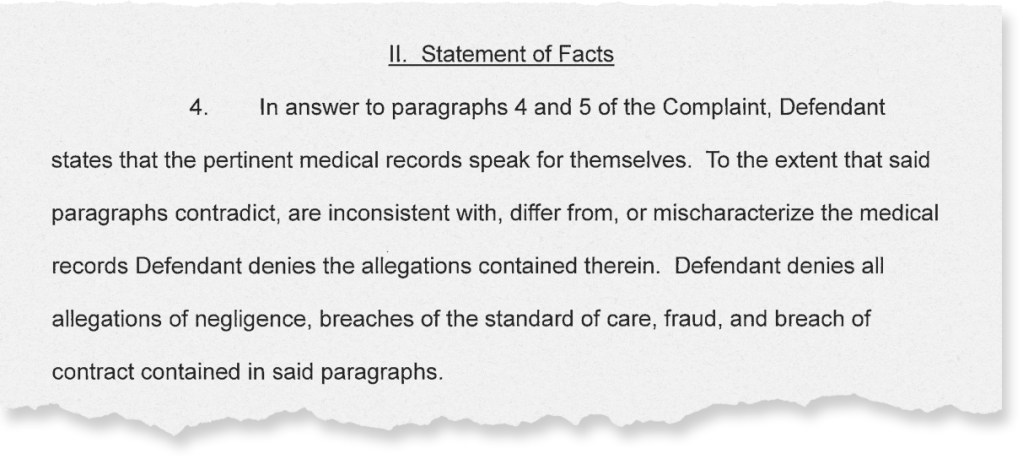
The main consequence McKenzie seems to have faced because of these allegations is a $750 fine for failing to inform the Hawaiʻi Medical Board of one malpractice claim, Snyder’s lawsuit, which he was required to disclose when applying to renew his medical license in 2019.
When asked whether the state investigated the allegations in Snyder’s case, William Nhieu, a spokesperson for the Department of Commerce and Consumer Affairs, did not respond. The Hawaiʻi Department of Commerce & Consumer Affairs, which oversees the medical board, declined requests for an interview. Civil Beat contacted multiple members of the board who served at the time McKenzie was fined. None responded.
In Hawaiʻi, the state’s medical board can revoke or suspend a doctor’s license for professional misconduct or violating standards of ethics. But a lawsuit accusing a doctor of misconduct doesn’t mean they will face any discipline by the licensing board. The office that investigates allegations of misconduct only gets “cursory information” about the outcome of lawsuits, Nhieu said. That means without cooperation from the patient, it would be challenging for the medical board to take disciplinary action.
The Hawaiʻi Medical Board did know about the Snyder lawsuit but never took away McKenzie’s license. As a result, although the 85-year-old is retired, he still holds an active medical license.
Civil Beat’s reporting on women’s and girls’ issues is funded in part by the Frost Family Foundation.
About the Authors
Madeleine Valera is a reporter for Civil Beat. You can reach her at mvalera@civilbeat.org or 808-978-7369.
Help power essential news and information