

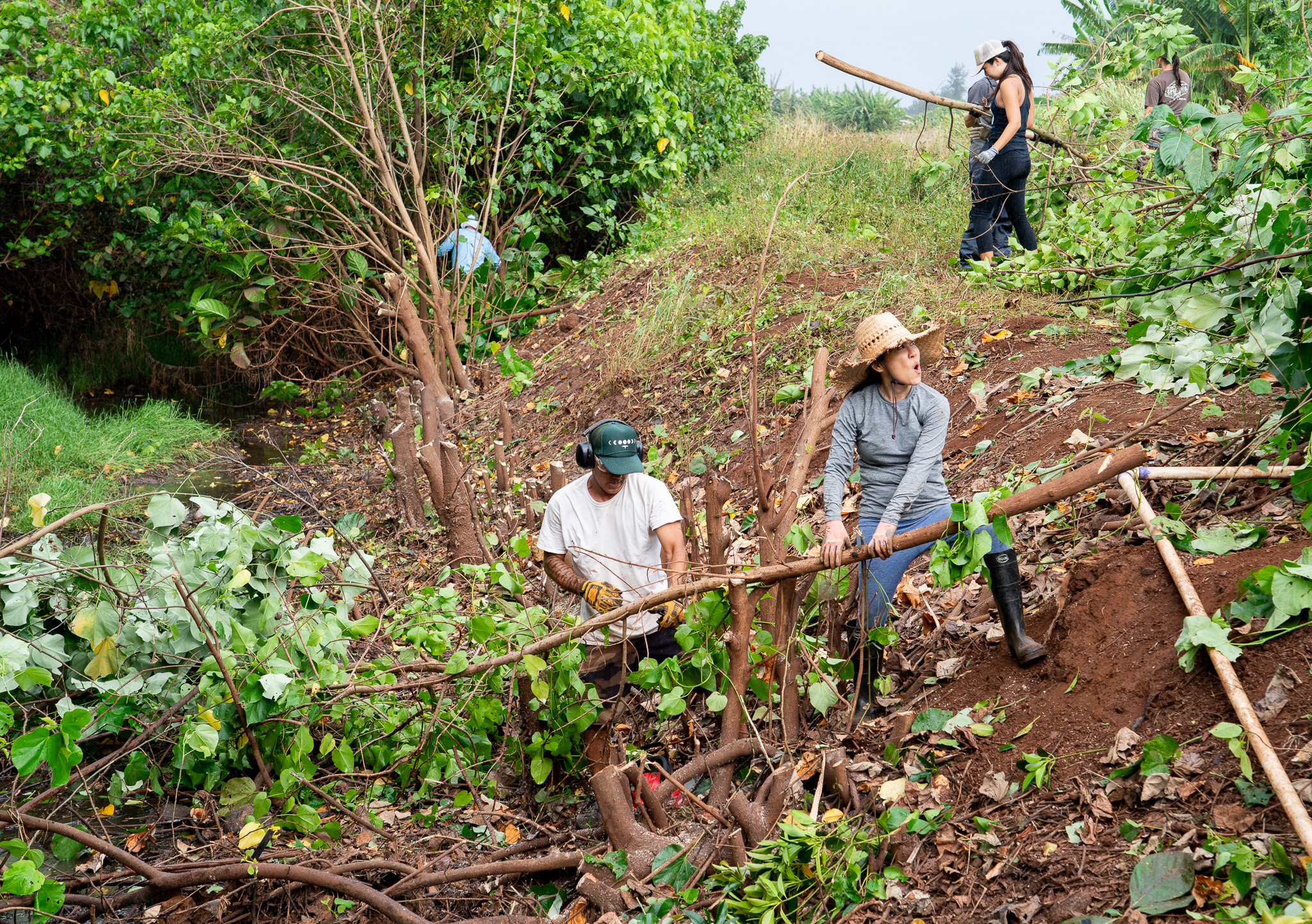
The rain clouds overhead last weekend in Waialua provided a visual reminder to volunteers of why they had gathered to spend a Saturday at Mill 6 Farms.
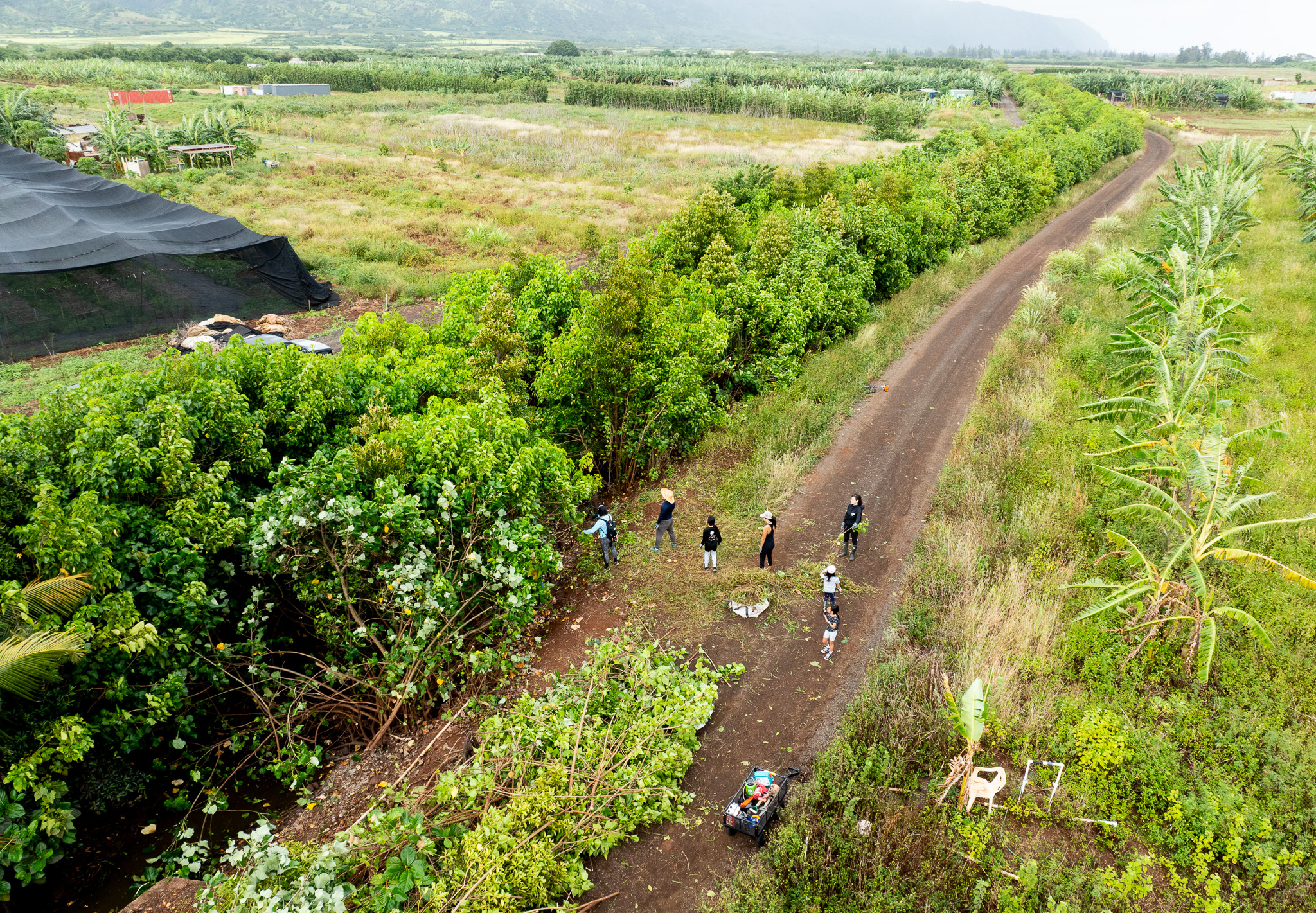
Just two months ago, Kona low storms had damaged many farmers’ crops and property. To lessen the impact of future storms, two dozen residents and volunteers from Wellspring Covenant Church came to clear hau, noni and invasive mangrove trees from the banks of drainage ditches.
“We didn’t want to do it right after (the storms) but we knew we had to do it,” said Waialua Farmers Co-op board president Grace Kekahuna.
Government agencies have thus far dragged their feet with regard to ditch clearing, Kekahuna said.
“They’re just assessing stuff,” Kekahuna said. “So at that point we’re just like, you know what, let’s just do it.”
Complicating the work is land ownership. With single owners, “like Dole, Castle & Cooke, it’s so easy to manage, right?” Kekahuna said. “Once it was sold to different people, then it’s kind of like, oh wait, do we do it? Are we supposed to touch the ditch?”
The approximately 250-acre property is currently owned by real estate developer Peter Savio, who purchased the former cane land from Dole in 2022 as part of a handshake agreement with the farmers cooperative. Under that agreement, farmers will eventually own their own piece of the current property so they can farm indefinitely. But it’s still unclear who’s ultimately responsible for the overgrowth.
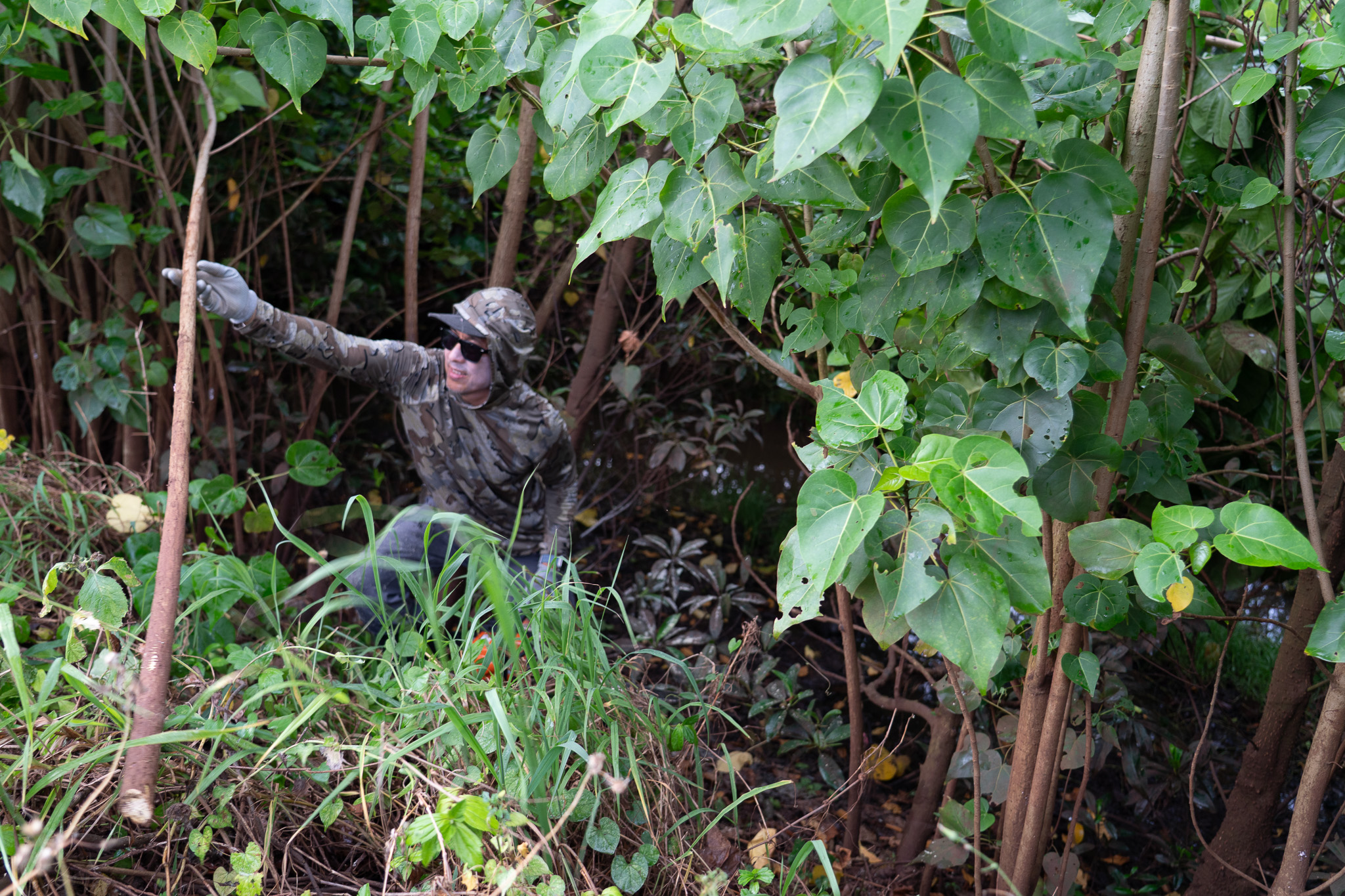
The banks along the drainage ditches at Mill 6 Farms are covered with tightly packed trees that keep banks and shorelines from eroding, which is why mangroves were brought to Molokaʻi in 1902 by the American Sugar Company. Other varieties were brought from Asia to Oʻahu, according to a 1998 paper by the U.S. Forest Service.
For farmlands, importantly, the alien trees also trap sediment, crowd out native flora and animal habitat, and their robust growth slows water flow, exacerbating flood risk. The trees can be so problematic that the state Department of Land and Natural Resources asked for mangrove mitigation in Waipahu in August 2022.

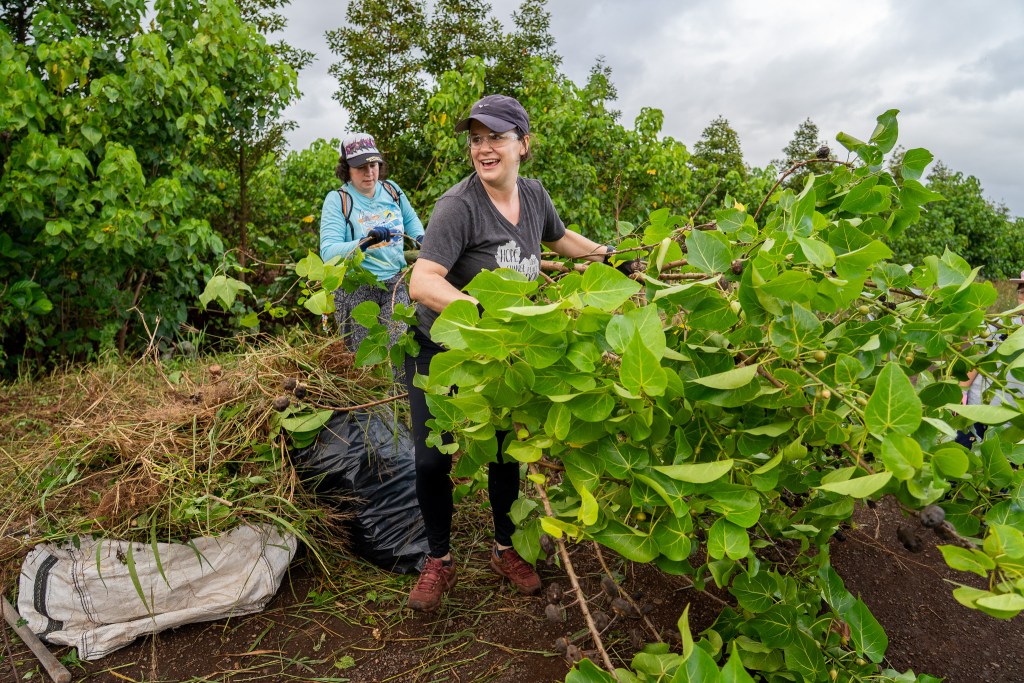
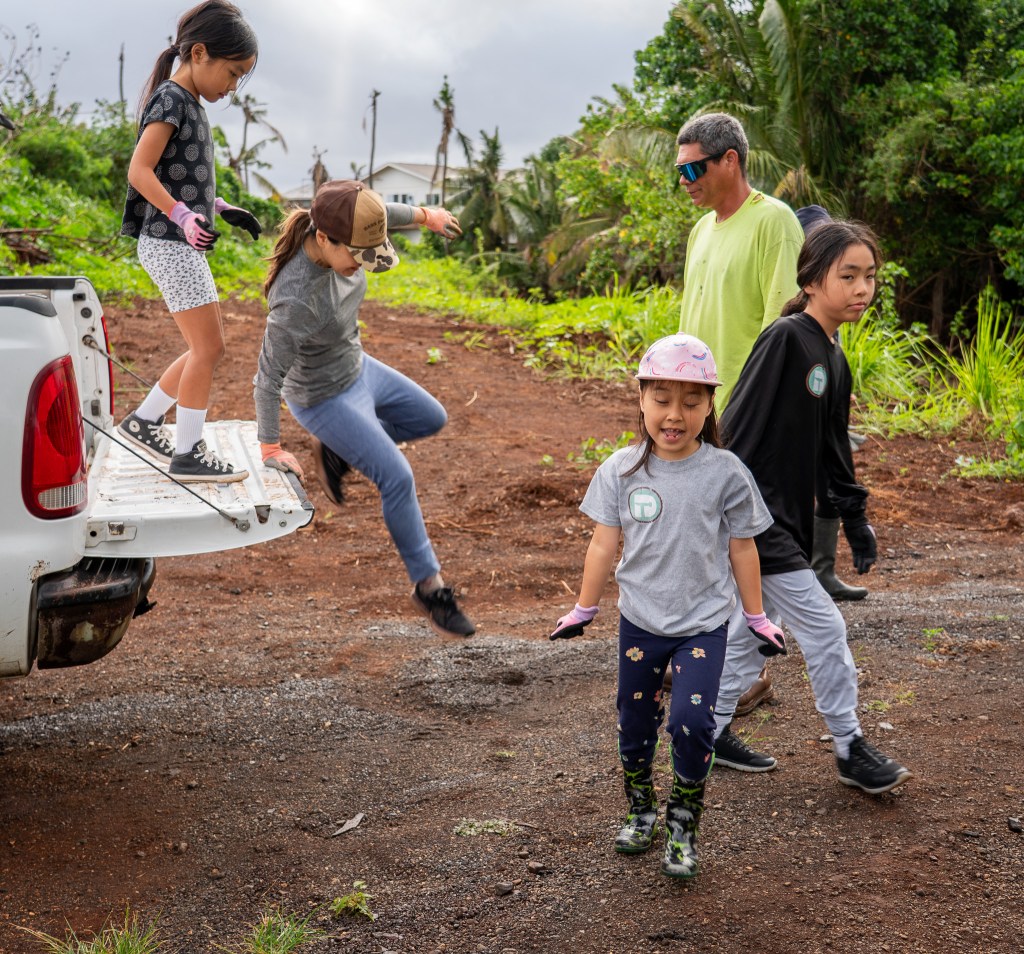
The bulk of the workforce that came out for the farmers’ co-op Mālama ʻĀina event came from Wellspring Covenant Church in Hālawa. Pastor Rebecca Stringer and church members turned out in force, just as they had during the March storms.
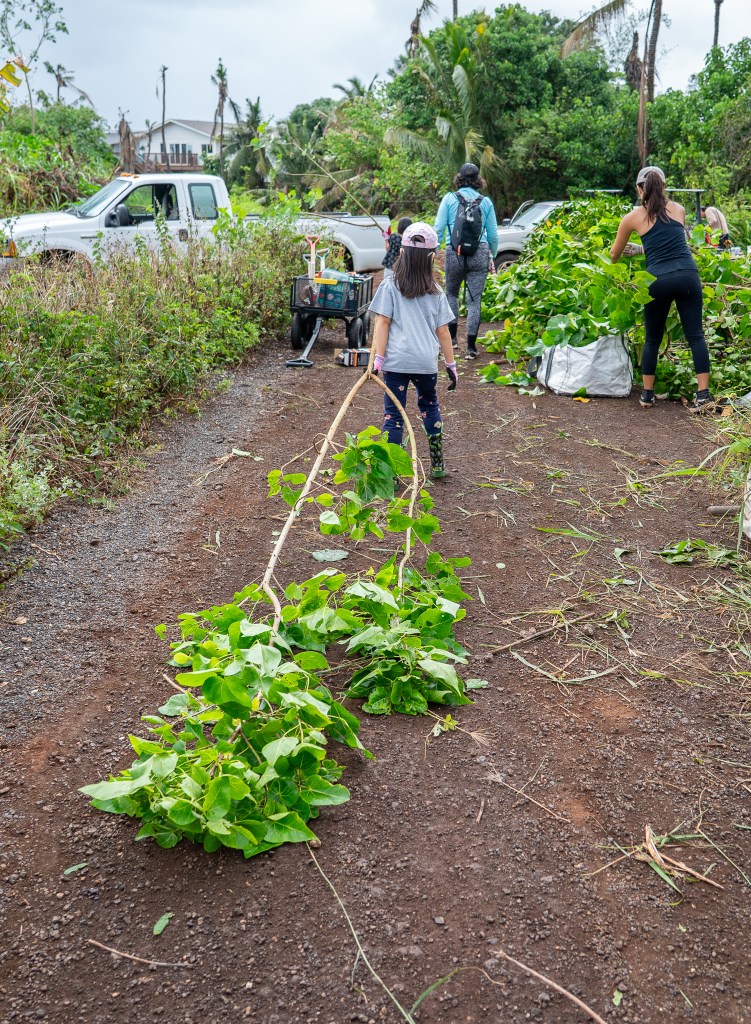
During the storms, the church and its members bought groceries for affected individuals and families, obtained the use of food trucks and prepared up to three thousand meals per day, Stringer said.
The church later obtained a grant from its parent church group to help with recovery efforts.
“When we heard about this workday, we were like, oh my gosh, we want to do something,” Stringer said. “We still have some trash bags, and you know we have some gloves that we bought with our grant funds.”
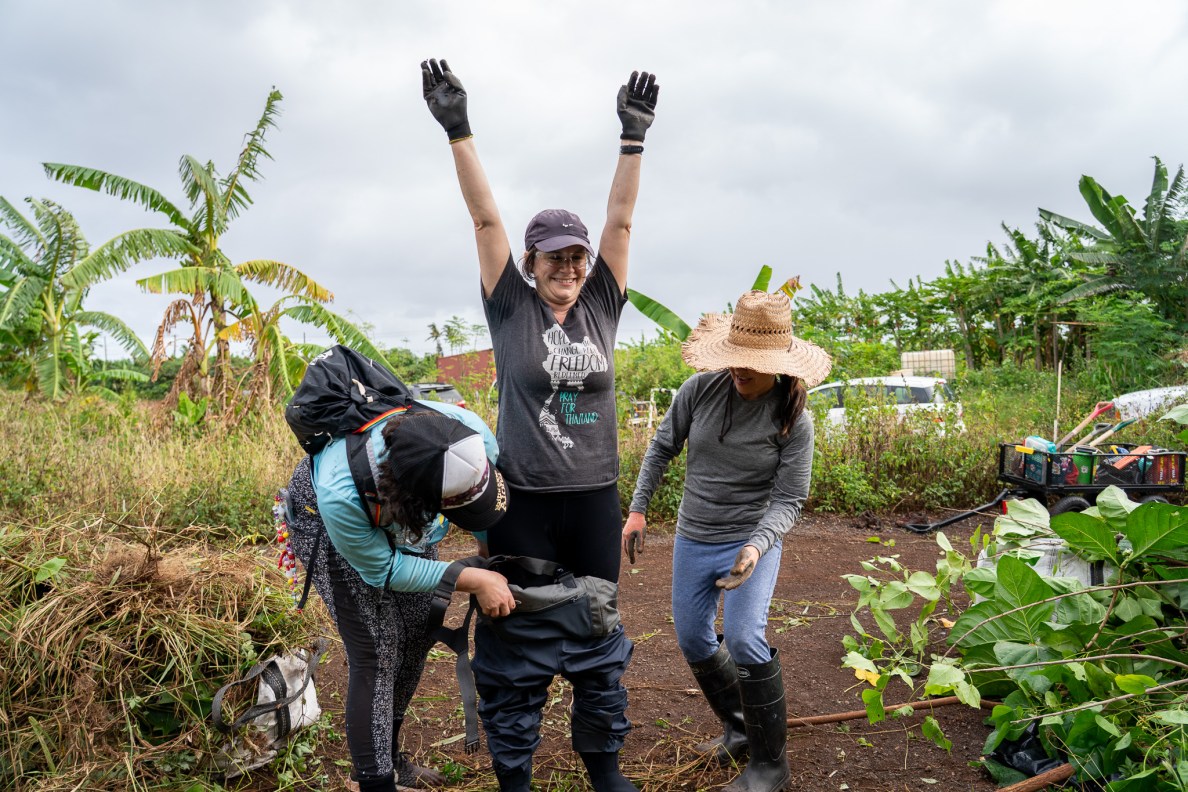
Those gloves were put to good use by church member David Taniyama, who came with his family from Mānoa to help. “I always surf out here, so I wanted to make sure that the community was OK,” he said.
The group also had use of borrowed heavy equipment and a roll-off truck, though they could use more volunteers and donations of chainsaws and fuel — both regular and diesel, board president Kekahuna said.
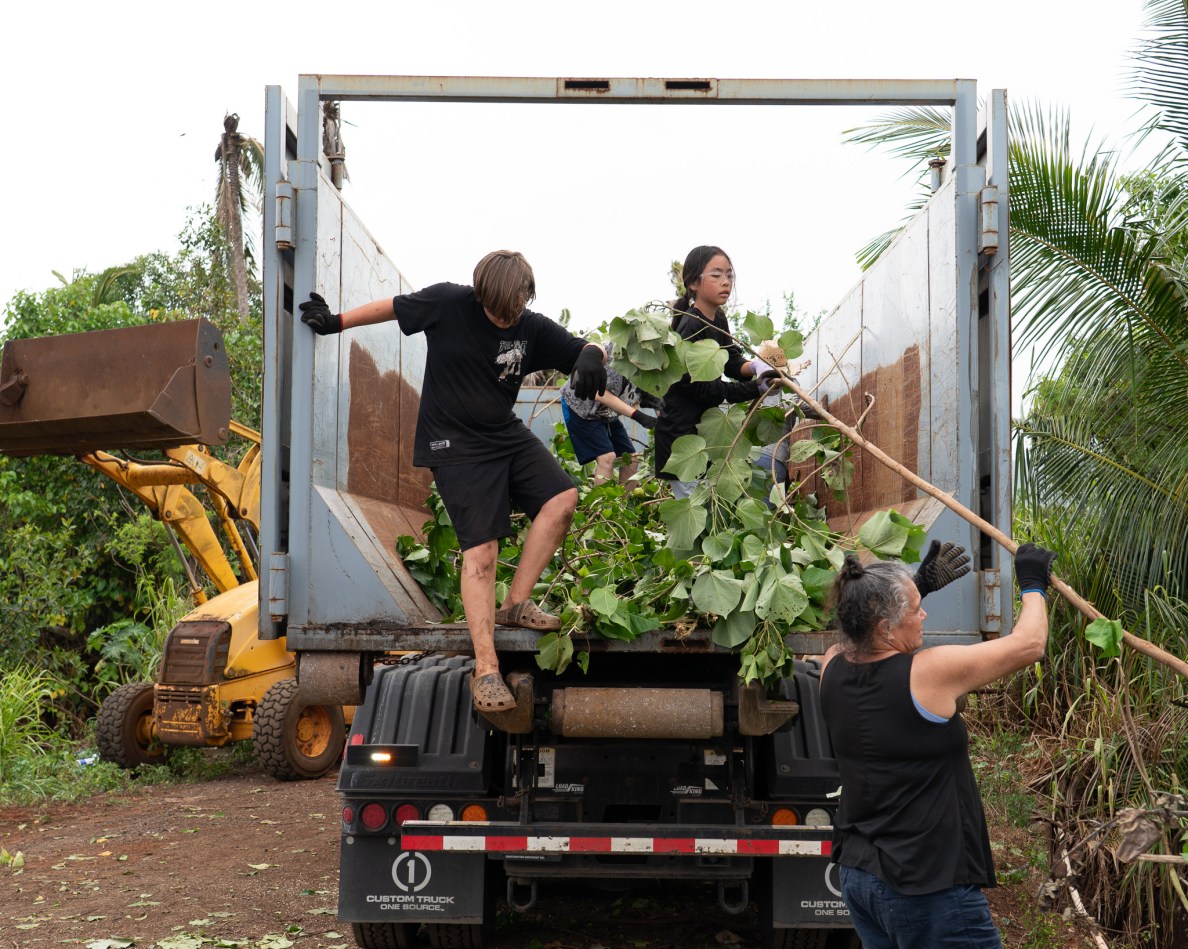
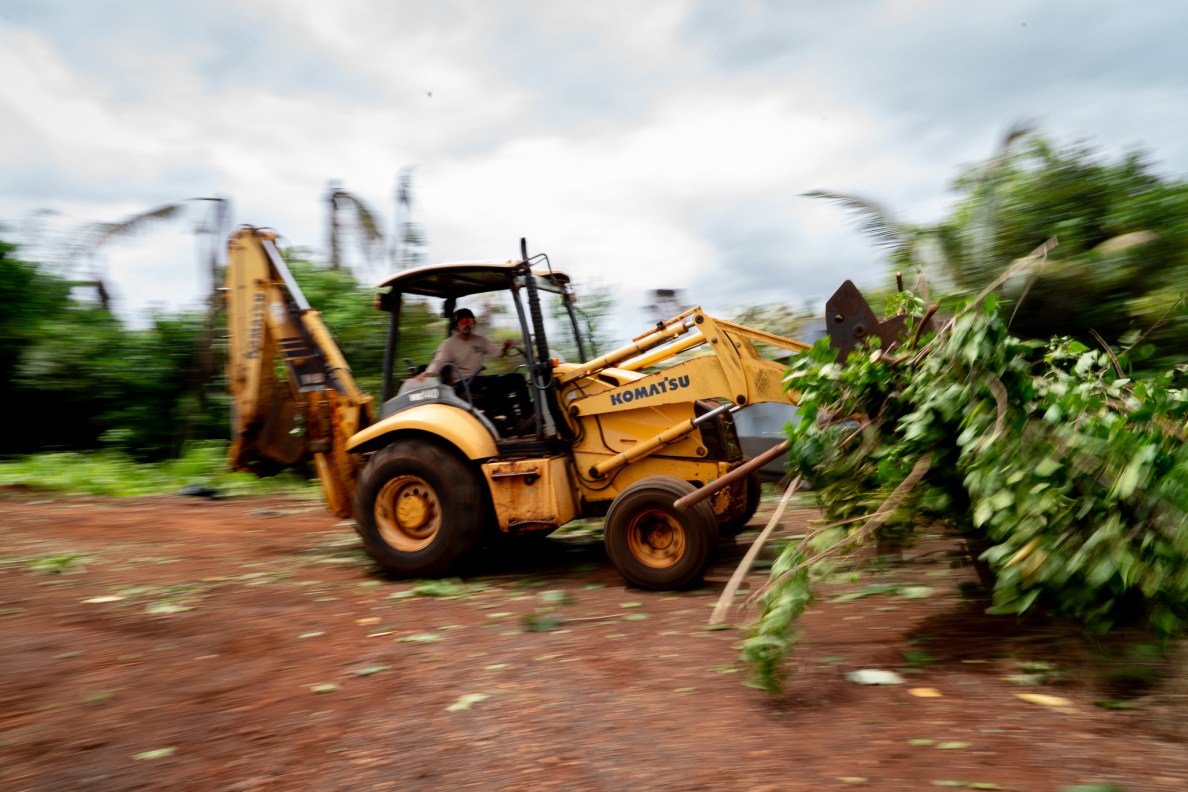
Ditch One is about 1,800 feet long, said Michelle Midro Ching, secretary of the Farmers Co-op. With just one half of a 180-foot stretch completed in four hours, the scale of the remaining work is daunting. The rest of Ditch One awaits, along with the other two ditches with similarly imaginative names.
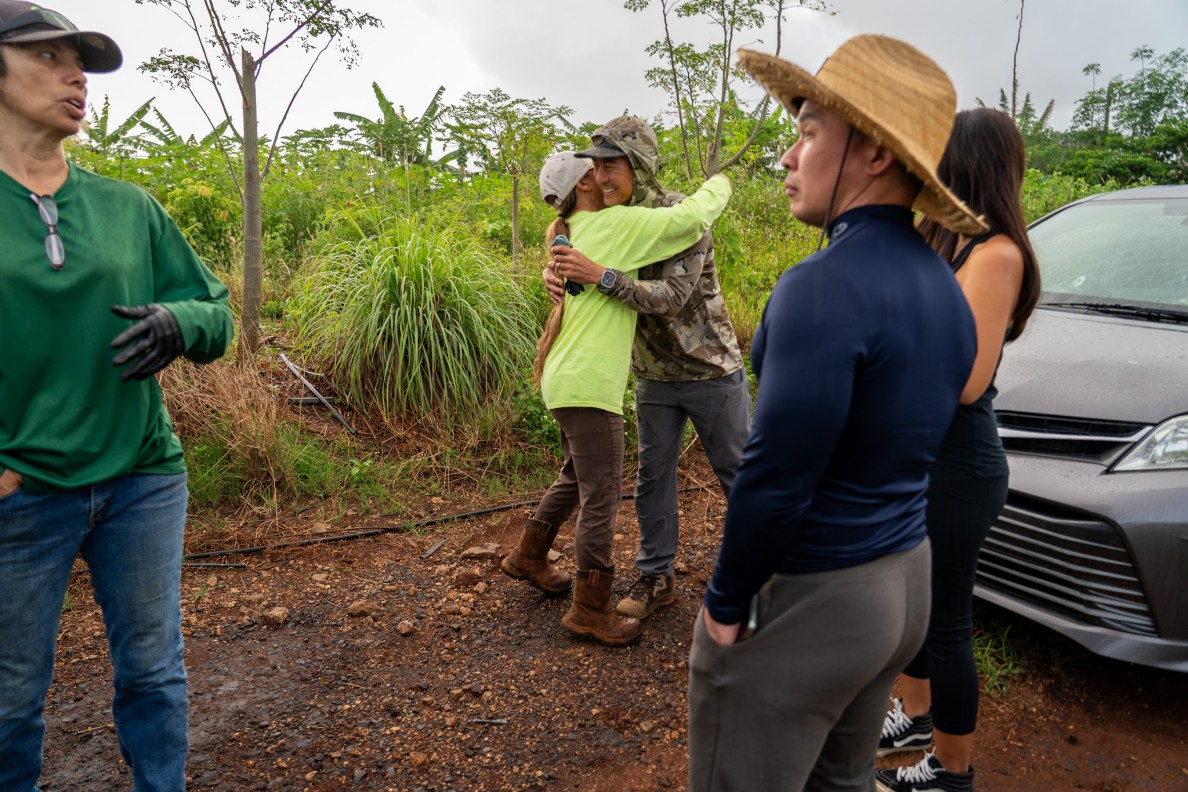
The community still needs help, Midro Ching said.
“It’s been a horrible wonderful experience,” Ching said, recounting the Kona low storms and their aftermath. “The wonderful part is seeing people come together, and you’re seeing all the aloha with people helping each other.”
Civil Beat’s coverage of climate change and the environment is supported by The Healy Foundation, the Marisla Fund of the Hawai‘i Community Foundation and the Frost Family Foundation.
