


It took two nights and 80 gallons of citric acid solution for John Andrews to kill two nocturnal frogs that had taken up residence in the trees at the front of his Maui property.
Though the frogs are loud, they are no larger than Andrews’ thumb. Their high-pitched calls have a ventriloquist effect, making them especially difficult to locate with untrained eyes and ears. One of the wily coqui frogs was nestled amid a stand of palms, the other camped in a thick cluster of croton and ti plants.
Soaking trees in an attempt to suffocate an invasive amphibian is a new chore for Andrews and the surrounding Hog Back Road community in Haʻikū-Pauwela. The area had, until recently, been spared from the frog’s namesake “co-kee” calls for years — a rare and peaceful pocket amid Maui’s largest infestation.
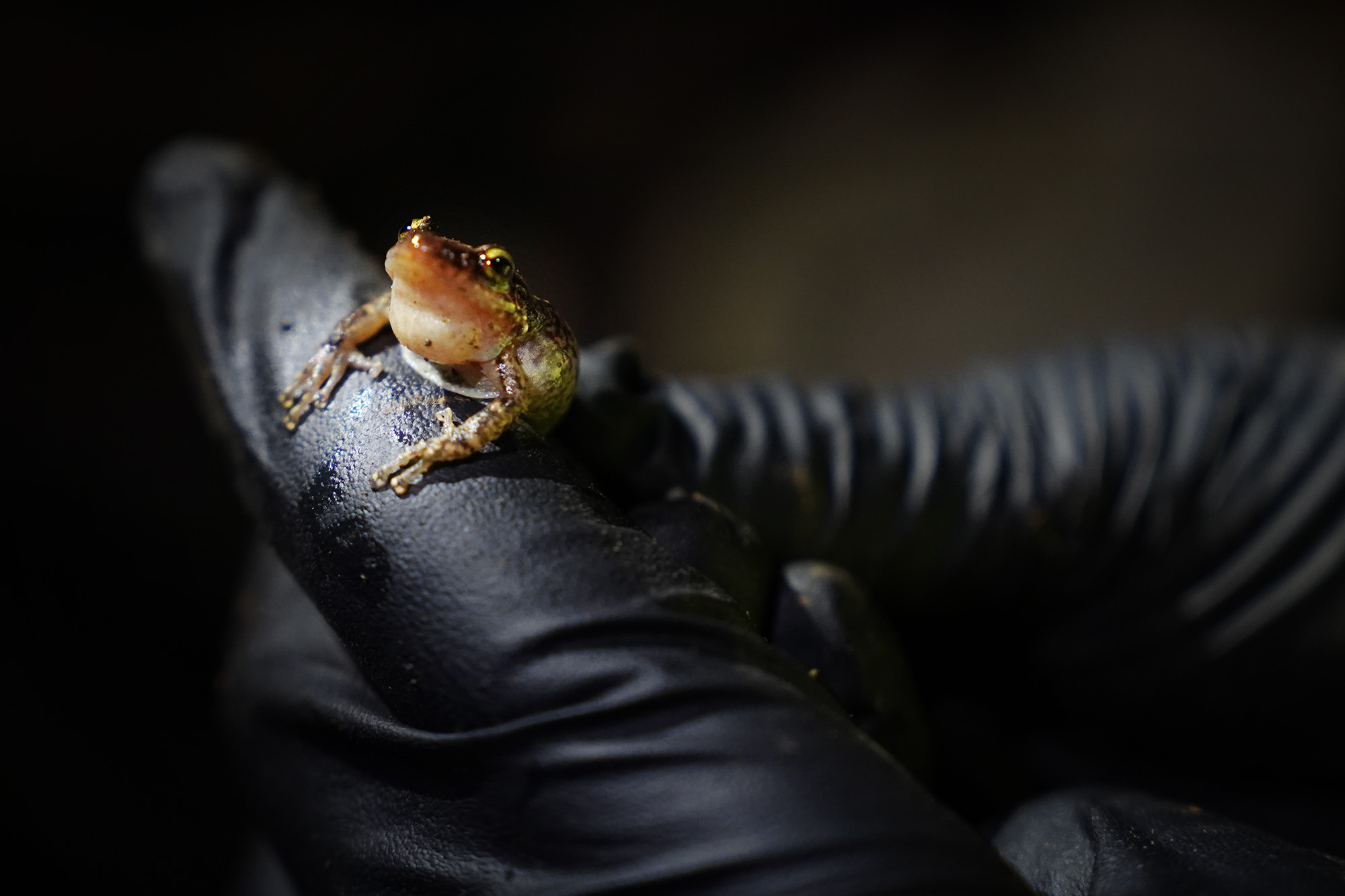
The Puerto Rican frogs have been on Maui for more than 20 years, arriving from the Big Island as hitchhikers on potted plants.
Since then, distinct frog populations have reached 37,000 on Maui and now occupy about 5,000 acres of Haʻikū-Pauwela — though the Maui Invasive Species Committee has so far managed to keep them from taking up residence across the island’s more-than 200,000 acres of suitable habitat.
But they are still spreading. And in November, after drought-breaking downpours, the frogs arrived in Upper Hog Back.
Residents called the Maui Invasive Species Committee, Maui County and their local council members, only to learn that the island’s five-person coqui team is too under-resourced and outgunned in its fight against the amphibians to tackle the spread in residential areas for long.

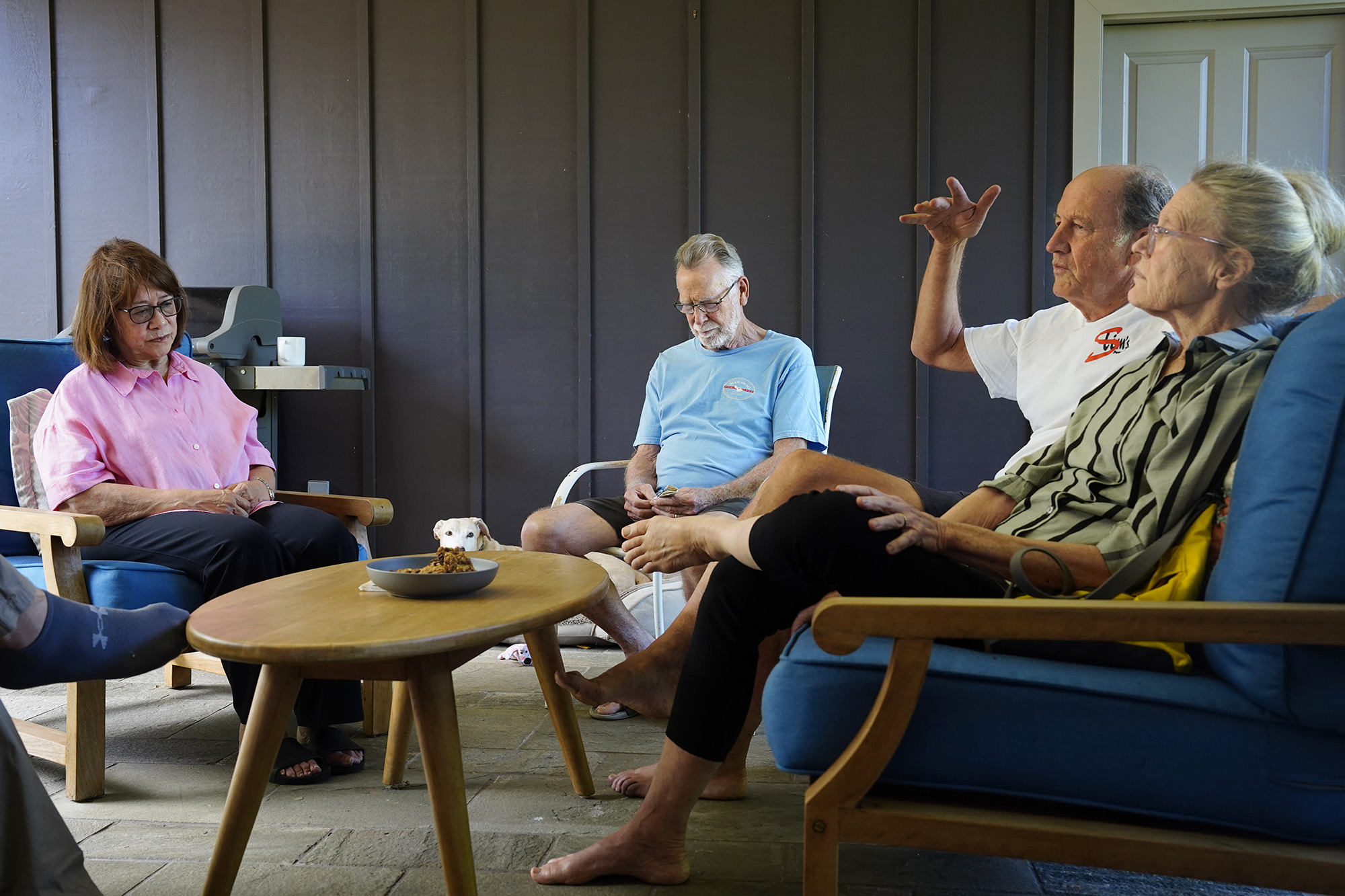
The committee would do a limited amount of spraying to address new infestations, but if the efforts failed — which was likely given the surrounding infestation — the fight would be left to residents. Money can’t solve the problem either: pest control businesses won’t take the job.
“I called them all,” Hog Back resident Nalani Clark said. “They said, ‘We don’t do that.’”
Neighborhoods familiar with the frogs have gone to extraordinary lengths to contain the animals. One community built an irrigation-like spraying system to douse the entirety of Maliko Gulch, in Haʻikū — ground zero for the frog population. Others have gathered monthly for years to spray infested areas. It’s an almost impossible task for Hog Back’s many working families, let alone retirees and part-time residents whose properties are at risk of being overrun.
“Why can’t our government be doing this? It’s bigger than us,” Clark said. “Why should every neighborhood be doing this?”
Coqui Crews Fan Out At Night
Hāna Highway’s bridges straddle seemingly countless gulches and ravines along Maui’s North Shore which, at night, become sound stages for male coqui frogs attracting mates. Their mating call reverberates through the channels at dusk.
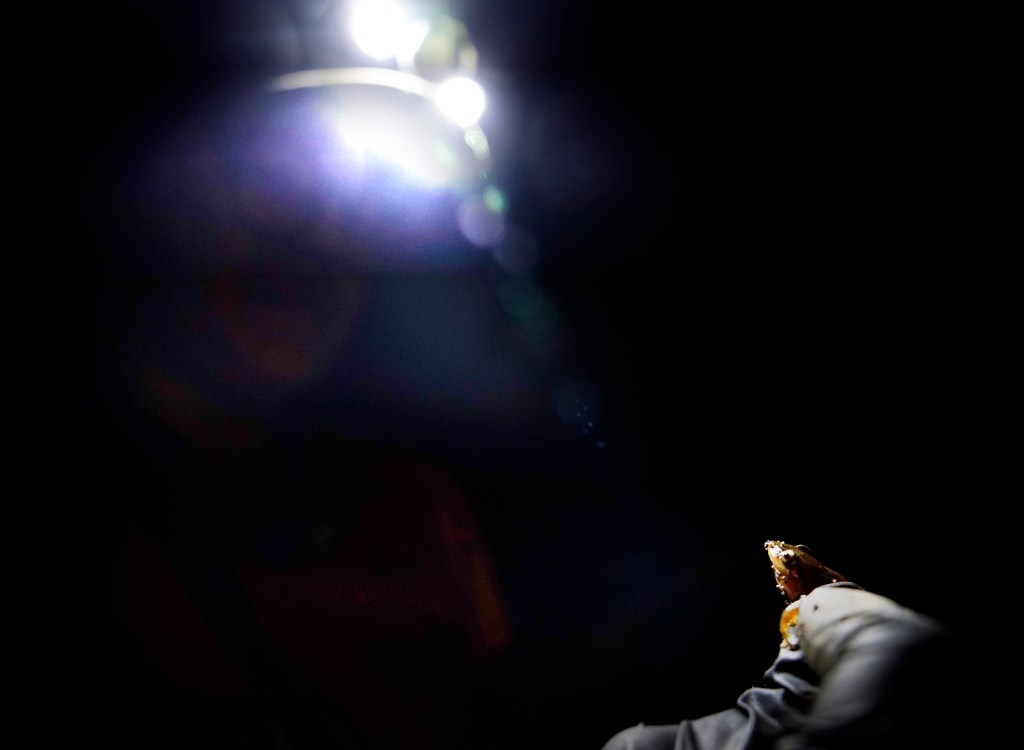
Last week, as night fell over the coast, the Maui Invasive Species Committee’s coqui crew set out to survey the muddy understory of sprawling hau tree that umbrellas a small gulch near Honokala on the North Shore. The area is home to one of the easternmost frog populations.
As they plodded though the vine-like trunks and brush, their headlamps strobed the dark thicket. They followed pink and blue ribbons tied to branches from previous visits and treatments, surveying the morass and listening.
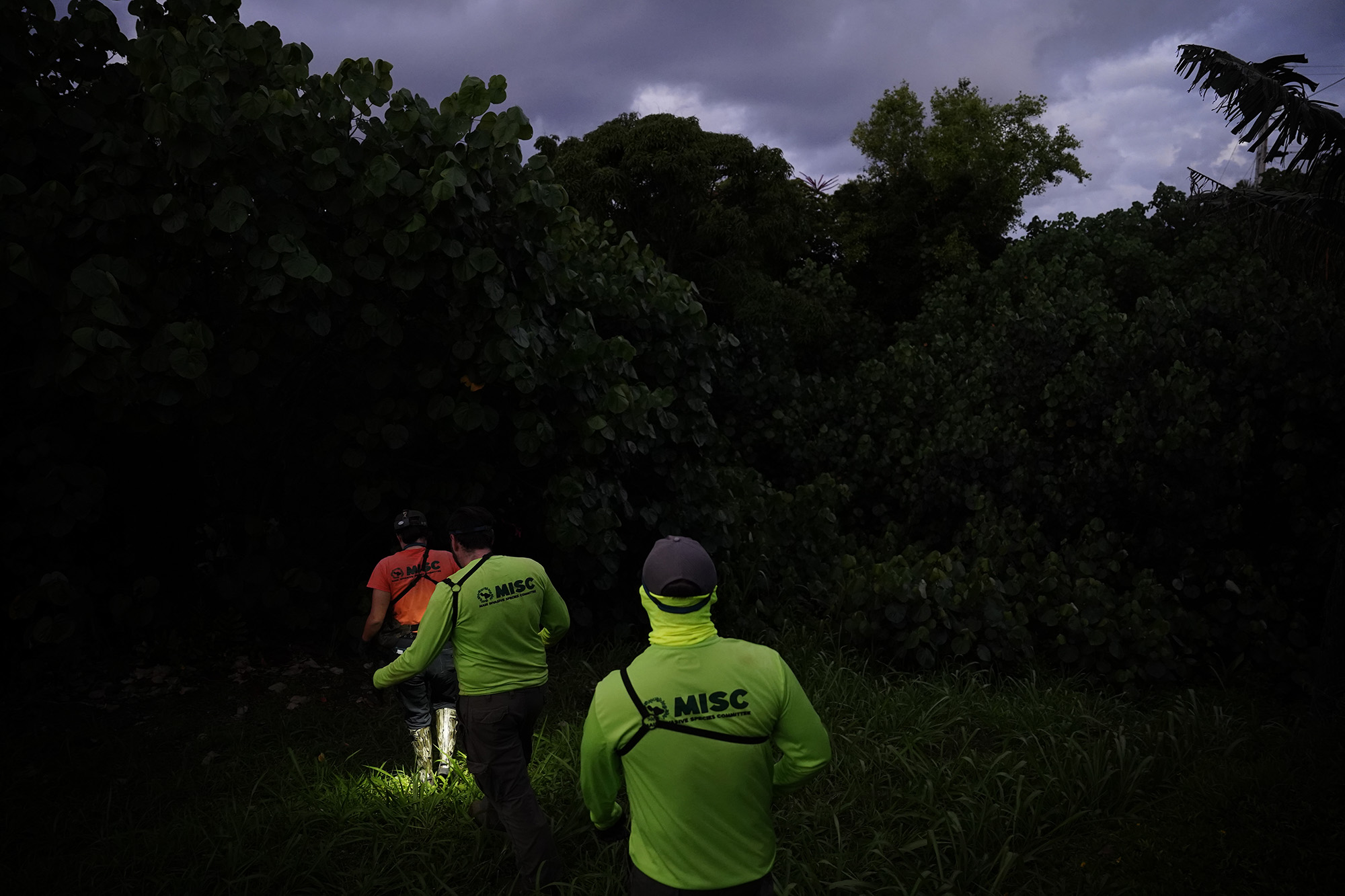
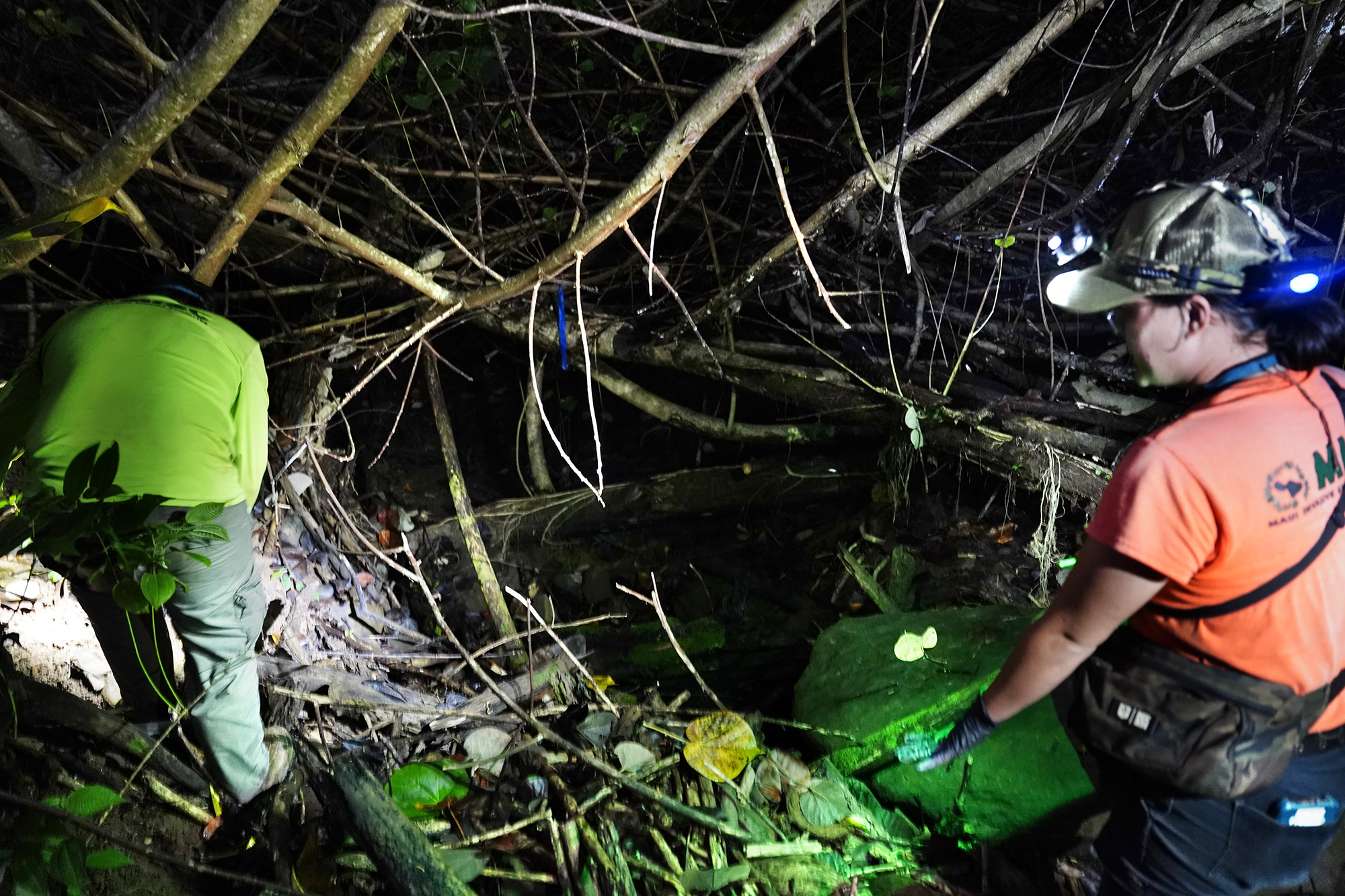

The crew is focused on stopping the frogs’ march east from Haʻikū, lest they become entrenched in Hāna where populations could explode and become completely unmanageable. The eastern region’s lush environment is prime habitat for the frogs, which would be able to proliferate without the committee’s intervention there, because the area is dense and inaccessible.
The frogs not only threaten Hāna’s nightly quiet, they could alter the region’s ecological balance.
About six miles away in Maliko Gulch is the stark reminder of what’s at stake. There, the frogs are already entrenched after the spraying system was destroyed during storms in 2014 and never replaced. The area is unlikely to ever be fully rid of the frogs, according to Rebecca Creighton, the committee’s coqui control coordinator.
The good news, Creighton said, is that eradicating outcroppings or new appearances of frogs outside the main infestations is still “100% possible.” That’s especially important for Hāna and East Maui, where one or two occasionally crop up.
“So much of East Maui is impenetrable land,” she said. “It would almost be a game over situation.”
Citric acid is currently the best method for killing the frogs. The amphibians breathe and drink through their porous skin, so when the acid makes contact, they suffocate and die almost instantly. The method requires direct contact, which means the crew hunts at night.
The committee spends about $150,000 on citric acid every year – $45,000 worth was donated to the community last year.
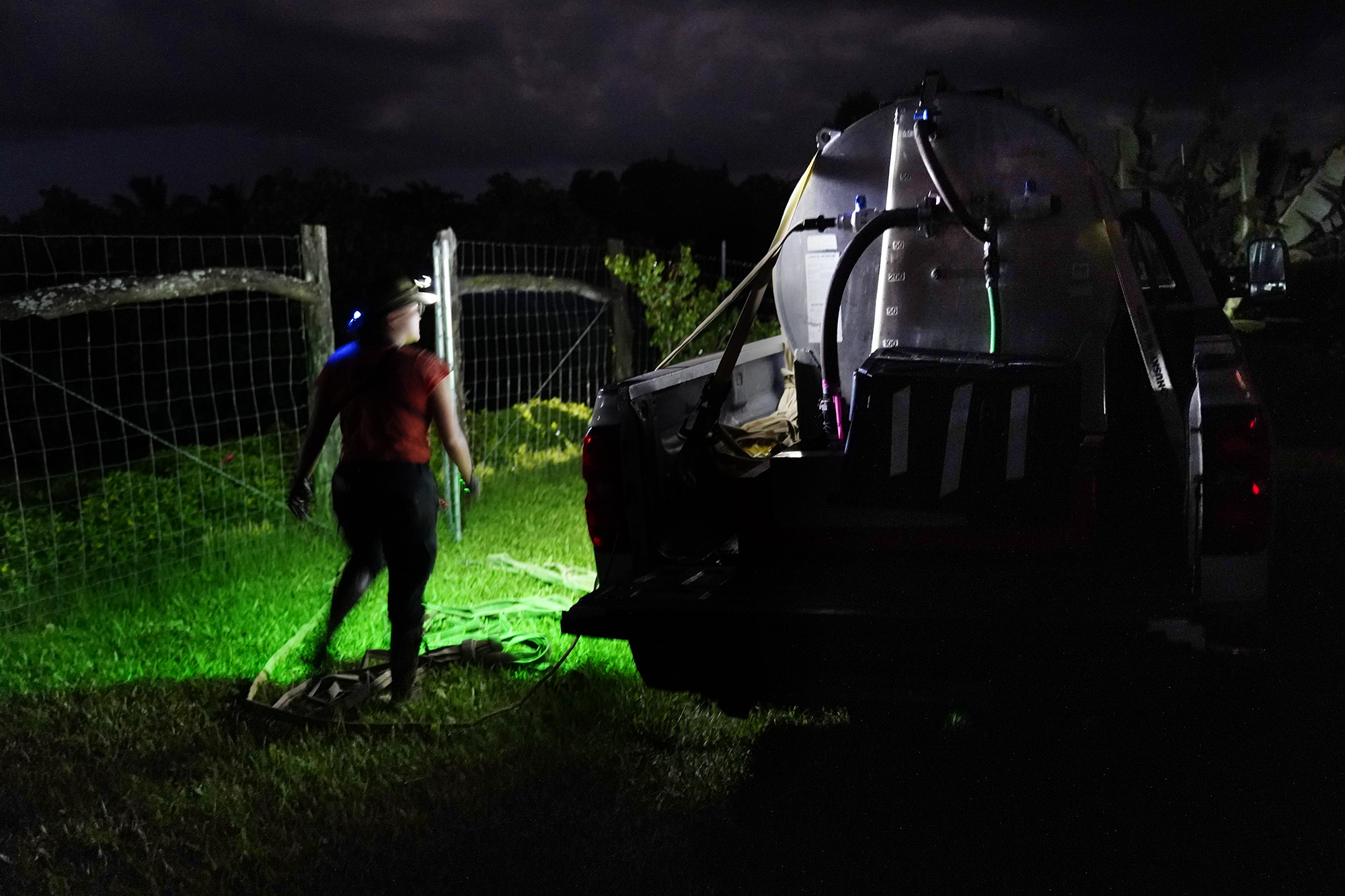
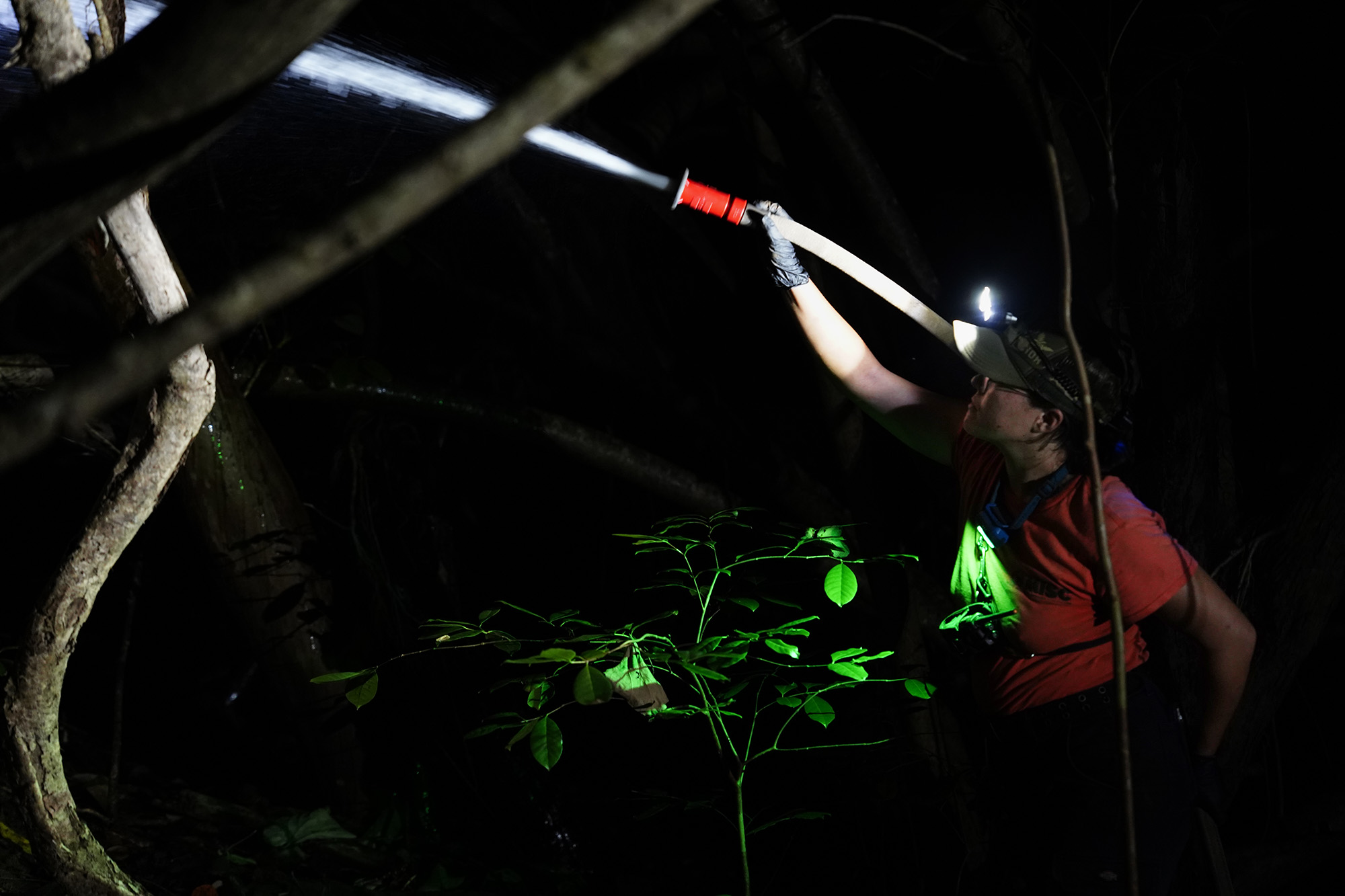
In Honokala Gulch last week, coqui crew members caught frogs by hand. It’s rare for the untrained frog wrangler, though the crew keeps a running tally on who finds the most. They make note of the capture location and keep the specimens to take back to their office at the old Maui High School in Pāʻia.
“Into baggie jail, Ziploc prison,” coqui crew member Preston Thompson said.
When the lights are off, the frogs’ calls amplify, giving away their location to potential mates and to the coqui crew. So far, the territorial amphibians have already died out in some parts of the gulch, thanks to previous work. Now they focus their spraying efforts on the western edge of the gulch, climbing in and out of the muddy gulch with 400 yards of firehoses attached to a tank on the back of their truck.
They aim high into the canopy and spray down to the foot of each tree.
It could take a few visits to snuff out this population, especially given that the males are the only ones who make noise, and only once they’re 8 months old. Females are silent but generally predictable, following mating calls to lay eggs at the bases of trees — although they will lay them elsewhere too, sometimes on cars and commercial plants, creating satellite populations around the island. They lay up to 1,400 eggs per year, each.
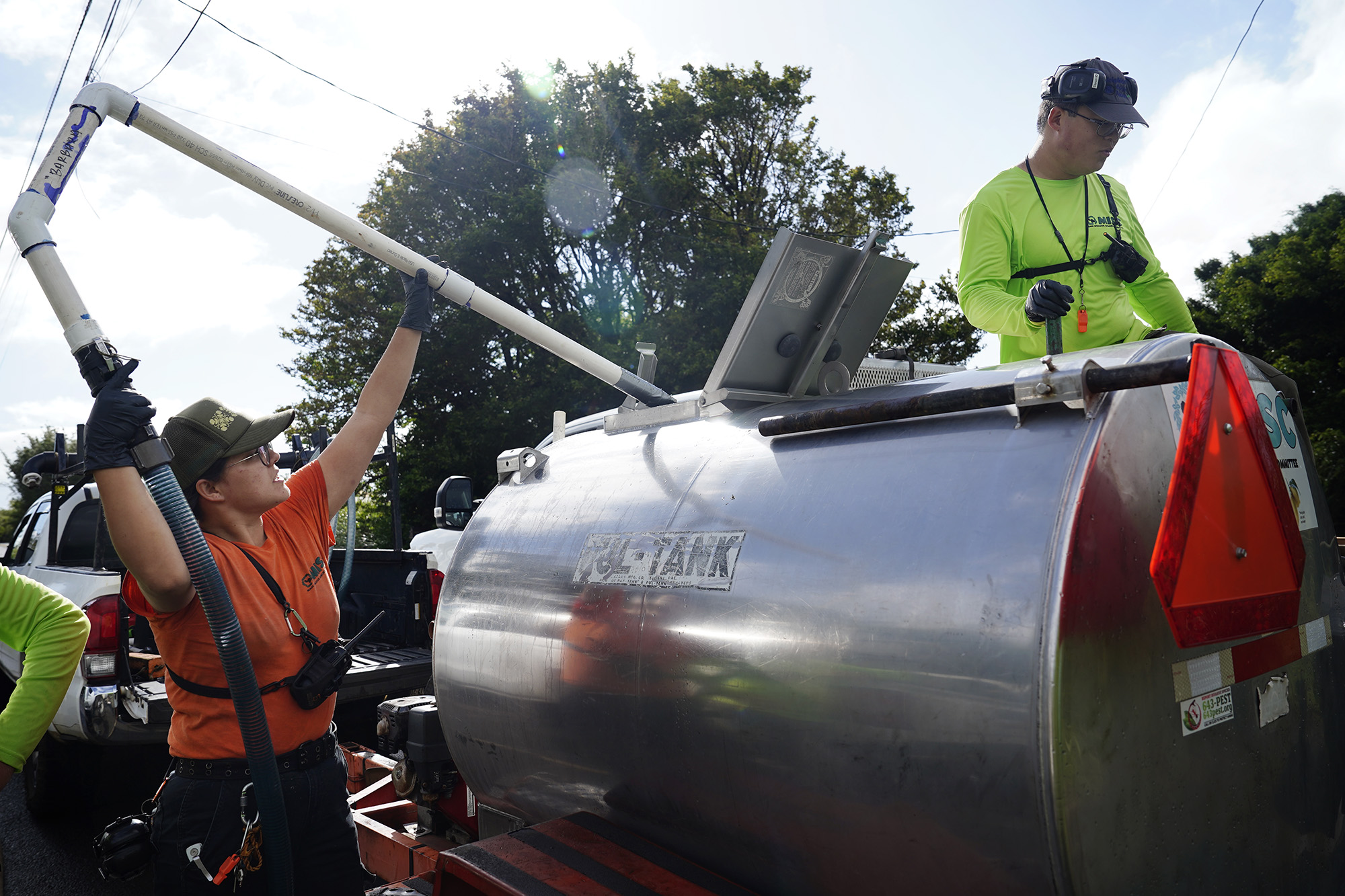
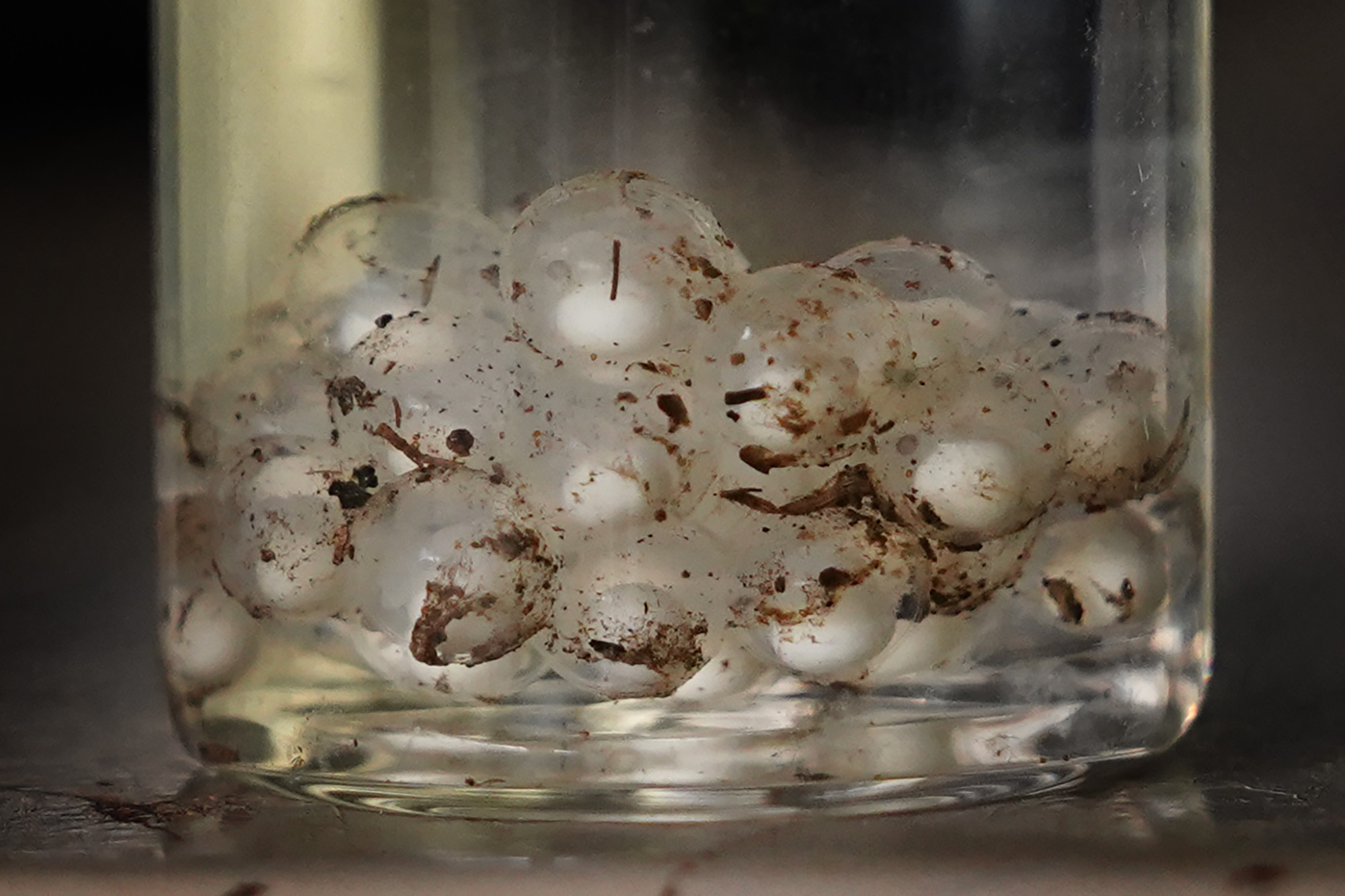
“There’s four of us on a regular day and we’ve got a whole island to cover,” crew member Kaelyn Leval said. “There’s so much land to cover, so we can come through and clear something out completely but there’s always a chance that you’re not hearing something.”
They continue the work until about 11 p.m., as they do four nights a week, for $19.31 an hour.
The Cost Of Keeping A Lid On It
In 2020, the committee estimated that it would need $64 million over 10 years to eradicate the frogs.
It’s never gotten close to that amount, although Maui’s committee still receives more funding for its efforts than other counties, said state invasive species expert Christy Martin. That is partly why Maui’s coqui frog infestation has not reached the severity of the Big Island’s, she said, where the frogs occupy more than 60,000 acres with more than 2,000 frogs per acre.
“It’s not an insignificant accomplishment that they’ve been able to keep a lid on it for this long,” said Martin, program manager for Hawaiʻi’s Coordinating Group on Alien Pest Species.

The committee received close to $5 million in the current fiscal year from state, county and federal grants. But that funding is subject to change every year, with fluctuating grants, county and state priorities.
That money must then be spread among four dedicated teams that address the frogs, invasive plants, miconia and little fire ants — along with the looming threat of other invasive species such as coconut rhinoceros beetles.
State agencies, particularly the Department of Agriculture and Biosecurity, have focused their coqui mitigation work on Oʻahu in recent years. The agency is currently more focused on coconut rhinoceros beetles and little fire ants, said plant quarantine branch Jonathan Ho.

The state has recently made invasive species a higher priority, putting $4.25 million aside for county-level committees and research grants for 2025 and 2026.
What happens next is up in the air, as the state Department of Agriculture and Biosecurity assumes almost total control of invasive species efforts statewide.
Sharon Hurd, the state agriculture director, on Friday said the committees shouldn’t assume they’ll receive the funds because there may be community members wanting to entertain other community group’s suggestions for how to manage invasive species.
Changing the funding lines for the committees would “pull the rug” out from under the committees, said Rep. Mahina Poepoe, who represents Hāna, Haʻikū and Molokaʻi.
The committee also has trouble finding workers and keeping them, given the difficulty of work and low pay. In 2020 — an abnormally good year for county funding — Maui’s coqui crew was 17-strong. At the end of 2024, the team had just one member.
“It can be pretty difficult to live on that income, especially here on Maui,” said Preston Thompson, a field technician. “If your heart’s not in conservation, you won’t last.”
‘They Are Winning’
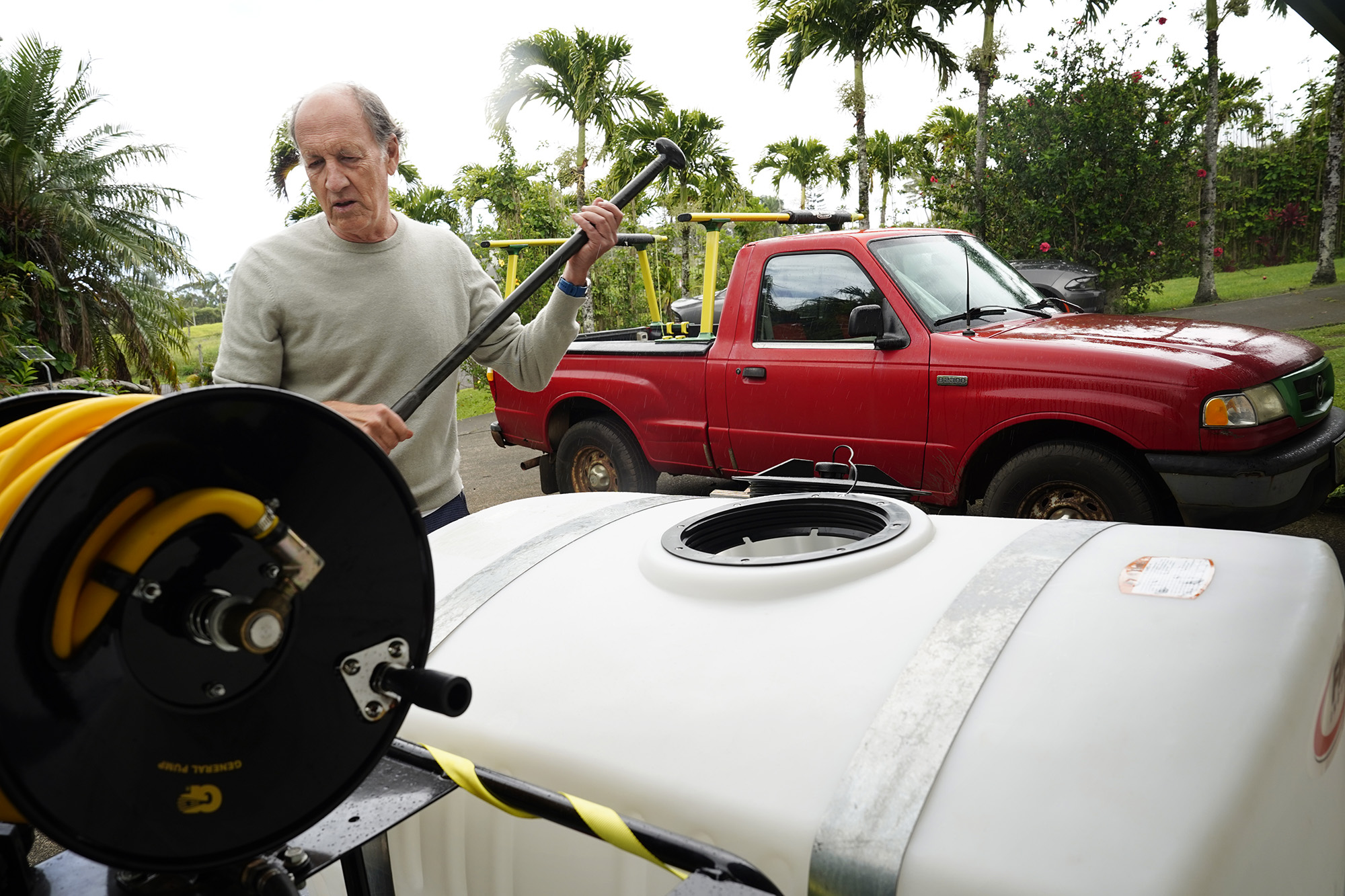
For the last six months, Upper Hog Back residents have been bushwhacking through cane grasses and dousing trees and plants with “The Silencer.”
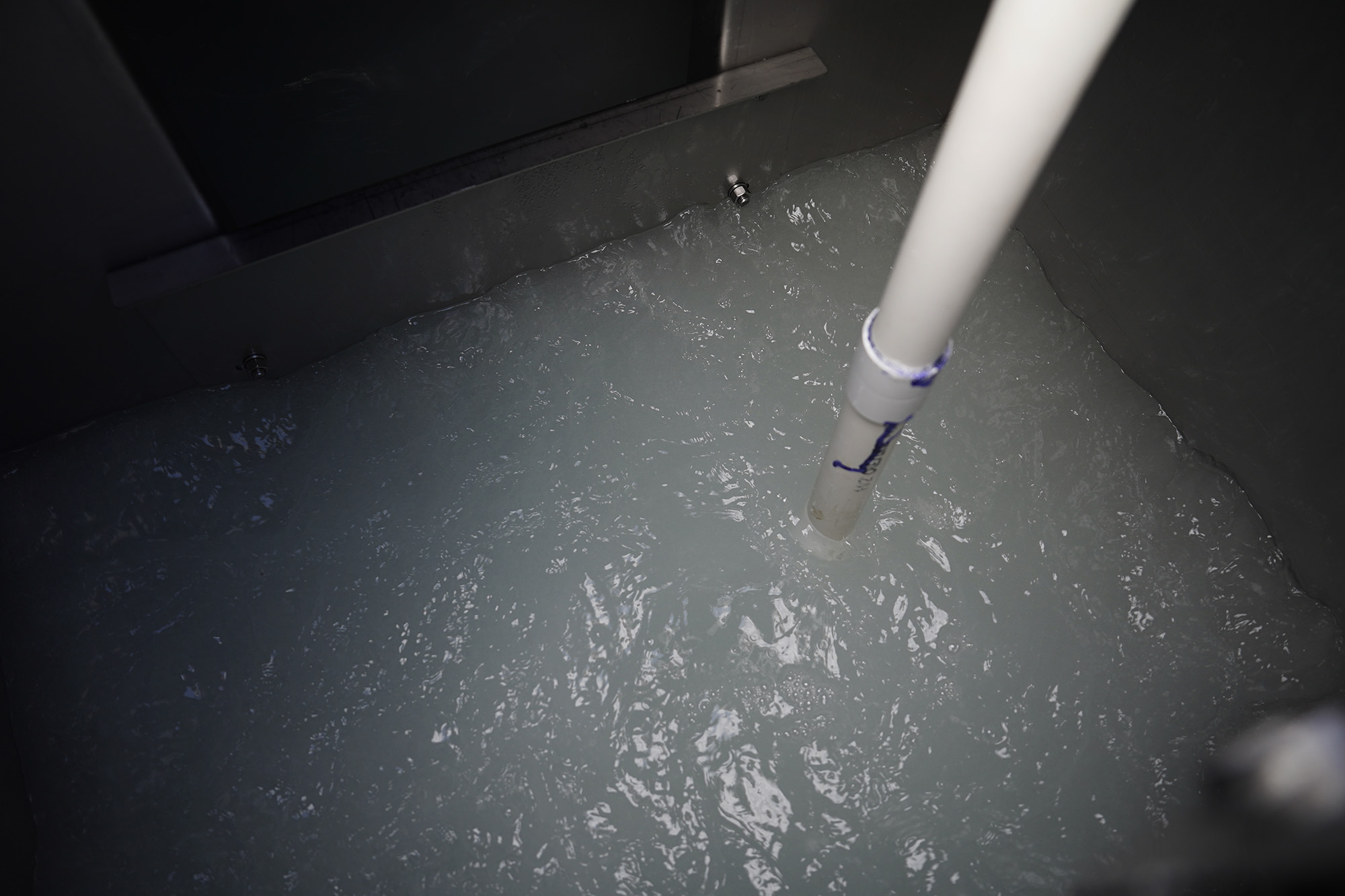
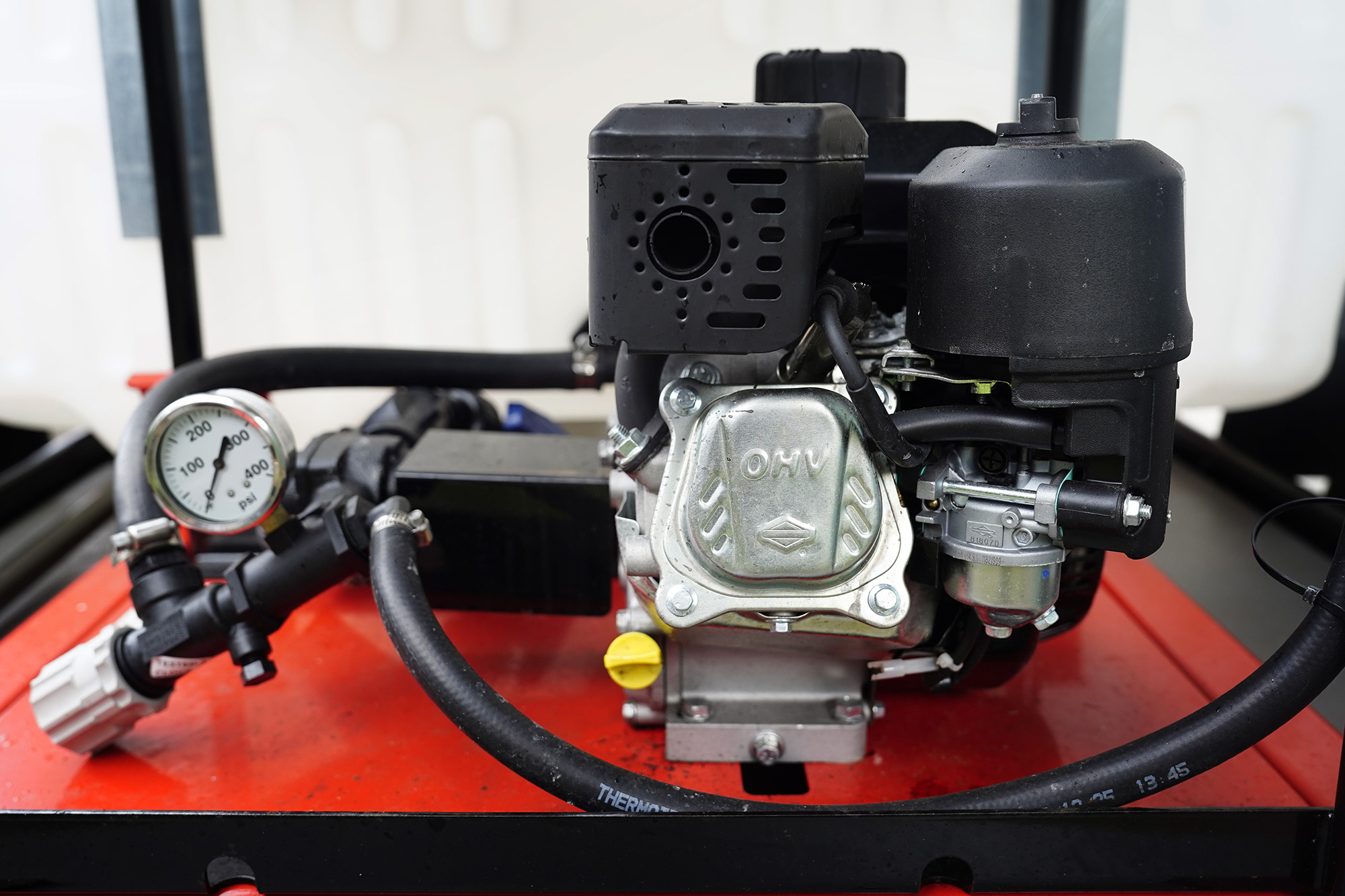
That’s what they call the $5,000 commercial sprayer with a 150-gallon tank that 13 residents pooled funds to share. The first coquis arrived in November and the community purchased the system the same month.
“It was sort of a panic,” Andrews said. “We realized this coqui is right here, right down the street, and thought we can’t rely on borrowing one of MISC’s sprayers just when we want it. There’s enough people on this side of Maui that need them that we can’t rely on them.”
The invasive species committee sprayed in the area every six weeks for several months, but will no longer be treating the area starting Wednesday. Not because it can claim victory, but because it has to move on.
“It’s more like a whack-a-mole thing with them,” said resident Nālani Clark, who has been going door-to-door trying to galvanize the community to fight the frogs. “That’s what they’ve had to do because they’re stripped so thin.”
Though they’ve felt under-resourced since the start of the spread, Hog Back residents will now mostly be on their own.
Neighbors like Andrews and Elizabeth Keller were among the more than 30 people to join Clark’s email list. They came up with the idea of purchasing “The Silencer,” which has so far been used on an as-needed basis, used by residents to spray their properties. It may be needed more in coming months, with a wet long-term weather outlook, perfect for frogs.
Many residents still struggle to accept that the state cannot either pump funding into the committee, to better pay its coqui team and increase its size. They worry about their property values, their sanity with less sleep and the future of tourism on the island.
They’ve tried calling private pest control businesses, who’ve all rejected their pleas for help. They’ve also called local and state lawmakers, with little response.
The county is in its final deliberations for next year’s budget, due on Friday, during which Clark plans to testify in support of more solutions for the coqui situation.
In the meantime, Clark and her husband plan to return to an overgrown lot near their home. They’ve worked there before but hope to use “The Silencer” to finally get rid of what they estimate to be a dozen coqui frogs.
“It’s almost futile,” Clark said. “They are winning.”
Civil Beat’s coverage of climate change and the environment is supported by The Healy Foundation, the Marisla Fund of the Hawai‘i Community Foundation and the Frost Family Foundation.
