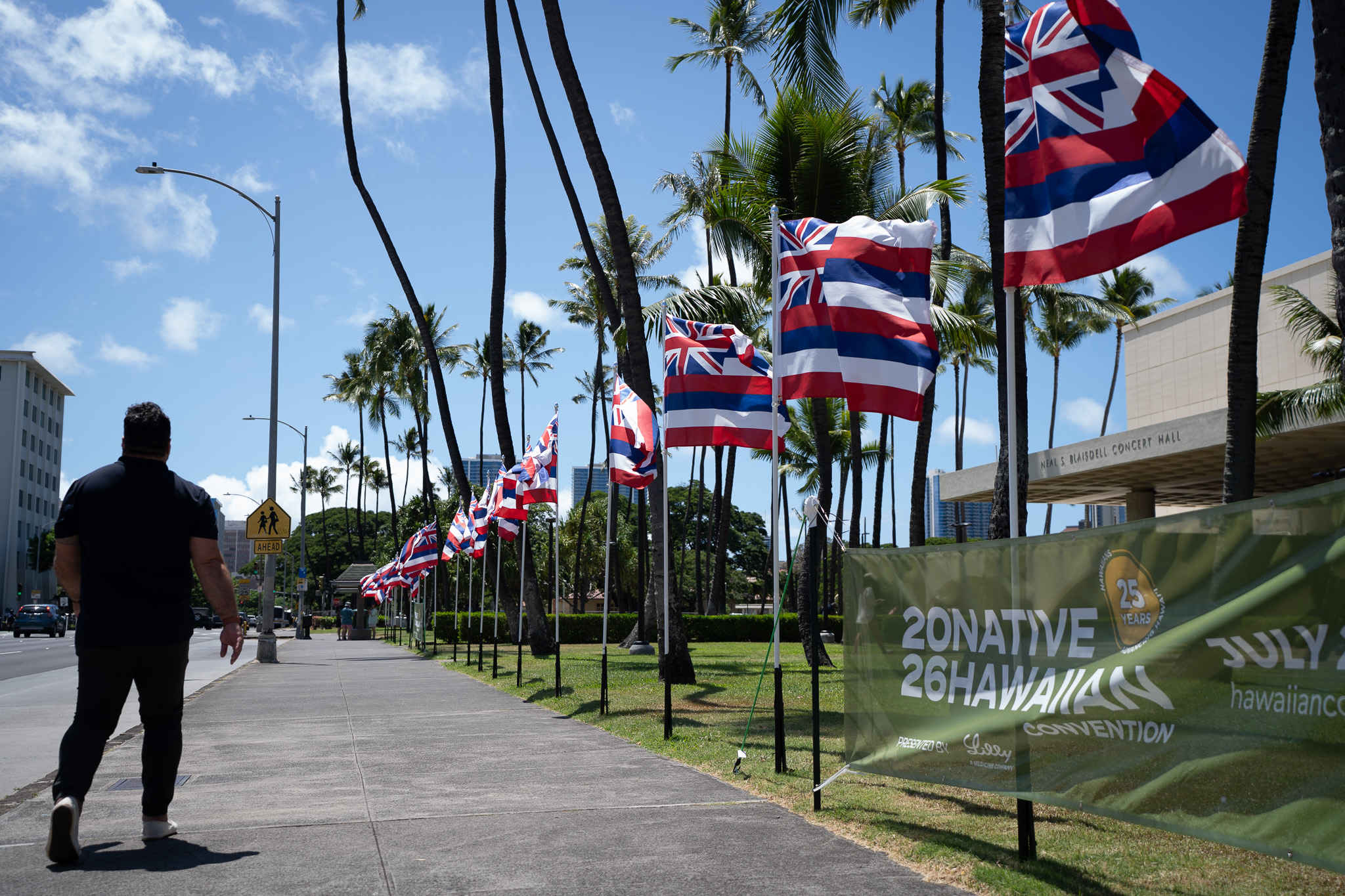
The perimeter of the Neal S. Blaisdell Center was lined with 133 Hawaiian flags for the opening of the 25th Native Hawaiian convention on Tuesday – one for each year since the Hawaiian Kingdom was overthrown with the aid of U.S. forces in 1893.
Now, state leaders and the heads of Native Hawaiian-serving organizations, created to rehabilitate a race whose population dropped dramatically after Western contact, say Hawaiʻi is again being threatened.
This time, they say, the danger comes in the form of federal funding cuts and lawsuits from conservative organizations that could jeopardize access to homes, educational opportunities and doctors for Native Hawaiians.
During a keynote speech, Gov. Josh Green said that such clawbacks and other attacks on Hawaiian programs pose “a very, very significant threat.”
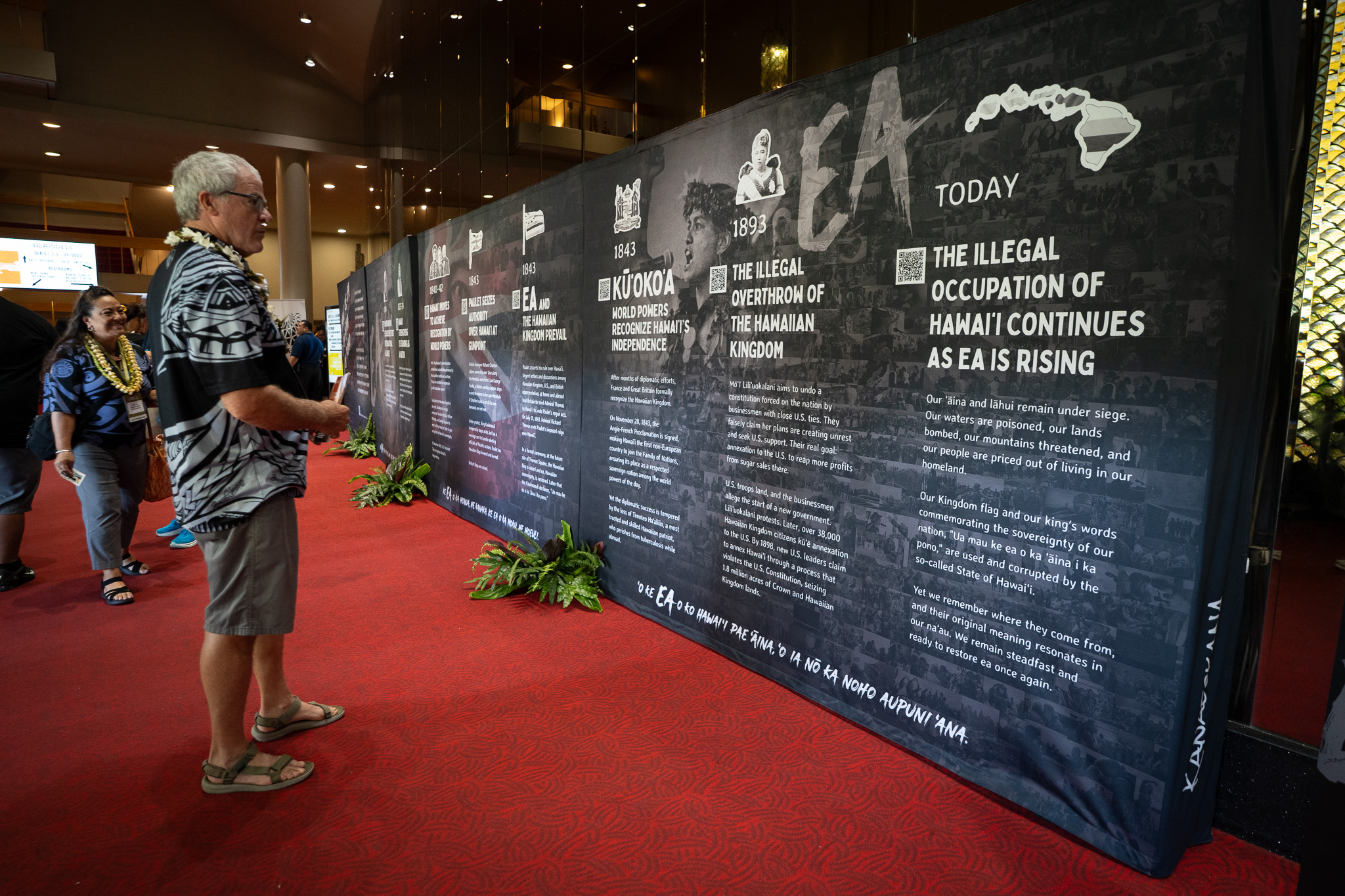
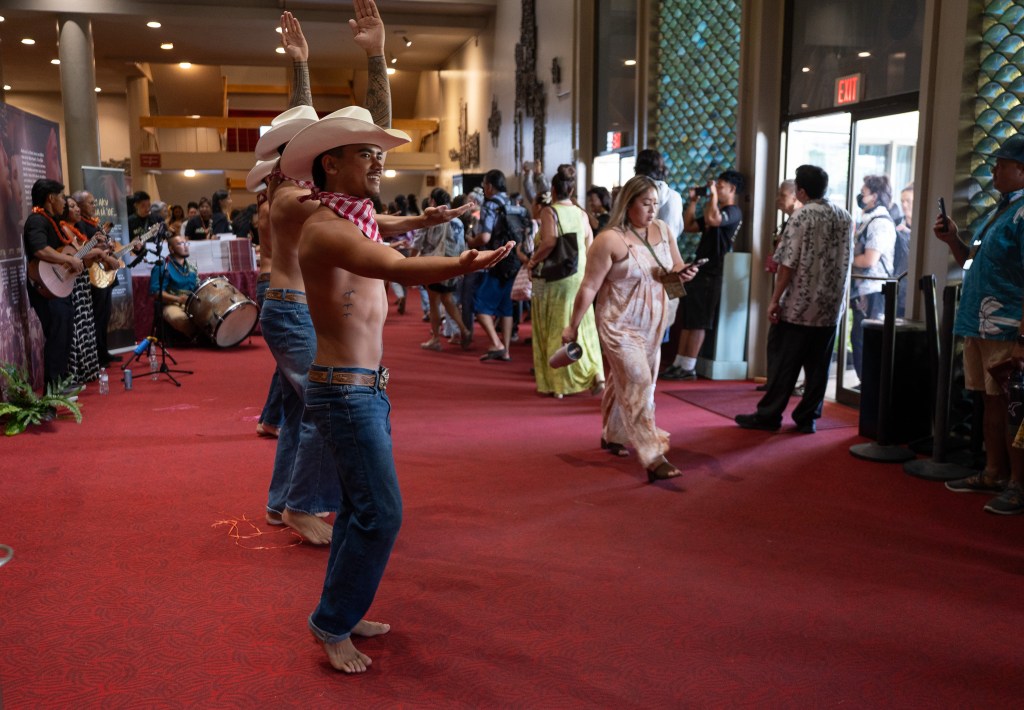
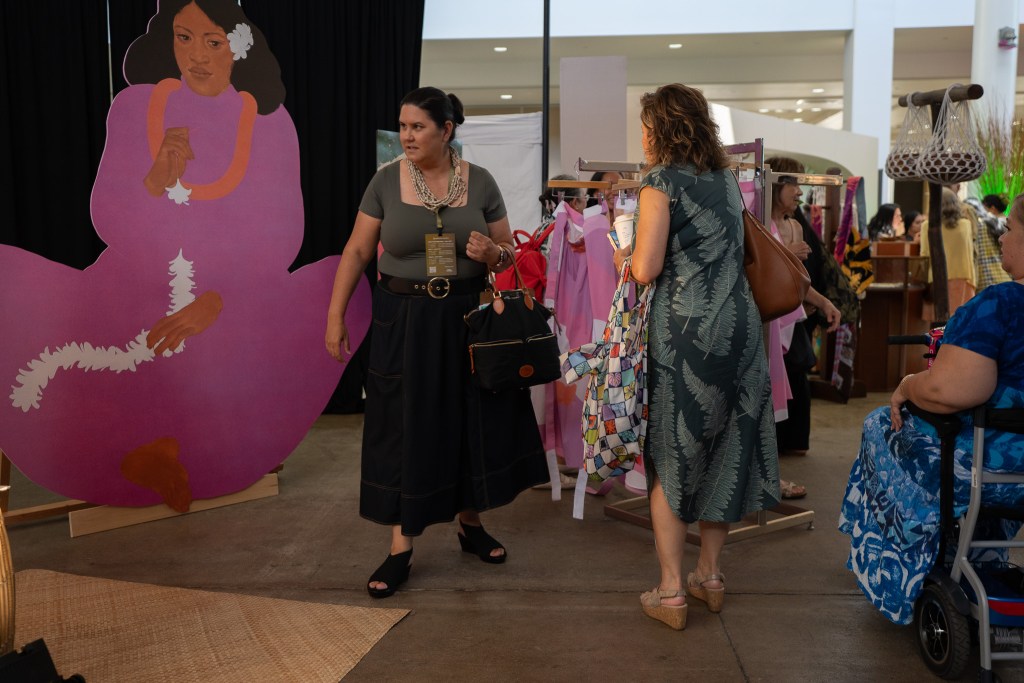

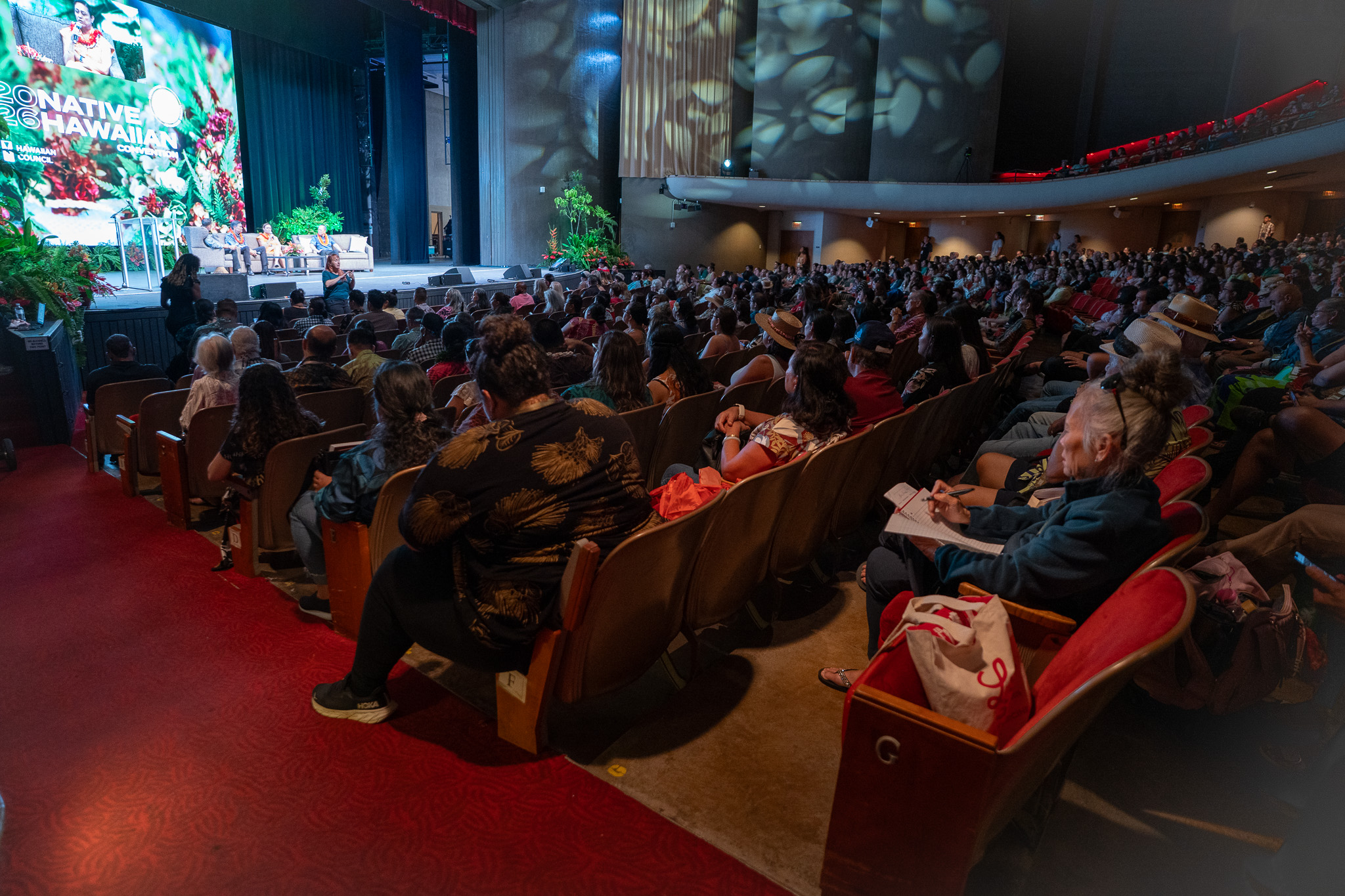
The annual convention, which is expected to draw more than 2,000 over three days, will feature discussions on military land leases, casinos, filmmaking, artificial intelligence and new energy developments.
Run by the Hawaiian Council, formerly known as the Council for Native Hawaiian Advancement, the convention is both a celebration of Hawaiian culture and a convening of thought leaders from business, government and nonprofit circles.
“We don’t cower in the corner. We get out. We fight.”
Kali Watson, director, Department of Hawaiian Home Lands
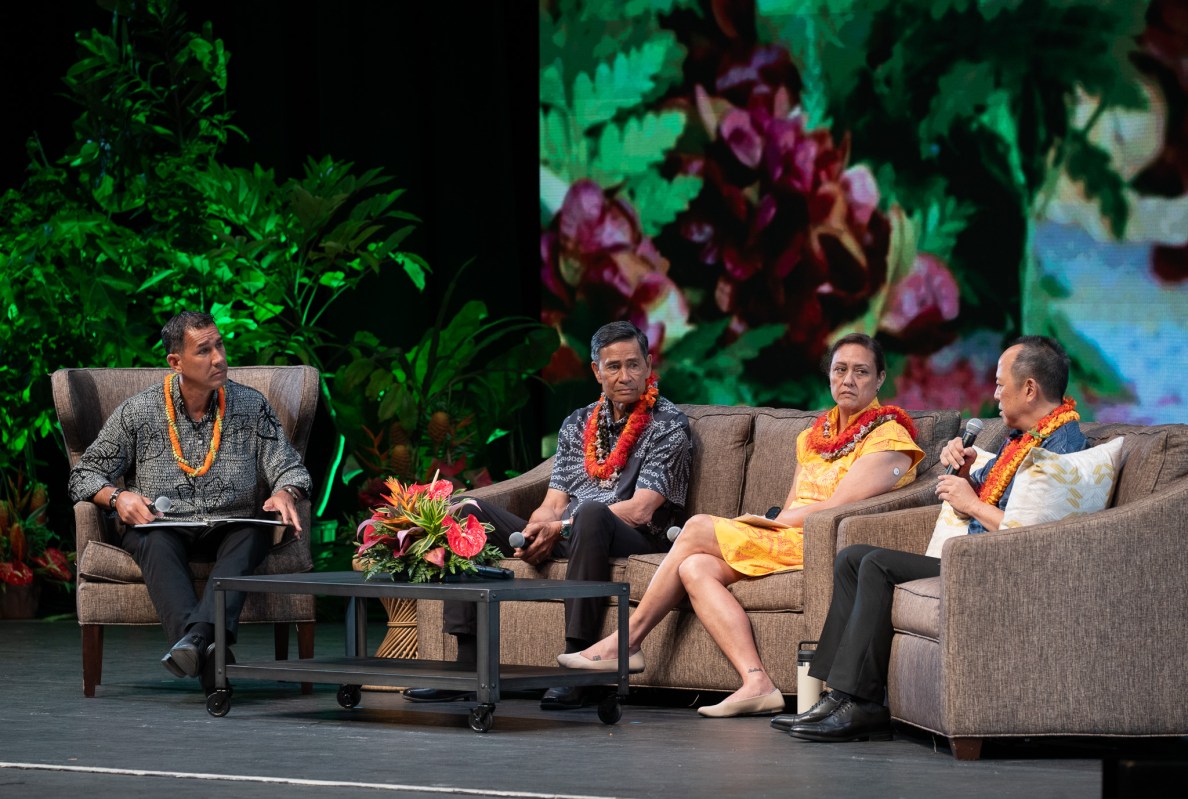
It kicked off with the threats: a discussion featuring leaders of Kamehameha Schools, Papa Ola Lokahi — a nonprofit dedicated to Native Hawaiian health — and the state Department of Hawaiian Home Lands, all facing lawsuits that could fundamentally alter their mission.
Heads of those programs promised to fight those legal challenges during speeches that galvanized a packed crowd in the concert hall.
“We don’t cower in the corner,” DHHL Director Kali Watson said to thunderous applause. “We get out. We fight.”
Stakes Are High
The home lands department is tasked with administering a 100-year-old federal law guaranteeing land to Hawaiians who can prove a 50% blood quantum. It was sued earlier this year over that policy.
That lawsuit, Watson said, threatens to undermine more than two dozen projects to develop thousands of homestead lots intended to chip away at the department’s ever-growing waitlist of applicants.
Similarly, the group Students for Fair Admissions brought a federal lawsuit against Kamehameha last year over its admissions policy that gives preference to Native Hawaiian children. And another group with ties to the SFFA is targeting a scholarship program for Native Hawaiians studying to become doctors and nurses.
Sheri-Ann Daniels, CEO of Papa Ola Lokahi, the nonprofit that runs the scholarship program, said that for rural communities, losing the Native Hawaiian health scholarship funds could mean fewer providers, especially doctors with whom patients can identify.
“We may not have doctors or counselors who understand us as kanaka, who understand where we live … who have the same values that we have,” Daniels said.
Similarly, striking down Kamehameha’s admissions policy would hamper its goal of educating Native Hawaiian children. The school was established from the estate of Princess Bernice Pauahi Bishop, who inherited lands from the Kamehameha dynasty.
“It would disrupt our history, our connection to our past.”
Jack Wong, CEO, Kamehameha Schools
If the fair admissions group were to prevail, it would inhibit the school’s ability to educate Hawaiian children and ground them in their culture, said Jack Wong, the schools’ CEO.
“It would disrupt our history, our connection to our past,” he said.
The U.S. Supreme Court’s conservative-learning supermajority worries all three leaders. Watson, however, said he is fairly confident the state will prevail in the lawsuit by conservative activist Eric Ryan because the Hawaiian Homes Commission Act is a federal law. The department, he said, is merely following the process laid out by Congress.
The panelists also stressed a need for Hawaiian organizations to work more collaboratively with each other.
Some of that work has already begun. The Hawaiian home lands department and OHA plan to partner on a residential development in Kakaʻako; meanwhile, Watson said the department also has plans to partner with Kamehameha on projects on the Big Island.
Daniels said organizations need to communicate more, too.
“It’s all poho (a waste) if we cannot talk,” she said.
Funding Cuts Loom
Federal funding cuts also loomed over other parts of the convention, clearly on the minds of everyone from the governor to parents and even some of the young people who attended.
Green, who has in the past year taken steps to remain cordial with the Trump administration, chose much stronger words Tuesday for the threats to Native Hawaiian housing programs and other federally funded areas.
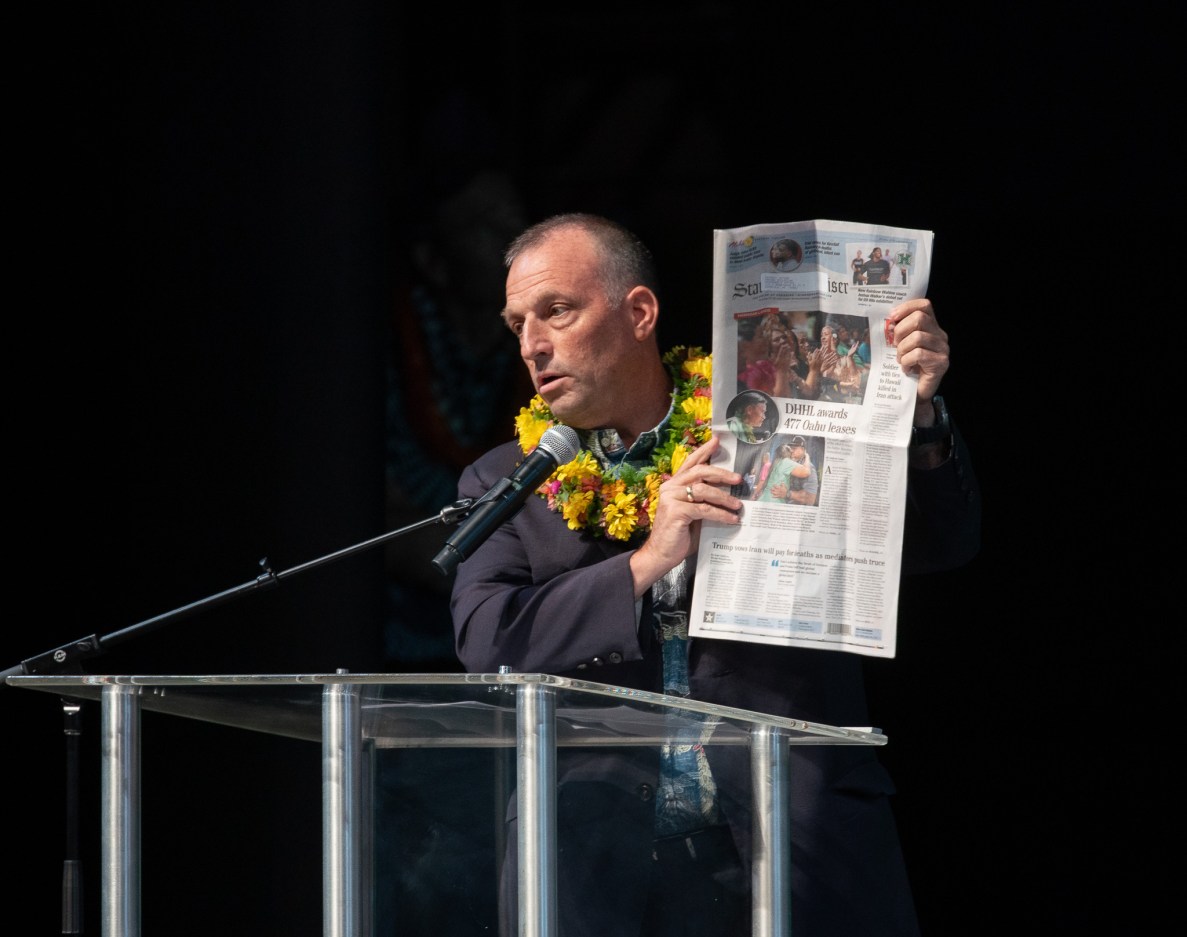
“There is a threat from the outside: It is the federal government’s approach to the Native Hawaiian people,” he said.
Kevin Tangonan administers Native Hawaiian grant programs at Leeward Community College, which has already dealt with cutbacks by the U.S. Department of Education last year. Now he’s worried that lawsuits targeting those programs could be detrimental for Native Hawaiian students, and could extend to other areas like healthcare.
But he said being in the crowd in the concert hall on Tuesday, seeing other people engaged in the conversation, gave him hope.
“It’s empowering to see the lāhui come together,” he said, “to have these difficult conversations.”
Malia Louis, of Hawaiʻi island, said she is afraid that the impacts of federal cuts could extend beyond individual programs to more broadly affect educational and housing opportunities for Native Hawaiians.
“It is education that helps us get onto Hawaiian homelands, helps us own a home,” she said. “It’s not just kids’ education, it’s adult education, land ownership, home ownership. We’re going into this headstrong, but with our hands tied.”
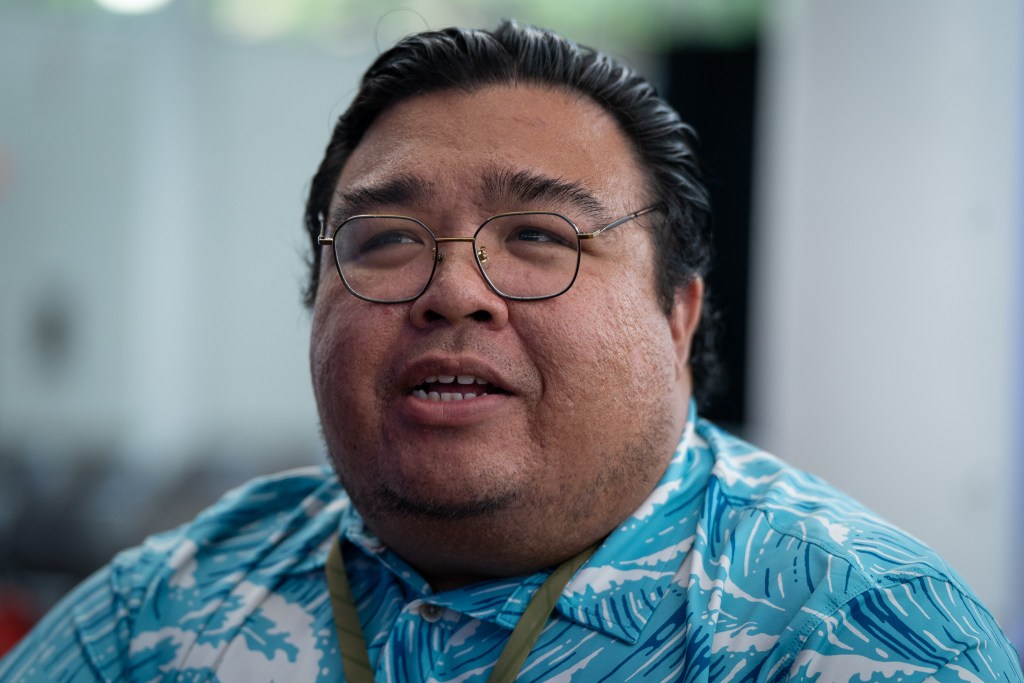
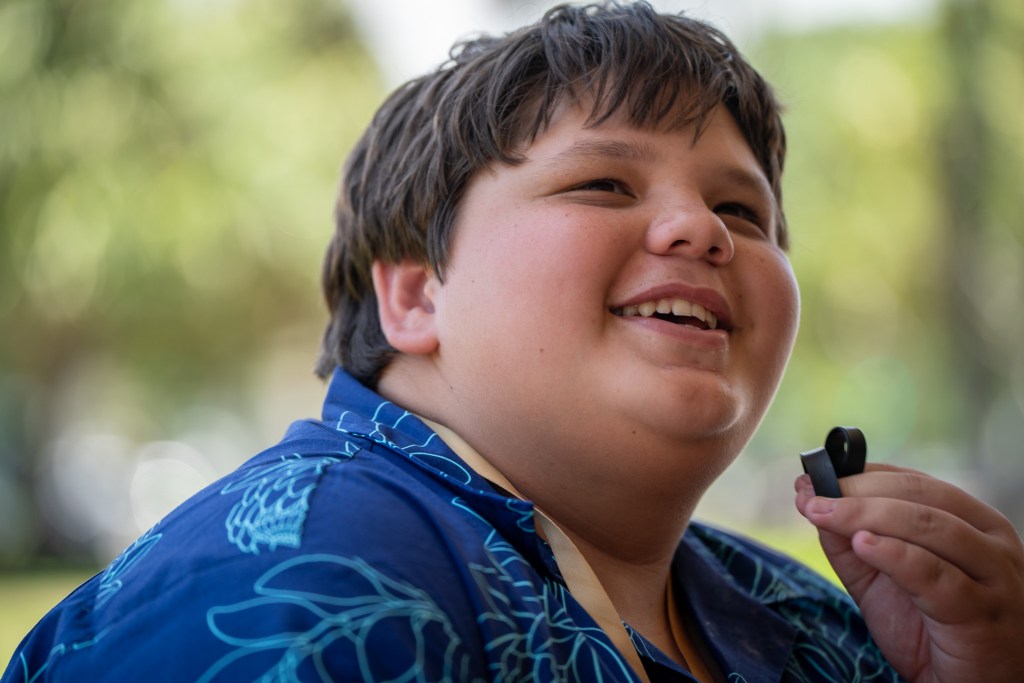
Maggie Kahoʻilua’s daughter, a Stanford graduate, said she benefitted from some of the educational programs that now may be on the federal chopping block. Both she and her daughter were attending the convention for the first time, to learn and connect with advocacy efforts.
So far, it has been an emotional experience for Kahoʻilua.
“For me, there have been moments where I’m just overcome with feeling everyone’s mana and my people being in one space,” she said.
It was Middle School student Robert Vierra’s first convention, too. He was one of about 300 students there and he said it made him feel part of the Hawaiian nation.
Vierra was particularly captivated by a performance from Hawaiian storyteller Lopaka Kapanui, who recounted a tale of a boy being possessed by a spirit near a waterfall.
“You could feel like you’re in the story,” he said.
Hawaiian Council CEO Joseph Kūhiō Lewis said the organization provided about 500 scholarships to help cover the cost of attendance so that more young people could come.
Looking out into the dark concert hall, Lewis saw in them Hawaiʻi’s future business leaders, elected officials, teachers and cultural practitioners.
“Maybe they don’t know it yet … maybe they’re sitting in the back of the room wondering if they truly belong,” he said. “If that’s you, let me tell you something, you belong here. Your voice matters.”