Panda Diplomacy: A Mayor’s Quest To Bring Pandas From China To Hawaiʻi
Mayor Rick Blangiardi’s efforts to court China included a gift of lei, a letter to President Xi Jinping and a trip to China with the CEO of Panda Express.
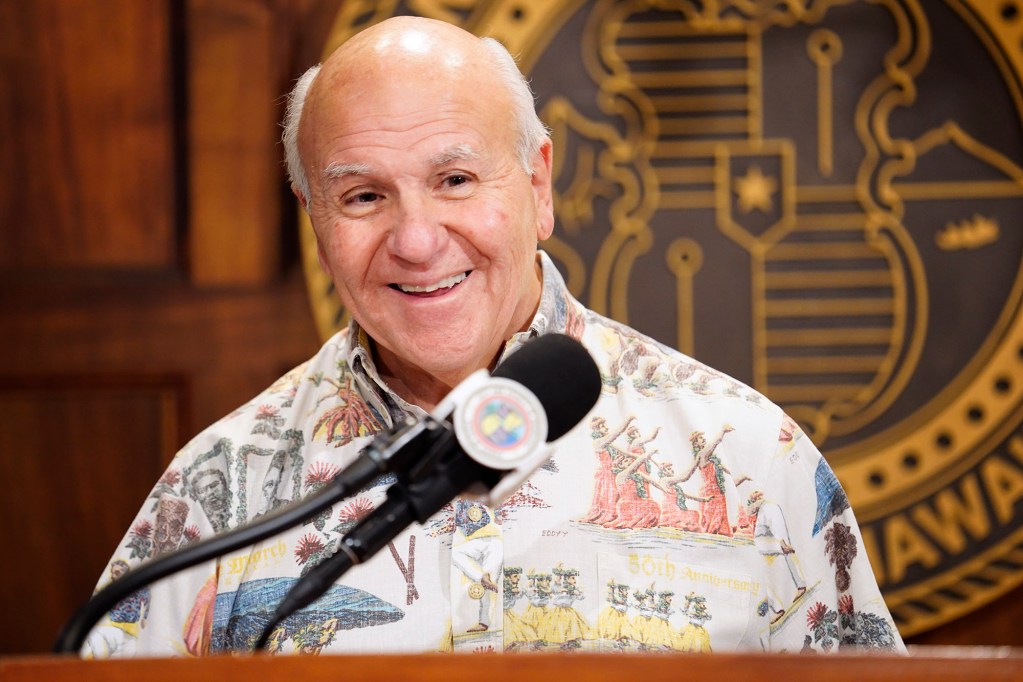
When Honolulu Mayor Rick Blangiardi decided he wanted pandas at the Honolulu Zoo, he approached the Chinese Consulate-General in Los Angeles, who gave him some advice: Go to China.
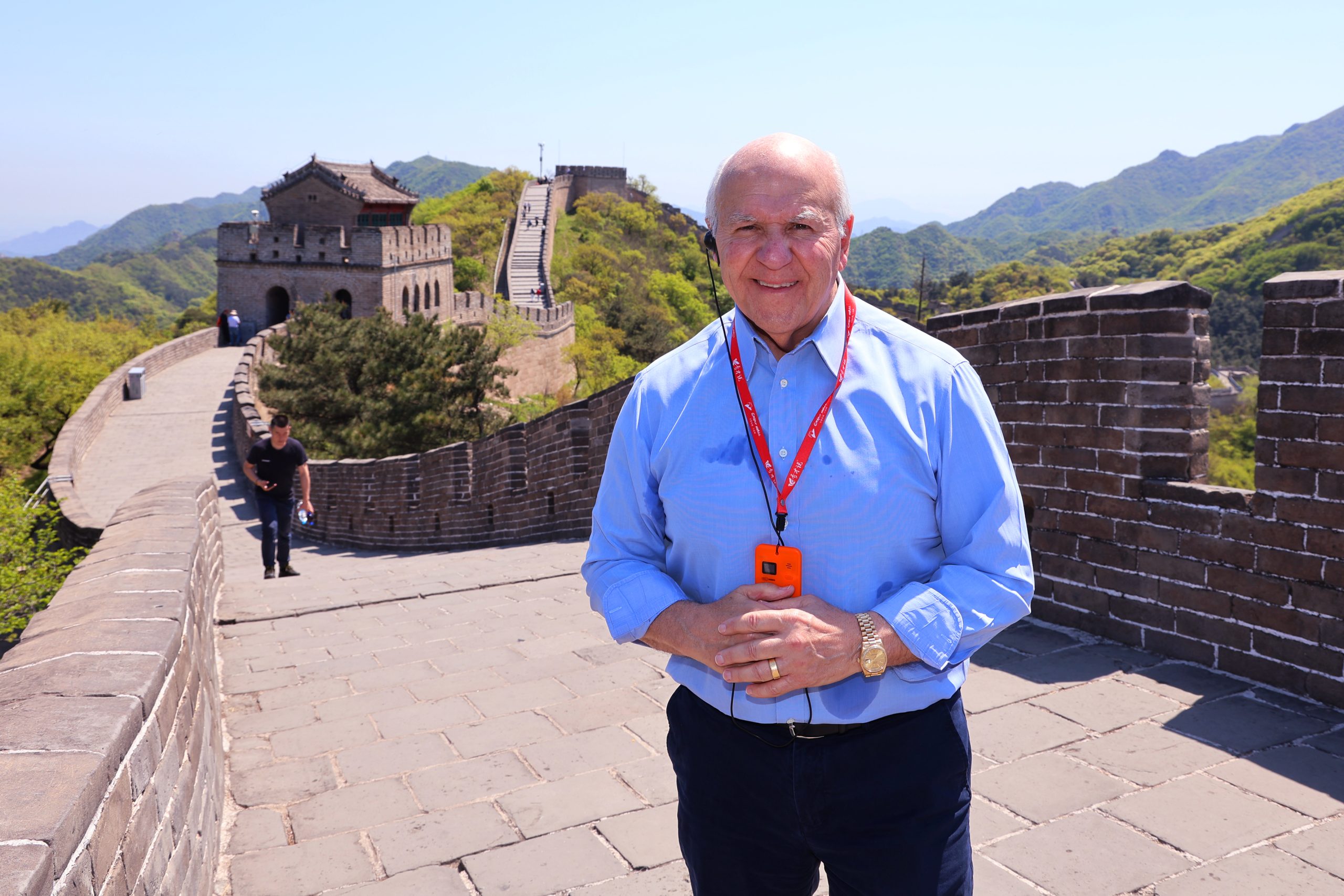
The trip, a 10-day whirlwind this past spring taken by Blangiardi and his wife, who was born in Beijing, cost taxpayers roughly $30,000 and involved the couple flying between three cities to meet with a series of high-ranking Chinese officials. Along the way, they visited Fuzhou Panda World, sat for an 18-course meal and took photos at the Great Wall of China.
“You would’ve thought we were doing a peace treaty,” Blangiardi told radio host Rick Hamada in an interview four days after he returned.
That comparison may not be far off from reality.
The mayor’s interest in getting a new headliner at the zoo has kicked off a diplomatic process with one of America’s perceived adversaries that will require the sign-off from Chinese President Xi Jinping himself. The arrangement could be a boon to Honolulu’s zoo but comes with strings attached, including an annual fee estimated to be at least $1 million and expectations not to cross any political red lines with Beijing.
But the price appears worth it to Blangiardi, who hopes the pandas could surge zoo attendance.
“I think we could easily triple the 500,000+ people we get a year at the zoo, at a minimum,” he said last month on Hawaii News Now. “And all of that means is we’ll be able to reinvest and make our zoo better and better.”
And China stands to benefit indirectly as well. While all zoo animals are ambassadors representing their species to conservation curious humans, Honolulu Zoo Director John Berry said in an interview, giant pandas are a symbol of something larger.
“They carry an important role as ambassadors for China to the United States,” Berry said.
Berry said the fanfare in 2005 over a new panda cub at the National Zoo in Washington, D.C., where he was the director at the time, was a clear example of this.
“We had cabinet level people from the United States government at his naming ceremony and the ambassador of China to the United States,” he said. “That doesn’t happen at every zoo every day.”
“They carry an important role as ambassadors for China to the United States.”
Honolulu Zoo Director John Berry, speaking about pandas
Whether or not Honolulu gets pandas depends on several factors, not the least of which is positive international relations between the U.S. and China. For now, Berry said, Honolulu is working to assure China that it can adequately care for the animals, and he assessed the likelihood of success as “leaning yes.”
“It’s like applying to your landlord,” Berry said. “You answer the first 10 questions, they come back with three more … Once we get to the end of that, it’ll go back up to President Xi (Jinping), and we will see whether we can get them from ‘leaning yes’ to ‘yes.’”
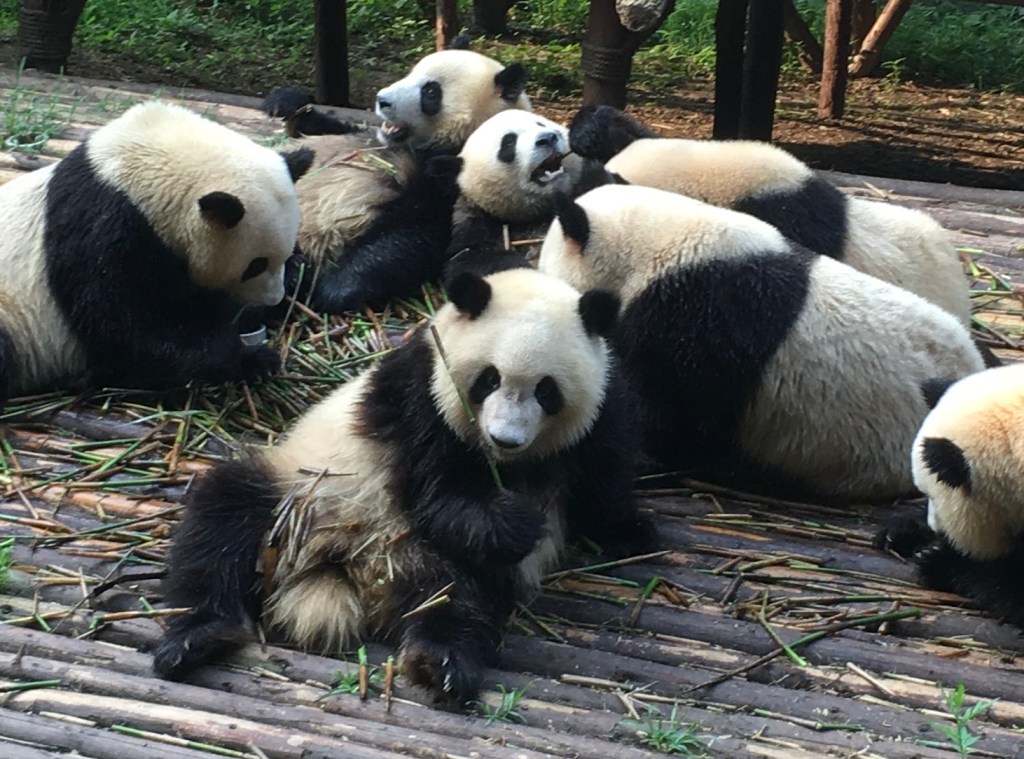
Pandas at the Honolulu Zoo would place the city in rare and envied company. Only two zoos in the United States currently host giant pandas. Getting them entails signing a lease with the Chinese government and enduring a yearlong rigamarole of meetings and negotiations. Still, for those willing to jump through the hoops, the appeal of giant pandas is clear.
“They sit there and chew their bamboo, or they do their somersalts, or they climb up a tree and then gently fall down,” American University global environmental politics and policy professor Judith Shapiro said. “And it’s endlessly delightful to watch them.”
The typical annual cost for hosting giant pandas – $1 million for a pair – is roughly a quarter of the Honolulu Zoo’s current attendance revenue. By pursuing them, Blangiardi is communicating his surety of their worth.
To reap these rewards, Blangiardi even wrote a letter to Chinese President Xi Jinping to seal the deal.
“It’s at a level now that I didn’t think it was even going to go to,” he told Hamada.
Blangiardi declined an on-the-record interview with Civil Beat about the trip. A recounting of it, however, could be stitched together via his itinerary and photos – both obtained through a public records request – along with appearances the mayor made in other media, including in China.
Blangiardi hopes the trip and ensuing efforts and investments will elevate the Honolulu Zoo into a destination of its own. Will his bet pay off?
Panda Diplomacy
Pandas are endemic to China, and the country doesn’t hand them out willy-nilly. Instead, the animals’ nonthreatening and cuddly charm makes them ideal tools of diplomacy in a hostile political world.
While the bears are now fully embraced by the People’s Republic of China, Saint Mary’s College of California history professor Elena Songster said, that support only came after the country’s communist founding in 1949. Prior to that, she said, Americans and other foreigners were the ones most enamored by what they saw as an exotic beast from the east.
“There was more external fascination with pandas than internal fascination with pandas,” Songster said. “That’s definitely changed.”
In her book “Panda Nation: The Construction and Conservation of China’s Modern Icon,” Songster frames the rise of pandas as being interwoven with the rise of the People’s Republic of China.
To help carve out its role in the global hegemony, she said in an interview, China embraced Western methods of scientific study. Pandas were a safe subject, she said, even when anti-intellectual backlash in China between the mid-1960s and mid-1970s opened up criticism toward artists, professors and scientists whose work could be seen as politically incorrect.
“Pandas were immune from that,” Songster said. “They couldn’t do anything wrong, and they were unique to China, and they weren’t in any historic records or art or anything like that, so they weren’t tainted with any imperial association … They became a very safe way of expressing nationalism during the Cultural Revolution.”
That made them an excellent symbol for national unity.
The oft-cited first modern instance of panda diplomacy – a practice where China loans its pandas to other countries as gestures of goodwill – happened as a result of U.S. President Richard Nixon’s 1972 trip to the country, which kickstarted diplomatic relations between capitalist America and communist China.
During the trip, the story goes, First Lady Pat Nixon sat next to the Chinese Premier Zhou Enlai at a gala. When she expressed adoration for the panda-decorated pink tissue paper wrapped around a box of cigarettes, Zhou responded by offering the U.S. two pandas who ended up living at the National Zoo in Washington, D.C.
America experienced an ensuing “Panda-monium,” the Richard Nixon Foundation says on its website, and “even those in high levels of government were unprepared for the pandas’ popularity. Hundreds of people visited everyday [sic], standing several rows deep to catch glimpses of (pandas) Ling-Ling and Hsing-Hsing.”
To this day, China continues to use its panda loans as diplomatic tools.
Normal loan periods are 10 years and include a male panda and a female panda, Shapiro said. Loans can be extended. Any baby born to the pair remains the property of China, she said, and all pandas eventually repatriate to China by the end of their lives. The idea is that host zoos help study the pandas, analyzing everything from how they breed to how they relax.
“It’s always a sad moment when the contract runs out and the pandas that have become so beloved by a certain community have to go home,” Shapiro said. “And then the community is on tenterhooks to see whether China will give them another pair.”
Whether or not the zoo receives another pair depends on many factors.
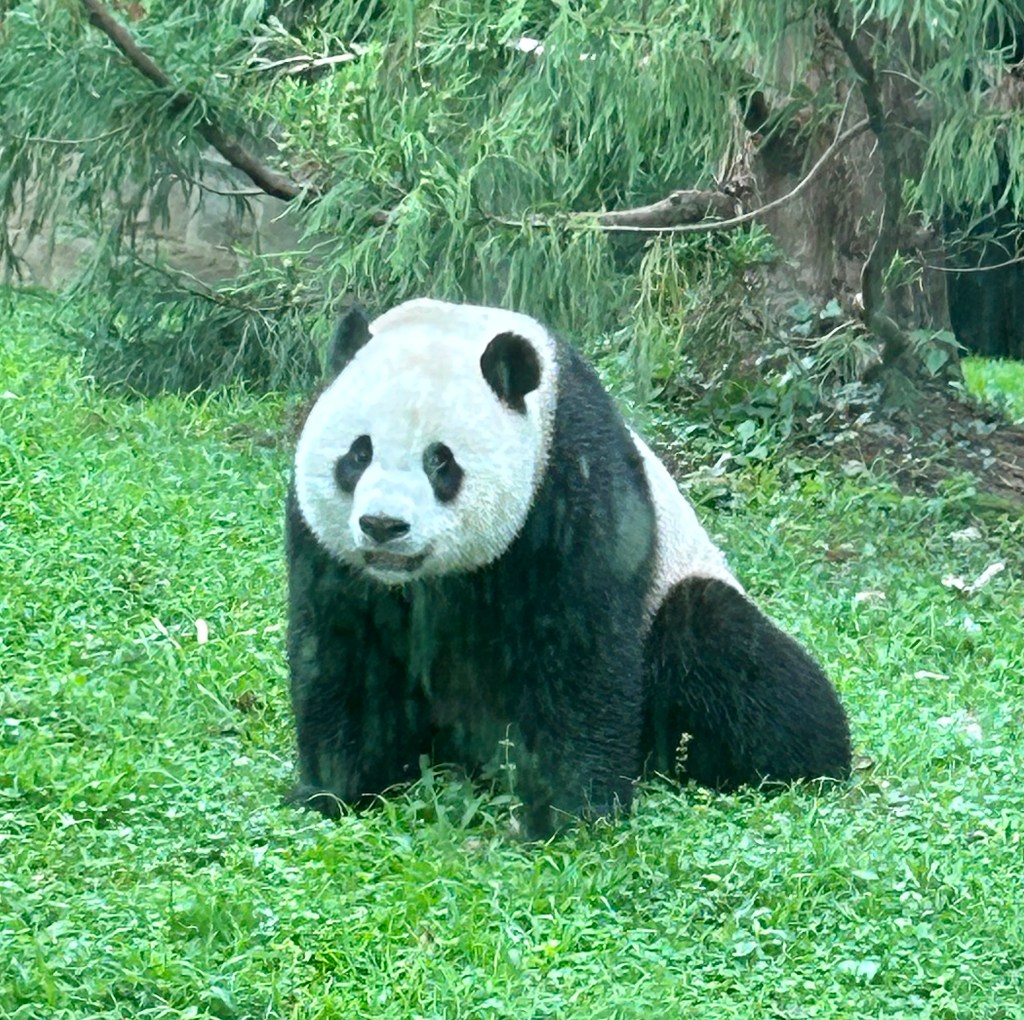
D.C.’s National Zoo recently started hosting its third pair of pandas after its previous pair of 23 years – Mei Xiang, whose name means “beautiful fragrance,” and Tian Tian, whose name means “more and more” – returned to China after four loan extensions. The facility is known for its expertise in breeding endangered animals, Director Brandie Smith said, a major selling point since giant pandas were only upgraded last decade from “endangered” to “vulnerable.”
Meanwhile, Ueno Zoo in Tokyo lost its giant pandas earlier this year after newly elected Japanese Prime Minister Sanae Takaichi said last fall that she would deploy her military if China were to invade Taiwan. That angered China, which maintains that the island is legally part of mainland China.
Despite some media coverage suggesting otherwise, Songster said, the pandas’ departure was not unexpected. She said the current loan period was ending then anyway, and that it would be difficult for China to suddenly yank a zoo’s pandas given the months of coordination that goes into transporting them.
More practical, she said, is for China to simply not agree to another loan period with an offending country. She said that appears to have been the case with Japan, which recently began dismantling its panda enclosure and has a scheduled completion date of February 2027, according to NHK World Japan.
“It does seem like they’re not going to get pandas for a while,” Songster said.
The Trip With A Mission
Few details about Blangiardi’s trip were publicly known before his departure besides how long it would last and that the Fuzhou Municipal People’s Government would be paying $450 for part of his stay. Asked during an unrelated March press conference what the purpose of the trip was, he declined to elaborate.
“We don’t want to raise expectations,” he said, “but it wasn’t the typical cultural exchange to our sister cities.”
A month later, as the mayor prepared to finally head to China, his office published a press release announcing the trip’s true purpose: “Mayor Blangiardi’s China trip looks to strengthen global ties and bring pandas to the zoo.”
Blangiardi took the trip per the guidance of Guo Shaochun, the Consulate-General of China in Los Angeles. Multiple attempts to reach Guo were unsuccessful.
He left on April 22 and returned May 2, bringing along his wife Karen Chang – who speaks fluent Mandarin and had her own successful career in business. Chang was not made available for an interview. The couple’s travel cost taxpayers $28,746.30, which came from lapsed funds from the first three quarters of the fiscal year.
Food business executives who paid their own way joined the couple on some legs of the trip, including Panda Express Chief Executive Officer Andrew Cherng.
The trip included talks about economic development, an internal memo dated from April 7 says, but a key objective was “to advocate for the potential placement of giant pandas at the Honolulu Zoo.”

Taxpayers paid for the mayor and his wife to fly business class rather than coach during the longer flights. City guidelines allowed this for a variety of reasons, including because the flights lasted more than nine hours and because both travelers were over the age of 75.
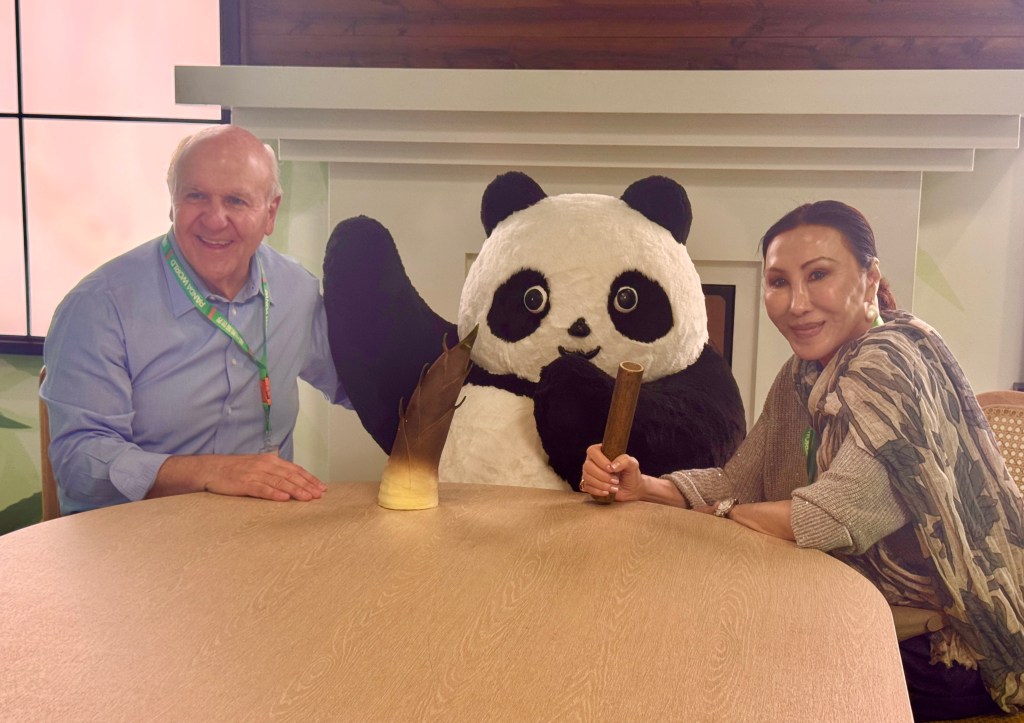
They and restaurateur Jack Zhang – another member of their posse and the CEO of Hawaii Lucky Group, which oversees Honolulu’s Mikiya Wagyu Shabu House and Cotti Coffee locations – landed on April 23 in Fuzhou, a sister city of Honolulu. A full itinerary of business meetings and cultural experiences lay ahead of them. Their first stop the next morning was the Fujian Cuisine Culture Museum, where they tasted Fuzhou’s famous jasmine tea.
“It was delicious … I can see why it’s considered world-class,” the Fujian Provincial government’s webpage quotes Blangiardi saying.
The next day, they visited Fuzhou Panda World, which holds both giant pandas and their distant smaller cousins, the red pandas. Blangiardi told Hamada during their radio interview that he found the red pandas fascinating.
“They look like a big raccoon,” he said.
He also said the conversations he had with directors and caretakers at Panda World were promising.
“Right from the outset,” he told Hamada, “they said they wanted to work with us. And if in fact we were to secure the pandas, they want to be our team.”
“I felt so responsible because I knew I was representing Hawaiʻi, but for that matter, really the United States.”
Mayor Rick Blangiardi on his panda mission
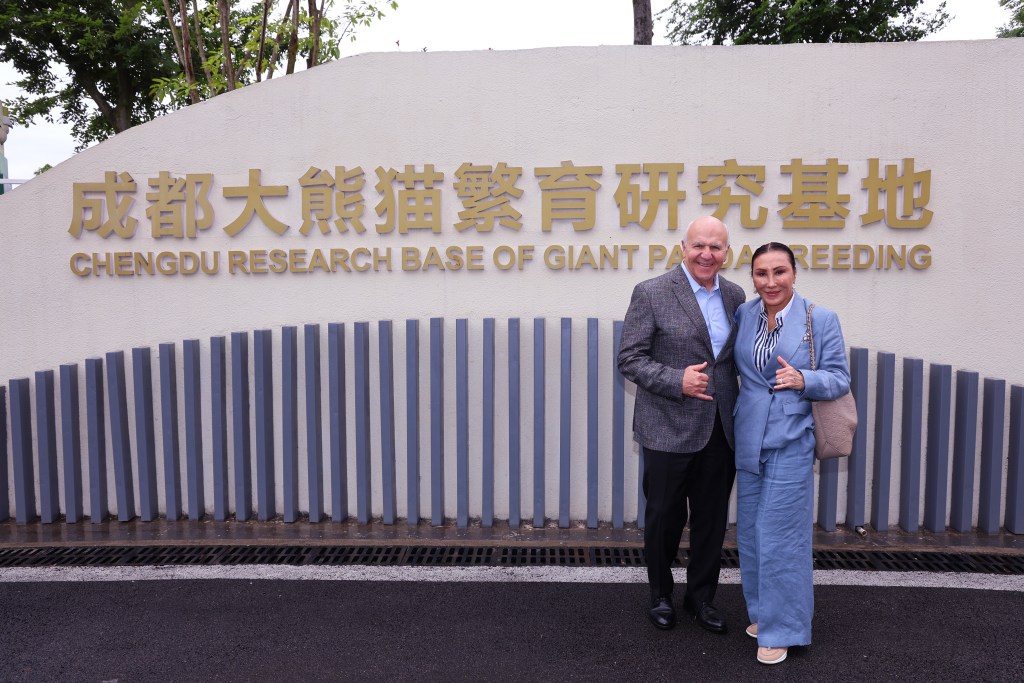
After Fuzhou came Chengdu, another sister city and the home of Chengdu Research Base of Giant Panda Breeding, not to mention a place awash with giant panda representations in the forms of public statues and souvenirs. Blangiardi’s time in Chengdu only lasted a few days, according to his itinerary, but he said it included three or four formal speaking arrangements.
“I felt so responsible,” he said to Hamada, “because I knew I was representing Hawaiʻi, but for that matter, really the United States.”
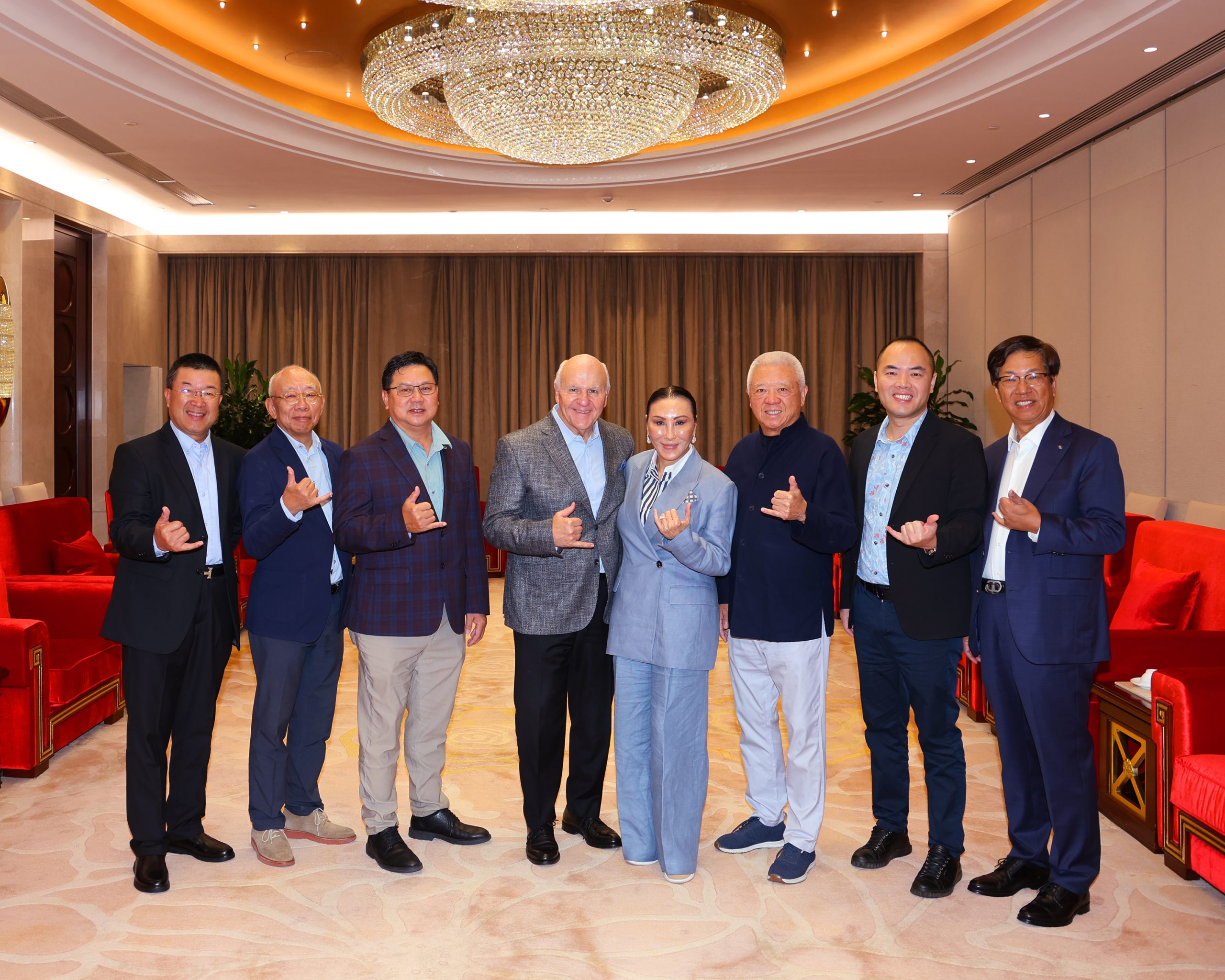
At their final stop, in Beijing, Blangiardi met with high-ranking government officials, including China’s Executive Vice Minister for Foreign Affairs Ma Zhaoxu and President Yang Wanming of the organization Chinese People’s Association for Friendship with Foreign Countries.
All the while, Blangiardi relayed to Hamada, he wondered which official it is who signs off on the country’s panda loans.
“Who’s the yes guy?” he remembers asking around.
The answer, he remembers Ma telling him, is that Ma makes a recommendation to Chinese President Xi Jinping. Blangiardi told Hamada during their May interview that the prognosis is good. He said his meeting with Ma ran 15 minutes longer than scheduled, which he took as a positive sign.
“He kept people waiting,” Blangiardi said. “We had a great meeting.”
The itinerary shows they capped off their time in Beijing with dinner at an Italian restaurant. The next morning, they got on a plane to come home.
“It was probably the most intense road trip of my life,” he told Hamada.
Blangiardi recognizes the situation’s sensitivity. He told Hamada that the Japanese prime minister’s words cost the country their pandas, which he said was a decision made by Ma.
“It was probably the most intense road trip of my life.”
Mayor Rick Blangiardi
Shapiro, the American University professor, agreed that Japan’s panda loss was likely retaliation for its leader crossing a red line with China. There are other red lines to be wary of too, she said, even if they often aren’t relevant for a Honolulu mayor to discuss anyway, such as disputed territories China claims as its own like Taiwan.
Blangiardi has recently been talking with the Taiwanese government about an unkempt property they own in Chinatown, a neighborhood he has spent his mayoralty trying to free from its seedier reputation. Taiwan’s neglect of their Chinatown Cultural Plaza did not aid his endeavor, he told the Honolulu Star-Advertiser in an article published this February. He said he had written their government letters for years asking them to spruce it up.
Talks progressed by March. In a follow-up story with the Star-Advertiser, Blangiardi projected optimism, saying that he envisioned Chinatown’s revitalization as potentially including a redeveloped and rebranded Taiwan Cultural Plaza.
Could that cross a red line? Shapiro said maybe – if, for example, Blangiardi were to invite the Taiwanese president Lai Ching-Te to a ceremony celebrating the plaza’s reopening, that would be a no-go. On the other hand, she said, it sometimes happens that a foreign government owns land in America, and it’s hard to blame Blangiardi for that.
“It’s also making Taiwan look bad,” she said.
When asked about this, Blangiardi told Civil Beat that he has since decided the plaza should remain named after Chinatown rather than Taiwan.
In general, Shapiro said, she thinks China’s unique relationship with the U.S. as a major trade and research partner means despite all the global superpower rivalry tension between the two countries, there remains a desire for good-spirited and peaceful relations. She said China can point to its panda loans to the U.S. as proof of this desire.
“At a moment when the U.S. and China are criticizing each other and threatening each other in various ways,” Shapiro said, “ordinary people are just mad for pandas. And that has to help China. That’s a good thing, diplomatically.”
Perhaps most important in explaining why Blangiardi made inroads with high-ranking Chinese officials, Shapiro said, is the fact that his wife is from Beijing. She said it explains why Blangiardi was able to schedule meetings with busy top officials and even to postpone those meetings during the storms without much of an issue.
“He’s proven by his marriage that he loves China,” she said.
The Guests
Giant pandas would come with giant hype.
Even the bears’ naming process can capture public attention, according to Annalisa Meyer, the director of brand management and communications for Smithsonian’s National Zoo and Conservation Biology Institute. Almost 135,000 people voted between potential panda names pitched by zoo staff and Chinese partners when a cub was born there in 2020. In the end, they settled on Xiao Qi Ji, meaning “little miracle.”
“Most zoos who have pandas find creative ways to engage the public,” Meyer said, “because they become celebrities. Honestly. They’re celebrity attractions.”
Honolulu Zoo visitors on a recent Tuesday were excited about the idea of giant pandas coming to town. Pandas are cute, they said. They’re fluffy. Majestic.
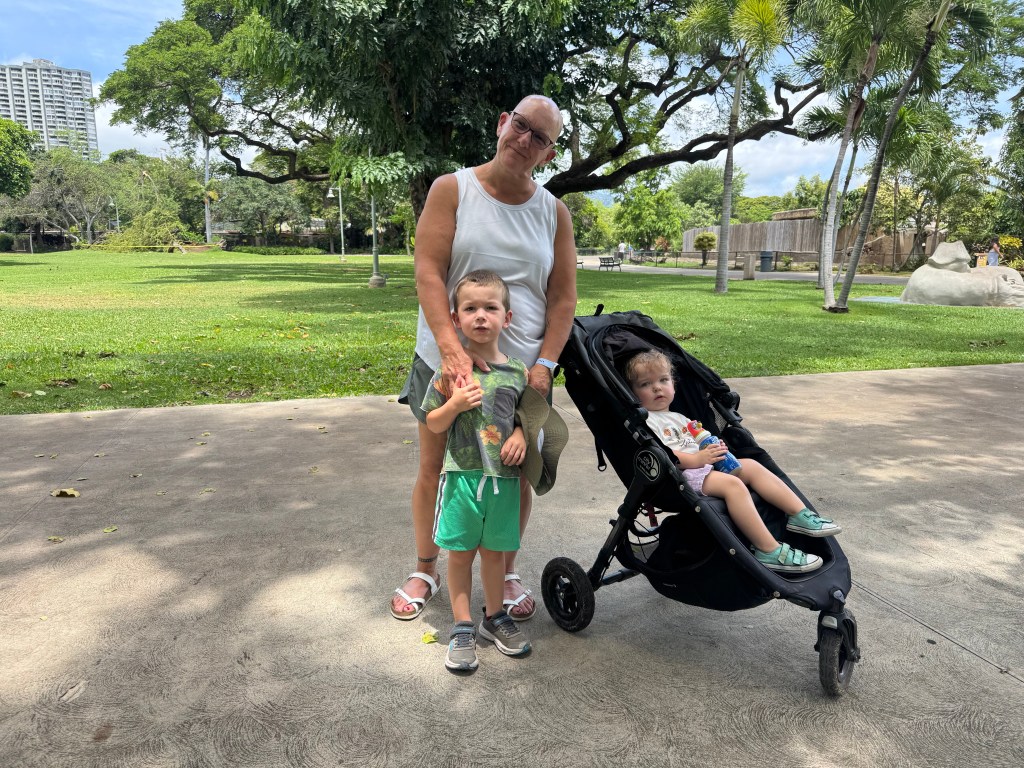
Idaho resident Cathy Butt, 60, brought her two grandkids to the zoo while the other adults on the trip visited Pearl Harbor. She said she loves pandas, and that it would be cool for the Honolulu Zoo to get them.
“Every zoo that I’ve gone to in the States – the upper States – I’ve never seen a panda,” she said.
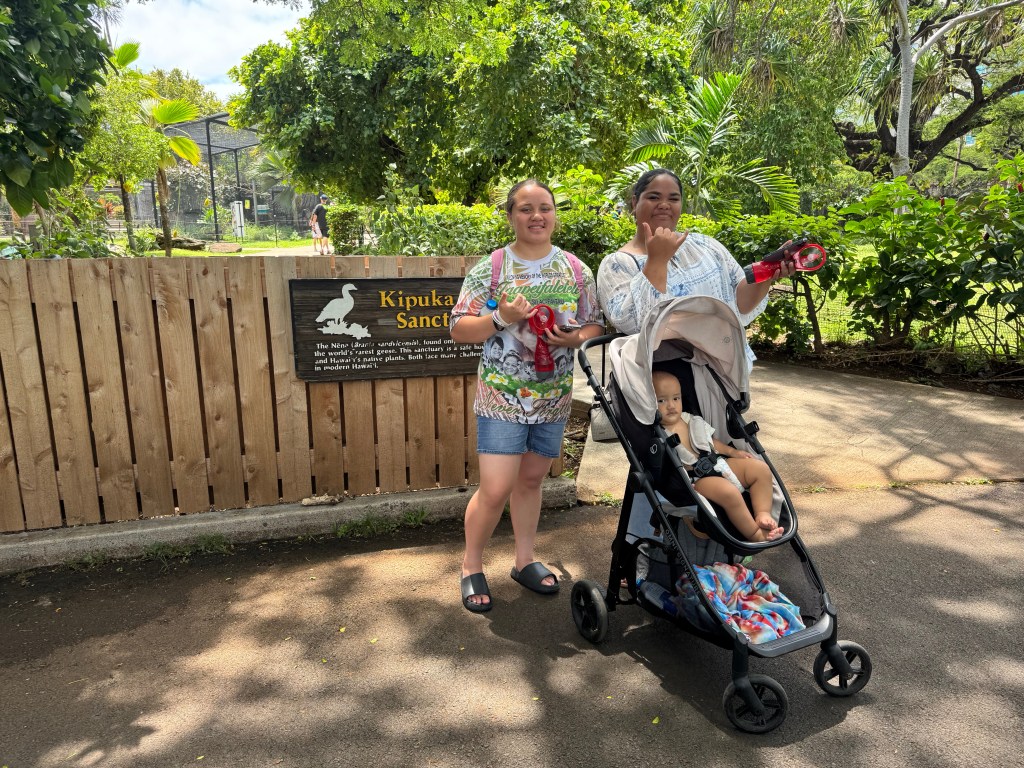
Sisters Agnes and Alexia Tiitii, 19 and 14, said they were staying in Waikīkī during their visit from Alaska. They weren’t very impressed by the zoo, which Agnes said seemed “pretty dead,” but they liked the idea of pandas and would consider coming back if the zoo had some on display.
Even visitors who have seen pandas were excited about the idea of seeing more.
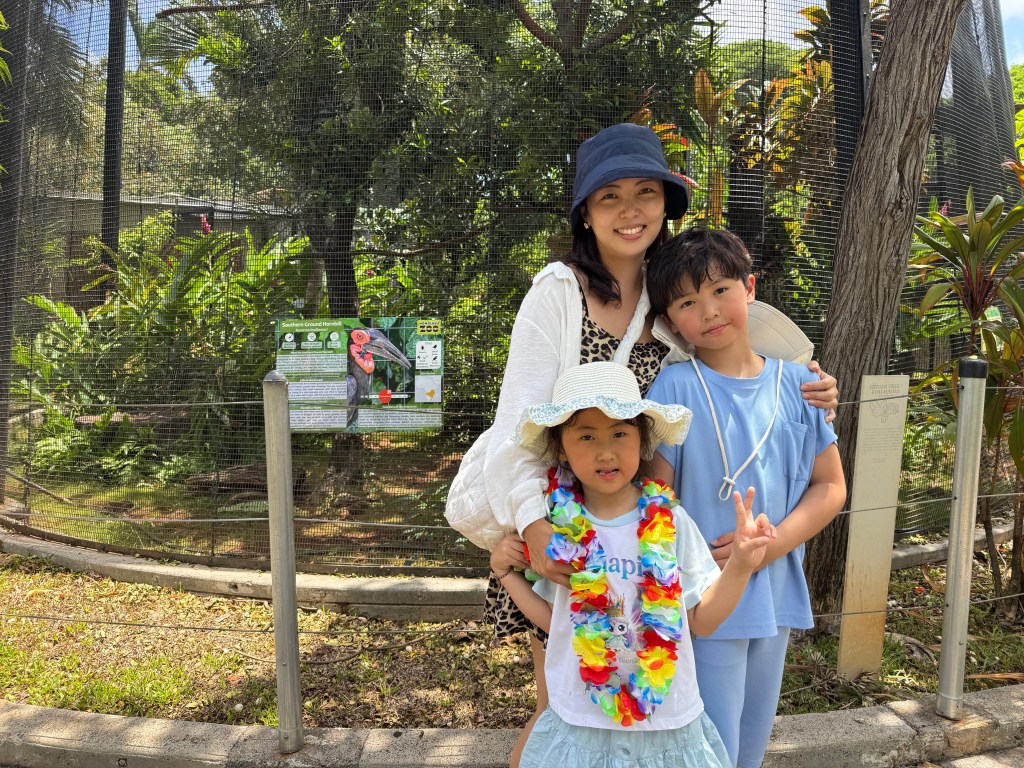
Shelly Shin, 39, who was visiting the zoo with her two young children, said they had flown to Honolulu from South Korea because her husband was in town on a work trip. Shin said she has seen pandas at the zoo in Korea, but that it would still be exciting to see them again while in Honolulu.
“We would definitely come back,” she said.
Attendance at the National Zoo in D.C. dropped by 20% during a recent yearlong period without pandas, according to Brandie Smith, the zoo’s director. She agreed they transcend the popularity of most other zoo animals.
“I’ve seen people burst into tears when they’ve seen pandas,” she said.
During a recent yearlong interim period without the bears, Smith said, the zoo renovated their panda enclosure. They upgraded the HVAC system, repainted the enclosure – since they didn’t have to worry about the paint covering up pandas’ scent trails – and created new flat areas for the bears to lounge on.
“I’ve seen people burst into tears when they’ve seen pandas.”
Brandie Smith, the National Zoo director
Pandas like to climb, Smith said, and the zoo’s enclosure originally had more realistic looking mountains for that. Now, she said, there’s more of an understanding that pandas also like to rest, and horizontal platforms have been added with that in mind.
Smith said the National Zoo pays China $1 million per year for its pair of pandas, though she emphasized that negotiation terms can vary. The money goes towards conservation efforts, though Songster, the author, said population progress can be difficult to track. She said China’s captive breeding program is by now self-sustaining, however, meaning they don’t pull pandas from the wild anymore.
Panda conservation efforts have been criticized by people who say they have a net negative effect on the species’ well-being, the New York Times reported in 2024, though panda researchers have disputed this and say their work is crucial to preventing the animal from becoming extinct.
And some people have questioned Honolulu’s panda potential. In early May, when the mayor was still abroad in China, council member Esther Kiaʻāina said at a budget committee meeting that building a panda exhibit would cost a lot of money that could be spent on other zoo improvements.
“I think we need to look hard at whether or not that moves forward,” she said.
She’s less skeptical by now, however. In a text message this month, she said she has full confidence in Berry, the zoo’s new director, who she used to work with when they both lived in D.C.
Berry confirmed in an interview that pandas would be expensive. He plans to court wealthy benefactors to pay for them, he said, removing the added burden for taxpayers.
“Hawaiʻi is blessed to have many people who have been very successful in their lives and who are known already to contribute to many wonderful causes,” he said. “And my hope is that we’ll be able to reach out and have them see that this is another one of those causes.”
The most expensive part of the exhibit would be electrical costs to keep the pandas cool, he said — giant pandas prefer temperatures below the mid-70s Fahrenheit — and his team has started discussions with the University of Hawaiʻi to research creative ways to save energy.
That kind of research could make Honolulu Zoo a leader in panda facility maintenance, Berry said, analogous to the National Zoo’s leadership in panda breeding techniques. He said he’ll think more about what panda research niche the Honolulu Zoo could pursue – whether it’s related to facility maintenance or other niches such as diet or tooth care – during the Association of Zoos and Aquariums conference next month.
Pandas could be at the Honolulu Zoo within two years after China gives the official green light, he said, and in the leadup, he would deploy a team somewhere that already hosts pandas so they could spend a couple weeks learning the basics of panda care. Once pandas arrive at the zoo, staff would monitor them and send reports back to China about metrics such as their weight, their eating habits and their blood levels.
Honolulu Zoo guest Arushi Dutt, a graduate student at the University of Hawaiʻi Mānoa, said during a recent afternoon at the zoo that she often doesn’t visit zoos because of her concern about the animals’ well-being. She had some free time that day, however, and she said she was curious to check it out.
“I would be happy to have pandas here at the zoo,” she said, “but yeah, my concern would always be about the well-being.”
The Honolulu Zoo has had a rocky reputation. It lost its national accreditation in 2016 due to underfunding, though it regained it in 2020. In 2022, the zoo cleared a mid-cycle review, allowing them to keep the accreditation through March 2025.
The AZA more recently approved the zoo for accreditation through 2030, which the city celebrated this April with a press conference.
In addition to its accreditation challenges, an animal advocacy group recently sued the city for allegedly violating the rights of two elephants, Mari and Vaigai, who are currently held in the Honolulu Zoo. The group, the Nonhuman Rights Project, says the elephant enclosure is too small, and they should be allowed to roam free in a sanctuary. Attorneys seek to make the case the animals deserve to be considered legal persons with the right to self-determination. The Hawaiʻi Supreme Court scheduled their case’s oral arguments for Nov. 9, to be held at Punahou School.
Berry has defended the zoo against the lawsuit, saying in a written statement in June that Mari and Vaigai receive “exceptional care and support.”
Smith, who used to work with Berry at the National Zoo, said China is rigorous in making sure candidate zoos are up to the task of hosting their beloved national animal. The only way the Honolulu Zoo would get giant pandas, she said, “is if they showed that they were absolutely able to take the best care of them.”
Honolulu officials are confident they can meet this standard and make the zoo a premier Waikīkī attraction, a potential future many residents are excited about as well.
“If this – when this – does come to fruition,” Hamada said on his radio show, “this is national, international news. And the focus on Honolulu is going to be off the charts.”