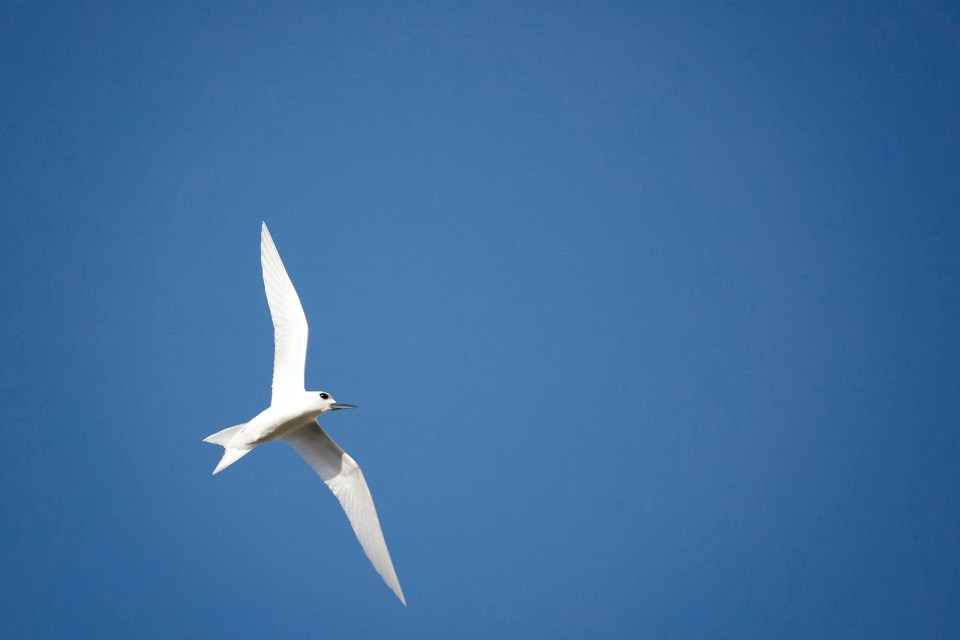
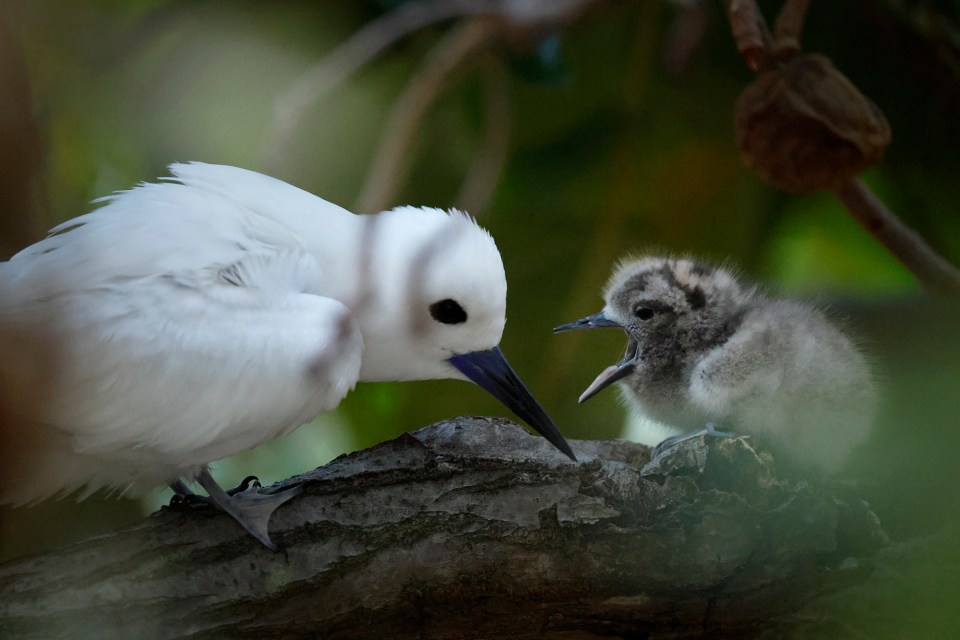
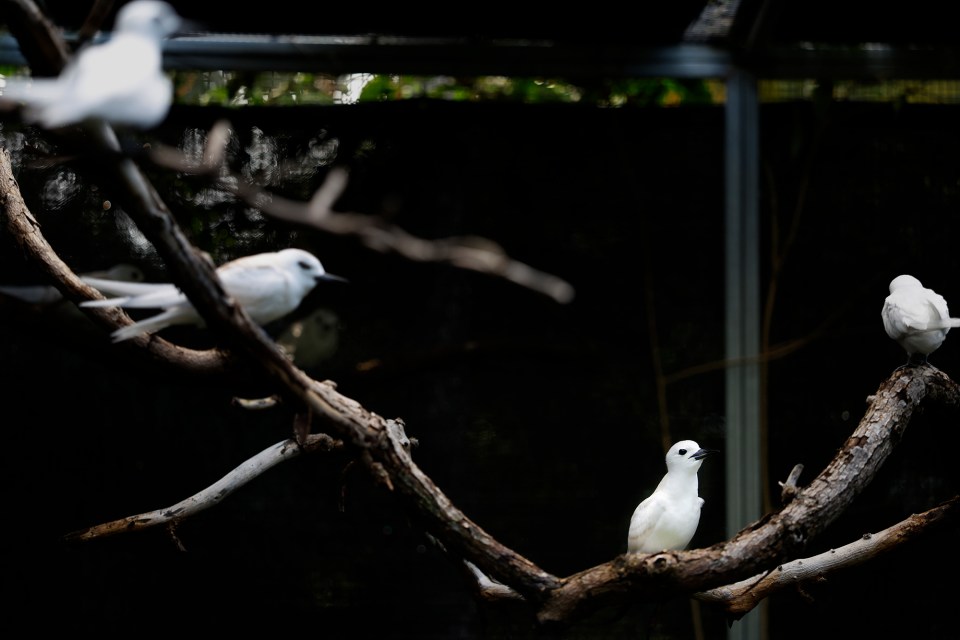
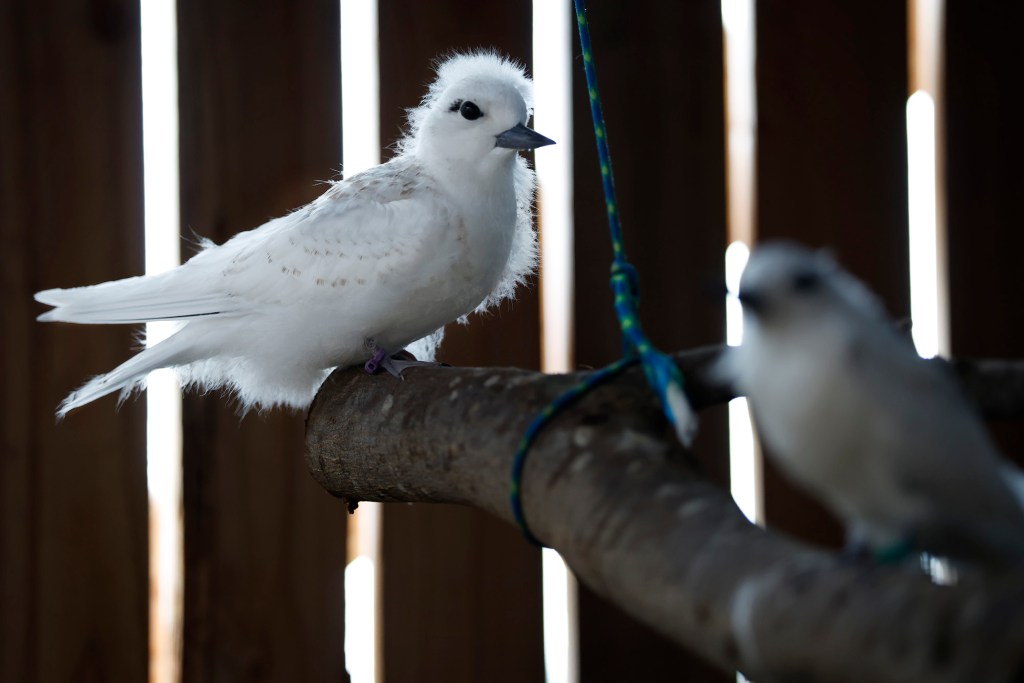
On a regular sunny Honolulu day, baby manu-o-Kū — small white native Hawaiian seabirds — sit in trees waiting for their parents to bring them food. But recent storms have blown them from the safety of their perches.
Hui Manu-o-Kū, a volunteer group that tracks the birds’ whereabouts, usually gets no more than one or two reports of fallen chicks per day, coordinator Rich Downs said. But during Hurricane Lala, 45 reports came in over the span of five days.
“Shouldn’t be any big surprise that strong winds are going to result in more chicks getting blown out of trees,” Downs said.
All in all, he said, 29 eggs and 14 small chicks were lost. Many of them disappeared without a trace, he said – likely carried away by cats or mongoose, their losses only known because one day they were there and the next they weren’t.
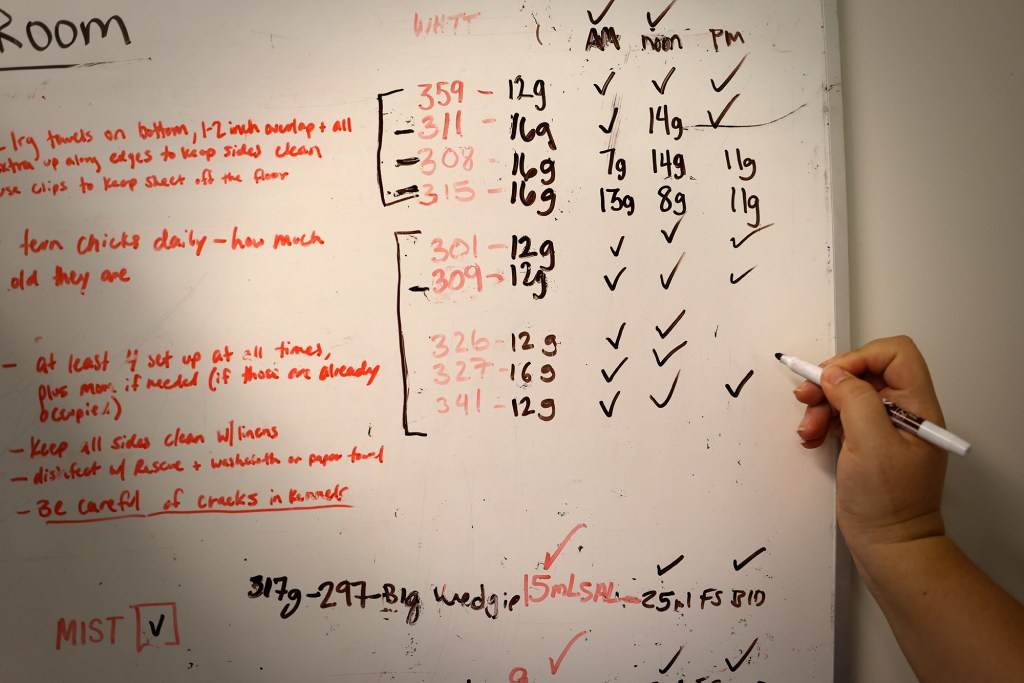
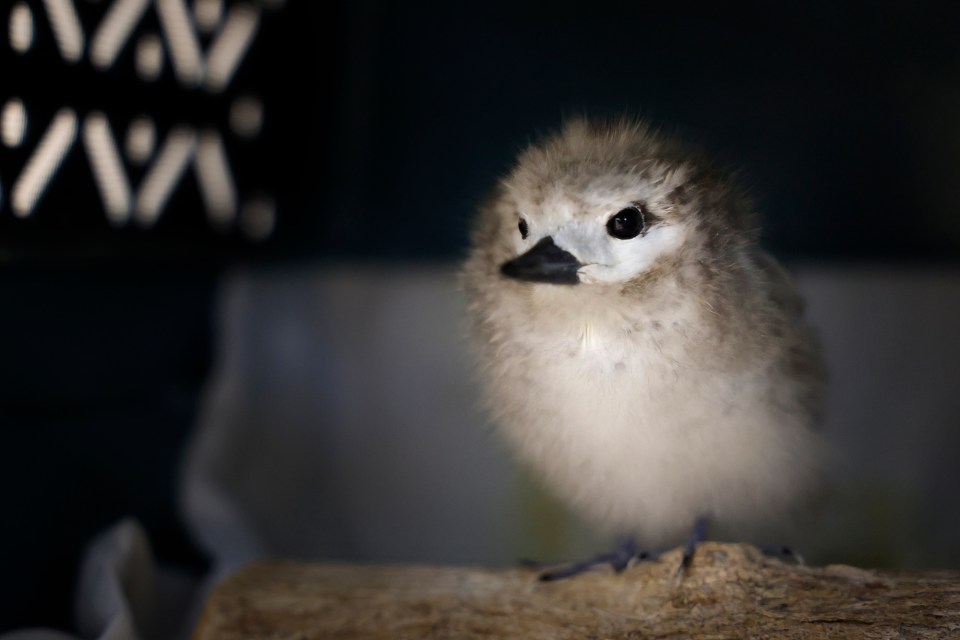
Hurricane Lala has been one of several high-wind events during Hawaiʻi’s super El Niño season this year, with gusts over 40 mph in Honolulu.
“We suspected all along that there’s a strong correlation between peak wind gusts and numbers of calls that come to the hotline,” Downs said, “and Lala kind of reinforced that suspicion.”
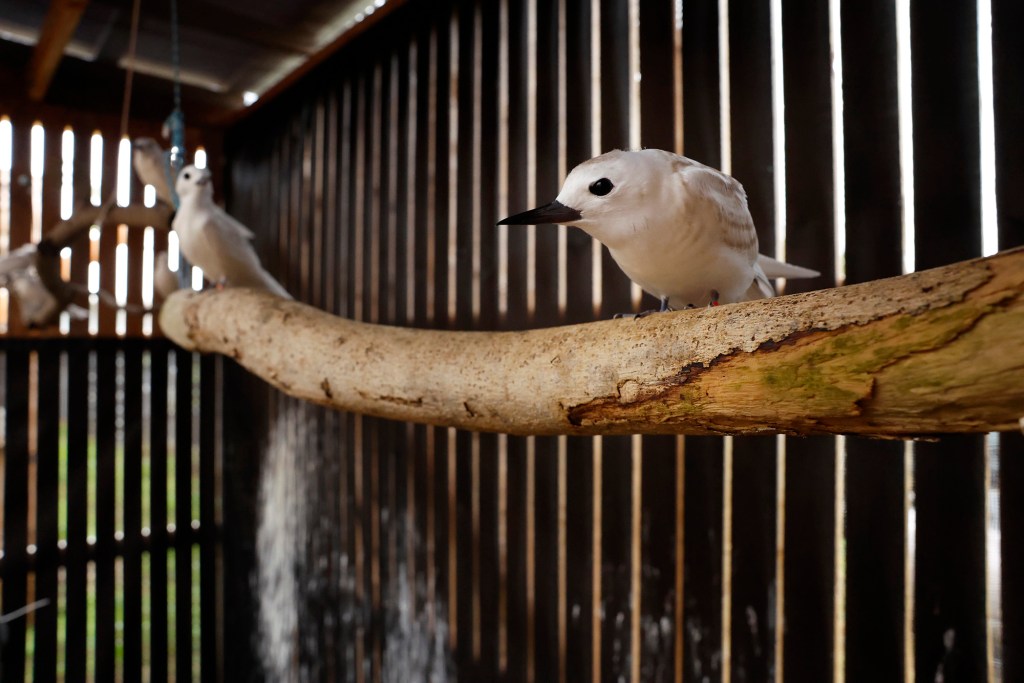
Manu-o-Kū, also known as white terns, are named after Kū, the Hawaiian god of war, and hold the distinction of being Honolulu’s official bird. Despite the storm losses, they are unusual among native birds because their population is thriving. Thousands of manu-o-Kū live in the bustle of urban Honolulu, where they tend to be safe from preying rodents and where arborist-trimmed trees give them plenty of places to lay their eggs and practice their flying.
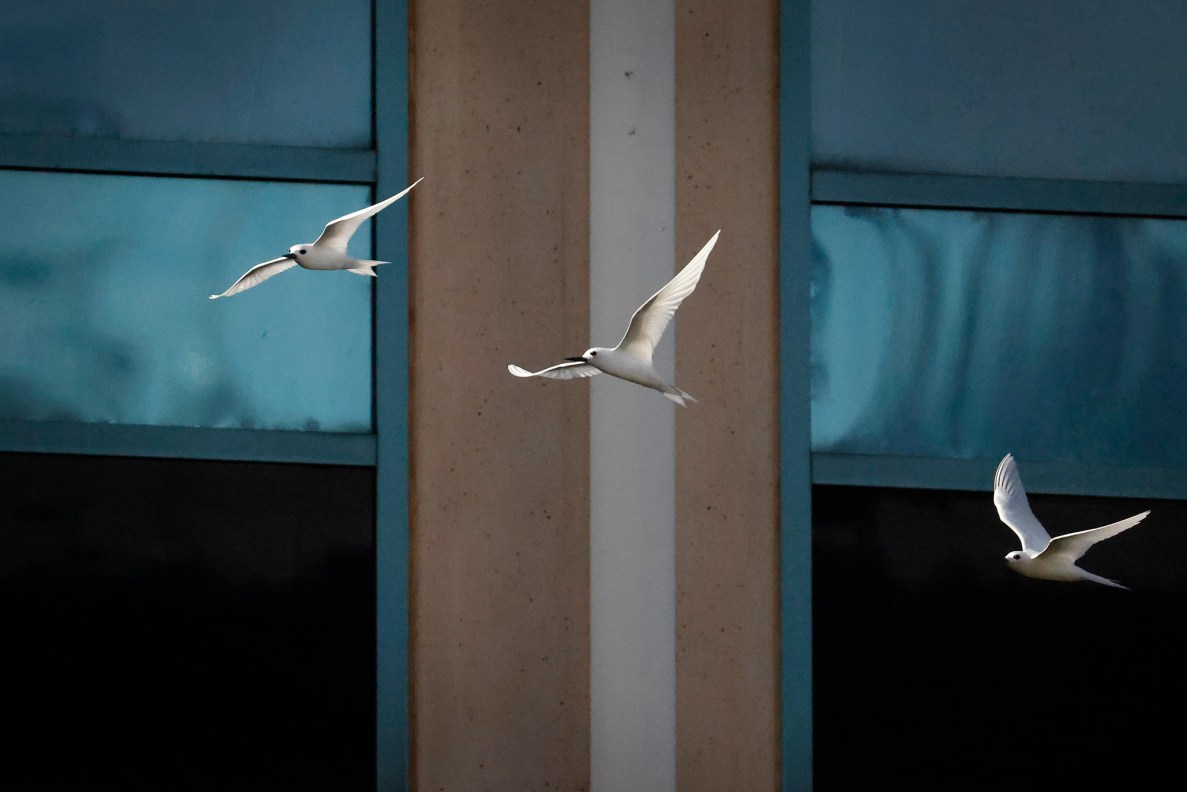
To alert arborists of the birds’ locations, the hui wraps blue ribbons around tree trunks where manu-o-Kū are nesting.
Those blue ribbons serve multiple purposes, Downs said: not only warning arborists to be mindful of their trimming – which protects both the manu-o-Kū from bodily harm as well as the arborists from legal issues related to the Migratory Bird Act Treaty – but also instilling a kind of civic pride in Honolulu residents whose city’s official bird can be found throughout the urban core.
“That was an unintended really good outcome,” he said.
When the hui started placing ribbons shortly after forming in 2016, Downs said, the ribbons were only meant for trees on public property. People started calling to report manu-o-Kū in their own private yards, however, and rather than disappoint them by denying them a blue ribbon, the hui expanded its policy.
“If somebody calls and wants a blue ribbon for a tree in their backyard,” Downs said, “we’re happy to provide it.”
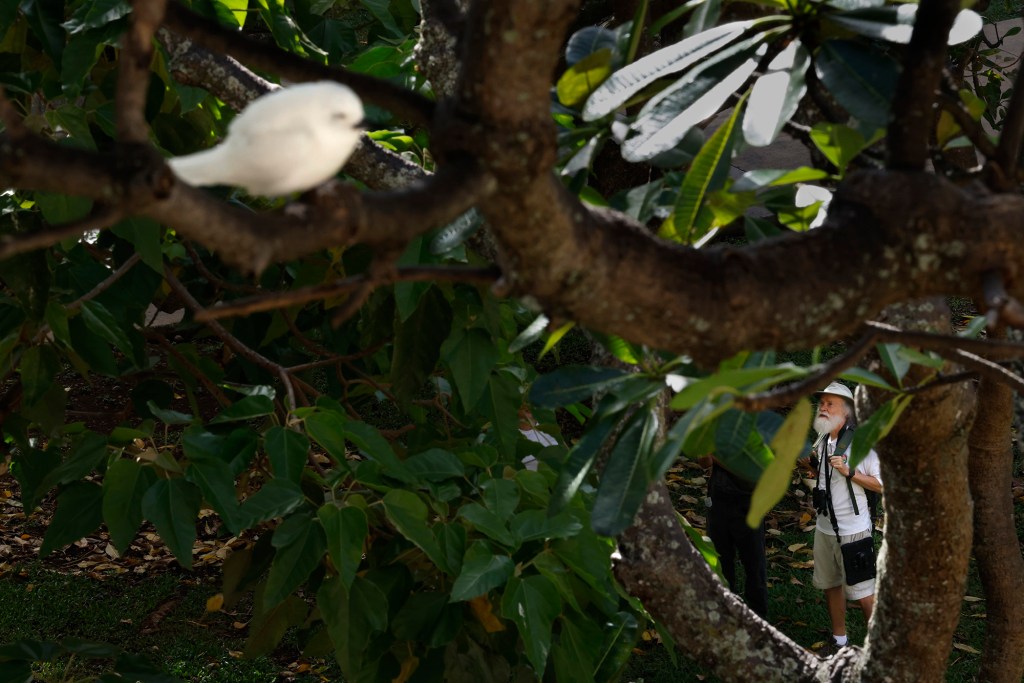
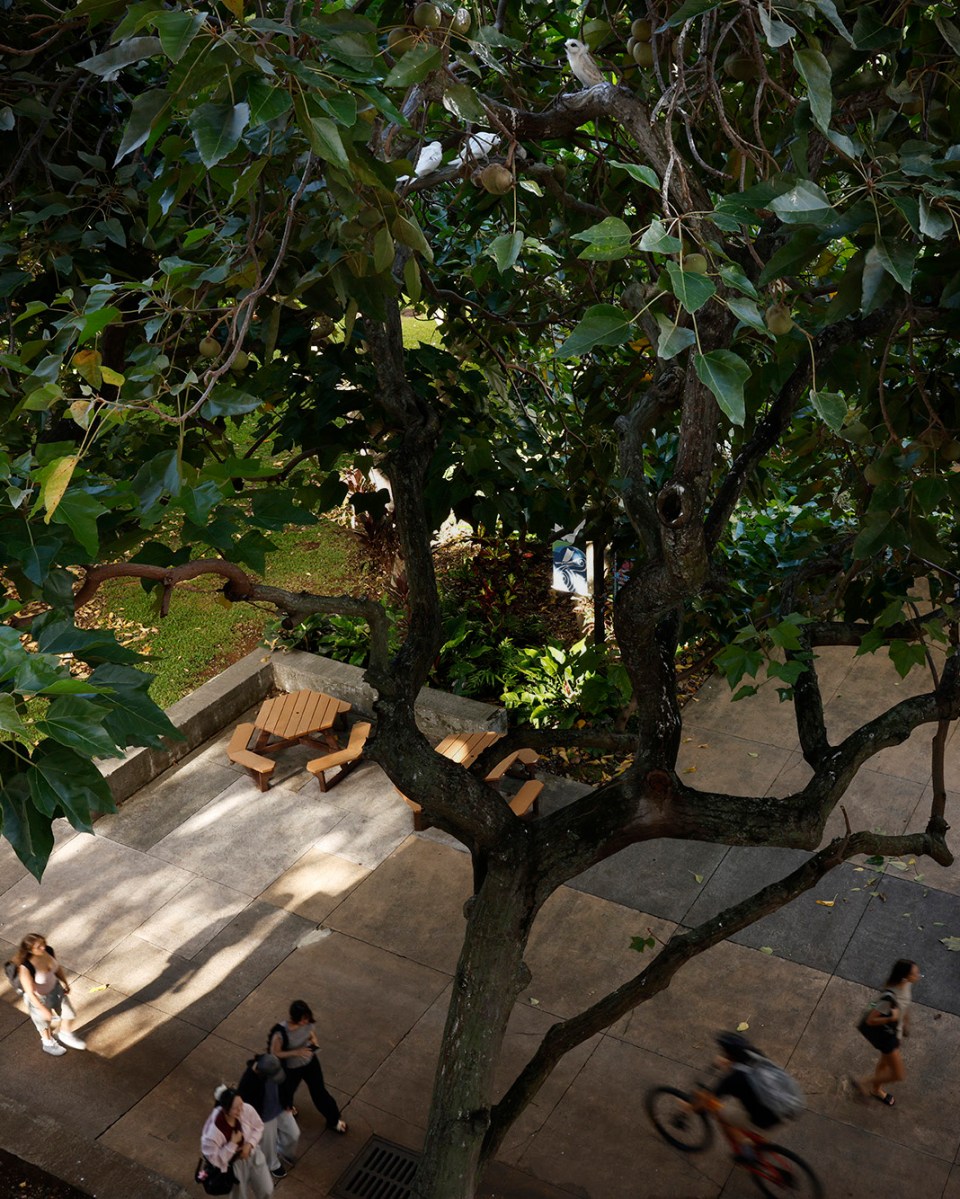
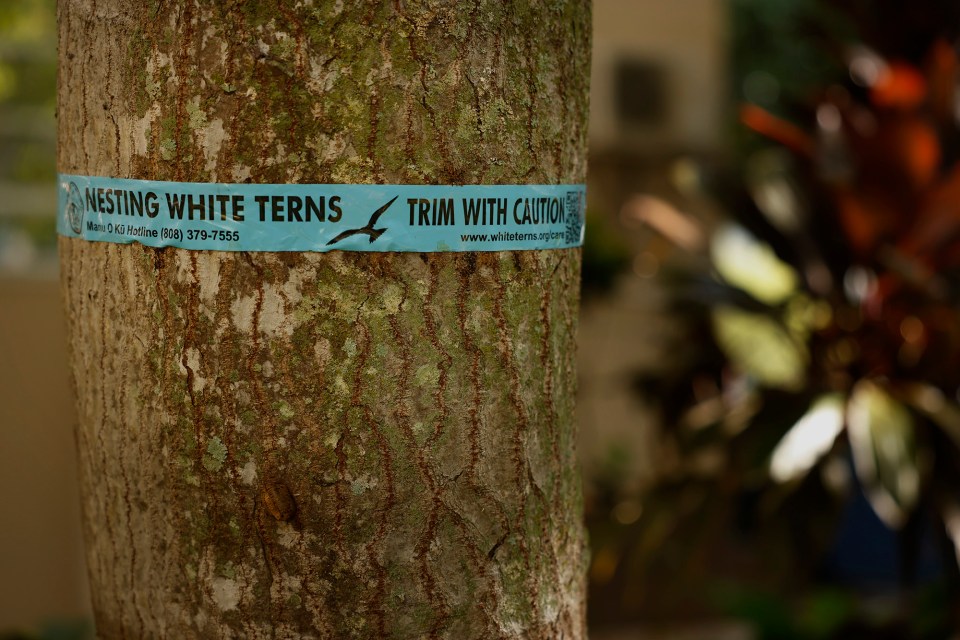

That public interest has now grown into a network of citizen scientists. If a chick falls to the ground, any human walking by can call the number listed on the tree’s ribbon to hail someone from the hui to come help.
It’s rare that the chicks die on impact, the hui’s volunteer coordinator Kelly Furuya said. Their light bodies can tolerate the landing, she said, and older chicks who have rudimentary gliding skills can slow their fall even further.
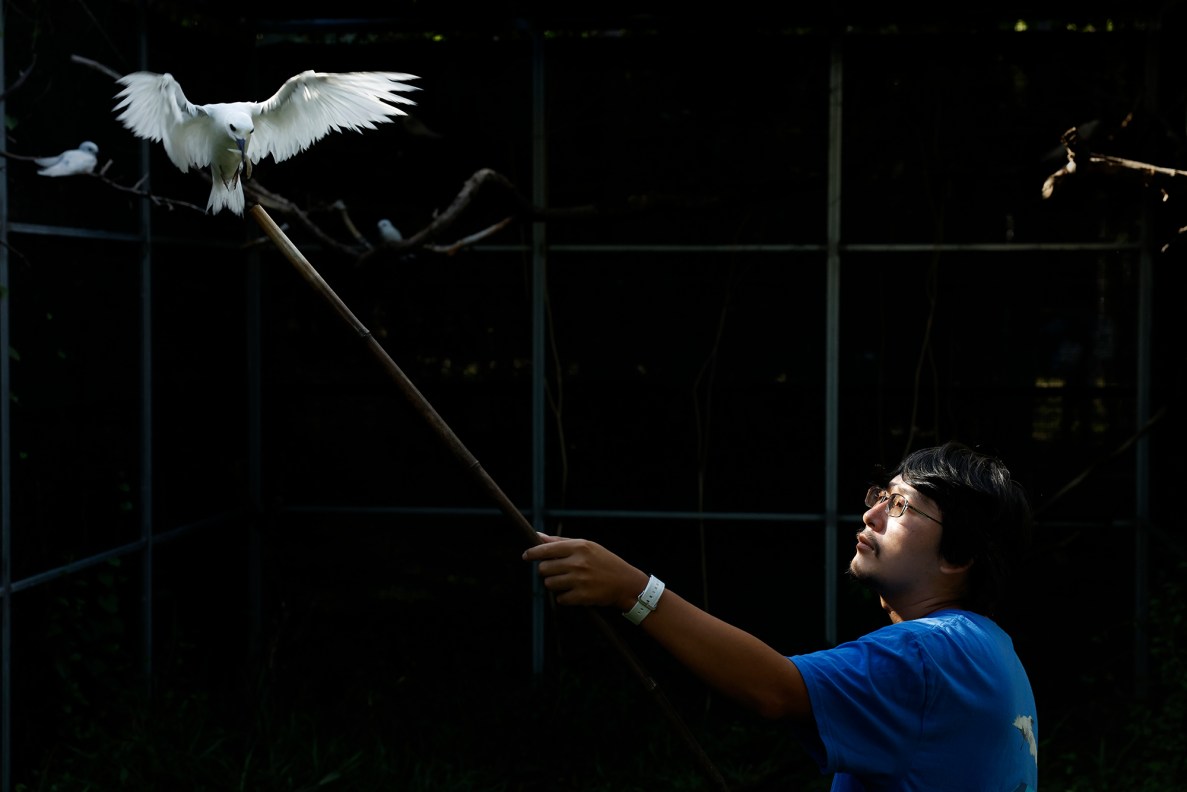
If the bird is uninjured, a volunteer can use a long paintroller to place it back in the tree, coaxing it onto the branch with its parents by gently tapping its chest to the branch.
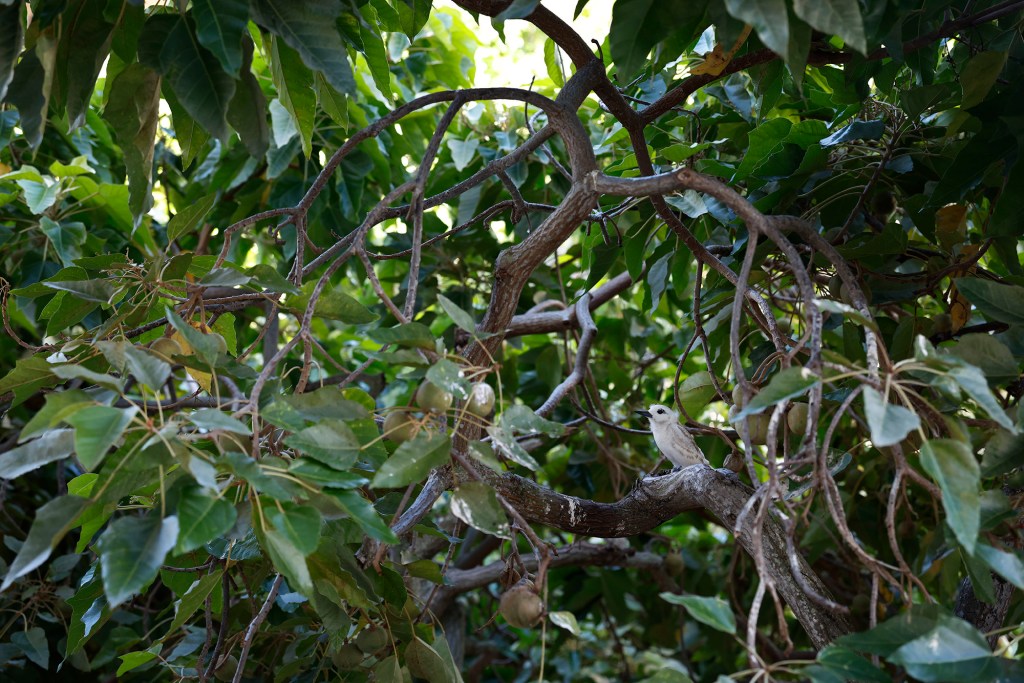
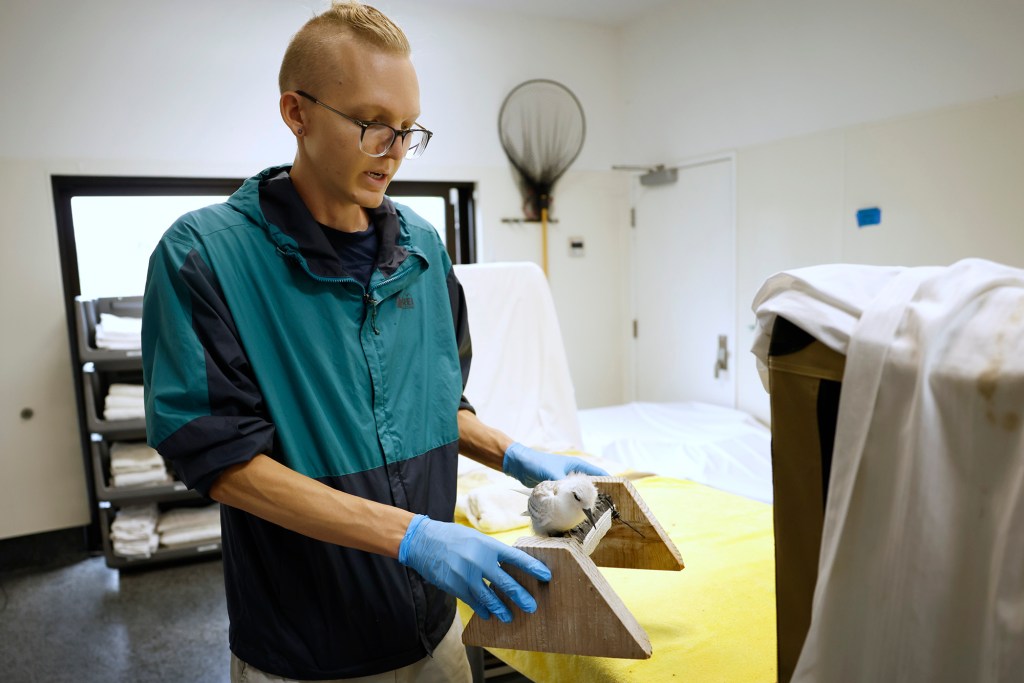
Circumstances aren’t always so ideal, however. If the bird is injured – or if no parents can be found – then it’s sent to Feather & Fur Animal Hospital in Kailua for triage and then to Hawaiʻi Wildlife Center, a nonprofit that focuses on rehabilitating native winged wildlife, for recovery and rehabilitation.
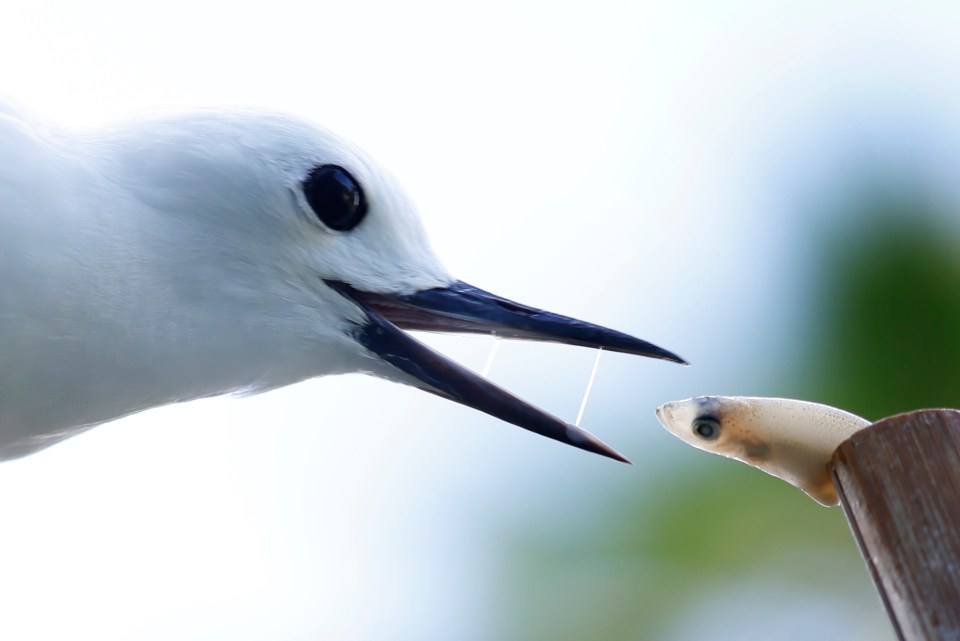
The best case scenario is to reunite it with parents right away, Downs said, since the parents of these seabirds teach their chicks how to fly and fish for food. Sometimes, he said, an orphaned chick can be introduced to parents who lost an egg and are happy to adopt.
“They’re good parents,” Hawaiʻi Wildlife Center Development Director Rae Okawa said.

There is more to learn about the birds. Because they are doing well population-wise, Downs said, they’re not a high priority when it comes to scientific research funding. He said the hui “primed the pump” by building up a knowledge base for free, however, and there’s value in studying them to help prevent them from becoming endangered.
The birds fly side-by-side as a kind of mating ritual, Downs said, swooping past each other in a show of their flying ability, which is an indicator of how well a potential mate could provide fish for the family.
He said that it sometimes seems like they’re flying just for the fun of it. Because they don’t build nests – preferring instead to lay eggs directly onto the nobs of branches on kukui and other trees – there aren’t many household chores to complete after they come home with a fresh catch of fish.
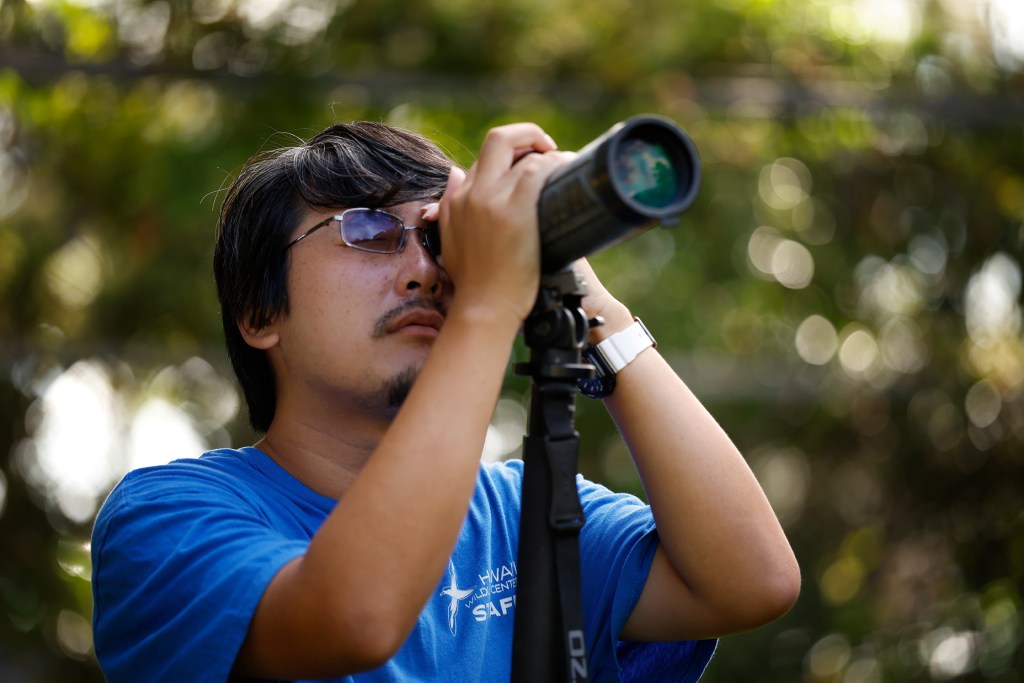
Admiring them from the lanai of a building at the University of Hawaiʻi Mānoa, Downs mused on what life must be like for manu-o-Kū.
“If there is such a thing of reincarnation, and I get a say in the matter,” he said, watching one of them fly, “that’s going to be me.”