Makana Eyre: France Stalls Return Of Hawaiian Ancestral Remains
“So offensive,” said a senior cultural officer from Hawaiʻi, describing the Musée de l’Homme negotiations. Others say the story is more nuanced.
November 3, 2026 · 7 min read

About the Author

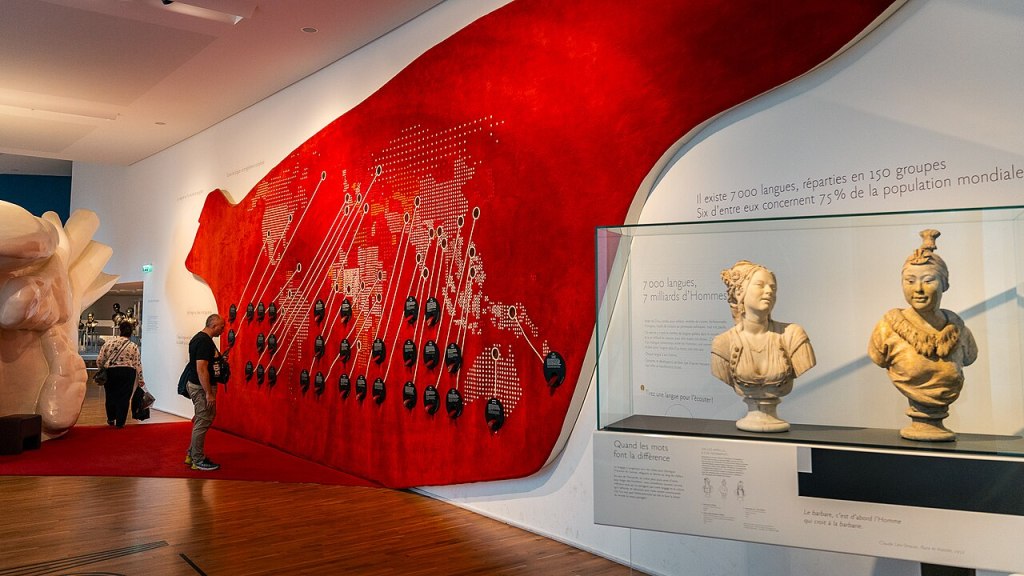
Last month, on a raw autumn day in Paris, a delegation from the Office of Hawaiian Affairs, the U.S. Department of the Interior, and the repatriation organization Hui Iwi Kuamoʻo, arrived at the Musée de l’Homme, France’s premier museum of anthropology, ethnology and human history.
Even before they entered the Art Deco building that morning, they had suffered a setback. Just a few days before they departed on the 7,500 mile trip from Hawaiʻi to the French capital, museum staff told them they’d decided not to make available the iwi kūpuna – ancestral remains of Native Hawaiians – they’d come so far to see.
It was a bewildering turn of events. OHA said it had given the French Ministry of Culture, the body handling the repatriation request, six months’ notice of their visit.
Scrambling to salvage the trip, two members of the delegation from the Department of the Interior appealed to the U.S. Embassy in Paris to intervene. Eventually, the embassy brokered a concession: The delegation could be in the same building as the iwi.
The meeting that ensued that morning was cordial but strained. After discussions with senior museum staff including its general director and director of collections, the delegation conducted a mihi, a ceremony of chanting and genealogy that acknowledged their ancestors and affirmed the commitment to bring them home.
The remains sat one floor above them in archival boxes. This was as close as the delegation got to them.

Ideas showcases stories, opinion and analysis about Hawaiʻi, from the state’s sharpest thinkers, to stretch our collective thinking about a problem or an issue. Email news@civilbeat.org to submit an idea or an essay.
Kamakana Ferreira, a compliance archaeologist at OHA, was there that morning. For him, the compromise felt hollow.
He and his colleagues left feeling a sense of sadness. “In most cases, when we’ve asked to see iwi, it hasn’t been a problem,” he told me.
In a statement, a representative from the museum said that it had not received sufficient advance notice of the visit and could not arrange a suitable space to present the remains. The representative added that the meeting was positive and constructive and the process toward repatriation was now underway.
Inside The Thorny Talks Of Repatriation
Repatriation is a frequent and thorny topic in Hawaiʻi. Items of immense cultural value are strewn around the world in museums and private collections. What should become of them, however, is a question knotted in cultural and legal complexity.
Even seemingly simple matters lack clear answers. What should be repatriated, what not? What counts as sacred, what doesn’t? When items do return home, who should take custody of them and who makes that decision?
Before any of these decisions can be discussed, however, there’s the part we seldom see: the frequently intricate, sometimes tense negotiation of repatriation itself.
The efforts of the Paris delegation offer a rare and revealing window into how that process often unfolds. While the meeting that morning lasted little more than an hour, getting to that point had been a long sequence of progress and setbacks — and took the better part of a decade.
OHA filed the initial inquiry in 2017 — not with the Musée de l’Homme but with its parent institution, the National Museum of Natural History.
For several years to come, it had to wrangle with museum officials who required it to prove its credentials through the U.S. Embassy in Paris.
Not until 2022 did OHA finally have a formal call with the museum’s administration. The news, however, was pessimistic.
Christine Lefèvre, a senior collections director, informed them that there was no legal path to return remains. While the group discussed establishing a joint steering committee to explore other solutions, there was little hope short of an intervention from the French Parliament.
A year later, though, France changed its laws. Now, there was a path for repatriating human remains, if they satisfied certain requirements: they dated from after the year 1500, were acquired in circumstances involving historical injustice, and were returned as part of a bilateral negotiation.
Ferreira has taken part in numerous repatriation missions worldwide, including a successful one in 2024 with the American Museum of Natural History. In building a case in this instance, he quickly got to work. He consulted with Michael Pietrusewsky, a physical anthropologist at the University of Hawaiʻi whose examination of historical records and the remains suggested that they were less than 500 years old.
To demonstrate evidence of historical injustice, Ferreira documented how Pierre Étienne Théodore Baillieu, the French Consul to the Kingdom of Hawaiʻi in the 1870s gathered them — quite possibly from burial caves — and carried them off to Europe.
And finally, OHA secured the backing of the U.S. Department of the Interior and the Department of State.
Now, they could negotiate with France, government to government.
Finally, in January of last year, the Department of the Interior made a formal request to the French Ministry of Culture for the return of 27 sets of remains and the six casts, busts and molds made by the museum.
Years Of Work, Another Roadblock
This enormous undertaking is what brought the delegation to the Musée de l’Homme that cold morning.
Yet after years of correspondence, preparation and repeated setbacks — still weary and jetlagged from the journey across the world — the delegation couldn’t even see the iwi.
And that wasn’t the end of it. Museum officials informed them that they’d only managed to locate 26 of the 27 sets of remains.
Then, according to people in the delegation, museum officials brought up the topic of the reproductions. While they recognized the legal framework to return remains, they refused to accept that it extended to reproductions.
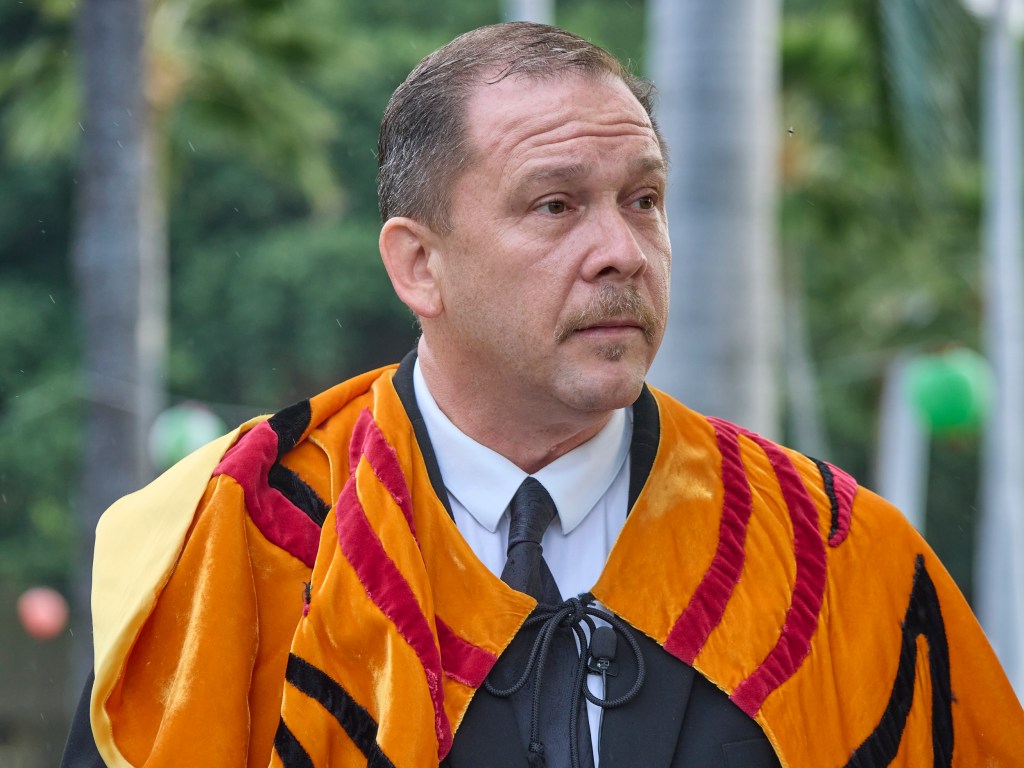
Hailama Farden, OHA’s Senior Director of Hawaiian Cultural Affairs, was outraged.
“I just find that so offensive,” he told me. “I said, excuse me? You’ve taken the images of our ancestors? Did you have their permission to do so? What gives you the right?”
As Farden saw it, the reproductions weren’t scientific objects on which to do experiments. They are representations of his forefathers — and they deserved dignity.
“The cultural barrier was so significant. They had no concept of how sacred this is,” he added.
Most critical of all, the French authorities still haven’t formally agreed to repatriation of the remains. For now, they’ve asked OHA to strengthen their evidence on the age of the iwi. Ferreira is already working on that and hopes to manage without subjecting them to invasive testing.
Ferreira is surprisingly optimistic for someone who has spent years working on this particular case.
He told me that while the museum is slow, sometimes unyielding, he believes they are motivated to settle the claim — especially before the next French presidential election. That suggests a certain fear about what might happen if Marine Le Pen, a hardright politician, wins. She is currently the favorite.
For now, the iwi will remain in Paris. Yet the group did not return to Hawaiʻi empty handed. After they left Paris, they traveled to Germany to meet with representatives of the Prussian Cultural Heritage Foundation and discuss several important Hawaiian objects in their collections.
When they departed Germany, one member of the delegation had an extra carry-on case. Delicately packed inside was a kiʻi.
It made the journey home in its own airplane seat.
As is often the case with repatriation, however, the situation isn’t as clean cut as some might hope. The delegation and the Prussian Cultural Heritage Foundation came to an agreement of co-stewardship of the kiʻi. In other words, the foundation still holds a claim to its ownership, even if it’s in Hawaiʻi.
Even a successful repatriation can — and often does — leave unresolved fundamental questions. And that’s if the group requesting it gets that far. In the case of the Musée de l’Homme, there were hiccups but also years of painstaking research, delicate negotiations and considerable financial resources.
Ferreira hopes another delegation will travel to Paris in 2027 to repatriate the iwi once and for all. There’s certainly more of this story left to tell – perhaps in a future column.
 Sign up for our FREE morning newsletter and face each day more informed.
Local reporting when you need it most
Support timely, accurate, independent journalism.
Honolulu Civil Beat is a nonprofit organization, and your donation helps us produce local reporting that serves all of Hawaii.
ContributeAbout the Author