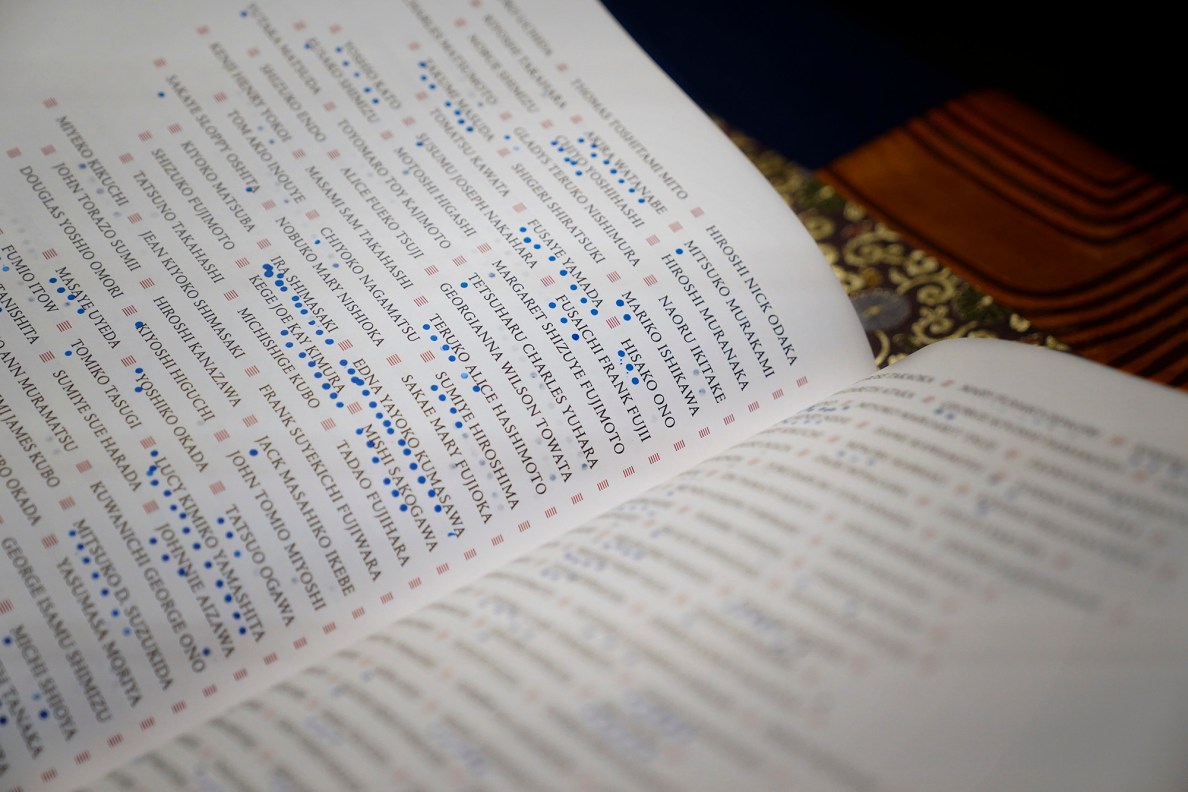
I always thought my grandpa’s name was Frank. Recently, I learned Frank was his middle name. His first name is Fusaichi.
My siblings and I never really heard stories about the time our dad was detained at Santa Anita Race Track Assembly Center — a WWII internment camp in Southern California, where thousands of people were housed in horse stalls with inadequate access to food and medical supplies. Or his time at the Manzanar War Relocation Center, today a national historic site described by the National Parks Service as a “remote military-style” camp in the foothills of the Sierra Nevada Mountains, where as many as 10,000 Japanese Americans at a time were detained in overcrowded barracks surrounded by barbed wire.
During our drive to the Japanese Cultural Center of Hawaiʻi in Honolulu Thursday to take part in a traveling memorial to the wartime mass detention, my father said he doesn’t remember much about it since it was hanabata time — childhood — or he wanted to forget about it.
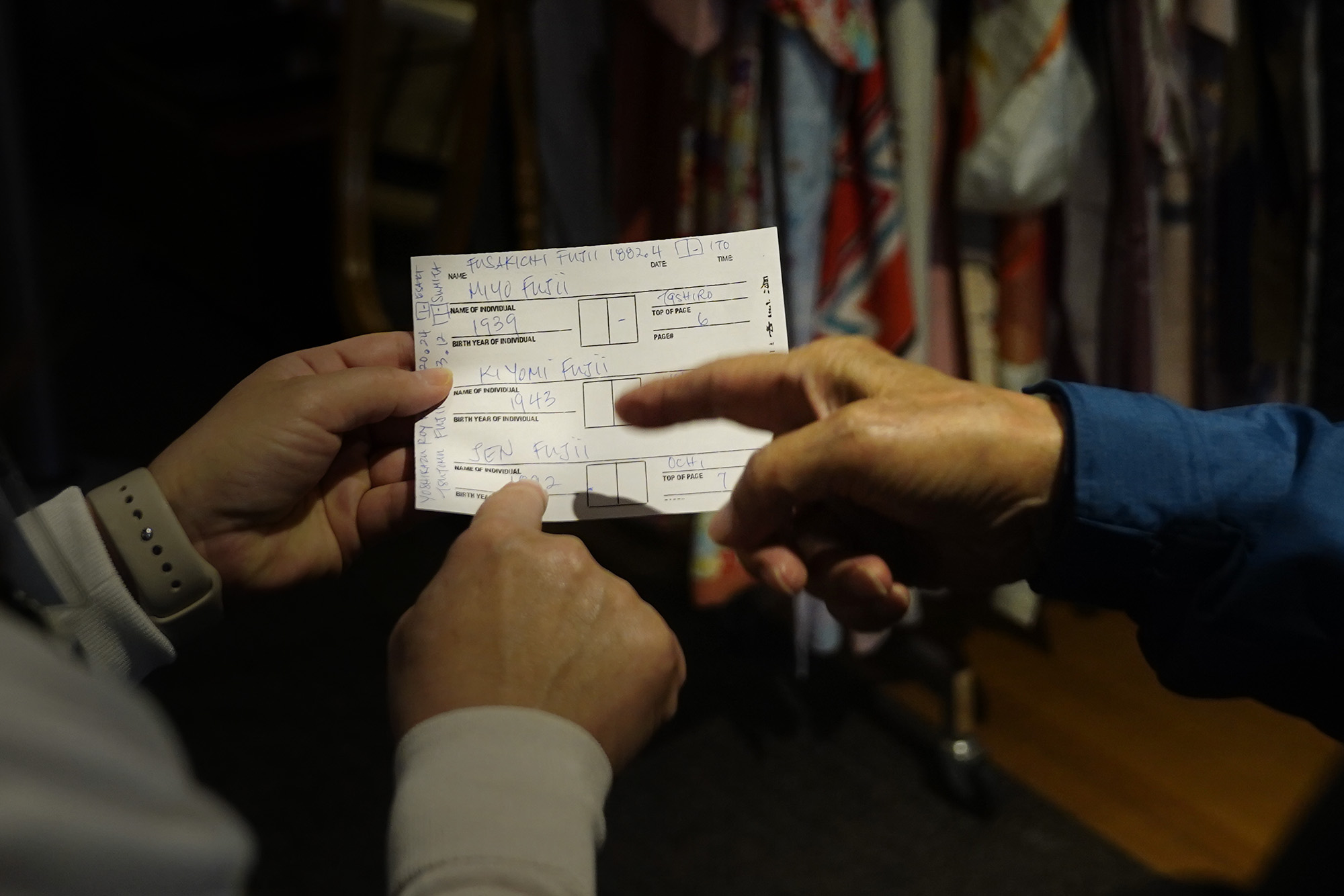
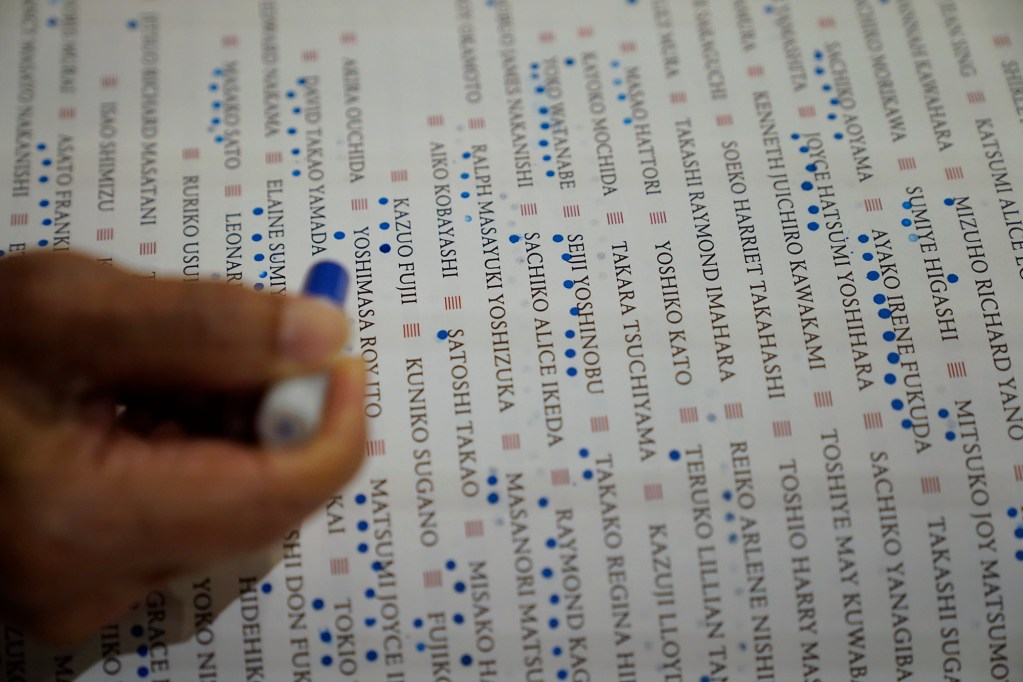
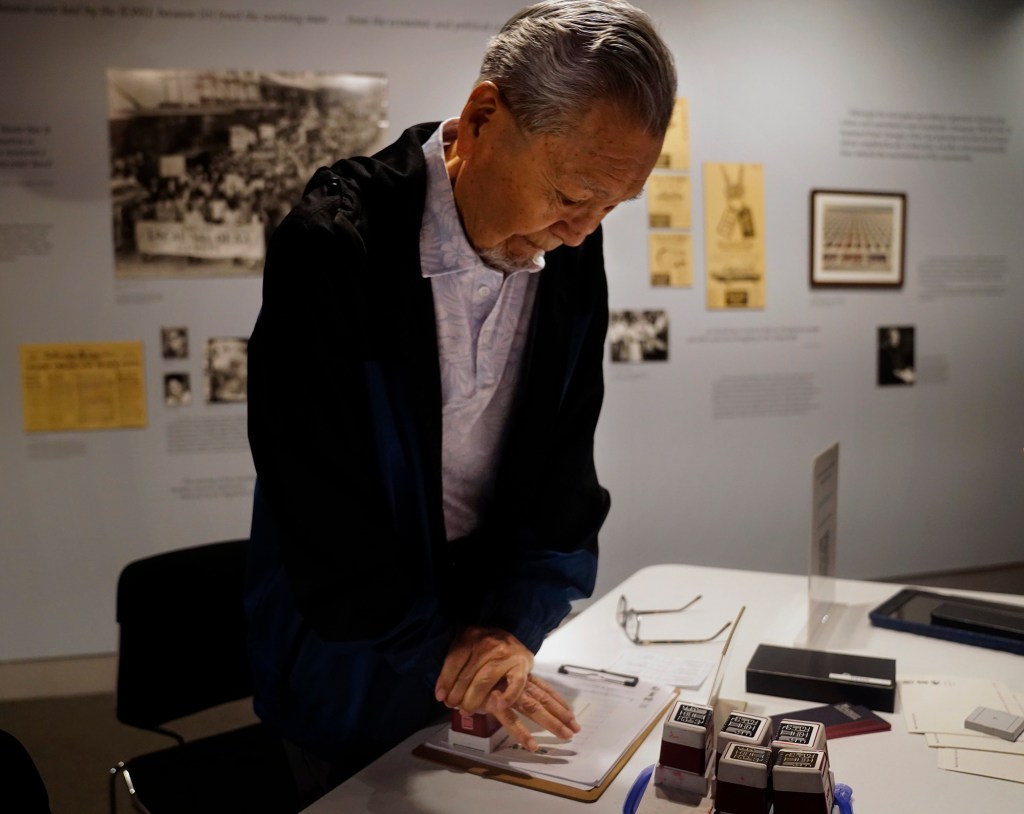
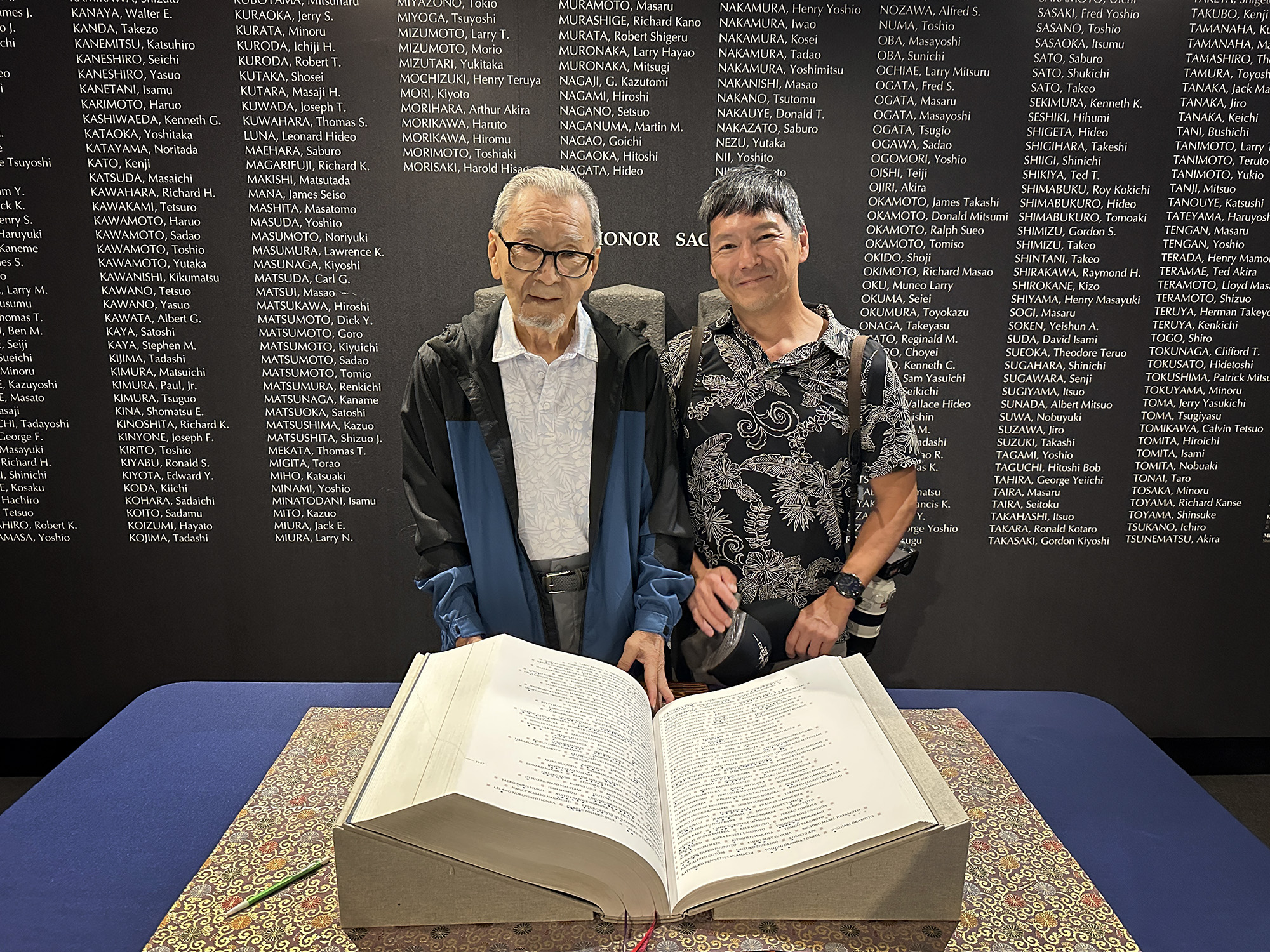
Ireichō recently made a four-day stop at the Japanese Cultural Center in Honolulu. The book itself is a monument with the names of 125,284 people of Japanese ancestry who were incarcerated by the American government during World War II. Ireichō tours throughout the United States, and at each stop, reservations are booked to capacity with survivors and their ʻohana wanting to add a hanko, a stamp.
“During 2025-2026,” Ireizō’s website states, “the goal of honoring the 125,000+ names will continue as the Ireichō goes on a national tour until every single individual is acknowledged.” Irei is the umbrella name for the three elements that make up the National Monument for the WWII Japanese American Incarceration: The Ireichō (Book of Names), Ireizō (The Online Archive) and the Ireihi (Sites of Remembrance).
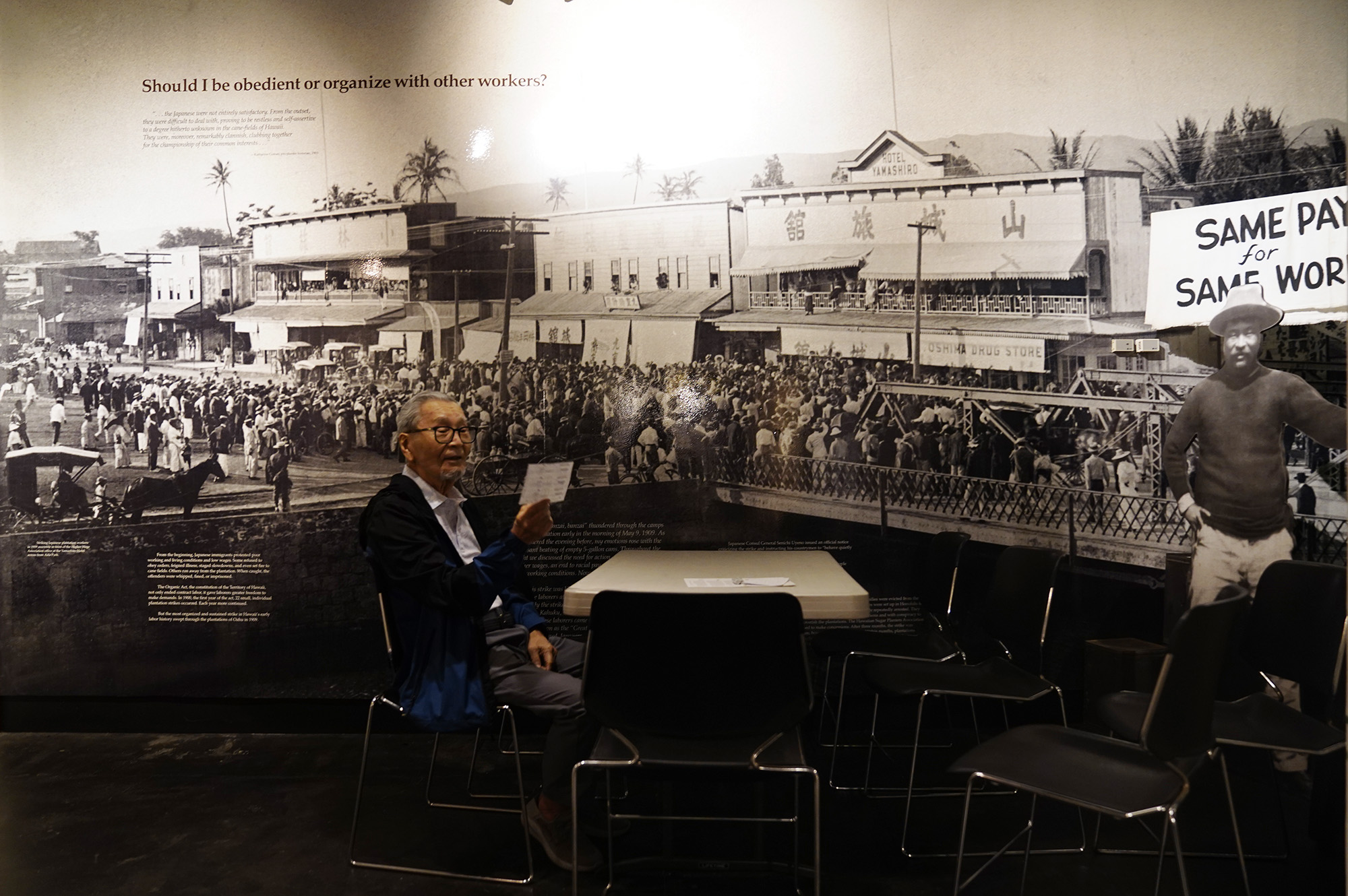
“The idea of a book as a monument is inspired by the Japanese tradition of Kakochō (literally, ‘The Book of the Past’),” the website says, “a book of names typically placed on a Buddhist temple altar. This book is brought out for memorial services, when the names of those to be remembered are chanted.”
The Ireichō staffer who led our orientation said the number of those imprisoned has historically been reported as 120,000. But, she said, the number excluded about 5,000 people to hide egregious wrongdoings by the government, usually at the hands of the FBI. Through interviews with survivors and research by historians, she said, their names and birth years were added.
It was during this visit to the Ireichō with my father that I learned my grandfather’s given name.

With so many names, the book is a heavyweight, clocking in at 25 pounds. The covers are extra stout and the front cover includes a smooth pendant made of dirt and sand from each War Relocation Authority prison, assembly center and detention facility where people of Japanese ancestry — two-thirds of whom were American citizens — were incarcerated.
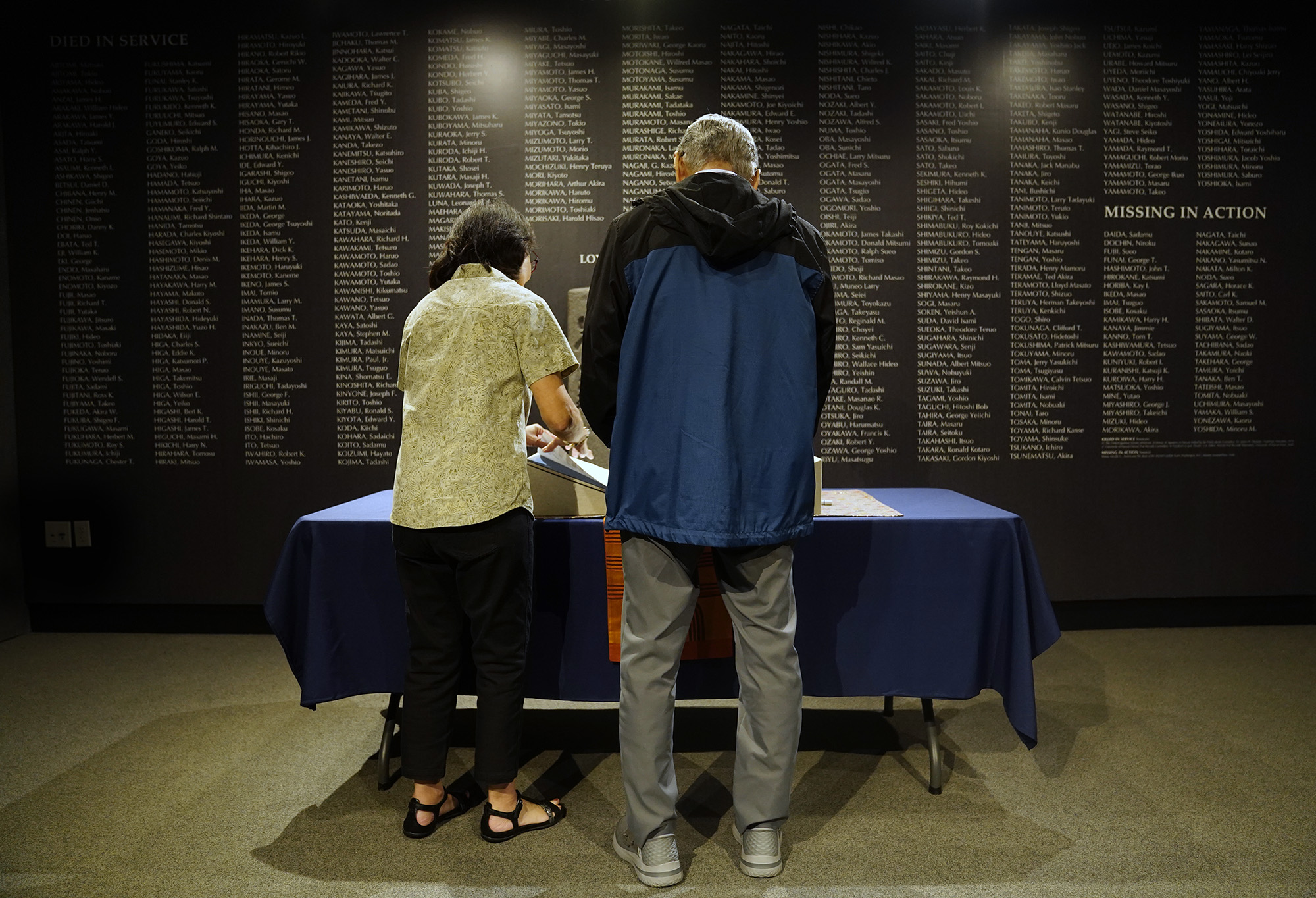


Dad has vague memories about being forcibly relocated. He said he was about 5 years old and remembers the winter of 1943 in Manzanar. He also recalls being 7 or 8 and in the second-grade class in camp.
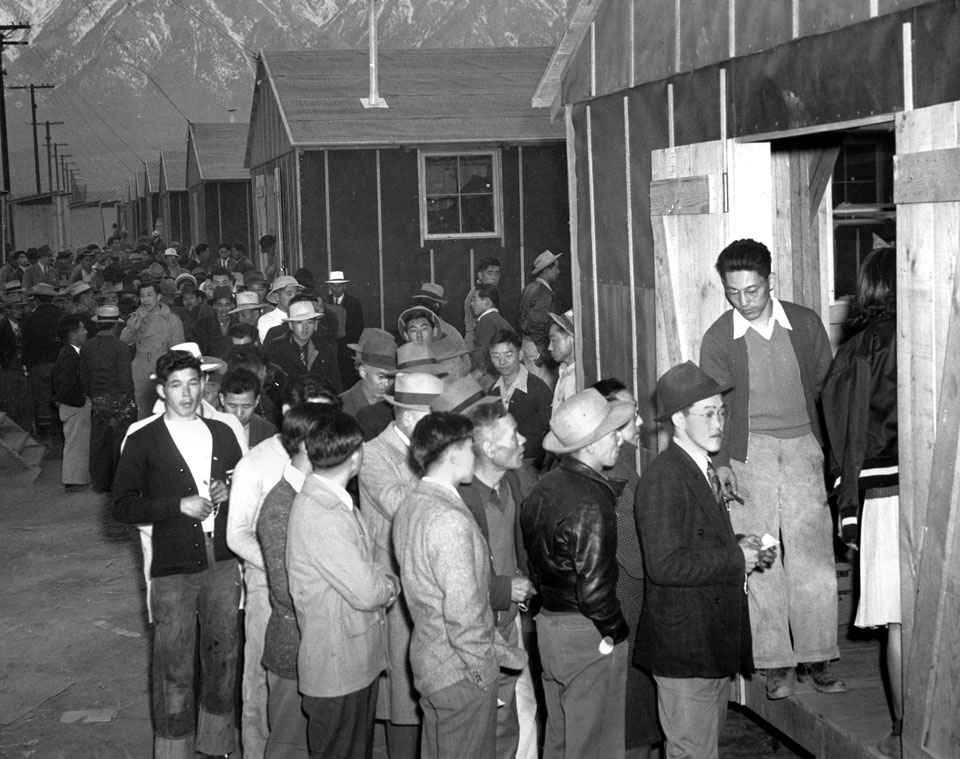
My older brother, Craig Fujii, whose byline you might have noticed recently in Civil Beat, was a Los Angeles-based Associated Press staff photographer in the 1990s. When he was working for the AP, he showed the above black and white photograph of men lining up for Manzanar housing assignments to our grandmother.
“That’s grandpa,” she said, pointing to the young Japanese American man wearing a gray fedora slightly cocked on his head in the upper left third of the image. He’s looking directly at the photographer, who we think was Ansel Adams.

Ireizō’s website writes this is “the first time it has been possible to properly memorialize each incarceree as distinct individuals instead of a generalized community.”
During the visit, my father stamped the names of nine family members who were incarcerated. The last name he stamped was his own.

In 1976, President Gerald Ford officially rescinded President Franklin D. Roosevelt’s Executive Order 9066, which had permitted the relocation and incarceration. Then in 1983, the Commission on Wartime Relocation and Internment of Civilians classified the forced relocation of Japanese and Japanese Americans as a “‘grave injustice’ caused by racial prejudice, war hysteria and failure of political leadership,” in its report to Congress titled “Personal Justice Denied.”
President Ronald Reagan officially apologized for the government’s failure and signed the Civil Liberties Act of 1988. Letters of apology and reparations began in 1990 during President George H.W. Bush’s administration.

We learn history to understand why and how society functions today. These include successes and failures. It took 34 years for the wrongs committed by the American government against citizens of Japanese ancestry during WWII to be officially recognized and repealed — and 48 years for reparations to begin. Many of those incarcerated passed away, including my Nisei (second-generation Japanese American) grandfather and his parents.
After years of dedicated work by Irei, Densho and numerous Japanese American groups and individuals, this history is being preserved. It’s up to the following generations to keep this memory alive.
Ganbatte!