Reader Rep: Big Storms Give TV Reporters Their Moment In The Sun
Viewers benefit when the news media takes weather and storm coverage seriously.
For most of the year, weather journalism in Hawaii revolves around the degrees in which warm can be distinguished from hot.
But when a big storm threatens, where else would you turn, if not to the local television reporters? Who else constantly documents and tries to make sense of the societal discombobulation and panic caused by sudden high winds, heavy rain, lightning strikes, flash flooding, high surf and all of the related phenomena?
The state’s first major tropical storm of the 2016 hurricane season, Darby, was full of surprises. It also provided a revealing test for local broadcast journalists, showing what they can do and how they can do it when called into action.
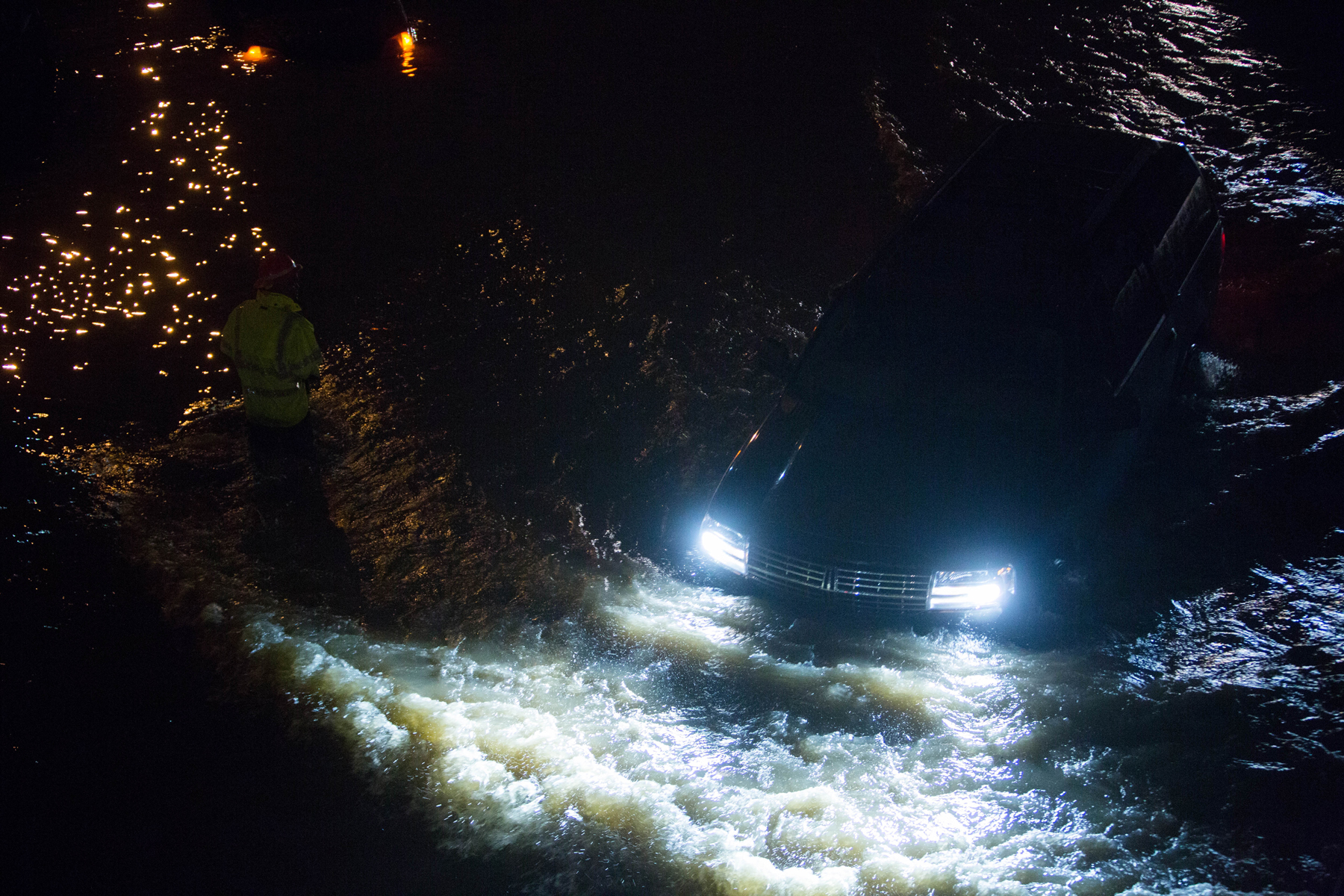
This is one arena in which television reporters have significant advantages, based on their medium, over their print, radio and web competitors.
A great effort on storm coverage from a web site could be competitive with TV, or even better – by offering a dedicated hub of interactive maps and graphics, precise place-based coverage, forecasting and analysis, live updates and other dynamic digital features 24 hours a day.
But no one in Hawaii has bothered to put something like that together. Non-TV sites instead generally focus on traditional print-like coverage, as the Star-Advertiser did or a round-up, per the approach by Civil Beat.
And, unlike most other journalists, TV reporters tend to have extreme enthusiasm for extreme weather.
When storms strike, television newscasters seem to feel a different sense of urgency than their brethren. They know it’s their moment to do what most others can’t. Not only do these stations typically employ people who take weather seriously (meteorologists) and report on it daily, their medium thrives on the dramatic visuals created by destructive weather.
The hurried movements, unusual spectacles and colorful visualizations offer the ability, through video, to create a sense of “being there” where the most exciting action is taking place. So when weather gets hairy (grab your hats, well-coiffed reporters!), I tend to turn on the TV first.
During Darby, this is what caught my attention on the local stations:
A ‘Small’ Sewage Spill?
About a year ago, government “miscommunication” apparently allowed more than 100,000 gallons of raw sewage to flow into the waters of Waikiki, and the surrounding areas, during a storm. The director of the city’s Department of Environmental Services, Lori Kahikina, offered a lame excuse (one of the pumps was off-line), and a half-hearted apology. She promised to prevent further spills by improving departmental communication.
Instead, after Darby, here she was in front of cameras again, trying to explain how just a “small” spill happened this time, when about 10,000 gallons of sewage poured into Waikiki.
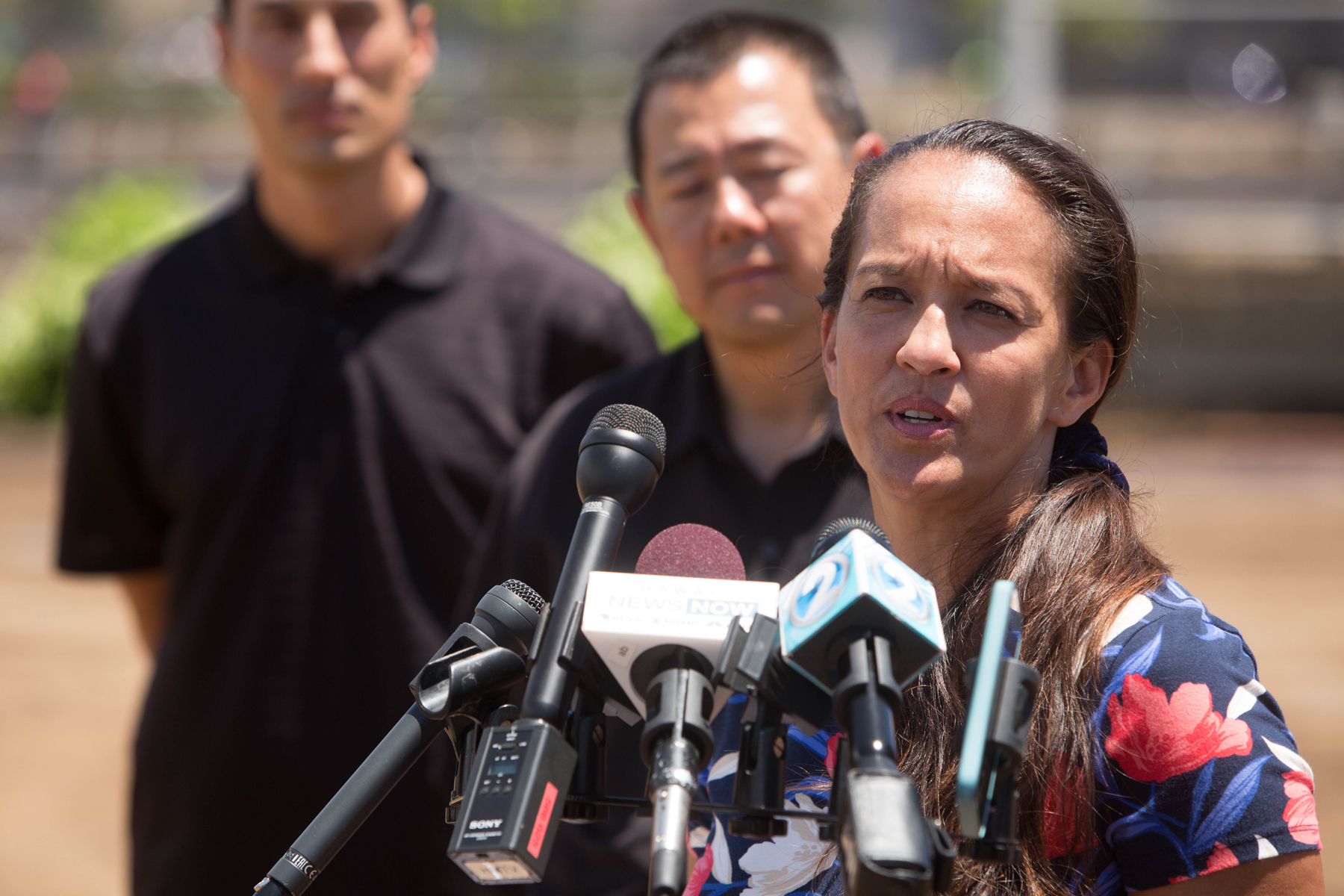
First of all, imagine a gallon of milk in your refrigerator falling out and spilling its contents on the floor of your kitchen. Next, picture being at Waikiki, and having 10,000 of those gallons of liquid (only in brown sewage form) spill into the beach waters where you love to swim with your family and friends. That doesn’t even account for the additional 50,000 gallons that poured into the waters in Kailua and elsewhere around Oahu.
Kahikina’s comments reek of indifference and incompetence (and of employing incompetents). But local television journalists become apologists for her when they fail to ask tough questions, assign blame, name names, hold specific people publicly accountable, when they allow her to label such a spill as “small” and freely use diversions like the fantastical manhole-cover poppers excuse. Surely someone is in charge of preparing the system for surges; if not, Kahikina’s department has even more problems than I imagine.
If someone is in charge. Who is this person? What is this person not doing right? And why isn’t this person being replaced?
Anticipation And Platitudes
Now, to our reporters on the street: While audiences surely appreciate the efforts (and expense of resources) that stations devote to get reporters onto the scene and in position for potential catastrophe, such goodwill gets squandered by putting those reporters on air to babble about the nothing of significance that they are witnessing.
During the Darby coverage, KITV, for example, sent Moanike’ala Nabarro to Kauai. She offered insights from Lihue such as a description of the “calm” and “business as usual” atmosphere. But, she warned, there always is the potential of weather conditions to deteriorate through the night. OK, KITV, how about just putting Nabarro on the air when something like that happens?
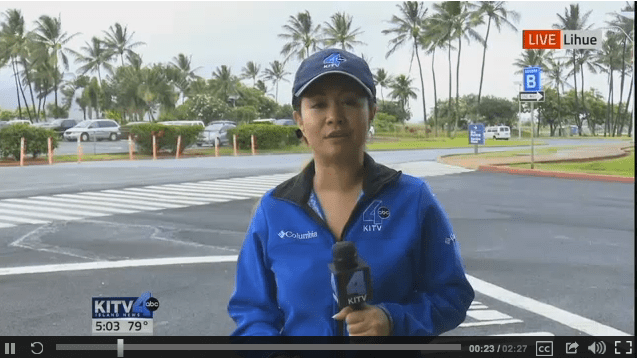
This pattern was repeated at the other stations. For example, KHON’s Alexander Zannes also arrived on Kauai, a few hours later, to describe the “almost perfect weather.” But, he warned, he could see “some lightning in the distance.” OK, when it gets closer, KHON, let us know!
Alex Cerball of KHON, deployed to the Big Island, told us that it was raining where she was “but that it rains here pretty much every day.” Hawaii News Now’s Ben Gutierrez, also on the Big Island, offered a similar report, of “it is still raining, but that is par for the course in Hilo.” Marisa Yamane of KHON, sent to Maui, showed us a clear and ordinary city background and added that the “streets are dry, and for the most part, things have returned to normal.”
This kind of stretching to fill air leads reporters to resort to insincere platitudes such as “stay calm,” and other useless advice, such as “stay safe,” “pay attention” and “make the proper preparations.” It’s really hard for me to imagine a viewer in a state of distress, as a foot of water fills her family’s living room, benefiting from these television sages’ wise words.
Show, Don’t Tell
Instead of life coaching, what I really want TV news to do is extend my vision. Show me what is happening around the area through the lenses of the broadcast journalists’ cameras and the enthusiastically engaged people carrying and in front of those cameras.
Not only did these stations produce an enormous amount of broadcast material during Darby, they also turned on the smartphones and offered a significant amount of behind-the-scenes perspective via Facebook Live (KHON, KITV, HNN). While some of that material seemed to be cast-off scraps from the regular newscast, other times, the journalists provided an intimate view into their newsrooms and provided more context about how they work and associate with each other. (Just scan down the Facebook feeds for the videos that start playing once you pass them.)
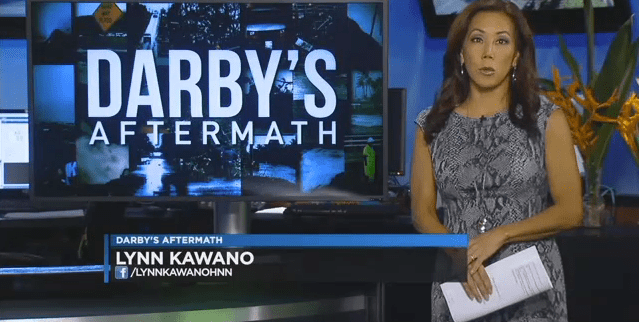
Meanwhile, all three Oahu stations (Hawaii News Now, KITV and KHON) also created meaningful stories about damage to businesses and about people cleaning up and responding to that damage. These stories involved journalists talking to people who probably rarely get interviewed unless something terrible has happened to them.
Their stories showed people who suffered tremendous material losses, and who took comfort in the fact that they had insurance, only to learn that their particular plans apparently did not cover their losses. Their stories showed how previous government inaction, such as ignoring the garbage piles near Keehi Lagoon, appear to have exacerbated the storm problems. Their stories showed communities of people coming together to help each other, as human beings in need.
When storms arise, TV news has several important roles in our response. Of those, they need to be there reliably and to show us accurately what’s happening, preferably while also providing context.
For the most part, they did so. I suppose it also doesn’t hurt when they remind everyone to remain calm.