

State Investigating Placement Of Human Remains At TMT Site
The Department of Land and Natural Resources acknowledged the probe in response to a public records request but won’t say more
The Hawaii Department of Land and Natural Resources is investigating a case in which someone allegedly disinterred human remains and put them in a shrine at the proposed site of the controversial Thirty Meter Telescope on Mauna Kea on the Big Island.
A July 6 public record request, obtained by Civil Beat, asked the department for any reports of “someone attempting to disinter remains from a cemetery/burial site” not on the mountain and putting them in an ahu, or shrine, at the TMT site.
The request asked for a copy of any such report or “a qualitatively similar incident” that occurred between April and December 2015, most likely in July.
The department denied the request, citing an exemption to the public records law that allows the government to withhold records if releasing them would cause “frustration of government.”
But in denying the request, the department identified the number of a report that fit the description of what the requestor had asked for.
In response to questions from Civil Beat Friday, a spokeswoman for the department responded that “DLNR is aware of this and it is under investigation,” but would not elaborate.
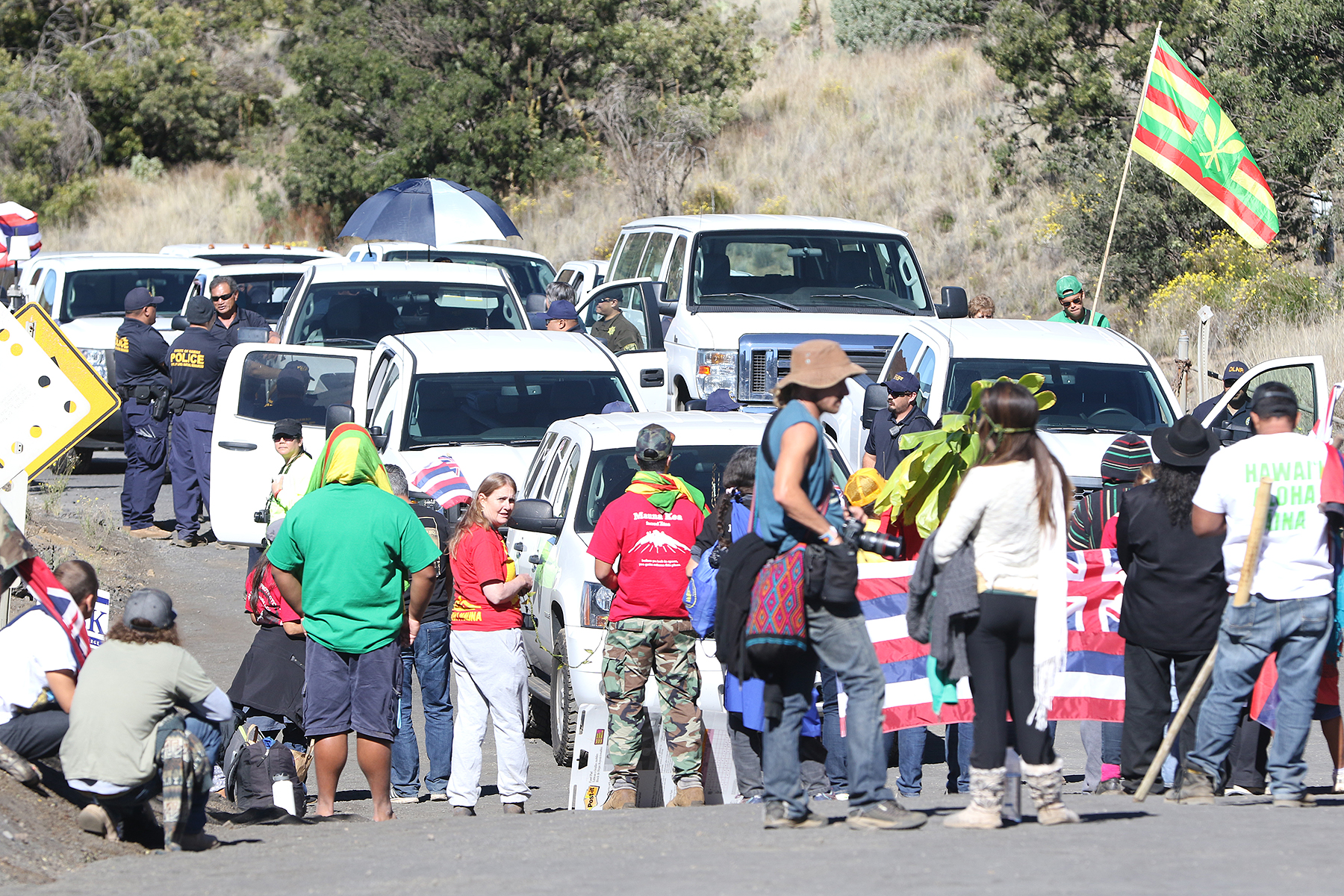
Construction of the $1.4 billion project on top of Hawaii’s tallest mountain was halted in 2015, during the period when the placement of human remains allegedly occurred, after Native Hawaiians and their supporters who consider the mountain sacred blocked the roadway with rocks and boulders. TMT opponents say that Mauna Kea is an ancient burial ground for revered ancestors.
A few months later, the Hawaii Supreme Court invalidated the permit for TMT, ruling that the state had erred when it granted a permit before holding a required contested case hearing. The state plans to restart the hearing process.
Kealoha Pisciotta, whose group Mauna Kea Anaina Hou was one of several parties to prevail in the Supreme Court case, said she was not informed beforehand of human remains being placed in a shrine. Generally, she said, burials are kept sacred and quiet.
“It’s probably safe to say that some people have been surprised by it,” she said.
At the same time, she said, “It’s important to remember that Mauna Kea is a burial ground, so burials continue to happen on Mauna Kea. They should continue to happen because that’s been since time immemorial.”
Hawaii law requires those who remove human remains from their original burial grounds to obtain a permit.
Here’s the public records request:
And the department’s response:

