

South Maui Is The Worst For Voter Turnout
Editor’s Note: This is the second in a series of stories examining Hawaii’s low voter participation rates. Read previous stories in the series as well as other initiatives Civil Beat is undertaking to understand why people don’t vote.
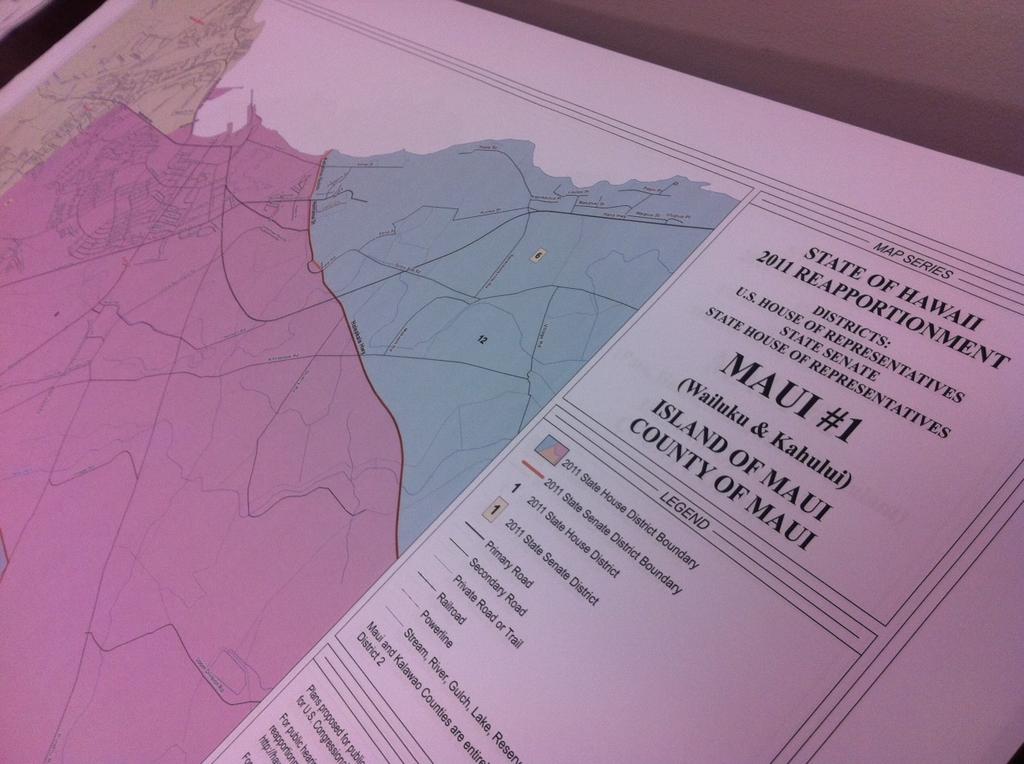
Kihei, a community of more than 20,000 residents on Maui’s southern coast, is home to one of the most active community groups on the island.
The Kihei Community Association holds monthly meetings, presents educational programs on county issues and maintains close relations with county officials, including regular meetings with Maui Mayor Alan Arakawa.
“If you go to public meetings, or listen to testimony at the County Council, almost none of the people come from Kahului,” said Dick Mayer, a retired UH Maui College professor. “Almost all come from Kihei.”
And the association has proved it can get results. In April, for example, it won a year-long fight to save four monkeypod trees along South Kihei Road the county had planned to remove.
Association vice-president Mike Moran credited the group’s street rallies, letter writing, fact-finding and lobbying with saving the trees.
During election years, KCA goes into high gear.
“We do everything,” Moran told Civil Beat. “We’ve had voter registration drives, we put on candidate forums, we host ‘speed dating’ meetings where candidates move around to talk personally with small groups of voters.”
“We’ve tried everything we possibly can, but each time the election comes around, we get the same kind of results,” Moran said.
And those results haven’t been good.
Voter turnout on Maui lags the rest of the state, and House District 11, which includes Wailea and most of Kihei, is next to last among the state’s 51 districts.
Only the adjacent District 10, which includes Lahaina and Kaanapali, reports lower voter turnout.
Just four in 10 registered voters in these areas cast ballots in the 2010 General Election, with Kihei’s District 11 (41.6 percent) narrowly beating out last placed District 10 (39.4 percent). By comparison, the average statewide turnout was 55.7 percent.
“I have been perplexed by this ever since moving to Kihei,” Moran said.
So how and why do people end up not voting? And why do South Maui voters have the lowest turnout rate in the state?
What is happening in Kihei and elsewhere in South Maui is part of the larger puzzle of stay-at-home voters, who now make up a large share of the state’s total electorate.
Gov.Neil Abercrombie received 222,724 votes in the 2010 general election, defeating his opponent, Duke Aiona, by more than 65,000 votes.
But Abercrombie was out-polled by the 305,363 stay-at-home voters who went through the trouble to register but never got around to voting. Just about the same number of people weren’t even interested enough to register to vote.
There are several things at work, according to both academics and political analysts — individual factors, systemic factors, and district-specific factors.
When the U.S. Census Bureau asked people why they didn’t vote in the 2010 election, the top reason registered voters across the country gave for not voting was that they were too busy (26.6 percent). Another 16 percent said they didn’t think their vote made any difference.
Although no data specific to Maui is available, a survey by the California Institute of Technology asked people in all 50 states why they didn’t get around to voting in 2008. Of the 200 respondents from Hawaii, 35 percent gave the same answer — “too busy.” Another 35 percent said they didn’t like the election choices, while 19 percent blamed problems getting to their polling places.
Lack of competition breeds voter apathy
But Moran, of the Kihei Communty Association, believes the bigger issue is apathy.
“When people feel ‘my vote doesn’t count,’ and no matter who you vote for, it’s all the same, then they don’t bother to vote,” Moran said.
Neal Milner, emeritus professor of political science at the University of Hawaii at Manoa, agreed. Studies have consistently shown that believing you can affect the political process is a key factor that makes people more likely to vote, according to Milner.
The dominance of Hawaii’s Democratic Party in recent decades — and the resulting lack of competitive elections — were also cited by several observers as an important structural factor in reducing turnout.
Strong incumbents who are able to dominate their districts discourage competitors from jumping in, and the lack of competition feeds the “my vote doesn’t count” feeling among voters, several observers argued.
State Sen. Les Ihara, who represents a district stretching from Palolo through Kaimuki and Kapahulu to the Diamond Head end of Waikiki, believes competitive races have been few and far between since Hawaii eliminated multi-member districts in 1982.
“Multi-member districts had competition built-in, structurally built-in,” Ihara told Civil Beat. “There’s the air of competition.”
From the time Hawaii became a U.S. territory until 1982, most Hawaii legislators were elected from multi-member districts. The plan recommended by the 1981 Reapportionment Commission called for 28 representative districts: six single-member districts, 21 two-member districts and one three-member district. The state Senate would have had eight districts, consisting of one single-member district, one two-member district, two three-member districts and four four-member districts.
But a lawsuit challenged the state’s use of registered voters rather than total population as the basis for reapportionment, arguing it violated the equal protection clause of the U.S. Constitution and the principle of “one man, one vote.”
A federal three-judge panel agreed, and a court-supervised plan made up exclusively of single-member districts was then adopted.
Court decisions have since upheld the legality of multi-member districts as long as district boundaries aren’t drawn in a way that permanently disadvantages any racial or political group, but Hawaii has remained with the single-member districts.
“The mandate of single-member districts was an act of reform that may have looked good on paper but has backfired in its application,” Chuck Freedman, former communications director for the Hawaii Democratic Party and a veteran of many election campaigns, wrote in a 2010 column in Hawaii Business.
Freedman said challengers got a boost from multi-member districts because if they didn’t win the top spot, they could still get elected as No. 2.
Former Republican State Sen. Fred Rohlfing, a Maui resident, testified in favor of multi-member districts during deliberations of the recent Reapportionment Commission. Rohlfing told Civil Beat multimember districts “gave the minority a better chance because people were more likely to toss one vote away to a newcomer after voting for their favorite.”
“Single member districts allow an incumbent to become very powerful, and discourage participation by both candidates and by voters,” Rohlfing said.
The 2011 State Reapportionment Commission considered a return to multi-member districts, a move supported by Neil Abercrombie, but ultimately rejected the idea.
While considering the question at the commission’s June 9, 2011 meeting, Maui attorney and commission member Anthony “Tony” Takitani said he had represented a multi-member district during his one term in the state House. Takitani said legislators from multi-member districts had to work together, resulting in better relationships.
But Commissioner Harold Masumoto worried about the lack of uniformity if some islands were represented by multiple senators, while smaller islands would have a single senator.
The commission decided to retain the current single-member districts, but only by a close 5-4 vote.
District demographics can make a difference
“There seems to be a link between your socio-economic status, your sense of being able to affect the political process, and your knowledge of what’s going on,” Milner said.
“People who are more educated are more likely to vote,” Milner said. “People who have more money are more likely to vote. And older people are more likely to vote than younger people. That’s the classic stuff.”
“Engagement in politics reflects awareness of the relationship between what you do as an individual and what is going on in political life,” he said.
Milner said fewer young people vote because their concrete connection to the political system is not large.
“If you ask most students what they do in their day-to- day life, it’s not very much about politics,” he explained.
Dick Mayer, the retired professor, pointed to Maui County’s large transient population as a major factor in low voter turnout.
“My impression is that these jobs in hotels, restaurants and retail shops in resort areas, draw a lot of people to the islands,” Mayer said. “They may register to vote, but in two years, or four years, they aren’t here.”
Mayer believes this highly mobile segment of the population leaves more “deadwood” on Maui’s voter lists – people who have moved away from the island but can’t be dropped from the voter lists until a lengthy, federally required process is completed.
The more deadwood, the lower the official voter turnout, which is calculated by comparing the number of votes with the total number of registered voters.
Kallie Keith-Agaran, a consultant and writer who was a delegate to the Democratic National Convention in 2008, also cited the fast population growth as a factor in Maui’s low voter turnout. She is married to state Rep. Gil Keith-Agaran, who represents Maui’s 9th District, which includes Wailuku and Kahului.
“My impression is Maui’s rapid development over the last 20-30 years has left many locals feeling bewildered, displaced, and something like strangers in their own homes,” Keith-Agaran said.
“The huge influx of ‘temporary’ or ‘short-term’ workers in the visitor industry (which has also increased at a tremendous rate over the last 20 years) has significantly destabilized a large chunk of the community and created tensions between newcomers and locals,” she said. “By and large, those households that have more income have adjusted and fared better than those that haven’t, and it shows up in many ways — one of them is voting rates.”
‘A lot of haole from the mainland’
Kihei’s population increased 24.7 percent since 2000, twice the rate of the state as a whole, and well over Maui County’s 20.9 percent growth, according to the 2010 Census.
Kihei’s population was also 50.7 percent Caucasian, census data shows, twice the state’s average of 24.7 percent.
Rohlfing, a Maui resident, said Kihei’s “newcomer population” was likely a factor in low voter turnout.
“A lot of haole from the mainland don’t have their feet on the ground yet, they don’t know who these people (candidates) are, so they’re not going to get out and vote,” Rohlfing said.
Lahaina, a census district in the middle of House District 10, grew even faster than Kihei, with a 28.4 percent increase in population between 2000 and 2010, but is different in other ways. It’s population is only 27.2 percent Caucasian, and less educated (just 15.3 percent with at least a college degree, compared to the state average of 29.4 percent).
Lahaina also had more foreign-born residents in 2010 than the state average (25 percent to the state’s 17.7 percent), census reports show.
Angus McKelvey is a lifelong resident and has represented Lahaina’s District 10 in the state House of Representatives since 2006.
“We’re a transient town,” McKelvey told Civil Beat. “There’s a lot of turnover in the population because of the visitor-based service industry. People come, work for a while, and then they leave, perhaps go to another resort area.”
“This district has historically had a large no-show factor of people who have registered but aren’t around to vote,” McKelvey said. “That’s the nature of the beast here in West Maui.”
Keith-Agaran also noted a reluctance among recently naturalized citizens, particularly Filipinos and Pacific Islanders, to register to vote.
“They bring their (well-justified) fear of government authorities with them, and seem to feel strongly about avoiding any contact or potential entanglement with government,” she said.
Mike Moran from Kihei said he also knows of people who will not register to vote because they are afraid of being called for jury duty.
“I try to educate them, but it doesn’t seem to make a difference,” Moran said.
Hawaii Voter Turnout in 2010 General Election
| House District | Description | Registered | Votes cast | Turnout | Absentee (%) |
|---|---|---|---|---|---|
| 18 | Hahaione, Kuliouou, Niu Valley, Hawaii Loa Ridge, Aina Haina, Wailupe, Kahala | 15,067 | 10,074 | 66.9% | 49.1% |
| 19 | Waialae Iki, Kalani Valley, Waialae Nui, Diamond Head, Kahala | 15,395 | 10,210 | 66.3% | 52.4% |
| 17 | Kalama Valley, Queen’s Gate, Hawaii Kai | 17,015 | 11,275 | 66.3% | 49.6% |
| 34 | Newtown, Waiau, Pearl City, Waimalu | 12,586 | 8,171 | 64.9% | 52.0% |
| 48 | Heeia, Haiku Valley, Kapunahala, Kaneohe | 14,599 | 9,390 | 64.3% | 51.8% |
| 38 | Mililani, Mililani Mauka | 17,943 | 11,536 | 64.3% | 43.3% |
| 37 | Mililani, Waipio Gentry | 14,505 | 9,287 | 64.0% | 42.0% |
| 33 | Aiea, Halawa Valley, Halawa Heights, Aiea Heights | 12,198 | 7,776 | 63.7% | 47.3% |
| 24 | Manoa, Manoa Valley, University | 14,624 | 9,297 | 63.6% | 47.4% |
| 36 | Pearl City, Momilani, Pacific Palisades, Manana | 12,656 | 8,038 | 63.5% | 46.1% |
| 26 | Dowsett Highlands, Pacific Heights, Pauoa, Punchbowl | 14,186 | 8,902 | 62.8% | 49.3% |
| 20 | St. Louis Heights, Palolo Valley, Maunalani Heights, Wilhelmina Rise, Kaimuki | 13,409 | 8,408 | 62.7% | 47.6% |
| 49 | Maunawili, Olomana, Enchanted Lake, Kaneohe | 14,628 | 9,170 | 62.7% | 47.0% |
| 3 | South Hilo, Panaewa, Puna, Keaau, Kurtistown | 14,223 | 8,786 | 61.8% | 46.7% |
| 27 | Nuuanu, Puunui, Liliha, Alewa Heights | 11,535 | 7,104 | 61.6% | 47.3% |
| 31 | Moanalua Valley, Moanalua, Salt Lake | 12,395 | 7,529 | 60.7% | 45.7% |
| 15 | Lihue, Koloa | 13,923 | 8,243 | 59.2% | 54.0% |
| 16 | Niihau, Lehua, Koloa, Waimea | 12,771 | 7,434 | 58.2% | 43.2% |
| 47 | Laie, Hauula, Punaluu, Kahana, Kaaawa, Waikane, Kahaluu, Ahuimanu, Kaneohe | 14,370 | 8,290 | 57.7% | 43.8% |
| 50 | Kailua, Kaneohe Bay | 14,699 | 8,377 | 57.0% | 38.3% |
| 8 | Wailuku, Waihee, Waiehu, Puuohala, Waikapu | 13,983 | 7,922 | 56.7% | 43.5% |
| 25 | Tantalus, Makiki, McCully | 12,779 | 7,237 | 56.6% | 51.8% |
| 12 | Pukalani, Makawao, Olinda, Pulehu, Kula, Ulupalakua | 15,846 | 8,924 | 56.3% | 35.0% |
| 21 | Kaimuki, Kapahulu, Waikiki, Ala Wai, Diamond Head | 13,483 | 7,500 | 55.6% | 44.9% |
| 5 | Puna, Ka’u, South Kona, North Kona | 14,118 | 7,795 | 55.2% | 31.4% |
| 9 | Kahului, Wailuku, Puunene, Spreckelsville, Paia | 12,537 | 6,902 | 55.1% | 38.7% |
| 41 | Waipahu, Village Park, Waikele | 11,846 | 6,480 | 54.7% | 37.3% |
| 14 | Hanalei, Princeville, Kilauea, Anahola, Kapaa, Wailua | 13,435 | 7,332 | 54.6% | 42.5% |
| 51 | Kailua, Waimanalo | 16,324 | 8,837 | 54.1% | 33.7% |
| 1 | North Kohala, South Kohala, Hamakua, North Hilo, South Hilo | 13,428 | 7,195 | 53.6% | 36.8% |
| 40 | Royal Kunia, Makakilo, Kapolei, Kalaeloa | 17,715 | 9,483 | 53.5% | 37.9% |
| 2 | South Hilo, Waiakea Kai, Kaumana, Keaukaha | 13,458 | 7,180 | 53.4% | 44.5% |
| 30 | Kamehameha Heights, Kalihi Valley, Fort Shafter | 9,872 | 5,255 | 53.2% | 38.5% |
| 22 | Moiliili, McCully, Kaimuki | 10,794 | 5,574 | 51.6% | 49.7% |
| 28 | Palama, Downtown, Chinatown, Sheridan | 11,926 | 6,128 | 51.4% | 53.1% |
| 43 | Ewa Beach, Iroquois Point, Puuloa | 17,159 | 8,795 | 51.3% | 36.1% |
| 39 | Wahiawa, Whitmore Village, Launani Valley | 11,774 | 6,031 | 51.2% | 35.2% |
| 35 | Pearl City, Waipahu | 11,663 | 5,965 | 51.1% | 34.7% |
| 7 | North Kona, South Kohala | 14,957 | 7,593 | 50.8% | 37.7% |
| 4 | Puna, Pahoa, Hawaiian Acres, Kalapana | 16,399 | 8,211 | 50.1% | 26.4% |
| 42 | Waipahu, Honouliuli, West Loch, Ewa | 10,309 | 5,142 | 49.9% | 41.1% |
| 6 | North Kona, Keauhou, Kailua-Kona, Honokohau | 14,426 | 7,107 | 49.3% | 39.4% |
| 13 | Kahoolawe, Molokini, Lanai, Molokai, Keanae, Wailua, Nahiku, Hana | 14,585 | 7,107 | 48.7% | 30.1% |
| 32 | Lower Pearlridge, Aiea, Halawa, Hickam, Pearl Harbor, Moanalua Gardens | 13,331 | 6,331 | 47.5% | 39.6% |
| 23 | Waikiki, Ala Moana | 12,642 | 5,967 | 47.2% | 56.3% |
| 45 | Waianae, Makaha, Makua | 10,070 | 4,654 | 46.2% | 33.9% |
| 29 | Sand Island, Mokauea, Kalihi Kai, Kapalama | 9,123 | 4,194 | 46.0% | 41.6% |
| 44 | Honokai Hale, Nanakuli, Lualualei, Maili | 11,111 | 4,949 | 44.5% | 33.5% |
| 46 | Kaena Point, Schofield, Mokuleia, Waialua, Haleiwa, Waimea, Pupukea, Sunset, Kahuku, Kunia Camp, Poamoho, Wheeler, Laie | 13,460 | 5,734 | 42.6% | 26.3% |
| 11 | Makena, Wailea, Kihei | 14,987 | 6,239 | 41.6% | 27.0% |
| 10 | Lahaina, Kaanapali, Kapalua, Maalaea, Kihei | 13,285 | 5,228 | 39.4% | 21.3% |
Source: Statewide Precinct Detail for November 2010 General Election, Hawaii Office of Elections
Ian Lind is a veteran political reporter and longtime Hawaii investigative journalist who blogs at iLind.net.
