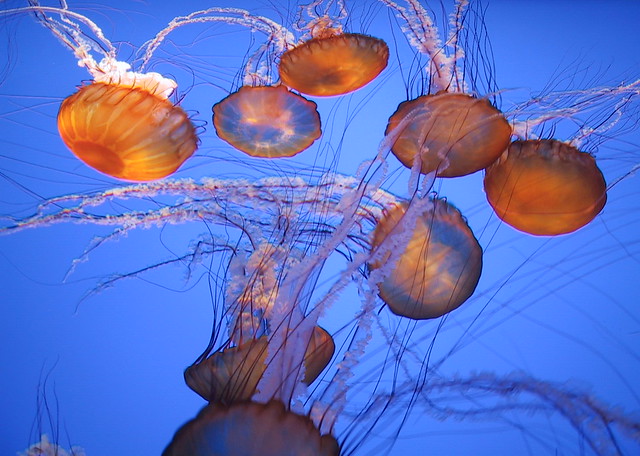
The Immortal Jellyfish
It’s a common assumption that everything dies. But this isn’t the case for the obscure Turritopsis dohnii, commonly known as the immortal jellyfish.
The jellyfish reaches a certain age, then begins aging in reverse until it reaches its earliest stage of development, at which point it begins aging again, according to a story in the New York Times.
The discovery was made by a German scientist who was diving off the coast of Italy in the 1980s, apparently to little fanfare:
You might expect that, having learned of the existence of immortal life, man would dedicate colossal resources to learning how the immortal jellyfish performs its trick. You might expect that biotech multinationals would vie to copyright its genome; that a vast coalition of research scientists would seek to determine the mechanisms by which its cells aged in reverse; that pharmaceutical firms would try to appropriate its lessons for the purposes of human medicine; that governments would broker international accords to govern the future use of rejuvenating technology. But none of this happened.
For more on the death-defying species, check out Can a Jellyfish Unlock the Secret of Immortality?
Here’s NOAA’s take on it: