Should Kamehameha Schools Be the Answer?
Much is being said about the recent plans for development in the Kakaako area by Kamehameha Schools.
In a recent article by Kalina Chang, “Seeking Answers From Kamehameha Schools On Development In Kakaako,” Chang addresses several concerns regarding Kamehameha Schools and its Kakaako development plan, as a response to the Civil Beat Civil Café that occurred on March 13.
The event hosted two executives from Kamehameha: Paul Quintiliani, senior director of the Commercial Real Estate Division and Vice President for Endowment Elizabeth Hokada.
What sparked me to respond to the article was one of the points that Chang makes in her article: namely, that Kamehameha Schools only admits a limited number of Hawaiian students. How can the trust justify spending millions on a development project like this when there are still Native Hawaiian students being excluded?
I am not too certain what Chang truly meant when she stated that, “there are still Native Hawaiian students being excluded.” As a Native Hawaiian student who has strong ties to both Kamehameha and the broader Hawaiian community, I think this is a great opportunity to add to the conversation regarding Kamehameha and its role in the Hawaiian community because I believe there are many misconceptions about this. My goal is to help people be more informed about what Kamehameha is about because this organization encompasses more than just the students they serve on the three main campuses.
Being the leader in Native Hawaiian education comes with huge responsibilities. That is both good and bad. Many people often point to Kamehameha as the solution to many of the problems that plague Native Hawaiians today. Is it because of its $9.2 billion trust that people feel this way? Or is it the 363,000 acres of land that the estate currently owns and manages? Whatever the reason, many people continue to feel that Kamehameha Schools should be doing more than what it is currently doing.
The question I pose is this: do people really know what Kamehameha does?
Kamehameha is known for its three major K-12 campuses located on Oahu, Maui and Hawaii Island. The school is known for its selection process in which only a handful of children are admitted every year. It is because of this selection process that many people deem the school as “very selective.” Some often go to the extreme of stereotyping the school as “elitist.” However, what many people do not know is that the school allots a certain number of spots depending on the geographic location around the islands (allowing more spots in the rural country island areas where there is a higher concentration of Native Hawaiians).
Kamehameha Schools knows that it cannot admit every Hawaiian child to one of its three K-12 schools. That is why the school has made it a point to extend its services beyond the walls of those three campuses. Through its Extension Education Department, Kamehameha is able to service over 18,000 children annually through its famous summer program series (Hoʻomākaikaʻi — Explorations, Hoʻolauna and Kūlia I Ka Pono) where students who do not attend Kamehameha are able to travel to different locations around the island chain to learn more about the ʻāina and their identity as Native Hawaiians (all expenses and airfare included). Kamehameha understands that many Hawaiians are economically challenged, that is why they offer financial aid to families who cannot afford the reasonable fee so that their children are able to attend these programs.
Along with these programs offered through Extension Education, Kamehameha also offers scholarships for Native Hawaiian students to fund their college education. Kamehameha spends about $15 million a year in these post high school scholarships. In addition, Kamehameha has provided $25.3 million in support of public school transformation in large Native Hawaiian communities, often providing staff in 21 DOE schools (K-3 classrooms).
Many people continue to advocate for Kamehameha to contribute more to the community in areas such as homelessness, sustainability, Native Hawaiian land issues regarding development and other challenges that Native Hawaiians face. What people have to realize is that this organization was not created to solve all of these problems. It is first and foremost an organization whose purpose is to fulfill the will of Bernice Pauahi Bishop by providing funding to its schools and those who attend it.
Kamehameha is not the answer to solving all of our problems. It is easy to point to its multi-billion dollar endowment and believe that its money will solve everything. The reality is this: that money can’t solve everything. Similar to the United States Government and its public services, Kamehameha cannot solve the majority of the problems by themselves. It will take a joint effort from numerous community members and organizations to help address the issues.
So is Kamehameha the answer? No, but it has to be a big player in helping the lāhui address these issues. I firmly believe that it is a “kākou thing.” Everybody needs to get involved and everybody will need to contribute. The fate and well being of the lāhui does not only rely on a single organization.
It does rely on the many hands that help to push our people into a brighter future.
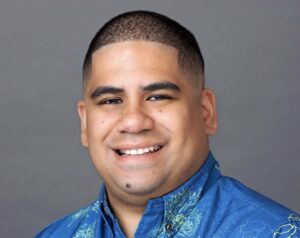
About the author: Jacob Bryan Aki is a graduate of the Kamehameha Schools and currently an undergraduate student who is majoring in Hawaiian Studies at the Hawaiʻinuiākea School of Hawaiian Knowledge at the University of Hawaii at Manoa.
Community Voices aims to encourage broad discussion on many topics of community interest. It’s kind of a cross between Letters to the Editor and op-eds. This is your space to talk about important issues or interesting people who are making a difference in our world. Columns generally run about 800 words (yes, they can be shorter or longer) and we need a photo of the author and a bio. We welcome video commentary and other multimedia formats. Send to news@civilbeat.com.